BRIDGES Insights · Europe
Europe: tougher at the border, more residence permits inside. What it means for a move in 2027

Updated: October 2026·11 min read·Expert reviewed
Terms and costs verified: October 2026
Contents
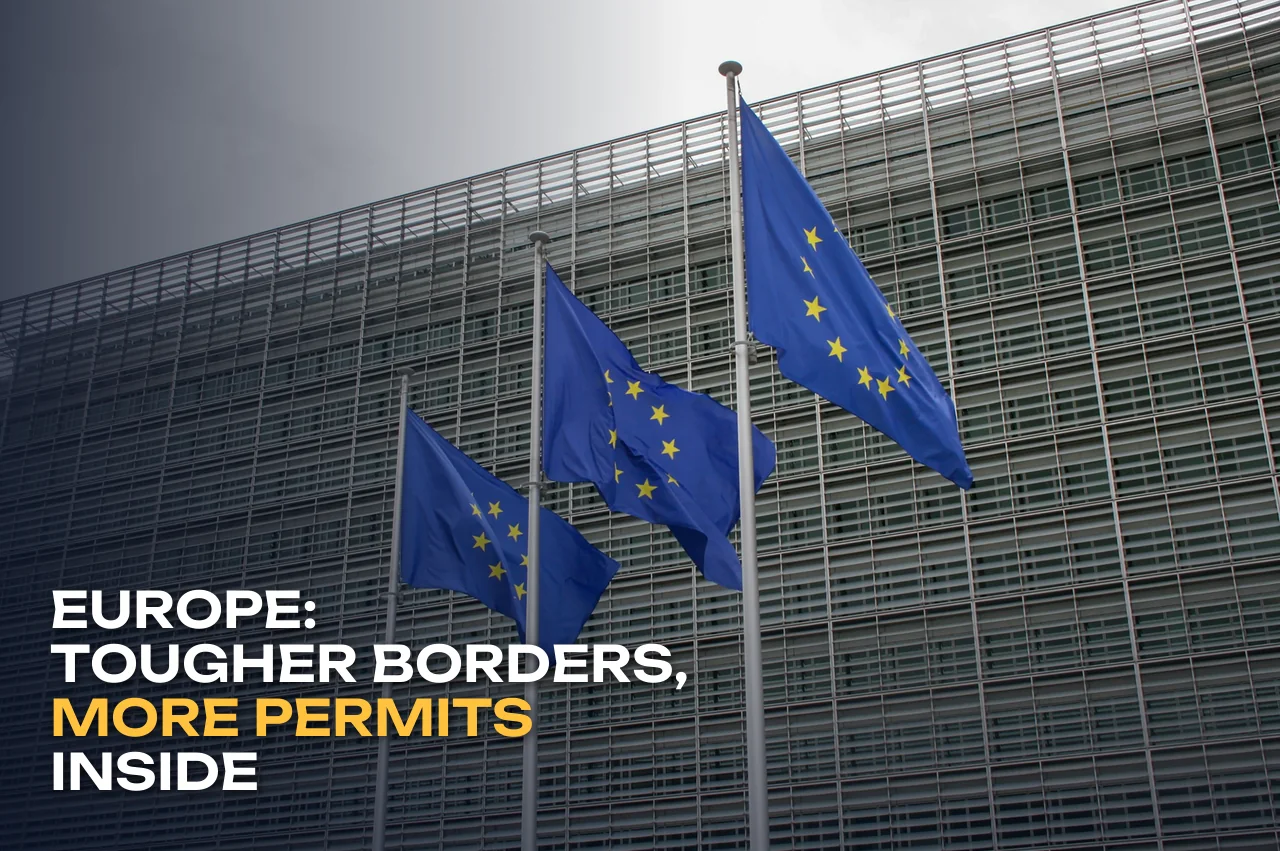
The news of the past two weeks looks contradictory. On 27 October the European Commission proposed tripling Frontex and making it the lead body on migrant removals. Cyprus is revoking student permits, Greece promises to take away golden visas, Portugal has lengthened the path to citizenship to ten years. And on the same days ISTAT reports that Italy issued 47% more residence permits in 2025 than a year earlier. In my view there is no contradiction: Europe is building two different corridors. I explain how they work and what this means for people planning a move in 2027.
In brief
- The EU and individual countries are tightening control of irregular migration: Frontex to 30,000 staff, shared records of return decisions, statuses revoked for abuse.
- At the same time legal channels are growing: Italy issued 426,956 new permits in 2025, 47.2% more, and Spain received 1.17 million regularisation applications.
- Requirements for legal statuses are also getting stricter: a longer path to citizenship, more source-of-funds checks, genuine compliance with programme conditions.
- My base case for 2027 is two corridors: tough on those without status, stable but stricter for those who have it.
- The practical conclusion: it is better to secure residence under clear rules now, keep documents impeccable and not rely on grey schemes.

What is happening: the facts of recent weeks
I will start with facts, because migration attracts a lot of emotion. On 27 October 2026 the Commission tabled a new Frontex mandate: the agency's corps would gradually grow to 30,000 people, a 17,000-strong reserve would be created, the budget would rise from about EUR 6 billion to 11.8 billion, and the agency would become the EU's lead body on returns. Details are in our story on Frontex. It continues the return regulation covered in our story on return rules.
Meanwhile, countries are tightening specific statuses. After clashes in Limassol on 15 October, Cyprus is revoking permits of private college students who were not studying and is preparing strict admission rules; see our story on Cyprus. On 15 October Greece's migration minister promised to revoke golden visas over hidden rebates and banned sublets - our story on Greece. Since 2026 Portugal has required ten years of residence for citizenship instead of five, and the citizenship queue has reached hundreds of thousands of cases - our story on the backlog. The UK dropped its investor visa and is discussing lengthening the path to settlement to ten years; on the visa, see a separate story.
Now the figures from the other side. On 22 October 2026 ISTAT reported that Italy issued 426,956 new permits in 2025, 47.2% more than in 2024, with family permits at a 15-year high - our story on Italy. In summer 2026 Spain received 1.17 million applications for mass regularisation, twice what was expected. Portugal moved residence renewal online and on 23 October opened the portal for documents expiring by 31 January 2027 - our story on Portugal. Italy has planned almost 500,000 work visas for 2026-2028.
| Country or EU | What is being tightened | What is growing at the same time |
|---|---|---|
| EU | Frontex to 30,000 staff, lead body on returns | enforced returns up to 33%, irregular crossings halved |
| Italy | family reunification only after 2 years of residence, checks on the border with Spain | 426,956 new permits in 2025, +47.2% |
| Spain | golden visa for property closed since April 2025 | 1.17 million regularisation applications in 2026 |
| Portugal | citizenship after 10 years instead of 5 | online residence renewal, portal open to January 2027 |
| Greece | golden visas revoked for hidden rebates and sublets | the programme runs, thresholds unchanged |
| Cyprus | student permits revoked and colleges inspected | investor permanent residence works, the country prepares for Schengen |
What this means for you. Judging by headlines, Europe is closing. Judging by figures, it is issuing more statuses than at any time in recent years. The key is to understand to whom it is closing and to whom it is not.
Why this is not a contradiction: two corridors
My assessment: Europe is deliberately splitting migration into two flows. The first is irregular: illegal border crossings, overstayed visas, asylum refusals. Here the course is single-minded: tougher, faster, joint. The Commission says outright that irregular crossings have halved in two years and enforced returns have risen to 33%, and it wants to lock in the result. Politically, this is what voters in almost all EU countries expect.
The second flow is legal: families, students, workers the economy lacks, wealthy people with passive income and investors. Here Europe behaves differently. Populations are ageing, Italy, Spain, Germany and Portugal lack workers, and pension systems depend on an inflow of taxpayers. So legal channels are not only preserved but expanded. Italy is raising work quotas, Spain is regularising those already living there, Portugal is speeding up renewals.
But the legal corridor is changing too. It is becoming stricter in quality: more source-of-funds checks, genuine compliance with status conditions, a longer path to citizenship. Greece is not closing its golden visa but takes it away from those who bend the rules. Cyprus is not closing the student channel but expels those who do not study. This is not accidental but a common line: status is granted readily, but you are expected to live up to it in practice.
What this means for you. For a legal move Europe remains open, but it no longer forgives carelessness. A mistake in documents or formal compliance with conditions now costs more than five years ago.
Planning a move to Europe? We will find a reliable status
We will tell you which programme fits your budget, timeline and presence requirements.
Sergey EvdokimovManaging Partner, BRIDGES
Three scenarios for 2027
I see three scenarios. The first, the base case, is two corridors as described above. Irregular migration meets an ever tougher response, while legal statuses are issued steadily but with stricter checks. We can already see signs of this scenario: the growth of Frontex coincides with rising permit issuance in Italy and online renewal in Portugal.
The second scenario is general tightening, where legal routes also become more expensive. There are signs of it too: Portugal lengthened the period to citizenship, Malta is raising fees for foreigners from 2027, the UK dropped its investor visa. If such decisions start being taken simultaneously in several large countries, the entry threshold for European programmes will rise noticeably. I rate this scenario as significant, especially for investor residence programmes.
The third scenario is a reversal, where the EU softens its course because of labour shortages and business pressure. I consider it unlikely in the next two years: the political agenda in most countries demands toughness, and any softening is more likely to come through narrow work programmes than general relaxation.
| Scenario | What happens | Likelihood in my view | What to do |
|---|---|---|---|
| Two corridors | tough on irregular migration, stable for legal statuses | base case | secure residence now, under clear rules |
| General tightening | legal routes get costlier too: fees, timelines, presence rules | significant | enter programmes before thresholds rise |
| Reversal | the EU softens its course because of labour shortages | low | do not count on it when planning |
What this means for you. My forecast: in 2027 legal statuses will remain available, but entry to some programmes will become more expensive or more complex. I would not wait for better conditions.
Which investor programmes are under most pressure
Of all legal statuses, residence for property purchase faces the most political pressure. In countries with a housing crisis it is linked to rising prices and rents, so this is where changes are most likely. Spain has already closed such a programme, Portugal removed property from its golden visa back in 2023, Greece raised thresholds and banned short-term letting. Programmes requiring investment in business, funds or government bonds are politically more resilient: they do not compete with local residents for housing.
The second risk factor is a weak presence requirement. The EU is wary of statuses that allow people to hardly ever be in the country, as the pressure on citizenship by investment programmes shows. For residence this pressure is weaker so far, but the trend is clear: authorities regard statuses involving real residence and tax residence as more justified. If you need Europe as insurance rather than a place to live, take this into account when choosing.
What it means for Russians
For Russians the picture is special. Legal corridors are open to them, but the visa channel is narrowing. The EU is discussing single-country visas and dropping multiple-entry Schengen visas, and Finland and Estonia propose banning tourist visas; we keep a timeline in our analysis of Schengen visas in 2027. Russia, according to its Foreign Ministry, will not respond with a visa ban for Europeans - our story on the ministry's statement, but this changes nothing for Russians' travel: the EU takes the decisions.
Hence the main practical conclusion. For a Russian who needs Europe regularly, residence is more reliable than depending on tourist visas. Residence gives the right to enter your country and travel in Schengen for up to 90 days in any 180, and decisions on tourist visas do not apply to it. Investor programmes are open in Greece, Portugal, Italy, Malta, Cyprus and Hungary. For those living on passive income there is Italian elective residence and other similar statuses, and for remote workers digital nomad visas.
A separate topic is second citizenship. Citizenship by investment programmes in the Caribbean are under EU pressure; I cover this in detail in my analysis of Caribbean programmes. A Vanuatu passport remains a working tool for travel outside the EU and as a basis for European residence. But for living in the EU, European residence remains key.
What I advise now
First, do not postpone. If you have decided you need Europe, it is better to enter a programme under current rules than to wait for changes. In the base case and the second scenario, conditions will not improve. Second, choose a status by your real goal. If you do not plan to live in the country, do not take a programme with strict presence requirements; if you do, do not skimp on preparation. The guide to presence requirements helps compare programmes.
Third, keep documents impeccable. Source of funds, tax residence, contracts, renewing residence on time. This is where the most common problems are now: Greece revokes visas over rebates and sublets, Cyprus over formal study, Portugal loses applications in queues. Fourth, think on a ten-year horizon. The path to permanent residence usually takes five years and to citizenship longer, and a gap in residence can reset the clock. An overview of where investor residence programmes are heading is in my analysis of residence without a passport and golden visas in autumn 2026.
Decide why you need Europe
To live, to visit or as insurance. The programme and presence requirements depend on the answer.
Enter under current rules
Do not wait for easing. In the main scenarios conditions will get stricter.
Prepare your source of funds
Documents on the origin of money are checked more closely than before.
Comply with your status
Do not let a golden visa home to tourists, do not use formal grounds.
Renew on time
A gap in status resets the clock to permanent residence and citizenship.
What to watch in the coming months
First, the debate on the Frontex mandate in the Council and Parliament, and EU visa decisions for Russians. Second, national budget decisions: residence fees, investment thresholds, tax regimes for new residents. Third, renewal practice: how quickly Portugal's portals, Italy's questuras and Cyprus's migration department work. Checks between Italy and Spain were lifted on 24 October - our story, and that is also an indicator: internal Schengen borders are closed temporarily, external ones for the long term. On the Portuguese golden visa queue, see a separate story.
We will track these decisions and update our assessment. If you want to discuss your situation, book an online consultation; all BRIDGES services are on the home page.
Not sure where to start your move? We will draw up a plan
We will compare programmes and prepare a plan for the coming years that takes EU changes into account.
Sergey EvdokimovManaging Partner, BRIDGES
How this article was prepared
Sources: the Commission's draft regulations on Frontex and digital case management for returns of 27 October 2026; the ISTAT report on non-EU citizens for 2025 of 22 October 2026; Spanish government data on 2026 regularisation applications; AIMA announcements on the residence renewal portal of 23 October 2026; statements by the Cypriot and Greek authorities in October 2026. Scenarios and likelihood assessments are my opinion, not a forecast by official bodies. This article does not replace a consultation.
Share this article
Frequently asked
Questions people ask before deciding
01Is Europe closing to migrants?
To irregular migration, yes: control is tightening. Legal statuses are still issued in large numbers: Italy issued 47.2% more permits in 2025 than a year earlier.
02What is the two-corridor scenario?
A tough course towards those in the EU without a legal basis, and steady but more strictly checked issuance of legal statuses.
03Should I wait for easier conditions?
In my view, no. In the main scenarios programme conditions will stay the same or get stricter, so it is better to enter under current rules.
04What matters most when applying for residence now?
Impeccable source-of-funds documents, genuine compliance with status conditions and timely renewal, so as not to interrupt the clock to permanent residence and citizenship.
05What does it mean for Russians?
The visa channel is narrowing, while legal residence programmes are open. For those who need Europe regularly, residence is more reliable than tourist visas.
About the author
Related materials
What to read next
 AnalysisResidence without a passport: why countries are separating investor residence from citizenship
 AnalysisEU golden visas in autumn 2026: Greece gets dearer, Portugal queues, Cyprus grows
 AnalysisSchengen is narrowing for Russians, and a backup plan is best built before 2027
News+7 stories on 28 October
Related news
 Europe · 16 OctRenting in Europe in autumn 2026: Portugal lifts limits on landlords, Spain freezes rents
 Hungary · 28 OctHungary plans a wealth tax: 1% on assets above EUR 2.7 million, including for non-residents
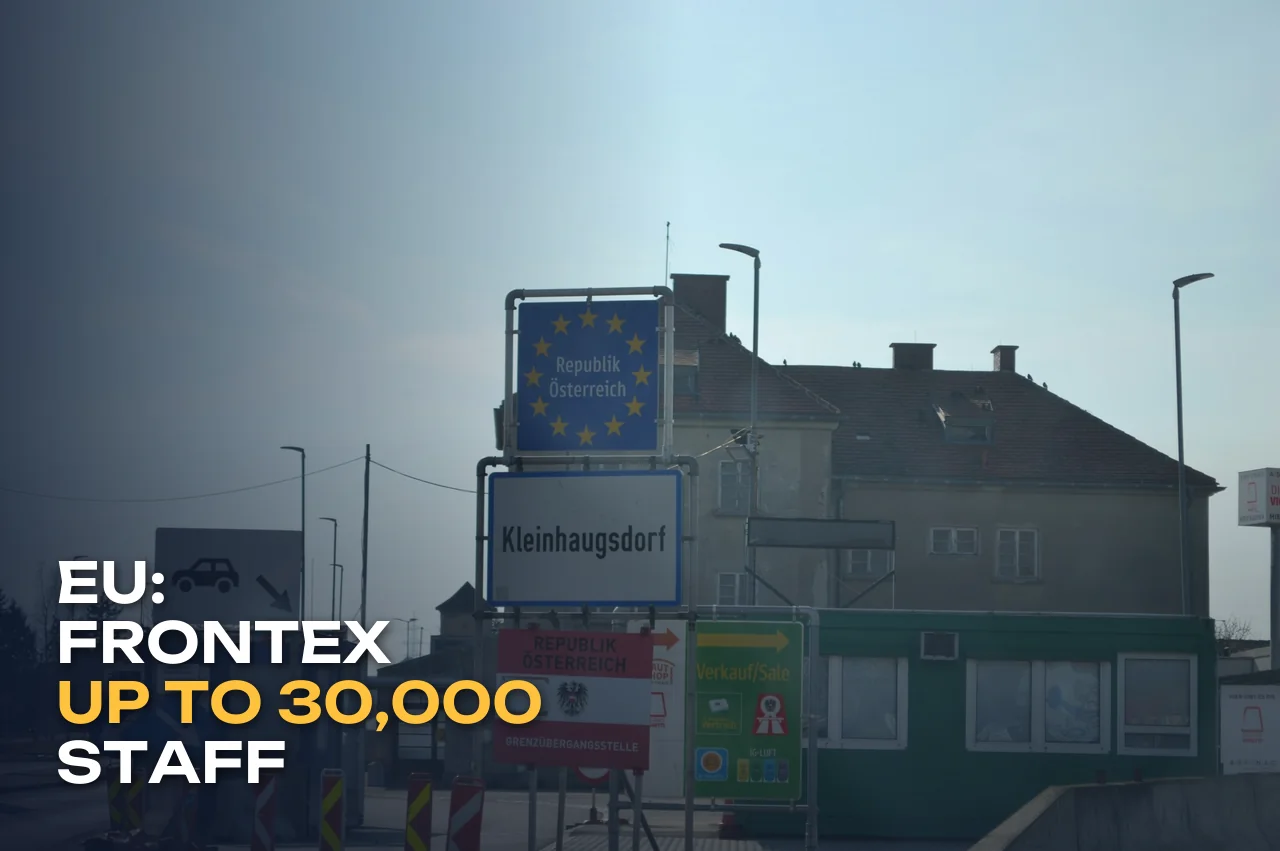 EU · 28 OctEU proposes tripling Frontex to 30,000 staff and making it the lead agency on returns
Personal programme selection is conducted by Anna Kovalevskaya, Head of Legal, BRIDGES.
Planning a move to Europe? We will find a reliable status
We will tell you which programme fits your budget, timeline and presence requirements.
