Citizenship · Argentina
Where is Argentina: map, neighbours, capital and climate
Updated: October 2026·14 min read·Expert reviewed
Terms and costs verified: October 2026
Contents
Argentina lies in the south-east of South America, between the Andes in the west and the Atlantic Ocean in the east. It is the second-largest country on the continent after Brazil, stretching 3,700 km from the tropics in the north to Tierra del Fuego in the south. The capital is Buenos Aires, the language is Spanish, the currency is the Argentine peso, and the clock is 6 hours behind Moscow. Below we look at where Argentina is on the map, which countries it borders, what its climate is like, how to get there and why the country is of interest to anyone considering a second passport. The conditions, cost and procedure of the programme are on the page turnkey Argentine citizenship.
Where is Argentina: the essentials
In brief: Argentina is a country in South America, in the south-east of the continent. To the west it borders Chile along the Andes, to the north Bolivia and Paraguay, to the north-east Brazil and Uruguay, and to the east it is washed by the Atlantic Ocean.
| Question | Answer |
|---|---|
| Continent | South America, south-east of the continent |
| Capital | Buenos Aires |
| Neighbours | Chile, Bolivia, Paraguay, Brazil, Uruguay |
| Ocean | The Atlantic to the east |
| Language | Spanish |
| Currency | Argentine peso |
| Time | UTC-3, 6 hours behind Moscow |
| Dialling code | +54 |
| Structure | 23 provinces and the Autonomous City of Buenos Aires |
| Entry for Russian citizens | Visa-free for up to 90 days |
The table answers the most common questions about the country. Argentina is in the Southern Hemisphere, so its seasons are the reverse of Europe's: summer runs from December to February and winter from June to August. Argentines see in the New Year in the heat, often on the beach or by the pool.
Argentina on the map
In brief: on the map, Argentina stretches from north to south along the Andes and narrows towards the south, resembling a wedge. Its southernmost part is Tierra del Fuego, about 1,000 km from Antarctica.
Argentina's northern border runs along the Tropic of Capricorn, and its southern tip lies by the Drake Passage, which separates South America from Antarctica. In the west, the Andes run the entire length of the country, forming a border with Chile of more than 5,000 km, one of the longest land borders on the planet. To the east Argentina is washed by the Atlantic Ocean, and in the north-east it borders Uruguay along the Uruguay River and the Río de la Plata estuary.
The city of Ushuaia in Tierra del Fuego is regarded as the southernmost city on the planet and is the departure point for cruises to Antarctica. Argentina also claims part of Antarctica and the Falkland, or Malvinas, Islands, which are administered by the United Kingdom.
- Area2.78 million km²the eighth-largest country
- Population46 million2022 census
- North to south3,700 kmfrom the tropics to Tierra del Fuego
- Aconcagua6,961 mthe highest point in South America
INDEC, 2022 census
Regions and nature
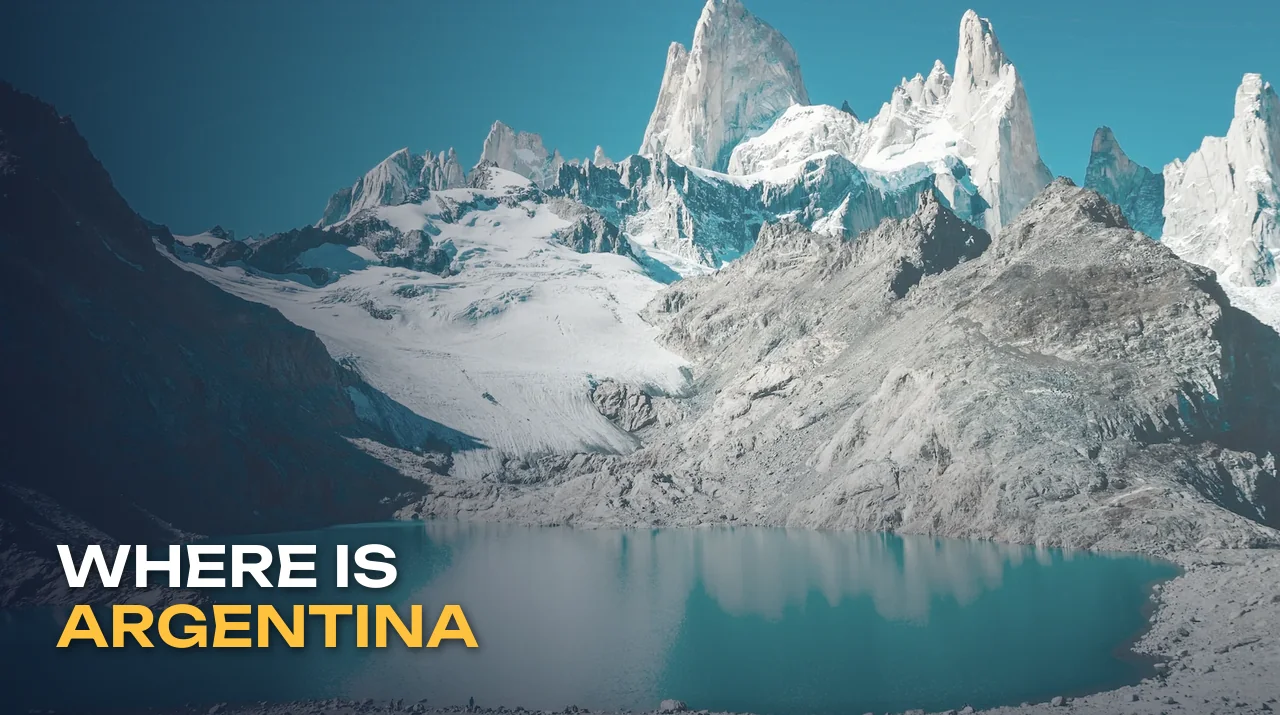
In brief: Argentina has six natural regions: the subtropical north-east with the Iguazu Falls, the arid north-west, the Andes and Cuyo with their vineyards, the plains of the Pampas, Patagonia and Tierra del Fuego.
The north-east, with the province of Misiones, is a land of jungle, rivers and the Iguazu Falls on the border with Brazil, among the widest waterfalls on the planet. The north-west covers the provinces of Salta and Jujuy, with multicoloured mountains, deserts and colonial towns. The Cuyo region, with Mendoza at the foot of the Andes, produces most of Argentina's wine. It is also home to Aconcagua, 6,961 metres high, the highest point in South America and in both Americas.
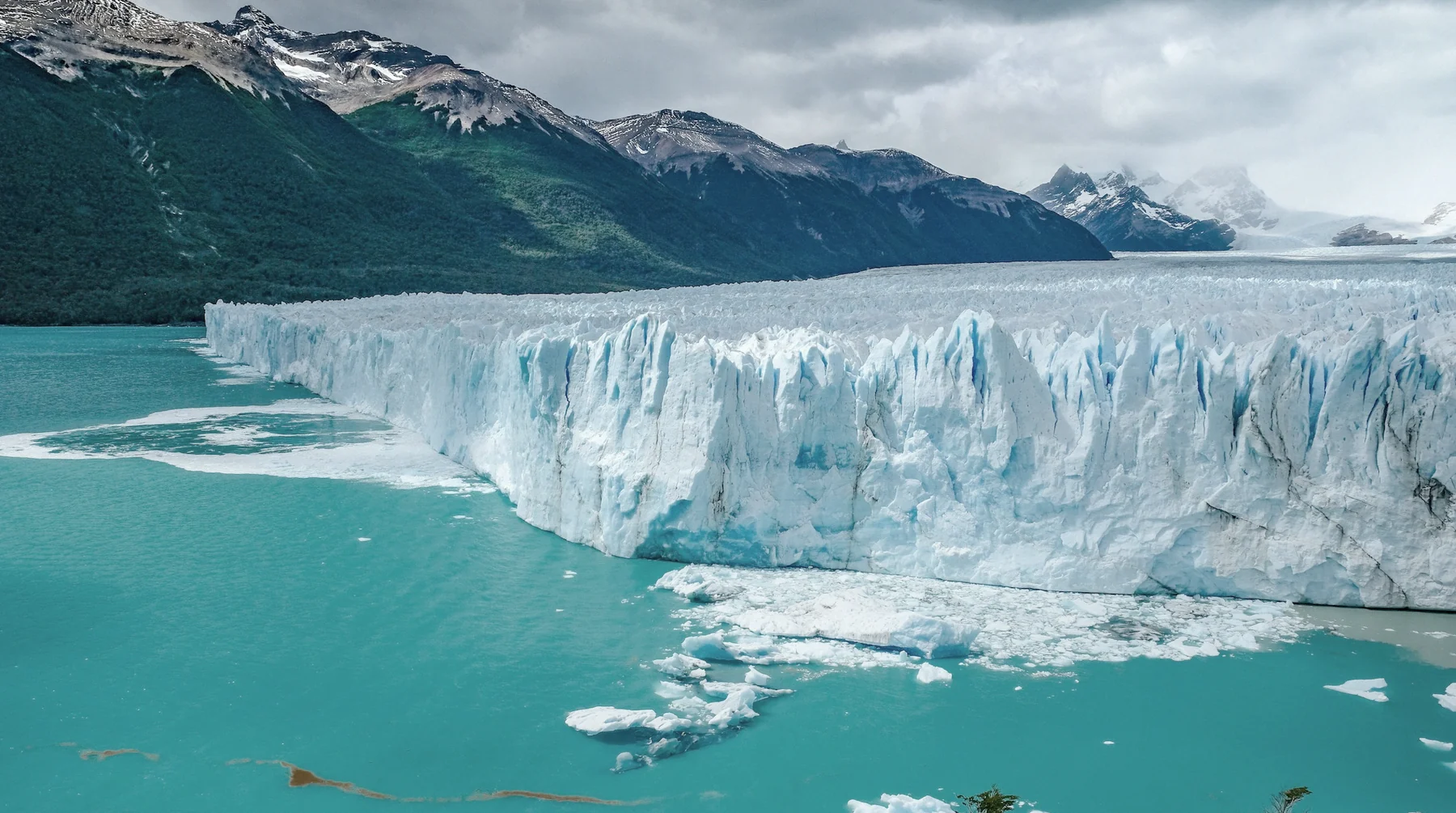
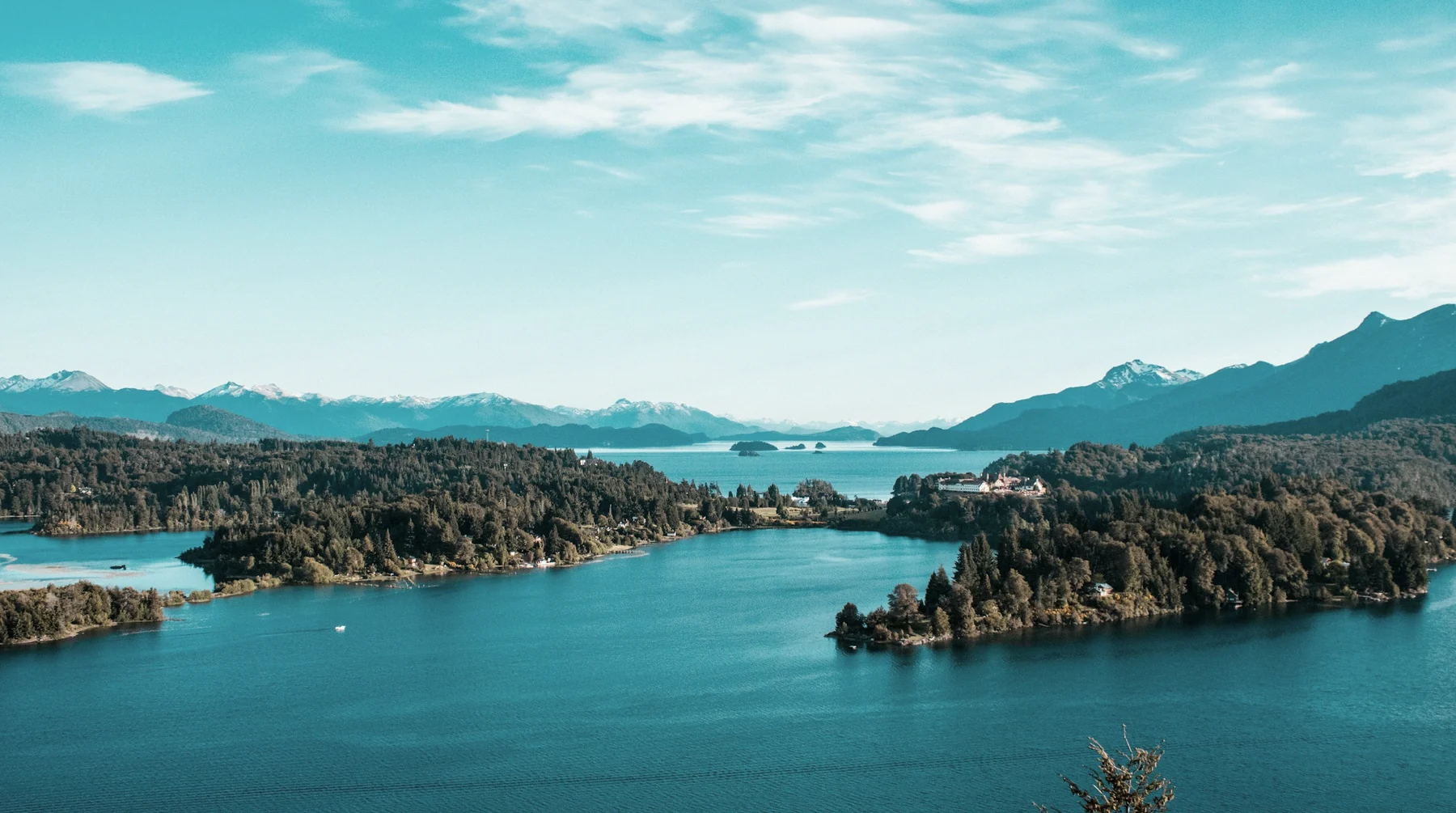
The Pampas are boundless plains in the centre of the country where herds graze and grain is grown. Most of the population lives here, and this is where Buenos Aires, Rosario and Córdoba are located. Further south begins Patagonia: steppes, the lakes of Bariloche, the Perito Moreno Glacier and the town of El Chaltén beneath the Fitz Roy massif. Further south still lies Tierra del Fuego with Ushuaia.
The capital and major cities
In brief: the capital is Buenos Aires, whose metropolitan area is home to about 15 million people, a third of the country's population. Other large cities are Córdoba, Rosario, Mendoza, La Plata and Tucumán.
Buenos Aires stands on the shore of the Río de la Plata and is regarded as one of the most European cities in Latin America: broad avenues, the old neighbourhoods of San Telmo and La Boca, the Teatro Colón and the parks of Palermo. The city is autonomous and does not belong to any province. Córdoba is the country's second city, with a university founded in the 17th century. Rosario is a major port on the Paraná River, and Mendoza is the wine capital at the foot of the Andes.
Most foreigners who move to Argentina live in Buenos Aires. More on cities and prices in the article living in Argentina.
Climate
In brief: subtropical and tropical in the north, temperate in the centre and cold Patagonia in the south. Buenos Aires has hot, humid summers and cool winters without snow.
In summer Buenos Aires can reach +35°C, and in winter temperatures range from +5 to +15°C. The north-east is hot and humid all year round, the north-west is dry and sunny, and the Andes are cold. In Patagonia summers are cool, around +15-20°C, it snows in winter, and Bariloche has a ski resort. The best time to visit Buenos Aires is the southern spring and autumn: from October to December and from March to May.
Population, language and currency
In brief: about 46 million people, most of them descendants of Italian and Spanish settlers. The official language is Spanish, and the currency is the Argentine peso.
According to the 2022 census, about 46 million people live in Argentina. Most are descendants of settlers from Italy and Spain, as well as from Germany, France, Eastern Europe and the Middle East. The country is also home to descendants of migrants from the Russian Empire, Ukraine and Poland, who arrived in the late 19th and 20th centuries. Since 2022, a new Russian-speaking community has taken shape in Argentina.
Argentine Spanish differs in pronunciation and in the use of "vos" instead of "tú" as the form of address. The currency is the Argentine peso, while large purchases, such as real estate, are traditionally paid for in dollars. More on the currency in the article Argentina's currency and economy.
A brief history
In brief: a Spanish colony from the 16th century, independent since 9 July 1816, mass European immigration in 1880-1930, military coups in the 20th century and democracy since 1983.
The Spanish founded Buenos Aires in the 16th century, and for almost three centuries the territory was part of Spain's possessions. On 25 May 1810 a government of its own was formed in Buenos Aires, and on 9 July 1816 the Congress of Tucumán declared independence. The 1853 Constitution, as amended, remains in force today.
In the late 19th and early 20th centuries, Argentina became one of the richest countries in the world thanks to exports of grain and beef, and it took in millions of settlers from Europe. The 20th century brought political instability: the rule of Juan Perón, military coups and the dictatorship of 1976-1983. In 1982 the country went to war with the United Kingdom over the Falkland Islands, and in 1983 it returned to democracy, which has remained uninterrupted ever since.
System of government
In brief: Argentina is a federal presidential republic of 23 provinces and the Autonomous City of Buenos Aires. Since December 2023 the president has been Javier Milei, and the next election is in 2027.
The president is elected for 4 years and may serve one further term. The parliament is the National Congress, made up of the Chamber of Deputies and the Senate. The provinces have their own constitutions, governors and courts. The five-member Supreme Court rules on constitutional questions, including the dispute over Decree 366/2025, on which the citizenship by investment programme is built. More in the article the legal basis of the programme.
Economy
In brief: Argentina is one of the three largest economies in Latin America and a member of the G20 and MERCOSUR. Its main sectors are agriculture, energy, lithium mining and services.
The country is one of the largest exporters of soybeans, maize, wheat and beef. The Vaca Muerta field in Patagonia has turned Argentina into an oil and gas exporter, and the country's north-west is part of the "lithium triangle" together with Chile and Bolivia. Buenos Aires is the region's hub for IT, finance and the creative industries.
national statistics offices
After the reforms of 2024-2025, inflation slowed to 1.7% a month in August 2026, and currency restrictions for citizens have been lifted. More in the article doing business in Argentina.
Argentina and the former Soviet countries
In brief: hundreds of thousands of descendants of migrants from the Russian Empire, Ukraine and Poland live in Argentina. Since 2022, they have been joined by a new Russian-speaking community.
The first large groups of migrants from the Russian Empire arrived in Argentina at the end of the 19th century: Volga Germans, Jews and Ukrainians. The Ukrainian community is especially visible in the province of Misiones, which has Orthodox and Greek Catholic churches. After 1917 and after the Second World War, Russian émigré organisations and schools appeared in Buenos Aires.
Since 2022, thousands of families from Russia, Ukraine and Belarus have moved to Argentina. Buenos Aires has Russian-speaking doctors, lawyers, children's centres and weekend schools. More in the article Argentine citizenship for citizens of Russia.
How to get to Argentina
In brief: there are no direct flights from Russia or the CIS. People fly with a connection in Istanbul, Dubai, Doha, Addis Ababa or European cities, and the journey takes 20 hours or more.
The distance from Moscow to Buenos Aires is about 13,500 km. The main international airport is Ezeiza, 35 km from the centre of the capital. From Europe, there are direct flights to Buenos Aires from Madrid, Rome, Paris, Frankfurt and London, taking 12-14 hours. Citizens of Russia, Ukraine and Belarus enter visa-free for 90 days, and citizens of Kazakhstan for 30 days.
Distances within the country are large, so people travel between regions on domestic flights: from Buenos Aires it is about 2 hours to Iguazu and about 3.5 hours to Ushuaia. Comfortable long-distance coaches run between cities.
Sofia MendesInvestment Programs Expert, BRIDGES
Want to move to Argentina? We will help you arrange it
We will take your situation into account and mark what you already have and what you still need to obtain.
Time and practicalities
In brief: Argentina is on UTC-3, 6 hours behind Moscow, with no daylight saving time. The dialling code is +54, the voltage is 220 V, and traffic drives on the right.
When it is noon in Moscow, it is 6 am in Buenos Aires. Evening hours in Argentina are night-time in Moscow, so families usually call relatives in the morning Buenos Aires time. Sockets are 220 volts and take plugs with flat pins, as in Australia, while ordinary European plugs are used in older buildings, so it is worth bringing an adapter.
Traffic drives on the right. Bank cards are accepted almost everywhere in cities, and a SUBE card is needed for public transport. Several operators provide mobile service, and a SIM card can be bought at the airport or in a phone shop on presentation of a passport.
Safety
In brief: Argentina is safer than most Latin American countries, but pickpocketing and street phone snatching are common in large cities. Safety varies greatly by neighbourhood.
In Buenos Aires, tourists and new residents are advised not to hold their phone in their hand on the street, not to hang bags on the back of a chair in cafés, and to use taxis or ride-hailing services in the evening. Palermo, Belgrano, Recoleta and Puerto Madero are considered calm neighbourhoods, while near Retiro station and in parts of La Boca it pays to be more careful after dark. The natural regions, such as Patagonia, Mendoza and Salta, are calm, but in the mountains it is important to keep an eye on the weather.
Why Argentina is of interest for a second passport
In brief: an Argentine passport opens 168 destinations without a consular visa, including the Schengen area and the UK. Since October 2026, citizenship can be obtained through investment with no residence requirement.
Argentina is a large country with developed cities, strong universities and a European way of life. Its passport gives the right to live in the MERCOSUR countries, and children born in Argentina receive citizenship from birth. Naturalisation takes 2 years of living in the country, and the citizenship by investment programme announced on 2 October 2026 grants a passport for a contribution from $350,000 with no residence requirement.
More in the articles the Argentine passport, what Argentine citizenship gives you and how much Argentine citizenship costs. If the family chooses citizenship by investment, the amount for your family composition is shown by the Argentina programme cost calculator.
What to see
In brief: Buenos Aires, the Iguazu Falls, the Perito Moreno Glacier, the wineries of Mendoza, the multicoloured mountains of Salta and Ushuaia at the edge of the continent.
In Buenos Aires, visitors head for the neighbourhoods of San Telmo and La Boca, the Recoleta Cemetery, the Teatro Colón, tango milongas and the parks of Palermo. The Iguazu Falls on the border with Brazil can be seen from both sides, and on the Argentine side the trails lead right up to the Devil's Throat. In Patagonia, the Perito Moreno Glacier can be viewed from balconies a few dozen metres from the wall of ice.
Mendoza means Malbec tastings with views of the Andes, while Salta and Jujuy offer the Hill of Seven Colours and salt flats. Cruises to Antarctica and trips along the Beagle Channel depart from Ushuaia. The best time to travel around the country is the southern spring and autumn.
Interesting facts
In brief: Argentina is the home of tango, mate and asado, a country with one of the largest theatres in Latin America and one of the southernmost cities on the planet. Our services and the way we work are shown on the page Argentine citizenship with BRIDGES.
- The name. It comes from the Latin word "argentum", meaning silver.
- Tango. It was born in the port districts of Buenos Aires at the end of the 19th century.
- Teatro Colón. One of the finest opera houses for acoustics.
- Football. The Argentine national team are three-time world champions.
- Nobel Prizes. Argentines have won five Nobel Prizes, including two in medicine.
- Bookshops. Buenos Aires has more bookshops per resident than almost any other city.
Want Argentine citizenship? We will send you a step-by-step plan
We will set out every step from the first documents to the final status, with the timeline for each.
Sofia MendesInvestment Programs Expert, BRIDGES
Get a planShare this article
Frequently asked
Questions people ask before deciding
01Where is Argentina?
In the south-east of South America, between the Andes in the west and the Atlantic Ocean in the east.
02What is the capital of Argentina?
Buenos Aires. About 15 million people live in its metropolitan area.
03Which countries border Argentina?
Chile, Bolivia, Paraguay, Brazil and Uruguay.
04What language is spoken in Argentina?
Spanish. The Argentine variety differs in pronunciation and in the use of "vos" as the form of address.
05What is the currency of Argentina?
The Argentine peso. Large purchases, such as real estate, are traditionally paid for in dollars.
06What is the time difference with Moscow?
6 hours: when it is noon in Moscow, it is 6 am in Buenos Aires. There is no daylight saving time.
07How long is the flight from Moscow to Argentina?
There are no direct flights. With a connection, the journey takes 20 hours or more.
08Do I need a visa for Argentina?
Citizens of Russia, Ukraine and Belarus do not, for stays of up to 90 days. Citizens of Kazakhstan do not, for stays of up to 30 days.
09What is the population of Argentina?
About 46 million people according to the 2022 census.
10What is the climate in Argentina?
Subtropical in the north, temperate in the centre and cold Patagonia in the south. The seasons are the reverse of Europe's.
11When did Argentina become independent?
On 9 July 1816, when the Congress of Tucumán declared independence from Spain.
12Who is the president of Argentina?
Javier Milei, since December 2023. The next presidential election is in 2027.
13What should I see in Argentina?
Buenos Aires, the Iguazu Falls, the Perito Moreno Glacier, Mendoza, Salta and Ushuaia.
14Is Argentina safe?
Argentina is safer than most Latin American countries, but pickpocketing is common in large cities. Safety depends on the neighbourhood.
15Can I obtain Argentine citizenship?
Yes: after 2 years of living in the country, or through the investment programme from $350,000 with no residence requirement.
Transparency
How this material was prepared
- Author
- Sofia Mendes, investment Programs Expert, BRIDGES
- Terms and costs last verified
- October 2026
- Sources
- official government authorities of the relevant country and state publications
- Methodology
- government minimum requirements are stated separately from due diligence charges, state fees, legal and banking costs
Sources and methodology
Figures, terms and timelines are checked against official sources as of October 2026. Link availability verified in August 2026. Third-party blogs and agent websites are not used as a source of programme terms.
- [1]EUR-LexOfficial texts of European Union legislationeur-lex.europa.eu/homepage.html
- [2]European Commission - Migration and Home AffairsEntry and residence rules in the EUhome-affairs.ec.europa.eu/index_en
Methodology: tables and charts state government minimum investment requirements; due diligence charges, state fees, legal, banking and other costs are calculated separately and are not included in the minimum thresholds.
About the author
Related materials
What to read next
 ComparisonCaribbean Passport: 5 Citizenship Programs Through Investment in 2026
 ArticleLatin America with a Vanuatu passport: Peru, Ecuador and the Caribbean visa-free
 ComparisonPassport of Portugal or Spain in 2026: which is stronger, terms and dual citizenship
News+1 story on 3 November
Related news
 Argentina · 11 OctArgentina citizenship by investment ban bills: risks for investors
 Greece · 3 NovGreece: the 15% home purchase tax will depend on tax residency, not on your passport
 European Union · 1 NovEuropean Union: updated social security rules for living and working in two countries enter into force
Personal programme selection is conducted by Anna Kovalevskaya, Head of Legal, BRIDGES.
Want to buy a home in Argentina? We will find options for you
We will take into account your budget, the city and the purpose of the purchase: to live in, to rent out or to obtain residence.
