News · Thailand
Thailand: authorities review 2,360 land plots held through nominees on behalf of foreigners

Updated: October 2026·15 min read·Expert reviewed
Terms and costs verified: October 2026

Contents
On 19 October 2026 the Prime Minister of Thailand, who is also the Minister of Interior, announced a nationwide operation against nominee landholding. The Department of Lands counted 2,360 plots covering 5,467 rai (about 875 hectares) and worth about THB 14.01 billion that, in its assessment, are registered to Thai individuals or Thai companies but actually belong to foreigners. Provincial governors must finish reviewing risk groups by the end of December 2026. Here is what was announced, what such arrangements risk, and how a foreigner can own a home in Thailand lawfully.
In brief
- On 19 October 2026 the Thai government announced an operation against nominee landholding on behalf of foreigners.
- According to the Department of Lands, this covers 2,360 plots, 5,467 rai (about 875 hectares), about THB 14.01 billion and 1,397 holders. Such land is subject to compulsory sale.
- The priority review covers 13,088 individuals and legal entities. Officials look beyond the registered owner to the real beneficiaries, money flows and connected people.
- Governors and the Department of Lands must finish reviewing risk groups by the end of December 2026.
- Since May 2026 land offices have checked the source of money in detail for deals from THB 5 million or from THB 2 million in cash.
- Lawful routes for foreigners remain: a condominium unit within the 49% quota, a registered lease of up to 30 years, land for a BOI-promoted company.
What was announced on 19 October
The announcement was made by Prime Minister Anutin Charnvirakul at a press conference at Government House. He holds both the post of head of government and Minister of Interior, and the Department of Lands is part of the Ministry of Interior. The statement was published on the Royal Thai Government website and on the website of the Government Public Relations Department.
According to the Department of Lands, 2,360 plots have been identified that, in its assessment, are held in the interest of foreigners. The total area is 5,467 rai, which is about 875 hectares. The current value is about THB 14.01 billion. There are 1,397 registered holders. The Thai version of the statement simply calls them persons, while the English version calls them legal entities, so it is more accurate to speak of individuals and companies together. The government states plainly that such land is subject to compulsory sale under the law.
Separately, the authorities set out a priority group of 13,088 individuals and legal entities that will be reviewed first. The Prime Minister set three tasks: finish nominee investigations by December 2026, enforce the law strictly, and close the loopholes that allow new nominee arrangements to appear.
| Indicator | What was announced on 19 October 2026 |
|---|---|
| Plots | 2,360 land plots across the country |
| Area | 5,467 rai, about 875 hectares |
| Value | about THB 14.01 billion |
| Holders | 1,397 holders the Department of Lands considers nominees or matching nominee indicators |
| Priority review | 13,088 individuals and legal entities |
| Deadline | finish reviewing risk groups by the end of December 2026 |
| Consequence | compulsory sale of the land, civil and criminal action |
What this means for you. If you bought land, or a house on land, in Thailand through a Thai partner, a spouse or a company with Thai shareholders on paper only, your property may come under review before the end of 2026. Condominium units within the foreign quota are not the target of this operation in its current form.
Who is checked and how
The government requires officials to look further than the land register. The review must go beyond the registered owner and the company shareholders to identify beneficial owners, related financial transactions, other assets and people connected to the holder. The Department of Lands and provincial governors must set priorities, assign responsibility and coordinate with other agencies.
The Department of Lands describes two forms of nominee arrangement. In the first, a Thai national is the registered owner, but a foreigner provided the purchase money and uses the land. In the second, a company is set up to hold land for a foreigner. It formally has Thai shareholders, but a foreigner invests, manages or receives the benefit. Such shareholders are known as nominee shareholders, and the agreement between them and the real owner is called a nominee agreement.
Since May 2026 every province has had a committee for inspecting nominee landholding. Its members include the local administration, land officers, local government bodies, the provincial commerce office and other services. The committees verify facts, monitor suspicious deals and report violations.
What is checked before a deal is registered
New deals are checked before registration. The Department of Lands introduced this rule in May 2026, and it is the one that affects people buying now. If a Thai national buys or receives land worth THB 5 million or more, or pays THB 2 million or more in cash, the land office checks the source of money, income, occupation and financial standing of the buyer in detail. Where there are reasonable grounds to suspect a nominee arrangement, the file is passed to the minister.
| Who is buying | What the land office checks |
|---|---|
| Thai national, deal from THB 5 million or from THB 2 million in cash | source of money, income, occupation and financial standing of the buyer |
| Thai national married to a foreigner | a written statement that the purchase money is personal, not marital, property; mortgages, leases and other rights granted to the foreign spouse |
| Minor child of a foreigner | a detailed inquiry into the circumstances of the transfer |
| Company with foreign shareholders or directors | whether Thai shareholders hold shares for foreigners, where the capital came from; land bought for more than the registered capital without a mortgage |
| Foreign company taking land on a long lease | what the land is for and whether the business complies with the Foreign Business Act |
Companies with foreign shareholders or directors get particular attention. The official checks whether Thai shareholders hold shares on behalf of foreigners and where the company capital came from. If a company buys land for more than its registered capital and without a mortgage, that is a separate reason to ask where the money came from. If a foreign company takes land on a long lease, it will be asked why it needs the land and whether its business complies with the Foreign Business Act. Without convincing explanations, the company may be treated as holding land or shares for foreigners.
What this means for you. A buyer with nothing to hide should collect proof of the source of funds in advance: statements, contracts, tax documents. Without them registration may be delayed even if you have done nothing wrong.
What nominee ownership risks
In May 2026 the Department of Lands reminded the public that nominee landholding breaches both civil and criminal law. The Thai Land Code sets penalties for every party to the arrangement. A foreigner who acquires land unlawfully faces up to 2 years in prison or a fine of up to THB 20,000, or both. A foreign company faces a fine of up to THB 50,000. A Thai national who acquires land as an agent or nominee of a foreigner faces up to 2 years in prison or a fine of up to THB 20,000, or both.
The department also refers to the Criminal Code. Giving false information to an official is punishable by up to 6 months in prison or a fine of up to THB 10,000. If false information causes an official to record untrue data in an official document, the penalty is up to 3 years in prison or a fine of up to THB 60,000.
For an owner, the main risk is not the fine but losing the land on terms someone else sets. If an official establishes nominee ownership, he orders the land to be sold. The sale period is no less than 180 days and no more than one year. If the owner has not sold the land within that period, the Director-General of the Department of Lands sells it. A sale under time pressure and in full view of the market rarely achieves a good price.
What this means for you. If your house stands on land held through a nominee, the risk falls not only on you but also on the Thai partner who is the registered owner. Any dispute about whose money it really was would then have to be settled in court.
What it looks like in practice
The operation did not begin on 19 October. On 10 July 2026 the Department of Special Investigation of the Ministry of Justice searched five locations on Koh Samui and Koh Phangan. The searches followed a referral from the Department of Business Development of the Ministry of Commerce, which had flagged 34 companies. The searches were carried out under warrants based on the Foreign Business Act.
The targets included a villa project built for foreign buyers with 15 plots of about 97 rai, and a law firm linked to more than 150 companies. 103 companies were registered at that firm's single address, and about 101 companies own property worth roughly THB 795 million. Investigators seized shareholder registers, land documents, bank records, and sale and construction contracts. The department stressed that it acts against those who use corporate structures to evade the law, not against foreign investors who do business lawfully.
This example shows a typical pattern: a law firm registers dozens of companies at one address, installs Thai shareholders in them, and each company holds one or more villas. The buyer often does not know who these shareholders are or what was signed on his behalf. If you are offered a villa through a company we will set up for you, that calls for a separate property due diligence.
How a foreigner can own a home lawfully
As a general rule a foreigner cannot own land in Thailand. But the law offers several direct routes, and the Department of Lands website lists them separately: a condominium unit, residential land under a special section of the Land Code, inheritance by a statutory heir, purchase by a Thai national married to a foreigner, and land for a company promoted by the Board of Investment (BOI). For a private buyer three of them work in practice: a condominium, a lease and, for business, the BOI.
| Route | What it gives a foreigner | Key condition |
|---|---|---|
| Condominium unit | full ownership of the unit | foreigners together may hold no more than 49% of the total unit area in a building; purchase money brought in from abroad |
| Lease of land or a house | right of use for the lease term | a lease over 3 years is registered at the land office; no more than 30 years can be registered |
| BOI-promoted company | land for the approved project | Board of Investment permission; land is sold within a year after promotion ends |
| Residential land under a special Land Code section | a small plot for housing | a large investment and permission from the Minister of Interior |
| Inheritance as a statutory heir | land received as a legal heir | a separate procedure and permission |
A condominium unit: the 49% quota
The simplest route is a condominium unit. The Condominium Act allows a foreigner to own a unit outright. There is one limit: all foreigners and companies treated as foreign in a building may together own no more than 49% of the total unit area at the time the condominium is registered. If the building quota is used up, the next unit cannot be registered to a foreigner.
The second condition concerns money. The buyer must show that foreign currency was brought into Thailand, or that money was withdrawn from a non-resident baht account or a foreign currency account, in an amount no less than the price of the unit. The seller informs the land office of the list of foreign owners and their share in the building. The land office registers the deal only if the documents are in order and the quota is not exceeded.
Hence a practical tip: before paying a deposit, ask the building management how much quota remains, and agree with your bank in advance on the transfer document. If the money arrives in a way the law does not accept, the unit will not be registered to you, and the dispute will then be with the seller.
What this means for you. A condominium unit within the 49% quota is your property with no intermediaries. It is not among the plots being reviewed as nominee holdings.
A long lease: up to 30 years
If you need a house with land, the lawful form is a lease. A tenant's rights are not ownership, but when properly documented they give a long and protected period of use. Under Department of Lands rules a lease for more than 3 years is registered at the land office. A lease longer than 30 years cannot be registered: if the parties specify a longer term, it is reduced to 30 years.
For foreigners and companies treated as foreign, the land office completes a separate document check form when registering a lease. Since May 2026, for a long lease by a foreign company, officials also check the intended use of the land and whether the business complies with the Foreign Business Act. We explain the difference between ownership and a lease in our glossary entry on freehold and leasehold.
The market often offers a lease of 30 years plus two renewals of 30. A promised renewal is a contractual arrangement with a particular owner, not a right the land office will register in advance. Value the deal on the basis of the 30 years that can be registered, and check who actually owns the land you are leasing.
A BOI-promoted company
The third route, for business, is the Board of Investment of Thailand (BOI). The Investment Promotion Act allows a BOI-promoted company to own land for an approved project in the amount the Board considers appropriate, even beyond the limits of other laws. This works only for a real project such as a factory, an office or an infrastructure facility, not for a private villa.
If a foreign company stops the promoted activity or transfers it to someone else, the land must be sold within one year. Otherwise the Director-General of the Department of Lands sells it. A mortgage, sale of part of the land, or use for another purpose requires BOI permission. If you are considering Thailand as a business base, compare the options in our article UAE or Thailand.
Igor VencReal Estate Managing Director, BRIDGES
Bought a house through a company or partner? We will check what you hold
We will review the land documents, company articles, shareholders and lease agreements, and tell you whether there is a risk and what can be done.
If you already own through a company or partner
First, gather all documents: the land title, the company articles and shareholder register, loan agreements and options with Thai shareholders, lease and construction agreements, and bank confirmations of payments. The key is to understand who owns the land on paper and who provided the money. Powers of attorney, blank share transfers or loan agreements without real money are the signs inspectors look for first.
Next comes an honest assessment of whether the holding can be moved into a lawful form. Sometimes that means converting it into a registered lease, sometimes selling and buying a condominium unit, sometimes restructuring the company with real Thai shareholders who invested their own money. There is no ready answer for every case, and any step must be taken by a licensed Thai lawyer. We help analyse the ownership structure and review the documents before you meet the lawyer.
Do not transfer the land to a friend or a new nominee in the hope that the review will pass you by. The government explicitly requires officials to look at money flows and connected people, and a new deal with the same features will be checked at the registration stage.
If you are only buying
For a new purchase the rule is simple: if a seller or agent offers to register land to a Thai acquaintance or to a company where Thais formally own 51%, walk away. Choose a condominium unit with a confirmed quota or a registered lease from an owner whose identity and rights have been checked. Checking the seller and the property is due diligence, and in Thailand it is now better not to pay a deposit without it.
Separately, prepare proof of the origin of your money. The THB 5 million and 2 million rules apply to Thai buyers and companies, but for a foreigner buying a unit the bank and land office will still check the transfer from abroad. If you are buying through a company, start with a company check before purchase and counterparty due diligence. For property in other countries where a foreigner can own land directly, see our real estate section and our real estate articles.
Property and the right to live in Thailand
Buying a home in Thailand does not give a visa or a right of residence. Long stays require separate programmes. For people over 50 there is the retirement visa, with details in our retirement visa guide. For remote workers and freelancers there is the DTV visa, covered in a separate guide. There is also a paid long-stay programme, described in our glossary entry on Thailand Elite.
Rules for visa-free trips are changing too: we have covered the reduction of the visa-free stay to 30 days and the entry and departure fees from 2027. When planning to buy a home, first decide on what basis you will live in the country.
What to do now
Check how your property is held
A condominium unit in your name, a registered lease, a company or a Thai partner: this determines whether there is a risk.
Gather the documents
Title, shareholder register, loan and lease agreements, confirmations of payments from abroad.
Assess the structure with a lawyer
If the land is held through a nominee, discuss moving it into a lawful form before the end of 2026, before a demand arrives.
Do not create new arrangements
Transferring land to another nominee will be checked at registration.
Use direct routes for a new purchase
A condominium with a confirmed quota or a lease of up to 30 years from a verified owner.
Want to buy a home in Thailand without risk? We will find a lawful option
We will check the building quota, the seller, the lease agreement and the money transfer.
Igor VencReal Estate Managing Director, BRIDGES
How this article was prepared
Sources: the Royal Thai Government statement on launching the operation against nominee landholding of 19 October 2026 (thaigov.go.th) and the Government Public Relations Department statement of 19 October 2026 (thailand.prd.go.th); Department of Lands, Ministry of Interior, statements of 26 and 28 May 2026 on stricter checks and on liability for nominee ownership (dol.go.th); the list of ways foreigners may acquire land and the lease registration procedure on the Department of Lands website; the Condominium Act B.E. 2522 (1979) as amended, sections on foreign ownership; the Department of Special Investigation, Ministry of Justice, statement of 10 July 2026 (dsi.go.th); Board of Investment of Thailand materials on land ownership by promoted companies (boi.go.th). The figures on plots, area and value are preliminary Department of Lands data; being included in the review does not mean a violation has been established. This article does not replace advice from a licensed Thai lawyer. Book a consultation.
Share this article
Frequently asked
Questions people ask before deciding
01What did the Thai authorities announce on 19 October 2026?
A nationwide operation against nominee landholding. The Department of Lands identified 2,360 plots covering about 875 hectares and worth about THB 14.01 billion that are subject to compulsory sale. Risk groups must be reviewed by the end of December 2026.
02Does the review cover condominium units?
A condominium unit registered to a foreigner within the 49% building quota and bought with money brought in from abroad is lawful property. The review targets land registered to Thais or Thai companies in the interest of foreigners.
03What happens to the land if nominee ownership is confirmed?
An official will order the land to be sold within no less than 180 days and no more than one year. If the owner does not sell it, the Director-General of the Department of Lands will. Parties to the arrangement also face fines and up to 2 years in prison.
04Can a foreigner lease land in Thailand?
Yes. A lease over 3 years is registered at the land office, and no more than 30 years can be registered. A promised renewal is an arrangement with the owner, not a registered right.
05Does buying a home in Thailand give a right to live there?
No. A long stay requires a separate visa, for example the retirement visa for people over 50 or the DTV visa for remote workers.
About the author
Related materials
What to read next
 ArticleThe digital nomad visa in Thailand: the LTR Visa in 2026 — terms and how to apply
 ComparisonAntigua and Barbuda or Grenada: Family Passport for Large Families in 2026
News+6 stories on 31 October
Related news
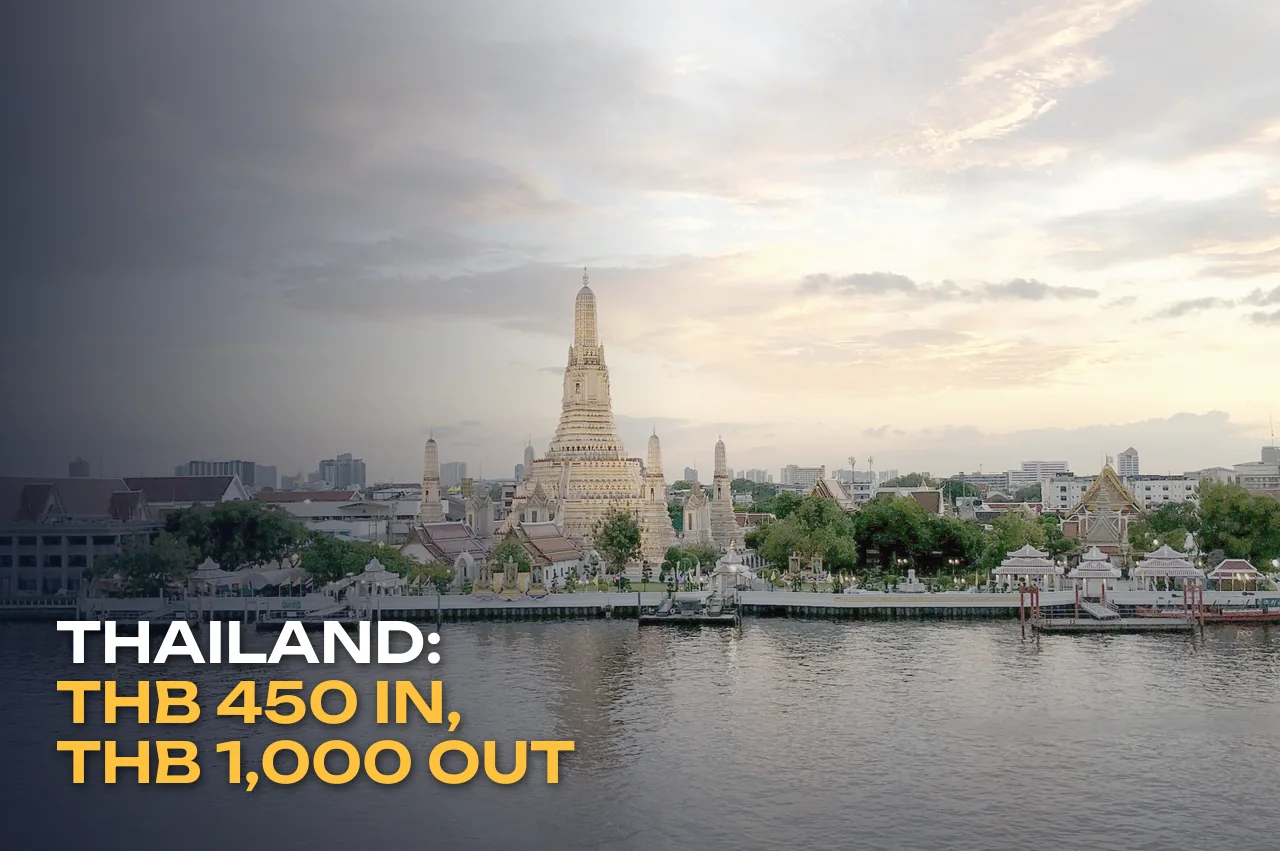 Thailand · 23 OctThailand plans a THB 450 entry fee and a THB 1,000 departure tax: what changes for tourists and residents
 Thailand · 16 OctThailand cuts visa-free stays to 30 days: what changed for Russians and how to stay longer
 Spain · 28 OctIbiza prepares a record EUR 4.2 million fine for tourist letting without a licence
Personal programme selection is conducted by Anna Kovalevskaya, Head of Legal, BRIDGES.
Bought a house through a company or partner? We will check what you hold
We will review the land documents, company articles, shareholders and lease agreements, and tell you whether there is a risk and what can be done.
