Citizenship · Nauru
Flag of Nauru: Meaning, Star and Stripe Symbolism, History

Updated: June 2026·9 min read·Expert reviewed
Terms and costs verified: June 2026
Contents
The Flag of Nauru is one of the most unusual in the world: it functions almost like a geographical map. A blue field, a thin yellow stripe in the middle, and a white star below it—this is not merely a beautiful color combination, but a precise indication of where exactly this tiny island is hidden in the Pacific Ocean. Each element carries meaning: the ocean, the equatorial line, the country's position south of this line, and the ancient tribes that formed the Nauru people. In this article, we will explain the symbolism of the Nauru flag in straightforward terms, discuss the coat of arms and the history of independence in 1968, and at the end show how today one can legally and remotely obtain a passport under this flag.
What the Flag of Nauru Looks Like: Brief Description
If you describe the Flag of Nauru in one sentence—it is a dark blue cloth intersected at the center by a horizontal golden-yellow stripe, with a white twelve-pointed star positioned slightly below it, closer to the hoist. The aspect ratio is standard for state flags; the colors are calm and contrasting.
The main feature of the flag is that it literally draws a map. The blue background is the endless Pacific Ocean surrounding the island on all sides. The yellow stripe is an imaginary equatorial line. And the white star below the stripe shows that the island of Nauru itself lies slightly south of the equator. As a result, the flag is simultaneously a coat of arms and a navigational guide: by looking at it, one can understand where to find the country on a globe.
Such an approach is rare in world vexillology (the science of flags). Most states choose abstract symbols or historical colors, but Nauru took a literal path, transforming the cloth into a diagram of its own position in the ocean.
Blue Field: The Pacific Ocean Around the Island
The deep blue color occupying almost all of the flag's space symbolizes the Pacific Ocean. For Nauru, this is not an abstraction but the very essence of existence. The island is a tiny piece of land covering approximately 21 square kilometers, surrounded by water on all sides. The nearest neighbors are hundreds of kilometers away, and until recently, the ocean was both a provider, a natural boundary, and the only road to the rest of the world.
The blue color on the Nauru flag speaks of isolation and simultaneously of belonging to the large Pacific family of Oceanian peoples. It is a reminder that the island's fate is inextricably linked to the sea: fishing, trade, and the very possibility of living on this remote piece of land depended on it.
Today, the blue field has acquired another, alarming layer of meaning. The rise in sea level is a real threat to low-lying Pacific states. This is why the climate issue has become for Nauru not abstract but highly practical—to the point that the country launched a citizenship program whose proceeds go to shore reinforcement and climate resilience.
Yellow Stripe: The Equatorial Line
The thin horizontal golden-yellow stripe dividing the flag in half is the equatorial line. The idea is simple and elegant: the stripe runs exactly in the middle of the cloth, just as the equator divides the globe into northern and southern hemispheres.
Nauru lies very close to the equator—less than one degree south of this imaginary line. Therefore, the stripe on the flag is not decorative but geographically accurate: it shows that the country is located in the very heart of the tropical Pacific zone, at the equator, where it is warm year-round and the climate is stable.
The yellow color here is often associated with phosphates—deposits that for decades were the island's main wealth and the foundation of its economy. The extraction of phosphorite (mineral raw material from bird guano) once made Nauru one of the world's richest territories by per capita income. Now the reserves are depleted, but the yellow color on the flag remains a reminder both of the equatorial sun and of the earth's depths that determined the country's history.
White Star: Position of the Island
The most recognizable element of the flag is the white twelve-pointed star. It is positioned not in the center but in the lower part of the cloth, below the yellow stripe, and offset toward the hoist. And this was done intentionally.
The position of the star below the stripe-equator shows that the island of Nauru is located south of the equator. And the offset toward the hoist corresponds to the fact that the country lies in the western part of the Pacific Ocean. As a result, the star is a point on the map marking the location of the island itself relative to the equatorial line and cardinal directions.
The white color of the star is traditionally read as purity, peace, and hope. Against the background of the blue ocean and yellow stripe, the white star looks bright and immediately catches the eye—it is this that makes the Nauru flag so memorable and unlike any other.
But the star has a second, deeper meaning embedded in the number of its rays. This is discussed in the next section.
Twelve Rays: Indigenous Tribes of Nauru
The twelve points of the star represent twelve indigenous tribes (clan groups) that historically formed the Nauru people. Each ray represents one tribe, and together they form a single star—a symbol that different clans merged into one people and one state.
The Nauru tribes bear their names in the Nauruan language: Eamwidara, Eamwit, Eamwitmwit, Eano, Eoraru, Eamwidamak, Eorenen, Deiboe, Iruci, Iruva, Ivi, and Ranibok. These twelve groups are the foundation of traditional island society, and the memory of them is enshrined directly in the country's main state symbol.
The number twelve appears on Nauru in other places as well—for example, in state symbolism and culture. The twelve rays of the star are reflected on the country's coat of arms. Thus, the flag becomes not only a geographical map but also a keeper of national identity: it reminds citizens of their roots and what formed the nation.
Symbolism of the Nauru Flag: Table of Values
To have all meanings in view, we will compile the symbolism of the Nauru flag in one table. This makes it easier to remember what each element of the cloth means.
| Element | Meaning |
|---|---|
| Blue field | Pacific Ocean surrounding the island |
| Yellow horizontal stripe | Equatorial line passing near Nauru |
| White 12-pointed star | Position of the island south of the equator |
| Position of the star below the stripe | Country located in the southern hemisphere |
| Offset of the star toward the hoist | Western part of the Pacific Ocean |
| Twelve rays of the star | Twelve indigenous tribes of Nauru |
| White color | Peace, purity, hope |
This simple design demonstrates the key point: the flag of Nauru is simultaneously a map of the country's location and a narrative of its people. A rare combination of geography and history in a single banner.
Flag history: independence in 1968
The flag of Nauru was officially adopted on 31 January 1968 — the day the country gained independence. Prior to this, Nauru had been under external administration for a long time: at different periods the island was governed by Germany, then Australia, and after World War II it became a UN trust territory under the joint administration of Australia, New Zealand, and Great Britain.
By the end of the 1960s, islanders had achieved the right to self-determination. Preparations for independence included the creation of national symbols — a flag and coat of arms. The flag design was selected following a local competition: the project reflected the island's geographical location and cultural heritage. An Australian flag manufacturer gave the design its final graphical form, a common practice for newly independent states at that time.
From 31 January 1968, the Republic of Nauru became an independent state, and the new flag was first raised over the island. Since then, the banner has remained unchanged — it remains the same symbol chosen in the year of independence.
The coat of arms of Nauru: what it means
In addition to the flag, Nauru has a coat of arms that appeared shortly after independence and officially came into use in the early 1970s. It is more complex than the flag and is saturated with symbols telling the story of the island.
The shield of the coat of arms is divided into sections. In the upper section, against a golden woven background, is depicted the alchemical symbol of phosphorus — a reference to phosphate mining, the country's principal historical source of wealth. The woven background itself symbolizes the people of Nauru. In the lower part, set against a background of sea waves, is shown a black frigate bird — a characteristic feathered inhabitant of the island, embodying the local fauna. Nearby is placed a branch with flowers of calophyllum — a local plant.
The shield is framed by depictions of traditional chiefly regalia worn at ceremonies: these include cords made from palm leaves, feathers of the frigate bird, and shark teeth. Above the shield is a twelve-pointed star, the same as on the flag, and ribbons bear the name of the island in Nauruan — Naoero — and the national motto: God's will be done above all else. Thus the coat of arms complements the flag, revealing the history, nature, and faith of the people of Nauru.
"The flag of Nauru often becomes the first thing people learn about the country — its uniqueness attracts attention. Then the question arises: what kind of state is this and can one be associated with it. Under this flag operates a young but real citizenship by investment program — an accessible and quick second passport that is processed remotely. However, we discuss the limitations: this is not a European document, there is no visa-free access to the Schengen area and the USA, and the passport by itself does not resolve tax matters. But it does provide mobility, a backup plan, and operates within a jurisdiction that permits dual citizenship."
Flag and country: a brief portrait of Nauru
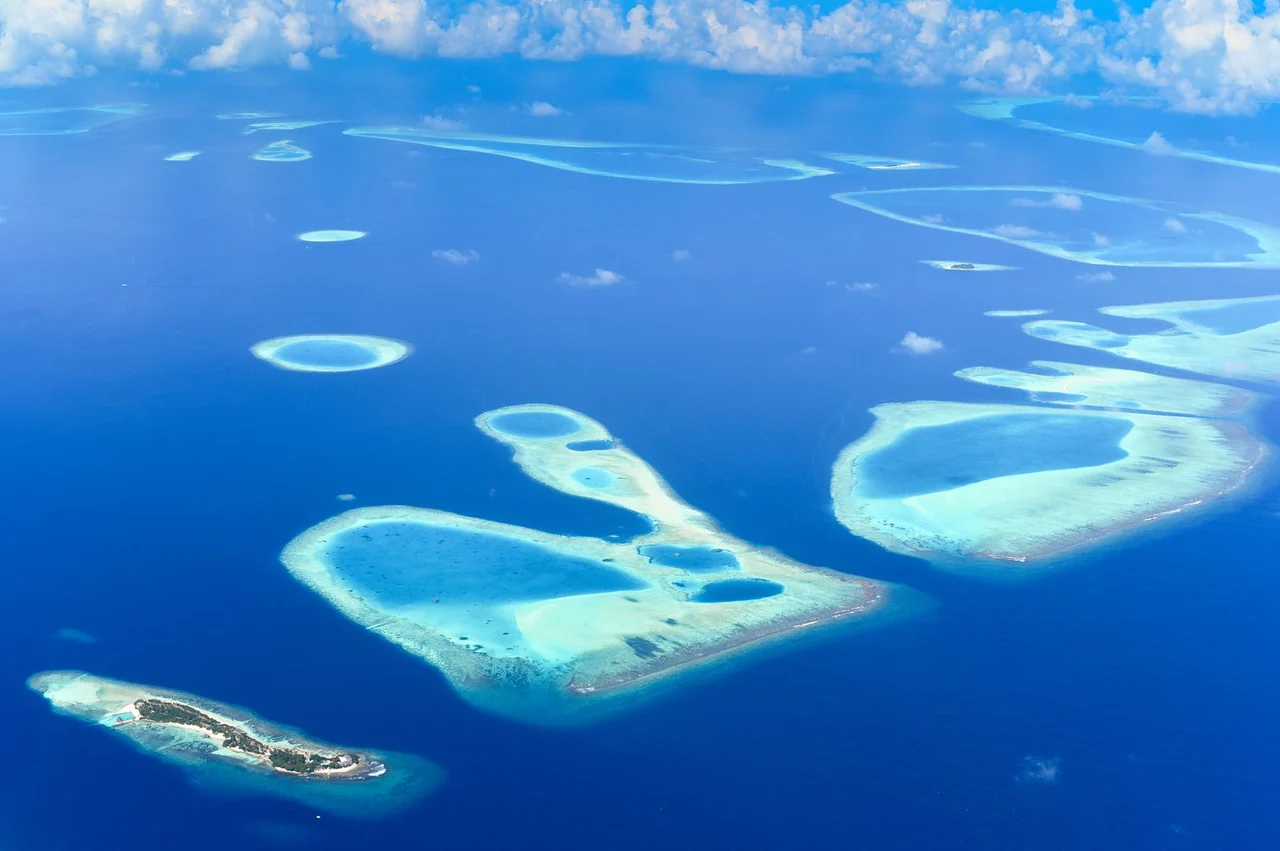
To better understand the symbolism of the flag, it is worth imagining the country itself. The Republic of Nauru is one of the smallest states on the planet and the world's smallest republic. It is the only island in Micronesia, in the southern part of the Pacific Ocean, northeast of Australia.
The area of the island is approximately 21 square kilometers, with a population of roughly 12,000 people. The country has no de jure official capital, but government institutions are concentrated in the Yaren district. The official languages are Nauruan and English, and the Australian dollar is used in circulation.
- Region: Micronesia, Oceania, southern Pacific Ocean
- Area: approximately 21 sq km
- Population: approximately 12,000 people
- Government district: Yaren
- Languages: Nauruan and English
- Currency: Australian dollar (AUD)
Historically, the economy was based on phosphate mining, but by now the reserves are nearly exhausted. Today the country is seeking new sources of development — and one of them has become a citizenship by investment program, closely linked to the climate agenda, which we discuss below.
Why the flag speaks to the climate issue
The blue field of the flag is not only a symbol of the ocean that sustains life, but also a reminder of the challenge Nauru faces directly. Low-lying Pacific states are especially vulnerable to rising sea levels: every centimeter of water represents a real threat to the coastline and the lives of people.
This is why climate resilience has become for the island not a slogan but a practical task. The country is seeking funds to reinforce coastlines, restore territory following decades of phosphate mining, and prepare for climate change. One of the financing instruments is the citizenship by investment program, whose proceeds are directed toward climate and economic projects.
Thus the blue color of the flag today takes on additional meaning: it is both the ocean that gave the island life and the force with which Nauru must prepare for dialogue. A state symbol conceived in 1968 unexpectedly turned out to be resonant with the defining problem of the 21st century.
A passport under the flag of Nauru: how to obtain citizenship
The flag of Nauru can not only be studied as a geographical puzzle — it is possible to obtain a second passport under it. Since 2024, the country has implemented the Economic and Climate Resilience Citizenship Programme (ECRCP). Its purpose is twofold: an investor receives a passport, and the funds collected go toward climate projects on the island.
Conditions as of 2026 are as follows. Citizenship is granted through a non-refundable contribution to a state fund. A time-limited offer is in effect: until 30 June 2026, the minimum contribution for one applicant is approximately 90,000 US dollars; after this window closes, the standard threshold rises to approximately 115,000 dollars. Administrative fees are added to the contribution — for application review, due diligence checks, and passport issuance — so the total amount for one person exceeds the base contribution.
- Type: non-refundable contribution to a state fund
- Threshold: approximately from 90,000 USD per applicant (preferential window until 30.06.2026)
- Processing time: approximately 3–5 months, remotely
- Residence: no permanent residence requirement
- Family: spouse, children, and parents may be included; relatives at additional contribution
- Verification: mandatory due diligence and source of funds verification
The program is young, so it should be approached thoughtfully and with proper professional support. We have compiled details about the country, passport, and the program itself in separate materials: about the country of Nauru, about Nauru citizenship, about the Nauru passport and about citizenship by investment. All current conditions and calculations tailored to your situation are available on the page Nauru citizenship program.
Would you like to find out if a Nauru passport is suitable for you and how much it will cost in your specific case? Leave a request for a consultation - we will analyze your situation and tell you about the possibilities and limitations of the program.
What the Nauru passport offers: possibilities and limitations
Before considering the program, it is important to soberly assess what the Nauru passport really provides and what you should not expect from it. We adhere to a approach here: we do not overstate the strength of the document.
The Nauru passport opens visa-free or simplified entry (visa on arrival, electronic visa) to approximately 85-90 destinations. Among the truly strong ones are the UAE, Singapore, Hong Kong, Malaysia, South Korea, Indonesia, Oceania and Pacific countries, several Caribbean and African states. This is convenient for business and travel in Asia and the Pacific region.
At the same time, it is important to understand the limitations. The Nauru passport does NOT provide visa-free entry to the Schengen zone, the USA, Canada, and Australia. Ireland excluded Nauru citizens from the visa-free regime in 2025. Therefore, if your main goal is free entry to Europe or the USA, you should consider this program with realistic expectations.
The strengths of the Nauru passport lie elsewhere: it is a quick and affordable second document, processed remotely, without residency requirements, in a jurisdiction that allows dual citizenship. For many investors, it is a tool for mobility and a backup plan, not a replacement for a European passport.
Taxes and Nauru: what is important to understand
Nauru is often mentioned in the context of tax planning, and there are grounds for this - but it is important to understand the nuances so as not to build false expectations.
The fact is that Nauru does not tax the worldwide income of individuals with ordinary income tax. At first glance, this sounds like an ideal tax haven. However, the mere fact of obtaining a Nauru passport does NOT automatically make a person a tax resident of the island and does not exempt them from taxes in the country where they actually live.
Tax residency in most countries is determined not by possession of a second passport, but by actual circumstances: where a person spends most of the year, where their center of life interests, family, and business are located. Therefore, a second Nauru citizenship is a tool for mobility, not a magical solution to tax issues.
It is worth mentioning separately the citizens of Russia and CIS countries. Obtaining second citizenship is possible strictly within the framework of the law, without circumventing any restrictions and sanctions. Enhanced compliance and source of funds verification apply. Additionally, Russian citizens have an obligation to notify state authorities of the presence of second citizenship - this point must be taken into account and complied with.
Interesting facts about the Nauru flag and symbols
Finally, we will gather several curious details that make the flag and symbolism of Nauru truly unique.
- The Nauru flag is one of the few in the world that works as a geographical map: you can determine the country's position relative to the equator and cardinal directions from it.
- The star is not located in the center of the flag, but is offset downward and toward the hoist - this violation of classical flag composition rules was intentional, for geographical accuracy.
- Twelve rays of the star - a rare number for state symbols; it directly indicates the twelve indigenous tribes of the island.
- The flag has not changed once since its adoption in 1968 - it remains exactly as it was on the day of independence.
- The same twelve-pointed star transferred from the flag to the country's coat of arms, linking two main symbols of Nauru into a single whole.
- The yellow color of the stripe echoes both the equator and phosphates - the wealth that determined the economic history of the island.
These details show how thoughtful, seemingly simple, the flag turned out to be: behind three colors lie the geography, history, and fate of an entire people.
Expert commentary
The Nauru flag often becomes the first thing people learn about the country - its unusualness attracts attention. And then a natural question arises: what kind of state is this and can one be associated with it. Our task is to provide a picture.
Under this flag operates a young, but real citizenship by investment program. It is an affordable and quick second passport that is processed remotely. But we always discuss the limitations: this is not a European document, there is no visa-free access to the Schengen zone and the USA, and the passport itself does not solve tax issues. However, it provides mobility, a backup plan, and operates in a jurisdiction that allows dual citizenship. For citizens of Russia and CIS countries, the process is carried out strictly within the framework of the law, with enhanced source of funds verification. We help you understand whether this program is suitable for you specifically and guide you through the process from your first question to receiving your passport.
Frequently asked
Questions people ask before deciding
01What does the Nauru flag mean?
The Nauru flag functions as a geographical map of the island. The blue field represents the Pacific Ocean, which surrounds the country. The yellow horizontal stripe represents the equator line. The white twelve-pointed star below the stripe shows that the island lies slightly south of the equator, and its twelve rays symbolize the twelve indigenous tribes of Nauru.
02When was the Nauru flag adopted?
The flag was officially adopted on January 31, 1968—the day Nauru gained independence from external administration. Since then, the banner has never been changed; it remains exactly as it was chosen in the year of independence.
03What does the blue color on the Nauru flag symbolize?
The blue field of the flag symbolizes the Pacific Ocean, which surrounds the island on all sides. For a tiny nation with an area of approximately 21 square kilometers, the ocean has historically been both its provider and its border, and the only pathway to the rest of the world.
04Why is there a yellow stripe on the Nauru flag?
The yellow horizontal stripe in the middle of the flag designates the equator line. Nauru lies less than one degree south of the equator, so the stripe shows the country's geographical position. The yellow color is also associated with phosphates—the island's historical wealth.
05What does the star on the Nauru flag mean?
The white twelve-pointed star indicates the island's position: it is located below the yellow equator stripe, showing that Nauru is south of the equator, and is offset toward the hoist—the country lies in the western part of the Pacific Ocean. The twelve rays symbolize twelve tribes.
06Why does the star have twelve points?
The twelve rays of the star represent the twelve indigenous tribes (clan groups) from which the Nauru people historically developed. Together they form a single star—a symbol that different clans united into one people and one nation.
07Who designed the Nauru flag?
The flag design was chosen as a result of a local competition in anticipation of independence. The design reflected the island's geographical position and cultural heritage. An Australian flag manufacturer gave the flag its final graphic form—a common practice for new nations at that time.
08What is depicted on the Nauru coat of arms?
The coat of arms is more complex than the flag. The shield displays an alchemical symbol of phosphorus (phosphate mining), a woven golden background (the Nauru people), and a black frigatebird over sea waves (local fauna). The shield is framed with traditional chiefly ornaments, and above it is the same twelve-pointed star.
09Where is Nauru located?
Nauru is an island nation in Micronesia, in the southern part of the Pacific Ocean, northeast of Australia. It is one of the smallest nations in the world and the smallest republic, with an area of approximately 21 square kilometers and a population of roughly twelve thousand people.
10Can you obtain Nauru citizenship through investment?
Yes, as of 2024, the Economic and Climate Resilience Citizenship Programme (ECRCP) is in effect. Citizenship is processed through a non-refundable contribution to a state fund, remotely, with no residency requirement, approximately within 3–5 months, with mandatory due diligence checks.
11How much does a Nauru passport cost?
As of 2026, a preferential window is in effect: until June 30, 2026, the minimum contribution for one applicant is approximately from 90,000 USD, after which the threshold increases to approximately 115,000 USD. Processing, verification, and passport issuance fees are added to the contribution.
12Does a Nauru passport provide visa-free entry to Europe?
No. A Nauru passport does not provide visa-free entry to the Schengen zone, the USA, Canada, or Australia. Its real strengths are the UAE, Singapore, Hong Kong, Malaysia, South Korea, Oceania countries, and a number of Caribbean and African nations. The passport's strength should be approached with realistic expectations.
Transparency
How this material was prepared
- Author
- Darya Melnik, senior Investment Programs Advisor, BRIDGES
- Terms and costs last verified
- June 2026
- Sources
- official government authorities of the relevant country and state publications
- Methodology
- government minimum requirements are stated separately from due diligence charges, state fees, legal and banking costs
Sources and methodology
Figures, terms and timelines are checked against official sources as of June 2026. Link availability verified in August 2026. Third-party blogs and agent websites are not used as a source of programme terms.
- [1]EUR-LexOfficial texts of European Union legislationeur-lex.europa.eu/homepage.html
- [2]European Commission - Migration and Home AffairsEntry and residence rules in the EUhome-affairs.ec.europa.eu/index_en
Methodology: tables and charts state government minimum investment requirements; due diligence charges, state fees, legal, banking and other costs are calculated separately and are not included in the minimum thresholds.
About the author
Related materials
What to read next
 ComparisonNauru or Caribbean Citizenship: Investment Program Comparison
 AnalysisWhat is due diligence and why the Caribbean is rejecting applications
 ArticleArea and size of Nauru: how small is this country
Personal programme selection is conducted by Anna Kovalevskaya, Head of Legal, BRIDGES.
Citizenship of Nauru: preparation checklist
Documents prepared in advance, source of funds checks and where applications usually fail.