Citizenship · Nauru
Nauru: interesting facts, phosphate history, and taxes

Updated: June 2026·9 min read·Expert reviewed
Terms and costs verified: June 2026
Contents
Nauru is a country that is difficult to find on a map, but almost impossible to forget. A tiny island in the middle of the Pacific Ocean has managed in half a century to become one of the richest places on the planet and nearly bankrupted itself. There is no official capital, the entire territory is encircled by a single ring road, and the state budget was once sustained by bird droppings converted into phosphates. Today Nauru is known not only for its unusual history: the country does not impose a standard income tax on resident individuals' worldwide income and offers a passport under an investment citizenship program. We have compiled the most interesting facts about Nauru - from the rise and fall of the phosphate era to the modern economy and taxes.
What Nauru is known for: record-breaking country
If you ask what Nauru is known for, you will find an entire list of records. It is the smallest republic in the world and the third smallest state by area on the planet after Vatican City and Monaco - only about 21 square kilometers. You can walk around the island's perimeter in just a few hours. The population is approximately twelve thousand people, fewer than in an average small town.
Nauru holds another curious record: it is the only republic in the world without an official capital. Parliament and government agencies are concentrated in the Yaren district, which all reference books conventionally call the capital, although legally it has no such status. The entire life of the island is strung along a single ring road about 19 kilometers long - it encircles Nauru along the coastline, connecting the airport, settlements, and fishing areas.
The country is located in Micronesia, in the southern part of the Pacific Ocean, northeast of Australia. The official languages are Nauruan and English, and the Australian dollar is in use. These simple facts about Nauru already make it one of the most unusual states on the world map.
Where Nauru is located and how the island is organized
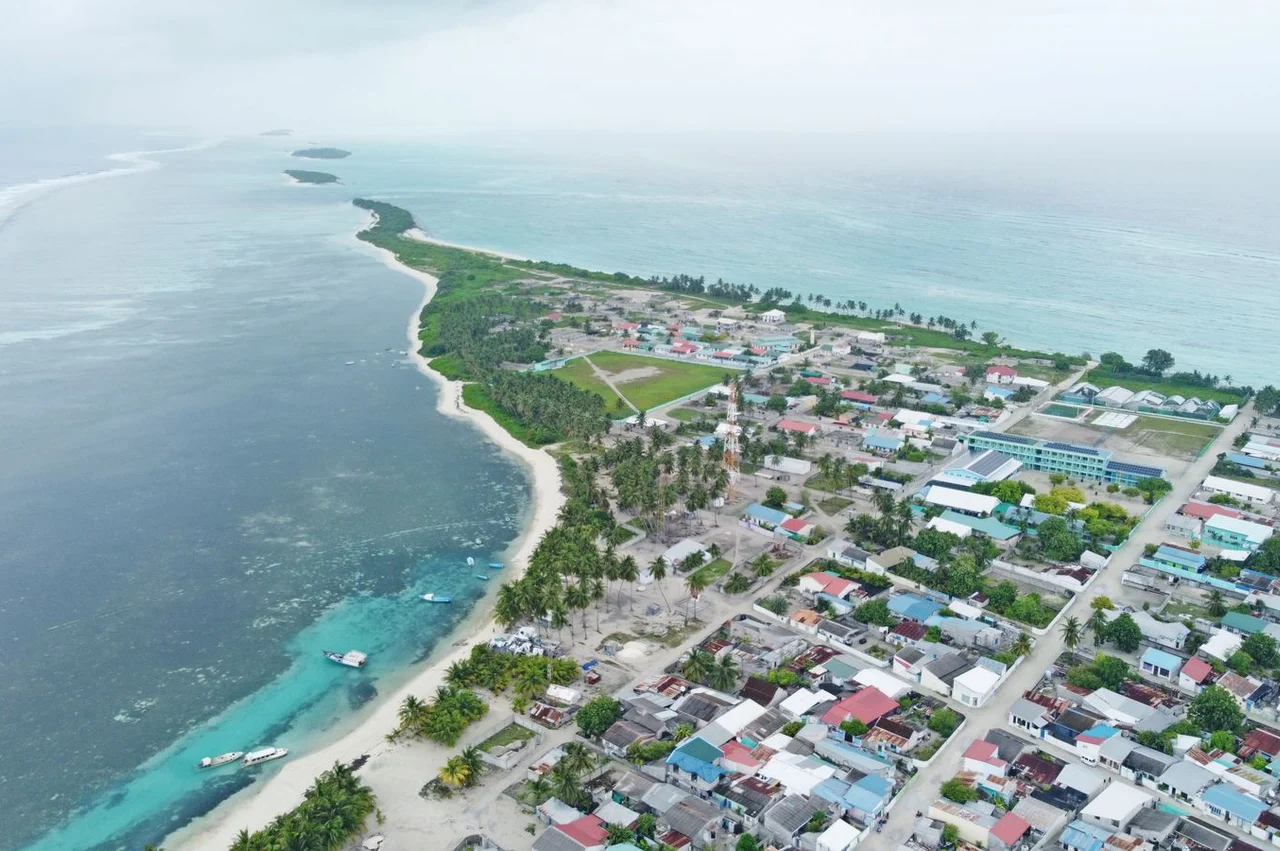
Nauru is a single coral island of volcanic origin rising from the ocean. A narrow fertile strip along the coast, where almost all residents live, surrounds the central plateau. This very plateau became both the wealth and curse of the country: beneath a thin layer of soil lay vast deposits of phosphates.
The climate here is equatorial, hot and humid, with a rainy season. The nearest neighbors are other Micronesian states, and it is several hours' flight to Australia. Due to its remoteness and small size, Nauru long remained outside major world routes, which only reinforces its reputation as one of the most difficult places to reach on Earth.
- Island type: elevated coral atoll with central plateau.
- Habitable zone: narrow coastal strip along the ring road.
- Region: Micronesia, Oceania, southern Pacific Ocean.
- Transportation: international airport and single ring road.
History of phosphates: how bird droppings made Nauru wealthy
Nauru's history is inseparable from phosphates. For millennia, seabirds nested on the island, and their droppings - guano - together with the remains of marine organisms over long epochs transformed into one of the world's richest deposits of phosphorite. This raw material is a highly valuable agricultural fertilizer, and in the early 20th century its extraction began in earnest.
After gaining independence in 1968, Nauru took control of the mining operations. In 1970, the mines were transferred to a national phosphate corporation, and revenues poured into the country. At its peak in the 1970s, phosphates provided the lion's share of the economy, and the island was rapidly transforming from a colonial outpost into one of the most prosperous territories on the planet.
The price for this wealth proved high. Open-pit mining gnawed away at the central plateau, leaving behind a barren landscape of limestone peaks. By various estimates, approximately four-fifths of the island's territory ultimately became unsuitable for habitation and agriculture - nature paid the price for prosperity.
The richest country in the world: Nauru's golden years
In the 1970s, thanks to phosphates, Nauru became one of the wealthiest states per capita. By some estimates, in the middle of the decade, GDP per capita reached approximately 50 thousand dollars - a figure second only to oil monarchies. For an island with a population of just a few thousand, this was fantastic money.
The state provided citizens with free housing, medicine, and education, and paid for treatment abroad. Residents paid almost no taxes, many did not work, and the government spent money freely. An airline appeared, expensive real estate abroad, and numerous investment projects around the world.
This era became legendary: a tiny Pacific island where bird droppings turned into one of the highest living standards on the planet. But it was precisely the generosity and carelessness of the golden years that laid the foundation for the subsequent crisis - wealth built on a single non-renewable resource proved fragile.
Collapse of funds: how Nauru's wealth melted away
Understanding that phosphates would eventually run out, Nauru's authorities created a trust fund in advance - a nest egg for the future, directing a portion of mining revenues into it. The idea was sound: accumulate capital that would sustain the country when the mines became depleted. In practice, things went differently.
By the 1990s, phosphate deposits had become virtually exhausted, and extracting the remaining reserves became economically unfeasible. The primary source of income dried up. Meanwhile, the sovereign wealth fund itself, by various estimates, collapsed in value from approximately 1.3 billion Australian dollars in the early 1990s to several hundred million by the mid-2000s. The causes cited include unsuccessful foreign investments, wasteful spending, and management errors.
| Indicator | Essence |
|---|---|
| Heyday (1970s) | One of the highest GDP per capita levels in the world |
| Resource depletion (1990s) | Phosphates virtually exhausted, revenues plummeted sharply |
| Fund collapse (1990-2000s) | Trust fund value declined from approximately 1.3 billion to hundreds of millions AUD |
| Today | Search for new sources: fishing, rental income, citizenship, climate finance |
Nauru's history has become a textbook example of how resource wealth without economic diversification can turn into a crisis. Today, economists worldwide study this case as an instructive cautionary tale.
How Nauru sustains itself today
Following the collapse of the phosphate era, Nauru was forced to seek new pillars for its budget. The modern economy rests on several sources, none of which matches the scale of the golden years, but together they allow the state to survive.
- Sale of fishing licenses in the island's rich waters to foreign fleets, primarily tuna fishing vessels.
- Revenue streams related to an agreement with Australia regarding a migrant reception center on the island (mentioned neutrally as an economic fact).
- External aid and partnership programs with other states.
- Revenue from the citizenship-by-investment program and climate finance initiatives.
- Residual phosphate extraction in limited volumes.
A separate issue is the island's vulnerability to climate change. The low-lying coastal strip where nearly all residents live is sensitive to rising ocean levels. This is precisely why Nauru's modern strategy is increasingly tied to the climate agenda: the country seeks funds for adaptation, coastal reinforcement, and long-term resilience—including through its citizenship program.
We will map your route to Nauru citizenship
We review your family, source of funds and timing and tell you which route fits.
Citizenship of Nauru by investment: a new income source
One of Nauru's most notable recent initiatives is the launch of a citizenship-by-investment program called the Economic and Climate Resilience Citizenship Programme (ECRCP). It launched in 2024, and its logic stems directly from the island's history: rather than betting on a single exhaustible resource, the country attracts investor capital and directs funds toward climate projects and development.
The program's essence is straightforward. An applicant makes a non-refundable contribution to the state fund and, after passing due diligence (verification of fund origins and reputation), receives Nauru citizenship. According to current data, the minimum contribution per applicant is approximately 90,000 to 115,000 dollars: a temporary promotional window with a reduced threshold is in effect, after which the standard amount applies. Exact figures and family conditions should be verified at the time of application.
Key program features make it attractive for international planning:
- Entirely remote processing without any requirement for island residence.
- Processing time is approximately 3-4 months (around 85 days).
- Nauru recognizes dual citizenship and does not require renunciation of previous citizenship.
- Funds support climate resilience and economic development.
Detailed review of conditions can be found in the materials about Nauru, about Nauru citizenship and about the investment program.
Nauru passport: what you need to know
The Nauru passport is not among the strongest in the world, and honesty matters here. According to current data, the document provides visa-free or simplified entry to approximately 85-119 destinations, but a significant portion of these are visa-on-arrival or e-visa arrangements rather than full visa-free access.
What the Nauru passport does NOT provide: visa-free entry to the Schengen Area, USA, Canada, or Australia. In 2025, Ireland removed Nauru citizens from its visa-free list, and the situation with several other countries may change. Therefore, one should not regard the document as a key to all of Europe—the program is young, and the list of destinations is adjusted over time.
The real strength of the passport: convenient access to business and logistics hubs and regions important for travel and business.
- Middle East: UAE and neighboring destinations.
- Asia: Singapore, Hong Kong, Malaysia, South Korea, Indonesia (visa-on-arrival).
- Oceania and the Pacific region.
- A number of Caribbean and African countries on arrival.
For many investors, the value of a second passport lies not so much in the number of countries as in having a backup document, freedom of movement, and planning instruments.
"Nauru's history is the best illustration of why a second citizenship is necessary at all. A country that once bet everything on a single resource nearly ended up with nothing. I advise a private investor to apply the same logic that Nauru learned from bitter experience: distribute risks across different jurisdictions. The Nauru passport is a fast, remote, and relatively accessible diversification tool. But I always warn my clients: it does not in itself eliminate taxes in the country where you actually live. Tax residence is determined by the center of vital interests, not the color of a passport cover. The advantage is realized only as part of a well-thought-out legal structure—and that is precisely what we help you build."
Interesting facts about Nauru in one list
We have compiled the most curious facts about Nauru that surprise even seasoned travelers. This island is a true collection of exceptions to the rule.
- The only republic in the world without an official capital—the district of Yaren plays the role of the seat of power.
- The entire country is encircled by a single ring road approximately 19 kilometers long.
- In the 1970s, the island was among the wealthiest in the world on a per capita basis thanks to phosphates.
- Wealth was built literally on bird droppings—guano that transformed into phosphates over millennia.
- Approximately four-fifths of the territory suffered from mining and became unsuitable for habitation.
- Currency is the Australian dollar; the country has no native monetary unit.
- There is no passenger railway, but a historic narrow-gauge line once served the mines.
- Nauru does not impose a standard income tax on worldwide personal income.
- The country was among the last to launch a citizenship-by-investment program—in 2024.
Each of these facts gives reason to reflect on how one small island accumulated so many world records and turns of fate.
The flag and symbols of Nauru: what they mean.
Since we have touched on facts, we cannot overlook Nauru's flag—one of the most geographically explicit in the world. On a blue cloth symbolizing the Pacific Ocean runs a narrow horizontal yellow stripe representing the equator. Directly below the stripe lies a white twelve-pointed star, denoting the island itself and its position just south of the equator.
The twelve rays of the star symbolize the twelve indigenous tribes of Nauru. The white color of the star alludes to phosphates—the island's principal historical wealth. Thus, the flag literally shows: here is the ocean, here is the equator, and here we are—a small dot beneath it.
Such transparent symbolism is rare among state flags and is itself a curious fact. Looking at Nauru's flag, one can understand without a map where approximately to find this country: just south of the equator, amid the vast Pacific Ocean.
Nauru citizenship for Russians and CIS citizens.
Nauru's program is open to citizens of various countries, including Russia and CIS states, but must be pursued strictly within legal frameworks without any attempts to circumvent restrictions. This is a principled matter: serious providers operate only through transparent procedures.
Points for applicants from Russia and the CIS to note:
- Enhanced compliance and careful verification of funds' source—prepare documents confirming the legitimacy of capital.
- A transparent business and income history increases approval chances.
- Obligation to notify Russian authorities of dual citizenship or residence permit—this is a requirement of Russian legislation that must be observed.
- No promises to circumvent sanctions or restrictions: the lawful path is the only correct one.
For more details on conditions for applicants from Russia, see the article. on Nauru citizenship for Russians.Competent assistance helps prepare the correct documentation package in advance and pass verification without unnecessary delays.
Who is Nauru citizenship suited for.
Nauru citizenship is not a solution for everyone, and that is normal. The program is young; the passport does not provide visa-free access to Europe and the USA, but it is processed quickly, remotely, and relatively inexpensively by market standards. It is worth comparing these advantages and disadvantages against your objectives.
When Nauru's program may be a successful choice:
- A backup passport is needed as an element of diversification and a Plan B.
- Speed and the ability to arrange matters without relocation and residence are important.
- International tax planning instruments are of interest.
- Budget is limited compared to expensive European and Caribbean programs.
- Access to business hubs in Asia and the Middle East is valued.
When other jurisdictions merit consideration: if the key goal is specifically visa-free Schengen or USA access, or a passport with maximum visa freedom is needed. In such cases, Caribbean or European options are more logical. A personal consultation will help you determine what suits you best.
Nauru taxes: why investors discuss them.
Taxes are one of the main reasons Nauru comes into view for those engaged in international planning. Key fact: Nauru does not impose a standard income tax on worldwide personal income. There is no conventional personal income tax on foreign-source income familiar to most countries, and typically no capital gains or inheritance taxes for private individuals.
It sounds attractive, but it is important to understand the nuance we warn about. Nauru citizenship alone does NOT automatically make you a tax resident of that country. Tax residency in most jurisdictions is determined not by passport but by the real center of vital interests: where you actually live, where your family, business, and property are located, how many days per year you spend in a given country.
This means Nauru's passport is not a magic button that turns off taxes in your current country. If you continue to live and conduct business in a state with a standard tax system, its rules apply to you. Nauru's tax advantage is realized only within a thoughtful and lawful structure, built with your personal residency and international agreements in mind.
Therefore, the tax aspect must be approached as part of an overall strategy, not as an automatic bonus. A competent tax and migration consultant will help assess what role a second citizenship can play in your specific situation and avoid mistakes.
Expert perspective: how to use Nauru's history profitably.
Nauru's history is not merely a set of curious facts but a ready-made business logic for those considering a second citizenship. A country that once bet everything on a single resource and nearly went bankrupt now teaches diversification itself. The same principle applies to a personal investor strategy: do not concentrate everything in one jurisdiction.
To assess how well Nauru's program suits you and build a lawful structure accounting for taxes and residency, begin with a consultation.
We will send a document checklist for your case
Leave your details: we will put together documents and timelines for your family.
Nauru: the essentials in brief.
Nauru is a rare example of a country whose history fits into one vivid parable about wealth and its fragility. The world's smallest republic, without a capital, with a single ring road and a remarkable map-like flag, has traveled from one of the planet's most prosperous states through deep crisis and back to the search for new, more sustainable income sources.
Today Nauru is known not only for phosphates and an instructive economic history but also for modern tools: a favorable regime under which worldwide personal income is not subject to standard income tax, and a citizenship-by-investment program (ECRCP). For an investor, this means the opportunity to obtain a backup passport quickly and remotely—provided a approach and competent guidance.
If you wish to understand whether Nauru citizenship suits you and how to incorporate it into your personal strategy, review the detailed. overview of Nauru's citizenship-by-investment program. and discuss details with specialists.
Frequently asked
Questions people ask before deciding
01Where is Nauru located?
Nauru is an island nation in Micronesia, in the southern part of the Pacific Ocean, northeast of Australia. It is a single coral island with an area of approximately 21 square kilometers - one of the smallest countries in the world.
02What is the capital of Nauru?
Nauru has no official capital - it is the only republic in the world without a capital. The Yaren district, where parliament and government offices are located, serves as the center of state power and is conditionally referred to as the capital.
03Why was Nauru the richest country?
In the 1970s, thanks to phosphate mining, Nauru became one of the richest countries per capita. Phosphorites formed from bird droppings (guano) over millennia and turned out to be the most valuable fertilizer, the income from which poured into the small country.
04What happened to Nauru's wealth?
By the 1990s, phosphate deposits were nearly exhausted, and the trust fund created for the future sharply depreciated due to failed investments and wasteful spending. The main source of income dried up, and the country fell into a deep economic crisis.
05What is Nauru known for today?
Today Nauru is known for its unusual phosphate history, status as the world's smallest republic, favorable tax regime, and citizenship-for-investment program. The economy is sustained by fishing, external transfers, climate financing, and the citizenship program.
06What are the taxes in Nauru?
Nauru does not tax worldwide income of individuals with regular income tax, and typically has no capital gains tax or inheritance tax for private individuals. At the same time, citizenship itself does not automatically make you a tax resident - residency is determined by the actual center of vital interests.
07Does a Nauru passport provide visa-free entry to Europe and the USA?
No. A Nauru passport does not provide visa-free entry to the Schengen zone, USA, Canada, and Australia. Strong directions are actually the UAE, Singapore, Hong Kong, Malaysia, South Korea, Indonesia, Oceania countries, a number of Caribbean and African countries, often with visa on arrival.
08What is the ECRCP program?
ECRCP (Economic and Climate Resilience Citizenship Programme) is Nauru's citizenship-for-investment program, launched in 2024. The applicant makes a non-refundable contribution to the state fund, with funds directed toward climate projects and economic development of the country.
09How much does Nauru citizenship cost?
According to current data, the minimum non-refundable contribution per applicant is approximately 90 to 115 thousand dollars: a temporary promotional window with a reduced threshold is in effect. Exact amounts, family conditions, and promotion deadlines should be clarified at the time of application submission.
10Is it necessary to reside in Nauru to obtain citizenship?
No, there is no residency requirement. The process is conducted remotely, without relocating to the island. The processing period is approximately 3-4 months; after passing the background check, the applicant receives citizenship and a passport.
11Can Russian citizens obtain Nauru citizenship?
Yes, the program is open to citizens of Russia and CIS countries, but strictly within the law, without circumventing sanctions and restrictions. Enhanced compliance and source of funds verification are in place. It is also important to fulfill the obligation to notify the competent authorities of the Russian Federation of dual citizenship.
12Who is the Nauru citizenship program suitable for?
The program is suitable for those who need a backup passport quickly, remotely, and relatively inexpensively; those who value access to business hubs in Asia and the Middle East and tax planning tools. Nauru recognizes dual citizenship. If the primary goal is visa-free travel to the Schengen area or the United States, Caribbean or European programs should be considered.
Transparency
How this material was prepared
- Author
- Dmitry Nagy, international Tax Consultant, BRIDGES
- Terms and costs last verified
- June 2026
- Sources
- official government authorities of the relevant country and state publications
- Methodology
- government minimum requirements are stated separately from due diligence charges, state fees, legal and banking costs
Sources and methodology
Figures, terms and timelines are checked against official sources as of June 2026. Link availability verified in August 2026. Third-party blogs and agent websites are not used as a source of programme terms.
- [1]EUR-LexOfficial texts of European Union legislationeur-lex.europa.eu/homepage.html
- [2]European Commission - Migration and Home AffairsEntry and residence rules in the EUhome-affairs.ec.europa.eu/index_en
Methodology: tables and charts state government minimum investment requirements; due diligence charges, state fees, legal, banking and other costs are calculated separately and are not included in the minimum thresholds.
About the author
Related materials
What to read next
 ComparisonNauru or Caribbean Citizenship: Investment Program Comparison
 AnalysisWhat is due diligence and why the Caribbean is rejecting applications
 ArticleArea and size of Nauru: how small is this country
Personal programme selection is conducted by Anna Kovalevskaya, Head of Legal, BRIDGES.
Tax residency in Nauru: how it is determined
When tax residency arises, how double taxation is avoided and what the tax authority checks.
