Citizenship · Nauru
Area and size of Nauru: how small is this country

Updated: June 2026·9 min read·Expert reviewed
Terms and costs verified: June 2026
Contents
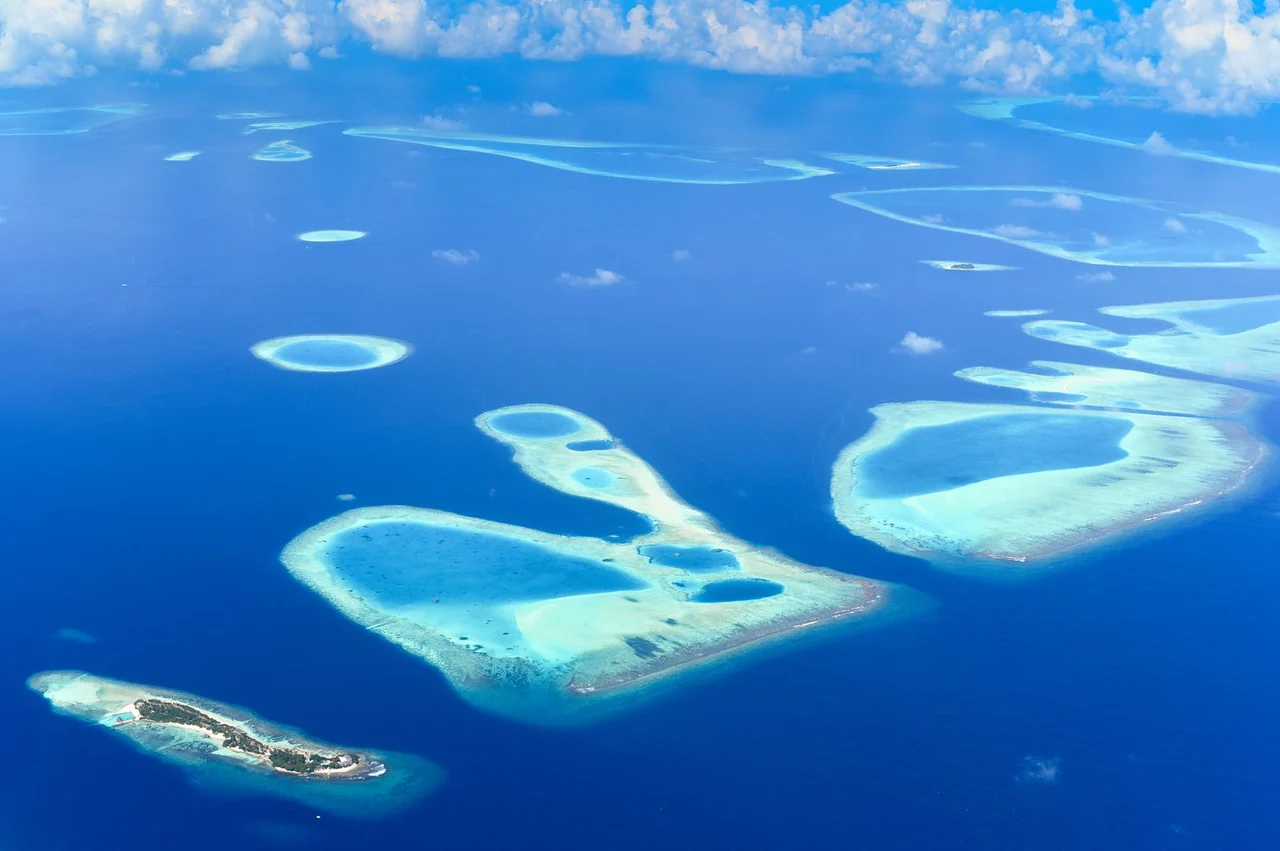
When people say that Nauru is one of the smallest countries on the planet, it is not a figure of speech. The area of Nauru is only about 21 square kilometers. It is the third smallest state in the world - smaller only than Vatican and Monaco - and at the same time the smallest independent republic and the smallest island nation. The island's dimensions are approximately 6 by 4 kilometers, and around it runs one ring road approximately 19 kilometers long: you can drive around the entire country in less than an hour.
In this material, we will examine how many kilometers Nauru covers, how small this country is compared to familiar city districts, and why the tiny territory size in no way prevents Nauru's passport from being a full-fledged and recognized document, which is also issued remotely.
What is the area of Nauru
The area of Nauru is approximately 21 square kilometers. To understand the scale: this is smaller than many city districts of major metropolises. The entire island as a whole is territory that in a large city would be occupied by one residential district with a couple of avenues.
The figure of 21 sq.km makes Nauru not just small, but one of the smallest countries on Earth. Only two states surpass it in smallness by area - Vatican and Monaco. All other countries in the world are larger than Nauru. Therefore, the correct answer to the question "how many kilometers does Nauru cover" sounds like this: approximately 21 square kilometers of land - and this is the entire country, without mainland possessions and overseas territories.
At the same time, Nauru is not a dependent territory or an autonomous region within another state. It is a full-fledged independent republic, a member of the United Nations and the Commonwealth of Nations. Small size here is not connected in any way with limited sovereignty: the country has its own government, passport, and citizenship.
Why Nauru is the third smallest state in the world
In the unofficial ranking of the smallest countries in the world, the top positions are occupied by dwarf states of Europe and the Pacific Ocean. If you arrange the leaders in order of increasing area, the picture looks like this.
| Country | Area (approximate) | Region |
|---|---|---|
| Vatican | approximately 0.44 sq.km | Europe |
| Monaco | approximately 2 sq.km | Europe |
| Nauru | approximately 21 sq.km | Oceania |
| Tuvalu | approximately 26 sq.km | Oceania |
| San Marino | approximately 61 sq.km | Europe |
The table shows that Nauru closes the top three smallest countries. However, there is an important difference between it and the two leaders. Vatican and Monaco are, in essence, city-states surrounded on all sides by another country (Italy and France). Nauru, however, is a full-fledged island in the middle of the Pacific Ocean, sharing no land borders with anyone. Therefore, Nauru is rightfully called the smallest independent republic and the smallest island nation in the world.
Island dimensions: 6 by 4 kilometers
If we translate the area into familiar "length and width," Nauru's dimensions are approximately 6 kilometers from one edge to the other and about 4 kilometers across. The island's shape is close to an oval, slightly elongated.
Such dimensions mean that from any point in the country to the ocean is several minutes' walk or a couple of minutes by car. There are no rivers on the island, no inland areas dozens of kilometers away from the shore, no mountain ranges dividing regions. All life is concentrated along the coastline—that is where residential areas and most buildings are located.
The central part of the island is an elevated plateau, historically rich in phosphates (fossilized bird droppings—guano). Decades of mining have significantly altered the landscape of the interior, so the main human activity has traditionally gravitated toward a narrow coastal strip. This means that habitable Nauru is even more compact than those same 21 square kilometers of total area.
Ring road: drive around the country in half an hour
The best illustration of how small Nauru is its main road. A single ring highway approximately 19 kilometers long runs around the entire island. It encircles the coastline and connects all regions of the country.
At a moderate speed, one can drive this entire road in about half an hour. That is, in the time a city resident spends commuting to work, one can drive around the entire country in a circle and return to the starting point. There are no interchanges, multi-lane highways, or traffic jams in the conventional sense here—simply because there is not enough space for them.
This image—"drive around the state in half an hour"—conveys the essence more accurately than any number. Nauru is measured not in hours of travel but in minutes. And there is its own appeal: the entire country is visible, comprehensible, and literally fits within one day of familiarity.
We will map your route to Nauru citizenship
We review your family, source of funds and timing and tell you which route fits.
What to compare Nauru's area to
The bare figure of "21 square kilometers" tells little. Comparisons with what we see every day are much more illustrative.
- Urban district Many residential areas of major capitals are comparable in area to the entire territory of Nauru or even larger. In essence, an entire state fits into one familiar district of a megacity.
- Airports A large international airport with all terminals and runways is comparable in area to a notable portion of the island.
- Parks and natural areas Some large urban parks are comparable in size to Nauru's inhabited coastal strip.
These comparisons do not diminish the country—on the contrary, they emphasize its uniqueness. Nauru proves that statehood is defined not by the number of square kilometers but by the presence of sovereignty, recognition, and its own citizenship. And the latter is of practical interest to people thinking about a second passport.
Population and density on tiny territory
On its 21 square kilometers, Nauru accommodates approximately 12,000 residents. For an island, this is not insignificant: population density is noticeable, and the country manages to maintain a calm, measured way of life.
An interesting feature: Nauru has no official capital. Government institutions are concentrated in the Yaren district, which de facto performs capital functions but has no legal status as a capital. This is another detail in the portrait of a country where familiar categories—regions, capital, intercity distances—are simply unnecessary due to scale.
The official languages are Nauruan and English, with the Australian dollar in circulation. English-language administrative procedures, by the way, significantly simplify communication with government agencies for foreigners considering Nauru citizenship.
Why a country's size does not affect passport value
A common misconception: if a country is tiny, its passport is "not serious." In reality, territory size and citizenship strength are not related things.
Nauru citizenship is full citizenship of a sovereign state, a UN member. It provides lawful citizen status, an international-standard passport, and the right to consular protection. The document is recognized by other countries on par with passports of much larger states.
Moreover, small states have a practical advantage: a compact, flexible government apparatus allows them to launch clear citizenship-by-investment programs and process applications in reasonable timeframes. This is how the situation with Nauru is organized: a small country with a substantial and concrete program for investors.
Nauru citizenship: what it is and why
Nauru operates a state citizenship-by-investment program—the Economic and Climate Resilience Citizenship Programme (ECRCP), launched in 2024. Its logic is straightforward: the state accepts a non-refundable contribution from a wealthy applicant, and directs the funds toward climate and infrastructure tasks, including addressing sea level rise.
For an investor, this is one of the fastest and most accessible ways to obtain second citizenship:
- processing is conducted remotelywithout requiring relocation or residence on the island;
- the contribution starts from 90,000 USD per applicant (the favorable threshold applies until 30.06.2026, after which an increase is expected—please verify the current amount);
- processing time is approximately 85 days with a complete documentation package;
- rigorous due diligence and source of funds verification is provided.
A detailed analysis of the program, conditions, and documentation package is compiled on a separate page— Nauru citizenship by investment.
Who benefits from citizenship of such a small country
Nauru's paradox is that a country miniature in area solves quite substantial tasks for its new citizens. Second passport here is typically of interest to those who value speed, remote processing, and a reasonable budget.
- Those who need a backup document Second citizenship is insurance against instability: an additional passport, alternative jurisdiction, freedom of action.
- Entrepreneurs and investors Remote processing without relocation is convenient for those conducting business in several countries and not prepared to spend years on naturalization.
- Those planning tax structure Nauru does not tax worldwide personal income with a standard income tax. This does not automatically make you a tax resident—actual tax residency is determined by place of residence and center of interests—but can be a useful element of thoughtful planning.
It is important to soberly assess the strength of the passport: the program is young, visa-free opportunities are more modest than Caribbean passports, and are largely based on visas on arrival. We always present the real picture without exaggeration - this is part of our work.
Do you want to understand whether this option is right for you? Leave an application for a free consultation - we will analyze your situation and tell you whether it's worth pursuing in your case.
Expert perspective: a small country - not a small opportunity
The area and real value of a second passport are things from different planes. The small size of the territory often proves to be even an advantage: a compact state has a simpler and more transparent program for investors.
At the same time, we always approach the choice of jurisdiction without rose-tinted glasses. With Nauru, it is important to understand passport limitations and remember that the program is very young. Therefore, the decision is made not based on an attractive land area figure, but on the client's specific goals.
"Clients are often surprised: how can a country the size of a city district have a full-fledged passport? I answer like this: the value of citizenship is determined not by area, but by sovereignty and what tasks it solves. Nauru is tiny, but it is a full-fledged UN member state, and its document is taken seriously. The small size actually works in its favor: a compact country has a simpler and more transparent program, applications are reviewed quickly, everything is handled remotely. The only thing I always warn about is the youth of the program and modest visa-free opportunities compared to Caribbean passports. If someone needs a quick backup document and remote processing within a reasonable budget, Nauru is worth considering. If the main goal is strong visa-free access, it is better to look at other jurisdictions. My job is to give you the real picture, not a pretty wrapper."
Where is Nauru located on the map
Nauru is located in Micronesia - this is part of Oceania in the southern Pacific Ocean, northeast of Australia. The nearest neighbors are other Pacific island nations: Kiribati, the Marshall Islands, the Federated States of Micronesia.
To the nearest major continent is thousands of kilometers of open ocean. This remoteness explains why the country remained on the sidelines of tourist routes for so long and why it is so little known outside the region. You can reach Nauru mainly via air connections with neighboring islands and Australia.
An isolated position in the middle of the ocean is another reason why the climate agenda for Nauru is not an abstraction, but a daily reality. Rising sea levels directly affect the low-lying island nation, and this is what underlies the logic of its investment program.
How phosphates shaped the island's appearance
It is impossible to understand the modern size and landscape of Nauru without a brief historical overview. For centuries, phosphate deposits accumulated on the island - valuable raw material for fertilizers, formed from bird droppings (guano).
In the 20th century, phosphate mining made Nauru one of the richest countries in the world on a per capita basis. But the resource proved finite: by now, the main deposits are almost exhausted, and intensive mining has significantly changed the interior of the island.
This history explains why the inhabited part of the country is even more compact than the formal 21 sq.km, and why Nauru today is seeking new sources of sustainable income - including the citizenship for investment program. Climate and economic sustainability are built into the program name ECRCP.
Citizenship of Nauru for Russians and CIS citizens
The program is open to applicants from a wide range of countries, including Russia and CIS states. But there are nuances that are important to know in advance.
- Enhanced compliance. For applicants from a number of countries, the source of funds verification is conducted with particular care. Everything is strictly within the law, without any workarounds and without circumventing sanctions.
- Notification of second citizenship. Russian citizens are required to notify the competent authority of acquiring second citizenship within the established timeframe. This is a formality, but it should not be neglected.
- Dual citizenship. Nauru itself permits its citizens to hold second citizenship - renouncing an existing passport is not required.
We support clients from the CIS taking into account all these peculiarities and help prepare the correct document package in advance so that verification passes without surprises.
We will send a document checklist for your case
Leave your details: we will put together documents and timelines for your family.
Useful materials about Nauru
If you are just beginning to understand the topic, we recommend reading our related materials - they will help you get a complete picture of the country and its passport:
- Nauru as a country: general overview - structure of the state, economy, lifestyle.
- Nauru Island - nature, geography, and features of the island.
- Citizenship of Nauru - what the passport offers and how to use it.
- Citizenship of Nauru for investment - ECRCP program terms in detail.
For official information about the state, you can contact Nauru government resources.
Frequently asked
Questions people ask before deciding
01What is the area of Nauru?
Nauru's area is approximately 21 square kilometers. This is the entire territory of the country - a small island in the Pacific Ocean without any additional possessions.
02How many kilometers does Nauru occupy?
Approximately 21 square kilometers of land. The island's dimensions are approximately 6 kilometers in length and 4 kilometers in width, and the ring road around it stretches for about 19 kilometers.
03Is Nauru the smallest country in the world?
No, the third smallest. Only Vatican and Monaco are smaller than Nauru. At the same time, Nauru is the smallest independent republic and the smallest island nation in the world.
04How small is Nauru compared to a city?
The entire country's area is comparable to one large residential district of a major metropolis. An entire nation fits within the territory that a typical district occupies in a large city.
05Can you drive around Nauru in one day?
Yes, and much faster. The ring road around the island is about 19 km, and it can be driven entirely in approximately half an hour at a moderate speed.
06How many people live on Nauru?
Approximately 12,000 people. Despite the tiny area, population density here is notable, and life is concentrated along the coastline.
07Does Nauru have a capital?
Nauru has no official capital. State institutions are concentrated in the Yaren district, which performs capital functions de facto.
08Where is Nauru located?
In Micronesia, in the southern Pacific Ocean, northeast of Australia. The nearest neighbors are other island nations in the Pacific Ocean.
09Does the small size of a country affect the strength of its passport?
No. Territory size and citizenship value are not related. The Nauru passport is a document of a full-fledged UN member state and is recognized on equal terms with passports of large countries.
10Can you obtain Nauru citizenship remotely?
Yes. The Economic and Climate Resilience Citizenship Programme (ECRCP) allows you to obtain citizenship remotely, without the requirement to reside on the island.
11How much does Nauru citizenship cost?
The non-refundable contribution starts from 90,000 USD per applicant (preferential rate valid until 30.06.2026, further increase expected). Confirm the exact current amount during consultation.
12Does Nauru tax worldwide income?
Nauru does not levy standard income tax on worldwide income of individuals. However, this does not automatically make you a tax resident - actual residency is determined by place of residence and center of interests.
Transparency
How this material was prepared
- Author
- Darya Melnik, senior Investment Programs Advisor, BRIDGES
- Terms and costs last verified
- June 2026
- Sources
- official government authorities of the relevant country and state publications
- Methodology
- government minimum requirements are stated separately from due diligence charges, state fees, legal and banking costs
Sources and methodology
Figures, terms and timelines are checked against official sources as of June 2026. Link availability verified in August 2026. Third-party blogs and agent websites are not used as a source of programme terms.
- [1]EUR-LexOfficial texts of European Union legislationeur-lex.europa.eu/homepage.html
- [2]European Commission - Migration and Home AffairsEntry and residence rules in the EUhome-affairs.ec.europa.eu/index_en
Methodology: tables and charts state government minimum investment requirements; due diligence charges, state fees, legal, banking and other costs are calculated separately and are not included in the minimum thresholds.
About the author
Related materials
What to read next
 ComparisonNauru or Caribbean Citizenship: Investment Program Comparison
 AnalysisWhat is due diligence and why the Caribbean is rejecting applications
 ArticleNauru Citizenship by Investment in 2026: Complete Program Overview
Personal programme selection is conducted by Anna Kovalevskaya, Head of Legal, BRIDGES.
Citizenship of Nauru: preparation checklist
Documents prepared in advance, source of funds checks and where applications usually fail.
