Citizenship · Nauru
Nauru: What kind of country is it, where is it located, and how do people live there

Updated: June 2026·11 min read·Expert reviewed
Terms and costs verified: June 2026
Contents
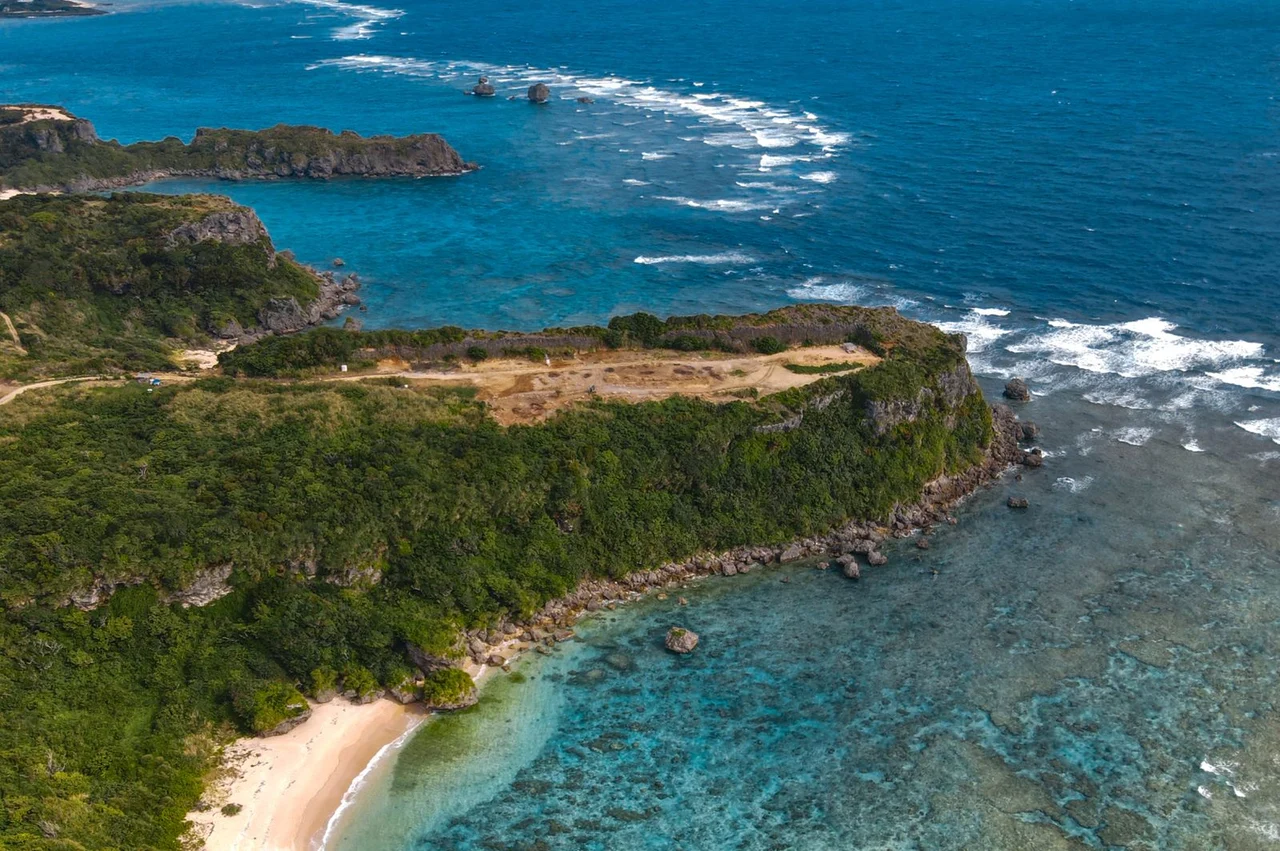
If you ask a random passerby what kind of country Nauru is and where it is located, you will most often be met with silence. This is normal: the Republic of Nauru is one of the smallest and most inconspicuous states on the planet, a tiny dot in the Pacific Ocean the size of a small district of a megacity. And yet this island has an incredible history: it managed to be one of the richest countries in the world per capita, and then almost lost its land due to phosphate mining.
In this analysis, we will calmly and factually explain what kind of country Nauru is, where it is on the map, what language is spoken there, what currency is used, how the economy is structured, and why investors from around the world have been talking about the state of Nauru again over the past couple of years. Without clichés and without embellishment: both strengths and risks.
What kind of country is Nauru: briefly about the main points
The Republic of Nauru is an independent island state in the Pacific Ocean, consisting of just one small island. To understand the scale: the entire country occupies approximately 21 square kilometers. This is smaller than many city districts and one of the reasons why Nauru is called the smallest republic in the world. Only Vatican and Monaco are smaller in area, but these are special cases - a city-state and a principality.
When asked what kind of country Nauru is in character, it can be described most accurately as: quiet, remote, with strong Pacific charm and a turbulent history. There are no skyscrapers, busy avenues, or a multi-million population here. But there is the ocean on all sides, a coral plateau in the center of the island, and about twelve thousand residents who know each other almost by sight.
- Full name - Republic of Nauru.
- Form of government - parliamentary republic, headed by a president.
- Member of the United Nations and the Commonwealth of Nations.
- One of the least populated sovereign states on the planet.
Despite its size, Nauru has its own diplomatic corps, its own passport, its own currency and legal system. It is a fully-fledged state, just very compact.
Nauru - where is it: location on the map
The most frequent question - where is Nauru. Answer: the island is located in the southern part of the Pacific Ocean, in the subregion of Micronesia, which is part of the larger continent - Oceania. Looking at a map, Nauru is located slightly south of the equator, to the northeast of Australia and northwest of Fiji.
Nearest neighbor - the island state of Kiribati. The nearest major countries are very far away: thousands of kilometers of open ocean separate Nauru from virtually everything. It is this remoteness that has largely determined both the history of the island and its current difficulties - from logistics to tourism.
| Parameter | Value |
|---|---|
| Continent | Oceania |
| Subregion | Micronesia |
| Ocean | Pacific (southern part) |
| Nearest neighbor | Kiribati |
| Direction from Australia | to the northeast |
Reaching Nauru is not straightforward: regular air service is limited, with main flights operated by the national carrier through neighboring Pacific hubs. This is not a country you fly through in transit to somewhere else—you need to fly here intentionally.
Population, language, and daily life
The population of Nauru is approximately 12,000 people. For comparison, this is the size of a single neighborhood in a large city. The population is primarily composed of indigenous Nauruans—a Micronesian people with their own language, culture, and traditions—as well as people from other Pacific islands and Asia.
The country has two official languages: Nauruan and English. Nauruan is spoken at home and in daily life, while English is used in government affairs, business, and education. This is convenient for foreigners: with basic English, one can communicate reasonably well on the island.
Life on Nauru is unhurried and highly local. The majority of the population is concentrated along a narrow coastal strip where residential homes, schools, shops, and government buildings are located. The central part of the island is occupied by former phosphate mining quarries—a lunar, heavily excavated landscape that has been undergoing restoration for decades.
- The predominant religion is Christianity.
- The level of urbanization is high: residents live compactly along the coast.
- The community is small and tight-knit, with many people related by kinship.
Where Nauru's capital is located and what Yaren is
One of the most tricky questions concerns Nauru's capital. The formally correct answer surprises many: de jure, the country has no official capital. In this respect, Nauru is virtually unique among sovereign states.
The district of Yaren in the south of the island serves as the de facto administrative center. It is here that the parliament, key government institutions, and the international airport are located. Therefore, in reference materials and on maps, Yaren is almost always indicated as the capital—a convenient simplification, although legally it is simply the main government district.
The island itself is divided into 14 districts. Yaren is not the most populous among them, but it is the most significant in terms of country administration. If you are searching for the location of Nauru's center of power on a map, focus on the southern part of the island.
This peculiarity is another stroke in the portrait of the country: it is so compact that designating a separate capital in the conventional sense was simply not necessary.
Phosphates: how the island became rich and why it became poor
Understanding Nauru is impossible without the history of phosphates. Over millions of years, seabirds left deposits of droppings (guano) on the island, which combined with other processes formed the richest deposits of phosphates—the most valuable raw material for fertilizers.
In the 20th century, these deposits began to be actively extracted. After gaining independence in 1968, income from phosphate exports made Nauru one of the richest countries in the world on a per capita basis. Money flowed abundantly; the state provided for its citizens and invested in foreign assets.
But this wealth had a reverse side. Open-pit mining literally removed the top layer of the island: the central plateau turned into lifeless quarries. By the end of the 20th century, easily accessible phosphate reserves were depleted, unsuccessful investments lost value, and the country faced a severe economic crisis.
- Peak prosperity: the 1970s and 1980s.
- Primary resource: high-quality phosphates (from guano).
- By the late 1990s–2010s, main reserves were exhausted.
- Consequence of mining: environmental damage to the central part of the island.
The history of Nauru is an instructive example of how dependence on a single resource can both elevate a country and bring it to the brink.
We will map your route to Nauru citizenship
We review your family, source of funds and timing and tell you which route fits.
Nauru's economy today: what sustains the island
After the phosphate era ended, Nauru's economy began seeking new foundations. Today, the country's budget is sustained by several sources, and almost all of them are in some way connected to the ocean and the island's geography.
The primary stable income comes from the sale of tuna fishing licenses in the country's extensive maritime economic zone. Nauru is party to an agreement of Pacific states that collectively control a significant share of global tuna catches, providing stable revenue. Additionally, the country earned income from hosting a regional migrant reception center in partnership with Australia.
| Income source | Description |
|---|---|
| Fishing licenses | Payment for tuna catches in Nauru's waters |
| Regional centers | Partnership programs with other countries |
| Residual phosphates | Processing of secondary deposits |
| New programs | Investment attraction, including citizenship |
At the same time, the economy remains narrow and vulnerable: the country is heavily dependent on external factors and partner assistance. This is precisely why the government actively seeks new, more sustainable sources of income—one of which is directly connected to the topic of investment and citizenship, which will be discussed further.
Climate and risks: life at ocean level
Nauru's climate is equatorial: hot, humid, with no pronounced seasonal variation. Temperatures remain around 30 degrees year-round, rainfall is uneven, and periodic droughts present serious challenges for the small island in terms of fresh water.
But the main long-term challenge for the country is rising sea levels. The majority of the population lives along a low coastal strip, and water rise is not an abstract threat but a real factor for planning decades ahead. We speak of this, without dramatization: it is an objective geographical feature that is important to understand for anyone seriously interested in the country.
Nauru's authorities do not ignore the problem. An initiative has been launched to resettle people from the vulnerable coast to a higher internal part of the island—areas where phosphate mining once took place and where land is now being restored. In essence, the country is rebuilding itself, retreating from the water inland.
This climate agenda became the ideological foundation for a new fund-raising program—discussed further.
Nauru citizenship through investment: a bridge for foreigners
Here the island's history unexpectedly intersects with the interests of international investors. To finance climate and economic resilience, Nauru launched a citizenship through investment program—the Economic and Climate Resilience Citizenship Programme. This is a legal way to obtain a second passport, with collected funds directed toward projects for the island's development and adaptation to rising sea levels.
Parameters for 2026 look as follows. A limited-time window operates with a reduced non-refundable contribution—approximately 90,000 dollars per applicant—until June 30, 2026; after this date, the threshold returns to approximately 115,000 dollars. Mandatory fees are added to the contribution (for application review, due diligence check, and passport issuance). An application can be submitted remotely, without requirements to relocate or reside in the country, and a decision typically takes approximately 3 months. The program allows for family inclusion and dual citizenship.
It is important to understand : the program is young, the passport does not provide visa-free entry to the Schengen area, USA, Canada, or Australia, with strong directions being primarily the UAE, Singapore, Hong Kong, and a number of Asian and Pacific countries. For Russian and CIS citizens, registration is possible strictly within the framework of the law, with enhanced verification of the source of funds and without any circumvention of sanctions; it is important to separately remember the obligation to notify of dual citizenship.
If you are considering Nauru as a backup option or an element of your personal strategy, it makes sense to work through the details for your situation. Details can be found on the page Nauru citizenship through investment programA personal analysis will help determine whether this path is right for you. Leave a request for a consultation We will calmly review timelines, budget, and alternatives.
Nauru Passport: Where It Actually Works
Since we're discussing citizenship, let's break down the Nauru passport without exaggeration. According to various estimates, it provides simplified entry to approximately 85-90 destinations, but a significant portion of these are visa-on-arrival or e-visa rather than traditional visa-free access.
What's important to understand soberly: the document does not grant access to the Schengen zone, the USA, Canada, or Australia. Therefore, presenting it as a key to Europe or North America would be misleading. However, among accessible destinations are genuinely useful business and tourist hubs.
- The UAE is one of the region's key business centers.
- Singapore and Hong Kong are Asia's financial hubs.
- Malaysia, South Korea, Indonesia - with simplified entry.
- A range of states in Oceania, the Caribbean, and Africa.
It's worth noting separately: rules change, and individual countries periodically revise conditions for passports from smaller programs. Therefore, the current list should always be verified at the time of travel. More details about the document itself and nuances are in the article about Nauru citizenship.
Nauru Taxes: Why the Island Interests International Planners
One reason wealthy individuals pay attention to Nauru is its tax regime. The country traditionally does not impose conventional income tax on residents' worldwide income. For international planning, this is a potentially interesting factor.
However, extreme caution is needed here to avoid self-deception. Simply holding a Nauru passport does not automatically make someone a tax resident of the island and does not exempt them from taxes in the country where they actually live and conduct business. Tax residency is determined not by passport color but by place of actual residence, center of vital interests, and the norms of specific countries.
In other words, Nauru can be an element of a sound strategy, but not a magic button for tax elimination. Any such decisions require verification against your primary jurisdiction's legislation and typically require consultation with a tax specialist. We always structure such arrangements strictly within the legal framework.
"Nauru is often underestimated precisely because of its size - and unfairly so. Yes, it's a tiny island with a complex history and real climate challenges, which we always discuss with clients and straightforwardly. But as a tool, this jurisdiction works: the citizenship program is legal, the process is genuinely remote, and the timelines are among the fastest on the market. The key is not to build inflated expectations about the passport. It's not a key to Europe or a way to zero out taxes with one stroke. We view Nauru as one element of a well-thought-out strategy - a backup document, expanded freedom of movement in the Asia-Pacific region, part of diversification. For Russian and CIS citizens, I emphasize separately: only within the legal framework, with enhanced verification of fund sources, and taking into account the obligation to notify of dual citizenship. With this approach, the island delivers exactly the benefit it's actually capable of."
Flag, Symbols, and Country Name
The Nauru flag is concise yet deeply symbolic. The blue field represents the Pacific Ocean, the horizontal yellow stripe in the center represents the equator, and the white twelve-pointed star below the stripe denotes the island's position south of the equator and the twelve indigenous tribes of the Nauruan people.
The country's name in the native language is Naoero. A curious modern detail: in 2026, parliament approved an initiative to eventually change the English spelling of the country's name closer to the Nauruan original - the final decision is left to citizens through a referendum. This is a small but telling gesture of returning to roots.
State symbols emphasize what is central to the country's self-perception: it is a Pacific people whose identity is closely tied to the ocean, the equator, and its own ancient tribes. Despite the island's tiny size, cultural pride is felt very distinctly here.
Tourism and Nature: Is It Worth Visiting?
Tourism on Nauru is underdeveloped, and there's a reason for this: the island is remote, infrastructure is modest, and there are no established beach resorts. This is definitely not a destination for mass tourism - rather for those who collect rare countries and seek places where few ordinary travelers have set foot.
That said, the island's nature is distinctive in its own way. A narrow coastal strip with palms and ocean borders a surreal interior plateau - carved with limestone pinnacles remaining from phosphate mining. Such a landscape is rarely found elsewhere.
- Swimming and Pacific Ocean views along the coastline.
- An unusual lunar-like landscape in the central part of the island.
- Sites related to World War II history.
- A calm, unhurried rhythm without tourist crowds.
In short: Nauru is not about five-star service, but about authenticity and rare experiences. More details about the island itself as a destination are in our separate article about the island of Nauru.
What Else Nauru Is Known For
Numerous curious facts have accumulated around Nauru, helping to better understand what kind of country it is. Many are connected to its unique scale and history.
- It is the world's smallest republic by area and one of the least populated countries.
- The country has no official capital de jure - a rarest case among sovereign states.
- Once, Nauru was among the world's richest countries per capita thanks to phosphates.
- The national currency is not its own but the Australian dollar.
- Almost the entire territory can be traversed by a circular road in approximately twenty minutes.
- The country is actively resettling residents inland due to the threat of rising ocean levels.
Together, these details form a portrait of a paradoxical state: tiny in size, yet with an enormous and instructive destiny. We provided more details about why Nauru has no classical capital in our article about Nauru's capital.
Who and Why Is Interested in Nauru in 2026
Let's summarize practically. Nauru is interesting to several audiences at once, and each has its own reasons. Some come for knowledge, others for a specific solution.
Geography and rare facts enthusiasts find the island rich material: the world's smallest republic, a country without a capital, a history of rise and fall based on phosphates. Collector-travelers find in Nauru a rarest passport stamp and genuine, mass-tourism-untouched atmosphere.
But over the past couple of years, another audience has been added to these - international investors. For them, Nauru is a young but real second citizenship program, remote processing, no requirement to reside on the island, and funds directed toward the country's climate sustainability. With a sober understanding of passport limitations, this can be a practical element of a personal diversification strategy.
A detailed breakdown of the investment route specifically is in the article about Nauru citizenship by investmentAnd if you'd like to discuss your situation right away, we're here for you.
We will send a document checklist for your case
Leave your details: we will put together documents and timelines for your family.
BRIDGES GLOBAL Expert Perspective
We asked a specialist from our team to comment on the topic; he leads the Pacific direction and has been working with the Nauru program since its launch.
Frequently asked
Questions people ask before deciding
01What kind of country is Nauru and where is it located?
The Republic of Nauru is an independent island nation in the Pacific Ocean, in the subregion of Micronesia (part of the world Oceania). Located northeast of Australia, slightly south of the equator. It is one of the smallest and least populated countries in the world.
02What is the area and population of Nauru?
Nauru's area is approximately 21 square kilometers, making it the smallest republic in the world. The population is approximately twelve thousand people, which is comparable to one district of a major city.
03What is the capital of Nauru?
Nauru has no official capital de jure - this is a rare case among sovereign states. The de facto administrative center is the Yaren district in the south of the island, where the parliament, government institutions and airport are located. Therefore, Yaren is usually indicated as the capital.
04What language is spoken in Nauru?
The country has two official languages - Nauruan and English. Nauruan is more commonly heard at home and in daily life, while English is used in government affairs, business and education. With basic English, it is quite possible to communicate on the island.
05What currency is used in Nauru?
Nauru has no national currency of its own - the Australian dollar (AUD) is in circulation in the country. This is due to the island's close historical and economic ties with Australia.
06Why was Nauru wealthy and then became impoverished?
The island's wealth came from phosphate deposits formed from bird droppings over millions of years. In the 1970s-1980s, export revenues made Nauru one of the richest countries per capita. However, reserves became depleted and unsuccessful investments lost value, leading to a crisis.
07What does Nauru's economy rely on now?
The main stable income comes from selling licenses for tuna fishing in the country's waters. Additionally, Nauru earned from hosting a regional center in partnership with Australia and processing residual phosphates. Currently, the government is actively seeking new sources, including an investment citizenship program.
08Is it true that Nauru could sink underwater?
Rising ocean levels represent a real long-term challenge for the island, as most of the population lives on low coastal strips. Authorities are already relocating people inland to higher territories. We speak about this : it is an objective geographic feature of the country.
09Is it possible to obtain Nauru citizenship for investment?
Yes. The Economic and Climate Resilience Citizenship Programme is in effect: a non-refundable contribution of approximately 90,000 dollars until 30 June 2026 (after—approximately 115,000), plus mandatory fees. Processing is remote, without relocation; decision timeframe is approximately three months. Family inclusion is permitted.
10Which countries accept a Nauru passport without a visa?
Simplified entry is possible to approximately 85-90 destinations, but largely through visa on arrival or e-visa. Strong destinations include the UAE, Singapore, Hong Kong, and several Asian and Pacific countries. : the passport does not grant visa-free access to Schengen, the USA, Canada, or Australia.
11Do Nauru citizens pay tax on worldwide income?
Nauru traditionally does not impose conventional income tax on individuals' worldwide income, which is relevant for tax planning. However, the passport itself does not make you a tax resident of the island: residency is determined by your actual place of residence and the norms of specific countries. Professional consultation is important here.
12Is the Nauru program suitable for Russian Federation and CIS citizens?
Registration is possible, but strictly within the law: with enhanced compliance, source of funds verification, and without any circumvention of sanctions. It is separately important to remember the obligation to notify about the existence of dual citizenship. To assess your situation, it is reasonable to start with a personal consultation.
Transparency
How this material was prepared
- Author
- Andres Ferreira, head of Investment Advisory, BRIDGES
- Terms and costs last verified
- June 2026
- Sources
- official government authorities of the relevant country and state publications
- Methodology
- government minimum requirements are stated separately from due diligence charges, state fees, legal and banking costs
Sources and methodology
Figures, terms and timelines are checked against official sources as of June 2026. Link availability verified in August 2026. Third-party blogs and agent websites are not used as a source of programme terms.
- [1]EUR-LexOfficial texts of European Union legislationeur-lex.europa.eu/homepage.html
- [2]European Commission - Migration and Home AffairsEntry and residence rules in the EUhome-affairs.ec.europa.eu/index_en
Methodology: tables and charts state government minimum investment requirements; due diligence charges, state fees, legal, banking and other costs are calculated separately and are not included in the minimum thresholds.
About the author
Related materials
What to read next
 ComparisonNauru or Caribbean Citizenship: Investment Program Comparison
 AnalysisWhat is due diligence and why the Caribbean is rejecting applications
 ArticleArea and size of Nauru: how small is this country
Personal programme selection is conducted by Anna Kovalevskaya, Head of Legal, BRIDGES.
Citizenship of Nauru: preparation checklist
Documents prepared in advance, source of funds checks and where applications usually fail.
