Citizenship · Nauru
Nauru citizenship by investment in 2026: ECRCP program, contribution, timeline

Updated: June 2026·12 min read·Expert reviewed
Terms and costs verified: June 2026
Contents
Nauru is a tiny Pacific republic that launched one of the youngest and most accessible investment citizenship programs in the world in 2024 - the Economic and Climate Resilience Citizenship Programme (ECRCP). Its logic is unusual: the island rises only a few meters above the ocean, it faces a serious threat from rising sea levels, and the money from new citizens goes towards climate adaptation and relocation of residents. In this article, we break down how much a Nauru passport costs for investment in 2026, how the non-refundable contribution works, who can be included in the application, what timeline applies for remote processing, and what hidden pitfalls the young program has.
What is ECRCP: Nauru citizenship by investment
Nauru citizenship by investment is a legal way to obtain a second passport through a non-refundable contribution to a state fund, without relocation and without a requirement to live on the island. It is processed by a specially created agency - Nauru Program Office, and the program itself is called the Economic and Climate Resilience Citizenship Programme, abbreviated ECRCP.
The program launched in 2024, and this is important to keep in mind: it is one of the youngest on the investment citizenship market. Caribbean programs have existed for decades, with established procedures and predictable passport reputation. Nauru is still building its track record, expanding its visa-free country list, and refining its rules. Therefore, it should be approached soberly: it is an accessible and fast tool, but not an equivalent to mature Caribbean Basin programs.
The key feature of ECRCP is the designated purpose of funds. The contribution does not simply go into the budget, but toward a climate program: coastal fortification, infrastructure, and preparation for possible relocation of residents due to rising ocean levels. The result is a unique exchange: the investor receives a second passport, and the state receives funds for literal survival.
Basic information about the island and passport we have collected in a separate article about facts about Nauru.
Why the program is called climate-focused
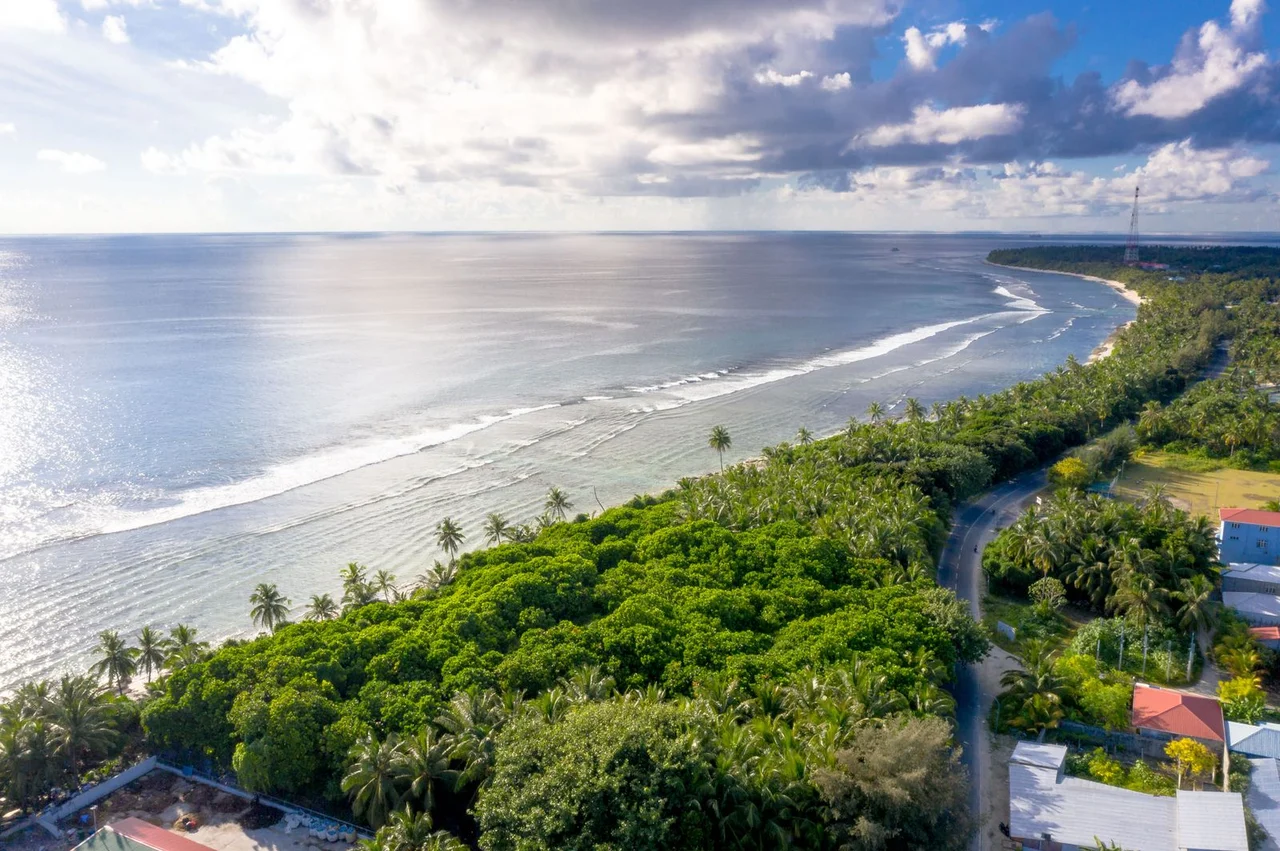
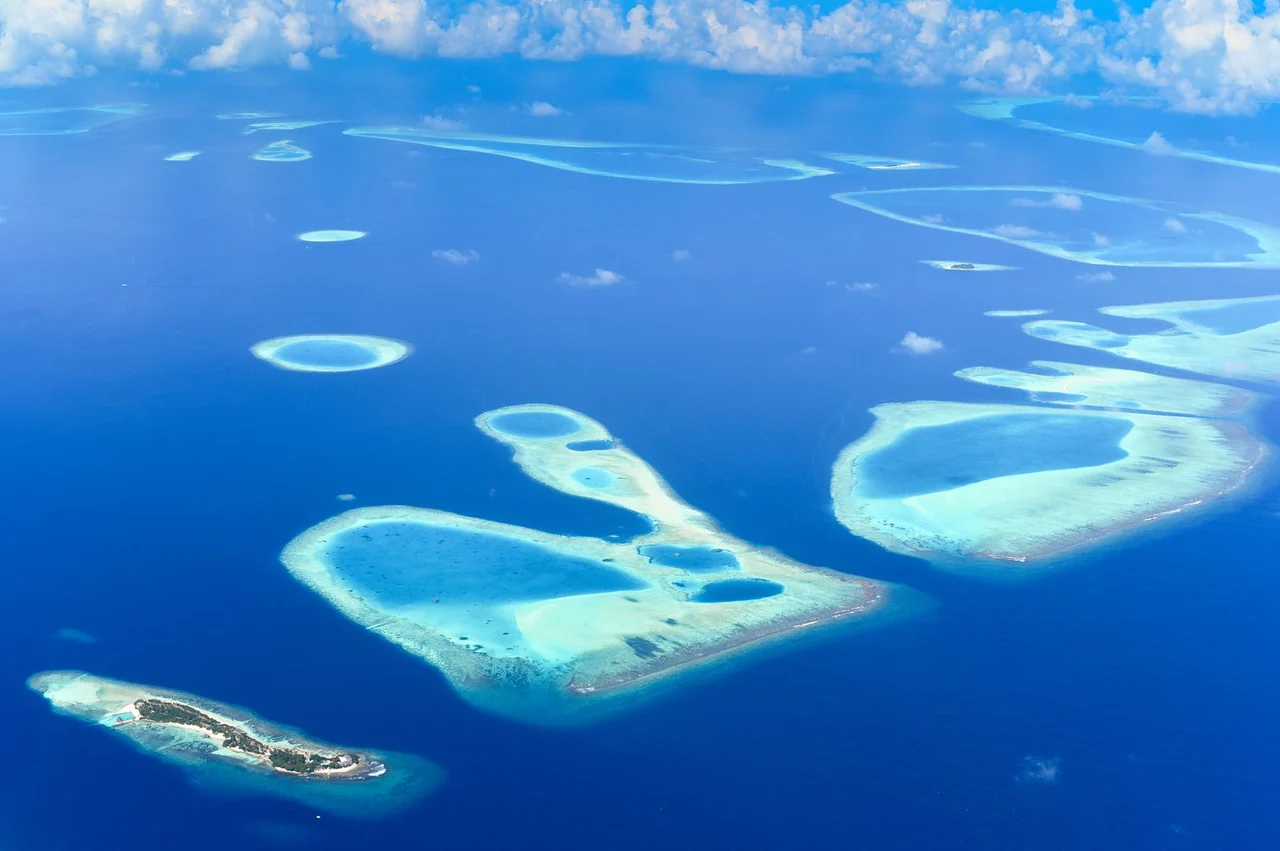
To understand ECRCP, one must understand Nauru itself. It is one of the smallest states on the planet: area approximately 21 square kilometers, population around 12,000 people. The island lies in Micronesia, in the southern Pacific Ocean, northeast of Australia. Most of the land rises above water only a few meters.
Historically, Nauru's economy was based on phosphate mining (fossilized bird droppings, guano) - valuable raw material for fertilizers. Over decades, deposits have been nearly exhausted, and the central part of the island has become a lunar landscape of mines. Few major new sources of income remain, and the climate threat is quite real.
Hence the program idea. The word resilience in the name means stability: the ability to withstand climate shocks and remain economically afloat. Funds from investors are directed toward climate adaptation and long-term projects to protect territory and residents. For the state, this is not a marketing move but a question of literal survival, and this is what distinguishes Nauru from programs where money simply replenishes the treasury.
Terms and costs 2026: table composition - contribution - what is included
Let us move to the main question - how much does Nauru citizenship by investment cost and what does this amount include. Here it is important to distinguish between two things: the non-refundable contribution (main fund contribution) and associated fees (application, due diligence, passport). In 2026, the Iruwa promotion threshold is in effect, which is significantly lower than the standard.
Approximate parameters for 2026:
- Promotion contribution (Iruwa Initiative) - from 90,000 USD for the main applicant. This is a temporary special offer whose deadlines have been extended; current status should be verified at the time of application.
- Standard contribution - 115,000 USD per applicant after the promotion window closes.
- Structure changed to individual calculation - instead of a single family price, each applicant and dependent is calculated separately, with their own fees.
We will compile an approximate picture in a table. Fee figures are provided as a guide - they are refined and subject to change, so the final estimate is always fixed in writing before starting.
| Who in the application | Non-refundable contribution (estimate) | What is included and nuances |
|---|---|---|
| Primary applicant | From 90,000 USD (share option) / 115,000 USD (standard) | Citizenship, passport, right to include dependents; plus application fees, due diligence, and passport fees |
| Each dependent | Approximately from 2,000 USD contribution + fees | Separate application and separate fees for each person; for individuals 16+ an additional verification fee is added |
| Children | At individual rates | Children of any age are included |
| Parents and older generation | At individual rates | Parents, grandparents - without strict age limits |
| Siblings | At individual rates | Permitted regardless of marital status |
Key point to remember: 90,000-115,000 USD is the contribution per person, and the total family budget is calculated as the sum of individual contributions and fees. Expanded family composition is a strong feature of the program, but the budget estimate must be calculated per person.
Who can be included in the application
One of the strongest arguments for ECRCP is a broad and flexible family composition. In 2026, the dependent rules were significantly expanded, and today you can include several generations under one application.
Who is permitted to be included:
- Spouse of the main applicant.
- Children of any age - there is no strict age cutoff as in some other programs.
- Parents of the main applicant and spouse - without strict age limits.
- Grandparents - older generations can also be included.
- Siblings - regardless of their marital status.
This scope is beneficial for families who want to obtain a common backup passport for several relatives at once. Important note: as the family composition expands, the total budget also grows, as the calculation is individual - each person has their own contribution and their own fees. And each adult undergoes a separate due diligence check. Therefore, family composition should be planned in advance, together with the budget estimate.
Remote processing without residency requirement
The Nauru program is initially designed for remote processing. This means that to obtain citizenship, you do not need to relocate to the island or even appear there physically. All interaction takes place through licensed agents and the Nauru Program Office.
What this provides in practice:
- No residence requirement. You are not required to live in Nauru before or after obtaining a passport. There is no residency obligation in principle.
- No mandatory visit. Documents are submitted and processed remotely; your physical presence on the island is not required.
- Application through an agent. You cannot submit an application directly as a private individual—the process is conducted through an authorized representative who assembles the package, verifies the source of funds, and manages the case.
For most foreign investors, this is convenient: there is no need to spend time on long flights to the Pacific Ocean and coordinate schedules. It is sufficient to collect and legalize documents, pass verification, and await a decision. For more details about the document itself, see the article on Nauru passport.
Processing timeline: approximately 3-4 months
Speed is the second reason after cost why the ECRCP attracts attention. According to official estimates, processing takes approximately 3-4 months from the moment a complete and clean document package is submitted. This is fast by investment citizenship standards.
However, a answer is more complex than a single figure. The actual timeline comprises several stages:
- Document preparation and source of funds verification - usually several weeks on the client's side. This includes collecting certificates, legalization, translation, and confirmation of money origin.
- Official processing at Nauru Program Office - the aforementioned estimated 3-4 months, including due diligence.
- Passport issuance - the final technical stage after approval.
In practice, from the start of work to receiving the passport in hand, it is reasonable to allow approximately 3-4 months, provided the package is assembled without gaps. Any delays with documents or questions regarding the source of funds shift this timeline. Therefore, the program's speed largely depends on how carefully the package is prepared from the outset.
"When clients hear about Nauru citizenship, the first question is always about price—and yes, in terms of entry threshold, this is one of the most accessible programs on the market. But I always add two things. First: 90 thousand dollars is the contribution for one person, while the actual family budget consists of individual contributions and fees for each included family member; you need to calculate per person. Second and more importantly: the program is young, only a couple of years old, and its main asset is strict due diligence. The credibility of this passport with other countries depends directly on the quality of due diligence. Therefore, we prepare the source of funds with maximum care, especially for applicants from the CIS. Nauru is an excellent quick backup passport, but not a substitute for strong programs, and it is more important to be about this with the client than to sell a pretty picture."
Due diligence verification
A low entry threshold does not mean passports are issued indiscriminately. Due diligence verification is a mandatory stage for each adult applicant. The approval or rejection of an application depends directly on its results.
What is verified:
- Biography and reputation. Absence of criminal records, serious violations, or facts that cast doubt on the applicant's credibility.
- Source of funds. The money for the contribution must have confirmed lawful origin—this is a key point for investors from the CIS.
- Sanctions and wanted lists. Verification against international databases.
Verification is conducted for each applicant and dependent aged 16 and above, and a separate fee is charged for it. For a young program, the quality of due diligence is a matter of reputation: the stricter the verification, the more stable other countries' trust in the passport. Therefore, it is not advisable to approach the source of funds formally—it is at this stage that delays and rejections most often occur.
What opportunities the Nauru passport provides
Now for what it is all about—the passport itself and its real, not embellished, capabilities. Let us be : the Nauru passport is not a top-tier document in the world, but it has its practical advantages.
What it provides:
- Visa-free or simplified entry into approximately several dozen countries and territories, accounting for visas on arrival and electronic visas. The list changes, and it should be verified at the time of trip planning.
- Among notable destinations include the UAE, Hong Kong, and Singapore—convenient hubs for business and transit.
- Dual citizenship. Nauru permits dual citizenship; you are not required to renounce your current citizenship.
limitations right away. The Nauru passport does not provide visa-free entry to the USA, and currently does not ensure stable visa-free access to the Schengen area. For a number of major destinations, data from different sources vary and change over time, so any specific itinerary should be verified for the travel date. A detailed breakdown of destinations can be found in the article on Nauru passport and visa-free countries.
Expert perspective: who the program is suitable for
A young program always presents a balance of opportunities and uncertainty. Let us examine who the ECRCP is truly suitable for and who should consider mature programs instead, and what to pay attention to before starting.
- If you need a quick and affordable backup passport - Nauru is one of the most accessible options on the market, especially during promotional windows.
- If an extended family is important - the ability to include parents, grandparents, siblings is not available everywhere.
- If strong visa-free access to the Schengen area and the USA is critical - this is not about Nauru; other jurisdictions should be considered here.
- If you are from the CIS - factor in enhanced compliance and thorough source of funds verification; a formal approach will not work.
Main advice - do not pursue price alone. Calculate the full estimate based on family composition, verify the relevance of promotional terms on the application date, and objectively assess the passport without exaggeration. Then the program will work as the accessible tool it actually is.
Taxes and currency: what is important to understand
Island jurisdictions always attract many myths about zero taxes. Let's clarify carefully. Nauru does not indeed tax worldwide income of individuals with standard income tax. For tax planning, this is potentially interesting, but the mechanics are important to understand.
Key disclaimers:
- Citizenship is not automatic tax residency. Upon obtaining a Nauru passport, you do not automatically become a tax resident of the island and are not relieved of taxes in your home country.
- Actual tax residency is determined by where you actually live, where your center of vital interests is located, and how many days per year you spend in a particular country.
- Nauru's currency is the Australian dollar (AUD); the state has no national currency of its own.
In other words, the passport itself does not resolve tax issues for you - it is merely one element of a broader strategy. Any tax planning is built individually and taking into account the legislation of your country of actual residence. It would be dishonest to promise automatic tax relief.
Russians and CIS citizens: what to consider
Let us separately address the nuances for applicants from Russia and other CIS countries, as there are specific features that are better understood in advance.
- Everything is strictly within the law. The program is not used and cannot be used to circumvent sanctions or any restrictions. Any such expectations are unrealistic.
- Enhanced compliance. For applicants from the CIS, the source of funds verification is particularly thorough. Documents on the origin of the money should be prepared in advance and carefully.
- Notification of second citizenship. Russian citizens are legally required to notify the competent authority of acquiring second citizenship. This is a formal procedure that is important not to overlook.
A detailed analysis of all nuances for Russian applicants is covered in a separate article on Nauru citizenship for Russians. In short: the program is available but requires a and thorough approach to documents - formal compliance does not work here.
We will calculate Nauru citizenship costs for your family composition
The cost of Nauru citizenship through investment depends heavily on who you include in the application and whether you meet the share option window. One applicant, a family with children, or an extended family with parents and siblings - these are completely different budgets. Additionally, the young program requires careful verification of the source of funds and a properly assembled documentation package, otherwise you may lose weeks on revisions.
We provide complete second citizenship solutions: we evaluate your case, calculate the exact budget based on your family composition, verify the source of funds, and manage your application with the Nauru Program Office from start to passport in hand.
Discuss Nauru citizenship with a BRIDGES GLOBAL lawyer - we will calculate an estimate specifically for your situation and advise whether you qualify for share option terms.
What makes up the final cost
When people say Nauru citizenship costs from 90,000 USD, they mean only the basic contribution. The actual final cost for one applicant is higher because several mandatory fees are added to the contribution. We will break down a typical estimate into components so there are no surprises.
- Non-refundable contribution to the fund - the principal amount (from 90,000 USD for the share option or 115,000 USD for standard). This is a contribution to the climate program and is non-refundable.
- Application filing fee - approximately several thousand USD per applicant.
- Due diligence verification fee - paid for each adult applicant; for dependents from age 16 it is calculated separately.
- Bank fee and passport processing fee - relatively small fixed amounts.
In total, for one applicant under share option terms, the overall budget is approximately in the range of slightly over one hundred thousand USD - the exact figure is always set out in the estimate before submission. For a family, individual contributions and fees for each included relative are added to this.
We emphasize separately: the contribution is non-refundable. Unlike programs involving real estate purchases or government bonds, where money could theoretically be recovered after several years, here you make a non-refundable contribution. This is the price for speed, simplicity, and a relatively low entry threshold.
Conclusion: who should consider ECRCP
Let us sum up, without embellishment. Nauru citizenship through investment is a young, accessible, and fast tool for those who need a backup passport without relocation, with flexible family composition and a relatively low entry threshold. A non-refundable contribution from 90,000 USD on promotion, remote processing in approximately 3-4 months, the ability to include several generations of relatives at once - these are the program's strong points.
But an objective assessment is essential. A Nauru passport is not among the strongest in the world: it does not provide visa-free access to the USA and stable visa-free access to the Schengen area, and the program itself is still building practice and reputation. Therefore, it is well suited as an accessible backup document and mobility tool, but not as a replacement for mature programs with a strong passport.
The optimal scenario is to calculate the full estimate for your family composition in advance, verify the relevance of promotional terms, and ensure careful work with source of funds. Details and official requirements can be reviewed through the Nauru citizenship guide, and to proceed with a calculation for your situation - on the page Nauru citizenship through investment program. Current parameters should always be verified on the official portal Nauru Program Office (ecrcp.gov.nr).
Frequently asked
Questions people ask before deciding
01How much does Nauru citizenship cost through investment in 2026?
The non-refundable contribution is from 90,000 USD per applicant under the preferential terms of Iruwa and 115,000 USD under the standard threshold. Processing fees, due diligence checks, and passport fees are added to the contribution, so the total cost per applicant is higher. For a family, the budget is calculated individually - each person has their own contribution and fees. Preferential terms and timelines should be verified as of the submission date.
02What is the ECRCP program?
ECRCP is the Economic and Climate Resilience Citizenship Programme, Nauru's economic and climate resilience program, launched in 2024. Through a non-refundable contribution, an investor receives citizenship, and the funds go toward the island's climate adaptation and preparation for rising ocean levels. The program is administered by the state agency Nauru Program Office.
03Do you need to live in Nauru to obtain citizenship?
No. The program is designed from the outset for remote processing: there is no residency requirement, you do not need to relocate or even physically appear on the island before or after obtaining a passport. All interaction is conducted through an authorized agent and Nauru Program Office remotely.
04How long does it take to obtain Nauru citizenship?
The official timeframe is approximately 3-4 months from the date of submission of a complete and clean document package, including due diligence checks. This does not include the time needed to gather and legalize documents and confirm the source of funds on the client's side, which typically takes several weeks. Any gaps in the document package will extend the timeline.
05Who can be included in a Nauru citizenship application?
In 2026, the family composition is broad: spouse, children of any age, parents and elderly relatives (grandparents) without strict age limits, as well as brothers and sisters regardless of their marital status. The calculation is individual, so as family size increases, the total budget also increases.
06Can you get a refund on the investment contribution in the Nauru program?
No. The contribution to the fund is non-refundable - it is a non-returnable contribution to the island's climate program. Unlike real estate purchase or government bond schemes, the return of funds is not provided here. This is the cost for speed, simplicity, and a low entry threshold.
07What countries provide visa-free entry with a Nauru passport?
A Nauru passport provides visa-free or simplified entry (including visas on arrival and electronic visas) to approximately several dozen countries and territories. Among notable destinations are the UAE, Hong Kong, and Singapore. The list changes, and the specific route should be verified as of your travel date.
08Does a Nauru passport provide visa-free travel to Schengen and the USA?
No. To date, a Nauru passport does not provide visa-free entry to the USA and stable visa-free access to the Schengen zone. This is a limitation of the program: if strong visa-free access to these destinations is critical for you, it is more prudent to consider other jurisdictions.
09Does Nauru permit dual citizenship?
Yes, Nauru allows you to hold a second citizenship; you do not need to renounce your current passport. However, Russian citizens should remember the obligation to notify the competent authority about acquiring a second citizenship - this is a separate formal procedure in your home country.
10What is checked during due diligence for the Nauru program?
The due diligence check covers the applicant's background and reputation, the absence of criminal convictions, the legality of the source of funds for the contribution, as well as verification against international sanctions and wanted lists. It is conducted for each adult applicant and dependents aged 16 and above, and a separate fee is charged for it. Approval depends directly on the results.
11Does Nauru tax worldwide income?
Nauru does not tax the worldwide income of individuals with ordinary income tax. However, citizenship itself does not automatically make you a tax resident of the island and does not exempt you from taxes in your country of actual residence. Actual tax residency is determined by place of residence and center of interests, so planning is done individually.
12Is the Nauru program suitable for Russian and CIS citizens?
Yes, the program is available for applicants from Russia and CIS countries, but strictly within the law and without any circumvention of sanctions. For such applicants, the source of funds is checked particularly carefully, so documentation on the origin of money needs to be prepared in advance and with care. A formal approach to compliance does not work here.
Transparency
How this material was prepared
- Author
- Elena Titova, client Relationship Manager, BRIDGES
- Terms and costs last verified
- June 2026
- Sources
- official government authorities of the relevant country and state publications
- Methodology
- government minimum requirements are stated separately from due diligence charges, state fees, legal and banking costs
Sources and methodology
Figures, terms and timelines are checked against official sources as of June 2026. Link availability verified in August 2026. Third-party blogs and agent websites are not used as a source of programme terms.
- [1]EUR-LexOfficial texts of European Union legislationeur-lex.europa.eu/homepage.html
- [2]European Commission - Migration and Home AffairsEntry and residence rules in the EUhome-affairs.ec.europa.eu/index_en
Methodology: tables and charts state government minimum investment requirements; due diligence charges, state fees, legal, banking and other costs are calculated separately and are not included in the minimum thresholds.
About the author
Related materials
What to read next
 ComparisonNauru or Caribbean Citizenship: Investment Program Comparison
 AnalysisWhat is due diligence and why the Caribbean is rejecting applications
 ArticleArea and size of Nauru: how small is this country
Personal programme selection is conducted by Anna Kovalevskaya, Head of Legal, BRIDGES.
Citizenship of Nauru: preparation checklist
Documents prepared in advance, source of funds checks and where applications usually fail.