Citizenship · Hungary
Hungarian citizenship through marriage: conditions for spouses in 2026

Updated: June 2026·13 min read·Expert reviewed
Terms and costs verified: June 2026

Contents
Marriage to a Hungarian citizen does not grant a passport automatically—it only reduces the naturalization period from eight years to three. To reach the oath ceremony, a foreign spouse must legally reside in the country, obtain permanent residence, learn Hungarian, pass an examination on constitutional basics, and undergo a sham marriage check. We break down step-by-step what conditions apply in 2026, how much time it takes, and where people most frequently face refusal.
Summary
Marriage to a Hungarian does not grant citizenship by itself - it only places you in a preferential naturalization category: instead of eight years of residence, three years of cohabitation in marriage are sufficient, provided you have legal residence in Hungary, permanent residence permit, language proficiency, and pass a constitutional basics examination.
This path is not for those who want to "buy" a passport through a fictitious marriage. The migration service carefully verifies the authenticity of the marriage, and falsifying status results in rejection and prohibition from reapplying. However, for families who genuinely live together, this is one of the shortest and most predictable routes to EU citizenship.
Below is a breakdown of conditions, timelines, documents, and typical mistakes. If you prefer an investment route without marriage, see Hungarian Residence Permit through Investment (Golden Visa), and we have compiled an overview of all methods in the hub Hungarian citizenship.
Does marriage grant citizenship automatically
The most common myth: "I married a Hungarian - so in a year I'll be an EU citizen." This is not true. Hungarian legislation (Citizenship Act LV of 1993) does not provide for automatic passport issuance upon marriage. Marriage is not a basis but a benefit that reduces the residence requirement.
Compare it with ordinary naturalization. A foreigner without Hungarian roots and without marriage must continuously reside in the country for 8 years before applying. A spouse of a Hungarian citizen has the right to submit the same application after 3 years of residence if the marriage has lasted at least three years by that time. In other words, savings of up to five years, but not elimination of all requirements.
What remains mandatory even for a spouse:
- Legal continuous residence in Hungary (typically through temporary residence permit, then permanent residence);
- Knowledge of Hungarian at conversational level;
- Passing an examination on constitutional basics in Hungarian;
- Stable income and housing;
- Absence of national security threats and serious violations;
- Verification of the authenticity of the marriage.
It is important not to confuse this route with Simplified naturalization based on Hungarian descent: there, residence in Hungary is not required at all, but you must prove Hungarian origin and pass an interview in Hungarian. Marriage and descent are two different legal grounds.
Conditions for obtaining citizenship by marriage
Preferential naturalization for a spouse of a Hungarian citizen is based on several mandatory conditions. All of them must be met simultaneously at the time of application.
1. Duration and authenticity of marriage. The marriage must be legal, valid, and last at least 3 years of cohabitation. An alternative regarding duration is the existence of a common child: if a child is born in the marriage, some experience requirements are relaxed. A marriage registered abroad must be registered (legalized) in the Hungarian civil registry.
2. Residence in Hungary. The basic marriage scenario involves continuous legal residence in the country for 3 years prior to application. This is the key difference from the myth of a "remote" passport: to benefit from the shortened 3-year period, you must actually live in Hungary, not just be married on paper.
3. Permanent residence status. By the time of citizenship application, the applicant must have a permanent residence permit. The usual path is: temporary residence permit for family reunification (marriage) → permanent residence permit in 2-3 years → then citizenship. We covered the initial stage in detail in the article on Hungarian temporary residence permit.
4. Language and examination. Knowledge of Hungarian at conversational level and passing an examination on constitutional basics in Hungarian. Exemptions will be discussed below.
5. Financial stability and housing. Confirmed legal income and place of residence.
6. Good moral character. Absence of criminal convictions, migration violations, and threats to public order and national security.
| Parameter | Ordinary naturalization | Naturalization through marriage |
|---|---|---|
| Residence period in Hungary | 8 years | 3 years |
| Marriage duration | - | From 3 years (or common child) |
| Permanent residence at time of application | Yes | Yes |
| Constitutional examination | Yes | Yes |
| Language | Hungarian | Hungarian |
If there is a common child and the family resides outside Hungary, different and longer marriage periods apply (ten years, or five years if a child is present) and different rules. We always calculate the specific scenario individually - there is no universal formula here.
Timeline and stages: from marriage to passport
It is important to understand the realistic timeline in advance so as not to plan for "a year or eighteen months after the wedding." In practice, the process takes several years, with the majority of time spent accumulating the residency requirement rather than on application review itself.
Typical sequence:
- Marriage and temporary residence through family reunification. Marriage registration, legalization in Hungary, obtaining spouse's temporary residence permit.
- Accumulating the residency requirement. Continuous residence in Hungary, renewal of temporary residence permit.
- Permanent residence. As a rule, permanent residence is granted after 2-3 years of legal residence.
- Exam preparation. Study of Hungarian language and constitutional basics.
- Application for citizenship. After 3 years of residence and 3 years of marriage, a petition is submitted.
- Review and oath. The decision is made at the level of competent authorities, then requires a presidential act; the process is completed with an oath (allampolgarsagi esku).
How long does the citizenship application review actually take? It is important not to underestimate expectations. After submission, review typically takes approximately 5-9 months, plus approximately 2 months for the presidential decree. Total time from submission to oath is approximately 14-18 months. This does not include the years spent on residence and obtaining permanent residence.
If time is critical, it makes sense to compare alternatives by speed in advance - for example, golden visas of Hungary, Greece, and Portugal provide resident status considerably faster, although they do not replace the marriage path to citizenship.
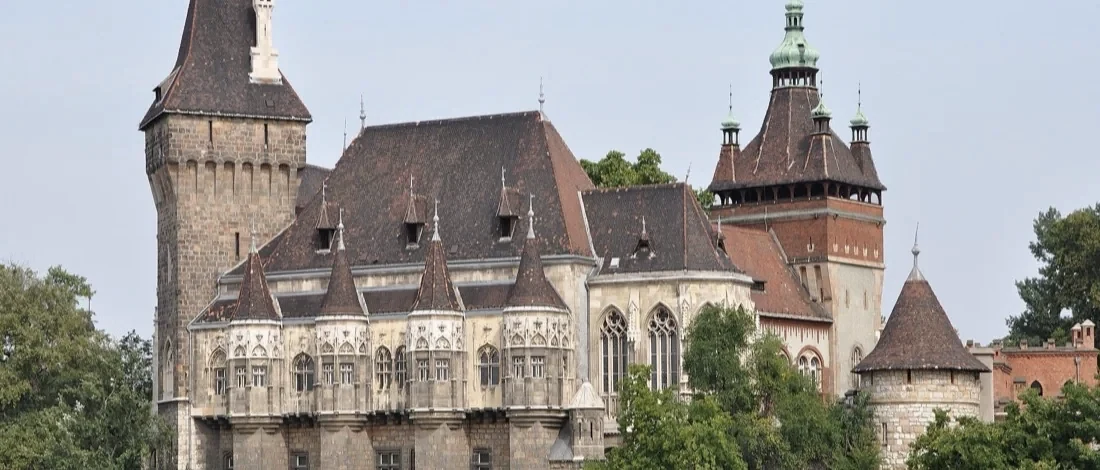
From temporary residence through marriage to permanent residence: the first stage of the route
Before discussing citizenship, the foreign spouse goes through two resident statuses. This is the foundation of the entire process, and errors at this stage are the most costly - because they reset the residency requirement.
Temporary residence through family reunification. The first step after marriage registration is a residence permit based on marriage to a Hungarian citizen. Even at this stage, the migration service examines the genuineness of the relationship: requests proof of cohabitation and may invite for an interview. The temporary residence permit is issued for a limited period and renewed.
Transition to permanent residence. As a rule, after 2-3 years of legal residence on a temporary permit, it becomes possible to apply for permanent residence. Permanent residence eliminates the need for regular renewals and becomes a mandatory step before citizenship.
Continuity is the key word. Prolonged absences from the country may interrupt the residency requirement, and then the count effectively starts anew. Therefore, planning extended absences must take into account future naturalization. We analyze the initial status in detail in the material on Hungary temporary residence, and here it is important to remember a simple rule: marriage-based citizenship begins not with the wedding, but with properly registered and continuous residence.
Exam and language: what must be passed
This is the stage that frightens applicants the most, although with preparation it is entirely achievable. Hungary requires citizenship applicants to demonstrate integration, and does so through two related requirements: language and knowledge of the basics of state structure.
Language. Hungarian at conversational level is required - sufficient to pass an interview and pass an examination. The law does not mandate a separate international certificate at a fixed level as strictly as in some other countries, but in practice you must understand questions and answer in Hungarian.
Constitutional Fundamentals Examination (alkotmanyos alapismeretek). Conducted in Hungarian. Tests basic knowledge of state structure, national symbols, rights and obligations of citizens, and fundamentals of legislation. Preparation should be systematic - questions are standard, and with proper preparation, the exam is passed confidently.
When the examination may be waived. The law provides for exemptions, in particular:
- for persons who received education at a Hungarian educational institution (diploma in Hungarian);
- by age - for elderly applicants;
- by health status - in the presence of documented grounds;
- for minors and persons with limited legal capacity.
Any specific ground for exemption must always be confirmed by documents - merely stating "I am over 60" does not resolve the matter. We verify in advance whether you qualify for an exemption to avoid unnecessary exam preparation.
Documents for submission.
The document package for naturalization through marriage is extensive, and almost every document has specific requirements for legalization and translation. Below is a basic checklist; the exact list is always tailored to the specific case.
- A naturalization application-petition in the prescribed form;
- applicant's birth certificate (with apostille and certified Hungarian translation);
- marriage certificate with a Hungarian citizen (with legalization in the Hungarian registry if the marriage was concluded abroad);
- a document confirming the citizenship of the Hungarian spouse;
- documents evidencing residence in Hungary: temporary residence permit, then permanent residence permit;
- proof of housing (rental agreement, ownership rights);
- proof of income and financial solvency;
- certificate of no criminal record;
- autobiography (in Hungarian) describing life history and circumstances of the marriage;
- photographs in the prescribed format;
- if there are common children - their birth certificates.
The main pitfalls here are apostilles, certified translations, and legalization of foreign marriages. A document prepared with a translation error or without the required stamp slows down the entire process. Therefore, we begin document package preparation in advance and manage it by checklist, not from memory.
Fictitious marriage verification: what is checked and how we prepare.
This is the central risk of the entire process. Since marriage confers a substantial benefit, the immigration service treats such cases with heightened scrutiny. A fictitious marriage (concluded for status without intention to live as a family) is direct grounds for refusal and in some cases grounds for subsequent revocation of status.
What the immigration service checks:
- interviews with spouses - joint and sometimes separate, with clarifying questions about daily life, relationship history, and habits;
- evidence of joint residence: common address, rental agreement or property ownership, utility bills;
- shared household and finances: joint budget, bank accounts, property;
- photographic and other evidence of genuine relationships (trips, events, correspondence);
- in disputed cases - on-site verification of actual residence at the address;
- chronology: when you met, when you married, how the relationship developed.
Red flags for an inspector - a significant age difference without a clear relationship history, lack of common language of communication, residence at different addresses, contradictions in spouses' answers, absence of joint photos and shared living arrangements.
How we prepare. For a genuine family, the verification is not a threat but a formality requiring proper preparation. We gather evidence of joint life (address, bills, property, photos, relationship chronology), prepare spouses for the interview (rehearse typical questions, align versions based on facts rather than "inventing a story"), and verify all documents by date to eliminate contradictions. Our task is to leave the inspector with no grounds for doubt about what is obvious.
To be straightforward: we do not arrange or represent fictitious marriages. This is not merely an ethical matter but a practical one - such schemes are exposed, and the consequences for the client are more severe than any benefit.
"The main misconception clients come with is that a passport stamp showing marriage is nearly equivalent to Hungarian citizenship. It is not. Marriage is a benefit, not a foundation: it shortens the residence period but does not eliminate the need for permanent residence, language, constitutional examination, or verification. And it is precisely the verification of genuine marriage that decides the matter. For a family that genuinely lives together, this is simply a formality for which we prepare the evidentiary base and prepare both spouses for the interview in advance. Fictitious unions, however, are exposed - and we on principle do not take on such cases. My advice: do not count years from the wedding date, count from the moment you have both the residence qualification and permanent residence and confirmed shared living arrangements. Then the path becomes predictable."
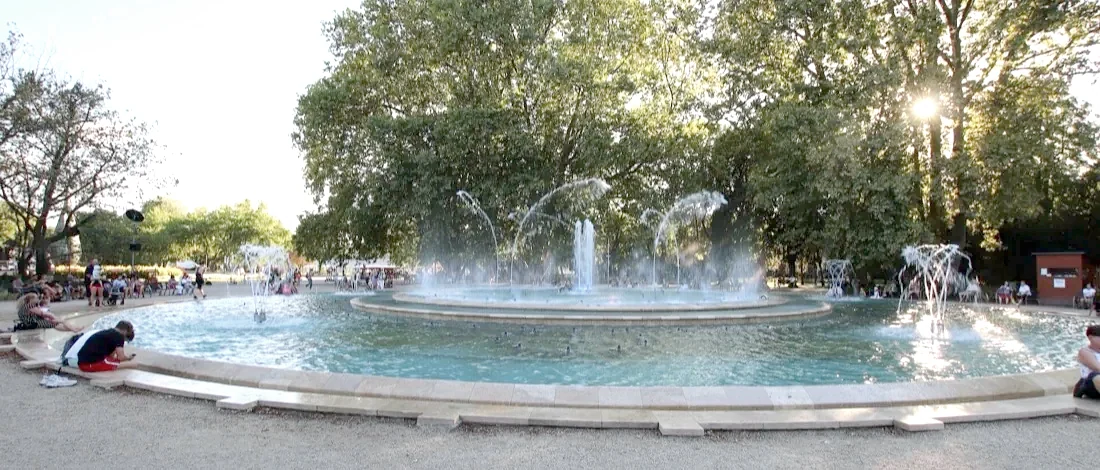
Children and family: what about citizenship for children.
The marriage pathway is almost always connected with the question of children - and this is important because the presence of a common child can ease requirements for length of residence, and children's status is often resolved in parallel with the parent's.
Common child and timeframes. If a common child is born in the marriage, certain requirements regarding the length of marriage and residence are eased. This often accelerates the process for families compared to childless couples. The specific scenario depends on where the family resides and what citizenship the child holds, so timeframes must be calculated individually.
A child born to a Hungarian citizen. If one parent is a Hungarian citizen, the child typically acquires Hungarian citizenship by descent (by right of blood). This is a separate mechanism not connected to naturalization of the foreign parent.
Naturalization of children together with the parent. Minor children of a foreign applicant can often be included in the naturalization process together with the parent on preferential terms, without a requirement to pass an examination. This allows the entire family's status to be established at once rather than separately.
Family configurations vary - mixed marriages, children from previous relationships, different nationalities of spouses. There is no universal answer here, and it is precisely family cases that we examine especially carefully to establish a path to an EU passport for all family members at once.
Dual Citizenship
Good news for most applicants: Hungary permits dual (multiple) citizenship. By obtaining a Hungarian passport through marriage, you are not required to renounce your previous citizenship from Hungary's perspective.
However, there is an important nuance that is often overlooked: permission from Hungary does not mean permission from your home country. Some states restrict or prohibit second citizenship, require notification of its acquisition, or impose other obligations. Therefore, before applying, you must separately verify what the legislation of your current citizenship country says.
A Hungarian passport is full-fledged EU citizenship: freedom of movement, residence, and work throughout the European Union, visa-free entry to most countries worldwide, access to European healthcare and education. This is precisely why marriage verification is approached so rigorously—it concerns a key to the entire European Union.
What a Hungarian passport provides and the tax aspects of the matter
Why go through this entire process at all if you can live on a residence permit? The answer lies in the scope of rights that citizenship provides and in one of the most attractive tax systems in the EU.
Rights of an EU citizen. A Hungarian passport is full-fledged European Union citizenship: the right to live, work, and study in any EU country without additional permits, access to European healthcare and education, voting rights, protection by EU consulates abroad. According to the passport index, the Hungarian document provides visa-free entry to most countries worldwide.
Taxes in 2026. Hungary is known for low fiscal burden by EU standards:
| Tax | Rate 2026 |
|---|---|
| Personal income tax (PIT) | 15% (flat rate) |
| Corporate tax | 9% (one of the lowest in the EU) |
| VAT | 27% |
A flat 15% personal income tax rate and 9% corporate tax rate make Hungary attractive not only for families but also for entrepreneurs. However, it is important to understand: tax residency is determined not by passport but by actual residence and center of life interests—we always address this question separately.
Common mistakes and reasons for refusal
Most refusals are not due to a person being "unsuitable" but to preventable errors in preparation. Here are the ones encountered most frequently.
- Expecting automaticity. Applying immediately after marriage without accumulated residency period and without permanent residence—the application simply will not be accepted on preferential grounds.
- Interruption of residence. Extended absences from Hungary that break the continuity of the residency period.
- Weak evidence base of the marriage. No shared address, common household, photos, contradictions in interview responses.
- Document issues. Absence of apostille, incorrect or unprofessional translation, illegalized foreign marriage.
- Underestimating the exam. Relying on "somehow I'll pass" without systematic preparation for Hungarian language and constitutional basics.
- Insufficient or unconfirmed income. Inability to demonstrate a stable legal source of funds.
- Hidden legal violations. Old migration regime fines, unpaid obligations, legal problems.
We note separately: if the marriage dissolves before citizenship is obtained, the preferential ground may be lost. Here it is important to assess the situation in time and, if necessary, switch to another route—for example, through continued residence. Sometimes it is more logical to consider in advance the path from residence permit to Hungarian citizenship as a backup option.
How we provide support
BRIDGES GLOBAL works with Hungarian migration cases with a local office in Budapest, and marriage cases are one of the areas where it is most important not to "sell a service" but to genuinely guide a family through all checks without refusal.
What support includes:
- assessment of your scenario: we calculate timelines, check whether you qualify under the marriage preference or common child basis;
- structuring a route from residence permit → permanent residence → citizenship with clear dates;
- collection and legalization of documents: apostilles, certified translations, registration of foreign marriage in the Hungarian registry;
- preparation of evidence base for marriage authenticity;
- preparation of spouses for interviews with the migration service;
- assistance with preparation for the constitutional basics and language exam;
- support during submission and monitoring at all stages until the oath.
If the marriage route does not suit you for any reason, we will be about it and offer an alternative—from golden visa to naturalization on other grounds. The goal is not to push you through marriage at all costs, but to find the most reliable path to an EU passport for your situation.
Summary
Hungarian citizenship by marriage is a real and relatively fast path to an EU passport, but only for families that genuinely live together. Marriage does not grant citizenship automatically: it reduces the residency requirement from eight years to three years, provided the marriage lasts three years, permanent residence is obtained, Hungarian language is demonstrated, and a constitutional basics exam is passed.
Key risks include underestimating sham marriage checks, document errors, and unrealistic timeline expectations. From application to oath ceremony takes approximately 14-18 months, not counting years of residence. With proper preparation—gathering evidence, verifying documents, preparing for interviews and exams—this route can be navigated with confidence.
Want to know if you qualify for benefits and how long your specific case will take? Start by analyzing your situation—see the full options map in the hub. Hungarian citizenship.
Frequently asked
Questions people ask before deciding
01Does marriage to a Hungarian citizen grant citizenship automatically?
No. Marriage does not grant citizenship automatically. It only reduces the residency requirement for naturalization from eight years to three years, provided other conditions are met: permanent residence, language, exam, and marriage verification.
02How many years must you be married to apply for citizenship?
On preferential grounds—at least 3 years of legal marriage with joint residence. If there is a common child, certain requirements are eased.
03Must you live in Hungary to obtain citizenship by marriage?
Yes, the basic scenario requires continuous legal residence in Hungary for 3 years prior to application. Residence itself provides the right to the shortened timeline.
04Is permanent residence mandatory before applying for citizenship?
Yes. At the time of applying for citizenship, a spouse must have permanent residence. Usually the process goes through temporary residence by marriage, then permanent residence.
05What language is the citizenship exam taken in?
The exam on the fundamentals of the Constitution is taken in Hungarian. Hungarian language proficiency at a conversational level is also required for the interview.
06Is it possible to be exempted from the exam?
Yes, the law provides exemptions—for example, by age, state of health, for those who received education at a Hungarian educational institution, and for minors. The exemption is confirmed by documents.
07How long does it take to review a citizenship application?
The review itself takes approximately 5-9 months, plus approximately 2 months for the presidential decree. In total from submission to oath—approximately 14-18 months.
08How is a marriage checked for being fictitious?
Through interviews with spouses, verification of cohabitation and household arrangements, shared finances, photos and timeline of the relationship, and in disputed cases—on-site visits to the residence address.
09Does Hungary permit dual citizenship?
Yes, Hungary permits dual citizenship and does not require renunciation of previous citizenship. However, you should verify whether your current country of citizenship permits it.
10What happens if the marriage dissolves before obtaining citizenship?
The preferential basis for marriage may be forfeited. In this case, it is sometimes reasonable to switch to an alternative route—for example, through continued residence and temporary residence to citizenship.
11What documents are required for an application through marriage?
Application form, birth and marriage certificates with legalization, spouse's citizenship document, temporary/permanent residence, proof of housing and income, criminal record clearance, autobiography, photo.
12How does the marriage route differ from naturalization through ancestry?
The ancestry route does not require residence in Hungary, but you must prove Hungarian origin and pass an interview in Hungarian. Marriage requires residence and permanent residence, but not ancestry.
Transparency
How this material was prepared
- Author
- Hanna Berger, trusts and Succession Advisor, BRIDGES
- Terms and costs last verified
- June 2026
- Sources
- official government authorities of the relevant country and state publications
- Methodology
- government minimum requirements are stated separately from due diligence charges, state fees, legal and banking costs
Sources and methodology
Figures, terms and timelines are checked against official sources as of June 2026. Link availability verified in August 2026. Third-party blogs and agent websites are not used as a source of programme terms.
- [1]Országos Idegenrendészeti FőigazgatóságResidence permits and how to applyoif.gov.hu
- [2]Nemzeti Adó- és Vámhivatal (NAV)Tax residency and ratesnav.gov.hu/en
Methodology: tables and charts state government minimum investment requirements; due diligence charges, state fees, legal, banking and other costs are calculated separately and are not included in the minimum thresholds.
About the author
Related materials
What to read next
 ComparisonCitizenship of Bulgaria or Hungary: EU passport by roots
 AnalysisWhat is due diligence and why the Caribbean is rejecting applications
 ArticleHungarian Citizenship 2026: All Ways to Obtain an EU Passport
Personal programme selection is conducted by Anna Kovalevskaya, Head of Legal, BRIDGES.
Citizenship of Hungary: preparation checklist
Documents prepared in advance, source of funds checks and where applications usually fail.
