Residency · Hungary
Real estate in Hungary: prices, buying as a foreigner, and the permit

Updated: June 2026·11 min read·Expert reviewed
Terms and costs verified: June 2026

Contents
Real estate in Hungary is one of the most discussed ways to establish yourself in the center of Europe: the country is in the EU and Schengen, and prices long remained lower than in Vienna or Prague. But a lot of confusion has built up around buying. Can a non-EU citizen buy an apartment in Hungary? Is a permit needed? Does buying give a residence permit? And how much does housing in Budapest and the regions really cost in forints, not euros? Let's break down the process step by step -, with links to official authorities and without promises Hungarian law doesn't make.
Real estate in Hungary: what's important to understand before you start
Hungary is a full member of the European Union and the Schengen zone, but has its own currency: the Hungarian forint (HUF). This is the first thing to remember - prices, taxes, and fees are counted in forints, not euros, though sellers and agencies often duplicate amounts in euros for foreigners' convenience. The exchange rate fluctuates, so it's better to go by forint figures.
The second important point is the buyer's legal status. EU citizens buy residential property almost on par with Hungarians. But a non-EU buyer (including from Russia, Kazakhstan, Belarus, and other CIS countries) needs a separate permit from the competent government agency to acquire housing. This is an administrative procedure, not a ban: for ordinary apartments and houses, the permit is generally granted.
The third point that removes half the questions: buying housing on its own doesn't give a residence permit. Hungary doesn't have the classic scheme of buy an apartment - get a residence permit. Investment residence is arranged through the separate Guest Investor Program, which we'll cover below.
Who can buy real estate in Hungary
The law divides buyers into several categories, and the category determines whether a separate procedure is needed.
- Citizens of Hungary and the EU/EEA- buy residential property without a special permit, under the normal procedure.
- Non-EU citizens(Russia, Kazakhstan, Azerbaijan, Asian and other countries) - obtain a government agency permit before buying housing.
- Legal entities- a foreign or local company can act as the buyer, but this changes the tax and corporate picture, so the decision is made together with a lawyer.
The question of land stands separately. Foreigners can't buy agricultural and forest land - this is a direct legislative ban that has persisted since Hungary joined the EU and been made indefinite. The restrictions here apply even to EU citizens if they aren't registered in Hungary as farmers. So this article is specifically about residential and urban property: apartments, houses, apartments.
The permit to buy real estate in Hungary for a foreigner
The main feature for a non-EU buyer is the permit to acquire real estate. It's issued by the territorial government agency (kormanyhivatal in Hungarian) of the district where the property is located. For property in the capital, the application is filed with the Budapest Metropolitan Government Office (Budapest Fovaros Kormanyhivatala).
How this works in practice:
- The application is usually filed by the buyer's lawyer or authorized representative together with the property's document package.
- The agency checks whether there are grounds for refusal - considerations of public interest, security, or local government objections. For an ordinary apartment such refusals are rare.
- Review takes roughly 30 to 60 days (up to 90 in certain districts), so it's factored into the deal timeline.
- The permit fee is roughly around 50,000 HUF (about 130 EUR). This is a government fee, not a tax.
Current requirements and forms are best checked on the official consular-legal resource of the Hungarian government: konzuliszolgalat.kormany.hu. It's important to understand: the permit is about ownership of the property, not the right to live in the country. These are different procedures.
How much does housing cost: a general overview of real estate prices in Hungary
Real estate prices in Hungary differ noticeably between the capital and the regions. Roughly speaking, and in forints (exact values change from quarter to quarter):
- The average price per square meter nationwide for resale housing is around 540,000 HUF per square meter.
- New construction nationwide is on average noticeably more expensive - roughly over 1.2 million HUF per square meter.
- Budapest stands apart: the average price per meter here is higher than the national one, and new apartments in early 2026 exceeded on average around 2 million HUF per square meter.
Analysts describe 2026 as a normalization phase: prices keep rising, but more slowly than in previous years. For a buyer this means the market has no sharp jumps, and there's time for a calm choice. Still, any figures should be taken as a reference point: the specific cost depends on the district, the building's condition, the floor, the view, and whether it's new construction or resale.
Prices by Budapest district: where it's expensive, where it's more affordable
Budapest is divided into districts marked with Roman numerals, and the price difference between them can be twofold. A few reference points for 2026 (in forints per square meter):
| Zone | Price per m² (reference) | What makes it interesting |
|---|---|---|
| The Buda Hills (districts II, XII) | ~1.9-2.6 million HUF | Premium villas, greenery, city views |
| The historic center (district V) | ~1.9-2.6 million HUF | Prestige, tourism, liquid rental |
| Central Pest (districts VI, VII) | medium-high level | Nightlife, restaurants, tenant demand |
| Outer Pest districts (for example, XXI - Csepel) | ~950 thousand-1.2 million HUF | The most affordable entry into the capital's market |
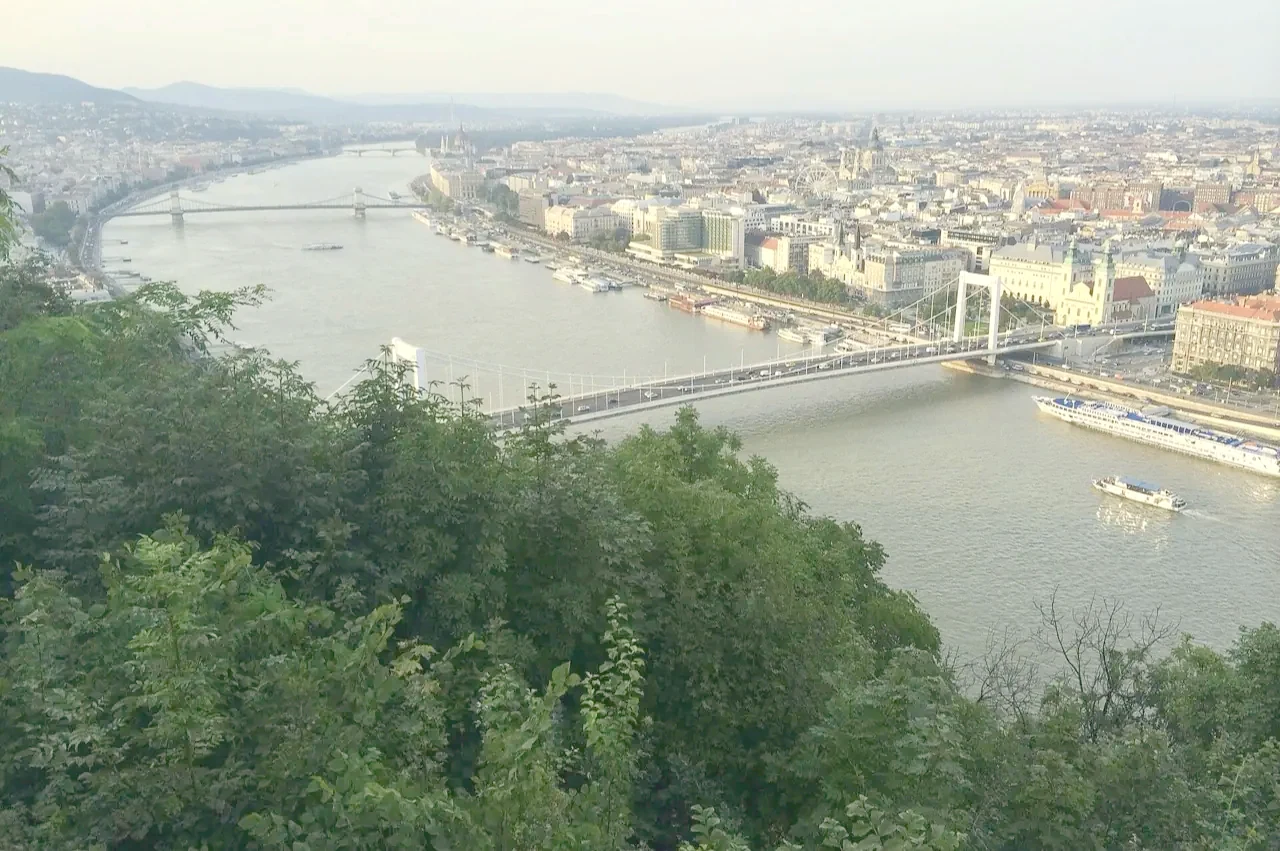
The logic is simple: the closer to the center, the Danube embankment, and the historic quarters, the pricier the meter. The Buda side is traditionally considered quieter and greener, the Pest side more business-oriented and vibrant. Central Pest districts are popular for renting out, the Buda hills and quiet quarters for family living.
We will find the right basis for residency in Hungary
We calculate the budget and timing for your family and list the documents you need.
Real estate in Hungary's regions and by Lake Balaton
Outside the capital, prices are lower, and the choice is wider than it seems. A few reference points in words:
- Large cities- Debrecen, Szeged, Győr, Pécs. Here there's developed infrastructure and universities, the price per meter is usually noticeably cheaper than in Budapest, and rental demand is sustained by students and company employees.
- Lake Balaton- Hungary's sea and the center of domestic tourism. Houses and apartments by the water are in demand in season, prices on the front line can approach capital-city levels, while deeper into the villages they remain moderate.
- Small towns and rural areas- the most affordable segment, but here it's important to remember the ban on agricultural and forest land for foreigners and check the plot's status.
Regional real estate is interesting for those looking for a house to live in or a getaway by the water, not just an investment. That said, liquidity in small towns is lower: it's harder to sell a property quickly and at a good price than in Budapest.
Buying an apartment in Hungary: the process step by step
A real estate deal in Hungary is logical and predictable. The typical sequence looks like this:
- Choosing a property and agreeing on the price.The parties agree on the price and terms.
- Title check.The lawyer requests an extract from the Land Registry, checks the owner, encumbrances, debts.
- Preliminary contract and deposit.Usually a contract is signed and a deposit is paid, generally around 10% of the price.
- Sale contract.The document is notarized or countersigned by a qualified Hungarian lawyer - without this, registration is impossible.
- Government agency permit(for non-EU buyers) - an application is filed and a decision is awaited.
- Payment and registration.The buyer pays the balance, documents are filed for title registration in the Land Registry.
- Transfer tax.Finally the tax is paid to the tax authority (NAV).
Ownership becomes legally protected only after registration in the Land Registry. So the key figure in the deal isn't the agent, but the lawyer, who handles the check and the paperwork.
Taxes and purchase costs: how much to budget on top of the price
Besides the property's price, the buyer bears additional costs. It's useful to calculate them in advance so the deal's budget doesn't come as a surprise.
| Stage / payment | Value (reference) |
|---|---|
| Property transfer tax | 4% of the deal price |
| Tax surcharge (for expensive properties) | +2% on the part over 1 billion HUF |
| Permit for a non-EU buyer | about 50,000 HUF (~130 EUR) |
| Lawyer and notary services | roughly 1-5% of the value |
| Deposit upon signing | generally around 10% |
| Registration in the Land Registry | a separate fee, fixed |
The main payment is the property transfer tax, 4% of the price. For properties over 1 billion HUF, another 2% is added on the excess amount. Legal support, depending on complexity, costs roughly 1-5% of the value. In total it's reasonable to budget around 6-10% on top of the property price to cover the tax, fees, and specialists' work.
“The most common illusion clients come to us with is the belief that buying an apartment in Hungary automatically opens a residence permit. These grounds simply don't exist in Hungarian law, and promising them means misleading the person. Real estate gives ownership and a comfortable base, but resident status is arranged separately. The second point we always discuss with buyers from CIS countries is preparing for the source-of-funds check. Since 2022 banks and authorities look closely at the origin of money, and here the winner is whoever assembled the documents in advance, not at the last moment. If the goal is specifically residence through investment, we point straight to the Guest Investor Program with fund units, not an ordinary property purchase. a breakdown of the scenario at the start saves both time and money.”
Does buying real estate give a residence permit in Hungary
This is the most common question - and it's important to be precise here. Buying housing in Hungary on its own doesn't give a residence permit. There's no golden visa for an apartment in the country. You can own several properties and still have no grounds for a residence permit.
What real estate genuinely gives:
- Ownership and the ability to rent out the property or live in it during a legal stay.
- A convenient base if you're arranging status on other grounds - work, study, business, or an investment program.
- An argument when justifying the center of vital interests in the country.
But the residence permit itself is arranged separately. If your goal is specifically resident status, study the existing routes: a Hungary residence permitand Hungary's permanent residence. Real estate in these scenarios is a useful addition, but not standalone grounds.
An investment residence permit: the Guest Investor Program
The only clear investment path to residence in Hungary today is the Guest Investor Program. It isn't equal to buying an apartment outright. The main working option is investing in units of a regulated real estate fund.
- The entry threshold is roughly from 250,000 EUR into units of a fund that invests in real estate.
- The investment holding period is roughly about 5 years.
- The option of a direct property purchase for 500,000 EUR under the program was suspended and isn't in practice effective - this matters so you don't build plans on a non-working scheme.
That is, the investor gets residence not for a personal apartment, but for participating in a regulated fund. This is a fundamentally different tool with its own rules, source-of-funds checks, and timelines. Details - in a separate article on Hungary's Guest Investor Program. If you're specifically considering residence through investment, you should start with it, not an ordinary property purchase.
Real estate in Hungary for Russians: what you need to know
Russians can buy real estate in Hungary - it's a legal operation. But there are nuances worth discussing.
- The government agency permit is mandatory.As for any non-EU buyer, a permit needs to be obtained for housing - the procedure, the fee, the timelines.
- Enhanced checks.Since 2022, banks and authorities have paid closer attention to the source of funds and the origin of money. Preparation for verification of the origin of capital needs to be done in advance, with supporting documents.
- Calculations and transfers.Due to banking restrictions, the path of money to the deal requires a well-thought-out structure - this is solvable, but not on the fly.
- No promises of workarounds.A serious consultant doesn't offer schemes to circumvent sanctions or rules - this is a risk for the client themselves. Work is done strictly within the law.
Buying an apartment in Hungary for a Russian citizen is a realistic task with proper document preparation and realistic expectations of timelines. The main thing is not to confuse it with automatically getting a residence permit and not to believe promises of instant statuses.
Common buyer mistakes and how to avoid them
On the Hungarian market, foreigners repeat roughly the same set of mistakes. Knowing them, it's easy not to step on the same rakes.
- Calculating in euros and forgetting about the forint.The real amounts of taxes and fees are in HUF, and the exchange rate can shift the budget.
- Counting on a residence permit for an apartment.These grounds don't exist; a separate route is needed for status.
- Ignoring the permit.A non-EU buyer can't skip this step - without it the deal won't go through.
- Buying land without checking its status.Agricultural and forest plots aren't available to a foreigner, and a nice listing can turn out to be prohibited.
- Saving on a lawyer.The title and encumbrance check is more important than it seems: without it, it's easy to buy a property with debts or a disputed history.
- Underestimating the timelines.The permit and registration take weeks - the deal timeline needs to be built with a buffer.
Most problems are removed at the start: a competent lawyer, a property check, and a sober budget accounting for all payments. Life in the country is a separate big topic, covered in the article on life in Budapest.
The pre-deal check: what the lawyer looks at
A professional property check (due diligence) is what distinguishes a calm deal from a risky one. Before signing the contract the lawyer examines a whole range of questions.
- A current extract from the Land Registry: who the owner is, whether there are multiple owners, whether the data matches.
- Encumbrances: mortgages, liens, third-party rights, court disputes.
- Debts on the property: utility bills, building dues, taxes.
- Whether the actual condition matches the documents: layout changes, legalized structures.
- For a non-EU buyer - the realism of getting the permit specifically for this property and in this district.
A separate block is preparing for the source-of-funds check. The earlier the documents on the origin of the money are assembled, the calmer both the banking part and the deal itself go. This is especially important for buyers from CIS countries.
We will send a document checklist for your case
Leave your details: we will put together documents and timelines for your family.
Bottom line: is it worth buying real estate in Hungary
Real estate in Hungary is a clear and generally foreigner-friendly market, if you approach it with your eyes open. Prices are lower than in Western Europe, the country is in the EU and Schengen, and the purchase procedure is transparent and predictable.
What's worth keeping in mind before deciding:
- Calculate in forints and budget around 6-10% on top of the price for tax, fees, and lawyers.
- A non-EU buyer needs a government agency permit - this is a normal, generally passable step.
- Agricultural and forest land isn't available to a foreigner - check the plot's status.
- An apartment doesn't give a residence permit; for residence you need a separate route or the Guest Investor Program.
- For Russians, buying is available legally, but with enhanced checks and no schemes to circumvent the rules.
If you want to work through your own situation - choosing between buying to live there, an investment, or residence through a fund - it makes sense to discuss the details with practitioners. We help structure the deal, go through the permitting procedure, and prepare documents. Write to us via the contacts page, and we'll lay out your scenario step by step.
Frequently asked
Questions people ask before deciding
01Can a foreigner buy real estate in Hungary?
Yes. EU citizens buy property almost on par with Hungarians. A non-EU buyer, including citizens of Russia and other CIS countries, needs to obtain a permit from the competent government agency to acquire residential property - this is an administrative procedure that is usually successfully passed for ordinary apartments.
02Do you need a permit to buy real estate in Hungary?
For a non-EU buyer - yes. The permit is issued by the territorial government agency (kormanyhivatal) where the property is located, for property in the capital - the Budapest Metropolitan Government Office. The fee is roughly around 50,000 HUF, review takes about 30-60 days. EU citizens don't need such a permit for housing.
03Does buying real estate give a residence permit in Hungary?
No. Buying housing on its own doesn't give a residence permit - there's no golden visa for an apartment in Hungary. Residence is arranged on separate grounds: work, study, business, or the Guest Investor Program with investment in real estate fund units.
04How much does real estate cost in Hungary?
Prices differ between the capital and the regions. Nationwide, resale housing is roughly around 540,000 HUF per square meter, new construction - over 1.2 million HUF. In Budapest, new apartments in early 2026 exceeded on average around 2 million HUF per meter, and in premium districts reach up to 2.6 million HUF.
05Which Budapest districts are the most expensive?
The most expensive are the Buda Hills (districts II and XII) and the historic center (district V), where the price per meter is roughly 1.9-2.6 million HUF. The most affordable are outer Pest districts, for example Csepel (district XXI), where properties can be found at 950 thousand-1.2 million HUF per square meter.
06What's the tax on buying real estate in Hungary?
The main payment is the property transfer tax, 4% of the deal price. For expensive properties over 1 billion HUF, another 2% is added on the excess amount. Besides the tax, budget for the permit fee and lawyer and notary services - roughly 1-5% of the value.
07Can a foreigner buy land in Hungary?
Residential and urban property - yes (with a permit for non-EU citizens). But foreigners can't buy agricultural and forest land - this is an indefinite legislative ban in place since the country joined the EU. The plot's status in the register must be checked before purchase.
08How does buying an apartment in Hungary work step by step?
First choosing a property and agreeing on the price, then a title check by a lawyer, signing a preliminary contract, and paying a deposit (usually around 10%). Then the sale contract is notarized or countersigned by a Hungarian lawyer, an application for a permit is filed (for non-EU citizens), the balance is paid, the title is registered, and the tax is paid.
09Can a Russian buy real estate in Hungary?
Yes, this is a legal operation. A Russian needs to get a government agency permit and pass enhanced verification of the source of funds - since 2022 banks and authorities have paid closer attention to the origin of money. A serious consultant doesn't offer schemes to circumvent sanctions or rules and works strictly within the law.
10What currency are real estate prices in Hungary counted in?
In Hungarian forints (HUF). Hungary is in the EU and Schengen, but doesn't use the euro as its currency. Sellers sometimes duplicate amounts in euros for convenience, but taxes, fees, and official calculations are done in forints, and the exchange rate can shift the final budget.
11How long does buying real estate in Hungary take?
The deal itself can go quickly, but for a non-EU buyer the key factor is the government agency permit, which is reviewed in roughly 30 to 60 days, up to 90 in certain districts. Plus time for checking the property and registering title in the Land Registry, so the timeline is built with a buffer of a few weeks.
12What is the Guest Investor Program in Hungary?
This is an investment path to residence that isn't equal to buying an apartment outright. The main option is investing roughly from 250,000 EUR in units of a regulated real estate fund with a holding period of about 5 years. The option of a direct property purchase for 500,000 EUR was suspended and isn't in effect. Details - in a separate article on the Guest Investor Program.
Transparency
How this material was prepared
- Author
- Igor Venc, real Estate Managing Director, BRIDGES
- Terms and costs last verified
- June 2026
- Sources
- official government authorities of the relevant country and state publications
- Methodology
- government minimum requirements are stated separately from due diligence charges, state fees, legal and banking costs
Sources and methodology
Figures, terms and timelines are checked against official sources as of June 2026. Link availability verified in August 2026. Third-party blogs and agent websites are not used as a source of programme terms.
- [1]Országos Idegenrendészeti FőigazgatóságResidence permits and how to applyoif.gov.hu
- [2]Nemzeti Adó- és Vámhivatal (NAV)Tax residency and ratesnav.gov.hu/en
Methodology: tables and charts state government minimum investment requirements; due diligence charges, state fees, legal, banking and other costs are calculated separately and are not included in the minimum thresholds.
About the author
Related materials
What to read next
 ArticleHungarian Citizenship 2026: All Ways to Obtain an EU Passport
 ComparisonCitizenship of Bulgaria or Hungary: EU passport by roots
 AnalysisWhat is due diligence and why the Caribbean is rejecting applications
Personal programme selection is conducted by Anna Kovalevskaya, Head of Legal, BRIDGES.
Buying property in Hungary: what to check
Title, encumbrances, outstanding debts and what to look for in the contract.