Citizenship · Hungary
Hungarian Citizenship by Repatriation: Complete Guide to Simplified Naturalization in 2026

Updated: June 2026·18 min read·Expert reviewed
Terms and costs verified: June 2026
Contents
If your family had Hungarians - a grandfather, great-grandfather, great-grandmother from Transcarpathia, Vojvodina, or pre-war Hungary - you can obtain an EU passport without relocating and without million-dollar investments. Simplified naturalization (egyszerusitett honositas) requires two things: proving Hungarian descent in a direct line and speaking with a consul in Hungarian. Let's break it down - who qualifies, what documents to search for in archives, how long it actually takes, and where people typically fail.
Brief Overview of Repatriation to Hungary
In Brief: Simplified naturalization in Hungary is an EU passport based on Hungarian ancestry without relocation and investments. You need to prove descent from a Hungarian citizen in direct line and pass an oral interview in Hungarian. Timeline approximately 14-18 months.
Hungary is one of the few EU countries that grants full citizenship to people with national roots without requiring any years of residence, property purchase, or bank deposits. Legally this is called simplified naturalization (in Hungarian: egyszerusitett honositas), and colloquially - repatriation based on Hungarian ancestry.
The program was launched in 2011 by amendment to the citizenship law. Initially it was designed for Hungarians who found themselves outside the country after the Treaty of Trianon in 1920 - in Transcarpathia (now Ukraine), Vojvodina (Serbia), Transylvania (Romania), southern Slovakia. However, the formal condition is formulated more broadly: the right exists for anyone whose ancestor was a Hungarian citizen, regardless of which country the applicant currently lives in.
Principal difference from ordinary naturalization: you do not need to live in Hungary for 8 years and you do not need to pass an exam on constitutional principles. In exchange, the state wants two things - documentary proof of ancestry and demonstrated knowledge of Hungarian language at conversational level. For more details on all legal pathways to a passport, see our hub on Hungarian citizenship.
Who Has the Right: Which Ancestors and How Many Generations Back
The citizenship law does not impose strict generational limitations. The formula is simple: you must prove an unbroken direct line of descent from a person who was or is a Hungarian citizen. This could be a mother or father, grandmother or grandfather, great-grandmother or great-grandfather - and theoretically a more distant ancestor, if a chain of documents has been preserved.
In practice, the preservation of documents rather than the degree of relationship determines whether you will succeed or not. The further back the ancestor goes in time, the more difficult it is to assemble an unbroken chain of civil status records.
What Counts as Hungarian Ancestry:
- Ancestor was born in the territory of historical Hungary before Trianon - this was a vast territory that included Transcarpathia, Transylvania, Vojvodina, southern Slovakia, part of Croatia, and Austria.
- Ancestor was a Hungarian citizen - held a Hungarian passport, was registered in records, served in the Hungarian army, listed in church or civil registers as a Hungarian subject.
- The Line Was Unbroken - that is, from your Hungarian ancestor to you there is a documentary-confirmed chain of births and marriages.
Important Note: Ancestry can be traced through the female line as well. However, if the surname changed through the mother after marriage, marriage certificates will be needed to link the maiden name and married name in a single chain. This is a frequent point where applicants' proof chain breaks.
A Hungarian-sounding surname in itself (Nagy, Kovacs, Szabo, Toth) is not a basis - documents are required. Conversely: a Slavic or German surname does not bar the way if the ancestor was a Hungarian citizen.
Separately on historical geography - it is this that explains why Hungarian roots are found among millions of people outside modern Hungary. Before the Treaty of Trianon, the Hungarian Kingdom was three times larger than the current country. After 1920, about one-third of ethnic Hungarians found themselves beyond new borders. Therefore, a Hungarian ancestor is realistically found among residents of Transcarpathia, Lviv region, Romanian Transylvania, Serbian Vojvodina, Slovak south. If your family originates from these places, the chance of finding grounds is significantly higher - and it is precisely these regions the program originally had in mind.
Conditions and Requirements for Applicant
In Brief: Hungarian ancestry in direct line, conversational Hungarian, clean record (no convictions), and no threat to national security required. Residence, property, and income do not need to be confirmed.
To qualify for simplified naturalization, an applicant must simultaneously meet several conditions:
| Condition | What This Means in Practice |
|---|---|
| Hungarian Ancestry | Documented direct line from a Hungarian citizen |
| Language Knowledge | Able to communicate freely on everyday topics in Hungarian in a personal interview |
| No Criminal Record | Absence of convictions and open criminal cases in the country of residence and in Hungary |
| National Security | Naturalization must not threaten public order and security of Hungary |
What Is NOT Required - and this is the key difference from ordinary naturalization:
- No need to reside in Hungary either before application or after.
- No need to confirm housing and stable income.
- No need to pass a written examination on constitutional basics (mandatory only for standard naturalization after 8 years of residence).
- No need to renounce current citizenship.
For comparison: standard naturalization requires 8 years of residence (reduced to 3 years if married to a Hungarian for over 3 years or with a common child, to 5 years if born in Hungary), plus proof of income and housing, plus Hungarian language examination. Repatriation removes almost all these barriers - only language and ancestry remain. If there are no Hungarian roots but an EU passport is needed, explore the path through Residence permit for investment (golden visa) followed by naturalization.
Hungarian language: actual interview requirements
This is the point that frightens people most - and simultaneously the most misunderstood. Let us explain .
There is no formal language examination in simplified naturalization. No certificate of level, no written test, no grammar assignments. Instead, a consul or official receiving documents conducts a personal conversation in Hungarian. By law, the applicant must independently present their petition and answer questions without interpreter assistance.
What is typically asked:
- What is your name, where are you from, who are your Hungarian ancestors.
- Why do you want Hungarian citizenship, what is your connection to Hungary.
- Simple everyday questions - family, work, plans.
This is not a linguistics examination, but a verification that you genuinely command the language at conversational level. Accent, slow speech, simple constructions - this is normal and not grounds for rejection. The main thing is to understand questions and answer substantively independently.
Important exception. If your Hungarian ancestor resided in Hungary after September 1, 1929, language requirement exemption may apply - such cases are reviewed individually. Language requirement is also not imposed on children under 14 years old, and for applicants over 60 years old it may be applied at the discretion of the authority. Since the law's wording leaves room for interpretation, we verify the exact grounds for exemption on a case-by-case basis.
Practical conclusion: if you have no Hungarian at all, you will need to learn it. A realistic minimum for a confident interview - at least six months of regular lessons, often a year. This is not a death sentence, but not a couple of weeks before a consulate visit either. We provide a detailed analysis of language level in the material about the path from residence permit to Hungarian citizenship.
Hungarian is objectively not an easy language - it is unrelated to Slavic, Germanic, or Romance languages, with its own logic of cases and word formation. However, the requirement for a repatriate is not academic: no one expects you to read literature or write correctly. They expect you to understand a consul's live question and answer in your own words. Preparation is built around this task - not a university course, but conversational practice on typical interview topics: family, roots, reasons why you want to become Hungarian. Training real dialogues in interview format is usually more effective than memorizing grammar.
We will map your route to Hungary citizenship
We review your family, source of funds and timing and tell you which route fits.
Search for archival evidence of ancestor's Hungarian citizenship
The most labor-intensive part of the entire project - not language, but archives. The state does not accept your story about a Hungarian great-grandmother: an unbroken documentary chain proving her Hungarian citizenship and your relationship to her is required.
Where to search for evidence:
- Civil registration documents - birth, marriage, and death certificates of ancestors. This is the foundation of the chain. For documents before 1895, church records (parish metric books) are used instead of civil acts.
- Old Hungarian passports, identity documents of the ancestor.
- Citizenship certificates, registry extracts.
- Military records, service records - service in the Hungarian army directly indicates citizenship.
- School and church documents, house registers, records of birthplace on Hungarian territory.
Where these papers physically are located: in the National Archives of Hungary (Magyar Nemzeti Leveltar), in diocesan and parish archives, in civil registry archives of countries where former Hungarian territories are now located - Ukraine (Transcarpathia), Romania, Serbia, Slovakia. Some data has been digitized, but a significant portion has not, and requests take weeks and months.
Typical difficulty: the chain breaks at one link. For example, there is a great-grandfather's birth certificate in a Hungarian city, there is your birth certificate, but the grandfather's marriage certificate connecting the surnames is lost. Without this link, the line is not proven. Precisely recovering such gaps is the main work on the case, and it is better to do it before submission rather than receive a rejection and start over. The official registry of archival institutions can be viewed on the website of the National Archives of Hungary (mnl.gov.hu).
Practical advice: documents from different countries arrive in different languages - Ukrainian, Romanian, Serbian - and all of this is subsequently translated into Hungarian. Spelling of names and place names changed with borders: the same city over a century could be called Hungarian, Czech, Ukrainian. Therefore, you must search for your ancestor not only by surname, but also by historical variants of place names, otherwise the needed record simply cannot be found in the catalog.
Documents: complete list
The package is divided into two parts: your personal documents and documents proving ancestry. All foreign documents must be accompanied by a certified translation into Hungarian - in Hungary this is done exclusively by OFFI office or accredited translators accepted by the authorities.
Personal documents of the applicant:
- Naturalization application (kerelem) on an approved form - completed in Hungarian.
- Valid foreign passport.
- Own birth certificate.
- Marriage/divorce certificate - if surname changed.
- Two photographs 35 x 45 mm format.
- Certificate of good conduct from country of residence.
- Autobiography (oneletrajz) in Hungarian - account of yourself and connection to Hungary.
Documents proving ancestry:
- Birth certificates of all ancestors along the line through which citizenship passes.
- Marriage certificates of ancestors - to connect surname changes.
- Any documents confirming Hungarian citizenship of an ancestor: old passport, identification card, registry extract, military booklet.
- For kinship with an ancestor born before 1895 - a certificate from the parish priest based on church records.
All civil status documents (birth, marriage, divorce, death) are translated into Hungarian. The completed package is submitted in person - either in Hungary or at a Hungarian consulate abroad. The application immediately specifies where you wish to take the oath after approval - in which Hungarian city or which consulate.
What we verify: due diligence on ancestry and documents.
In brief: Before submission, BRIDGES conducts its own expertise - builds a chain of evidence for origin, finds and closes gaps in the document chain, verifies grounds and risks. The goal is to avoid rejection due to missing paperwork.
Simplified naturalization looks straightforward on paper, but in reality 90 percent of problems lie in the evidence base. Before preparing the submission, we conduct internal case expertise across several directions.
1. Line of descent. We build a family tree from you to the Hungarian ancestor and verify each link: whether there is a document connecting one generation to the next. We identify where the chain breaks and create a plan to find missing documents.
2. Ancestor's status. It is not enough that the ancestor was born on Hungarian territory - Hungarian citizenship (subject status) must be specifically confirmed. We verify which documents prove this and whether they are sufficient for the particular consulate.
3. Consistency of surnames and dates. Discrepancies in name spelling (Hungarian, Cyrillic, Latin transliteration), date errors, different spelling variants of place names - all these are reasons for inquiries and delays. We identify inconsistencies in advance.
4. Language readiness. We assess the actual level of Hungarian and the timeframe needed to reach confident conversation. If the level is absent - we say so before starting.
5. Reputational risks. We verify for criminal record and national security - factors that may become grounds for rejection.
Such an audit before submission saves months: documents in Hungary and foreign archives are prepared slowly, and collecting them again after rejection means losing a year. You can compare the Hungarian path with EU alternatives in our review of golden visas in Hungary, Greece and Portugal..
"Over years of working with Hungarian cases, I developed a simple rule: success is decided not in the consulate, but in the archive. People come with confidence - grandmother was Hungarian, so the passport is in my pocket. Then it turns out that between grandmother and applicant, one marriage certificate is missing, and the entire line falls apart. That is why we never submit documents until we have built an unbroken chain from ancestor to client and closed every gap. And second - language. Hungarian cannot be learned in a month before the trip; an interview with the consul is a filter. If you assess the case soberly at the start, repatriation works beautifully. If you go blindly - you lose a year and start over."
Timeline by stage: about 14-18 months.
Honesty matters here - advertising often mentions 3-6 months, but that is only the departmental review period, not the entire path from first contact to passport in hand. The real horizon is different.
| Stage | Approximate timeframe |
|---|---|
| Document collection, archive requests, translations | 2-6 months (depends on archive preservation) |
| Preparation for language interview | from 6 months if learning the language from scratch (in parallel) |
| Application review after submission | approximately 5-9 months |
| Presidential decree on citizenship acceptance | approximately 2 months |
| Oath and document issuance | within 12 months after notification |
If you sum the stages from application submission to oath - it comes to approximately 14-18 monthsAnd including document preparation and language, the entire project typically takes one and a half to two years.
Why it matters to know this in advance: people plan relocations, children's university enrollment, business deals under an EU passport - and a six-month error is costly. We always state the upper time limit so clients do not base plans on optimistic minimums. If an EU passport is needed faster and without the language requirement, it makes more sense to consider residence permits through investment as a first step.
We will calculate the budget for your family
A full estimate: contributions, fees and our work for your family.
How the process works step by step.
The entire path fits into a clear sequence. Here is how it looks from beginning to end.
- Assessment of prospects. Analysis of family tree and document availability. If a Hungarian ancestor exists but documents do not - we assess whether they can realistically be recovered.
- Collection of archive evidence. Requests to archives in Hungary and countries of former Hungarian territories, recovery of missing civil documents.
- Language study. Preparation for interview - in parallel with document collection to avoid wasting time.
- Package preparation. Completion of application and autobiography in Hungarian, certified translations of all documents through OFFI.
- Submission and interview. Personal visit to the consulate or Hungary. Conversation with the consul in Hungarian, submission of documents.
- Review. The authority examines the case and requests additional documents if necessary.
- Presidential decree. The decision to grant citizenship is approved at the highest level.
- Oath. Notification of the place and time of the ceremony, taking the citizenship oath (allampolgarsagi esku).
- Document processing. Receipt of naturalization certificate, followed by passport and identity card.
At each stage there are pitfalls - from an error in the translation of a surname to a missing link in the chain of kinship. This is why most applicants prefer to conduct the process with a lawyer rather than alone.

Submission through the consulate.
An application for simplified naturalization can be submitted in two ways: directly in Hungary (at the district office or specialized authority) or at a Hungarian consulate abroad. For most applicants living outside Hungary, the second option is more practical.
Key features of submission through the consulate:
- Personal presence is mandatory. Documents are submitted in person - this is when the language interview takes place. Submission by mail or through a representative is not permitted.
- Advance appointment. Consulate appointments are scheduled well in advance; the waiting period may extend for weeks.
- Fees. Submission of a naturalization application abroad is exempt from state duty by law, but separate consular services (for example, document processing) may incur a fee - approximately from 120 EUR; exact tariffs are clarified at the specific consulate.
- Choice of oath location. In the application itself, you specify where you want to take the oath after approval.
Partial submission of an application electronically through the Konzinfo Ugyseged portal is possible, but a personal visit for the interview remains mandatory. A list of Hungarian diplomatic missions and their contacts is available on the official portal of the Hungarian Ministry of Foreign Affairs. konzuliszolgalat.kormany.hu.
Oath and passport receipt.
Application approval is not yet the final step. Citizenship arises at the moment of taking the oath, not on the day of the authority's decision.
How this happens:
- After the president signs the decree on granting citizenship, the applicant is notified of the place and time of the ceremony - usually within 30 days.
- A period of up to 12 months from the date of notification is given to take the oath. If the oath is not taken within this period, the naturalization decision loses its validity.
- The oath (allampolgarsagi esku) can be taken either in Hungary (at the city hall of the location you specified) or at a consulate abroad.
- At the moment of taking the oath, a person becomes a citizen of Hungary. Subsequently, a naturalization certificate, passport, and identity card are issued.
After the oath, you receive full EU citizenship with all associated rights - the passport is issued as a standard citizen document. It is important not to miss the oath deadline: this is one of the frequent regrettable errors when, after waiting one and a half years, a person misses the ceremony.
Double citizenship and Russia.
Hungary does not require renunciation of previous citizenship. You can become Hungarian while remaining a citizen of your country - Hungarian law directly permits multiple citizenship. This is a significant advantage compared to several countries where you must choose.
What is important to consider for citizens of Russia and other CIS countries:
- Hungary does not notify other states. about the admission of their citizens to its citizenship. A Hungarian passport is your private matter before Hungarian authorities.
- Russian legislation. requires Russian citizens to notify the Interior Ministry of the existence of a second citizenship or residence permit in another country. This is a procedural obligation of the individual themselves, and it should be fulfilled in accordance with your legislation.
- Double citizenship in the strict legal sense. (when there is an agreement between countries) and the presence of a second citizenship are different things. Russia and Hungary do not have a separate double citizenship agreement, so it is more accurate to speak of a second citizenship.
In practice, this means that a Hungarian passport does not cancel your current one and does not create an automatic conflict - but the obligation to notify your home authorities under your law remains with you. We discuss the specifics of your situation individually during a consultation.
What a Hungarian passport provides.
Hungary is a full member of the European Union and Schengen Area, so Hungarian citizenship is not a local status but a key to the entire EU.
Specific rights and opportunities:
- Life, work, and business in any EU country. without visas and permits - Germany, Austria, France, Netherlands, and beyond.
- Visa-free entry. to a wide range of countries worldwide - the Hungarian passport consistently ranks in the upper part of the global passport index.
- Education in the EU for children at local rates rather than as foreign students - savings on tuition can be substantial.
- Access to healthcare and social systems of Hungary and the EU.
- Right to vote in Hungarian elections and European Parliament elections.
- Citizenship transfer to children - your children become EU citizens by birth.
Separate note on taxes. Hungarian citizenship alone does not automatically make you a tax resident - residency is determined by the fact of residence. However, if you decide to relocate your center of life to Hungary, the tax environment here is one of the most favorable in the EU: corporate tax 9 percent (the lowest in the European Union), personal income tax - a flat 15 percent, VAT - 27 percent. This makes Hungary attractive not only for living but also for business.
It is important to understand the strategic significance of a Hungarian passport. EU citizenship is not the status of one country, but the freedom to choose a country based on your needs. With a Hungarian passport, you can live in Hungary for its low taxes, open a company in Estonia, send your child to study in Germany or the Netherlands at local rates, and work remotely from anywhere in the Union. Freedom of movement and employment rights apply to all 27 EU countries, and through Schengen - to free travel throughout Europe without visas. Unlike a residence permit, which ties you to a specific country and requires renewal, citizenship is granted for life and passes to children by birth.
Common mistakes and reasons for rejections
Most rejections and delays are predictable. Here is what most often ruins the application.
- Broken chain of documents. The most common reason. A single birth or marriage certificate is missing - and the line of descent is not proven. The state does not complete the chain for you.
- Confusion in surnames and transliteration. The same ancestor is recorded differently in different documents - in Hungarian, in Cyrillic, in Latin. Without explanation of the discrepancies, the authority sees different people.
- Overestimating your Hungarian. A person learned the language from a self-study guide and is confident they will manage, but at the interview with the consul cannot answer a simple question. The interview is a real filter.
- There is ancestry, but no citizenship documentation for the ancestor. The ancestor lived on Hungarian territory, but their Hungarian citizenship is not documentarily confirmed - only the fact of birth. This may not be sufficient.
- Incorrect translations. Translations not from OFFI or without proper certification are returned for revision.
- Missing the oath deadline. The case is approved, but the person did not appear at the ceremony within the allotted 12 months - and the decision is annulled.
- Questions regarding criminal record and security. Open criminal cases or data affecting national security are grounds for rejection.
Almost each of these errors can be resolved in advance - at the case audit stage. This is why we do not submit documents blindly, but first build and verify the entire evidence base.
Cost and BRIDGES support
Government application submission abroad is exempt from fees by law; individual consular services cost approximately from 120 EUR. However, the main cost of the project is not the state fee, but the preparation work: archive searches, translations, legal support and language training.
How costs break down:
- Archive requests and document recovery - depends on how many countries and archives hold your ancestors' documents.
- Certified translations into Hungarian through OFFI - based on the number of documents.
- Application and autobiography preparation in Hungarian, submission support.
- Language training for the interview - if Hungarian needs improvement.
- Legal case management - genealogy audit, strategy, representation of interests.
What BRIDGES GLOBAL does on the project:
- We conduct a genealogy audit and assess your real chances before you invest.
- We build the evidence chain and find missing archive documents.
- We prepare a complete package with certified translations and support the submission.
- We prepare you for the language interview.
- We manage the case until the oath and receipt of the passport.
We provide an exact quote after evaluating your specific case - it depends heavily on the condition of your documents. You can register for a review of your genealogy through the Hungary citizenship page. If you do not have Hungarian roots, we will discuss the path through golden visa.
We will send a document checklist for your case
Leave your details: we will put together documents and timelines for your family.
Summary
Hungary's simplified naturalization is one of the most straightforward and accessible paths to an EU passport for those with Hungarian roots. No need to relocate, invest millions, or renounce current citizenship. Two things are required: proving descent from a Hungarian citizen and speaking Hungarian.
The main risks lie not in the law, but in documents and language. A broken chain of civil registry records, discrepancies in surnames, overestimated Hungarian proficiency—these are what separate successful cases from rejections. Yet these very risks are mitigated through proper preparation before submission.
A realistic timeline is 18 months to 2 years from start to passport, with 14-18 months spent from submission to oath ceremony. If you have a Hungarian ancestor, begin with one step: gather everything you know about their origin and come for a genealogy review. We will tell you whether you have grounds and what needs to be done to reach a Hungarian passport.
Frequently asked
Questions people ask before deciding
01How many generations back can one claim citizenship through ancestry?
There is no strict generational limit. The key is proving an unbroken direct line of descent from a Hungarian citizen. In practice, the depth is limited by archival document availability, not degree of kinship.
02Must one live in Hungary to obtain citizenship through repatriation?
No. Simplified naturalization does not require residency in Hungary before or after application. This is the key difference from standard naturalization, which requires 8 years of residence in the country.
03What level of Hungarian is needed for the interview?
Conversational, everyday level. There is no formal exam—the consul conducts a conversation with you in Hungarian about your roots and plans. An accent and slower speech are acceptable; the main requirement is understanding questions and answering independently, without an interpreter.
04Is there an exemption from the language requirement?
Yes, in certain cases - for example, if an ancestor resided in Hungary after 1 September 1929, for children under 14 years of age, and for persons over 60 years of age at the discretion of the authority. The grounds are examined individually.
05How long does the entire process take?
From application submission to oath of allegiance, approximately 14-18 months: review takes approximately 5-9 months, presidential decree approximately 2 months plus oath. Taking into account document collection and language requirements, the process typically takes one and a half to two years.
06What documents prove Hungarian descent?
Birth and marriage certificates of ancestors, old Hungarian passports and identification documents, registry extracts, military service records, and for kinship with an ancestor before 1895 - a certificate from the parish priest based on church records.
07Does Hungary allow dual citizenship?
Yes. Hungary does not require renunciation of previous citizenship. You become an EU citizen while retaining your current passport. The obligation to notify your home country authorities under your legislation remains your responsibility.
08Where is the application submitted?
In person - either in Hungary or at a Hungarian consulate abroad. Personal presence is mandatory because the language interview takes place at the time of submission. Application by mail or through a representative is not permitted.
09How much is the state fee?
Application for naturalization abroad is exempt from state fees under the law. Individual consular services may cost approximately from 120 EUR - exact rates are clarified at the specific consulate.
10What is the oath of allegiance and why is it needed?
The oath of allegiance (allampolgarsagi esku) is the final step at which you become a citizen. It must be taken within 12 months of notification, otherwise the naturalization decision loses force.
11What should be done if there is a gap in the chain of documents?
Restore the missing link through archival requests - in Hungary or countries of former Hungarian territories. This is the main work on the case. Submission with a gap is not permitted: the line of descent will be considered unproven.
12What does a Hungarian passport provide?
Full rights as an EU citizen: life, work and business in any EU country, visa-free entry to most countries of the world, education in the EU at local rates, transfer of citizenship to children. Taxes in Hungary are low: corporate tax 9 percent, personal income tax 15 percent.
Transparency
How this material was prepared
- Author
- Irina Shtern, head of Hungary Office, BRIDGES
- Terms and costs last verified
- June 2026
- Sources
- official government authorities of the relevant country and state publications
- Methodology
- government minimum requirements are stated separately from due diligence charges, state fees, legal and banking costs
Sources and methodology
Figures, terms and timelines are checked against official sources as of June 2026. Link availability verified in August 2026. Third-party blogs and agent websites are not used as a source of programme terms.
- [1]Országos Idegenrendészeti FőigazgatóságResidence permits and how to applyoif.gov.hu
- [2]Nemzeti Adó- és Vámhivatal (NAV)Tax residency and ratesnav.gov.hu/en
Methodology: tables and charts state government minimum investment requirements; due diligence charges, state fees, legal, banking and other costs are calculated separately and are not included in the minimum thresholds.
About the author
Related materials
What to read next
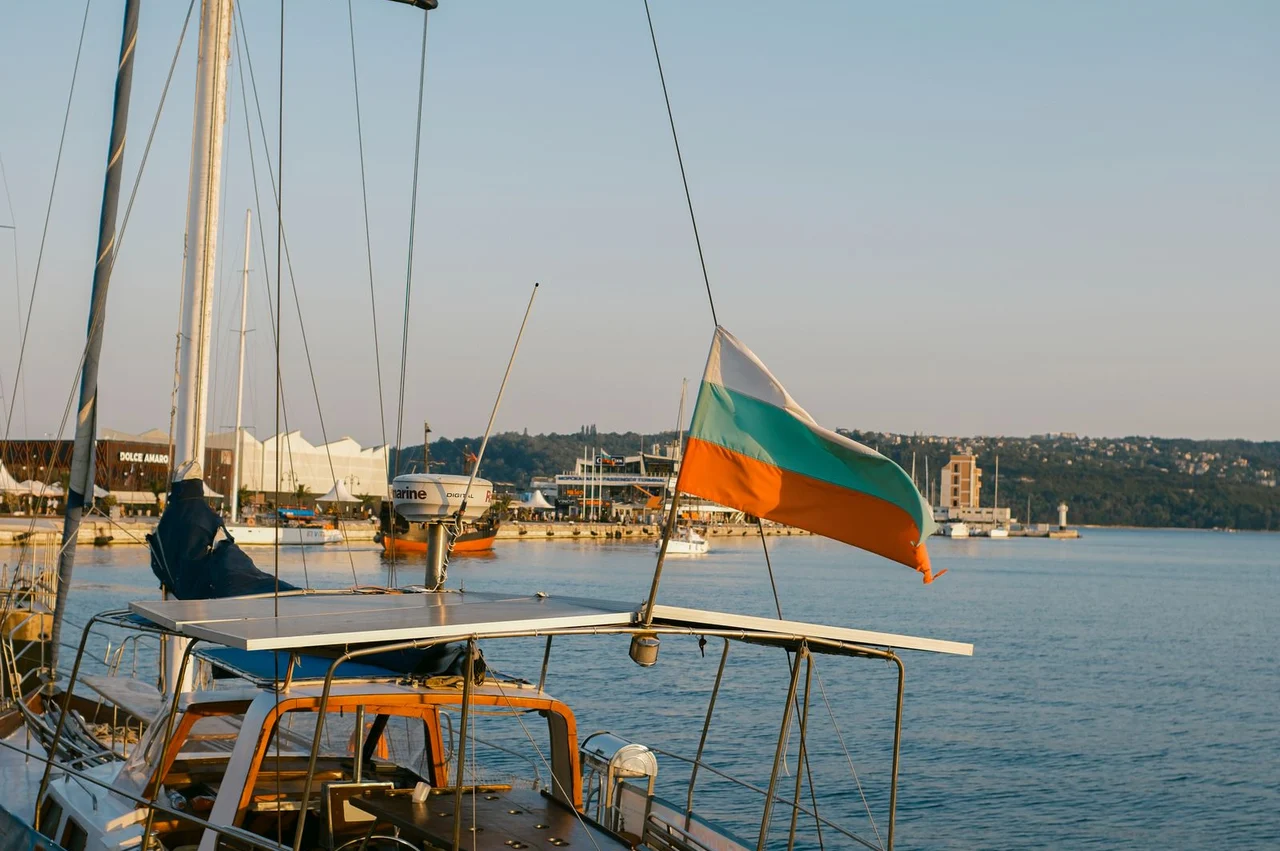 ComparisonCitizenship of Bulgaria or Hungary: EU passport by roots
 AnalysisWhat is due diligence and why the Caribbean is rejecting applications
 ArticleHungarian Citizenship 2026: All Ways to Obtain an EU Passport
Personal programme selection is conducted by Anna Kovalevskaya, Head of Legal, BRIDGES.
Citizenship of Hungary: preparation checklist
Documents prepared in advance, source of funds checks and where applications usually fail.