Citizenship · Romania
Documents for Romanian citizenship: complete list 2026

Updated: June 2026·9 min read·Expert reviewed
Terms and costs verified: June 2026
Contents
Romanian citizenship by descent is one of the most sought-after paths to an EU passport for CIS residents. Moldova, Ukraine, parts of Russia—tens of thousands of people have Romanian roots and the right to restore citizenship under Article 11 of the Citizenship Law. However, it is precisely at the document collection stage that most cases stall or are rejected. Not because the person lacks grounds—but because the package is assembled incorrectly: wrong translation, apostille on the wrong document, birth certificate from archive without required stamps. I have worked with Romanian citizenship for several years. I will break down the document list specifically: what is needed, in what form, where to obtain it, and where mistakes occur most frequently.
Who has the right and why this matters before document collection
Before assembling the package, you need to understand the legal basis for your application. Article 11 of the law applies to descendants of Romanian citizens who lost citizenship involuntarily: as a result of deportations, Soviet annexation of Bessarabia and Northern Bukovina (1940), forced change of citizenship. This directly affects which documents are needed. If your ancestor was a Romanian citizen before 1940 from Moldova or Chernivtsi region, the logic is one thing. If it concerns a Romanian citizen who emigrated in the 1930s—another. The volume and composition of the package depend on the length of the kinship chain and which archives hold the necessary documents.Chain principle: from ancestor to you
The main rule that many overlook: each link in kinship must be documentally confirmed. You cannot simply show a great-grandmother's birth certificate and your birth certificate—all intermediate documents are needed. Example of a three-generation chain: - Birth certificate of great-grandmother (Romanian citizen, born in Bessarabia) - Birth certificate of grandmother (daughter of great-grandmother) - Marriage certificate of grandmother (if surname changed) - Birth certificate of applicant's mother/father - Marriage certificate of parents (if applicable) - Birth certificate of applicant If someone in the chain died—a death certificate is required. If divorced—a divorce certificate. There should be no gaps.Documents of Romanian ancestor-citizen
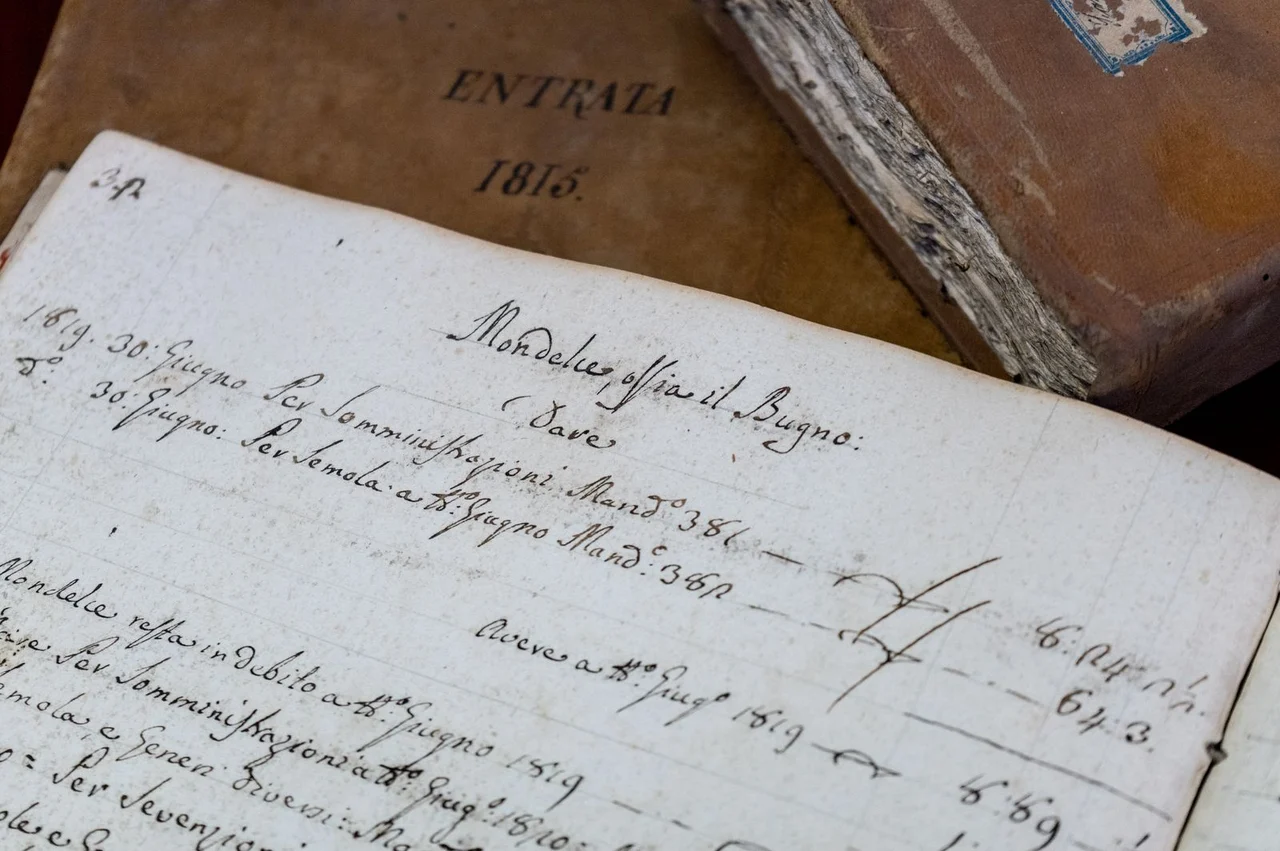
This is the foundation of the entire case. You must prove that a specific person was indeed a Romanian citizen and lost citizenship involuntarily. What to request: - Birth certificate (vital record) from Romanian or Moldovan archive - Marriage certificate (if applicable and surname changed) - Documents confirming the fact of residence in Romanian territory or loss of citizenship Where to look: National Archives of Romania, State Archives of the Republic of Moldova, Chernivtsi Regional Archives (Ukraine), State Archival Service of Ukraine. Requests can be submitted directly or through intermediaries with agreements with archives. Format: original or certified archival copy. Mandatory: apostille (if document from Ukraine or Moldova) and notarized translation into Romanian.Birth certificates of entire chain up to applicant
Each document of an intermediate link is a birth certificate, marriage certificate, death certificate, or divorce certificate. The logic is simple: no document—no proof of kinship. Practical points: - Soviet birth certificates in Russian must be translated into Romanian with notarized certification - If Soviet vital record was reissued (duplicate certificate, form No. 2)—the current version with archival notation is required - Documents from Russia, Kazakhstan, Belarus—apostille + translation - Documents from Moldova—apostille (Moldova in Hague Convention since 2007) - Ukraine—apostille Special case: if someone in the chain changed their name or surname (not just through marriage, but by personal statement in USSR)—a document on name change is needed.Applicant's documents
Two documents are required here:Internal passport (for Russian citizens—RF passport, for Kazakhstan—identity card, etc.)
International passport Both are needed: internal confirms identity in country of residence, international—for registration of Romanian passport after obtaining citizenship. Format: notarized copies with translation into Romanian. Originals are presented upon personal appearance. Important: international passport validity period. If it expires in the next 12–18 months—it is better to replace it before submission or have a new one by procedure completion.Criminal record certificate
Required from each country where applicant lived for the last 5 years. If lived in Russia entire time—one certificate from Russian Interior Ministry. If lived in Russia and Kazakhstan in recent years—from both countries. For Russian citizens: certificate issued through Interior Ministry (information center of regional police) or MFC. Term—up to 30 days. Certificate requires apostille and notarized translation. Important nuance: certificate has limited validity period for foreign proceedings purposes. Romanian side accepts certificates not older than 6 months as of submission date. Schedule document collection so the certificate does not expire while preparing other documents.We will select optimal route for your goals, verify documents, and guide from application to result.
Get analysis →State fee and payment receipt
State fee amount—approximately 200 Romanian lei (about 40 €). Payment made: - At ANR (National Citizenship Agency) cashier in Bucharest when submitting in person - By bank transfer to ANR account when submitting through consulate Payment receipt is attached to document package. Without it, application is not accepted for review. Note: if submitting through Romanian consulate abroad, clarify current payment procedure—it may differ from direct submission in Bucharest.Apostille required on all foreign official documents—that is, all documents not of Romanian origin. By each country: - Russia: Ministry of Justice (through MFC or directly). Term—from 5 business days - Ukraine: Ministry of Justice of Ukraine or its regional offices - Moldova: Ministry of Justice of RM - Kazakhstan: Ministry of Justice of RK - Belarus: Ministry of Justice of RB Common mistake: apostille placed on copy, not original. Apostille is placed only on original document or notarized copy—depending on requirements of specific archive or issuing authority. Another mistake: apostille present, but translator translates only main document, ignoring apostille text. Translation must include apostille sheet.
"I have worked with Romanian citizenship by descent long enough to know: most refusals and case returns are not a problem of grounds. Grounds exist for almost everyone who contacts us. The problem is documents. The most common story: person spent six months independently collecting, confident everything is complete, comes to pre-submission consultation—and we discover three or four critical gaps. Translator without accreditation. Apostille on copy, not original. No grandmother's divorce certificate—meaning break in chain. Criminal record certificate already expired by the time other documents were ready. It is important to understand ANR's logic: they do not help fix packages. They either accept it or return it with formal indication of deficiencies. Sometimes the indication is so general that it is unclear what is wrong. And the case goes through another round. Another point rarely considered at document collection stage: tax planning. Romanian passport is a tool. Many use it for relocating within EU or opening business in Europe. But if you simultaneously maintain assets or a business at home - in Russia, Kazakhstan or any other country - you need to understand in advance how your tax status will change and what obligations arise. Sometimes it is better to restructure assets first, then change residency. This is not a citizenship question, but planning—however, it must be done in parallel, not after."
Translation into Romanian must be performed by a certified translator and notarized. Here are two options: (1) The translation is completed in the country of origin by a certified translator, after which an apostille is affixed to the translation; (2) The translation is completed in Romania or at the Romanian consulate by an accredited translator. Option 2 is often simpler and more reliable: Romanian translators are familiar with ANR requirements and format documents correctly. Lists of accredited translators are published by the Romanian Ministry of Justice. Not accepted: translations from standard translation agencies without accreditation, translations without notarization, machine translations with any certification.Where to submit: ANR or consulate
There are two submission routes: (1) Directly to ANR (Agenția Națională pentru Cetățenie) in Bucharest—in person or through an authorized representative with a notarized power of attorney; (2) Through the Romanian consulate in the country of residence. Submission through the consulate is more convenient geographically, but often slower: the consulate forwards documents to ANR, adding an extra step. Personal appearance in Bucharest allows you to immediately receive confirmation of case acceptance and remedy any remarks on site. After obtaining citizenship—oath ceremony and receipt of citizenship certificate. With it, you can then apply for a Romanian passport and ID card.Document package verification before submission: what to check
Before sending documents, be sure to verify: (1) Matching names and dates throughout the entire chain. Soviet documents often contain discrepancies: "Mariya" and "Mariya," "1936" and "1937." Each discrepancy must be explained or eliminated through an archival certificate; (2) Currency of criminal record clearance certificate (not older than 6 months); (3) Apostille is affixed to the correct document, not to its copy without notarization; (4) Translation covers the entire text of the document including the apostille; (5) All application forms are completed in Romanian without hand corrections; (6) Receipt of state fee payment is attached. Any of these oversights is grounds for return of the case without substantive consideration. The timeline is lost in this case.Typical mistakes I see in practice
Frankly, most cases that come to us after independent attempts contain the same problems. Mistake 1: Incomplete chain. A person brought their great-grandmother's birth certificate and their own birth certificate—and thinks that is sufficient. It is not. Mistake 2: Apostille is outdated. An apostille has no expiration date in itself, but some countries issue documents with an expiration date notation—you need to check. Mistake 3: Translator is not accredited. Translation was done at a standard bureau, there is a nice seal, but the translator has no accreditation—ANR will not accept this. Mistake 4: Name changes are not taken into account. Grandmother was married twice—both marriage certificates and divorce certificate (or death certificate of the first husband) are needed. Mistake 5: Documents from different periods. Soviet birth certificates were sometimes re-registered in the 1990s—you need exactly the version that matches archival data.Tax aspect: what changes after obtaining Romanian citizenship
This is a topic rarely discussed when collecting documents—and for good reason. Romanian citizenship itself does not make you a tax resident of Romania. Tax residency is determined by other criteria: place of residence, center of vital interests, length of stay (183 days). However, if you plan to relocate to Romania or use a Romanian passport to obtain residence permit in another EU country—you need to plan the tax implications in advance. Romania has double taxation avoidance agreements with most CIS countries, but the tax credit mechanism works differently depending on income structure. If you have a business, real estate, or investments in your current country of residence—do not postpone tax planning until "after obtaining a passport." By that point, some windows may have closed.Realistic timelines: from document collection to passport
The official ANR consideration period is up to 12 months. In practice in 2024–2026, the actual timeline is 18–24 months due to high agency workload. Approximate timeline: (1) Document collection and preparation: 3–6 months (depends on chain complexity and archive availability); (2) ANR consideration: 18–24 months; (3) Oath ceremony and citizenship certificate receipt: 1–2 months after decision; (4) Romanian passport and ID card issuance: 1–3 months. Total from beginning of document collection to Romanian passport in hand: realistically 2.5–3 years. This must be taken into account when planning relocation, business launch, or obtaining residence permit in another EU country.When to seek professional help
People with a short and simple chain handle it independently: one ancestor, well-preserved documents, no name changes or discrepancies. You should consult a specialist if: (1) Chain spans three or more generations; (2) Documents from multiple countries and archives; (3) There are discrepancies in names, dates, surnames; (4) Some documents are lost and recovery is needed through court or archival requests; (5) Ancestor lived in territory that changed state affiliation (Bessarabia, Bukovina, Transylvania); (6) There is no confidence in the legal clarity of the kinship chain. An error in submission means loss of time and repeated document expenses. Professional package verification before submission costs less than redoing everything a year later.Frequently asked
Questions people ask before deciding
01Do I need to know Romanian to obtain citizenship by descent?
No. Article 11 of the Citizenship Law does not require language knowledge for citizenship restoration by descent. A language requirement exists for naturalization, but not for this procedure. However, applications and forms must be completed in Romanian.
02Can I submit documents through a representative without personal presence?
Yes. Submission through an authorized representative is possible via notarized power of attorney, drawn up in Romanian or translated with apostille. Personal presence is mandatory only at the oath-taking stage after a positive ANR decision.
03What should I do if ancestor's documents are lost or the archive burned down?
Alternative sources exist: church registers, which have been preserved in many archives in Moldova, Ukraine, and Romania; judicial establishment of kinship; requests to parallel archives (military records, tax registers, voter lists). It is more complicated, but possible—the key is to start with a comprehensive archive search.
04What is the validity period of a criminal record certificate for Romanian citizenship?
ANR accepts certificates issued no earlier than 6 months before application submission. This is one of the most frequently violated deadlines: the certificate is obtained at the beginning of document collection, but by the time the package is ready, it is already outdated.
05Do Romanian documents from Romanian archives need an apostille?
No. An apostille is required only for foreign documents—those issued outside Romania. Documents from Romanian state archives or civil registry offices are accepted without an apostille.
06Can I include children in a citizenship restoration application?
Yes. Minor children of the applicant can be included in the application. For each child, a birth certificate with apostille and translation is required. If the child is older than 14—their personal consent is required.
07What if there are discrepancies in name spelling in documents?
Discrepancies must be explained documentally. In simple cases, an archive certificate confirming it is the same person is sufficient. In complex cases, a court decision establishing identity may be required. Discrepancies cannot be ignored: ANR notices them.
08Will I retain my current citizenship after obtaining Romanian citizenship?
It depends on your country of citizenship. Romania allows dual citizenship—there are no restrictions on Romania's side. But Russia, for example, in most cases does not recognize dual citizenship de jure, although it does not revoke citizenship automatically. Before applying, you should study your country's legislation.
09How much does the complete process of obtaining Romanian citizenship cost?
State fee—approximately 200 lei (≈40 €). Other expenses: archive requests and extracts (100–500 € depending on quantity and country), apostilles (30–60 € per document), notarized translations (50–150 € per document), legal support if needed (1,500–5,000 €). Total independently—from 500 to 2,000 €; with professional support—from 3,000 €.
10Can application review be expedited?
There is no official expediting mechanism. ANR considers cases in order. The only thing that realistically speeds up the process is a perfectly assembled package without comments during initial review. Any document return for revision adds several more months to the timeline.
11Do I need to renounce my current citizenship when obtaining Romanian citizenship?
On Romania's side—no, renunciation is not required. Romania recognizes dual citizenship and does not require renouncing the previous one. The question is in your country's legislation: you need to study what consequences arise from having a second citizenship.
12What does a Romanian passport provide practically?
Romania is an EU and Schengen zone member (fully as of 2024). A Romanian passport provides: the right to live and work in any EU country without permits, visa-free entry to 170+ countries including the USA and Great Britain, the right to open accounts and companies in the EU as an EU citizen, access to the European healthcare and education system.
Transparency
How this material was prepared
- Author
- Martina Veber, head of Case Processing, BRIDGES
- Terms and costs last verified
- June 2026
- Sources
- official government authorities of the relevant country and state publications
- Methodology
- government minimum requirements are stated separately from due diligence charges, state fees, legal and banking costs
Sources and methodology
Figures, terms and timelines are checked against official sources as of June 2026. Link availability verified in August 2026. Third-party blogs and agent websites are not used as a source of programme terms.
- [1]Inspectoratul General pentru ImigrăriResidence permits and stayigi.mai.gov.ro
Methodology: tables and charts state government minimum investment requirements; due diligence charges, state fees, legal, banking and other costs are calculated separately and are not included in the minimum thresholds.
About the author
Related materials
What to read next
 ComparisonAntigua and Barbuda or Grenada: Family Passport for Large Families in 2026
 AnalysisWhat is due diligence and why the Caribbean is rejecting applications
 ArticleRomanian citizenship for Moldovans: simplified path to the EU in 2026
Personal programme selection is conducted by Anna Kovalevskaya, Head of Legal, BRIDGES.
Citizenship of Romania: preparation checklist
Documents prepared in advance, source of funds checks and where applications usually fail.