Citizenship · Romania
Romanian citizenship for Russians: is it possible to obtain in 2026

Updated: June 2026·11 min read·Expert reviewed
Terms and costs verified: June 2026
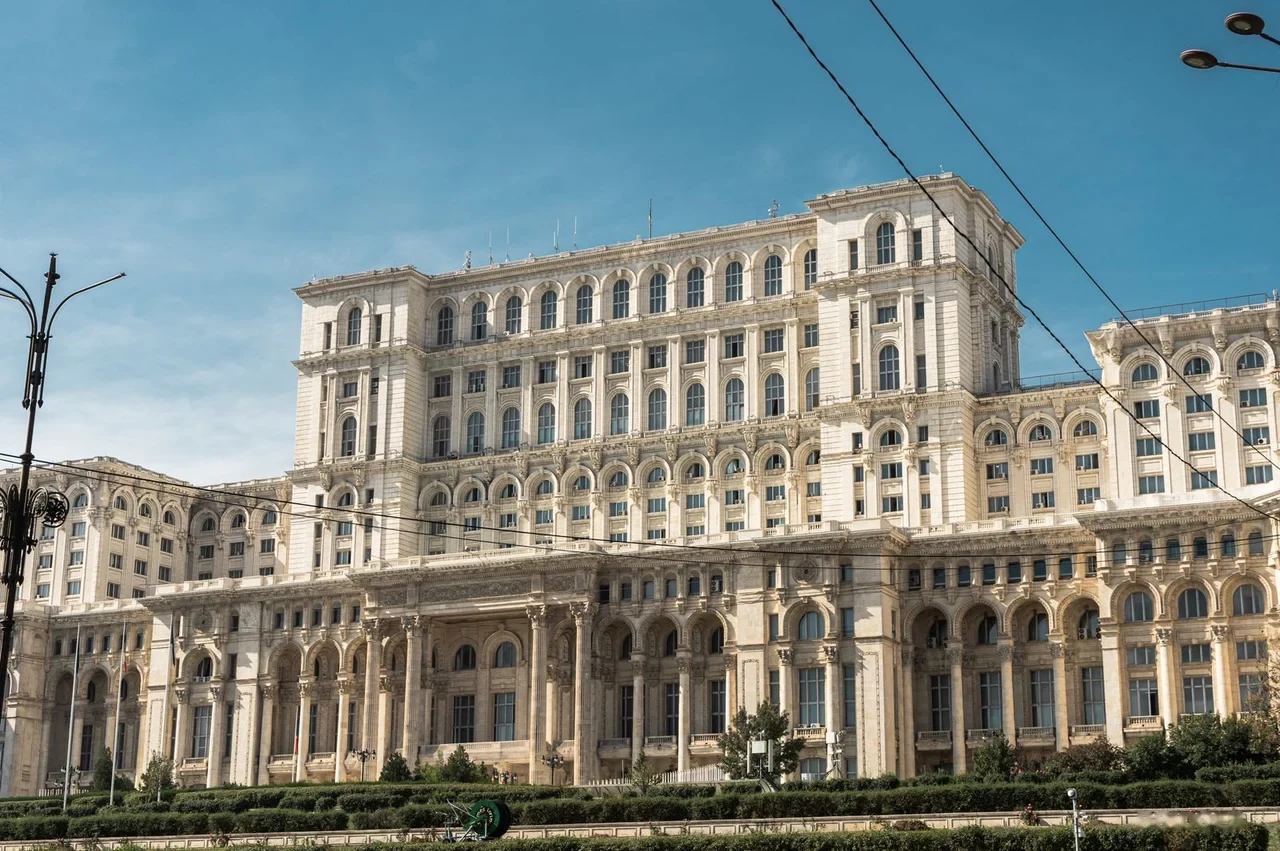
Contents
Who this is for. This article is written for citizens of Russia. Visa, banking, sanctions and dual citizenship rules depend on your passport: for other nationalities they may differ.
Romania is one of the few ways to obtain an EU passport through ancestry rather than investment. For Russians, this is particularly relevant: a significant portion of families from the Chernivtsi region of Ukraine, Moldova, and former Northern Transylvania have Romanian roots. The program is called "restoration of citizenship" - in Romanian redobândirea cetățeniei române. Legally, this is neither naturalization nor purchase: the state recognizes that you or your ancestors were Romanian citizens and restores this status. No need to reside in Romania. No language examination is required for the applicant. To be, in my practice this is one of the most complex routes in terms of archival work - and one of the most valuable in terms of results. A Romanian passport opens access to Schengen, the United Kingdom, visa-free entry to 170+ countries. If there are no roots - there is a path through naturalization: 5 years of legal residence plus language. We will review both options.
Which Russians can claim Romanian citizenship
The citizenship restoration program applies to descendants of people who were Romanian citizens before June 28, 1940. This was the day the USSR annexed part of Romanian territory. For Russians, this is realistic if the family has roots in three regions: **Bukovina** - today this is the Chernivtsi region of Ukraine. Before 1940 - part of Romania. Many families from Chernivtsi, Storozhynets, Vyzhnytsia have Romanian citizenship in their genealogy. **Bessarabia** - today this is Moldova and part of the Odesa region of Ukraine. Before 1940 - part of Romania. The majority of Moldova's citizens have obtained a Romanian passport through this route. **Northern Transylvania** - part of modern Romania, which from 1940 to 1944 was under Hungarian administration. The logic here is slightly different, but the basis is the same. If your grandfather or great-grandmother was born in one of these regions before 1940 and had Romanian citizenship - you can apply. There is no legal limit on the depth of kinship: great-grandchildren and great-great-grandchildren also have the right.Citizenship restoration program conditions
Requirements are established in the Romanian Citizenship Law (Legea nr. 21/1991). Key conditions: **1. Ancestor was a Romanian citizen** before losing citizenship as a result of political changes (1940, 1947, or 1952 depending on the specific situation). **2. Continuous chain of documents** from you to this ancestor. Each document - birth certificate, marriage certificate - must confirm the generational link. **3. Apostilles and translations** of all foreign documents. Ukrainian and Moldovan archive certificates must be apostilled and translated into Romanian. **4. No criminal record.** A certificate of no criminal record from the country of residence will be required. **5. Renouncing Russian citizenship is not required.** Romania recognizes dual citizenship. The Russian side formally does not recognize it - but de facto most clients retain both passports without consequences. No need to reside in Romania to obtain citizenship on this basis. Taking a language examination is not required either, although basic language knowledge is welcomed during interviews at ANC (National Citizenship Authority).Where to find documents: archives for Bukovinians and Bessarabians
This is the most labor-intensive part. Most applications fail here - not because of lack of ancestry, but because documents are collected incorrectly. **For Bukovinians (Chernivtsi region of Ukraine)** The main archive is TsIAHK Ukraine (Central State Historical Archive in Kyiv). Metric books of Orthodox, Catholic, and Greek Catholic parishes of Bukovina are stored here. The State Archive of Chernivtsi region also operates - for Soviet-era documents and part of pre-Soviet records. Requests can be sent by mail or through authorized representatives. Execution time - from 1 to 6 months. **For Bessarabians (Moldova)** The National Archives of the Republic of Moldova (ANRM) in Chișinău. Metric books of Bessarabian parishes and documents from the Romanian period of 1918–1940 are concentrated here. When documents are lost at one generation level, indirect evidence sometimes helps: census records, lists of voters from the Romanian period, property documents. **What to do if documents are lost** Wars, Soviet re-registrations, archive fires - documents may be missing. In this case, two paths are possible: recovery through court decision (fact determination) or search for parallel sources - church books, notarial registers, land ownership documents.Application procedure through ANC: step by step
ANC - Autoritatea Națională pentru Cetățenie - is the only body that accepts applications for citizenship restoration. **Step 1. Document collection** Birth records of the entire chain from you to the ancestor-Romanian citizen. Marriage certificates where surname changed. An archive certificate confirming the ancestor's Romanian citizenship. **Step 2. Apostille and translation** All foreign documents (Ukrainian, Moldovan, Russian) are apostilled in the country of issue. Then translated into Romanian by a translator accredited in Romania. **Step 3. Submit application** Personally at the ANC office in Bucharest. Or through the Romanian consulate - this takes longer but allows you to avoid traveling to Romania at this stage. **Step 4. Review** Legal deadline - 6 months, actual - 12–24 months. ANC checks documents and requests additional materials if necessary. **Step 5. Oath and passport receipt** After approval, you must personally appear in Romania and take an oath. This is mandatory. After the oath - issuance of citizenship certificate, then passport and identity document.We will map your route to a second citizenship
We review your family, source of funds and timing and tell you which route fits.
Cost: how much does Romanian citizenship through ancestry cost
There are no official investment thresholds - this is not an investment program. But expenses are still significant. **Archive requests:** $200–800 per archive depending on search scope and urgency. With a deep chain (3–4 generations) - $1,500–3,000 for archives alone. **Document apostille:** $30–80 per document. For 10–15 documents - $300–1,200. **Translations to Romanian:** $40–100 per document. Complex Soviet documents with non-standard formulations - more expensive. **ANC state fee:** approximately 70 EUR for application review. **Legal support:** $3,000–8,000 depending on case complexity, firm, and scope of archival work. **Trip to Romania for oath:** flight + hotel + 1–2 days. Budget $400–800. **Total independently:** from $2,000 with ideal documents. **Total with full support:** $6,000–15,000. There is an important nuance: with an incomplete document set, ANC may refuse. Resubmission - another fee and another wait. Saving on lawyers often results in loss of time and money.Real timelines: why 2 years is the norm
The law says "6 months." Reality is different. ANC is systematically overloaded. Tens of thousands of applications arrive annually - mainly from Moldova, Ukraine, Russia. The review queue has extended. In my practice, the average time from submission to approval is currently 18–24 months. Cases with incomplete documents or requests for additional materials - up to 36 months. What affects speed: - Completeness of documents at first submission - key factor - Submission through Bucharest is faster than through consulate - Complexity of archival chain: 2 generations easier than 4 - Region of ancestor: Bessarabian cases historically reviewed slightly faster Application is submitted once. There are no official "accelerations." This must be taken into account when planning.Naturalization: path for those without Romanian roots
If proving Romanian descent is impossible, the standard path remains - naturalization. **Requirements:** - 5 years of legal continuous residence in Romania (residence permit) - Knowledge of Romanian language - A2/B1 examination - Basic knowledge of the Constitution and country's culture - Proof of housing and means of subsistence - No criminal record - Renouncing current citizenship is not formally required, but Romania notifies - the dual citizenship issue is decided at the country-specific level **For Russians in 2026** the main challenge is obtaining initial residence permit. After February 2022, Romania, as an EU member, is under general pressure regarding visa and residence permit issuance to Russian citizens. Work permits, student visas, family reunification - are granted but checked more thoroughly. This path takes 6–7 years from relocation to passport. For most clients who have even the slightest possibility of proving ancestry, the path through redobândirea is more rational.How to check if you have Romanian roots
First step - interview elderly relatives. Often it turns out that grandmother or great-grandmother is "from somewhere near Chernivtsi" or "from Moldova before the war." **Signs to pay attention to:** - Names with characteristic Romanian endings: -eanu, -escu, -yanu, -ul - Mentions of Chernivtsi, Khotyn, Soroca, Beltsy, Izmail as birthplace of elder relatives - Orthodox or Greek Catholic faith in the family from these regions - Documents in two languages - Russian and Romanian **What to do next:** Request an archive certificate from TsIAHK (Ukraine) or ANRM (Moldova) with the ancestor's name and approximate birth date. The archive will check for existence of metric records. If the request confirms existence of records - further work with documents. If not - check parallel sources: church books, the Romanian Academy, which has digitized some documents. I regularly see clients decline to check, deciding in advance that "there are no roots." But 2–3 hours of archival search reveals documents that completely change the picture."I want to say directly: Romania is one of the most underestimated routes to an EU passport among my Russian clients. In my practice, about 30% of Russians who come with a request for "I want an EU passport," upon closer conversation, discover Romanian roots. Bukovina and Bessarabia are huge regions that changed state affiliation several times in the 20th century. People simply do not know their family history at the level of detail needed for archival research. What I particularly value as a lawyer in this program: there is no investment threshold. You do not need to invest €300,000 or €500,000. You need to prove a fact. This is fundamentally different logic. The flip side is the complexity of archival work. Soviet re-registrations destroyed some documents. Church books burned in war. Families changed surnames when moving to Russia. I have seen cases where searching for one record took six months and required requests to three different archives. But here is what is important: even partially preserved documentation is not the end. In Romanian judicial practice, there is a mechanism of "fact determination," where a court establishes the fact of an ancestor's citizenship based on indirect evidence. It takes longer - another 6–12 months - but it works. I will also mention dual citizenship separately. Romania permits it by law. Russia de jure does not recognize it, but de facto there are no sanctions for the mere fact of having a second passport - only administrative notification to the Interior Ministry. I have worked with dozens of clients in this situation. There are pitfalls, but they are solvable with proper planning."
Romanian passport: what it gives in 2026
Romania is an EU member since 2007. The passport grants EU citizenship with all the accompanying rights. **Visa-free entry:** Schengen zone, United Kingdom, United States (via ESTA), Canada, Japan, UAE - total 170+ countries. **Right to live and work in any EU country** without permits and restrictions. Germany, France, Netherlands - on a Romanian passport. **Opening accounts in European banks** without additional checks as for third-country citizens. **Business in the EU:** company registration in any EU country with full resident rights. **Important:** Romania is not yet part of the Schengen zone as regards land borders - only air and maritime. This restriction is being gradually lifted, and by 2026 significant portions of Schengen rules already apply. The passport is valid for 10 years (for adults). For children under 14 - 5 years.Typical mistakes that lead to refusal
Over the years of practice, I have witnessed several recurring scenarios. **Error 1: Incomplete document chain.** Documents are provided from you back to your grandfather, but without a vital record linking your grandfather to his father—a Romanian citizen. ANC will reject the application even if everything else is impeccable. **Error 2: Improperly apostilled documents.** The apostille must be issued in the country that issued the document. A Russian birth certificate requires apostille in Russia. A Ukrainian vital record requires apostille in Ukraine. Attempts to circumvent this procedure result in rejection. **Error 3: Translations from non-accredited translators.** ANC maintains a list of accredited translators. A translation from any other specialist will not be accepted. **Error 4: Documents that do not cover the required period.** You must prove your ancestor's citizenship prior to the date of loss—1940 or 1947. Post-war documents from the Soviet period without pre-Soviet documents do not provide sufficient grounds. **Error 5: Attempting to submit independently without archival verification.** Applicants spend money on apostilles and translations without first confirming that the necessary archival records have been preserved.Two paths: through ancestry or through residence—which to choose
Short answer: if there is even the slightest possibility of proving ancestry, pursue redobândirea. | Criterion | Citizenship Restoration via Ancestry | Naturalization | |---|---|---| | Residence in Romania | Not required | 5 years mandatory | | Language | Not required | A2/B1 exam | | Timeline | 12–24 months | 6–7 years | | Cost | $6,000–15,000 | Relocation + living expenses | | Complexity | Archival research | Residence permit bureaucracy | Naturalization is justified in two cases: when an individual wishes to relocate to Romania for other reasons, or when archival document searches have reached a genuine impasse.Russian citizens with Moldovan ancestry: the dual pathway
A special case—Russians with roots in Moldova. Here, two parallel options open up: Romanian citizenship (through Bucharest) and Moldovan citizenship by descent. Moldova itself is not an EU member state—its passport does not provide work rights within the EU. However, a Moldovan passport allows visa-free entry into Romania and other EU countries (short-term). For most clients with Bessarabian ancestry, the target passport remains Romanian. Moldovan citizenship as an interim step is rarely used. Important note: the Romanian program does not require the applicant to first obtain Moldovan citizenship. You may apply directly to ANC with documents from Moldovan archives.Tax implications: what you need to know before obtaining a passport
As a tax consultant, I will add an important section—one that is often overlooked before obtaining a passport and later regretted. **Tax residency and citizenship are different things.** Obtaining a Romanian passport does not in itself make you a tax resident of Romania. Tax residency is determined by place of residence, center of vital interests, and number of days spent in the country. **Romania is not a tax haven.** The standard income tax rate is 10%, VAT is 19%. For those relocating to Romania, this is quite competitive by EU standards. **Dual citizenship Russia–Romania.** Russia does not officially recognize dual citizenship, and under Russian law you are obligated to notify the FMS of obtaining a second passport. This is an administrative procedure, not a prohibition. Tax obligations to Russia remain as long as you are a tax resident of the Russian Federation. **Exiting Russian tax residency** requires separate planning—183 days outside Russia per calendar year with documentary proof of new residency. I recommend addressing the tax question in parallel with the citizenship matter, not after.We will send a document checklist for your case
Leave your details: we will put together documents and timelines for your family.
How to begin: practical algorithm for Russians
**Step 1.** Interview relatives. Record: full names of ancestors, approximate birth years, names of settlements. **Step 2.** Determine the ancestor's region: Chernivtsi Oblast → Central State Historical Archive of Ukraine and State Archive of Chernivtsi Oblast; Moldova → National Archives of Moldova, Chişinău. **Step 3.** Send a preliminary inquiry to the archive. This can be done independently or through an intermediary. The goal is to confirm that documents have been preserved. **Step 4.** Create a document map. Which documents exist, which are missing, where to obtain them. **Step 5.** Prepare a complete package with apostilles and translations. Only after this—submit to ANC. **Step 6.** Register the submission, receive a reference number, and wait. **Step 7.** Upon approval—travel to Romania for the oath ceremony. After the oath—complete citizenship documentation. The entire process is manageable. The key is not to skip the archival stage and not to submit an incomplete set of documents.Frequently asked
Questions people ask before deciding
01Do I need to reside in Romania to obtain citizenship through ancestry?
No. The citizenship restoration program does not require residence in Romania. The only mandatory trip is for the oath ceremony after application approval. This typically takes 2–3 days.
02Up to which generation of ancestors is citizenship eligibility recognized?
Romanian law formally does not limit the depth of kinship. Great-grandchildren and great-great-grandchildren of Romanian citizens have the right to apply. However, with each generation, it becomes more difficult to compile a complete documentary chain.
03Do I need to know Romanian to obtain citizenship through ancestry?
Formally, no. A language exam is not required for the redobândirea program. However, at the final interview at ANC, basic understanding of Romanian creates a better impression. For naturalization, the exam is mandatory.
04Will I have to renounce Russian citizenship?
Romania does not require this. Romanian legislation permits dual citizenship. The Russian side formally does not recognize a second passport, but there are no penalties for its possession—only an obligation to notify the Russian Interior Ministry within 60 days.
05What should I do if ancestors' documents are lost or destroyed?
This is solvable but more complex. Options include: searching parallel archives (church records, voter lists, land documents), requesting documents from the Romanian Academy (some documents are digitized), or judicial establishment of fact through attestation. The timeline increases by 6–18 months.
06How much time does the entire process realistically take?
With a complete set of documents—18–24 months from submission to oath. If documents need to be requested or submission is through a consulate—up to 36 months. The archive stage before submission takes an additional 3–6 months.
07Can I submit an application through the Romanian consulate without traveling to Romania?
Yes. The application can be submitted through the Romanian consulate. This is convenient but takes longer—the consulate forwards documents to ANC in Bucharest. You will still need to attend the oath ceremony in person.
08Does the program work for Russian citizens with Moldovan ancestry?
Yes. Bessarabia was part of Romania until 1940. Descendants of Bessarabians—both with Moldovan and Russian citizenship—have the right to restore Romanian citizenship. Documents are requested from the National Archives of Moldova in Chișinău.
09What tax consequences does obtaining a Romanian passport entail?
A passport and tax residency are different things. Obtaining Romanian citizenship does not automatically make you a Romanian taxpayer. Tax obligations are determined by place of actual residence and center of vital interests. This question requires separate analysis.
10What does a Romanian passport provide in practical terms?
EU citizenship: the right to live and work in any EU country without permits. Visa-free entry to 170+ countries—Schengen, United Kingdom, USA (ESTA), Canada, UAE. Access to European banks and the ability to register a business in the EU as a citizen.
11Can restoration of citizenship be denied if all documents are in order?
Theoretically, ANC can deny based on grounds related to state security threats or criminal convictions. In practice, with a complete and properly prepared document package and a clean background, denials are rare. Most denials result from incomplete or improperly prepared documents.
12Does BRIDGES GLOBAL assist with searching for archival documents?
Yes. BRIDGES GLOBAL supports the entire process: from preliminary archive verification to submission to ANC and coordination of your trip for the oath ceremony. During the consultation phase, we assess whether there are grounds for submission and which documents need to be found.
Transparency
How this material was prepared
- Author
- Daniel Kovach, senior International Law Attorney, BRIDGES
- Terms and costs last verified
- June 2026
- Sources
- official government authorities of the relevant country and state publications
- Methodology
- government minimum requirements are stated separately from due diligence charges, state fees, legal and banking costs
Sources and methodology
Figures, terms and timelines are checked against official sources as of June 2026. Link availability verified in August 2026. Third-party blogs and agent websites are not used as a source of programme terms.
- [1]Inspectoratul General pentru ImigrăriResidence permits and stayigi.mai.gov.ro
Methodology: tables and charts state government minimum investment requirements; due diligence charges, state fees, legal, banking and other costs are calculated separately and are not included in the minimum thresholds.
About the author
Related materials
What to read next
 ComparisonAntigua and Barbuda or Grenada: Family Passport for Large Families in 2026
 AnalysisWhat is due diligence and why the Caribbean is rejecting applications
 ArticleRomanian citizenship for Moldovans: simplified path to the EU in 2026
Personal programme selection is conducted by Anna Kovalevskaya, Head of Legal, BRIDGES.
Citizenship of Romania: preparation checklist
Documents prepared in advance, source of funds checks and where applications usually fail.