Citizenship · Romania
Romanian citizenship for Moldovans: simplified path to the EU in 2026

Updated: June 2026·9 min read·Expert reviewed
Terms and costs verified: June 2026
Contents
Moldova is the absolute leader in the number of applicants for Romanian citizenship. According to ANC (National Citizenship Agency), more than 600,000 Moldovans have already obtained Romanian passports. Why so many? Bessarabia - present-day Moldova - was part of Romania from 1918 to 1940. Residents of those territories were Romanian citizens. Their descendants today have the right to restore this citizenship. The law on this is simple: Article 11 of Romania's Citizenship Law gives the right to anyone whose ancestor lived on Romanian territory before 1940 to apply for citizenship restoration. It is not necessary to prove residence over several generations - one ancestor is sufficient. about timelines: officially, the procedure takes 1 year. In reality - 2-4 years due to enormous queues at ANC. Moldova allows dual citizenship, so you do not need to surrender your Moldovan passport. A Romanian passport opens up the entire European Union: the right to live, work, and study in 27 countries without additional permits.
Why Moldovans have the right to Romanian citizenship
From 1918 to 1940, Bessarabia was part of Romania. In 1940, the USSR annexed the territory under the Molotov-Ribbentrop Pact. Residents living there before 1940 were Romanian citizens de jure. Romania recognized this historical fact and enshrined it in legislation: descendants of those people - in any generation - have the right to restore citizenship. Not to obtain new citizenship, but to restore what was lost. Important nuance: this applies not only to Moldova. The law applies to descendants of residents of Northern Bukovina (now Ukraine) and other territories that were part of Romania before 1940. But Moldovans are the largest category simply because all of present-day Moldova's territory is historically Bessarabian.Conditions for obtaining Romanian citizenship
There is one main condition: prove that at least one ancestor lived on Romanian territory before 1940 and had Romanian citizenship or resided there permanently. Who falls under the law: - Children, grandchildren, and great-grandchildren of Romanian citizens before 1940 - Descendants of persons who were unlawfully deprived of citizenship during 1940–1989 - The applicant himself if there is documented connection with an ancestor Additional requirements for the applicant: - Not convicted of crimes against humanity or war crimes - Does not pose a threat to Romania's state security or public order - Has legal capacity The ancestor's age is irrelevant. Only one thing matters: documenting that a specific person lived on Romanian territory before 1940.What documents are needed to submit an application
The document package is divided into two parts: the applicant's personal documents and documents on the ancestor. Applicant's documents: - Passport (Moldovan) - notarially certified copy - Birth certificate - Marriage certificate (if name was changed) - Certificate of no criminal record (from Moldova) - Application in the established form Ancestor's documents (chain up to the person before 1940): - Birth certificates for each intermediate generation - Documents confirming the ancestor's residence on Romanian territory All Moldovan documents are submitted with notarized translation into Romanian. Documents must be apostilled in Moldova. A separate question is where to obtain documents on the ancestor. The next section covers this.Archives: where to find documents on ancestors
This is the most labor-intensive stage. Documents from before 1940 are scattered across several archives. National Archives of Moldova (ANRM, Chișinău): stores metric books of Orthodox parishes in Bessarabia, documents of the Romanian administration 1918–1940, revision records, and other historical records. This is the primary source for most Moldovans. Archives of district centers of Moldova: some metric books are stored at the district level rather than in the central archive. Archives of Romania: Archives of Romania's Interior Ministry (SIPA) and regional archives store some documents from the period of Greater Romania. It is worth contacting them if documents are not found in Moldovan archives. From my practice: documents are found in approximately 80% of cases if the ancestor definitely lived in Bessarabia. It is more difficult when the family moved, changed surnames, or when archive collections were destroyed during the war years.Order of application submission: step by step
Step 1. Gather and translate documents. All documents are translated into Romanian by a certified translator. An apostille is affixed in Moldova to the originals. Step 2. Schedule an appointment with ANC. ANC is the National Citizenship Agency under Romania's Ministry of Justice. An application can be submitted in person in Bucharest or through the Romanian consulate in Chișinău (Mircea cel Bătrân Street, 25a). Step 3. Submit the application. At the appointment, the staff member verifies that all documents are complete. The application is registered and assigned a case number. Step 4. Await consideration. ANC reviews the documents and, if necessary, makes requests to archives. The majority of time is spent at this stage. Step 5. Oath. After a positive decision, the applicant takes an oath of allegiance to Romania. This can be taken in Bucharest or at the consulate in Chișinău. Step 6. Obtain documents. After the oath, a citizenship certificate is issued. With it, a Romanian passport and identity card are arranged.Actual timelines: why 2-4 years and not 1
By law, ANC is obligated to consider an application within 1 year. In practice, this does not work. The reason is the volume of applications. ANC receives tens of thousands of applications per year, not only from Moldovans, but also from Ukrainians and Romanians from the diaspora. There are not enough staff members. Archive requests are processed over months. Average timelines in 2024-2026: - Appointment scheduling for initial consultation at the consulate in Chișinău: 3-6 months wait - Case review at ANC: 18-36 months after submission - Total from start to oath: 2-4 years There are cases where the procedure took 5 years. There is no official way to expedite the review - the law does not provide for paid priority. What actually speeds things up: a complete and properly assembled document package on the first try. If ANC requests additional documents, timelines increase by another 6-12 months.Cost: what to pay and what is free
State fee for application review: 0 lei - the procedure is free. However, there are real expenses: Document preparation: - Notarized translation of each document: 300-600 MDL per page - Apostille: 200-300 MDL per document - Archive certificates: 50-300 MDL per request (depending on urgency) Trips to Bucharest (if submitting in person): - Transport + accommodation: $200-400 per trip - Usually 2 trips are needed: submission and oath Consular fee for passport (after citizenship is obtained): - Standard Romanian passport: 258 RON (~$60) - Expedited: 391 RON (~$90) Services of intermediaries (optional): - Legal support and document search: $500-2000 depending on complexity Total independently: $300-600 with minimal trips. With legal assistance: $1000-2500.We will map your route to a second citizenship
We review your family, source of funds and timing and tell you which route fits.
Dual citizenship: Moldova and Romania simultaneously
Moldova officially permits dual citizenship - this is enshrined in Moldova's Citizenship Law. You do not need to surrender your Moldovan passport when obtaining a Romanian one. Romania also permits its citizens to hold other nationalities. In practice, this means: after obtaining a Romanian passport, a person remains a citizen of Moldova with all rights and simultaneously becomes an EU citizen through Romania. Important for taxes: having two passports itself does not change tax status. Tax residency is determined by place of actual residence (the 183-day rule), not by passport. If a person continues to live in Moldova, they remain a tax resident of Moldova.What a Romanian passport gives to a Moldovan citizen
Right to live and work in the EU without visas and permits. All 27 EU countries are open without additional procedures. Visa-free entry to 170+ countries worldwide - including the United States, Canada, the United Kingdom, Japan, and Australia. For comparison: a Moldovan passport provides visa-free entry to approximately 120 countries. Access to European education at EU citizen prices. Study at Romanian, German, French, Dutch universities without a surcharge for foreigners. Healthcare and EU social programs. When relocating to any EU country - access to the local healthcare system equal to citizens. For business: company registration in any EU country without additional permits. Opening bank accounts in European banks. Important to note: a Romanian passport by itself does not change tax status and does not automatically mean the right to benefits in other EU countries - these must be earned through actual residence and work.How to check your chances before starting the procedure
The first step is to establish which of your ancestors lived in Bessarabia before 1940. For most Moldovans, these are grandfathers or great-grandfathers. A simple check using family documents: if the birth certificate of your grandfather or great-grandmother lists a birthplace in Moldova, there is a high probability they lived there during the Romanian period. Request to ANRM: The National Archives of Moldova accepts requests to search for pre-revolutionary and interwar period documents. It is worth making a request before starting the application process to understand what has been preserved. Checking by surname and locality: some metric books have been digitized. Family search resources (FamilySearch, Ancestry) contain digitized Romanian metrics from Bessarabia. What is a stop factor: if the family moved to Bessarabia from Russia after 1940, there is no right to Romanian citizenship through this line."I have been working in international taxation for ten years, and Moldovan clients are a separate category that I understand very well. Most of them perceive Romanian citizenship not as an 'investment tool,' but as a restoration of what was once taken from their family. It is a different emotion, a different motivation. In my practice, the most frequent question is 'do we have a chance?' And the answer is: if your family is from Moldova and grandfathers or great-grandfathers lived here, your chances are high. Documents exist in most cases. The question is to find them and process them correctly. What regularly frustrates me is that people put things off for years, saying 'we'll deal with it later.' Meanwhile, the queues keep growing. Those who applied in 2020 received their passport in 2023. Those applying now will likely receive it in 2028-2029. Each year of delay is another year without a European passport. A separate point about the tax side: I see a widespread misconception—people think that by obtaining a Romanian passport, they will automatically start paying taxes in Romania. This is not true. A passport and tax residency are different things. You live in Moldova—you pay in Moldova. There is no double taxation. Another point—entrepreneurs. Romanian citizenship opens very interesting opportunities through company registration in Romania. There is a preferential regime for micro-enterprises with a turnover of up to €500,000—an effective rate of 1-3%. But this requires real structuring, not just 'register and forget.' Come for a consultation—we'll work out your specific situation.'"
Typical mistakes that prolong the procedure
I regularly see the same mistakes that cost people an extra year of waiting. Incomplete document package. ANC requests missing papers by letter. While the applicant receives the letter, finds the documents, and sends them—6-12 months pass. Solution: have a specialist check your package in advance. Incorrect translation. The translator must be authorized in Romania or hold appropriate certification. Translation "from a neighbor" is not accepted by ANC. Missing apostille. All Moldovan documents must be apostilled. Many forget about intermediate birth certificates. Errors in the document chain. If your grandfather is listed in different documents with different name or surname variants (Romanized and Soviet)—additional certificates of identity are needed. Submitting without archival research. Some submit an application hoping ANC will find the ancestor itself. ANC does not search—you must provide the evidence yourself.Children and spouses: how to include them in the procedure
Minor children of the applicant can obtain Romanian citizenship simultaneously with the parent. To do this, they are included in the parent's application and do not submit separate applications. If both parents submit applications independently—each includes the children in their own application. Children will receive citizenship together with the parent whose case is reviewed first. A spouse has no automatic right to Romanian citizenship through marriage to the applicant. If the spouse has no own Romanian roots, they cannot apply under this procedure. An alternative path for a spouse: obtaining Romanian residence permit and subsequent naturalization after 8 years of residency (or 5 years if married to a Romanian citizen). Adult children (from age 18) submit separate applications and go through the procedure independently.Tax consequences for Moldovans with a Romanian passport
Obtaining Romanian citizenship in itself does not create tax obligations to Romania if a person continues to live in Moldova. Romania taxes only tax residents—those who spend more than 183 days per year on Romanian territory or have permanent accommodation there and a center of vital interests. If you obtained a Romanian passport but live in Moldova: - You are a tax resident of Moldova - You pay taxes in Moldova at Moldovan rates - No additional obligations to Romania If you move to Romania or another EU country: - You become a tax resident of the country of residence - Moldovan tax residency ceases (if residency change criteria are met) - You need to properly complete your exit from Moldovan tax residency For entrepreneurs: a Romanian passport opens the opportunity to register a company in Romania (corporate tax rate of 1-3% for micro-enterprises). But this requires real presence or appointment of a resident director.Submission through the consulate in Chisinau: nuances
The Romanian Consulate in Chisinau is the main submission point for Moldovans. You do not need to travel to Bucharest. Address: Mircea cel Batran Street, 25a, Chisinau. Appointment booking: through the consulate's official website. Queues for booking are 3-6 months. I recommend monitoring available dates: sometimes cancelled slots open up. What happens at the appointment: the officer checks the documents for completeness, accepts the application, transfers the case to ANC in Bucharest. The review itself already takes place in Bucharest. Oath ceremony: also administered at the consulate in Chisinau. After the oath, a citizenship certificate is issued, and the passport is then processed with it. Passport: processed in Romania (you can visit any passport center) or through the consulate. Through the consulate it takes longer—about 2-3 months. In Romania—7-30 days.We will send a document checklist for your case
Leave your details: we will put together documents and timelines for your family.
Summary: who should apply right now
The procedure is suitable for those who: - Have a documentable ancestor who lived in Bessarabia before 1940 - Have time to spare: plan for 3-4 years - Have no convictions for serious crimes To be : if you expect to get a passport in 1 year—this is unrealistic under current conditions. But if you are looking at a 3-4 year horizon, this is one of the most affordable ways to obtain an EU passport. For Moldovans, this is essentially a restoration of historical justice enshrined in law. More than 600,000 people have already gone this route—this shows that the procedure works. First step today: ask older relatives about grandfathers and great-grandfathers. Find out the localities. Make a request to ANRM. This will take a month, but will give you an understanding: do you have grounds to apply?Frequently asked
Questions people ask before deciding
01How many generations are eligible for Romanian citizenship?
The law does not limit the number of generations. The right extends to children, grandchildren, great-grandchildren, and more distant descendants of citizens or residents of Romanian territory before 1940. The main requirement is to documentarily prove the chain of kinship to a specific ancestor.
02Is it necessary to know the Romanian language to obtain citizenship?
No. Knowledge of the Romanian language is not a mandatory requirement for obtaining citizenship under Article 11 (restoration by descent). Unlike ordinary naturalization, a language exam is not required.
03Is it necessary to live in Romania to obtain citizenship?
No. A residence requirement in Romania is not necessary. You can continue living in Moldova, gather documents, and submit an application through the consulate in Chișinău.
04Will you have to renounce Moldovan citizenship?
No. Moldova permits dual citizenship at the legislative level. After obtaining a Romanian passport, Moldovan citizenship is retained automatically—no renunciation statements need to be submitted.
05Can an application be submitted if the ancestor is deceased and there are no living witnesses?
Yes. The procedure is based on documents, not witness testimony. You need to find archival documents: vital records, birth certificates, documents from Romanian administration from 1918-1940. Witnesses are not required.
06What should be done if archival documents are lost or destroyed?
Archives do not always have complete records. If vital records are destroyed, indirect documents sometimes help: censuses, property registers, Soviet documents indicating nationality as 'Romanian' or birthplace. Each case is individual—it is worth consulting with a specialist in archival research.
07What rights does a Romanian passport provide apart from EU benefits?
Visa-free or simplified entry to 170+ countries worldwide, including the USA (ESTA), Canada, the United Kingdom, Japan, Australia, and the UAE. Also—the right to study at EU universities at citizen rates, access to European banking services, and the right to register companies in any EU country.
08Can the application review be expedited for money?
No. There is no official expedited procedure. Paid priority is not provided by law. The only real way to speed up the process is to submit the most complete and error-free document package from the outset to avoid additional requests from ANC.
09Are children automatically included in a parent's application?
Minor children can be included in a parent's application and will obtain citizenship simultaneously with the parent. This does not happen automatically—children must be listed in the application and birth certificates must be attached. Adult children submit separate applications.
10Can a spouse obtain citizenship through marriage to the applicant?
No—not through this procedure. Marriage to a Romanian citizen does not grant the right to restoration of citizenship by descent. An alternative for a spouse without Romanian roots: relocation to Romania and naturalization after 5 years of residence in marriage with a Romanian citizen.
11Is a state fee charged for application review?
No, no state fee is charged. The procedure for restoration of citizenship by descent is free. Expenses arise for ancillary services: document translations, apostille certification, archival certificates, and travel.
12Is it necessary to renounce Romanian citizenship upon obtaining citizenship of a third country?
This depends on the requirements of the third country, not Romania. Romania does not require renunciation of its citizenship upon obtaining another passport. However, some countries—for example, in naturalization—require renunciation of previous citizenships. Check the requirements of the specific country.
Transparency
How this material was prepared
- Author
- Daniel Kovach, senior International Law Attorney, BRIDGES
- Terms and costs last verified
- June 2026
- Sources
- official government authorities of the relevant country and state publications
- Methodology
- government minimum requirements are stated separately from due diligence charges, state fees, legal and banking costs
Sources and methodology
Figures, terms and timelines are checked against official sources as of June 2026. Link availability verified in August 2026. Third-party blogs and agent websites are not used as a source of programme terms.
- [1]Inspectoratul General pentru ImigrăriResidence permits and stayigi.mai.gov.ro
Methodology: tables and charts state government minimum investment requirements; due diligence charges, state fees, legal, banking and other costs are calculated separately and are not included in the minimum thresholds.
About the author
Related materials
What to read next
 ComparisonAntigua and Barbuda or Grenada: Family Passport for Large Families in 2026
 AnalysisWhat is due diligence and why the Caribbean is rejecting applications
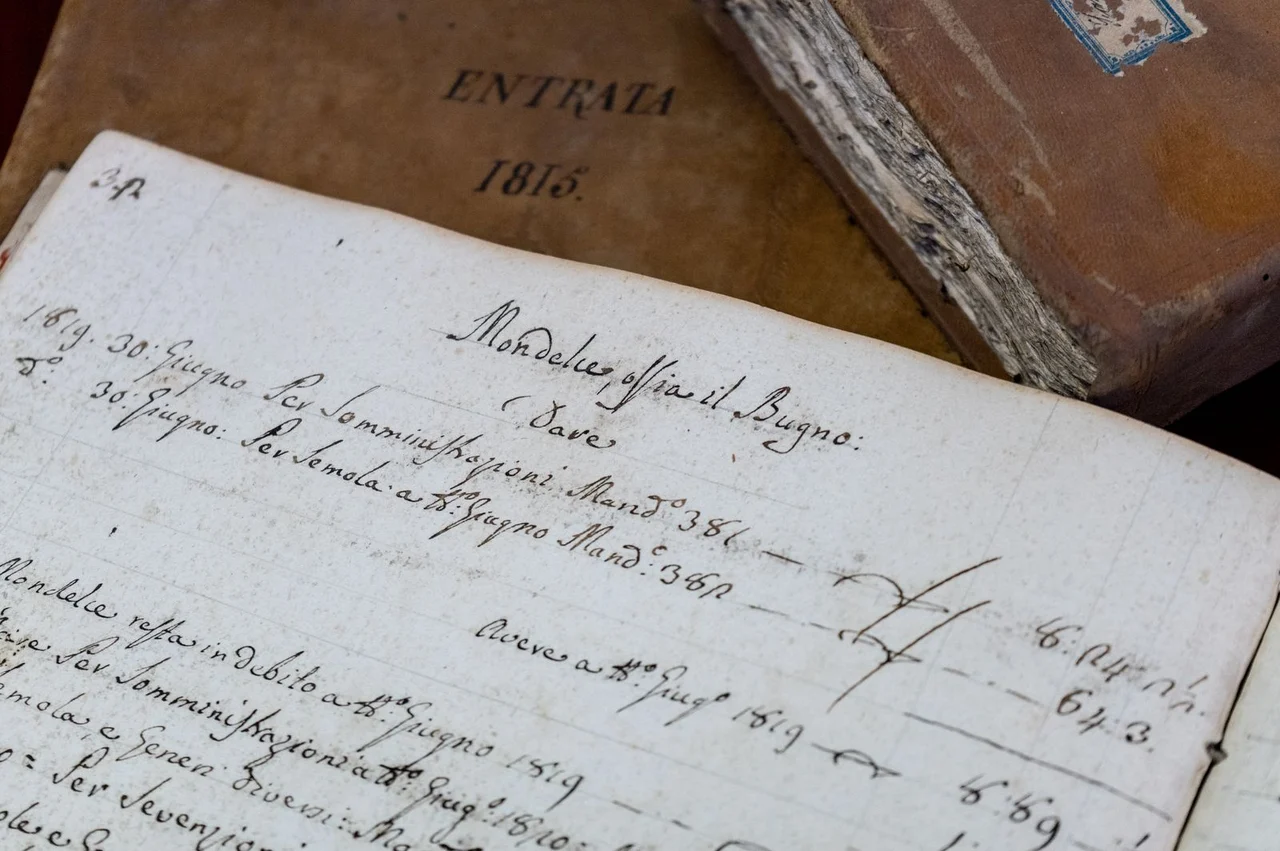 ArticleDocuments for Romanian citizenship: complete list 2026
Personal programme selection is conducted by Anna Kovalevskaya, Head of Legal, BRIDGES.
Citizenship of Romania: preparation checklist
Documents prepared in advance, source of funds checks and where applications usually fail.
