Citizenship · Bulgaria
How to find and prove Bulgarian roots in 2026: archives and court

Updated: June 2026·11 min read·Expert reviewed
Terms and costs verified: June 2026
Contents
Many descendants of Bulgarians are unaware of their heritage. Bulgarian blood may have entered the family one and a half to two centuries ago through Bessarabian settlers, colonists of Taurida or the Caucasus, and during this time the surname changed spelling and the language was forgotten. The absence of documents or lack of knowledge about one's roots is not a death sentence. Origin can be found through archival research and proved officially, including through court, when birth records are lost or contain discrepancies. Bulgarian descent gives the right to citizenship and an EU passport through a preferential procedure. This material explains how to find Bulgarian roots, where to search for ancestors in archives, and how to prove Bulgarian descent if you do not have documents on hand.
Roots you may not have known about
The history of Bulgarian emigration is tens of thousands of families that dissolved into other peoples over two centuries. In the early 19th century, fleeing Ottoman oppression, Bulgarians massively resettled in the Russian Empire. The most famous flow is Bessarabian Bulgarians: from 1801 to 1812, and especially after the Russo-Turkish War of 1828-1829, entire villages relocated to the south of present-day Bessarabia (Budzhak - now the south of Odesa region of Ukraine and Taraclia district of Moldova).
By 1819, Bessarabia had approximately 24 thousand Bulgarian colonists, and by the mid-19th century, up to 115 thousand people in dozens of settlements. Meanwhile, Bulgarians settled near Odesa, near Mykolaiv, in Crimea near Feodosia, in the Caucasus and in the Volga region. These were organized colonies with their own schools and churches.
Five to six generations passed. Children married Ukrainians, Russians, Moldavans; grandchildren moved to cities; great-grandchildren no longer spoke Bulgarian and did not know that their great-grandfather came from near Tarnovo or Sliven. Bulgarian blood did not go anywhere—only the memory of it faded. This is why a person with a surname that sounds Russian or Ukrainian to the ear may turn out to be a direct descendant of a Bulgarian settler.
Signs that there were Bulgarians in the family
Before going to the archive, it is worth reviewing your own family. There are several indirect signs that often point to Bulgarian roots.
- Geography of ancestors. If your great-grandfathers lived in Budzhak (Bolgrad, Izmail, Reni, Artsiz, Taraclia, Comrat), in Taurida, in Azov region, in Crimea, near Odesa or Mykolaiv—this is a Bulgarian settlement belt. The very place where ancestors lived is a strong lead.
- Surnames and their spelling. Bulgarian surnames often end in -ov/-ev, like Russian ones, but characteristic roots and forms are found (Stoyanov, Kolev, Gochev, Zhelyazkov, surnames ending in -ski). During censuses and document changes, spelling was often Russified—Georgi became Georgy, Stoyan became Stepan.
- Family stories. Stories about a great-grandfather who came from across the Danube, about a village where everyone was Bulgarian, about vineyards and special cuisine (banica, chuski)—this is oral memory that often turns out to be accurate.
None of these signs by itself is proof. But together they give reason to begin archival research, which will either confirm or refute the assumption.
Where to begin searching for ancestors
The search always proceeds from you downward: you—father/mother—grandfather/grandmother—great-grandfather. The task is to build a continuous line of kinship, where each generation is confirmed by a document, and to reach that ancestor whose Bulgarian nationality or birthplace in Bulgaria is recorded.
The first step is to collect everything you have at home. Old birth, marriage and death certificates, Soviet passports (they listed nationality until the 1990s), military documents, employment records, house registers, letters, photographs with inscriptions, church icons and baptism certificates. Even an inscription on the back of a photo—name, year, village—can sometimes be a lead.
The second step is to interview older relatives. Your grandmother may remember her mother's maiden name and the name of a village that is not in any documents you have. Write down all names, dates, places—even approximate ones. This outline will become a map for the archives: you will know exactly which ancestor, in which region, and for which year to search.
Civil registry office and church registry books
Records of birth, marriage and death from the Soviet and late imperial periods are kept by Civil registry offices and in state archives. Records less than 100 years old usually remain in civil registry offices; older ones are transferred to regional archives. Through the civil registry office you can request a duplicate certificate or an archive report on an ancestor, specifying your relation to them—this is often where a record of nationality comes to light.
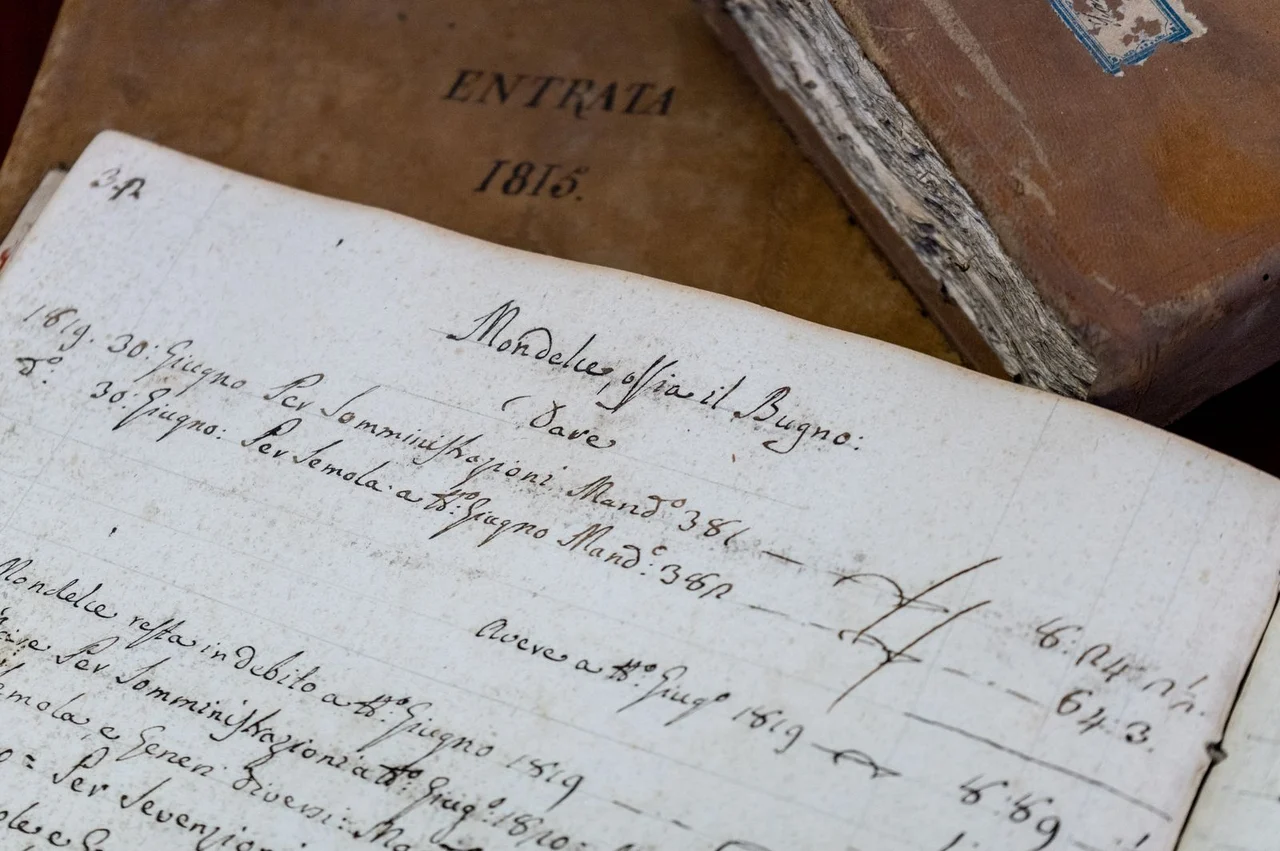
Before the establishment of Soviet power, the church maintained civil records. Metric Books These are parish registers of births (baptisms), marriages (wedding ceremonies), and deaths (funeral services). Bulgarian colonies were typically Orthodox, so records of Bulgarian ancestors should be sought in metric books of local Orthodox parishes.
A metric record of baptism is one of the most valuable documents: it indicates the names of parents, sometimes their estate and origin, godparents (sponsors), and exact date. By linking the baptism metric of your grandfather with the metric of his father, you officially confirm the succession from generation to generation—precisely what the Bulgarian Ministry of Justice will require.
State and Regional Archives
The main body of pre-revolutionary and Soviet documents is stored in state archives—federal and regional. In Russia, these are the regional State Archives of oblasts (for example, for Crimea, Krasnodar Krai, the Volga region); in Ukraine, regional archives (especially Odesa and Izmail for Bessarabia); in Moldova, the National Archive. Bulgarian colonies left an extensive documentary trail precisely in these collections.
For families from the Bessarabian and Tauride settlement zones, of key importance are Revision Tales (household census records of the taxable population, maintained in the Russian Empire from 1719 to 1858). They list heads of households and all family members with age and kinship indicated—this allows one to reconstruct a family line long before mass metric records appeared. Colonist lists often directly marked settlers as Bulgarians.
Also useful are resettlement documents —lists of colonists, files on land allocation, family lists of colonies. They often record which Bulgarian village or region a family came from. An archive request is submitted with the ancestor's full name, region, and period; the response is an archive certificate or certified copy of a file, which has legal force.
Bulgarian Archives and Historical Collections
Part of the family line may extend to Bulgaria itself—to where ancestors departed. The national record keeper is the State Archives Agency: the Central State Archive in Sofia, the Military-Historical Archive in Veliko Tarnovo, and six regional archives with centers in all 28 oblasts.
Bulgarian church metric books have been kept since approximately the 1850s, when the Bulgarian church separated from the Greek; earlier records are sometimes kept in Greece due to former subordination to the Patriarchate. Civil registers of the late 19th—early 20th century (approximately from 1893) are held in regional archives by location.
Separately worth mentioning is the topic of Bulgarians abroad, which was historically handled by the State Agency for Bulgarians Abroad (DABCH). Important update to the procedure: under recent reforms, DABS no longer issues the mandatory separate origin certificate—evidence is now submitted directly to the Ministry of Justice (the current 2026 procedure should be verified before submission). In practice, access to Bulgarian collections typically occurs through written request or a local specialist.
How to Reconstruct the Family Line Father-Grandfather-Great-Grandfather
The goal of the entire search is not simply to find mention of a Bulgarian ancestor, but to construct from documents a continuous chain of generations where each relationship is confirmed. The Bulgarian Ministry of Justice examines precisely this integrity of the line.
The line is assembled on the bridge principle. Your birth certificate connects you to your father. Your father's birth certificate connects him to your grandfather. A metric or archive record of your grandfather connects to your great-grandfather Bulgarian ancestor. Each document must align with the next by names and dates: the father's name in one record matches the person's name in the next record.
In parallel, a document is needed that directly establishes Bulgarian nationality or birth in Bulgaria for at least one ancestor in the ascending line (up to the third degree—father, grandfather/grandmother, or great-grandfather/great-grandmother). This may be a nationality notation in a Soviet document, a colonist marking in a revision tale, a metric from a Bulgarian parish. When the line is assembled and Bulgarian origin is established—the evidence base for citizenship is ready.
When Documents Are Missing or Contain Discrepancies
An ideal situation is rare. Most often the search runs into one of the problems: the archive burned in war, parish metric books were lost, a record was not preserved, or—which occurs especially often—documents contain different spellings of names and surnames.
Discrepancies accumulate naturally. In a metric, the great-grandfather is recorded as Stoyan, in the grandfather's Soviet passport—Stepan. The surname in one document is Zhelyazkov, in another Zhelezkov, in a third Russified to Zheleznova. Patronymics vary, birth dates in different papers differ by a year or two. For an official these are formal inconsistencies, due to which a family line cannot be recognized as proven by documents alone.
It also happens that there is no direct document of nationality at all: the nationality field on an ancestor's birth certificate was not filled in, and there are many indirect indicators (place of birth, colonist lists), but they do not form a formally flawless chain. It is for such cases that a judicial path exists.
"Most often a person comes saying: I don't know if I have grounds at all, almost no documents remain. And this is a normal starting point, not a dead end. Bulgarian emigration was massive and well documented: revision tales, colonist lists, parish metric books. The fact that a person doesn't have the needed paper doesn't mean it's not in an archive. The most common difficulty is not the absence of a Bulgarian ancestor, but inconsistencies in documents: Stoyan became Stepan, the surname was Russified, one metric was lost. Previously this seemed final; today it is solvable through court. One thing matters: we don't invent relationships, we prove them. If Bulgarian blood was in the family, it can almost always be confirmed."
Establishing Origin Through Court
When documents are insufficient or contain contradictions, kinship and origin can be established through court. Juridically this is called establishment of a fact having legal significance —a special judicial procedure in which a court officially confirms a fact that cannot be proven by ordinary documents.
With respect to roots, a court can establish two important facts. The first— fact of kinship: that a given person is indeed the son, grandson, great-grandson of such-and-such an ancestor, despite inconsistencies in name spelling or missing metrics. The second— fact of origin of a specific person from a specific ancestor, when it is necessary to connect two generations between which a document was lost.
In court, evidence is accepted that by itself does not close the line: archive certificates, metric extracts, revision tales, testimony of relatives, expert conclusions, sometimes DNA test results. The court evaluates them together and renders a decision. This decision is a full official document that replaces missing or contradictory records.
Document Situation and Solution
To make this clearer, below are typical document situations and the appropriate tool—archive search or court. In practice these paths often complement each other: first everything possible is collected in archives, then remaining gaps are closed through court.
| Document Situation | Solution |
|---|---|
| Documents exist, but not on hand (in civil registry, archive) | Archive request: duplicate certificates, archive certificates |
| Parish metrics burned or lost | Search in related collections: revision tales, colonist lists |
| Different spelling of name/surname in different papers | Court: establishment of fact of kinship |
| Document lost between two generations | Court: establishment of fact of origin from ancestor |
| No record of ancestor's nationality | Archive (indirect data) + court if necessary |
| Line established, Bulgarian origin documented | Submission of evidence base directly to the Bulgarian Ministry of Justice |
It is important to understand : the court establishes real facts rather than invents kinship. If a Bulgarian ancestor truly existed, the court helps prove it when documents have failed. If there are no Bulgarian roots, neither archives nor courts will create them.
assessment of method capabilities and limitations
The judicial route is a real, lawful, and recognized instrument, but not a magic wand. There are several things important to understand in advance to avoid building illusions.
First, a good-faith evidentiary base is needed. The court will not confirm kinship out of thin air – it needs at least some documents, evidence, archival traces that form a convincing picture. The more collected during the archive search stage, the higher the chance of a positive decision.
Second, it requires time. Archive requests take weeks and months (in complex cases – longer), and court proceedings also take time. Ancestor search and fact-finding are not a matter of a couple of weeks.
Third, a court decision establishing a fact is only part of the path to citizenship. It closes the gap in evidence of origin, but then comes the general procedure of submission to the Bulgarian Ministry of Justice with its own timelines. However, by origin the applicant follows a preferential track – without residence requirements, without Bulgarian language exam, and without requirement to renounce previous citizenship.
How this connects to citizenship and realistic timeline
Everything described above – archive search and fact-finding through court – serves one purpose: to gather evidence of Bulgarian origin that the Bulgarian Ministry of Justice will accept. Under recent reforms, evidence is submitted directly to the Ministry of Justice, without mandatory separate certificate from DABCH; the Ministry of Justice evaluates whether origin is confirmed.
Citizenship by descent is a preferential route. The applicant is exempt from residence requirements, from Bulgarian language exam, and from renouncing previous citizenship. Bulgarian citizenship provides an EU passport: the right to live, work, and study in any EU country, and Bulgaria as of 2025 is fully part of Schengen.
About timelines . By law, consideration takes approximately one year, but in practice due to queues in the Citizenship Council at the Ministry of Justice and final presidential decree, obtaining stretches, approximately, to 24-36 monthsThis is normal procedural reality, not a sign of a problem. More details on the actual route – in our guide to Bulgarian citizenship by descent and in the overview of required documents.
How to start restoring your roots with us
Searching for and proving Bulgarian roots is work at the intersection of genealogy, archival work, and law of several countries at once. It is easy to get stuck doing it independently: requests go to the wrong archives, and time passes. We build this path as a unified project.
- Assessment of prospects. We analyze family history, ancestor geography, surnames, and existing documents – and speak about whether there are grounds for Bulgarian origin and the probability of success.
- Archive search. We send requests to civil registries, state and regional archives of Russia, Ukraine, Moldova, and Bulgaria, retrieve metric books, revision tales, and resettlement documents.
- Collection of kinship line. We connect generations – father, grandfather, great-grandfather – into a continuous proven line and document the ancestor's Bulgarian origin.
- Judicial route, if needed. When documents are insufficient or there are discrepancies, we prepare and conduct proceedings to establish fact of kinship or origin.
- Application for citizenship. We form an evidentiary base meeting the requirements of the Bulgarian Ministry of Justice and provide support until result.
Solving the question begins with assessment of your situation – leave a request for consultation, and we will analyze what can realistically be found and proven in your case.
Expert commentary: how origin is verified
Understanding how the Bulgarian Ministry of Justice and courts evaluate evidence helps avoid wasting effort and gather immediately what carries weight.
The key principle is continuity of the kinship line and presence of a document that directly or indirectly records the ancestor's Bulgarian origin in the ascending line to the third degree. Scattered mentions of Bulgarian roots without an established line of generations do not work. This is exactly why the archive stage is so important: it fills the case with documents that both the Ministry of Justice and – if necessary – the court later rely on.
What an expert looks at first when assessing chances. First – geography and ancestor documents: where they are from, what has been preserved in the family, whether there is at least one record of nationality. Second – where exactly the line breaks and whether the gap can be closed by archives or court proceedings will be necessary. Third – how serious the name discrepancies are: cosmetic inconsistencies are correctable, substantive contradictions require separate work. This early diagnosis saves months and immediately shows the realistic rather than desired scenario. About other routes to Bulgaria – repatriation and general overview of Bulgarian citizenship – read in separate materials.
How we handle such cases
Behind every successful root restoration is methodical work, not luck. We start by listening to the entire family history – even fragmented memories of grandmother about a village beyond the Danube or about great-grandmother's maiden name often become the very thread that leads to the right archive collection.
Next comes parallel work on multiple fronts: requests to archives in different countries, verification of names and dates between documents, construction of kinship line. When discrepancies in spelling or missing links between generations emerge, we identify in advance where court will be needed and prepare the case so the judge has a convincing evidentiary base.
This approach saves what matters most – time and nerves. Instead of spending years sending random requests and hitting rejections, a person gets a structured route: from initial prospect assessment to submission to the Bulgarian Ministry of Justice. And when it comes to an EU passport for the entire family, a carefully assembled evidentiary base pays for itself many times over. To move to the program and learn details, go to the page on Bulgarian citizenship.
Frequently asked
Questions people ask before deciding
01Can I Obtain Bulgarian Citizenship If I Did Not Know About Bulgarian Roots?
Yes. Many descendants of Bulgarians are unaware of their heritage - Bulgarian blood may have entered the family one and a half to two centuries ago through Bessarabian settlers or Tauride colonists, and the memory of it faded. Roots can be found through archival research and proven officially. Lack of knowledge about one's descent is not an obstacle if the Bulgarian ancestor truly existed.
02What Should I Do If I Have No Documents Proving Bulgarian Descent?
The absence of documents in hand is not a death sentence. First, an archival search is conducted: requests to civil registry offices, state and regional archives of Russia, Ukraine, Moldova, and Bulgaria, search for vital records, revision lists, resettlement documents. If a document is lost or contains discrepancies, kinship and descent are established through court.
03How Can I Prove Bulgarian Descent Through Court?
Through a special procedure - establishment of a fact having legal significance. A court can establish the fact of kinship (that a person is a descendant of a specific ancestor) or the fact of descent from them. Archival certificates, vital records, revision lists, testimony of relatives, and sometimes DNA tests are accepted as evidence. The court decision is officially recognized and used when submitting to Bulgaria's Ministry of Justice.
04Who Are Bessarabian Bulgarians and Why Is This Important?
These are descendants of Bulgarians who resettled in the early 19th century from Ottoman lands to the Russian Empire, primarily to Budjak - the southern part of present-day Odesa region of Ukraine and Taraclia district of Moldova. By the mid-19th century, over one hundred thousand Bulgarians lived there. If your ancestors are from this region, Tauride, Crimea, the Azov region, or the Caucasus, there is a strong chance of Bulgarian roots.
05What Degree of Kinship Is Required for Citizenship by Descent?
Bulgarian descent is recognized along the ascending line up to the third degree: a Bulgarian ancestor may be your father, grandfather or grandmother, great-grandfather or great-grandmother. You must establish a continuous kinship line from you to this ancestor, where each generation is confirmed by a document, and Bulgarian nationality or birth in Bulgaria must be recorded for at least one of them.
06Where to Search for Bulgarian Ancestors in Archives?
In civil registry offices (records less than 100 years old), in state and regional archives (older documents), and in church metrical books of Orthodox parishes. For the resettlement belt, revision tales and colonist lists are particularly valuable. Part of the line may lead to Bulgarian archives - the State Archives Agency with centers in all regions of the country.
07What are revision tales and how do they help?
These are household censuses of the taxable population of the Russian Empire, conducted from 1719 to 1858. They list heads of families and all household members with age and relationship indicated, and colonists were often directly marked as Bulgarians. Revision tales allow you to reconstruct a family line long before the appearance of mass vital records and confirm origin from a Bulgarian colony.
08Can a court fabricate kinship that did not exist?
No, and this is a matter of principle. A court establishes only real facts based on a good-faith evidentiary base - archive certificates, vital records, testimonies. It helps prove kinship that actually existed when documents are lost or contradict each other. If there were no Bulgarian roots in the family, neither an archive nor a court will create them.
09Why do documents of ancestors show different spelling of names and surnames?
This is typical for Bulgarian families in the Russian Empire and the USSR. Names were Russified (Stoyan - Stepan, Georgi - Georgy), surnames changed spelling during census and document changes, patronymics and dates varied. For an official, these are formal discrepancies due to which a line cannot be recognized as proven by documents alone - and then the discrepancy is eliminated through court.
10Where are proofs of origin submitted in 2026?
Under the recent reform, proofs of Bulgarian origin are submitted directly to the Ministry of Justice of Bulgaria. The State Agency for Bulgarians Abroad (DACI) no longer issues a mandatory separate certificate as a standalone stage. The current procedure should be verified before submission, but it is the Ministry of Justice that assesses whether origin is confirmed.
11How long does it take to obtain citizenship by ancestry?
By law, consideration takes about one year, but in practice due to queues at the Citizenship Council under the Ministry of Justice and the final presidential decree, obtaining citizenship stretches, roughly, to 24-36 months. This is a normal reality of the procedure. To this should be added time for archival search and, if necessary, for a court case to establish facts.
12What benefits does the ancestry route provide?
An applicant by ancestry is exempt from the residence requirement in Bulgaria, from a Bulgarian language examination, and from the requirement to renounce previous citizenship. The result is a Bulgarian passport, that is, an EU passport: the right to live, work, and study in any EU country, and as of 2025 Bulgaria is a full member of Schengen.
Transparency
How this material was prepared
- Author
- Daniel Kovach, senior International Law Attorney, BRIDGES
- Terms and costs last verified
- June 2026
- Sources
- official government authorities of the relevant country and state publications
- Methodology
- government minimum requirements are stated separately from due diligence charges, state fees, legal and banking costs
Sources and methodology
Figures, terms and timelines are checked against official sources as of June 2026. Link availability verified in August 2026. Third-party blogs and agent websites are not used as a source of programme terms.
- [1]Ministry of Interior of BulgariaResidence of foreign nationals and documentswww.mvr.bg/en
Methodology: tables and charts state government minimum investment requirements; due diligence charges, state fees, legal, banking and other costs are calculated separately and are not included in the minimum thresholds.
About the author
Related materials
What to read next
 ComparisonCitizenship of Bulgaria or Romania: what to choose for an EU passport
 AnalysisWhat is due diligence and why the Caribbean is rejecting applications
 ArticleBulgarian citizenship through investment in 2026: why the program was cancelled and what works instead
Personal programme selection is conducted by Anna Kovalevskaya, Head of Legal, BRIDGES.
Citizenship of Bulgaria: preparation checklist
Documents prepared in advance, source of funds checks and where applications usually fail.