Updated: June 2026

Case study · Sao Tome and Principe · Citizenship

How a Coffee Exporter Confirmed Source of Funds andObtained a São Tomé Passport for EU Market Entry

São Tomé and Príncipe is a country of coffee and cocoa, and for an entrepreneur in this sector, a passport here is particularly logical. Our client's source of funds was coffee export, and the goal was EU market entry. Important: citizenship is granted for a contribution, not for a plantation - and export income must be transparently verified. We explain how we accomplished this.

Sergey EvdokimovSergey EvdokimovManaging Partner, BRIDGESReading time9 min readVerificationReviewed by an expert

This case is based on a real matter. The name and certain identifying details have been changed to protect confidentiality.

BRIDGES client story - How a Coffee Exporter Confirmed Source of Funds and Obtained a São Tomé Passport for EU Market Entry
Contents

Case at a glance

Situation, solution and outcome in seven lines

Client
Entrepreneur, coffee exporter
Objective
Verify source of funds and achieve EU market entry
Program
São Tomé and Príncipe, Citizenship by Investment
Source of Funds
Coffee export income
Key Points
Citizenship granted for contribution to NTF, not for plantation; source must be verified
Bridge to the EU
CPLP member country status, close ties to Portugal
Result
Source verified, passport obtained

Client story

Client's Story

Where they started

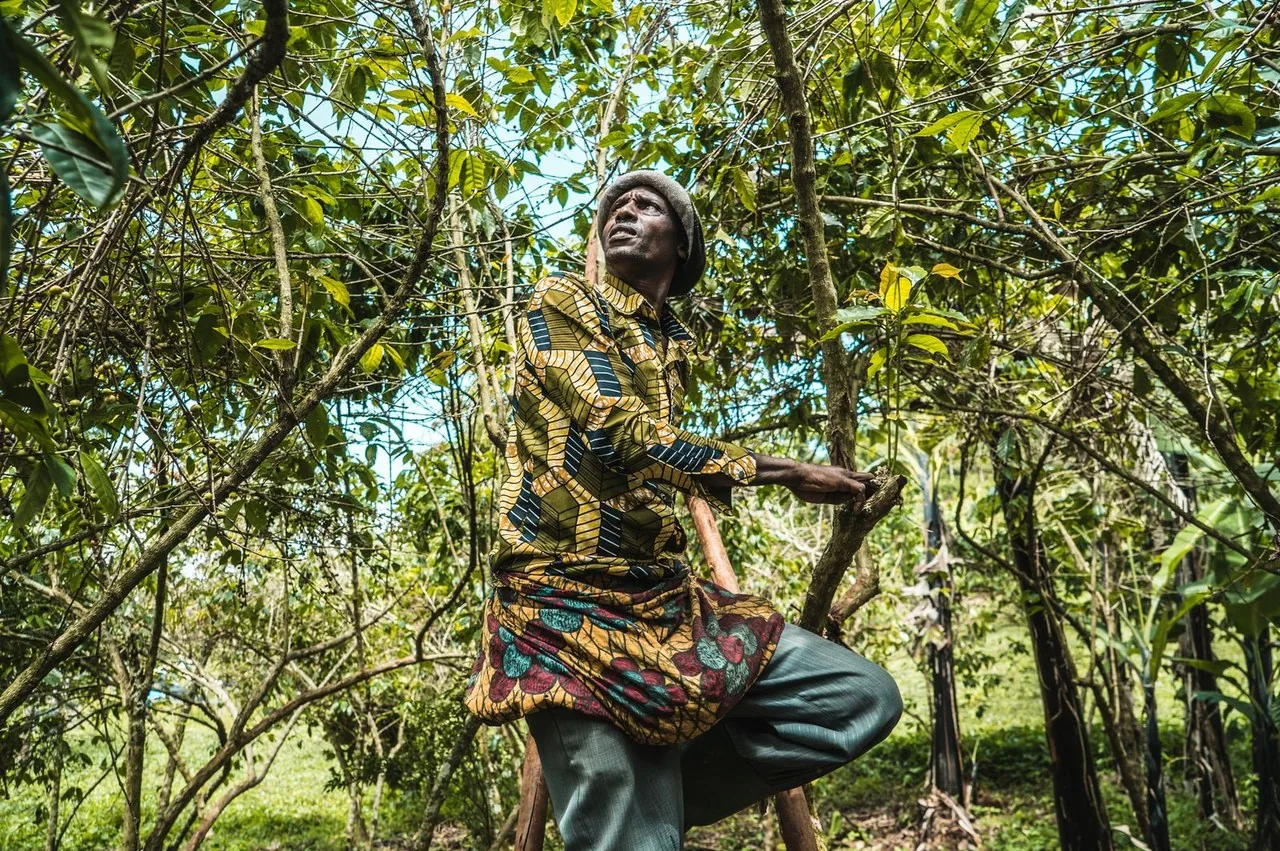
The client is an entrepreneur in the coffee industry whose income derives from coffee exports. São Tomé and Príncipe, itself a coffee and cocoa country, aligned well with his business spirit, and he needed a passport with a view to EU market entry.

Why the standard route did not work

First, it is important to clarify honestly: São Tomé and Príncipe citizenship is granted for a non-refundable contribution to the National Transformation Fund, not for plantation purchase - the investment goes to the fund, not to land. The coffee business here is not a way to "buy citizenship through a plantation," but rather a source of funds for the contribution, which must be transparently verified.

What BRIDGES had to solve

Second, what the passport actually provides for the EU. São Tomé and Príncipe is a member of CPLP, a community of Portuguese-speaking countries, culturally and commercially close to Portugal. It is a convenient bridge: CPLP citizen status brings one closer to Portuguese and, more broadly, European business circles. However, it is precisely a bridge and convenient status, not automatic EU market access: trade and regulatory matters are addressed separately.

Why a standard answer would not do

At BRIDGES, the client sought two things simultaneously: to transparently verify coffee export income as the source of funds and to obtain a São Tomé and Príncipe passport - as a convenient CPLP country status with a view to EU market entry.

My income is from coffee exports, and São Tomé and Príncipe, a coffee and cocoa country, felt natural to me. Sergey immediately clarified: citizenship is granted for a contribution to the fund, not for a plantation, so coffee is my source of funds, which must be cleanly verified. We disclosed the export income - contracts, shipments, receipts. And a CPLP country passport became my bridge closer to the EU. He honestly stated that it is a status and a bridge, not automatic EU market access. We verified the source, and I obtained the passport.

Anna · Coffee ExporterThe name and certain identifying details have been changed to protect confidentiality.

What Was at Risk

What Was at Risk

The risk was not in the legality of income, but in two misconceptions: that citizenship is granted for a plantation and that a passport itself opens EU market access. Neither is correct: citizenship is granted for a contribution to the fund, and export income must be transparently verified; the passport is a bridge and status, not automatic market access. The key was to disclose the source of funds and correctly understand the passport's role.

That citizenship is granted for a contribution to NTF, not for a plantation;

  1. 01That coffee export income is the source of funds and must be verified;
  2. 02That São Tomé and Príncipe is a CPLP member, close to Portugal and the EU in business environment;
  3. 03That a passport is a convenient bridge and status, not automatic market access;
  4. 04That EU trade and regulatory matters are addressed separately.

The logic of the solution

How the matter progressed: from checks to result

The chart is built from the facts of this matter and shows the logic of the work without decorative or unverified data.

  1. 01
    Stage 1

    We clarified what citizenship is granted for. First, we honestly explained: São Tomé citizenship is for a contribution to the National Transformation Fund, not for a plantation. The coffee business here is a source of funds, not a way to "buy" a passport through land.

  2. 02
    Stage 2

    We disclosed the source of funds. We transparently verified income from coffee exports: contracts, shipments, fund receipts - so that the origin of money for the contribution was clean and clear.

  3. 03
    Stage 3

    We correctly defined the passport's role for the EU. We explained that São Tomé is a CPLP country close to Portugal, and the passport provides a convenient bridge to the European environment, but not automatic market access: trade and regulation are separate matters.

  4. 04
    Stage 4

    We processed the contribution and application. We made a non-refundable contribution to the fund and prepared an application according to program rules, based on verified source of funds.

  5. 05
    Stage 5

    We verified the source during review. With transparently disclosed income from coffee exports, the application passed verification - the origin of funds raised no questions.

Takeaway. Conclusion: São Tomé citizenship is granted for a contribution to the fund, not for a plantation; export income is the source of funds, which is verified. A CPLP country passport is a bridge to the EU environment, not automatic market access.

How we solved the problem

How we solved the problem

The work was split into verifiable stages so that every conclusion rested on documents.

  1. 01

    Stage 1

    We clarified what citizenship is granted for. First, we honestly explained: São Tomé citizenship is for a contribution to the National Transformation Fund, not for a plantation. The coffee business here is a source of funds, not a way to "buy" a passport through land.

  2. 02

    Stage 2

    We disclosed the source of funds. We transparently verified income from coffee exports: contracts, shipments, fund receipts - so that the origin of money for the contribution was clean and clear.

  3. 03

    Stage 3

    We correctly defined the passport's role for the EU. We explained that São Tomé is a CPLP country close to Portugal, and the passport provides a convenient bridge to the European environment, but not automatic market access: trade and regulation are separate matters.

  4. 04

    Stage 4

    We processed the contribution and application. We made a non-refundable contribution to the fund and prepared an application according to program rules, based on verified source of funds.

  5. 05

    Stage 5

    We verified the source during review. With transparently disclosed income from coffee exports, the application passed verification - the origin of funds raised no questions.

  6. 06

    Stage 6

    We provided status and a bridge to the EU. The client obtained São Tomé citizenship - a convenient CPLP country status that brings closer to the European business environment. Market entry into the EU he builds separately; the passport provided the foundation and bridge.

Expert comment

Coffee business and São Tomé is a beautiful combination, since it is a country of coffee and cocoa, but I immediately dispel two common misconceptions. First: citizenship here is granted not for a plantation, but for a non-refundable contribution to the National Transformation Fund. Therefore, the client's coffee business is not "purchasing citizenship through land," but a source of funds for the contribution, and like any source, it must be transparently verified: contracts, shipments, receipts. Second: the passport does not automatically open the EU market. What it really provides is a convenient status and bridge: São Tomé is a member of CPLP, close to Portugal, and citizenship brings the client closer to the European business environment. But trade and regulatory issues of market entry are resolved separately; the passport cannot replace them. For this client, we cleanly verified income from coffee exports and obtained a passport as CPLP country status with a view toward the EU. Honesty on both points - regarding the contribution and regarding the bridge - saves the client from false expectations.

Sergey Evdokimov, Managing Partner, BRIDGESSergey EvdokimovManaging Partner, BRIDGES

Outcome

What the client received

What was required
How we did it · Result
Verify the source
Disclosure of coffee export income · Origin of funds is clean
Without misconceptions
Clarified: contribution, not plantation · Realistic expectations
Bridge to the EU
Citizenship status of a CPLP country · Closer to the European environment
Obtain a passport
Contribution to NTF + application · São Tomé citizenship
Obtain a passport
Contribution to NTF + application · São Tomé citizenship

What was the situation: the client's source of funds was coffee export, and the goal was EU market access. What we did: clarified what citizenship is granted for; disclosed the source of funds; correctly defined the passport's role for the EU; processed the contribution and application; verified the source during review; provided status and a bridge to the EU. What the client received: verified source, São Tomé citizenship, and a convenient bridge to the European environment.

Practical takeaway

What matters in a similar situation

  • Conclusion: São Tomé citizenship is granted for a contribution to the fund, not for a plantation; export income is the source of funds, which is verified. A CPLP country passport is a bridge to the EU environment, not automatic market access.
  • The client verified the source and obtained status with a view toward the EU - because we transparently disclosed income from coffee exports and honestly defined that the passport provides a bridge, not market access.

FAQ

Questions people ask in a similar situation

01Is citizenship of São Tomé granted for a coffee plantation?

No. Citizenship is granted for a non-refundable contribution to the National Transformation Fund, not for plantation purchase. Coffee business may be a source of funds for the contribution, which must be transparently verified.

02How to verify income from coffee exports?

Disclose contracts, supplies, and fund receipts, demonstrating the lawful origin of income. A transparently verified source passes program due diligence.

03Does a São Tomé passport open the EU market?

Not automatically. São Tomé is a CPLP member, aligned with Portugal, and the passport provides a convenient bridge to the European business environment. However, market access to the EU and regulatory matters are addressed separately.

04What makes São Tomé advantageous for EU business?

CPLP membership and proximity to the Portuguese-speaking business community. This status serves as a bridge approximating Europe but does not replace separate trade and regulatory procedures.

05What is the cost of São Tomé citizenship?

Non-refundable contribution to the National Transformation Fund from USD 90,000 per applicant. Exact terms should be clarified with the authorized body.

06Your income derives from exports and your objective is EU market entry?

We will transparently verify the source of funds from export activities and process a São Tomé passport as a CPLP-member country status, aligned with Portugal—a convenient bridge to the European environment—while honestly clarifying that EU market access is addressed separately.

About the author

Sergey Evdokimov

Author: Sergey Evdokimov

Managing Partner, BRIDGES

As Founder and Managing Partner of BRIDGES, I am responsible for the firm's strategy and personally lead its most complex client matters, including cases in which citizenship or residence decisions require a strategic view and consideration of capital.

I begin by defining the objective: the outcome the client needs, the facts that affect the choice, and the matters that require further review. I then establish the available directions, the sequence of work, and the key decision points.

Once the strategy has been agreed, I oversee the BRIDGES team's key decisions and remain involved at the stages that shape the course of the matter. The purpose is to give the client a clear rationale for the chosen direction and a precise understanding of the next steps.

Prepared on the basis of BRIDGES practice and reviewed by a subject-matter expert.

Discuss your situation with Sergey

We will review your situation and propose a solution

Describe your task in a few words. We will study your situation, assess the legal and practical options and propose the next step based on your goals, documents and country.

Confidential · no obligations · answered by the relevant specialist

Or message us on WhatsApp or Telegram

Anna KovalevskayaHead of Legal, BRIDGES
Anna Kovalevskaya, Head of Legal, BRIDGES

Names and certain details have been changed to protect client confidentiality. The result described reflects one specific situation and is neither a public offer nor a guarantee of a similar outcome. Programme terms are stated as of 2026 and may change - please confirm current parameters with a BRIDGES consultant.