Residency · Portugal
Schools and education in Portugal in 2026: public, private, international, universities

Updated: June 2026·12 min read·Expert reviewed
Terms and costs verified: June 2026
Contents
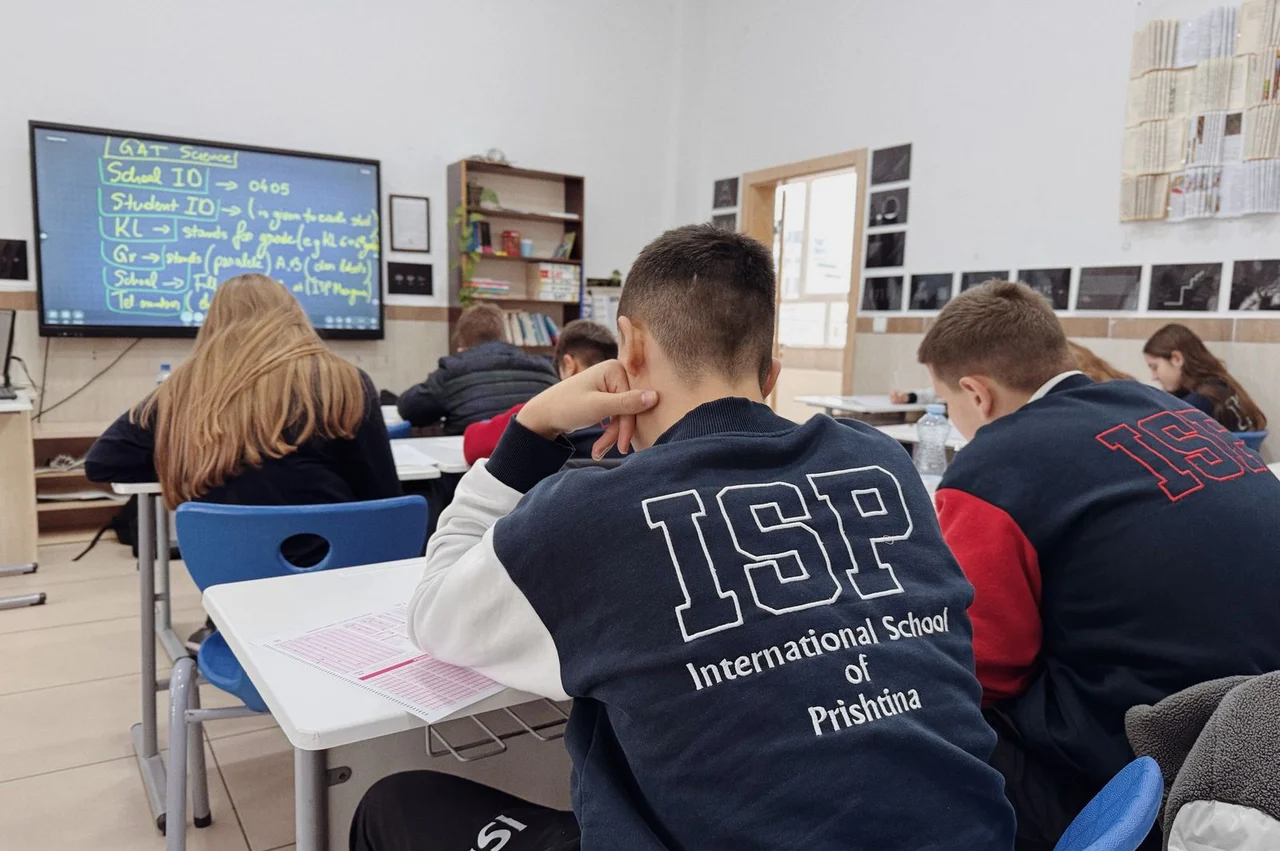
Relocating to Portugal with children always comes down to one question - where to send the child to study. A family has three real tracks: a free public school in Portuguese, a private or international school with British, IB, and American programmes, and language programmes as a bridge between them. Resident children have access to local schools on par with the Portuguese, and higher education in Lisbon, Porto, and Coimbra is considered strong and, at the same time, affordable by European Union standards. We break it down point by point: how the tracks differ, approximately how much tuition costs, where the best schools are concentrated, and why spots at them need booking well in advance.
Portugal's three education tracks: how to choose
When a family relocates to Portugal, parents face a choice not between specific schools, but between three fundamentally different trajectories. Both the budget and the language the child will spend the coming years in, and how quickly they'll integrate into the local environment, depend on this choice.
- Public school- free, teaching fully in Portuguese. Ideal for younger children and families who've come to Portugal long-term and want full integration.
- Private and international school- paid, with British, IB, or American programmes, teaching more often in English. The choice of those who value a system familiar to the child, an international diploma, and the ability to relocate further with no loss of curriculum.
- Language programmes- not a standalone track, but a bridge: intensive Portuguese for those going to public school, or prep for international exams.
There's no universal answer. It's easier for a seven-year-old to blend into a Portuguese school and speak like a local within a year. For a 15-16-year-old entering university in two years, disrupting the curriculum is risky - an international school with a clear diploma makes more sense for them. Next we'll break down each track in detail, and at the end put it all into a table.
Public schools: free, but in Portuguese
The main plus of a public school is obvious - it's free for resident children. A family that's processed a residence permit gets access to local education on the same terms as the Portuguese: schooling, basic textbooks under a social-support programme, school transport in a number of municipalities. This is a serious saving, especially with several children.
Portugal's education structure is built as follows:
- Preschool (pre-escolar)- approximately from 3 to 6 years old, not mandatory but widespread.
- Basic (ensino basico)- 9 years, three cycles, mandatory.
- Secondary (ensino secundario)- 3 years, ends with exams and a certificate, opens the path to university.
Education in Portugal is mandatory approximately until age 18. Public schools' strength is genuine integration: the child lives in the country's linguistic and cultural environment, makes local friends, naturally picks up Portuguese. The obvious downside is the language of instruction. The first months with no support can be hard, so schools bring in Portuguese-as-a-foreign-language programmes (more on this below). For those planning to relocate as a whole family, it's useful to study our article in advance onrelocating to Portugal with a family and children.
Private and international schools: British, IB, American
If a public school is the path to integration, an international school is the path to continuity. The child studies under a familiar curriculum, in English, among children like themselves from expat and wealthy local families. This is especially valuable when the family isn't sure they'll settle in Portugal forever, or when the child has already studied under the British or American system.
Several programme types are distinguished:
- British (the English system)- IGCSE and A-Levels, a familiar structure, a graduation set recognized worldwide.
- IB (International Baccalaureate)- an international diploma highly regarded at European and US universities.
- American- the American curriculum, a High School Diploma, often with SAT prep.
- Bilingual and Portuguese-international- combine the local curriculum with intensive English.
International schools' pros - the English language, an international diploma, gentle adaptation, and strong infrastructure. Cons - cost and limited spots: the best schools fill classes in advance. Many are also worried an international environment slows down learning Portuguese - and this is fair, so families often pick up the language separately. For those just planning settling in, our breakdown will be usefulrelocating to Portugal.
Tuition cost: how much to budget
This is the most practical question, and here it's important to speak in benchmarks, not exact figures - each school's fee is its own and revised annually. Public school is free, expenses come down to meals, uniform, clubs, and materials. But private and international schools are a serious budget item that needs budgeting in advance.
| School type | Language of teaching | Annual cost (approximate) |
|---|---|---|
| State | Portuguese | Free (meals, uniform, materials - separate) |
| A private Portuguese school | Portuguese (+ English) | from ~€5,000-10,000 |
| International British | English | ~10 000-20 000+ € |
| International IB | English | ~10 000-22 000+ € |
| International American | English | ~12 000-22 000+ € |
| Language programmes (PLE/prep) | Portuguese / English | from ~€1,000-4,000 per course |
Besides the tuition fee itself, schools take an entrance (registration) and sometimes a one-off deposit fee, plus meal, transport, excursion, and uniform expenses. Higher grades (A-Levels, IB Diploma) are generally pricier than lower ones. A real budget per child at a top international school accounting for all extra fees should be set above the base tuition rate. How this fits into the family's overall expenses is in our article onthe cost of living in Portugal.
We will find the right basis for residency in Portugal
We calculate the budget and timing for your family and list the documents you need.
How to enroll a child in school: timelines and documents
School enrollment in Portugal is a process with strict deadlines, especially in the international segment. The main mistake of relocating families is putting off the school question until later, already after relocating. By that time, spots at the desired school can be taken.
How enrollment works:
- Public schools- enrollment through the municipality and the public services portal, tied to the residential district, there are set windows for filing applications for the school year.
- International and private schools- admission goes directly through the school: an application, sometimes an entrance interview or testing (especially in English), a queue for popular grades.
- Documents- generally a birth certificate, report cards and references from the previous school (translated), medical certificates and a vaccination certificate, and confirmation of address and resident status are needed.
The key rule: applications for top international schools are filed well in advance - often a year before the start of studies, because spots for popular programmes and age levels are limited. In parallel with filing for a residence permit, it makes sense to already form a school shortlist and book a spot. On the legal basis for staying as a student - in our article onPortugal's student visa.
"The first thing I say to a family relocating with children: the school question is decided not after relocating, but together with getting the residence permit. The most frustrating mistake is arriving in summer, having processed all the documents, and finding out spots at the needed international school are already gone, taken back in winter. So we launch the shortlist and spot booking in parallel with the migration part. Second - the child's age matters more than the school's prestige. Confidently take a toddler to a Portuguese public school: within a year they'll speak like a local. But for a teenager a couple of years before university, disrupting the curriculum is risky - an international school with a clear IB or A-Levels diploma makes more sense for them."
Higher education: universities in Lisbon, Porto, and Coimbra
Portuguese universities are an underestimated strength of the country. By European Union standards, education here is quality and at the same time affordable in cost, and there are more English-language programmes every year.
Key higher education centers:
- Lisbon- the University of Lisbon (Universidade de Lisboa) and NOVA University Lisbon, a wide range of fields, many international and English-language programmes.
- Porto- the University of Porto (Universidade do Porto), one of the country's largest and strongest, especially in engineering, medicine, and exact sciences.
- Coimbra- the University of Coimbra (Universidade de Coimbra), one of Europe's oldest, a historic academic center.
What's important to know about enrollment and cost:
- For EU citizens and residents the conditions are more favorable than for non-EU applicants - this is another practical argument for resident status.
- Undergraduate tuition at public universities is approximately noticeably lower than in Britain or the US, at a comparable level for a number of programmes.
- The number of fully English-language programmes is growing, especially at the master's level - you can study without waiting for fluent Portuguese.
For a family this means the school track logically needs thinking through right away with an eye on university: which diploma (national, A-Levels, IB) and in what language will open the child's needed path.
The school year, holidays, and how school life is structured
To plan the relocation, it's useful to understand the rhythm of the Portuguese school year. It differs from the systems familiar in many other countries, and both school enrollment and the relocation itself are adjusted to it.
- The start of the year- approximately mid-September, ending in June.
- Holidays- Christmas (late December-early January), Easter (in spring), and a long summer one (July-August).
- The day's structure- at public schools studying is generally in the first half of the day plus extracurricular activities; a full day with a rich extracurricular programme is common at international schools.
An important practical detail: the school year launches in autumn, and enrollment needs doing in advance, in spring or even earlier. If the family relocates in summer, by that moment the school question already needs to be resolved, otherwise the child risks missing the year's start. The ideal strategy is to sync getting the residence permit, relocating, and the school calendar so the child starts studying together with everyone in September.
Separately, it's worth accounting for international schools' tie to their own system's schedule: British and American schools follow their own exam calendar, which matters for high schoolers.
Public or international: what a family should choose
This is the decision parents agonize over the most. To simplify the choice, it's useful to base it not on prestige, but the child's age, planning horizon, and budget.
A public school suits if:
- the child is younger and picks up language easily;
- the family is relocating to Portugal long-term and wants full integration;
- the education budget is limited;
- it's important the child speaks Portuguese fluently.
An international school suits if:
- the child is older and already studied under the British/American system;
- little time is left before university enrollment and changing the curriculum is risky;
- the family expects further relocations and wants a portable diploma;
- the English language of instruction and international environment matter.
A combined strategy often turns out optimal: younger children go to a Portuguese school and integrate quickly, while the older one finishes an international one under IB or A-Levels with no risk to enrollment. There's no universal recipe - the decision is always tied to the specific family, and it's exactly this we help build at the start of relocation.
We will calculate the budget for your family
A full estimate: contributions, fees and our work for your family.
Resident children's education rights
One of the common questions is what education rights a child even gets when relocating. Here everything's logical: the family's legal status opens access to the country's education system.
- Access to public schools.Resident children have access to public school education on par with locals - this is part of what residence permit status gives.
- Freedom to choose a private school.There are no restrictions on enrolling in private and international schools for resident families - the question is only about available spots and budget.
- University conditions.Resident status, and even more so subsequent EU citizenship, improve university enrollment conditions and cost compared to non-EU applicants.
It's important to understand the cause-and-effect link: first a family builds legal status in Portugal, and it's already this status that opens educational opportunities for children. So the school question can't be separated from the migration one - they're decided in tandem. Current official information on state services, including education, is published on the portal ofPortugal's government services (gov.pt).
Typical parent mistakes: an expert's view
In practice families stumble not on the language or the cost, but the same organizational miscalculations. Let's break them down so you don't lose a school year.
- Putting off the school question until after relocating.The most common and costly mistake. By the time of arrival, spots at the needed international school are already taken. The shortlist and booking need to go in parallel with residence permit processing.
- Choosing a school with no regard for the district.A good school determines where to live. School first - then housing nearby, not the other way around.
- Underestimating a teenager's adaptation.A toddler will start speaking within a year, but for a 15-year-old a sharp change of language and curriculum can cost university enrollment. For older children, an international school or preliminary language intensive is safer.
- Ignoring the full budget.Tuition isn't the whole sum: entrance fees, meals, transport, uniform, and excursions are added. It's the total that needs calculating, not the base rate.
- A mismatch with the school calendar.Relocating in summer with the school question unresolved is a risk of missing the September start.
A child's education forgives a lot, but doesn't forgive missing deadlines. The sooner the school-district-status strategy is built, the smoother the relocation for the whole family.
Where schools are concentrated: Lisbon, Cascais, the Algarve, Porto
International schools are distributed across the country unevenly - they gravitate to places where expats and wealthy families live. This is important to account for when choosing housing: a good school largely determines the residential district.
- Lisbon and the Cascais-Estoril line- the country's main concentration of international schools. British, IB, and American programmes are concentrated here, the choice is maximal. Cascais and the coast are traditionally a family expat zone with developed infrastructure.
- The Algarve (south)- the second most popular zone among foreign families, especially British ones. International schools along the coast, a mild climate, an unhurried lifestyle.
- Porto and the north- fewer schools than in Lisbon, but there are historically strong British educational institutions. The city is cheaper than the capital with a high quality of life.
The logic is simple: the farther from these centers, the fewer international options, and the higher the chance the only real option is a public or private Portuguese school. So the choice of district and school need to be made in tandem. More on life in the capital is in our overviewthe cost of living in Lisbon.
Language programmes and a child's adaptation
The language question is what scares parents putting a child into the Portuguese environment the most. Good news: children pick up the language incomparably faster than adults, and the system is designed with the assumption some students arrive with no Portuguese.
Which adaptation tools work:
- Portuguese as a foreign language (PLNM)- at public schools, support for learning Portuguese as a non-native language is provided for foreign children, with separate classes and adapted assessment at the first stage.
- Language courses and intensives- private programmes for a quick start before enrolling in public school.
- Preparation for international exams- IGCSE, IB, SAT prep courses for those going to an international school or preparing for university.
- Bilingual schools- a compromise where English is the base and Portuguese is added gradually.
Practical advice: the younger the child, the more boldly you can go into a fully Portuguese environment - within a year they generally catch up with peers. For teenagers it's safer to enter through an international school or preliminarily brush up the language with an intensive. The adaptation period itself is normal, and it's worth budgeting approximately from a few months to a year for it.
Bottom line: how to build children's education in Portugal
Education in Portugal isn't choosing one school, but building a trajectory for a specific child. A family has three working tracks: a free public school with full integration and teaching in Portuguese, a paid international school with British, IB, and American programmes in English, and language programmes as a bridge between them. Resident children get access to local schools, and higher education in Lisbon, Porto, and Coimbra gives a strong and, by EU standards, affordable finale to this path.
A practical strategy looks like this: determine the relocation horizon and children's ages, choose the track for this (younger children - more often public school, older ones - international), then select a district for the chosen school and book a spot in advance, often a year ahead. And most importantly - handle the school question not separately, but in one tandem with getting the residence permit and relocating, so the child starts the school year together with everyone.
Where to practically start - study our materials onrelocating with a family, relocating to Portugaland the cost of living, and we'll help put together a specific plan for your family individually.
We will send a document checklist for your case
Leave your details: we will put together documents and timelines for your family.
Summary conditions: three education tracks in one table
To keep the whole picture in view, let's put the three education tracks' key parameters together. This is a working checklist at the start of planning - it's convenient to use it to estimate what suits your family specifically.
| Parameter | State | Private / international |
|---|---|---|
| Language of teaching | Portuguese | English (British/IB/American) or bilingual |
| Cost (approximate) | Free (extra charges for meals, uniform) | ~€8,000-20,000+ a year + fees |
| Integration into the environment | Full, the child picks up Portuguese | An international environment, the country's language - separately |
| Diploma | The national certificate | A-Levels, IB Diploma, High School Diploma |
| Access for resident children | Yes, on par with locals | Yes, subject to available spots and budget |
| Where concentrated | Nationwide | Lisbon, Cascais, the Algarve, Porto |
| When to apply | Within set school-year windows | In advance, often a year before starting |
| Who it suits | For younger children, on a long-term relocation | For older children, with possible further relocations |
Cost figures are given approximately: each school's fee is its own and revised annually, so the final budget is always clarified for the specific schools on your shortlist. The main thing the table shows clearly is not a better/worse choice, but a choice for the task: integration vs. continuity, free vs. a portable diploma.
Frequently asked
Questions people ask before deciding
01Is education in Portugal free for resident children?
Yes, public schools are free for resident children - a family with a residence permit gets access to them on par with the Portuguese. Teaching is in Portuguese. Only meals, uniform, materials, and some extracurricular activities are paid separately. Private and international schools are paid.
02In what language is teaching done at Portugal's public schools?
Fully in Portuguese. Support is provided for foreign children - Portuguese as a non-native language (PLNM) with separate classes and adaptation at the first stage. Younger children pick up the language fast, approximately catching up with peers within a school year.
03How much does an international school in Portugal cost in 2026?
Approximately from €8,000 to 20,000 and more a year depending on the school, programme (British, IB, American), and level; higher grades are pricier. Exact figures are specific to each school and revised annually. Entrance fees, meals, transport, and uniform are added to the fee.
04What international programmes are available in Portugal?
The main ones - British (IGCSE and A-Levels), IB (International Baccalaureate), and American (the US curriculum with a High School Diploma). There are also bilingual and Portuguese-international schools, where the local curriculum combines with intensive English. The programme choice should be made with an eye on the future university.
05Where in Portugal are there the most international schools?
The main concentration is in Lisbon and along the Cascais-Estoril line, there the choice of British, IB, and American programmes is maximal. The second zone is the Algarve in the south, popular among foreign families. In Porto and the north there are fewer schools, but there are historically strong British educational institutions.
06When do you need to enroll a child in school in Portugal?
In advance. Enrollment at public schools happens within set school-year windows through the municipality. Applications for top international schools are filed well in advance, often a year before the start, because spots are limited. The shortlist and booking are better formed in parallel with residence permit processing.
07What documents are needed to enroll a child in school?
Generally - a birth certificate, report cards and references from the previous school with translation, medical certificates and a vaccination certificate, confirmation of residential address and resident status. International schools may conduct an entrance interview or testing, especially in English.
08Is higher education in Portugal strong?
Yes. The universities of Lisbon (Universidade de Lisboa, NOVA), Porto (Universidade do Porto), and Coimbra (Universidade de Coimbra) are considered strong, and Coimbra is one of Europe's oldest universities. By EU standards, tuition is affordable, and the number of English-language programmes is growing, especially at the master's level.
09Are there English-language programmes at Portuguese universities?
Yes, and there are more every year, especially at the master's level at Lisbon's and Porto's major universities. This allows starting studies without waiting for fluent Portuguese. For English-language undergraduate programmes the choice is still narrower, but it exists. Specific programmes are clarified per each university.
10What to choose - a public or international school?
Depends on the child's age, relocation horizon, and budget. Younger children on a long-term relocation more often fit a public school - free and with full integration. Older children, especially a couple of years before university, are safer with an international school and a portable diploma. A combination for different children in the family is often optimal.
11How quickly does a child adapt to schooling in Portugal?
The younger, the faster. Younger children generally pick up Portuguese approximately within a school year. Teenagers have it harder - it's safer for them to enter through an international school or a preliminary language intensive. It's worth budgeting approximately from a few months to a year for adaptation.
12Does relocating to Portugal give children education rights?
Yes. Legal resident status opens children's access to public schools on par with locals and doesn't restrict enrollment in private ones. Resident status, and even more so EU citizenship, improve university enrollment conditions and cost compared to non-EU applicants. So the school question is decided in tandem with the migration one.
Transparency
How this material was prepared
- Author
- Viktoria Lebedeva, managing Director, Private Clients, BRIDGES
- Terms and costs last verified
- June 2026
- Sources
- official government authorities of the relevant country and state publications
- Methodology
- government minimum requirements are stated separately from due diligence charges, state fees, legal and banking costs
Sources and methodology
Figures, terms and timelines are checked against official sources as of June 2026. Link availability verified in August 2026. Third-party blogs and agent websites are not used as a source of programme terms.
- [1]Agência para a Integração, Migrações e Asilo (AIMA)Residence permits and how to applyaima.gov.pt/en
- [2]Portal das FinançasTax regimes and obligations of residentswww.portaldasfinancas.gov.pt
Methodology: tables and charts state government minimum investment requirements; due diligence charges, state fees, legal, banking and other costs are calculated separately and are not included in the minimum thresholds.
About the author
Related materials
What to read next
 ArticlePortuguese citizenship by descent in 2026: by parents, grandparents and birth
 ComparisonResidence permit for investment in 2026: Greece, Portugal or UAE - what to choose
 AnalysisWhat is due diligence and why the Caribbean is rejecting applications
Personal programme selection is conducted by Anna Kovalevskaya, Head of Legal, BRIDGES.
Residency in Portugal: timelines and requirements
Grounds, document list, presence requirements and what is needed for renewal.