Residency · Portugal
Relocating to Portugal with family in 2026: visas, schools, healthcare, safety, and daily life for children

Updated: June 2026·13 min read·Expert reviewed
Terms and costs verified: June 2026
Contents
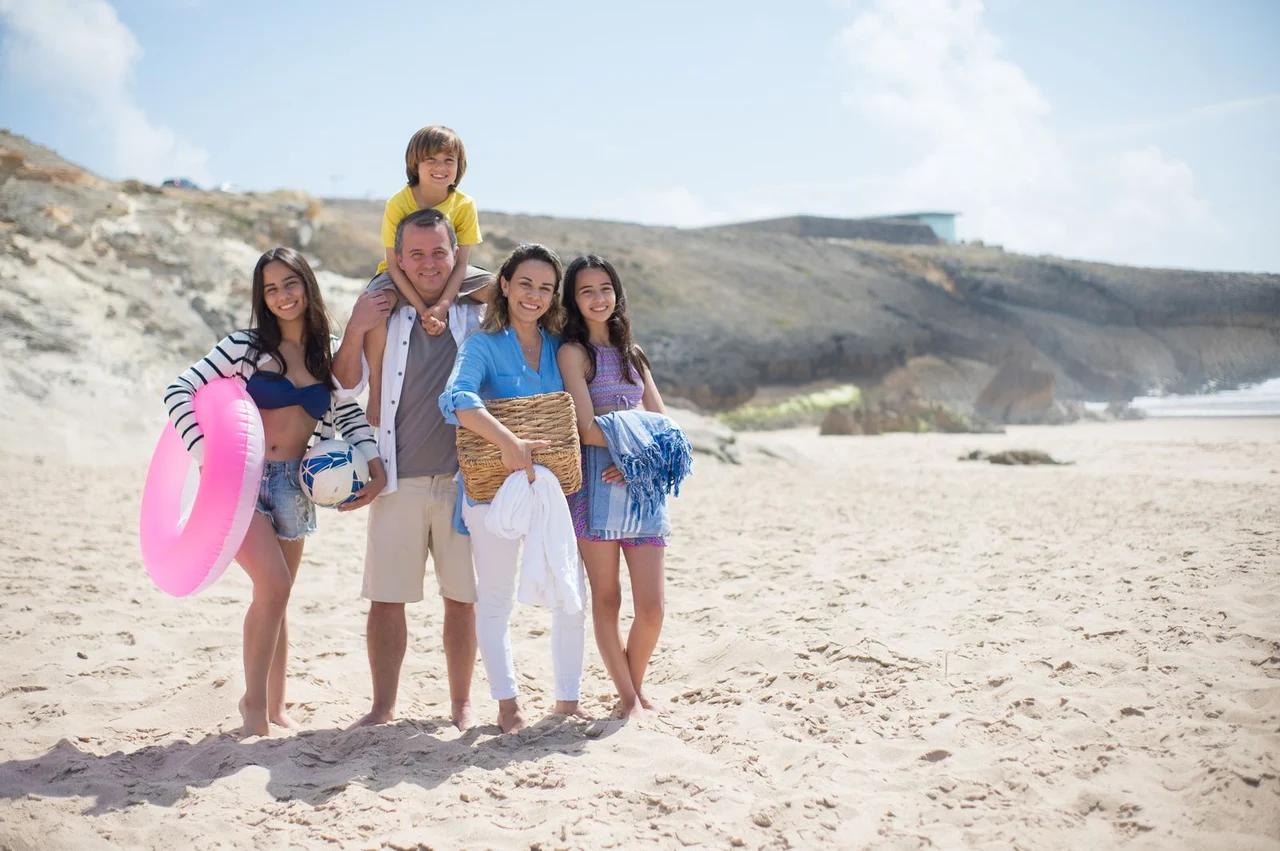
Portugal has long become one of the calmest destinations for a family relocation to Europe: a mild climate, low crime, a child-friendly society, and a country within the EU and Schengen. But behind the pretty picture lie specific requirements - which visa to choose for the whole family, how to confirm income for a spouse and children, where to find a school, how to connect children to the state SNS healthcare, and what changed in 2026 with family reunification and naturalization rules. We break down the relocation family-style: from choosing a visa to daily life with children on the ground.
Why families choose Portugal specifically
When it comes to relocating to Europe with children, Portugal almost always makes the shortlist - and not by chance. It's a country combining things that matter specifically for a family: safety, a mild climate, accessible education, nature, and EU membership with the prospect of permanent residence and citizenship. Unlike a number of its neighbors, Portugal is in both the EU and Schengen, so the family gets freedom to travel across most of Europe with no visas from the very start.
What parents especially value:
- Peace of mind.Portugal consistently ranks among the safest countries in the world - with a very low level of violent crime.
- Attitude toward children.Here a child is a welcome guest practically everywhere: in restaurants, on the streets, in public places. Family values are embedded in the culture.
- Climate.A mild winter, warm summer, and abundant sun support an active outdoor lifestyle year-round.
- Education and healthcare.State schools are free, and legal residents' children get access to the national healthcare system.
That said, relocating isn't a tourist trip, but a project with a legal and financial side. Next we break everything down in order: which visa to relocate the whole family on, how to calculate income, what's up with reunification, schools, and healthcare. We keep the general relocation logic in our overview ofmoving to Portugal.
Which visas suit relocating with the whole family
The main principle: a family usually relocates on one main visa, arranged by one family member (the main applicant), with the spouse and children included as dependents. Less often the family goes in parts, in which case the family reunification procedure kicks in. The visa choice depends on what the family's income is built on.
- D7 - the passive income visa.For those living on a pension, rent, dividends, or interest. Suits rentiers and pensioners. The income benchmark - from ~€920 a month for the main applicant.
- D8 - the digital nomad visa.For those working remotely for a foreign employer or clients. Requires higher income - roughly from ~€3,480 a month.
- D2 - the entrepreneur visa.For those opening or running a business in Portugal, including freelancers with local contracts.
- A work visa.If the head of the family is hired by a Portuguese company (a common case - relocating IT specialists).
Under all these routes, a spouse and minor children (and often dependent adult children and parents too) can be included in the application. Each option leads to a residence permit, then to permanent residence. A detailed breakdown of the most popular family route is in our article onthe D7 visa to Portugal.
Conditions for the family: income, housing, and a decision table
Let's gather the key family requirements into one table - a framework the details build on. The main axes are confirming income for each family member and having housing in Portugal. Important: exact thresholds depend on the visa and are tied to the minimum wage, so the figures below are approximate and subject to checking at filing time.
The income logic for a family is usually this: 50% for a spouse and 30% for each minor child is added to the main applicant's base minimum. That is, a family of four must show noticeably more than a single person.
| The family's need | The solution in Portugal |
|---|---|
| Legal status for everyone | One main visa (D7/D8/D2/work) + including a spouse and children as dependents |
| Proof of income | ~€920 base + 50% for a spouse + 30% for each child (benchmark, depends on the visa) |
| Housing | A lease or ownership in Portugal at the time of filing |
| Children's education | Free state schools or international schools (€6,000-26,000/year) |
| Healthcare | Private entry insurance + connecting to SNS via the utente number after getting the residence permit |
| A financial cushion | Savings in the account (benchmark from ~€11,040 for the main applicant) |
| Clean criminal record | Apostilled certificates for each adult family member |
| Prospect | Residence permit - permanent residence - EU citizenship (naturalization requirement in 2026 - 10 years) |
If even one item is "weak" - for example, income right at the minimum for a family of four, or no lease agreement - it's better to refine the application before filing, rather than get refused and lose months.
How to calculate income for children and a spouse
Parents' most common question: how much money must be shown to bring a wife/husband and two children? There's no universal answer - the threshold depends on the chosen visa - but the calculation logic is general and clear.
The main applicant's minimum income is taken as the base. Then add-ons follow for each family member:
- For a spouse- an additional roughly 50% of the base minimum.
- For each minor child- about 30% of the base minimum.
- For dependent parents- there are also their own add-ons if you're bringing the older generation.
For example, for the D7 passive income route with a base benchmark of about €920 a month, a family of two adults and two children must show noticeably more in total - the add-ons stack up. For the D8 digital nomad visa, the base threshold is higher from the start (roughly from ~€3,480 a month), and family add-ons are calculated from it.
Besides monthly income, it's important to show savings in the account - a benchmark from ~€11,040 (about 12 minimum wages) for the main applicant, plus additional sums for family members. These figures aren't a strict constant: they're tied to the minimum wage and change annually, so the current calculation is always made at filing time.
Schools for children: state and international
Education is one of the main questions when relocating with children, and Portugal has plenty to choose from here. The system splits into state schools and private ones (including international).
- State schools (free).Available to legal residents' children on equal footing with citizens. Teaching is in Portuguese. For foreign children not fluent in the language, a special PLNM programme (Portuguese as a non-native language) applies: the child's level is assessed and suitable support is selected.
- Private and international schools (paid).Portugal has more than 50-70 international schools, mostly in Greater Lisbon, Porto, the Algarve, and Madeira. British, American, French, German programmes, and the International Baccalaureate (IB) are available. Tuition costs roughly from €6,000 to €26,000 a year.
Many families choose this strategy: younger children go straight into state school, where they quickly pick up the language through immersion, while teenagers who need to complete a programme in English go to an international school with IB. Enrollment in state schools happens in strictly defined windows (for the 2026/2027 school year - in spring and June), so it's better to plan the move around these dates. More on how education is structured in our article onschools and education in Portugal.
We will find the right basis for residency in Portugal
We calculate the budget and timing for your family and list the documents you need.
Healthcare for children: the SNS system and insurance
Children's health is the topic parents worry about most. The good news: legal residents of Portugal and their children get access to the national healthcare system SNS (Serviço Nacional de Saúde).
How this works in practice:
- The utente number (número de utente).After getting the residence permit and tax number, each family member can get a personal SNS patient number at the local health center (centro de saúde). This opens access to state healthcare.
- Children under 18.Help within the SNS system is generally free for children. The child is registered with a family doctor; newborns get access automatically.
- A family doctor.Healthcare access doesn't depend on citizenship - it's tied to legal residence. If a family doctor isn't available right away, the family is put on a waiting list.
- Entry insurance.At the visa stage, private health insurance is required (coverage benchmark - €30,000-50,000). Many families keep private insurance even after getting SNS for fast access to specialists with no queues.
In practice many choose a hybrid: basic and emergency care through SNS, and scheduled visits to specialists through private clinics via insurance. This is especially convenient for families with young children. A full breakdown of the system is in our article onhealthcare in Portugal.
"To families I always say one thing: calculate income not for yourself, but for everyone at once - this is the first mistake that breaks plans. Half is added for a spouse and almost a third for each child to the base minimum, and for a family of four the figure comes out quite different from the single-person calculator. Second: after the 2026 reform, family reunification became stricter, with a sponsor residence period of about two years, so it's more often advantageous to go with the whole family on one visa. And third, which I warn about: citizenship is now ten years, not five. Relocating to live and raise children in a calm EU country - Portugal is an excellent choice; for a fast passport, expectations should be revisited."
Safety and environment for children
If one reason had to be singled out for why families with children are so drawn to Portugal, it's the sense of safety. And it's not baseless: the country consistently ranks among the calmest in the world, with one of the lowest levels of violent crime in Europe.
What this means in daily life:
- Children get more freedom.Families who relocated from major cities often note that here a child can walk to school alone or play in the yard - something parents didn't feel comfortable with back home.
- A calm urban environment.The main risks are petty pickpocketing in tourist spots, not threats to personal safety. Violent crime is rare.
- A friendly culture.The Portuguese treat children and newcomers warmly, society is generally tolerant and friendly.
- A measured pace of life.Long lunch breaks, protected weekends and holidays, an emphasis on family - all of this creates a calm backdrop for raising children.
Safety plus climate give exactly the quality of life families come for: the ability to live outdoors, walk, exercise, and not be shut inside four walls. We cover this topic separately in our article onsafety in Portugal.
Daily life with children: climate, housing, everyday routine
Once the legal part is behind you, ordinary life begins - and the family has its own questions here. Where to live, what the climate is like, how expensive it is to raise children.
A few practical benchmarks:
- Climate.Mild Mediterranean-Atlantic weather: a warm summer, a not-cold winter (in Lisbon in January, an average of about 11°C), plenty of sun. The north is cooler and rainier, the Algarve warmer and sunnier year-round.
- Where families settle.Lisbon and its suburbs (Cascais, Oeiras) - the most schools and jobs; Porto - cheaper and calmer; the Algarve - the sea, sun, and strong international schools; Madeira - a mild climate year-round.
- Housing.Rent in Lisbon and Porto is a notable expense line, cheaper in the regions. A long-term lease agreement is needed already at the visa stage.
- Everyday life.Fresh produce, markets, the ocean, parks, developed infrastructure for children - from playgrounds to clubs. Many everyday services are more affordable than in Northern Europe.
It's also important to understand about language: in major cities and tourist zones many speak English, but for integration, school, and daily life, Portuguese will still be needed - and children pick it up quickly, especially through state school.
Pros and pitfalls of a family relocation
For a well-weighed decision, let's lay out the strengths and the points to prepare for in advance.
Strengths for the family:
- Safety and peace of mind- one of parents' main arguments.
- Education and healthcare- access to free state schools and the SNS system.
- Climate and nature- year-round outdoor life, the ocean, a mild winter.
- EU prospects- the road to permanent residence and citizenship, freedom to travel across Schengen already with the residence permit.
Pitfalls it's better to know about right away:
- Income for everyone.Finances need confirming for each family member - a family of four must show noticeably more than a single person.
- Timelines and bureaucracy.Visa booking, processing through AIMA, registering with a doctor - all require patience and time.
- Reunification has become stricterin 2026 - relocating the family in parts is now harder.
- Citizenship - a long-term goal.The naturalization requirement is raised to 10 years, so an EU passport is a horizon of many years, not a couple of seasons.
The conclusion is simple: Portugal suits families who plan to genuinely relocate and live, not "get status as a backup". Then all the advantages work for you.
We will calculate the budget for your family
A full estimate: contributions, fees and our work for your family.
From residence permit to permanent residence and citizenship: what awaits the family
Many families look beyond the first residence permit - to stable permanent residence and an EU passport for their children. It's important to rely on current 2026 rules here, since they've changed noticeably.
What the path looks like:
- Residence permit.The first card is usually issued for 2 years, then renewed. All included family members receive it.
- Permanent residency.Permanent residence is arranged after several years of legal residence in the country, subject to conditions (stability, language, no long gaps).
- Citizenship.Here's the main warning: in 2026 a reform was passed, raising the naturalization requirement. The law was approved by parliament on April 1, 2026, and signed by the president on May 3, 2026. Under the new rules, most applicants need10 yearsof legal residence (for citizens of Portuguese-speaking community CPLP countries -7 years), knowledge of Portuguese atA2and passing a test on culture, history, and basic rights.
What this means for the family: citizenship for children and parents is a real but long-term goal. The count starts from issuing the first residence permit. So it's strategically important to enter status correctly from day one and not allow gaps in residence. Current conditions and forms should always be checked on the state's official portalgov.pt.
A step-by-step family relocation plan
To avoid getting lost in details, let's put the whole process into a clear sequence. This is a broad-strokes roadmap - each family will have its own nuances.
- Step 1. Auditing the situation.We determine the family's income source (passive/remote work/business/employment) and family composition. The visa depends on this.
- Step 2. Choosing a visa.D7, D8, D2, or work - and calculating the income threshold factoring in add-ons for a spouse and children.
- Step 3. Housing.We select a region for your priorities (schools, climate, budget) and arrange the lease.
- Step 4. Documents.Apostilled criminal record certificates for adults, proof of income and savings, children's birth certificates, health insurance.
- Step 5. Filing the visa.The national D visa is arranged at a consulate outside Portugal for the whole family.
- Step 6. Entry and AIMA.We enter, file documents for residence permit cards with the AIMA migration service.
- Step 7. Children and daily life.We enroll children in school (factoring in enrollment windows), get utente numbers and connect the family to SNS, arrange tax numbers.
The main thing is to plan the sequence of steps in advance: a missed school enrollment window or a missing certificate can delay the whole move. We keep the detailed relocation logic in our overview ofmoving to Portugal.
Common family mistakes and an expert's view
Over years of practice we see families stumble not on exotic issues, but on the same recurring things. Let's break them down so you don't lose time and money.
- Underestimating income for everyone.They calculate the threshold for one person, forgetting the 50% add-on for a spouse and 30% for each child. A family of four must show substantially more.
- Betting on reunification "later".After the 2026 reform, bringing the family in parts became harder - it's often more advantageous to go with everyone at once.
- Ignoring school enrollment windows.Enrollment happens in strictly defined periods; miss it, and the child can end up with no spot for the school year.
- Counting on fast citizenship.The requirement is raised to 10 years - an EU passport is a long-term goal, not a reason to relocate "for a couple of years".
- Gaps in status.An expired residence permit or long absences reset years toward permanent residence and citizenship. Keep a status calendar from day one.
A family relocation forgives a lot, but doesn't forgive haste and carelessness with documents. The earlier the strategy for income, school, and status is built, the calmer the move goes - and the sooner the family settles into stable daily life.
We'll help you plan your family's move to Portugal
A family relocation is dozens of interconnected details: the right visa for the income source, calculating the threshold for a spouse and children, a lease, insurance, certificates for each family member, enrolling children in school, and connecting to SNS. A mistake in one link slows the whole process and can cost the family months of waiting. We handle getting a residence permit and relocating to Portugal turnkey: we select the visa for your situation, calculate income for the whole family, prepare documents, and support you through to getting the residence permit cards.
Discuss your family's move with a BRIDGES GLOBAL lawyer- we'll break down your family's makeup, income source, and select the optimal route.
Family reunification: what changed in 2026
If the main applicant has already gotten a residence permit while the family stays abroad, the family reunification procedure (reagrupamento familiar) kicks in. Important changes happened here in 2026 that need to be known : the rules have tightened.
With the new law taking effect (Lei 61/2025, in force since October 1, 2025), reunification conditions have tightened:
- The sponsor's residence period.To launch reunification, the main applicant now generally must have a valid residence permit for at least two years. Previously you could apply much sooner.
- An exception for couples.For spouses and partners who lived together for at least 18 months before arriving, a shortened waiting period is possible - if convincing proof of the relationship is provided.
- Income and housing.The sponsor confirms sufficient income with no state help and housing meeting basic standards.
- Integration.Reunited family members take Portuguese language courses and civic values training already in the country.
It's exactly because of the 2026 tightening that many families find it more advantageous to go with everyone at once on one visa, including a spouse and children as dependents, rather than sending one person ahead with the plan to "bring the rest later". We keep the procedure's details in our article onfamily reunification in Portugal.
We will send a document checklist for your case
Leave your details: we will put together documents and timelines for your family.
Bottom line: who a family relocation to Portugal suits
Portugal is a strong choice for families who want to live in a safe, warm, child-friendly EU country, with access to education and healthcare and the prospect of permanent residence and citizenship. This is a destination for those who genuinely relocate: to raise children, work remotely or run a business, and integrate into local life.
If your plan is genuinely living on the ground, Portugal gives a family almost everything it needs: peace of mind, climate, schools, healthcare, and a European prospect. But if the goal is formally "getting status as a backup" without living in the country, then both the financial burden on the whole family and the long 10-year naturalization requirement will make this path disadvantageous.
The optimal strategy is to select a visa for the family's income source, correctly calculate the threshold for a spouse and children, settle the school and healthcare question in advance, and enter status cleanly, with no gaps. Then the move turns from stress into a manageable project. Where to start - see our articles onD7 visa, schoolsand healthcare, and check current government conditions on the portalgov.pt.
Frequently asked
Questions people ask before deciding
01Which visa is easiest to relocate to Portugal with family in 2026?
Most often families go on one main visa, including a spouse and children as dependents. If the income is passive (pension, rent, dividends), D7 suits. If the head of the family works remotely for a foreign employer - D8. For business - D2, for hiring at a local company - a work visa. The choice depends on the family's income source.
02How much money must be shown for a family of four?
The exact sum depends on the visa, but the logic is general: about 50% for a spouse and about 30% for each child is added to the main applicant's base minimum (D7 benchmark - about €920 a month). Plus savings in the account - a benchmark from ~€11,040 for the main applicant and additional sums for family members. Figures are tied to the minimum wage and change.
03Can children attend state school for free?
Yes. Legal residents' children enroll in state schools on general terms, tuition is free and taught in Portuguese. For children not fluent in the language, the PLNM programme (Portuguese as a non-native language) applies, with a level assessment and selected support. Enrollment happens in strictly defined windows during the year.
04How much do international schools cost in Portugal?
Roughly from €6,000 to €26,000 a year depending on the school and programme. The country has more than 50-70 international schools, mostly in Greater Lisbon, Porto, the Algarve, and Madeira, with British, American, French, German programmes, and the International Baccalaureate (IB).
05How do children get access to healthcare in Portugal?
After getting the residence permit and tax number, each family member can arrange a utente number (número de utente) at the local health center - it opens access to the state SNS system. For children under 18, help is generally free; the child is registered with a family doctor, and newborns get access automatically.
06Is private insurance needed if there's SNS?
At the visa stage private health insurance is mandatory (coverage benchmark €30,000-50,000). After connecting to SNS, many families keep private insurance for fast access to specialists with no queues. In practice a hybrid is convenient: emergency and basic care through SNS, scheduled visits through private clinics.
07What changed in the family reunification rules in 2026?
Under the new law (Lei 61/2025, in force since October 1, 2025), conditions have tightened. To launch reunification, the sponsor generally must have had a residence permit for at least two years. For couples who lived together for at least 18 months before arriving, a shortened period is possible given proof of the relationship. Income, housing, and completing integration courses are required.
08Is Portugal safe for a family with children?
Yes, Portugal consistently ranks among the safest countries in the world, with one of the lowest levels of violent crime in Europe. The main risks are petty pickpocketing in tourist zones. Many families note that children get more freedom here: they can walk to school or play in the yard alone.
09What's the climate like in Portugal, and where's best to live with children?
The climate is mild, Mediterranean-Atlantic: a warm summer, a not-cold winter, and plenty of sun. Families more often choose Lisbon and its suburbs (the most schools and jobs), Porto (cheaper and calmer), the Algarve (the sea, sun, international schools), or Madeira (a mild climate year-round).
10Can elderly parents be brought to Portugal?
Yes, dependent parents can be included in the family relocation or arranged via family reunification, but for them too additional income needs confirming and housing conditions met. After the 2026 reform, reunification requirements tightened, so this scenario is worth calculating in advance.
11After how many years can the family get Portuguese citizenship?
Under the 2026 reform (the law approved April 1 and signed by the president May 3, 2026), most applicants need 10 years of legal residence, for citizens of CPLP countries - 7 years. Additionally, Portuguese at A2 level and a test on culture, history, and basic rights are required. The count starts from issuing the first residence permit.
12Does a Portugal residence permit give freedom to travel around Europe?
Yes. Portugal is in both the EU and Schengen, so already with the residence permit the family gets the right to freely move around the Schengen Area within permitted stay periods. This is a substantial advantage over EU countries not yet in Schengen.
Transparency
How this material was prepared
- Author
- Viktoria Lebedeva, managing Director, Private Clients, BRIDGES
- Terms and costs last verified
- June 2026
- Sources
- official government authorities of the relevant country and state publications
- Methodology
- government minimum requirements are stated separately from due diligence charges, state fees, legal and banking costs
Sources and methodology
Figures, terms and timelines are checked against official sources as of June 2026. Link availability verified in August 2026. Third-party blogs and agent websites are not used as a source of programme terms.
- [1]Agência para a Integração, Migrações e Asilo (AIMA)Residence permits and how to applyaima.gov.pt/en
- [2]Portal das FinançasTax regimes and obligations of residentswww.portaldasfinancas.gov.pt
Methodology: tables and charts state government minimum investment requirements; due diligence charges, state fees, legal, banking and other costs are calculated separately and are not included in the minimum thresholds.
About the author
Related materials
What to read next
 ArticlePortuguese citizenship by descent in 2026: by parents, grandparents and birth
 ComparisonResidence permit for investment in 2026: Greece, Portugal or UAE - what to choose
 AnalysisWhat is due diligence and why the Caribbean is rejecting applications
Personal programme selection is conducted by Anna Kovalevskaya, Head of Legal, BRIDGES.
Residency in Portugal: timelines and requirements
Grounds, document list, presence requirements and what is needed for renewal.