Residency · Hungary
Transport and driving licenses in Hungary 2026: exchanging your license and getting around

Updated: June 2026·9 min read·Expert reviewed
Terms and costs verified: June 2026
Contents
You've moved to Hungary - and an everyday question arises: how to get around and what to do about your license. You can get around Budapest by metro for 500 forints, but a foreign license will sooner or later need to be exchanged for a Hungarian one, and with Russian ones it's not as smooth as forums promise. We break down the facts of 2026: fares, license exchange, car registration, insurance, and the vignette - with no myths and caveats where the topic is slippery.
In brief
Hungary is a convenient country to live in without a car: Budapest is covered by the metro, trams, and BKK buses, MAV trains and Volanbusz buses run between cities. A single ticket in the capital is 500 forints, a monthly pass is 8,950. A foreign license can be used for up to a year from the start of permanent residence, after which an exchange for a Hungarian one is needed. For Vienna Convention countries (Russia among them), the exchange goes ahead without exams - based on a medical certificate and document package; for others theory and driving may be required.
Having your own car makes sense outside the capital. Car registration, mandatory KGFB insurance, and the highway vignette (e-matrica) are three things without which you can't legally drive. Below are the specifics and amounts.
Budapest public transport (BKK)
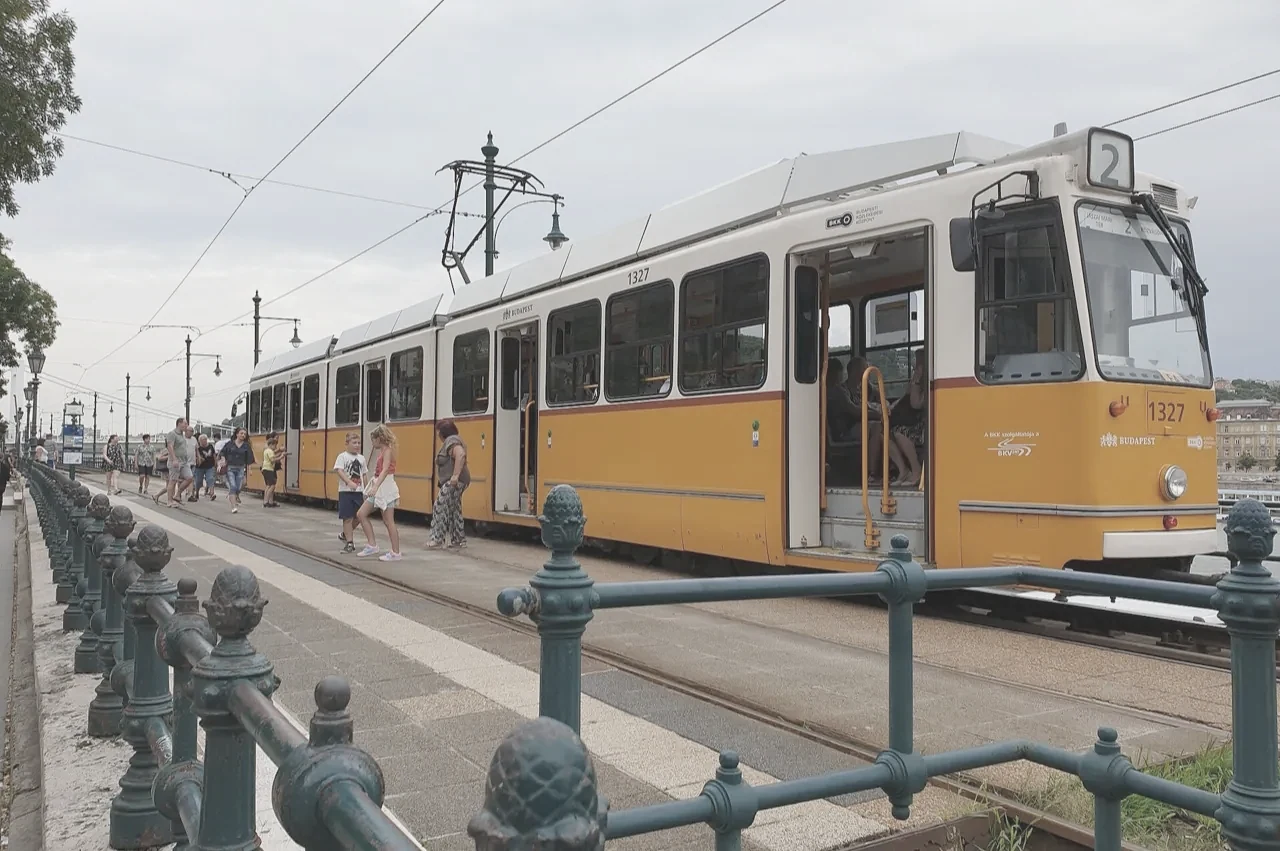
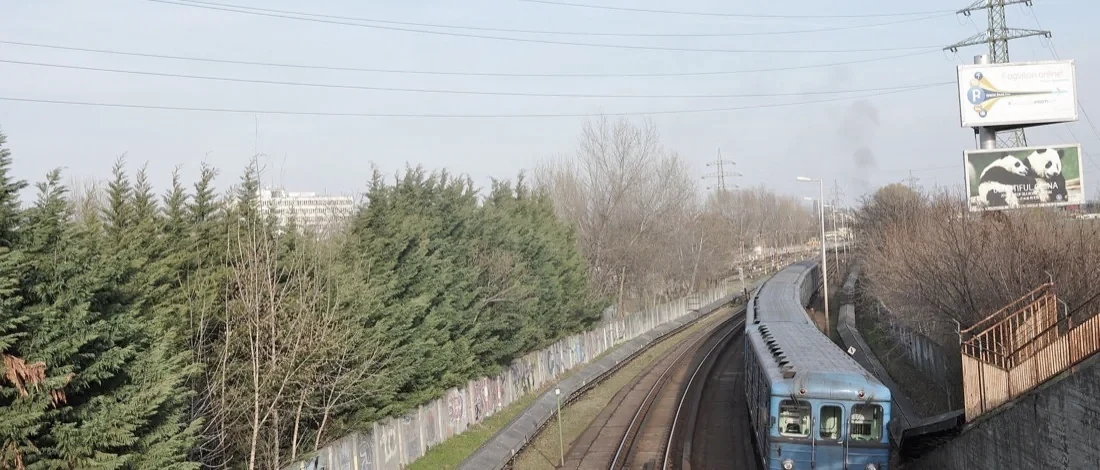
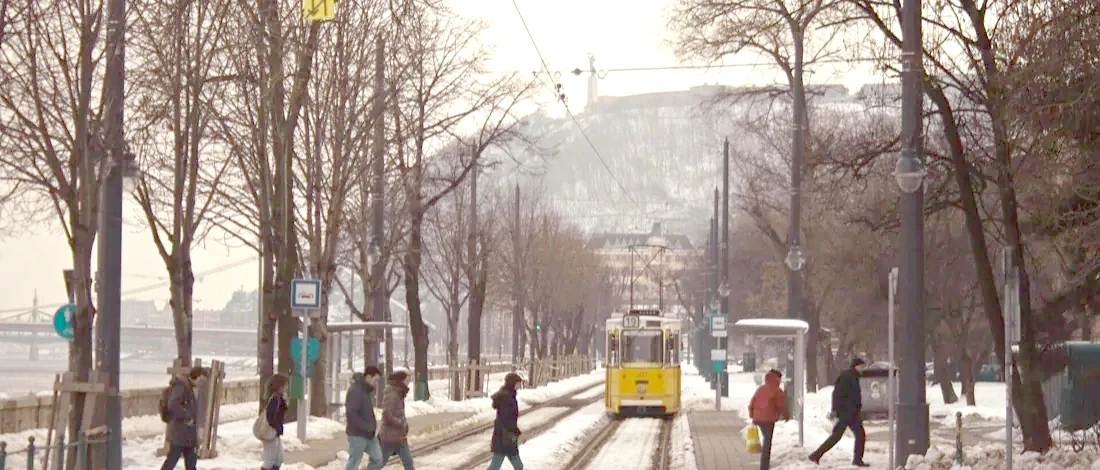
The capital's city transport is managed by BKK (Budapesti Kozlekedesi Kozpont). The network is dense and familiar to a newcomer from Russia: four metro lines (including the historic M1 - the second oldest in Europe), trams, trolleybuses, buses, and HEV suburban trains. The famous tram No. 2 along the Danube makes it into every guidebook, but for a resident it's just a working route.
The main rule is you need to punch (validate) the ticket on entry, and inspectors in yellow vests check it regularly and fine without mercy. So it's simpler to just buy a pass right away. Tickets and passes are arranged in the BudapestGO app, at station machines, and at ticket offices. Current rates are published by BKK's official website.
- Single ticket- 500 forints, valid for one trip without transferring to another metro line without a separate transfer ticket.
- A pack of 10 tickets- more advantageous than single tickets.
- Monthly Budapest pass- 8,950 forints, unlimited across the whole city network.
- Ticket from the driver- 700 forints, that is, more expensive; buying in advance is always more advantageous.
For those still looking around before relocating, the tourist Budapest Card is more convenient. We write in more detail about the rhythm of life in the capital in the article on on Hungary's residence permit and legal residence.
Intercity transport: trains and buses
Outside the capital, travel relies on two operators. Trains are MAV(Magyar Allamvasutak, Hungarian State Railways). Intercity buses - Volanbusz; they're usually white or yellow and cover routes trains don't reach. Since 1 January 2025, Volanbusz has merged with MAV-HEV, and the system is gradually being consolidated into a single window.
Practical news for 2026: the updated app MAV+since 2025 allows buying tickets for almost all Volanbusz intercity buses and trains across the country in one place - no more need to keep two different services. Train tickets are also sold through the ELVIRA online ticket office on the MAV website.
For regular trips around the country there are unified passes under the new fare - Hungary Pass(across all of Hungary) and regional County Passes. This is a reasonable choice if work or family requires frequent travel between cities. Schedules and routes are convenient to check in the MAVPlusz planner. Hungary is compact, and the network covers the country densely, so many newcomers live comfortably without a car for the first months.
Fares (table)
To make it concrete, we've gathered the basic 2026 rates in one place. Prices are given in forints; the rate is roughly 1 euro ≈ 400 forints, so for a rough estimate divide the amount by 400.
| Service | Price (forints) | Roughly in euros |
|---|---|---|
| Single BKK ticket (Budapest) | 500 | ≈1,2 |
| Ticket from the driver | 700 | ≈1,7 |
| Monthly Budapest pass | 8 950 | ≈22 |
| Taxi: base fare (pickup) | 1 100 | ≈2,7 |
| Taxi: per kilometer | 440 | ≈1,1 |
| Taxi: minute of waiting | 110 | ≈0,3 |
| Annual D1 vignette (car) | 62 775 | ≈155-160 |
| Medical certificate for the license exchange | 6 500-7 500 | ≈16-19 |
Transport costs are moderate by EU standards: life without a car in Budapest costs the price of one monthly pass plus occasional taxis. We give a detailed budget breakdown in the guide on on relocating and living in Budapest.
Driving licenses: can you drive on a foreign one
The short answer: yes, but not indefinitely. While you're a tourist or here for a short time, a foreign national license is valid. As soon as you become a resident - get a residence permit and register a permanent address - the clock starts ticking.
The key rule for countries that signed the 1968 Vienna Convention on Road Traffic(and this includes Russia and most post-Soviet countries): you can drive on your own license within one year of the start of permanent residence in Hungary. After this term the license needs to be exchanged for a Hungarian one. If the exchange is overdue, the law requires taking a theory course on local traffic rules, so it's not worth delaying.
A couple of important caveats:
- The license must be valid- an expired document doesn't work for either driving or exchange.
- The categories must be legible. Russian licenses duplicate the categories in Latin script (A, B, etc.), so they're understandable to Hungarian authorities.
- An International Driving Permit (IDP) helps in a disputed situation on the road, but it's only a supplement to the national license - it's not accepted for exchange on its own.
That is, in the first year after relocating you can drive calmly while preparing documents for the exchange in parallel. Those planning the move in advance can read our breakdown of Hungary's investment residence permit (golden visa)- resident status is exactly the point from which the year's count starts.
We will find the right basis for residency in Hungary
We calculate the budget and timing for your family and list the documents you need.
Exchanging your license for a Hungarian one: conditions (and separately for Russians)
The exchange is arranged at the Kormanyablak government window. For citizens of Vienna Convention countries (including Russia), a simplified procedure applies - without taking theory and practical exams. You don't need to retake the driving test: the procedure comes down to assembling a document package and a medical exam.
What's usually required:
- A valid national driving license (Russian licenses generally don't need translation into Hungarian - they're already partly in Latin script).
- A passport or ID card.
- A document proving legal residence in Hungary (residence permit / address registration). In practice, residence is expected for the exchange at least 6 monthswith a confirmed address - the address card (lakcimkartya).
- Medical certificatefrom an authorized Hungarian doctor. Cost - about 6,500-7,500 forints, the license certificate itself is valid for many years (a long term).
- In certain cases, a small share of applicants may be asked for an education certificate certified by the OFFI translation bureau - this nuance is better checked in advance at the specific Kormanyablak.
about Russian licenses.Legally, Russia is a party to the Vienna Convention, and formally the exchange proceeds without exams based on a medical certificate. But in practice a lot depends on the specific government window and the current administrative stance: sometimes the procedure goes smoothly, sometimes extra documents are requested or review takes longer. A single scenario can't be guaranteed for everyone - this is an area where reality depends on the local official. So we always advise not putting off the exchange until the end of the permitted year and checking the list in your district in advance. The basic rules for recognizing and exchanging licenses in the EU are described on the portal of the European Commission's Your Europe.
For citizens of countries that DIDN'T sign the Vienna Convention and with which Hungary has no separate agreement, the procedure is stricter: both a theory exam (in Hungarian, with a translator) and a practical driving test may be required, and sometimes a first-aid course.
Buying and registering a car
If you're settling outside Budapest or the family needs a car, you'll have to go through registration. The EU's key principle: if you permanently reside in the countryor bring in a car with foreign plates for long-term use, it needs to be put on the Hungarian register and get Hungarian plates. You can't drive long-term on Russian (or other non-EU) plates while being a resident.
In simplified terms the process looks like this:
- A sale contract or car import documents.
- Technical inspection (muszaki vizsga) - the equivalent of a vehicle inspection.
- Arranging mandatory KGFB insurance (more below) - without it the car won't be registered.
- Registration with the authorities and getting Hungarian plates and a registration certificate (forgalmi engedely).
- Vehicle tax (gepjarmuado) - paid annually; in 2026 the one-time payment deadline is 15 April.
Buying a used car from a dealer or a private seller is a common story; the main thing is to check the car's history and a valid technical inspection. For a family with children, having a car is often justified: Hungarian roads are in good condition, and out-of-town trips to Lake Balaton or Austria become a matter of a couple of hours.
Insurance and the vignette
Two mandatory things for any car owner in Hungary are liability insurance and the highway vignette. They shouldn't be confused: the first covers damage to others, the second gives the right to drive on toll highways.
Mandatory KGFB insurance.This is the Hungarian equivalent of OSAGO - kotelezo gepjarmu-felelossegbiztositas. Every owner of a car registered in Hungary must have a valid KGFB policy and pay contributions continuously; without it you can't drive or register the car. The cost is calculated by online calculators (Netrisk, Biztositas.hu, Allianz, UNIQA, etc.) - the price depends on engine power, region, the driver's age and experience, and the bonus-malus rating. If you have a car with plates from another EEA country and a valid policy, you don't need to arrange separate Hungarian insurance for a temporary stay - such insurance works throughout the EU.
The vignette (e-matrica).You need to pay for driving on Hungary's highways and expressways - not at toll booths, but by buying an electronic vignette tied to the plate number. Since 2024 sales are fully digital, there are no more roadside points: you can buy online or in the app. The car category is D1.
- AnnualD1 for 2026 - 62,775 forints (about 155-160 euros); rates were raised about 5% from 1 January 2026 as part of inflation indexing.
- There are also 10-day, monthlyand regional (county) vignettes - for those who drive on highways rarely or within one region.
Current rates and categories are published by the state road operator (Nemzeti Utdij). Important: driving on a toll road without a vignette is a fine, and it's issued automatically by camera, so forgetfulness costs dearly.
Taxis and car sharing
If you don't need your own car every day, the combination of taxis and car sharing works great in Budapest.
Taxi.A single regulated rate applies in the capital - it's the same for all legal services, including the Bolt app: a 1,100-forint pickup fee, 440 forints per kilometer, and 110 forints per minute of waiting. The price doesn't change at night or on weekends - no time-of-day surcharges. Since September 2025 card acceptance is mandatory in all Budapest taxis, so you don't need to look for cash. The most convenient way to call a car is the Bolt app, which also helps avoid overpaying illegal drivers at stations and the airport.
Car sharing.The main player is MOL Limo: a fleet of about 600 cars, online registration through the app, 24/7 trips, per-minute billing. For regular users there's a subscription of about 999 forints a month that lowers the per-minute rate - convenient for locals, not just tourists. You take the car where it's parked and leave it in the service zone - ideal for short trips around the city when the metro won't cut it.
The bottom line for this block: for life in Budapest, owning a car is often excessive - it's cheaper to combine a BKK pass, Bolt taxis, and MOL Limo car sharing, leaving your own car for out-of-town trips.
What to arrange when relocating: a checklist from BRIDGES GLOBAL
When a client gets a residence permit and relocates, we help close transport questions in the right order - so there are no fines or an overdue license exchange. Here's what we check and advise at the start.
- The start date of residence.The count of the year during which you can drive on a foreign license starts from it. We record it right away so as not to miss the exchange deadline.
- The address card (lakcimkartya).Without a confirmed address you can arrange neither the license exchange nor the car registration. This is a basic document.
- The license exchange - in advance.We don't wait for the last month of the permitted year. For Russians we separately check the requirements of the specific Kormanyablak, since local practice varies.
- Medical certificate.We direct you to an authorized doctor - without it the exchange won't be accepted.
- KGFB insurance and the vignette.If you're buying a car, we check the policy and the e-matrica arrangement so you don't get fined on the very first highway trip.
- Vehicle tax.We remind you of the payment deadline - by 15 April.
These everyday details seem trivial, but it's exactly these that those relocating on their own trip up on. We guide the client from a residence permit by investmentthrough to full adaptation, and down the line - through to Hungarian citizenship.
“Transport is the first thing those who move on their own trip up on. People are sure: since Russia is in the Vienna Convention, the license is exchanged automatically and without exams. Legally that's the case. But on the ground a lot depends on the specific government window: sometimes the procedure takes one visit, sometimes they ask for extra papers and take longer to review. We always tell the client: don't wait until the end of the permitted year, arrange the medical certificate and address card right away. And don't forget the vignette - a fine for driving on a highway without one comes automatically from cameras. These small things are the difference between calm adaptation and a headache.”
We will send a document checklist for your case
Leave your details: we will put together documents and timelines for your family.
Bottom line
Getting around Hungary is simple and inexpensive. Budapest is covered by BKK for 8,950 forints a month, the country - by MAV trains and Volanbusz buses in one app, MAV+. A foreign license can be used for a year after relocating, then an exchange for a Hungarian one: for Vienna Convention countries, including Russia, without exams, based on a medical certificate and document package. The one caveat - the practice of exchanging Russian licenses depends on the specific government window, so it's not worth delaying.
If you're planning to live with a car, don't forget registration, mandatory KGFB insurance, and the D1 vignette (62,775 forints a year). And if the move to Hungary is still just in the plans, start with legal status: see our breakdowns of a residence permit by investmentand Hungarian citizenship- BRIDGES GLOBAL supports every step, including everyday details like a license and transport.
Frequently asked
Questions people ask before deciding
01Can you drive in Hungary on a Russian license?
Yes. Russia is a party to the 1968 Vienna Convention, so you can drive on a valid Russian national license for a year from the start of permanent residence in Hungary. After that term it needs to be exchanged for a Hungarian one.
02Do you need to take an exam when exchanging a Russian license?
Under the rules for Vienna Convention countries - no, the exchange goes ahead without theory and practical exams, based on a medical certificate and document package. But in practice a specific government window (Kormanyablak) may request additional documents, so conditions are best checked in advance.
03How much does the medical certificate for a license exchange cost?
About 6,500-7,500 forints from an authorized Hungarian doctor. The medical certificate for the license itself is valid for a long term.
04How long can you drive on a foreign license?
Up to one year from the start of permanent residence in Hungary (that is, from getting resident status and registering the address). After that an exchange is required.
05How much does public transport cost in Budapest?
A single BKK ticket is 500 forints, more expensive from the driver - 700. A monthly Budapest pass is 8,950 forints and gives unlimited travel across the whole city network.
06How do you buy train and intercity bus tickets?
Through the MAV+ app, which since 2025 combines MAV train tickets and almost all Volanbusz buses, and through the ELVIRA online ticket office on the MAV website.
07Do you need to register a car in Hungary?
Yes, if you permanently reside in the country or bring in a car for long-term use. The car is put on the Hungarian register, undergoes a technical inspection, gets insured, and receives Hungarian plates.
08What is KGFB?
This is mandatory car third-party liability insurance (kotelezo gepjarmu-felelossegbiztositas) - the Hungarian equivalent of OSAGO. Without a valid policy you can neither drive nor register the car.
09How much does a highway vignette cost?
The annual D1 category vignette for a car for 2026 is 62,775 forints. There are also 10-day, monthly, and regional vignettes. Sales are fully electronic (e-matrica), tied to the plate number.
10What happens if you drive on a highway without a vignette?
A fine. Control is automatic via cameras tied to the plate number, so forgetting to buy a vignette is a costly oversight.
11How much does a taxi cost in Budapest?
A single regulated rate applies to all legal services, including Bolt: a 1,100-forint pickup fee, 440 forints per kilometer, and 110 forints per minute of waiting. There are no night or weekend surcharges. Since September 2025 card acceptance is mandatory.
12Is there car sharing in Budapest?
Yes, the main service is MOL Limo: a fleet of about 600 cars, online registration, 24/7 trips with per-minute billing. For frequent users there's a subscription of about 999 forints a month at a reduced rate.
Transparency
How this material was prepared
- Author
- Irina Shtern, head of Hungary Office, BRIDGES
- Terms and costs last verified
- June 2026
- Sources
- official government authorities of the relevant country and state publications
- Methodology
- government minimum requirements are stated separately from due diligence charges, state fees, legal and banking costs
Sources and methodology
Figures, terms and timelines are checked against official sources as of June 2026. Link availability verified in August 2026. Third-party blogs and agent websites are not used as a source of programme terms.
- [1]Országos Idegenrendészeti FőigazgatóságResidence permits and how to applyoif.gov.hu
- [2]Nemzeti Adó- és Vámhivatal (NAV)Tax residency and ratesnav.gov.hu/en
Methodology: tables and charts state government minimum investment requirements; due diligence charges, state fees, legal, banking and other costs are calculated separately and are not included in the minimum thresholds.
About the author
Related materials
What to read next
 ArticleHungarian Citizenship 2026: All Ways to Obtain an EU Passport
 ComparisonCitizenship of Bulgaria or Hungary: EU passport by roots
 AnalysisWhat is due diligence and why the Caribbean is rejecting applications
Personal programme selection is conducted by Anna Kovalevskaya, Head of Legal, BRIDGES.
Residency in Hungary: timelines and requirements
Grounds, document list, presence requirements and what is needed for renewal.