Living abroad · Bulgaria
Transport in Bulgaria: Sofia metro, cars and trains - complete guide

Updated: June 2026·9 min read·Expert reviewed
Terms and costs verified: June 2026
Contents
Have you moved to Bulgaria and are wondering: do you need a car or can you get by? The answer depends on the city. There are metro, trams and buses in Sofia. A taxi ride is cheaper than in any European capital. But outside of large cities, it will be difficult without a car. BJ trains are slow, but cheap - the Varna-Sofia route will take 7 hours and cost about 10 euros. Regional roads leave much to be desired in some places, but motorways have greatly improved in recent years. This guide contains everything you need to know about transport in Bulgaria before and after moving. Prices, routes, driver license exchange rules and the best navigation apps.
How does transport work in Bulgaria?
Bulgaria is a small country, but with a noticeable difference between the capital and the regions. Sofia has metro, trams, trolleybuses and buses. In Varna and Burgas there are only buses. In small towns and villages - almost nothing.
This means: your level of comfort in transport directly depends on where exactly you live. If you are in Sofia and don’t travel far, you don’t need a car. If you live outside the city or often travel around the country, it will be more difficult without a car.
Bulgarians actively use personal cars. Public transport is perceived as something for those who don't have a car. But for a foreigner who has just moved, city transport is a convenient and cheap start.
We will send a document checklist for your case
Leave your details: we will put together documents and timelines for your family.
Sofia Metro: three lines and how to use them
The metro in Bulgaria is only in Sofia. Three lines cover most of the city - from the airport to the center and large residential areas. This is the fastest way to get to work or the business center.
The first line runs from north to south and connects business districts. The second is transverse, covering the airport from the east. The third line opened relatively recently and stretches to the western regions.
Trains run every 3-5 minutes during rush hour and every 7-10 minutes at other times. The metro operates from 5:30 to 00:00. The stations are clean, navigation is in Bulgarian and English.
A single ticket costs 1.6 leva. It is more convenient to buy a Suica card (the local equivalent is the Elena card) and top it up in advance. This way you don't have to wait in line at the checkout.
Trams, trolleybuses and buses in Sofia
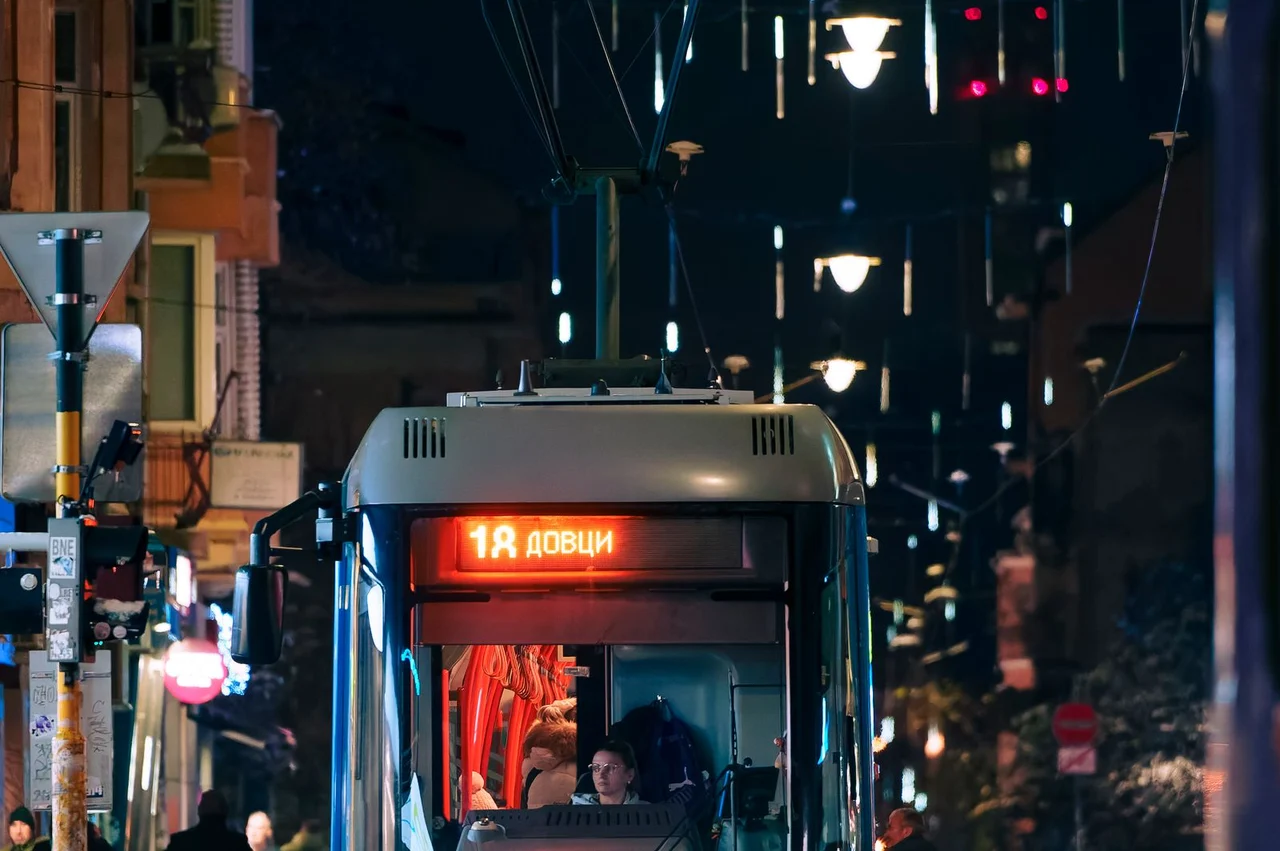
In addition to the metro, Sofia has an extensive network of ground transport. Trams cover the historical center and old quarters. Trolleybuses - quiet and emission-free - operate on several major routes. Buses cover everything else.
All types of transport use a single tariff: 1.6 leva per trip. You can buy a ticket from the driver or at the bus stop. A monthly subscription costs 55 leva - about 28 euros. This is very beneficial for the family.
The schedule is not always strictly followed. During rush hour, trams and buses may be late by 10-15 minutes. The Sofia Traffic application helps you track the real location of vehicles in real time.
In Varna and Burgas there are only buses. The schedule is less dense than in the capital, but enough for everyday trips within the city.
Taxi and Bolt: cheap and convenient
Taxis in Bulgaria are one of the cheapest in Europe. The base rate is about 1 leva, a kilometer is about 0.5 leva. A trip around the center of Sofia will cost 3-6 leva.
The Bolt application works in all major cities - Sofia, Varna, Burgas, Plovdiv. Interface in Russian is available. Prices are lower than street taxis.
Yandex Go also operates in Bulgaria. This is convenient for those who are already accustomed to this service. Both apps show the cost of your trip up front - no surprises.
Street taxis in tourist areas (airports, train stations) can inflate prices. It is better to call a car through the application or by phone through local services - OK Taxi or Yellow Taxi in Sofia.
Intercity buses: Union Ivkoni and Biomet
Intercity transportation in Bulgaria means buses. They are cheaper than trains and run more frequently. Two large companies - Union Ivkoni and Biomet - cover most routes throughout the country.
The routes pass through the central bus station of Sofia (Tsentralna Avtogara). You can buy a ticket online on the companies' websites or directly at the ticket office. We recommend booking in advance for weekends and holidays.
Approximate prices on popular routes:
| Route | Travel time | Price (approximately) |
|---|---|---|
| Sofia - Plovdiv | 2 hours | 12-15 leva |
| Sofia - Varna | 7 o'clock | 35-45 leva |
| Sofia - Burgas | 6 hours | 30-40 leva |
| Sofia - Veliko Tarnovo | 3 hours | 18-22 leva |
The buses are in good condition, have air conditioning and USB chargers. Stops are made on long routes.
BDJ trains: slow but cheap
Bulgarian State Railways (BSR) is a different story. The trains here are slow. The infrastructure is old. The schedule sometimes changes without notice. But the prices are very low.
The Varna - Sofia route by train takes about 7 hours. A ticket costs approximately 10 euros. The same route by bus is faster and costs about the same. Therefore, most travelers choose the bus.
However, there are situations when the train is convenient. Night flights allow you to save on hotel costs. Some scenic routes through the mountains are a great option for a leisurely trip. For example, the Septemvri - Dobrinishte narrow-gauge railway through the Rhodope Mountains is a real attraction.
Tickets can be purchased on the website bdz.bg or at the box office. Online shopping works, but the interface is awkward. Payment by card is not available everywhere.
Cars in Bulgaria: do you need a car?
If you live in Sofia and work there, a car is not required. City transport and taxis will cover most of your needs. Plus, in the center of Sofia there are problems with parking.
But if you live outside the city, often travel to other cities, or plan to explore the mountains and the Black Sea coast, a car will be very useful. Regional roads have improved but remain in poor condition in places. A navigator and patience are required.
Motorways in Bulgaria are toll roads. The vignette (road toll) is paid online or at gas stations. Cost: for passenger cars - about 15 euros per year. Without a vignette - a fine.
Gasoline costs about 2.5 leva per liter (about 1.28 euros). This is cheaper than most EU countries. Diesel is slightly cheaper than gasoline.
Driver's license: how to exchange a license
A foreigner can drive on an international license for 6 months after entering the country. After this, you need to exchange them for a Bulgarian ID.
For citizens of EU countries, the exchange is simple: come to the local office (KAT), fill out an application and submit documents. Bulgarian driving licenses are issued without an exam.
For citizens of Russia, Ukraine and other CIS countries, the procedure is more complicated. You will have to pass a theoretical exam (test in Bulgarian) and possibly practice. Preparation through a driving school will cost 200-400 leva.
Documents for exchange: passport, residence permit (residence permit), original driving license with a notarized translation, medical certificate. Translation of documents is a standard service of translation agencies for 20-30 leva.
If you are planning to apply for a residence permit in Bulgaria, find out more on the page Bulgarian citizenship - all steps for legalization are described there.
“Bulgaria is one of the most affordable EU countries to live in, and transport confirms this. A monthly pass in Sofia costs about 28 euros - in Prague or Warsaw it is twice as expensive. Taxis are cheaper here than almost everywhere else in Europe. A car for a year will cost several times less than in Germany or Austria. At the same time, the infrastructure of the capital is quite modern: three metro lines, convenient connections to the airport, Bolt operates reliably. The main feature that needs to be taken into account when moving is the difference between the capital and the regions. In Sofia you can live peacefully without a car. In the provinces, a car becomes a necessity. This is worth budgeting for in advance. If you plan to live in mountainous areas or small towns, buy a car right away. If you stay in the capital, start with a travel card and Bolt, and buy a car later, when you better understand the local specifics and areas.”
Car rental: prices and conditions
Renting a car in Bulgaria is cheap by European standards. A small hatchback will cost 20-30 euros per day. SUV or minivan - 50-80 euros.
Large international companies operate at the airports of Sofia, Varna and Burgas - Hertz, Europcar, Avis. Local companies offer a little cheaper, but you need to read the conditions carefully.
What is important to know when renting:
- A license requires a minimum of 1-2 years of experience (depending on the company).
- The deposit is blocked on the card - usually 200-500 euros.
- CASCO insurance is not always included - please check.
- The rental may not apply to dirt and mountain roads - read the conditions.
During the tourist season (July-August), cars are dismantled quickly. Book in advance, especially in Burgas and Varna near the sea.
Cost of transport in Bulgaria: cost table
| Expense item | Sofia | Regions (Varna, Plovdiv) |
|---|---|---|
| Single ticket (bus/metro/tram) | 1.6 leva | 1.2-1.6 leva |
| Monthly pass | 55 leva | 40-50 leva |
| Taxi: pick up + 5 km | 4-6 leva | 3-5 leva |
| Bolt: ride through the center | 4-7 leva | 3-5 leva |
| Intercity (bus, 2 hours) | 12-15 leva | 10-18 leva |
| Train (up to 200 km) | 8-12 leva | 8-12 leva |
| Gasoline (1 liter) | ~2.5 leva | ~2.4-2.5 leva |
| Vignette for car (year) | ~30 leva | ~30 leva |
| Car rental (days) | from 40 leva | from 38 leva |
| OSAGO (per year) | 300-500 leva | 280-450 leva |
Transport costs in Bulgaria are among the lowest in the EU. A family of two with travel cards spends about 110 leva per month on public transport. This is less than 60 euros.
We will find the right basis for residency in Bulgaria
We calculate the budget and timing for your family and list the documents you need.
Airports in Bulgaria: Sofia, Varna, Burgas
There are three international airports in Bulgaria. Each serves its own region and has direct flights to Europe and the CIS.
Sofia Airport is the main hub of the country. There are two terminals. The metro will take you from the airport to the city center in 20 minutes - this is one of the most convenient airport connections in Eastern Europe. The cost of a trip by metro is 1.6 leva. A taxi will cost 20-30 leva.
Varna Airport serves the Black Sea north. There are many flights in summer, much fewer in winter. You can get to the city by minibus or taxi in 15-20 minutes.
Burgas Airport is the gateway to the southern coast. In summer, charters fly here from all over Europe. In winter, the airport is almost closed. The city is 10 minutes by taxi.
Low-cost airlines Ryanair and Wizz Air actively fly to Bulgaria from Europe. Prices for flights Moscow - Sofia via connections start from 150-200 euros round trip.
Ferry and other modes of transport
In northern Bulgaria there is a ferry crossing across the Danube - from Vidin to Romanian Calafat. This is a short route (about 3 km) but an important transit point for those traveling by car from Romania.
The crossing operates daily. Travel time is about 30 minutes. The cost for a passenger car is about 30-40 leva. There are queues in the summer - allow extra time.
Cycling infrastructure in Bulgaria is poorly developed. There are several bike paths in the center of Sofia, but they do not form a coherent network. Riding a bicycle around the city is possible, but it requires attention - drivers are not always attentive to cyclists.
Electric scooters for rent operate in Sofia - several operators, including Lime. Convenient for short trips around the center.
Real road conditions: what to expect
Bulgarian highways (Trakia, Hemus, Struma) are in good condition. Over the past 10 years, the country has invested a lot in road construction. Driving on highways is comfortable.
Regional and rural roads are another matter. Potholes, narrow lanes, lack of markings are a standard picture outside large cities. Mountain roads in winter require winter tires or chains.
Speed limit: in populated areas - 50 km/h, on regular roads - 90 km/h, on highways - 140 km/h. There are many cameras, the fines are real.
Parking in Sofia is paid in blue and green zones. Cost: 1.5-2 leva per hour. Payment via app or parking meter. It is difficult to find a place in the center - especially during the day on weekdays.
In general, Bulgaria's infrastructure is comparable to its Eastern European neighbors. Better than in Ukraine or Moldova. Worse than in Poland or the Czech Republic. Enough for everyday life.
Practical advice for those who have moved
Here's what will come in handy in the first months after moving to Bulgaria:
- Download the apps: Bolt (taxi), Sofia Traffic (transport schedule), Waze or Google Maps (car navigation).
- Buy a reusable card for public transport - cheaper and more convenient than single tickets.
- Pay for your car vignette online at e-vignette.bg - cheaper and without queues.
- International rights are valid for 6 months - do not delay the exchange, the procedure takes time.
- On the Black Sea coast in summer, car rental prices increase by 30-50%. Book in advance.
- In winter in the mountains (Bansko, Pamporovo) you need winter tires or chains - this is not a recommendation, but a requirement.
If you are considering obtaining Bulgarian citizenship, this gives you access to all the rights of an EU citizen, including freedom of movement and driving in any country of the Union. More details about the conditions are on the page Bulgarian citizenship by descent.
Transport tax and car registration in Bulgaria
If you buy a car in Bulgaria, you need to register it with KAT (local traffic police). To do this you will need: a passport, a residence permit, a purchase and sale agreement, and an MTPL insurance policy.
Transport tax in Bulgaria is small. It depends on the engine power and year of manufacture of the car. On average - 50-200 leva per year for a passenger car. Paid annually at the municipality or online.
OSAGO (Civil liability) is mandatory. The cost is 300-500 leva per year for a regular car. Sold through insurance companies and online. CASCO separately - 500-1500 leva per year depending on the model and insurance company.
Cars with foreign license plates can be used for a limited time. After receiving a residence permit, you need to register the car with Bulgarian license plates within a few months. If you don't do this, you will be fined.
Technical inspection (Godishen technically pregled) - annual. Cost: 30-50 leva. They take place at specialized stations. There are queues at the end of the year.
Frequently asked
Questions people ask before deciding
01Is there a metro in Bulgaria?
The metro only operates in Sofia. Three lines cover most of the city, including the airport. In other cities there are only buses.
02How much does a monthly pass in Sofia cost?
A monthly subscription for all types of public transport in Sofia costs 55 leva - about 28 euros. This is one of the cheapest passes among European capitals.
03Does Bolt work in Bulgaria?
Yes, Bolt operates in Sofia, Varna, Burgas and Plovdiv. Yandex Go is also available. Both apps are cheaper than street taxis and show the cost up front.
04Do you need a car in Bulgaria?
In Sofia you can do without a car - public transport is well developed. Outside large cities, a car is necessary: intercity buses rarely run, regional roads require independent travel.
05How to exchange a foreign driving licence for a Bulgarian one?
Russian citizens take a theoretical exam in the CAT and, possibly, a practical exam. You need a translation of your license into Bulgarian and a medical certificate. Preparation through a driving school costs 200-400 leva. International rights are valid for 6 months after entry.
06How much does a taxi cost in Bulgaria?
The basic landing is about 1 leva, a kilometer is about 0.5 leva. A trip around the center of Sofia will cost 3-6 leva. Through Bolt prices are comparable or slightly lower.
07How to get from Sofia airport to the center?
From Sofia Airport to the center you can take the metro in 20 minutes - the cost is 1.6 levs. A taxi will cost 20-30 leva. The metro operates from 5:30 to 00:00.
08Do you need a vignette to drive on Bulgarian roads?
Yes, you need a vignette to drive on motorways and national roads. For a passenger car - about 30 leva per year. You can buy it online at e-vignette.bg or at a gas station.
09How much does it cost to rent a car in Bulgaria?
A small car costs 20-30 euros per day. SUV or minivan - 50-80 euros. In summer, prices are higher on the Black Sea coast, so book in advance.
10How to quickly get from Sofia to Varna?
By bus (Union Ivkoni or Biomet) - about 7 hours, cost 35-45 leva. By train BJ - also about 7 hours, about 10 euros. The bus is more convenient: it runs more often, the bus station is in the center.
11Is there a ferry in Bulgaria?
Yes, the Vidin - Kalafat ferry service connects Bulgaria with Romania across the Danube. Travel time is about 30 minutes, the cost for a passenger car is about 30-40 leva. Open daily.
12What are the fines for violating traffic rules in Bulgaria?
The fines are real: for speeding - from 50 to 2000 leva, depending on the violation. There are many cameras. For driving without a vignette - 300 leva. For driving without compulsory motor insurance - 400-800 leva.
About the author
Related materials
What to read next
 ArticleBulgarian citizenship through investment in 2026: why the program was cancelled and what works instead
 ComparisonCitizenship of Bulgaria or Romania: what to choose for an EU passport
 AnalysisWhat is due diligence and why the Caribbean is rejecting applications
Personal programme selection is conducted by Anna Kovalevskaya, Head of Legal, BRIDGES.
Moving to Bulgaria: what to settle first
Housing, schooling, healthcare, accounts and taxes - the order and what takes longest.
