BRIDGES Insights · Russia
Property abroad for residence: demand is up, and entry is getting dearer

Updated: November 2026·13 min read·Expert reviewed
Terms and costs verified: November 2026
Contents
Demand for property abroad is growing again: by the estimates of property search services and agencies, it is up 8 to 15% since the start of 2026. But look at what people actually buy and the picture changes. They are not buying a house by the sea; they are buying status: a residence permit, a bank account, the ability to travel and do business. And exactly when demand for status rose, getting it became more expensive. Greece has passed a 15% tax for buyers from outside the EU, housing in the EU keeps getting dearer, and Dubai has shown that buying there is easier than earning there. My position is simple: buy with a calculation, not on a wave. Below I look at where the money goes, where entry is getting more expensive and how to calculate a deal when the main goal is status.
In brief
- Demand rose 8-10% by Prian.ru's estimate and 10-15% by Ricci's. These are requests and activity, not official deal statistics.
- The motive has changed: at Tranio the share of requests made for immigration status rose from 15.2% to 25.1%. The flat has become a tool, not the goal.
- The demand leaders are the UAE, Thailand, Georgia and Turkey. In Europe, Greece and Cyprus are growing, where property still earns a residence permit.
- Entry is getting dearer: in Greece, from 1 July 2027 the home purchase tax for tax residents outside the EU rises from 3.09% to 15.45%, and EU house prices rose 4.7% in a year.
- My view: if the goal is status, choose the status first and the property second. Sometimes status without a flat is better value, like Turkey's new investor residence for a deposit.
Demand is up, but it is demand for status
Everyone's growth figures differ, and that is normal: each company counts its own funnel. The Prian.ru service estimates growth in Russian demand for property abroad since the start of the year at 8-10%. The consultancy Ricci sees buyer activity up 10-15%. At Avito Real Estate, demand to buy homes abroad rose 27% in January-October and demand for long-term rentals 25%. It is important to understand that all of these are requests and enquiries. There is a long way between interest in a property and a signed contract, and there are no official statistics on deals by Russian buyers abroad.
| Indicator | Figure | Whose estimate |
|---|---|---|
| Growth in demand for property abroad since the start of 2026 | 8-10% | Prian.ru |
| Growth in buyer activity | 10-15% | Ricci |
| Growth in demand to buy homes abroad, January-October | 27% | Avito Real Estate |
| Share of requests made for immigration status | from 15.2% to 25.1% | Tranio |
| Average purchase budget | about EUR 300,000, +10% in a year | market participants' estimate |
| Growth in demand for Greece and Cyprus, first half | +46% and +63% | Tranio |
Much more interesting is why people buy. At Tranio the share of requests where the purchase is needed for immigration status rose over the year from 15.2% to 25.1%. In October we covered a study showing that 68% of purchases of homes abroad are already linked to residence permits, against 54% a year earlier. Most of these buyers do not plan to move: they need mobility, a bank account, the ability to run a business and obtain visas. In such a deal the flat is a tool, not the goal.
The average budget, by market participants' estimates, is about EUR 300,000, 10% more than a year earlier. That is a useful reference point, because most programme thresholds fall into this range: EUR 250,000-400,000 in Greece, EUR 300,000 in Cyprus, from $200,000 in Turkey.
What this means for you. If you are buying for status, count not the price per square metre but the price of the status: the threshold, taxes, fees, timelines, renewal conditions and how quickly you can sell the property.
Where the money goes
According to NF Group, over ten months of 2026 the UAE holds first place among destinations, as it did a year ago. Thailand moved up from third to second, Georgia took third having not been on the list at all a year ago, and Turkey is fourth, up from fifth. Serbia, second a year ago, dropped out of the top five. By number of requests on Prian.ru Turkey leads, with interest up 20%, while requests for Georgia rose 40%.
Europe looks different. Spain and Italy, once key markets for Russian buyers, have almost lost demand: by Tranio's estimate, requests there fell by more than 25%. Growth is in countries where property can still bring status: in the first half Tranio recorded interest in Greece up 46% and in Cyprus up 63%. Montenegro grew separately, by 25.8%, even though it introduced visas for Russian citizens from 1 November 2026.
| Country | What buying a home gives | What changed by November 2026 |
|---|---|---|
| UAE | a 10-year golden visa for an investment from AED 2 million | resale market at a discount, but running a business is expensive |
| Turkey | a 2-year residence permit for a purchase from $200,000 | an investor permit for a deposit from $150,000 without a flat |
| Greece | a golden visa from EUR 250,000 to 800,000 | from 1 July 2027, a 15.45% tax for tax residents outside the EU |
| Cyprus | permanent residence from EUR 300,000 | demand up, threshold unchanged |
| Thailand | no status: a flat in a condominium or a lease of up to 30 years | status is arranged separately, nominee owner checks are stricter |
| Georgia | a home for yourself close to Russia | demand up, many unsold new-build flats on the market |
The table shows the main point: the demand leaders link purchase and status in very different ways. In the UAE, Turkey, Greece and Cyprus a purchase gives a residence permit once the threshold is met. In Thailand a purchase gives no status at all: a foreigner can own a flat in a condominium as long as foreign ownership in the building does not exceed 49%, or take land and a house on a long lease, and arrange a visa and status separately. Nominee owner schemes there are checked ever more strictly. In Georgia people buy homes for themselves: close, direct flights, clear prices. We compared these destinations in our pieces UAE or Thailand and UAE or Georgia.
Popularity has a flip side. Market participants put the median request for Georgia at $120,000-150,000, but by the end of 2025 there were about 12,400 unsold flats there, and active construction is increasing competition between properties: selling such a flat later may be harder than buying it. For Thailand Tranio records the opposite movement: the country accounts for 17% of all requests, but their number fell by 34.9% in a year, and demand has become more selective. A ranking shows where people are looking today, not how a property will sell in five years.
What this means for you. Before choosing a country from a demand ranking, check what a purchase actually gives you there. A popular destination and a destination with status are not the same thing.
Entry is getting dearer: three signals from November
The first signal is Greece. Law 5355/2026 was published on 13 November 2026. From 1 July 2027 the home purchase tax for individuals who are not tax residents of the EU or EEA will rise from 3% to 15%, or from 3.09% to 15.45% with the municipal levy. Tax residence counts, not the passport. On a EUR 400,000 property the tax rises from EUR 12,360 to EUR 61,800. A golden visa gives no relief from this tax. We covered all the conditions and exceptions in our guide to the 15% tax, and the programme itself on the Greek Golden Visa page.
The second signal is prices in the EU. According to Eurostat, in the second quarter of 2026 house prices in the EU rose 4.7% year on year and rents 3%. Between 2015 and 2025 prices rose faster than incomes in 17 EU countries. The price-to-income ratio rose most in Portugal, by 60.8%, and in Greece by 22.5%. In Cyprus, by contrast, it fell by 12%. For a buyer this means that entry into European programmes is getting more expensive not only because of taxes but because of the market itself. We have a separate report on the purchase tax for non-residents in Portugal, and a separate article on fees in Cyprus.
The third signal is Dubai. Here entry into property has, on the contrary, become cheaper: after the escalation of the conflict in the Middle East, discounts appeared on the resale market, and that fuelled demand. At the same time it became clear how much it costs to live and work in the emirate. Since 2022, by the estimate of the Wesupport agency, about 21% of businesses owned by Russian entrepreneurs have left Dubai. By Nikoliers' count, in the third quarter of 2026 alone 30 of 107 Russian clothing and restaurant brands closed. Registering a company and obtaining the Emirates ID resident card cost about $9,000 on average, and operating costs were many times higher.
What this means for you. It is not always the property itself that gets dearer. In Greece the tax rises, in the EU prices rise, in Dubai the cost of living and doing business around the property rises. All three layers need counting.
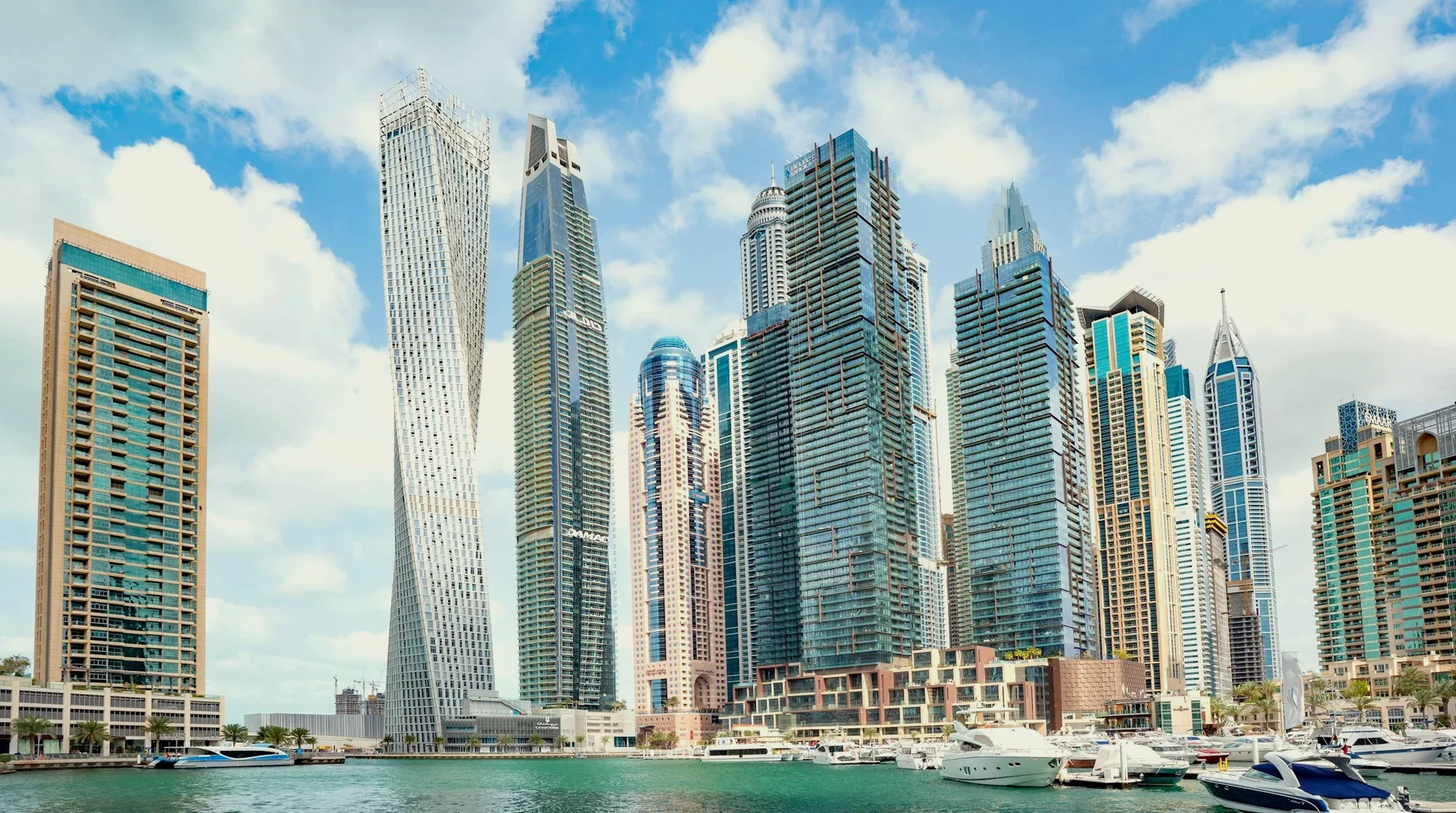
Dubai: easier to buy than to earn
The story of Russian businesses leaving Dubai is often read as "Dubai is over". I disagree. These are different tasks. Buying a flat for a 10-year golden visa and opening a restaurant in a mall are two different deals with different risks. The UAE golden visa is granted for property from AED 2 million, about $545,000, and its conditions do not depend on restaurants closing. We explained how this visa works in our article on the UAE golden visa for property, and all status options are on the UAE residence page.
Business is another matter. High spending and low taxes attracted entrepreneurs, but the market turned out to be expensive and competitive: rent for good space, winning customers from dozens of communities, bank checks on the source of funds. If you are going to Dubai for business, count not the cost of the licence but the full budget for the first year, as in our estimate for opening a business in Dubai. Buying a home in the UAE as a Russian citizen has its own specifics with payment and checks, described in our article on Dubai property for Russian buyers.
I would not mix up two questions. A flat in Dubai for a visa is a clear deal with a clear threshold. A business in Dubai is a separate project, and it has to be costed as a project, with a reserve for a first year without profit.
Status without a flat: a new fork in the road
The most interesting change of the year for those buying for status happened in Turkey. Decision No. 11994 created an investor residence permit: a deposit, bonds or funds from $150,000 give a 3-year permit, from $200,000 a 5-year one. No flat is needed. After the holding period the money can be withdrawn. Details are on the Turkish investor residence page and in our article on the new permit for a deposit.
This changes the logic of the choice. Previously the investment route to Turkish status went through buying a home from $200,000. Now the buyer has a choice: a flat that has to be sold later, or a deposit that comes back as money. Which is better depends on the task: if you need a home to live in, the flat makes sense; if you only need status, the deposit is simpler and more liquid. We compared the options in our piece deposit, flat or passport.
In Europe there is almost no such fork: in Greece and Cyprus status is still tied to property. That makes it especially important to calculate the exit: for how much and how quickly the property can be sold when the status is no longer needed or another citizenship comes along.
What this means for you. If you need status rather than a home, start by asking whether the country has a route without a purchase. It is often cheaper at the exit.
How to calculate a purchase for status
A deal for status is calculated differently from a purchase to live in or to let. I break it into five layers.
- The programme threshold. The minimum amount that gives status, and where exactly it applies: in Greece the threshold depends on the region, in Turkey on the property valuation.
- Taxes and fees on entry. Transfer tax, VAT, notary, registration, government fees for the status for each family member. In Greece after 1 July 2027 this is already 15.45% for tax residents outside the EU.
- The cost of ownership. Annual property taxes, utilities, insurance, management if the property is let.
- Status conditions. Term, renewal, requirements to stay in the country, family rights. A status that has to be confirmed by constant presence costs more than it seems.
- The exit. How soon the property can be sold without losing status, market liquidity and the tax on sale.
All these costs by country are collected in our guide to property purchase costs. Separately, prepare documents on the source of funds: banks and sellers ask for them ever more strictly, as we explained in our article on the source of cash. And before any deal the property must be checked legally; the procedure is in our guide to checking a property.
My position: buy with a calculation, not on a wave
Rising demand is no reason to rush. When interest grows, the first to raise prices are those who sell status together with square metres, and "beat the increase" offers multiply. Greece has given a clear example: until 1 July 2027 the rate is 3.09%, after that 15.45%. That is a real reason to plan a deal earlier. But it is not a reason to buy the first property that comes along in June 2027.
My order is this. First decide what status you need and why: travel, banking, business, a family move, tax residence. Then choose the country where that status is given on clear terms. Then compare the property route and the route without it, if one exists. Only then choose the property. All status options by country are in our residence permits section, and property selection and checks in our real estate section.
A separate word on buyers from Russia. Their options are limited by money transfers, visas and flight connections, and none of that has gone away. That is exactly why Turkey, the UAE and Georgia are growing, while Greece and Cyprus are of interest to those who already have a second passport or documents to live in the EU. How to buy legally in Greece with a Russian passport is covered in our article on Greek property for Russian buyers, and in Turkey in our piece on Turkish residence through property.
What to do now
Define the goal
Status for travel and banking, a family move or rental income: the country and the type of deal depend on it.
Compare routes to status
Buying a home, a deposit, a fund or bonds. Where there is a route without a flat, calculate both.
Count the full price
Threshold, taxes, fees, ownership and exit. For Greece, take into account 1 July 2027 and your tax residence.
Prepare the documents
Source of funds and property checks take weeks. Start before choosing a flat.
If you want to go through your situation, you can do so at an online consultation: we will calculate the options and tell you where status will cost less over the whole term.
How this material was prepared
Prepared by Sergej Evdokimov, Managing Partner at BRIDGES, on 23 November 2026. Demand estimates are data from Prian.ru, Ricci, NF Group, Tranio and Avito Real Estate published in November and July 2026; these are estimates of requests and enquiries, not deal statistics. Data on business in Dubai are estimates by the Wesupport agency and the consultancy Nikoliers. EU house prices are from Eurostat: the house price index for the second quarter of 2026 and the price-to-income ratio for 2015-2025. Programme rules are from Greek Law 5355/2026, Turkish Decision No. 11994 and BRIDGES programme pages. Tax calculations are ours.
Share this article
Still have questions? We'll answer for your case
Tell us what you want to solve, and an expert on the topic will contact you.


Frequently asked
Questions people ask before deciding
01How much has demand for property abroad grown in 2026?
By company estimates, 8 to 15% since the start of the year: Prian.ru gives 8-10%, Ricci 10-15%. These are requests and activity; there are no official deal statistics.
02Why are people buying property abroad now?
Increasingly for status. At Tranio the share of requests for immigration status rose from 15.2% to 25.1%. Buyers need residence, a bank account, travel and business.
03Which countries are most popular?
The UAE, Thailand, Georgia and Turkey according to NF Group. In Europe, Greece and Cyprus are growing, where property earns a residence permit.
04What has changed in Greece?
From 1 July 2027 the home purchase tax for tax residents outside the EU and EEA rises from 3.09% to 15.45% under Law 5355/2026. A golden visa gives no relief from it.
05Can I get residence without buying a flat?
In Turkey, yes: the investor permit is granted for a deposit, bonds or funds from $150,000 for 3 years and from $200,000 for 5 years. In Greece and Cyprus status is tied to property.
06Is it worth buying in Dubai after Russian businesses left?
These are different tasks. The golden visa for property from AED 2 million does not depend on restaurants closing. A business in Dubai must be costed separately, with a first-year reserve.
About the author
Related materials
What to read next
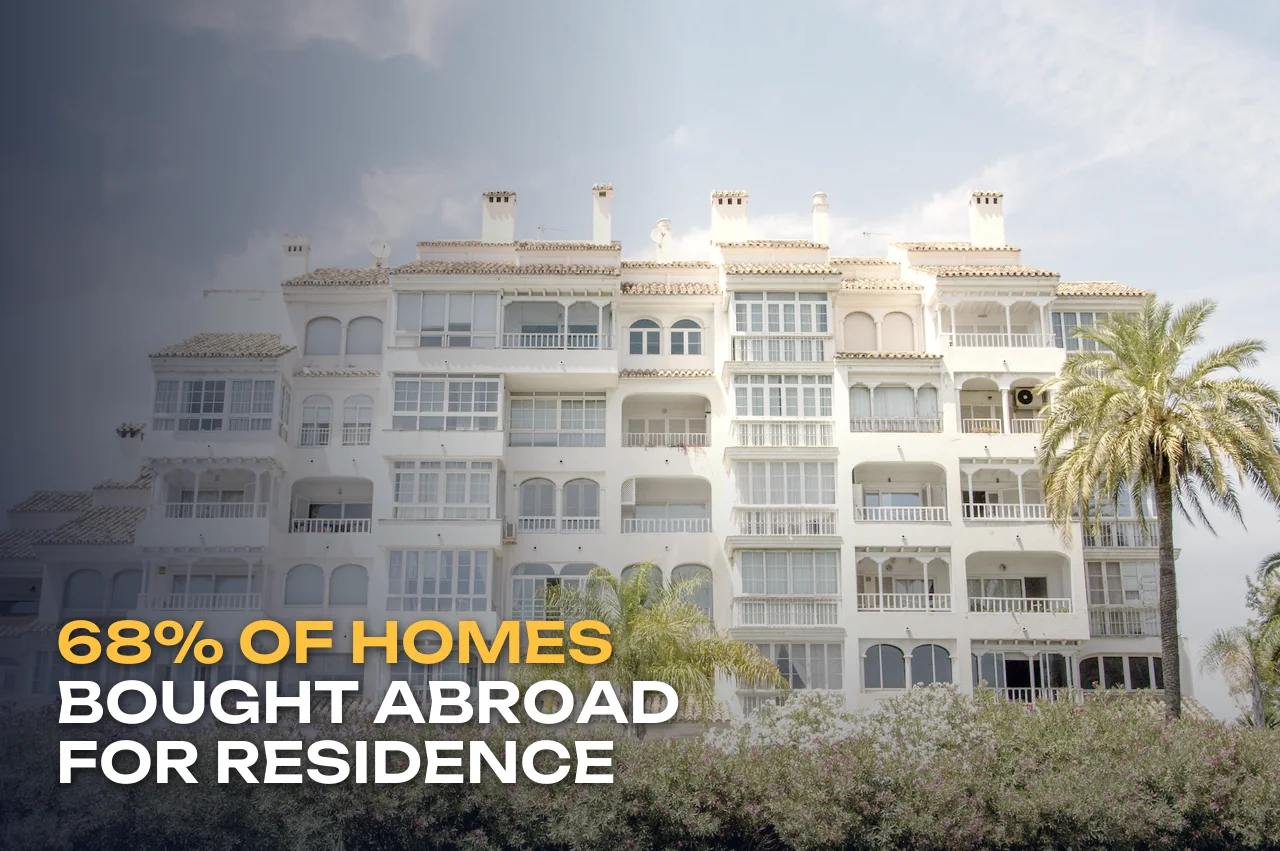 News68% of home purchases abroad are for residence: what a 9-month 2026 market study showed
 Article15% tax on buying a home in Greece: who pays and how to calculate before July 2027
 ArticleInheritance funds in Russia: how to set one up and how it differs from a foreign foundation
News+10 stories on 24 November
Related news
 Russia · 18 NovRussia clarifies who counts as unfriendly: individuals without a friendly passport or residence permit
 Russia · 29 OctThe Bank of Russia brings crypto payments under currency control: it covers foreign trade contracts
 Russia · 29 OctRussia proposes taxing CFC profit without the RUB 10 million threshold: the change would apply from 2027
Personal programme selection is conducted by Anna Kovalevskaya, Head of Legal, BRIDGES.
Buying property for residence? We will calculate where status costs less
We will compare countries and routes to status, calculate taxes, ownership and exit, and find a property for your task.