Citizenship · Vanuatu
Vanuatu citizenship through real estate: how the REO option works and who it suits

Updated: September 2026·17 min read·Expert reviewed
Terms and costs verified: September 2026
Contents
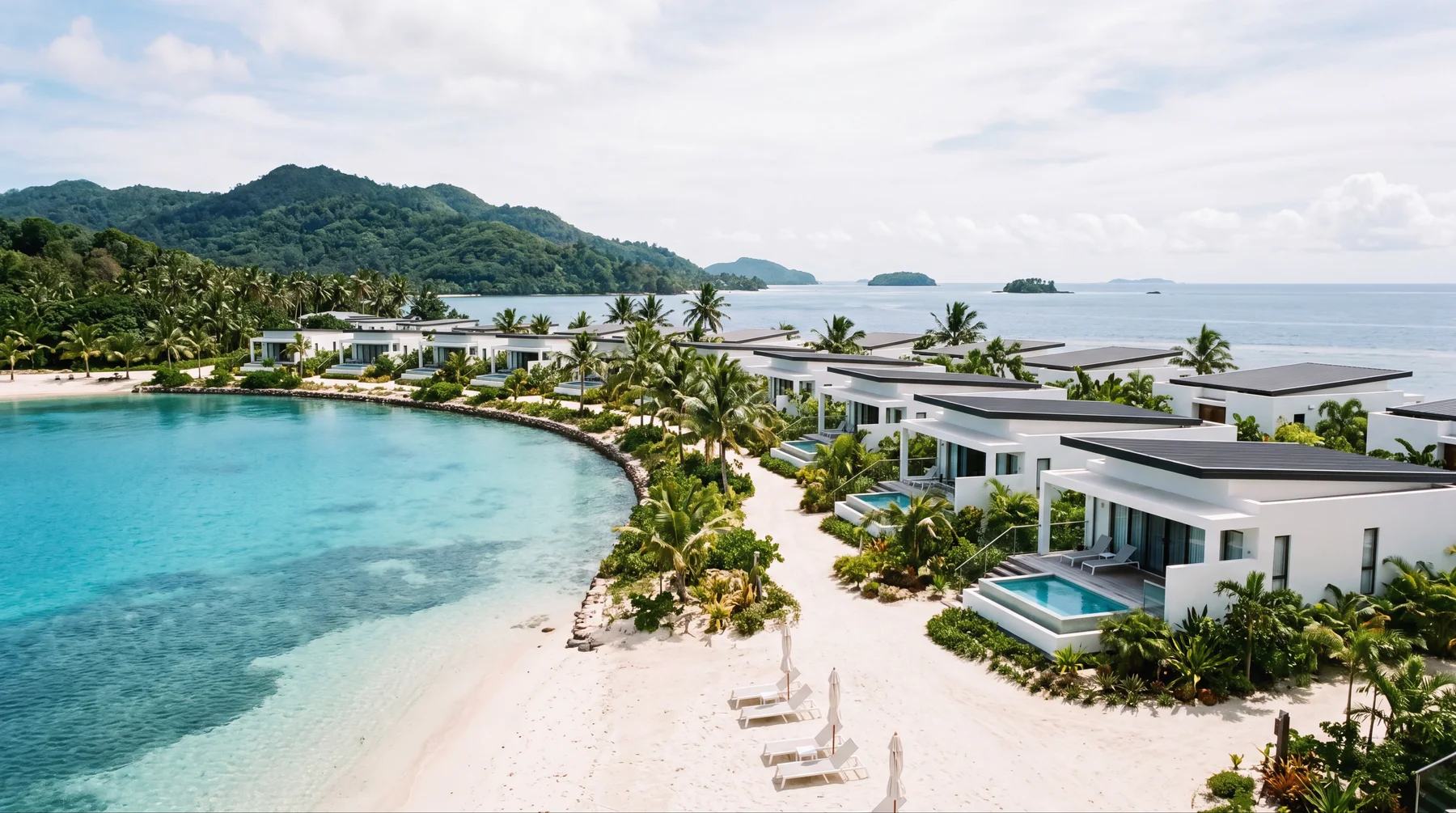
Vanuatu citizenship through real estate is offered by the REO (Real Estate Option): the applicant buys property in one of four government-approved projects and applies through the master agent Naika Holdings Limited. The option has been running since 23 July 2021, but the investment amount is not given in the published tariff table, and most applicants choose the DSP programme or the CIIP fund. Below: how REO works, the approved projects, the cost of each route, buying property without citizenship, and property in Greece as the next step.
Vanuatu citizenship through real estate in brief
In brief: the option exists: REO has been running since 23 July 2021. The property is chosen only from four approved projects on Efate and Espiritu Santo, the application goes through a single master agent, and buying property outside these projects does not give citizenship.
The REO investment amount is not given in the published tariff table; it is provided by the master agent.
Vanuatu Citizenship Office, BRIDGES cost calculator as of September 2026
- DSP. The amount is published in the tariff table, the contribution goes to the state budget, and the application is filed by a designated agent.
- CIIP fund. $157,000 for a family of up to four, with $50,000 returned after 5 years.
- REO. The amount is not published, the property stays with the family, and only the master agent accepts applications.
For an applicant who needs a passport rather than property on the islands, the main routes are different: a DSP contribution from $130,000 for one person or the CIIP fund at $157,000 for a family of up to four, of which $50,000 is returned after 5 years. These programmes are compared in the article DSP or the CIIP fund, the totals in turnkey totals by family composition, and the citizenship conditions in Vanuatu citizenship by investment.
How the REO option works
In brief: as described by the Citizenship Office, the applicant buys property in a government-approved project, obtains and files the application forms through Naika Holdings Limited, and the master agent deals with the Citizenship Commission directly. The rest of the procedure matches the other routes; the fees and the requirement to buy property differ.
- Project. Choosing a property in one of the 4 government-approved projects.
- Application through the master agent. Naika Holdings Limited issues and accepts the forms.
- Review. The master agent deals with the Commission directly; the check is the same as for other routes.
- Commission decision. Approval, deferral or refusal.
- 3 months after approval. To take the oath and pay the certificate fee.
- Citizen’s documents. The Commission certificate and a passport from the Immigration and Passport Service.
The Government of Vanuatu appointed Naika Holdings Limited as the exclusive worldwide REO master agent, so designated DSP agents do not file real estate applications. A consultant can support the client, but an REO application goes only through the master agent. The general procedure is covered in the article how to get Vanuatu citizenship step by step.
After approval the applicant, as with other routes, has 3 months to take the oath and pay the certificate fee. The period is extended by 2 months on written request with good reason; otherwise the approval lapses and a new application is filed. The Citizenship Office includes REO in its list of official types of citizenship, whose procedure is governed by the Citizenship Act. The legal basis is covered in the article the Vanuatu citizenship law.
Family members are included in the application under the same rules as in other programmes: the spouse, children under 25 and parents over 50. The conditions are covered in the article who can be included in the application.
Four approved projects
In brief: the Citizenship Office website names four government-approved projects: Pacific Springs, Narpow Point Coral Bay and FPF Rainbow City on the island of Efate, and Milai on the island of Espiritu Santo.
| Project | Location | Island |
|---|---|---|
| Pacific Springs | Rentabao | Efate, home to the capital Port Vila |
| Narpow Point Coral Bay | Narpow Point | Efate |
| FPF Rainbow City Project | Narpow Point | Efate |
| Milai | Espiritu Santo | Espiritu Santo, second city Luganville |
The choice of property is limited to these projects: property outside them is not a basis for citizenship. The list of projects may change, so the status of a property is checked on the date of the deal with the master agent and the Citizenship Office.
Efate is convenient for living and letting: it has the capital, the international airport, banks and the main infrastructure. Espiritu Santo is larger and quieter, an island for those looking for nature and space. Vanuatu’s islands and towns are described in the article where Vanuatu is.
The cost of each route
In brief: under the DSP the turnkey total is $135,000 for one person and $185,000 for a family of four; under the CIIP fund $165,000, of which $50,000 is returned after 5 years. The Citizenship Office does not give the REO investment amount and fees in its published table; they are provided by the master agent.
Under the DSP the contribution grows with family size: $130,000 for one person, $150,000 for a couple, $165,000 for a family of three, $180,000 for a family of four. On top of the contribution, only the FIU fee is paid to the state: $5,000 under the DSP and $8,000 under the fund, per application. For a single applicant or a couple the DSP is better value, for a family of three or more the fund. The contribution is paid after the Commission’s approval, and before the decision only the FIU fee is paid; the order is covered in the article when the contribution is paid.
Under REO, the property price is increased by programme fees, transaction costs, registration of title, upkeep and property management. As there is no published tariff, the terms are fixed in writing before the contract: the property price, the fees, the payment order and what happens to the money if the application is refused. The DSP and fund totals for your family are shown by the estimate for your family.
REO, DSP or the fund: choosing by goal
In brief: REO suits those who need property in one of the approved projects for its own sake: to live in, winter in or let. If the goal is only a passport, the DSP contribution or the CIIP fund is simpler: there is no need to choose and maintain a property on the islands.
- REO. The family plans to spend time in Vanuatu, a property in an approved project suits it in location and format, and managing property at a distance is not a concern.
- DSP. A passport is needed for a single applicant or a couple, and property is not needed.
- CIIP fund. A family of three or more, prepared to leave $50,000 in the fund for 5 years.
- DSP or the fund plus a separate purchase. Both a passport and a home are needed, but the property is chosen freely rather than from four projects.
Island property sells more slowly than property in large cities, so when choosing REO the buyer assesses in advance who will buy the property on exit and what its upkeep costs. The market is covered in the article property in Vanuatu.
Calculate the DSP and the CIIP fund for your family
The calculator shows the total under the DSP and the CIIP fund for your family, including the FIU fee, without buying property.
Buying property in Vanuatu without citizenship
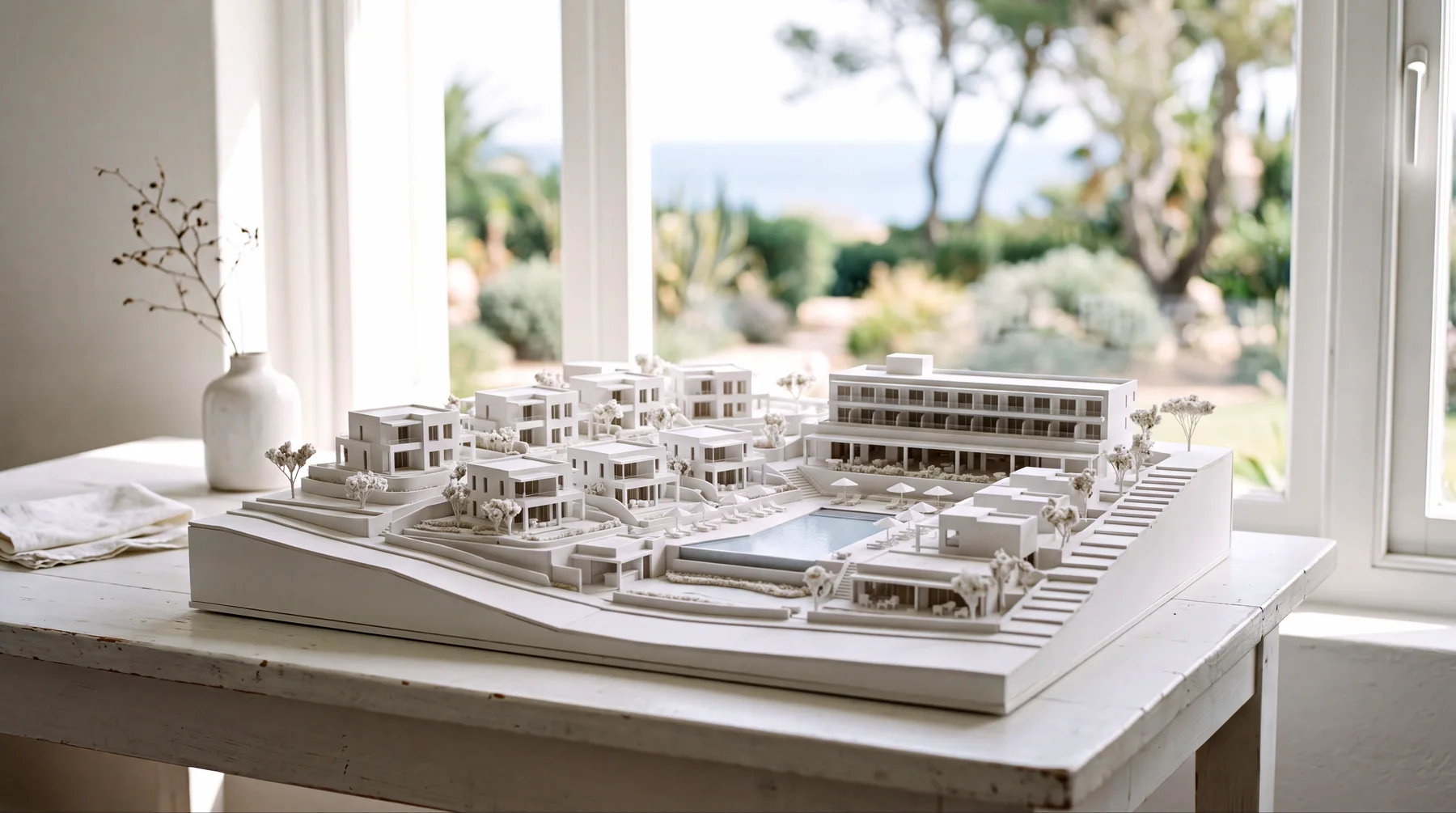
In brief: foreigners buy property in Vanuatu without citizenship, but such a purchase does not by itself give a passport. Under the Constitution, land belongs to its custom owners, so foreigners hold plots on long leases of up to 75 years, and apartments and units in complexes under strata title.
A holiday home, a villa to let or a business property is bought by a foreigner with no link to the citizenship programme. Before the deal, the structure of title, the remaining term of the land lease, renewal terms and encumbrances are checked. If the property is not in an approved REO project and the application is not filed through the master agent, the purchase does not give citizenship.
A practical combination for those who need both a passport and a home: obtain citizenship under the DSP or through the CIIP fund and choose the property separately. The property is then selected by location and price, not only from the list of projects. Payments for the deal and rent are easier to handle through a local account; the options are covered in the article a bank account with a Vanuatu passport.
Property and residence
In brief: an investment in Vanuatu can be a basis for investor residence: it is issued on the basis of a foreign investment approval certificate from the Vanuatu Investment Promotion Authority (VIPA). Residence allows living in the country but does not give a passport.
The term of investor residence is usually tied to the term of the VIPA certificate, and buyers of property on long leases also have a route to residence through VIPA approval. Citizenship by naturalisation after residence requires at least 10 years of continuous residence. Residence permits are covered in the article Vanuatu residence or citizenship.
Upkeep and insurance of property on the islands
In brief: a property in Vanuatu requires remote management, insurance and a budget for upkeep. These costs do not depend on whether the property was bought under REO or separately.
Vanuatu lies in the tropical belt of the Pacific, so before buying, the building’s construction, insurance cover against natural hazards and responsibility for repairs are checked. In projects with a management company these matters are set out in the contract, while the owner of a standalone house handles them personally.
If the property is let, a manager is needed: they find tenants, look after its condition and pay rental tax or VAT. Rental income is calculated net of management, insurance and vacancy, not at the gross rate. Life and costs in the country are covered in the article living in and relocating to Vanuatu.
Property in Europe as the next step
In brief: many families combine a Vanuatu passport with property in Europe: as Vanuatu citizens they buy a home in Greece and obtain residence under the Golden Visa programme. Greek property thresholds range from €250,000 to €800,000 depending on the region and the property.
For the €400,000 and €800,000 thresholds, the main premises must be at least 120 sq m.
Greek Law 5038/2023 as amended by Law 5100/2024, BRIDGES programme database
For a family that needs both European property and a second passport, this plan is often more rational than REO: a Vanuatu passport under the DSP or through the CIIP fund in 2-3 months, then a property in Greece that gives residence and remains an asset in Europe. The turnkey package, the Vanuatu passport and Greek residence, takes up to 9 months. In Hungary, investor residence of up to 10 years is granted for an investment of €250,000 in real estate fund units.
Greek residence through property: demand and additional costs
In brief: first-time grants of investor residence in Greece grew more than a hundredfold in five years: 46 in 2021 and 4,846 in 2025. The property price is increased by transfer tax with a municipal surcharge, 3.09% in total, and state fees for residence cards.
The tax is calculated on the taxable value of the property, which the notary works out before the deal: for a €250,000 property it is €7,725, for €400,000 €12,360, for €800,000 €24,720. The residence fee for the main investor is €2,000 plus €16 for the card, for an adult family member €150 plus €16, and minors pay only for the card.
Greek Ministry of Migration, statistics as of December 2025
Greek residence covers the spouse, the investor’s and spouse’s children under 21, and the parents of both spouses, so one investment covers three generations. Living in Greece permanently is not required to keep the card as long as the property remains owned, and travel in the Schengen Area is possible for up to 90 days in any 180.
Documents for both applications are prepared once: police certificates, apostilles and translations are made with both Vanuatu and Greece in mind. Conditions for Vanuatu citizens are on the page Greek residence for Vanuatu citizens.
Download the Vanuatu and Greek residence package presentation
Leave your contacts and we will send the presentation: a Vanuatu passport in 2-3 months, a property in Greece and the whole package in 9 months.

What to check before an REO deal
In brief: before the contract, check the project’s status on the date of the deal, the master agent’s authority, the structure of title, the payment and refund terms in case of refusal, the source of funds and the property’s upkeep costs.
- Project. The property is in one of the approved projects on the date of the deal.
- Master agent. The application is filed by Naika Holdings Limited; its details are checked against official sources.
- Title. Land lease or strata title, remaining term, renewal, encumbrances.
- Money. The property price, programme fees and the timing of each payment in writing.
- Refusal. What happens to the paid-for property if the Commission refuses.
- Source of funds. Documents on the origin of the purchase money, as for any application.
- Upkeep. Management, insurance, maintenance and rental tax if the property is let.
If the purchase money came from digital assets, the chain is traced through exchanges, wallets and the withdrawal to a bank; details are in the article a Vanuatu passport for a crypto investor. Residential rental tax in Vanuatu is 12.5% of gross rent, and commercial and short-term rentals are subject to 15% VAT. Taxes are covered in the article taxes in Vanuatu.
Signs of an unreliable “passport for a villa” offer
In brief: warning signs are a property outside the four approved projects, filing not through Naika Holdings Limited, a promise of citizenship without checks, payment for the property to a personal account and a refusal to put in writing what happens to the money if the Commission refuses.
- “Any villa gives a passport”. Citizenship comes only from a property in an approved project and an application under the REO rules.
- “We will file through our own agent”. REO applications are accepted only from the master agent.
- “No checks needed”. The decision is made by the Citizenship Commission, and the review procedure is the same as for other routes.
- “The amount is negotiable”. The property price, fees and terms in case of refusal are fixed in the contract before payment.
Official Government of Vanuatu websites use the gov.vu domain, and the list of projects and the master agent are checked against the Citizenship Office website. Other fraud scenarios are collected in the article Vanuatu passport scams.
REO and home-country obligations
In brief: REO conditions are the same for applicants of every nationality; what differs is the payment channel and obligations after the deal. If transfers from the home country do not reach Vanuatu, as is the case with Russian banks, the purchase is paid from an account at a bank in another country with documents on the origin of funds, and where the home country requires it, the authorities are notified of the second citizenship, in Russia within 60 days.
A tax resident of the home country may have to report a foreign account and its movements and include income from letting property in Vanuatu in their tax return; Russia is one example of such rules. Home-country obligations are covered in the article Vanuatu citizenship and home-country rules.
Choosing a route with BRIDGES
In brief: we compare the DSP contribution, the CIIP fund and a property purchase for the family, check the property and the REO terms before the contract and handle the application under the chosen programme.
- Comparing routes. A DSP and fund estimate by family composition and a separate calculation of property ownership.
- REO check. Project status, master agent, title and terms in case of refusal.
- Separate purchase. Checking title and the land lease if the home is bought outside the programme.
- Route to Europe. With a Vanuatu passport, families obtain Greek residence; the turnkey package takes up to 9 months.
Support terms are on the page Vanuatu citizenship with BRIDGES.
Frequently asked
Questions people ask before deciding
01Can I get Vanuatu citizenship through real estate?
Yes, under the REO option, which has been running since 23 July 2021: a property purchase in one of four approved projects and an application through the master agent Naika Holdings Limited.
02Which projects are approved for REO?
Pacific Springs in Rentabao, Narpow Point Coral Bay and FPF Rainbow City on Narpow Point on Efate, and Milai on Espiritu Santo.
03How much do I need to invest under REO?
The investment amount is not given in the Citizenship Office’s published tariff table. The conditions and fees are provided by the master agent and are fixed in writing before the contract.
04Can I buy any property and get a passport?
No. Citizenship comes only from a purchase in an approved project under the REO rules. A foreigner buys property outside the projects with no link to citizenship.
05Who files the application under REO?
Only Naika Holdings Limited, the exclusive REO master agent. Designated DSP agents do not file real estate applications.
06Which is better value: REO or the DSP contribution?
If you do not need property, the DSP is simpler: the turnkey total is $135,000 for one person. For a family of three or more, the CIIP fund with $50,000 returned suits. REO makes sense when the property is needed for its own sake.
07How much time is there after approval?
3 months to take the oath and pay the certificate fee, as with other routes. An extension of 2 months is given on written request.
08Can a foreigner own land in Vanuatu?
Under the Constitution, land belongs to its custom owners, so foreigners hold plots on long leases of up to 75 years, and apartments and units under strata title.
09Does buying property give residence?
An investment can give investor residence on the basis of a VIPA certificate. Residence allows living in the country, but citizenship by naturalisation requires 10 years of residence.
10What taxes apply when renting out property in Vanuatu?
Long-term residential rent is taxed at 12.5% of gross rent, with the first 200,000 vatu of an individual’s income exempt. Commercial and short-term rentals are subject to 15% VAT.
11Can I buy property in Greece with a Vanuatu passport and get residence?
Yes. Vanuatu citizens obtain Greek residence under the Golden Visa programme with a property threshold of €250,000 to €800,000 depending on the region and the property. The turnkey package takes up to 9 months.
12What costs are added to the property price in Greece?
Transfer tax with a municipal surcharge of 3.09% of the taxable value and residence fees: €2,016 for the main investor, €166 for an adult family member, €16 for a child.
13Does the BRIDGES calculator cover the REO option?
No. The calculator covers the DSP and the CIIP fund at published tariffs; REO conditions are confirmed with the master agent.
14Is a passport under REO different from one under the DSP?
No. Under any route the citizen receives a Commission certificate and a passport from the Immigration and Passport Service with the same rights.
15Who can be included in an REO application?
Family members are included under the general programme rules: the spouse, children under 25 and parents over 50.
Transparency
How this material was prepared
- Author
- Andres Ferreira, head of Investment Advisory, BRIDGES
- Terms and costs last verified
- September 2026
- Sources
- official government authorities of the relevant country and state publications
- Methodology
- government minimum requirements are stated separately from due diligence charges, state fees, legal and banking costs
Sources and methodology
Figures, terms and timelines are checked against official sources as of September 2026. Link availability verified in August 2026. Third-party blogs and agent websites are not used as a source of programme terms.
- [1]Vanuatu Citizenship OfficeOfficial conditions of the citizenship programmevancitizenship.gov.vu
- [2]Vanuatu Department of ImmigrationEntry, visas and statusesimmigration.gov.vu
Methodology: tables and charts state government minimum investment requirements; due diligence charges, state fees, legal, banking and other costs are calculated separately and are not included in the minimum thresholds.
About the author
Related materials
What to read next
 ComparisonSecond citizenship in 3-6 months: Caribbean, Türkiye or Vanuatu in 2026
 AnalysisWhat is due diligence and why the Caribbean is rejecting applications
 ArticleBanks in Vanuatu and accounts abroad: what a bank checks for a Vanuatu citizen
Personal programme selection is conducted by Anna Kovalevskaya, Head of Legal, BRIDGES.
Vanuatu citizenship and Greek residence, turnkey in 9 months
We will obtain Vanuatu passports without buying property on the islands and Greek residence through a property in Europe as one package.
