Citizenship · Sierra Leone
Sierra Leone: what kind of country is it, where is it located and how does it live?
Updated: June 2026·9 min read·Expert reviewed
Terms and costs verified: June 2026
Contents
Sierra Leone is a country few investors have looked at closely, and on first acquaintance a logical question arises: what kind of country is Sierra Leone, where is Sierra Leone and how does it live? This is a state on the west coast of Africa, with an English language, a turbulent history and natural wealth - from diamonds to gold. In recent years, those who are considering a second citizenship are increasingly asking about the Republic of Sierra Leone. In this review, we will calmly examine what country it is, where it is located and why investors are talking about it.
Sierra Leone is where: location on the map
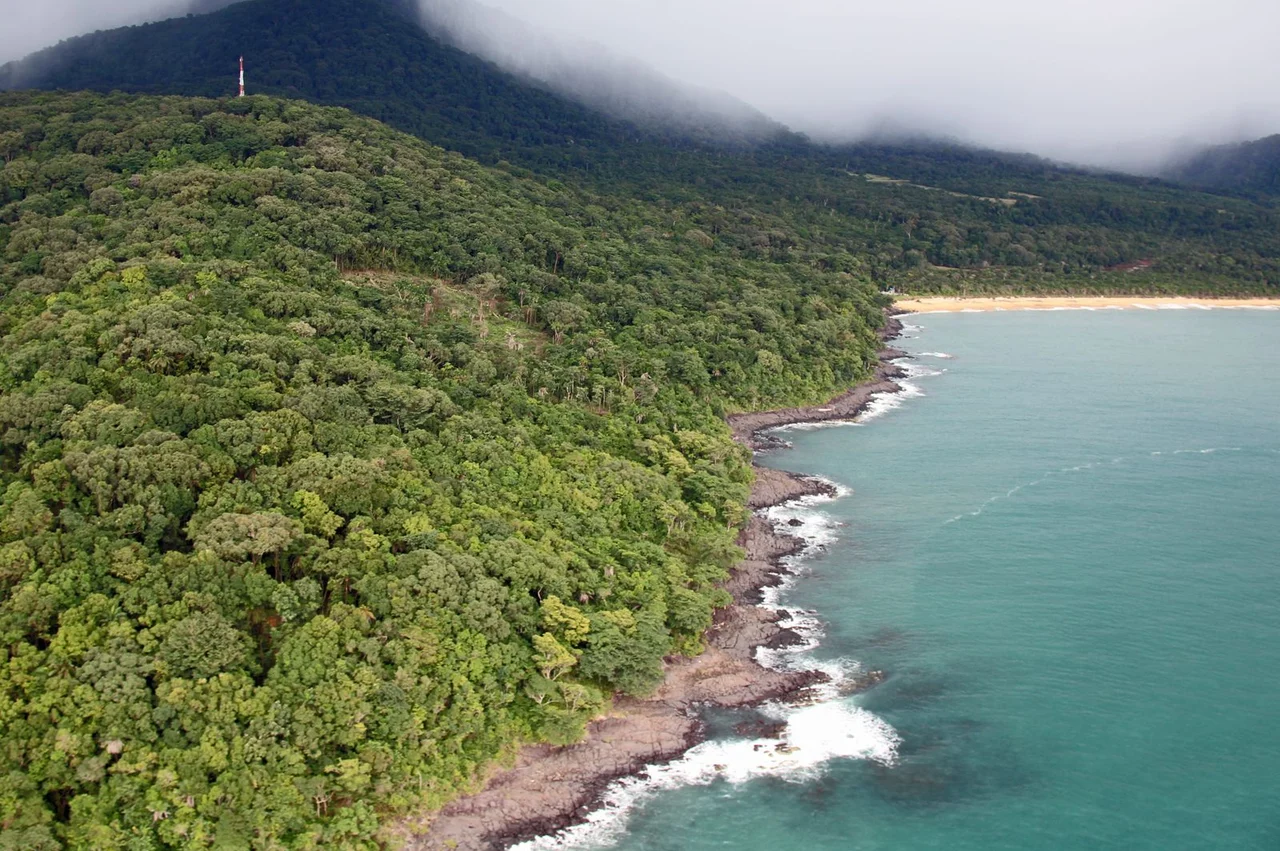
The first thing that is important to understand about Sierra Leone is where it is located. The state is located on the west coast of Africa, near the Atlantic Ocean. From the north and east the country borders on Guinea, from the southeast on Liberia, and from the west its coast goes straight into the Atlantic. That is, Sierra Leone is a typical West African coastal country with a long ocean line.
The state is relatively small in area - about 72 thousand square kilometers, which is comparable to not the largest European country. At the same time, the terrain is quite varied: sandy beaches and mangrove swamps off the coast, hilly plains in the interior and mountain ranges in the east. The climate is tropical, with a distinct rainy season and a dry season.
The name itself translates roughly as “Lion Mountains” - this is how Portuguese sailors in the 15th century christened the mountainous coast in the area of the current capital. To briefly answer the question “where is Sierra Leone?”, the easiest way to remember is the landmark: between Guinea and Liberia, facing the Atlantic Ocean.
Capital Freetown and major cities
The capital of Sierra Leone is Freetown, located on the Atlantic coast, next to one of the largest natural harbors in the world. It is the main political, business, financial and cultural center of the country. Government authorities, main banks, port and business life are concentrated here.
The population of Freetown together with its suburbs in 2026 is estimated at approximately 1.4 million people - this is the largest city in the state. The very name of the city - “Free City” - is connected with history: at the end of the 18th century, a settlement was founded here for freed slaves, and this page of history is still felt in the culture and appearance of the capital.
In addition to Freetown, cities such as Bo, Kenema and Makeni play a prominent role - regional centers of trade and agriculture. But it is the capital that remains the place through which the main financial and administrative processes take place, including those related to the preparation of documents for foreigners.
Language, colonial past and independence
The official language of Sierra Leone is English. This is a legacy of the British colonial past: the territory was under British rule for a long time, and the country gained independence in 1961. English is used in government, education, business and official documents, which greatly simplifies communication for foreigners.
In everyday life, most residents communicate in the Krio Creole language, as well as in many local languages - Mende, Temne and others. But it is English that remains the language of the official sphere, and when processing any legal issues this is a serious convenience: no exotic translation is needed, documents are maintained in a familiar international language.
The colonial legacy is evident in the legal system, which is largely based on British common law, and in the country's membership in the Commonwealth of Nations. For those who answer the question “what kind of country is Sierra Leone?”, this is an important detail: administratively it is closer to the English-language legal tradition than to the French one, which is typical for many of its neighbors.
Population, peoples and culture
The population of Sierra Leone in 2026 is estimated at approximately 9 million people. The country has a young age composition: children and youth make up a significant proportion, and population growth remains at about 2% per year.
Ethnically, Sierra Leone is very diverse. The two largest groups are the Mende in the south and east and the Temne in the north. In addition to them, the country is home to Limba, Creoles (descendants of freed slaves), Fula, Maninka and other peoples. This diversity is reflected in languages, cuisine, music and traditions.
In terms of religious composition, the country is also distinguished by noticeable diversity and, importantly, many years of peaceful coexistence: the majority of residents are Muslims, a significant part are Christians, while interreligious relations are traditionally considered calm. Hospitality, communalism and respect for elders are prominent features of the local culture. For the traveler or investor, this means a friendly environment while respecting local customs.
How does Sierra Leone's economy work?
Sierra Leone's economy rests on two pillars - agriculture and mining. The agricultural sector employs most of the population: rice (the staple food), cassava, coffee, cocoa and oil palm are grown. Agriculture provides employment, but the main foreign exchange income comes from another industry.
The country's main export earnings are the mining industry. Sierra Leone is known as one of the notable producers of gem-quality diamonds, and also produces rutile (titanium raw material), bauxite and gold. It was mineral resources that historically formed both the country’s reputation and a significant part of its budget.
The country's gross domestic product, according to recent estimates, is approximately $8 billion - by world standards it is a small economy that is gradually recovering and developing. Sierra Leone is a developing country with infrastructure, energy and diversification challenges ahead, but its resource base and ocean access offer growth potential.
We will map your route to Sierra Leone citizenship
We review your family, source of funds and timing and tell you which route fits.
Currency - leone
The country's national currency is Sierra Leonean Leone, international code SLE. Leone is divided into 100 cents. Banknotes and coins are in circulation, and cash is still common in everyday life, especially outside the capital.
An important detail: in 2022, the country underwent a redenomination - three zeros were removed from the old leone (code SLL), and the updated currency received the code SLE at the rate of 1000 to 1. This was done to simplify calculations after a period of high inflation. Therefore, when studying old sources, you can find both designations - SLL and SLE.
Sierra Leone is also involved in regional plans to introduce a single currency for West African countries (a project called "eco"), which is being discussed within ECOWAS, although the launch date has been repeatedly postponed. For investors, the practical conclusion is simple: settlements for large transactions and investment programs are usually carried out in US dollars, which eliminates the currency risks associated with local money.
Civil War, Ebola and Reconstruction
a story about the country is impossible without mentioning the complex pages of its history. From 1991 to 2002, Sierra Leone experienced a civil war that took a heavy toll on the economy and society. The conflict ended more than twenty years ago, and since then the country has consistently recovered, held elections and established a peaceful life.
Another serious challenge was the Ebola outbreak in 2014-2016, which affected several countries in the region. Sierra Leone got through it with the help of international partners and subsequently strengthened its health system to better respond to such threats.
Today it is important to emphasize the main thing: these events are in the past. Modern Sierra Leone is a peaceful state that is developing, attracting investment and building relationships with the international community. Understanding this trajectory helps to correctly answer the question “what kind of country is Sierra Leone now”: it is a recovering, stabilized country, and not a conflict zone.
ECOWAS, the Commonwealth and place in the world
One of the most interesting features of Sierra Leone for business is its membership in regional and international associations. The country is a member of ECOWAS - the Economic Community of West African Countries, which unites about 15 states in the region.
What does this mean in practice? Citizens of ECOWAS countries enjoy freedom of movement, residence and employment within the community. That is, a Sierra Leone passport opens not only the country itself, but also a wide West African market - from Nigeria to Côte d'Ivoire and Ghana. For an entrepreneur working with the region, this is a real advantage.
In addition to ECOWAS, Sierra Leone is a member of the Commonwealth of Nations (former British territories), the African Union and the UN. Membership in the Commonwealth is another consequence of historical ties with Great Britain and a common language of dialogue with dozens of states around the world.
“When clients hear about Sierra Leone for the first time, the first reaction is surprise: what kind of country is it, where is it even. I always explain calmly: this is a peaceful West African state with an English language, an ocean coast and real natural resources, primarily gold. The investment program here is young, and I never promise what it does not deliver: neither Schengen nor the USA in visa-free travel. But it provides speed, remote registration, the opportunity to retain your native passport and access to the ECOWAS market - and this is important for those who actually work with Africa. My approach is simple: first we understand the client’s goals, then we say whether this direction solves them. If it doesn’t solve the problem, I’ll say so and offer an alternative. If he decides, we will build a transparent process with correct compliance and confirmation of the source of funds, without any gray schemes.”
Why investors are talking about Sierra Leone
Until recently, Sierra Leone was of interest mainly to travelers, specialists in Africa and those who work with natural resources. But in the last couple of years, the country has come to the attention of those working on issues of second citizenship and international mobility.
The reason is the launch of the state naturalization program for investment. The gold-rich country proposed to formalize the status through a contribution to national development or through an investment in local gold. This fits into the general trend: a number of African states are opening investment routes to obtaining citizenship, competing with the usual Caribbean programs.
It is important to immediately tune in to a realistic view. Sierra Leone's program is young, the country's passport is inferior in strength to catalog Caribbean ones and, even more so, European ones. But it has its niches: speed, remote processing and access to the West African market through ECOWAS. More details in the following sections.
Sierra Leonean citizenship by investment: the essence of the program
Sierra Leone's government program (known as GO-FOR-GOLD) was launched around 2024-2025 and links status to economic participation in the country's development. Now it offers several ways, and it is important to check the current thresholds for the current year and the composition of the family.
The main directions look like this:
- Naturalization through contribution - non-refundable contribution to national development, approximately from ~100-140 thousand dollars for the main applicant.
- Path through gold - purchase of a local gold bar (approximately from 1 kg, which corresponds to approximately ~148 thousand dollars), which is stored in the state reserve for a specified period and gives status.
Registration, as a rule, takes place remotely, without mandatory residence in the country, and is accompanied by a mandatory verification procedure (due diligence). The exact amounts, terms and conditions for family members should be clarified individually - they depend on the chosen path and the composition of the applicants. Read more about Sierra Leonean citizenship and about terms of the investment program We talk about it in separate materials.
What does a passport provide: visa-free and dual citizenship
Let's realistically assess the capabilities of the passport. As of 2026, a citizen of Sierra Leone has visa-free or simplified (visa on arrival, eVisa) entry to roughly ~60 countries and territories. The list includes West African states and a number of Caribbean and Asian destinations.
Immediately an important disclaimer without exaggeration: the visa-free list does not include the countries of the Schengen zone and the United States. If the main goal is free entry into Europe or the United States, a Sierra Leone passport does not solve this problem, and it would be dishonest to promise the opposite.
What's the real value? Firstly, Sierra Leone allows dual citizenship - you do not need to give up your original passport. Secondly, membership in ECOWAS provides access to the West African market. For entrepreneurs working with Africa and those who need an additional legal document, this can be a working tool - with the right expectations.
Sierra Leone in numbers: key parameters
Let's summarize the basic information about the country in one table - this way it’s more convenient to keep the overall picture before your eyes before making any decisions.
| Parameter | Meaning |
|---|---|
| Location | West Africa, Atlantic coast |
| Neighbours | Guinea, Liberia |
| Capital | Freetown |
| Official language | English |
| Population (2026) | approximately ~9 million people |
| Currency | Leone (SLE) |
| Independence | 1961 (from UK) |
| Resources | diamonds, gold, rutile, bauxite |
| Membership | ECOWAS, Commonwealth of Nations, African Union, UN |
| Dual citizenship | allowed |
Useful landmarks for further study - where is the country located on the map and more about capital Freetown.
Is Sierra Leone right for you?
Before making a decision, you should compare the country's capabilities with your goals. Sierra Leone as a destination for second citizenship has a clear profile - both its advantages and its limitations.
The program may be suitable if you:
- do or are planning a business in West Africa and want to take advantage of freedom of movement within ECOWAS;
- are looking for an additional legal document and are ready for remote registration without moving;
- Are you interested in investing in gold and obtaining status;
- are considering citizenship based on African roots (this path exists when confirming origin).
The program most likely will not be suitable if your main goal is visa-free entry into Schengen or the USA or the most “strong” passport from the top of the ratings. In this case, it is more to look at other jurisdictions. The selection is always individual: much depends on citizenship, goals, family composition and source of funds. To understand in detail and compare options, discuss your situation with a BRIDGES GLOBAL specialist - we will help you understand whether this direction solves exactly your problems.
Features for citizens of Russia and the CIS
For applicants from Russia and the CIS countries, work with any investment program is strictly within the legal framework. There are no schemes for circumventing sanctions - all procedures are carried out within the framework of current legislation and with enhanced compliance.
What to pay attention to in advance:
- Source of funds. Any program requires transparent confirmation of the origin of money - this is an international verification standard, and you need to prepare for it in advance.
- Dual citizenship. Sierra Leone allows it, so you won’t have to give up your native passport.
- Notice of second citizenship. Russian citizens are required by law to notify authorized bodies about the acquisition of foreign citizenship or residence permit - this must be done correctly and on time.
It is especially important to understand: citizenship and tax residency are not the same thing. You pay taxes where you actually live and where your center of interests is, and not where you have your passport. It’s best to work through these issues together with compliance and tax specialists to avoid any unpleasant surprises.
We will send a document checklist for your case
Leave your details: we will put together documents and timelines for your family.
An expert's view: sober about the possibilities
Sierra Leone is an example of how a small African state is trying to turn natural wealth and convenient ECOWAS membership into a tool for attracting capital. And this should be approached without illusions, but also without bias.
The main thing is to set your expectations correctly. This is not a European passport and not a top Caribbean citizenship in terms of document strength. But here there is speed, remote registration, access to the West African market and the opportunity to retain native citizenship. For some tasks this is a working solution, for others it is not, and there is nothing wrong with that: each tool is good for its purpose.
Before any step, it is important to study the current conditions for the current year, check the thresholds and deadlines, prepare documents in advance on the source of funds and assess how the new citizenship fits into your tax and legal picture. A competent preliminary analysis saves money, time, and nerves.
Frequently asked
Questions people ask before deciding
01Sierra Leone - what country is it and where is it located?
Sierra Leone is a state in West Africa on the Atlantic coast, between Guinea and Liberia. The capital is Freetown, the official language is English, the population is approximately 9 million people.
02Where is Sierra Leone on the map?
On the west coast of Africa. It borders on Guinea to the north and east, Liberia to the southeast, and the western coast faces the Atlantic Ocean. A simple landmark: between Guinea and Liberia, facing the Atlantic.
03What is the language in Sierra Leone?
The official language is English, a legacy of the British colonial past. The Krio Creole language is widely spoken in everyday life, as well as the local languages Mende, Temne and others. Documents and official matters are conducted in English.
04What is the capital of Sierra Leone?
The capital is the city of Freetown on the Atlantic coast. It is the main political, business and cultural center of the country with a population of approximately 1.4 million people including its suburbs.
05What is the currency in Sierra Leone?
The national currency is Leone (international code SLE), divided into 100 cents. In 2022, they carried out a denomination, removing three zeros from the old leone (SLL). Large investment transactions are usually carried out in US dollars.
06Is Sierra Leone a safe country now?
Yes, today it is a peaceful state. The civil war ended in 2002, more than twenty years ago, and the country strengthened its health care after the 2014-2016 Ebola outbreak. Sierra Leone is now recovering and developing.
07What is Sierra Leone rich with?
The country is known for its natural resources: it produces gem-quality diamonds, gold, rutile (titanium raw materials) and bauxite. Agriculture is also developed - rice, cassava, coffee, cocoa. Mineral exports are the main source of foreign exchange income.
08Is there citizenship by investment in Sierra Leone?
Yes, the country has launched a government naturalization by investment program (known as GO-FOR-GOLD) approximately from 2024-2025. Ways - a contribution to national development or an investment in local gold. Registration is remote, with due diligence check.
09How much does Sierra Leonean citizenship cost?
Approximately from ~100-140 thousand dollars through a contribution for the main applicant or through the purchase of a gold bar (from 1 kg, approximately ~148 thousand dollars). Current thresholds and conditions for a family must be checked individually for the current year.
10Where can you travel with a Sierra Leonean passport?
As of 2026, the passport provides visa-free or simplified entry into approximately 60 countries and territories - West African states, a number of Caribbean and Asian destinations. Schengen and the USA are not included in this list.
11Does Sierra Leone allow dual citizenship?
Yes, dual citizenship is allowed - there is no need to renounce your native passport. At the same time, it is important for Russian citizens to correctly and on time fulfill the obligation established by law to notify the authorized bodies of their second citizenship.
12What benefits does Sierra Leone's membership in ECOWAS provide?
ECOWAS - Economic Community of West African Countries (about 15 states). Citizens enjoy freedom of movement, residence and work within the community. For businesses in Africa, this is a real advantage - access to a wide regional market.
Transparency
How this material was prepared
- Author
- Andres Ferreira, head of Investment Advisory, BRIDGES
- Terms and costs last verified
- June 2026
- Sources
- official government authorities of the relevant country and state publications
- Methodology
- government minimum requirements are stated separately from due diligence charges, state fees, legal and banking costs
Sources and methodology
Figures, terms and timelines are checked against official sources as of June 2026. Link availability verified in August 2026. Third-party blogs and agent websites are not used as a source of programme terms.
- [1]State House, Republic of Sierra LeoneOfficial government publicationswww.statehouse.gov.sl
Methodology: tables and charts state government minimum investment requirements; due diligence charges, state fees, legal, banking and other costs are calculated separately and are not included in the minimum thresholds.
About the author
Related materials
What to read next
 ComparisonAntigua and Barbuda or Grenada: Family Passport for Large Families in 2026
 AnalysisWhat is due diligence and why the Caribbean is rejecting applications
 ArticleCapital of Sierra Leone: Freetown - What It Is Known For and What to See
Personal programme selection is conducted by Anna Kovalevskaya, Head of Legal, BRIDGES.
Citizenship of Sierra Leone: preparation checklist
Documents prepared in advance, source of funds checks and where applications usually fail.
