Citizenship · Bulgaria
8 stages of obtaining Bulgarian citizenship by descent - from archive to passport

Updated: June 2026·9 min read·Expert reviewed
Terms and costs verified: June 2026
Contents
Bulgarian citizenship by descent is one of the few legal ways to obtain an EU passport without relocation and without major investments. The process takes two to four years, but each step is predictable. The key is not to miss any stage and not to submit an incomplete package. In this article, we break down all 8 steps: from your first conversation with relatives to the moment you hold a Bulgarian passport in your hands.
How the path to a Bulgarian passport works
Bulgarian citizenship by descent is regulated by the Bulgarian Citizenship Act. Anyone with at least one parent, grandfather, or grandmother who was a Bulgarian citizen is entitled to it. Relocation is not necessary. Language testing is not required either. You only need to prove kinship by documents.
As of 2026, the procedure has become slightly simpler: proof of descent is now submitted directly to the Ministry of Justice, bypassing an intermediate body. This reduced one of the queues. However, the overall process still consists of eight consecutive stages - and each requires precision.
Below is a breakdown of each step with actual timeframes and typical mistakes.
We will send a document checklist for your case
Leave your details: we will put together documents and timelines for your family.
Stage 1. Establish the line of descent
The first step is a family conversation. You need to find out which of your ancestors was Bulgarian. This could be your father, mother, paternal grandfather, maternal grandmother - any direct relative.
It is important to clarify two points immediately. First: the connection must be direct, not through a cousin. Second: you need to establish in which Bulgarian settlement this person lived - that is where the archive requests will be sent.
Practical advice: ask older relatives, find old documents at home - birth certificates, military IDs, Soviet passports. Any mention of a Bulgarian city or Bulgarian surname is a valuable clue. The more precisely you establish the place and period, the faster the documents will be found in the archive.
If your ancestor moved from Bulgaria before 1944, documents may be held in church records or regional archives. This is covered in the next stage.
Stage 2. Request documents from Bulgarian archives
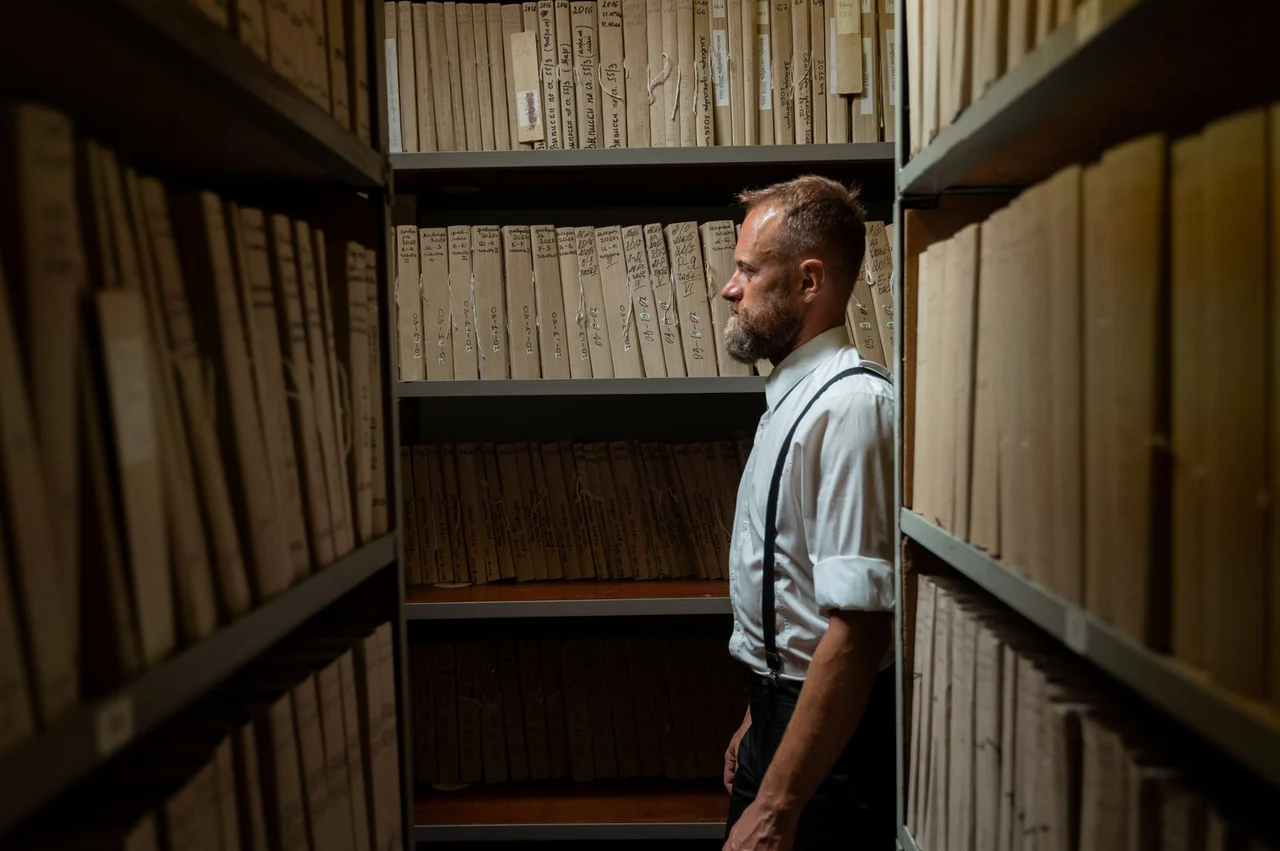
This is the most unpredictable stage in terms of timeframe. Bulgarian vital records are stored in several locations: the General State Archives of the Republic (GARA) in Sofia, regional state archives (across 28 regions), and municipal archives.
If your ancestor was baptized in an Orthodox church before the 1900s - search in church records. Many of them have been digitized and are accessible through Bulgarian archival services. If birth records were destroyed or lost - there is a court procedure: Bulgarian courts restore the fact of birth based on indirect evidence.
What to request: ancestor's birth certificate, marriage certificate (if surname changed), death certificate. Requests can be sent by mail or through an authorized representative in Bulgaria.
Archive response timeframe: 1 to 6 months depending on workload and fund preservation. The response arrives in Bulgarian - it is already a prepared document for further processing.
For more details on the procedure, see the article on Bulgarian citizenship by descent.
Stage 3. Apostille and notarized translation
All documents issued outside Bulgaria must be apostilled. This applies to your personal documents: birth certificate, passport, marriage certificate (if any), birth and death certificates of intermediate relatives.
An apostille is affixed by the authority that issued the document or by an authorized agency in the country. In Russia, this is the Ministry of Justice and its territorial offices. The timeframe for apostille is 3 days to 3 weeks.
After apostille, each document is translated into Bulgarian by a notary-certified translator. The translator must be accredited and recognized in Bulgaria. You cannot translate it yourself or use an online service.
Practical advice: make 2-3 certified copies of each translation immediately. They will be needed when submitting to the Ministry of Justice and later when applying for a passport. Do not economize on copies - redoing them is more expensive.
Stage 4. Preparation of application to the Ministry of Justice
The application is submitted to the General Directorate "Civil Registration" of the Bulgarian Ministry of Justice. The application form is standard, but the accompanying document package is extensive.
What is included in the package: application in the prescribed form, your foreign passport with apostilled translation, documents confirming the Bulgarian descent of your ancestor, documents linking you to that ancestor (your birth certificate, birth certificate of an intermediate relative), certificate of no criminal record with apostille.
If you are applying through a generation - for example, your father is alive, but your grandfather (your father's father) was Bulgarian - then you need documents for the entire chain: Bulgarian grandfather, your father born from him, you born from your father.
A common mistake: submitting an incomplete package, hoping to provide documents later. The Ministry of Justice returns such applications without review. It is better to spend an extra month gathering documents than to lose six months due to rejection of the application.
Step 5. Submission of documents to the Ministry of Justice
Since 2021, documents are submitted directly to the Bulgarian Ministry of Justice. The intermediary body - DABCH (State Agency for Bulgarians Abroad) - no longer participates in this procedure. This is a real simplification: one queue and one verification stage have been eliminated.
You can submit in person in Sofia or through an authorized representative with a notarized power of attorney. The power of attorney also needs to be apostilled and translated. Most applicants who live abroad submit through a representative: this is standard practice.
After submission, you receive an incoming case number. You can track the status by it. Save it - you will need it throughout the waiting period.
Important: from the moment of document submission, the official consideration period starts anew with each request for revision. Therefore, a complete package from the first time is not perfectionism, but time savings.
Step 6. Review by the Citizenship Council
After documents are accepted, the case goes to the Ministry of Justice lawyers. They check the package, request additional information from Bulgarian registers if necessary, and prepare a conclusion for the Citizenship Council under the President of Bulgaria.
Official consideration period - 12-18 months. In practice, in 2024-2026, cases are considered closer to 18 months due to an increase in applications. The Council meets periodically and makes decisions on groups of cases.
At this stage, nothing is required from you except waiting. However, it is important to stay in contact with your representative in Bulgaria - sometimes the Ministry of Justice requests clarification or an additional document. Missing such a request means losing several more months.
Read about real timelines by stages in the article on Bulgaria citizenship timelines.
Step 7. Decree of the President of Bulgaria
The final decision to grant citizenship is made by the President of Bulgaria. The Citizenship Council prepares a recommendation, the President signs the Decree. Decrees are issued in several batches per year.
Between a positive conclusion of the Council and the issuance of the Decree, several more months may pass. This is where the final timeline is formed: from document submission to the Decree - on average 24-36 months based on current practice in 2025-2026.
After the Decree is signed, the applicant's data is entered into the Bulgarian register of citizens. From this moment, you are officially a Bulgarian citizen - even before receiving a passport.
Practical advice: immediately after the Decree is issued, you can submit a passport application. Do not wait for an official notice - it is sometimes delayed.
"The most common misconception is that people think it is enough to prove the fact of a Bulgarian ancestor. In reality, you need to documentally connect each generation without gaps. If your father is Bulgarian - you need his birth certificate. If your grandmother was Bulgarian, and your father was born in another country - you need documents of your grandmother, your father, and yours. Miss one link - you will get a request for revision and lose several months. Since 2026, direct submission to the Ministry of Justice simplified one of the steps, but this does not eliminate the need for discipline in document collection. My advice: start with a preliminary audit of your documentary base before spending money on apostilles and translations. This takes a few days, but allows you to understand the real picture and not go in blind."
Step 8. Obtaining a Bulgarian EU passport
The final step is obtaining a biometric passport of a Bulgarian citizen. You can submit an application at the Bulgarian consulate in your country or in person in Bulgaria.
To obtain a passport, you need: an identity document (Bulgarian), photographs, a receipt for payment of state duty, and confirmation of citizenship by Decree. A Bulgarian identity document is issued in parallel or slightly before the passport.
Passport processing time - from 30 to 60 days for a standard request. There is an expedited procedure for an additional fee - 10-15 business days.
A Bulgarian passport gives you the right to live, work and study in any of the 27 EU countries without visas and permits. Visa-free entry to more than 170 countries worldwide. This is the final goal of the entire journey.
Full program overview - on the page Bulgaria citizenship.
Total costs: how much each step costs
Cost depends on the complexity of the family line and the country where the applicant lives. Below is a complete breakdown of all expenses.
| Expense item | Amount (estimate) | Reimbursability |
|---|---|---|
| Archive requests in Bulgaria | 100-400 € (depends on number of documents) | Non-refundable |
| Apostille on applicant documents (Russia/CIS) | 50-150 $ per document | Non-refundable |
| Notarized translation into Bulgarian | 30-80 € per document (5-15 documents) | Non-refundable |
| Notarized power of attorney for representative | 50-150 € | Non-refundable |
| State duty when filing with Bulgarian Ministry of Justice | 500-600 BGN (~250-300 €) | Non-refundable |
| Passport fee upon issuance of passport | approximately 300-500 € (standard + identity document) | Non-refundable |
| Services of representative in Bulgaria (support) | 500-1,500 € per year | Non-refundable |
| Agent support (full cycle) | 3 000-7 000 € | Non-refundable |
| Other expenses (mail, notary, copies) | 100-300 € | Non-refundable |
Total per 1 applicant: from 4,500 to 10,000 € including agent support
Total for a family of 4 people (both parents + 2 children): from 8,000 to 18,000 €. Children typically follow a simplified procedure together with the parent-applicant, which reduces per-person expenses.
Detailed price breakdown - in the article on the cost of Bulgarian citizenship.
We will map your route to Bulgaria citizenship
We review your family, source of funds and timing and tell you which route fits.
How to check your chances before starting document collection
Before spending money on apostilles and translations, it is worth assessing the realistic chances. This takes 1-2 days and costs significantly less than collecting a complete package and receiving a rejection.
What is needed for preliminary assessment: name of Bulgarian ancestor, approximate birth year and region of Bulgaria, as well as documents you already have. A specialist in Bulgarian law will verify: whether there is sufficient connection for submission, which documents are available in archives, whether there is a risk of a court restoration request.
Three questions you need to ask yourself before starting. First: can you documentarily connect yourself to a Bulgarian ancestor - without breaks in the chain? Second: have Bulgarian ancestor's documents been preserved or do they need to be restored? Third: are you ready to wait 2-3 years?
If the answer to all three questions is "yes" - the path is open. If you have doubts - it's better to consult first than to proceed blindly.
Common mistakes that delay the process
Most delays in Bulgarian citizenship by descent are not due to the complexity of the law, but due to technical errors in document collection. Here are the most common of them.
Incomplete chain of kinship. Documents of ancestor and applicant are submitted, but the intermediate generation is forgotten. For example, grandmother was Bulgarian, father is her son, you are father's son. The package must include documents of all three generations. Without father's birth certificate, the case will be returned.
Apostille from the wrong authority. An apostille on a Russian-format birth certificate must be issued by the authorized body in Russia - not by any notary. The Bulgarian side verifies this.
Outdated criminal record clearance. The certificate must be issued no more than 6 months before submission. If the package was being collected for a long time - the certificate may become outdated. It will have to be obtained again.
Absence of Bulgarian names in documents. If the ancestor is recorded as Petro Ivanov in Bulgarian archives, but as Petr Ivanov in Soviet documents - confirmation of identity is needed. Without it, the Ministry of Justice may not accept the documents.
Realistic timeframes in 2025-2026
The official review period under the law is 12 months. In practice, given the growing number of applications, the picture is different.
Document preparation and archive requests: 3-8 months depending on document preservation. Submission and queue for consideration at the Ministry of Justice: 1-3 months. Review by the Citizenship Council: 12-18 months. Queue for Presidential Decree: 3-6 months after positive decision from the Council. Passport issuance: 1-2 months.
Total realistic forecast - from 20 to 36 months from the first archive request to passport in hand. The more complex the family tree and the more documents need to be restored - the closer to the upper limit.
Good news: unlike investment programs, there is no risk of closure or rule change here - the right by descent is enshrined in Bulgaria's constitution.
What a Bulgarian passport gives
Bulgaria has been a member of the European Union since 2007. A Bulgarian passport opens free movement, residence and work in all 27 EU countries - without visas, without permits, without quotas.
Visa-free entry to more than 170 countries worldwide: USA (via ESTA), United Kingdom, Canada, Japan, UAE, entire Schengen area. Compared with many non-EU passports, from Russian and Kazakh to Indian, this is a fundamentally different level of mobility.
Education: a Bulgarian passport gives the right to study at any European university at EU internal rates - several times cheaper than for third-country nationals. The applicant's children automatically receive citizenship together with the parent.
Banking services: an EU citizen can significantly more easily open accounts in European banks. This is relevant for business with settlements in euros.
Citizenship itself does not create tax obligations - taxes are paid at the place of tax residency, not according to passport.
Summary: what is important to know before starting
Bulgarian citizenship by descent is a marathon, not a sprint. But the finish line is predictable if you follow the right path.
Eight stages look comprehensive, but most of them are waiting, not active work. Real efforts are concentrated in the first four: establish the line of kinship, obtain archive documents, make apostilles with translations, and assemble the package for the Ministry of Justice. If these four steps are completed cleanly - the system works further.
The most frequent question: "What if they reject it?" Rejections happen, but almost always for remediable reasons: incomplete package, translation error, missed document. This is not the end - this is an opportunity to refine and resubmit.
If you have a Bulgarian ancestor - it is worth checking at least the documentary base. Sometimes the needed archive document is already in the family archive, and the path turns out to be shorter than it seems.
More about the program - on the page Bulgarian citizenship by descent.
Frequently asked
Questions people ask before deciding
01Who is eligible for Bulgarian citizenship by descent?
Any person is eligible whose at least one direct ancestor – parent, grandparent, or great-grandparent – was a Bulgarian citizen. Cousins and distant relatives do not qualify for this procedure.
02Is relocation to Bulgaria necessary to obtain citizenship?
No. The procedure is conducted remotely through an authorized representative in Bulgaria. Personal presence is not required during submission or review. You only need to travel to collect your passport or obtain it through a consulate.
03How long does it realistically take to obtain a Bulgarian passport in 2025-2026?
From 24 to 36 months from the date of submitting a complete document package. This includes review by the Citizenship Council (12-18 months) and awaiting the Presidential Decree (an additional 3-6 months). Plus document preparation – an additional 3-8 months before submission.
04What should I do if my ancestor's Bulgarian documents are lost or destroyed?
There are several alternatives. First, church records – for ancestors baptized before the mid-twentieth century. Second, regional archives – birth certificates are often stored there. Third, court proceedings to restore the fact of birth through Bulgarian courts using circumstantial evidence.
05Is knowledge of the Bulgarian language required to obtain citizenship by descent?
No. A language test is not required for this procedure. Unlike naturalization by residency, citizenship by descent requires neither language skills nor a residency requirement.
06Will my children obtain citizenship together with me?
Yes. Minor children of the applicant are included in the procedure. Once you become a Bulgarian citizen, your children automatically obtain citizenship based on descent from an EU citizen.
07Can documents be submitted independently without a representative in Bulgaria?
Technically yes, if you can travel personally to the Ministry of Justice in Sofia. In practice, most applicants from abroad execute a notarized power of attorney to a local representative – this is more convenient and reduces the risk of submission errors.
08What happens if the Ministry of Justice requests additional documents during the review process?
You must respond to the request within the established timeframe (typically 30-60 days). If you fail to respond, the case will be suspended or returned. This is why it is important to maintain contact with your representative in Bulgaria throughout the waiting period.
09Do I need to renounce my current citizenship?
Bulgaria permits dual citizenship when obtaining citizenship by descent. From the perspective of Bulgarian law, there are no restrictions. Regarding Russian legislation: formally, notification to the Ministry of Internal Affairs regarding second citizenship is required. Clarify the current requirements in your country.
10Can the procedure be expedited for an additional fee?
No official expedited pathway exists for citizenship by descent. The timeframe is determined by the queue of the Citizenship Council and the schedule of Presidential Decrees. Acceleration is only possible for passport issuance after citizenship has been granted.
11What changed in the procedure from 2026 onwards?
Documents are now submitted directly to the Ministry of Justice without involvement of DABCH (State Agency for Bulgarians Abroad). This eliminated one intermediate queue. The overall review timeframe by the Citizenship Council remained unchanged.
12What is the cost of full assistance with Bulgarian citizenship by descent?
Agency support for the complete cycle costs 3,000 to 7,000 euros. Plus state expenses: archive requests, apostilles, translations, state duties, passport fees – an additional 1,500-3,000 euros. Total per applicant: 4,500 to 10,000 euros.
Transparency
How this material was prepared
- Author
- Elena Titova, client Relationship Manager, BRIDGES
- Terms and costs last verified
- June 2026
- Sources
- official government authorities of the relevant country and state publications
- Methodology
- government minimum requirements are stated separately from due diligence charges, state fees, legal and banking costs
Sources and methodology
Figures, terms and timelines are checked against official sources as of June 2026. Link availability verified in August 2026. Third-party blogs and agent websites are not used as a source of programme terms.
- [1]Ministry of Interior of BulgariaResidence of foreign nationals and documentswww.mvr.bg/en
Methodology: tables and charts state government minimum investment requirements; due diligence charges, state fees, legal, banking and other costs are calculated separately and are not included in the minimum thresholds.
About the author
Related materials
What to read next
 ComparisonCitizenship of Bulgaria or Romania: what to choose for an EU passport
 AnalysisWhat is due diligence and why the Caribbean is rejecting applications
 ArticleBulgarian citizenship through investment in 2026: why the program was cancelled and what works instead
Personal programme selection is conducted by Anna Kovalevskaya, Head of Legal, BRIDGES.
Checklist: citizenship of Bulgaria by descent
Which documents on the ancestor and each family link are gathered in advance, where they are requested and what slows the review.