
Updated

AT-CIP

Citizenship for investment

Austrian citizenshipfor investment

You can obtain a European Union passport for a contribution to the Austrian economy — with no move and no ten years of waiting for naturalisation. The whole family obtains citizenship, and it passes to children at birth.

  • The ground is § 10(6) of the citizenship act
  • We prepare an economic case, not a form
  • Working since 2004
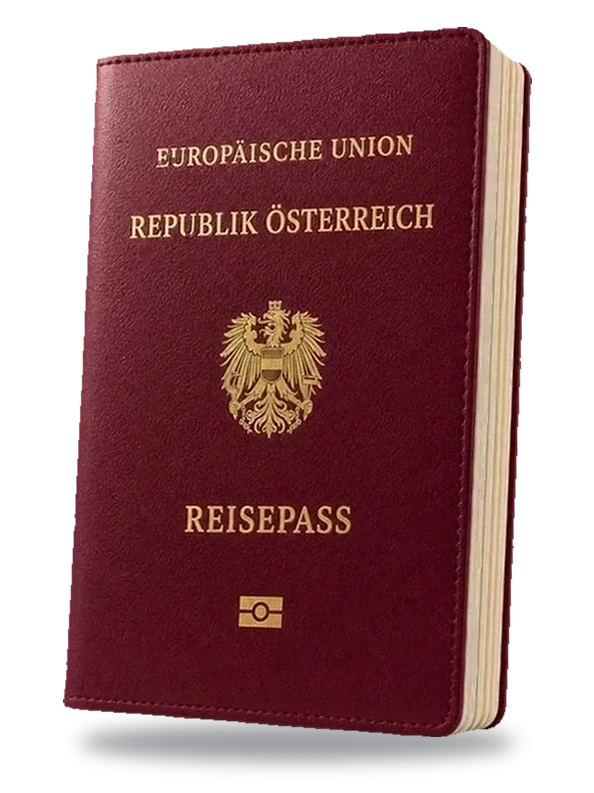
The passport of a citizen of the Republic of Austria
from €3mThe guide budget for a project
An EU passportLife and work in 27 countries
§ 10(6)The provision of the citizenship act

01 / About the program

How Austrian citizenship for investment works

This is not a Caribbean programme with a price list, and it is not a golden visa. Austria does not sell a passport: it grants citizenship to those whose contribution is recognised as outstanding and as answering the special interest of the republic. The investment here is the way to create that contribution, not a line in a tariff.

01

The ground is § 10(6) of the citizenship act

The provision allows citizenship to be granted where the federal government confirms that a foreigner’s services — those already rendered and those expected in future — answer the special interest of the republic. The requirements as to length of residence and as to renouncing the former citizenship, which apply in ordinary naturalisation, then fall away.

02

Four fields of service

Austria’s Interior Ministry names science, the economy, sport and art. What interests an investor is the economic line: a contribution that creates jobs, exports, technology or production. Only services markedly above the average level in their field count as outstanding.

03

The government decides, not a provincial official

The special interest is confirmed by the federal government, and the decision stays discretionary: nobody has a right to demand citizenship under this provision. So the application is built as the case for a project, not as a set of forms.

04

The former passport stays

Ordinary Austrian naturalisation requires renouncing the former citizenship. Under this provision keeping a second passport is possible: retaining the former citizenship is allowed where that answers the same special interest of the republic.

02 / What you get

What an Austrian passport gives you

Life and work in 27 EU countries

Freedom to move, live and take work across the European Union, and in Switzerland, Norway, Iceland and Liechtenstein. No work permit is required and no residence permit has to be arranged.

Business with no restrictions for foreigners

A company in any EU country on local terms, access to the single market and to European banking. The approvals an investor from a third country needs fall away.

Education and medicine

The universities of Austria and the EU on citizens’ terms rather than as a foreign student. The health system is among the strongest in Europe.

Travel with no visas and no queues

The Austrian passport is among the strongest in the world: most countries are open without a visa or on simplified rules, and business trips stop depending on visa centres.

The rights of an EU citizen

Consular protection from the embassy of any country of the union outside the EU, participation in the elections the law provides for and access to European social rights where you live.

Inherited by the children

Citizenship passes at birth to the generations that follow. It is not a status with a term and not a permission that has to be renewed.

A preliminary assessment

Calculate the cost for your family

Set out who is applying with you — the cost on the page recalculates at once. With the calculation you get the Austrian estimate for your composition, the timeline by stage and a plan of action.

Who is applying for citizenship?

Get the calculation

about a minuteno calls and no obligationsconfidential

  • A realistic budget for the project for your purpose
  • The timeline for each stage of the process
  • A plan of action: where to start
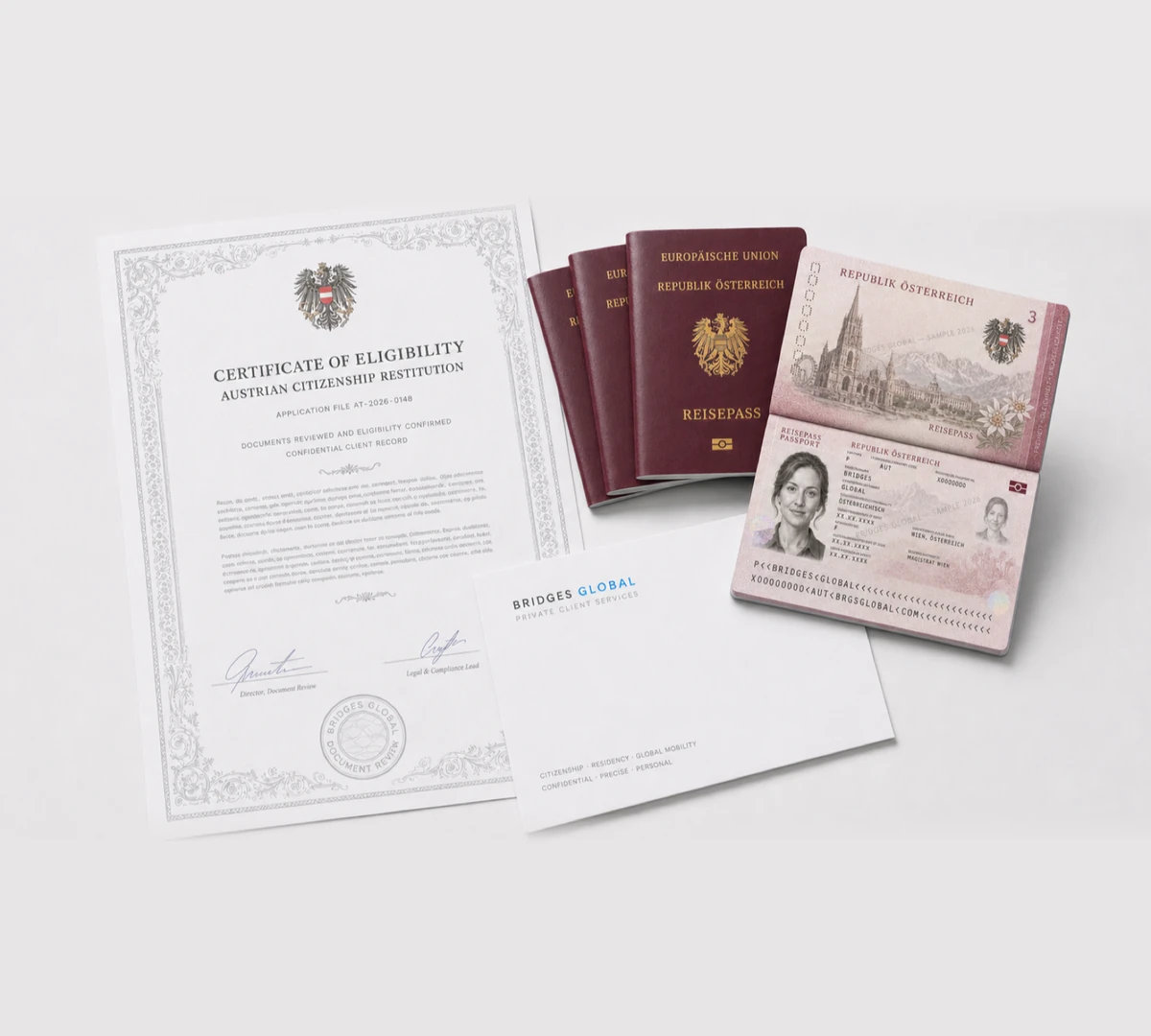
A set of documents for an Austrian citizenship application

03 / Why people apply

Why people obtain an Austrian passport

Austria is almost never a first passport taken just in case: too expensive and too long. It is taken for a particular purpose, where the status of an EU citizen is exactly what is needed.

Moving a business to Europe

When a company enters the European market, citizenship removes the barriers: banks, licences, public procurement, working with EU counterparties. The investment in Austrian production and the citizenship application go as one project.

A family with school-age children

The children obtain the same status and study at European universities as locals. For a family with a horizon of ten to fifteen years that counts as the main argument.

Lifting the limits of your present passport

When your current citizenship closes accounts, visas and deals, an EU passport solves the problem whole rather than softening it. A Caribbean passport does not go that deep.

Freedom of movement without visas

The Austrian passport is among the strongest in the world: travel and business meetings stop depending on visa centres, waiting times and refusals.

The status passes to the children

Children born after citizenship is obtained become Austrian citizens at birth. The decision is taken once and works for generations ahead.

A long-term footing for capital

Austria is a country with settled property rights and predictable regulation. Citizenship here is part of the structure of capital, not a document for travel.

04 / The core of the family

Who goes through with the investor

The service is recognised in a particular person, so it is always they who are the main applicant. A spouse and minor children go with them; adult children and parents do not come into the application under this provision. Open a row to see the conditions.

  • Over 18
  • No convictions and no open investigations
  • An evidenced lawful source of funds
  • Services to Austria markedly above the average level in their field
  • A registered marriage
  • Their own due diligence check
  • The status follows the main applicant; no separate service is required
  • The applicant’s minor children
  • The consent of the other parent where they live apart
  • Citizenship passes to them together with the parent’s status
  • They do not come into a parent’s application under this provision
  • Each needs a ground of their own — study, work or their own contribution
  • We choose a separate option: a student or a work residence permit
  • They do not come into the application under this provision
  • A separate family reunification option is possible once the status is obtained

05 / Cost

What Austrian citizenship costs

The programme has no single price and no law sets one: the sums below are the market’s guide to the budget with which such projects reach a result. The total comes together around the particular project: the weightier the contribution to the economy, the better the chance the government recognises a special interest.

A direct contribution to the economy · a non-returnable contribution

from€3,000,000

≈ $3,240,000

The horizon of the project A one-off contribution

  • A non-returnable contribution to a project of significance for the Austrian economy
  • Below three million euro such projects as a rule do not reach a result
  • The money is not returned: it is a contribution, not an investment with a yield
  • An economic case is required: what effect Austria gets
  • The sums are not set by law — this is settled market practice

An investment in a business · a returnable investment

from€10,000,000

≈ $10,800,000

The horizon of the project From 3 years of the project operating

  • An investment in an Austrian company: production, technology, an export project
  • The asset stays yours — unlike a direct contribution the money does not burn
  • The service is evidenced by the result: jobs, exports, innovation
  • The project must work, not exist on paper
  • The horizon to a decision is usually longer than for a direct contribution

The form of the contribution

The scale of the project

The main applicant — the author of the contribution
1
Spouse
0
Children under 18
0
Adult children from 18
0
Parents
0

The sums on this page are a guide to the budget as settled on the market, not a threshold set by law: neither § 10(6) of the citizenship act nor the explanations of Austria’s Interior Ministry names any sum of money. The guide does not guarantee a result: the decision stays discretionary and is taken by the federal government. The costs of the economic case, the audit, translations, legalisation and legal support are worked out separately for each project.

06 / Comparison

Austria against the alternatives

Comparing Austria with the Caribbean programmes is not sound: they are different products. Below are the options investors actually use to meet the need for a passport or a status in the European Union.

AustriaMaltaPortugalThe Caribbean
What you getEU citizenshipNo citizenshipResidency, then citizenshipCitizenship outside the EU
A budget from€3,000,000-€500,000$200,000
The timingCase by case-From 5 yearsFrom 4 months
Do you have to live in the countryNo-Yes, 7 days a yearNo
The right to live and work in the EUYes-After citizenshipNo

The Maltese scheme of citizenship for direct investment was struck down after the judgment of the Court of Justice of the European Union of 29 April 2025, so its citizenship column is empty. Portugal is the route through residency: citizenship is applied for after five years and requires a language exam. The budgets are minimum guides, without fees and support.

Full program comparison →

09 / How it works

How Austrian citizenship is arranged

STEP 1

A review of the profile and a straight assessment

We look at whether there is anything to build a service from: capital, the industry, readiness to run a project in Austria, the public record, reputational risks. If we see there is no prospect, we say so at once and offer another route — Portugal, Malta or a Caribbean programme.

STEP 2

The structure of the contribution

We settle the form: a direct contribution to the economy or an investment in an Austrian business. That governs the budget, the horizon and what exactly will evidence the outstanding character of the service.

STEP 3

The economic case

We prepare the document the whole thing is done for: what effect Austria gets — jobs, exports, technology, taxes. It is not a form but project work, with figures and evidence.

STEP 4

Compliance and the source of funds

We check the origin of the capital and the business reputation by the same standards the state will use. Weak points are closed before filing, not after a request.

STEP 5

Filing and following the decision

The application goes through the authorised bodies, and the special interest is confirmed by the federal government. The timelines are not regulated: we run the case to the decision and answer the requests.

STEP 6

The oath, the passport and life afterwards

After a positive decision the documents and the passport are arranged. Then we stay alongside: tax residency, the structure of assets, a status for adult children and parents.

10 / Travel

Where you can travel and where a visa is needed

The Austrian passport is one of the strongest in the world and gives the full rights of an EU citizen. We do not publish an exact number of visa-free destinations: the lists change, and a figure with no date of checking misleads.

Mode 01

Without a visa

The whole European Union and Schengen with no limit on the length of stay, the United Kingdom, Japan, South Korea, Singapore, the UAE and most of Latin America and South-East Asia.

Mode 02

An electronic authorisation

The United States on ESTA, Canada on eTA, Australia and New Zealand — the authorisation is arranged online in a few minutes.

Mode 03

The right to live and work

In 27 EU countries, and in Switzerland, Norway, Iceland and Liechtenstein — with no work permit and no residence permit. No investment programme outside the European Union gives that.

Mode 04

A visa is needed in advance

Russia, China, India, Saudi Arabia and a number of African countries — as for the citizens of other EU countries.

The rights of an EU citizen — the Treaty on the Functioning of the European Union, articles 20 and 21. The entry regimes were checked as at the date this page was updated.

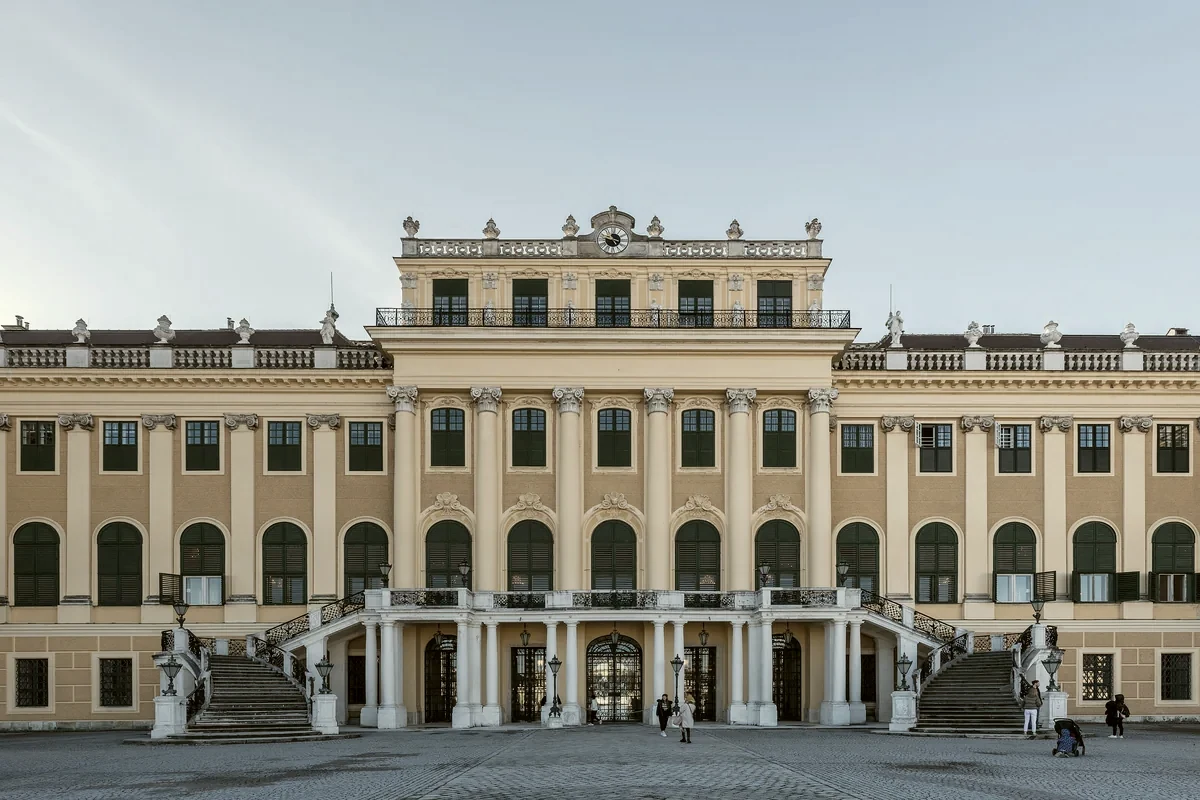
Vienna, Austria

Citizenship is granted under § 10(6) of the citizenship act of 1985 — for outstanding services in the special interest of the republic. The decision is taken by the federal government of Austria.

The Republic of AustriaThe European Union§ 10(6) StbG
Discuss the project

11 / Our role

Why people obtain Austrian citizenship with us

We have worked since 2004 and more than 8,000 families have come through us. Austria is the most demanding task in our practice: here you cannot buy a result, you can only make the case for it.

01

We tell the truth about the chances

At discretion Austria naturalises a little over a thousand people a year, and almost all of that is the ordinary route after ten years of residence. The exceptional grounds account for dozens of decisions. We name those figures before the contract, not after.

02

We build a project, not file a form

The result depends on the economic case: what exactly Austria gets. We assemble that document together with your team — with figures, jobs and evidence, not general words.

03

We do not sell a tariff that does not exist

Neither the law nor Austria’s Interior Ministry names any monetary threshold. Anyone promising you citizenship for a fixed sum is selling something that does not exist. We work with a guide to the budget and say plainly that it guarantees nothing.

04

We keep an alternative ready

If Austria has no prospect, the task is usually solved by a pairing of residency in the EU and a second passport. We run both lines and do not pull a client into a project for the sake of a fee.

15 / Materials

Useful materials on Austria

Materials on Austria: how citizenship for a contribution to the economy is granted and what the authorities assess.

The main materialPresentation

Austrian citizenship for investment

The presentation gathers the essentials of the programme: the conditions, the sums, the family composition, the documents and the order of work.

Inside:

  • who can take part in the programme
  • which investment options are available
  • what it costs for your family composition
  • which relatives come into the application
  • which documents will be needed
  • how the due diligence check works
  • how work with BRIDGES is organised

PDF · free · current as of August 2026

A short check: who passes the selection, what the restrictions on citizenship are and what is looked at in the due diligence check.

The list of documents for the applicant and each family member, marking what has to be translated, certified and apostilled.

We calculate the full estimate for your composition: the contribution, the state fees, the due diligence check and the support.

All the materials are updated regularly by our team and are used when supporting BRIDGES clients.

16 / News

News on the programme

18 February 2026

Statistik Austria published the results for the year: in 2025 citizenship was obtained by 25,095 people. At discretion, that is under § 10, 1,262 people were naturalised — around 5% of all cases, and 1,185 of them went through the ordinary route after ten years of residence. All the exceptional grounds together accounted for fewer than eighty decisions in the year.

2025

More than three quarters of all Austrian naturalisations — 19,167 people — went by right rather than at discretion. Of them 9,521 obtained citizenship as descendants of victims of the Nazi regime under § 58c. That is a separate ground and is not connected with investment.

The version in force

§ 10(6) of the citizenship act of 1985 remains in force unchanged: citizenship is granted where the federal government confirms a special interest of the republic in connection with outstanding services already rendered and expected. The provision contains no monetary thresholds.

Worth having

Get the review of Austrian citizenship

The short document we give clients before the start: how § 10(6) works, what the contribution is made of, what budget is realistic, what goes into the economic case and what such applications most often come apart on.

Inside the document

  • The legal ground and who takes the decision
  • What the budget for the project is made of
  • What has to be in the economic case

We will send it after a short form - no call or obligation.

17 / Questions

Answers to common questions

There is no set price. Neither § 10(6) of the citizenship act nor the explanations of Austria’s Interior Ministry names any sum of money. A guide has settled on the market: from three million euro as a direct contribution to the economy, or from ten million as an investment in an Austrian business. That is a guide to the budget, not a tariff: it guarantees no decision, because what is assessed is the contribution, not the payment.

Because no threshold exists and everyone names their own. Some quote the minimum at which they will take the work on at all, some the typical budget of a project that reached a result, some simply put down a prettier figure. There is nothing to check them against: no official source names a sum.

The ground is lawful — § 10(6) of the citizenship act of 1985, a provision in force. But it is not a programme for investment in the usual sense: there is no application form, no tariff and no right to demand citizenship. There is a provision under which the government may recognise a contribution as answering the special interest of the republic.

Not high, and we say so directly. On Statistik Austria’s figures, in 2025 1,262 people were naturalised at discretion, and 1,185 of them after ten years of residence in the country. All the exceptional grounds together were left with fewer than eighty decisions. So we take the task on only after a review of the profile.

The residence requirement compulsory in ordinary naturalisation falls away under this provision. But the project must be real: if citizenship is founded on a business, the business must work rather than exist on paper.

In ordinary naturalisation, yes — Austria requires you to leave your former citizenship. Under this provision keeping a second passport is possible: retaining it is allowed where that answers the same special interest of the republic. The question is settled together with the main one and calls for a case of its own.

The requirement as to language belongs to ordinary naturalisation. Under § 10(6) no language exam is provided for — what is assessed is the contribution. In practice German strengthens the position, because it evidences a connection with the country.

A spouse and minor children. Adult children and parents do not come into the application under this provision — each needs a ground of their own. For them we usually choose a student or a work residence permit, and once you have the status, a family reunification option.

The timelines are not regulated by law, and promising a particular date would be deceptive. Most of the time goes not on the consideration but on the preparation: the structure of the contribution and the economic case are project work over months, not a fortnight of gathering certificates.

Portugal gives residency at once and citizenship after five years, with a language exam and a compulsory presence of seven days a year. The budget there starts at 500,000 euro. Austria gives citizenship directly, with no residence requirement, but costs an order of magnitude more and guarantees no result. They are different instruments for different purposes.

The task is almost always solved another way. Usually it is a pairing: residency in the European Union for a particular purpose — Portugal, Hungary, Italy — plus a second passport from a Caribbean programme for travel. We work that option out in the same review, so that you compare not with nothing but with a real alternative.

INITIAL ASSESSMENT

Tell us what outcome your family needs

We will design a solution for your case, choose the country and the right status, and take the whole process through to the result.

Or message us on WhatsApp or Telegram

Anna Kovalevskaya, lead lawyer at BRIDGES GLOBAL
Anna KovalevskayaLead lawyer, citizenship and residency, 12 years of practice