Case · Vanuatu
Vanuatu passports: seven people and three generations in one application
Updated: September 2026·11 min read·Expert reviewed
Composite example based on typical family enquiries · figures as of September 2026 · names invented
Contents
The list of seven names appeared at the very first meeting, handwritten on a page torn from a school exercise book. Mikhail brought it to our office in Samara and laid it on the table the way people lay out a family photograph: himself, Olga, their son Ilya, their daughter Nastya, Nina, Olga’s mother Valentina and father. He put it briefly: all of us, or there is no point. A year earlier the family had been through something they recall reluctantly - Olga’s father Pyotr was hospitalised in Turkey in the summer, and four days went by while documents for an urgent trip were assembled. After that the decision about second passports was unanimous, the older generation included, though until then they had thought the whole idea a whim.
Seven people, three generations, one list
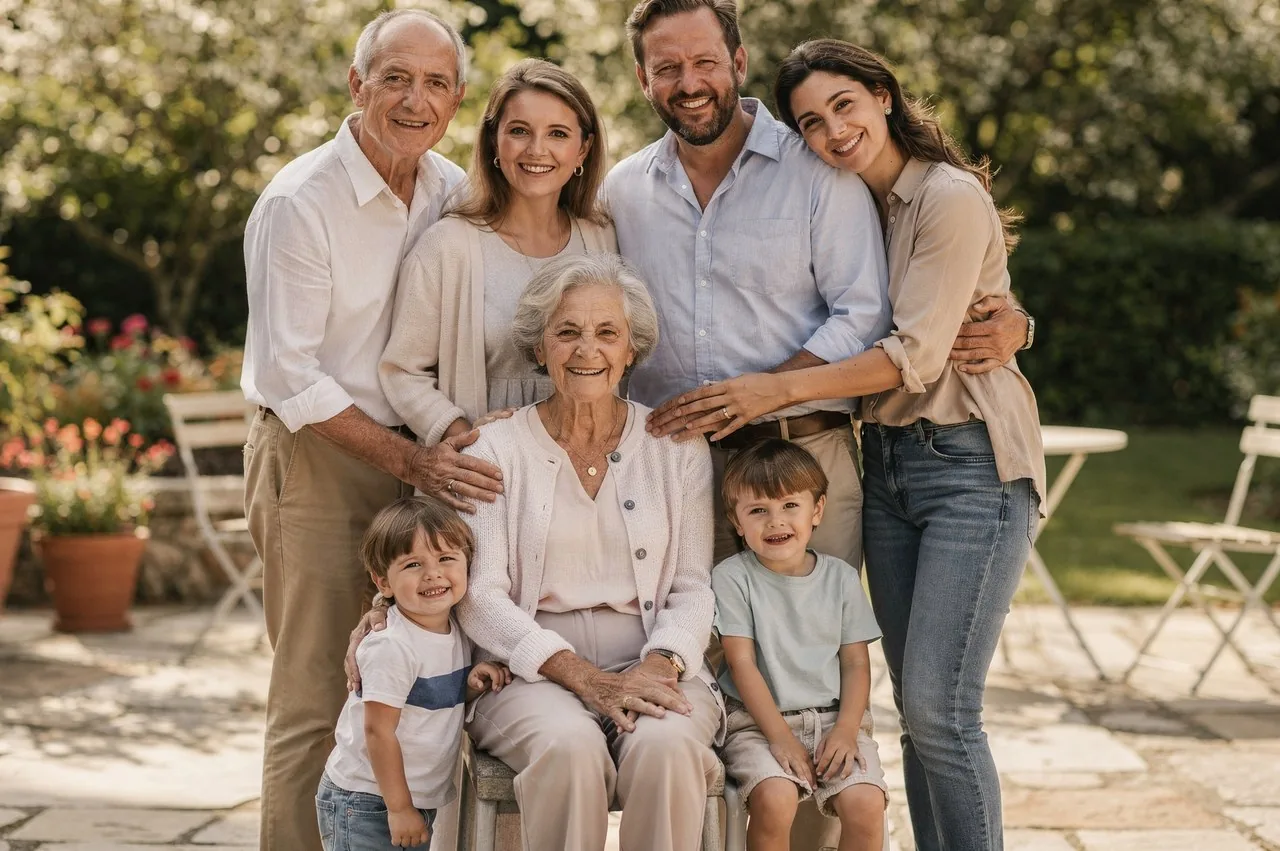
This is a composite example: the story is built from typical family enquiries, and no real client is described; the names are invented. Mikhail is 45, Olga 42, their son Ilya 16, their daughter Nastya 11, Mikhail’s mother Nina, 68, Olga’s parents Pyotr and Valentina, 71 and 69. All are Russian citizens living in Samara, with the three elders sharing a house with the children.
Mikhail owns a chain of dental clinics; Olga runs their administration. Their son is finishing school and plans to study in Europe; their daughter Nastya attends music school.
Their house is large and split in two: Mikhail, Olga and the children in one half, the elders in the other. A shared kitchen, a shared Sunday table, a shared conversation about what comes next. It was at that table that the idea of second passports turned from an argument into a list.
The older generation did not warm to second passports at once. Mikhail’s mother spent the first fortnight saying that in her late sixties she had no use for passports, then asked whether it would mean travelling abroad.
Olga’s father Pyotr, by contrast, backed it immediately. After the hospital in Turkey he kept repeating one thought: documents should be prepared while nothing has happened, not once it has. Valentina worried about one thing only - whether she would have to give up her Russian passport - and the lawyer answered that in the first ten minutes.
The family heard about us from our own clients, acquaintances from the clinic: they had obtained Vanuatu passports with us two years earlier and suggested asking us the same question.
Mikhail set his condition at once: all seven people go into the application, or he sees no point in it.
Why three parents joined the application
A Vanuatu citizenship application covers a spouse, children and parents over 50 - the parents of both spouses, not only of the main applicant. In some cases other dependent relatives are included too.
The elders’ ages raised no questions: 68, 71 and 69. Children are included by age, and at 16 Ilya went in as a child, which meant no police certificate for him - those are required from the age of 18.
Nastya is 11, so she needed a birth certificate, a travel passport and photographs. At 16 Ilya filled in his own forms and, by his father’s account, was the only person in the family who never lost or mixed up a single paper.
The donation is calculated from the total number of people. Four people cost USD 185,000 including the due diligence fee, and each person beyond four adds USD 26,500 under our estimate. For seven that is USD 264,500.
- For four people$185,000with the due diligence fee
- Three people beyond four$79,50026,500 each
- Total donation$264,500seven people, one application
- Per person$37,786at this composition
Apostilles, translations, archive requests and passport delivery are paid separately.
Vanuatu programme terms and the BRIDGES estimate, September 2026
The coconut oil fund covers a family of up to four, so for this composition the family chose the donation. How the two programmes work is set out in donation or fund.
Seven sets of documents and one archive request
The main work in an application like this is organisational. Each person needs a passport, a birth certificate, marriage documents, photographs to specification and proof of address, and every adult from 18 also needs a police certificate and a medical certificate.
Timing an application like this runs off the slowest document. With seven people that is always the same short list: police certificates, medical certificates and something from an archive. The lawyer said at once that they would not file before the reissued certificate arrived from Kazakhstan, and asked them not to guess at dates until then.
The lawyer built the family a table: seven columns, each with a list and target dates. The table went up in the kitchen, and the elders ticked the boxes themselves.
The work was divided by person rather than by document. The spouse took the elders: clinic appointments, journeys, photographs. Mikhail handled his banking papers and contracts. Ilya helped his grandfather with the travel, and Nastya stuck name labels on the envelopes - that part was her own idea.
The main delay came from an archive. Olga’s father Pyotr was born in 1955 in Kokchetav, then part of the Kazakh SSR, and sixty years had worn his birth certificate down to illegible. An archive request to Kazakhstan was needed: the reissued certificate took two months.
The second difficulty was medical. After last year’s hospital stay Olga’s father Pyotr walks with difficulty, so Mikhail’s son drove him to his appointments. The family got their medical certificates at one clinic in two days by booking everyone together.
There was a third small thing, the kind that most often costs weeks in applications like this. Olga’s mother had her surname spelled differently in her travel passport and her marriage certificate: Nataliia in one, Natalia in the other. The lawyer assembled a chain of documents with a single spelling and asked the centre to issue all seven passports in one transliteration so the family surnames would match.
- Passports and birth certificates
- Marriage certificates
- Police certificates
- Medical certificates
- Archive request to Kazakhstan
All Russian documents were apostilled and translated into English by a certified translator.
Document list from a BRIDGES composite example
We will cost an application for a large family
We will review the composition, cost the donation by number of people and list what the elders need.
One person out of seven went through due diligence
This the family learned with surprise and relief: only the main applicant goes through due diligence. The elders did not have to explain the origin of their pensions and savings, and the children nothing at all.
The questions followed Mikhail’s business: the clinics’ revenue, equipment bought on lease, the sale of one of the premises in 2024. The lawyer assembled contracts, statements, tax returns and a bank letter.
One question concerned the parents: due diligence asked for proof of the family relationship and that the elders live with the family. Birth certificates, marriage certificates and a household register extract answered it.
A month later approval came for all seven at once.
- Februarymeeting, a list of seven names
- Marcharchive request to Kazakhstan
- Aprilpolice and medical certificates
- Maythe reissued certificate arrived
- Juneapplication filed
- Julyapproval, biometrics in Moscow
- Augustseven passports
Workflow from a BRIDGES composite example
Seven people in one day in Moscow
Biometrics are given in person at one of the centres: Port Vila, Dubai, Hong Kong, Moscow, Saint Petersburg. Taking the elders abroad was out of the question, so they chose Moscow.
They booked one morning, all seven in a row. Mikhail asked the centre in advance to take account of the fact that Olga’s father Pyotr finds standing and waiting hard, and he was seen first.
The journey was planned separately: an overnight train from Samara in a compartment, two hotels near the centre, a car for the day. The whole thing took less than twenty-four hours; by evening the family was on its way home.
The hardest part was fitting seven people of very different speeds into one day. Mikhail arrived half an hour before opening, handed the receptionist a list with the order and the ages, and the family was called in that order: the elders first, then the children, then the parents.
Afterwards Mikhail’s mother Nina said she had expected something more complicated and it turned out like a clinic visit: place your fingers, look at the camera, sign.
The passports arrived two weeks later, all seven. Each of the elders received their own document and asked for a copy to be made in case of loss.
The passports were couriered to Mikhail’s clinic, because nobody is home during the day. They were handed out that evening at the family table, each to its owner, with the spelling of names and dates of birth checked against the certificates. Two documents had their patronymics checked twice - English spelling does not carry them, and that had to be explained to the elders separately.
Calculate the cost for your family composition
The estimate shows the donation by number of people, children and parents over 50 included.
Seven notifications and one calendar
All seven kept their Russian citizenship: Russia allows a second one. Vanuatu citizenship must be notified to the Interior Ministry within 60 days, or within 30 days of returning if it was acquired abroad.
The family received the passports in Russia, so the deadline ran from the date of receipt. The lawyer drew up one calendar for seven people and reminded them about it twice.
The notifications were filed on the same day at the local office. The parents filed for the children, Mikhail filed for the elders under a power of attorney where that was allowed, and the rest came in person.
Seven notifications took about two hours. Mikhail printed the forms and filled them in at home in advance, because completing seven sets at the office with elderly relatives in tow is a slow business.
Copies of the notifications went into one folder with the passports. That folder later proved useful when opening an account: banks prefer paperwork that is right the first time.
- Notified the ministry on time
- Made copies of every passport
- Kept one folder for the family
- Gave up their Russian passports
- Moved abroad as a whole family
A second passport requires no renunciation of the Russian one and obliges nobody to move.
From a BRIDGES composite example
How it ended for the family
In this scenario the Vanuatu Commission approved all seven and the passports were issued. In a real application the decision and the timing rest with the Vanuatu Citizenship Commission.
The family did not move. Mikhail explains it simply: the clinics are in Samara, his daughter’s school is there, the elders’ doctors are there. The second passport was needed as a backup document and as a way to travel together without collecting visas one by one.
They also discussed what happens if travelling becomes hard for the elders in a few years. The lawyer explained that Vanuatu citizenship is indefinite while the passport is replaced with a new one every ten years, and that this replacement needs no trip to Port Vila: the documents go through the agent and biometrics are given at the same centre as the first time.
Their son goes to study in Europe next year, and he will use the second passport more than anyone: his student permit will rest on its own basis, while trips home and back become simpler.
Six months after the passports the family noticed an unexpected result. The elders became calmer about travel: Mikhail’s mother Nina agreed to fly to the sea with the children for the first time in ten years, and Olga’s mother Valentina started a folder with copies of every family document - in her words, “so there is nothing to look for when there is no time to look”.
Olga’s father Pyotr has already used the new document once in a year: he flew to Dubai for treatment, and this time no visa was needed.
A Vanuatu passport is issued for 10 years and then replaced with a new one, while the citizenship itself is indefinite. The family set a reminder a year before expiry.
The donation is counted by the number of people in the application. The parents of both spouses go in alongside the children, and only the main applicant goes through due diligence.
Who this route suits
Large families where three generations live together: one application covers the spouses, the children and the parents of both spouses over 50.
Families whose elders travel badly: biometrics can be given in Moscow or Saint Petersburg, and seven people can be booked into a single day.
Families whose older documents were issued in former Soviet republics: an archive request takes months, so it is the first step, not the last.
Similar stories: Mikhail’s mother Nina in the application and a family of four. Programme terms are on the Vanuatu citizenship page.
We will help gather documents for the whole family
We will build a table for each person, order archive documents and pick a day for biometrics.
Composite example: the story is built from typical enquiries and no real clients are described. Figures as of September 2026. The decision rests with the Vanuatu Citizenship Commission.
BRIDGES analysis on this topic: what the state earns per passport.
Frequently asked
Questions people ask before deciding
01How many people can be included in one application?
A spouse, children and the parents of both spouses over 50. In some cases other dependent relatives too.
02How much does an application for seven cost?
USD 185,000 for four including the due diligence fee, plus 26,500 for each person beyond four: for seven that is USD 264,500.
03Is the fund suitable for a large family?
The fund covers a family of up to four, so at this composition the donation is usually chosen.
04Do parents and children go through due diligence?
No. Only the main applicant does.
05From what age is a police certificate required?
From 18. Younger children do not need one.
06What if documents were issued in the USSR?
Order reissued documents through an archive request. It takes months, so it goes first.
07Where does a large family give biometrics?
At one of the centres: Port Vila, Dubai, Hong Kong, Moscow, Saint Petersburg. Seven people can be booked into one day.
08Must the Russian Interior Ministry be notified?
Yes, for each person: within 60 days, or within 30 days of returning if the citizenship was acquired abroad.
About the author
Related materials
What to read next
 ArticleDonation or fund: the Vanuatu programmes
Personal programme selection is conducted by Anna Kovalevskaya, Head of Legal, BRIDGES.
We will cost passports for a large family
A BRIDGES lawyer will review the composition, cost the donation by number of people and plan the documents for the older generation.