Residency · Malta
Life in Malta: climate, language, healthcare, schools, pros and cons
Updated: June 2026·11 min read·Expert reviewed
Terms and costs verified: June 2026
Contents
Malta is a tiny archipelago in the center of the Mediterranean Sea that's part of the EU, Schengen, and the eurozone. The sun shines here year-round, English has official language status, and any beach is a half-hour drive away. Unsurprisingly, families from the CIS, remote specialists, and entrepreneurs who need a clear European jurisdiction with no language barrier discuss relocating to Malta.
But behind the postcard there's a flip side too: high population density, hot summers, water shortages, and pricey housing. In this article we break down the climate, language, healthcare, and schools in Malta, weigh the pros and cons, and suggest who the island suits for living with children, and who should think twice.
Malta in a nutshell: where it is and why people go there
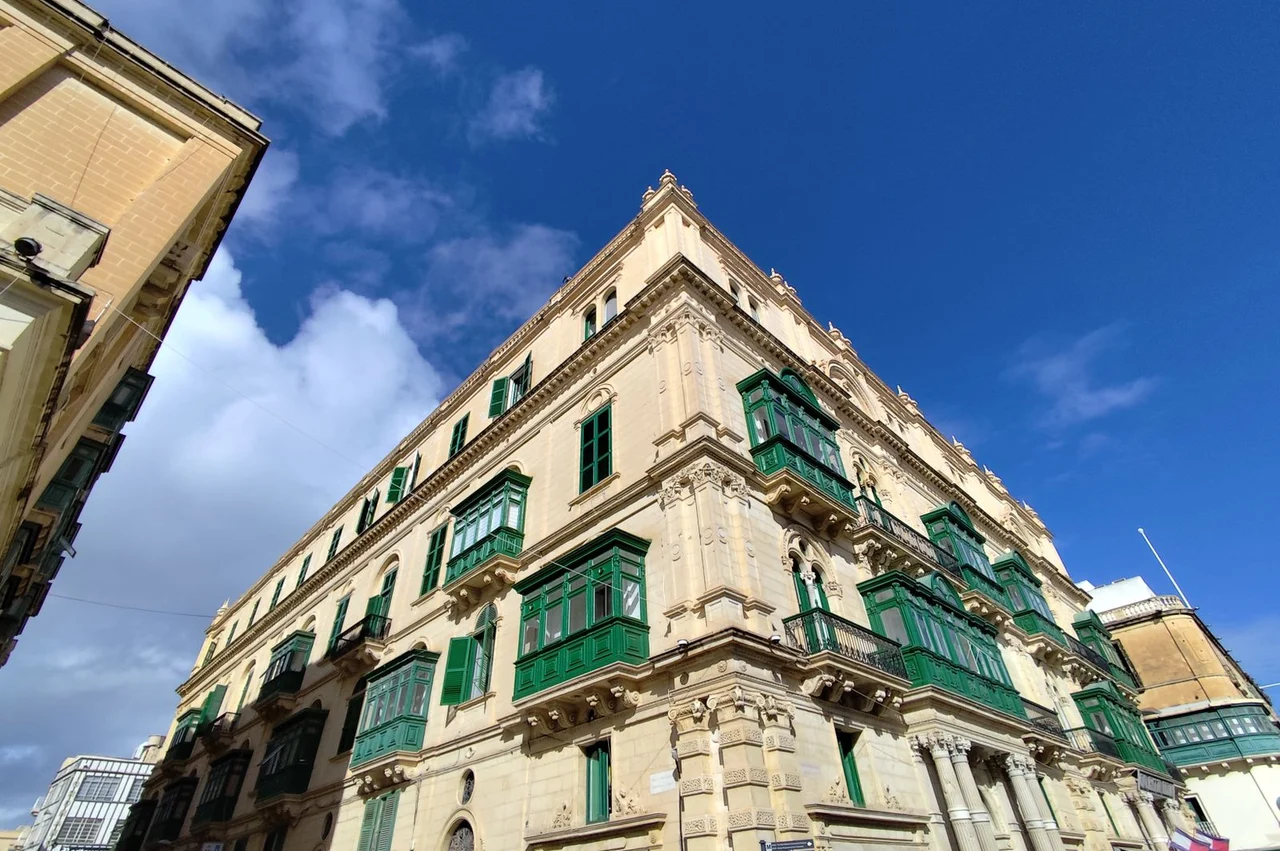
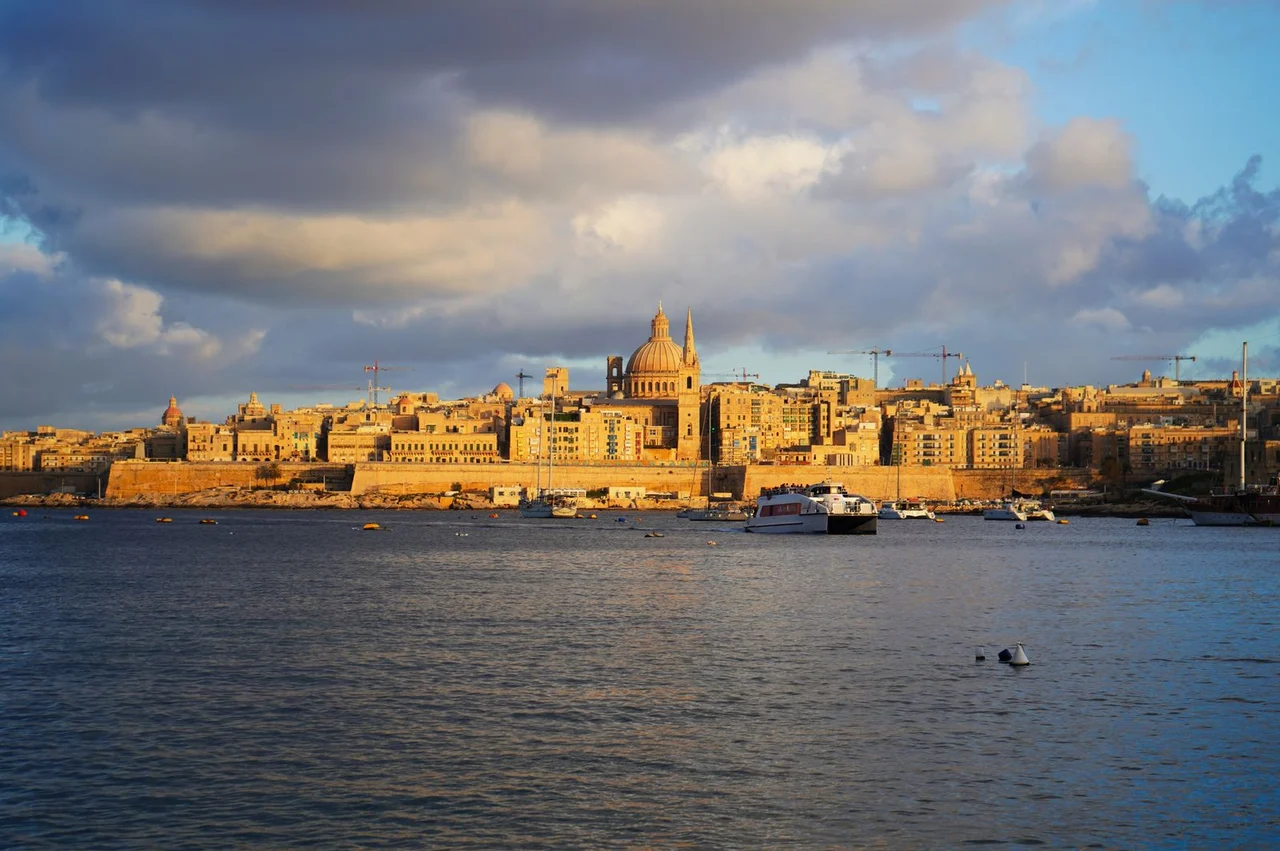
Malta is three inhabited islands (Malta, Gozo, and Comino) with a total area of just over 300 square kilometers. It's one of Europe's smallest states and at the same time a full EU member since 2004, part of the Schengen area and the eurozone. For daily life this means freedom of movement across Europe, a single currency, and a clear legal environment.
People come to Malta for a few clear reasons:
- English as an official language - no need to learn the local language to settle daily life;
- a mild Mediterranean climate and the sea within walking distance;
- EU country status with all the resulting rights and infrastructure;
- high personal safety and a calm pace of life;
- a developed services economy - finance, IT, maritime, and gaming business.
That said, Malta isn't a resort for a couple of weeks, but a real place to live with its own everyday nuances, which we'll discuss below.
Climate in Malta: 300 sunny days and a hot summer
The climate in Malta is classic Mediterranean: a mild winter and a hot dry summer. There are about 300 sunny days a year, and the average annual temperature stays around +23 degrees. In winter the daytime temperature is usually +14...+18, there's no snow, and the sea stays swimmable longer than in many European countries.
Summer is the most contentious part of Malta's climate. In July, August, and September the air warms to an average of +32, humidity is high, and rain is virtually absent. The heat is harder to bear due to dense development and heated stone.
There's also a winter nuance rarely mentioned in marketing brochures: old houses have no central heating, the walls are thin, and winter humidity is high. In January-February an apartment can be cool and damp, so an air conditioner with a heating mode is almost a must-have.
- The best months for living there: April-June and September-October.
- The hardest months: July-August (heat) and January-February (damp homes).
Language in Malta: why English removes the barrier
The main bonus for relocating is the language in Malta. There are two official languages: Maltese and English. English is used in government institutions, banks, hospitals, schools, and business. This is a legacy of the British period: the vast majority of residents speak it.
For a foreign family this means smooth adaptation without years of learning the local language:
- you can open an account, arrange documents, and see a doctor in English;
- children study in English-language schools, which gives them strong language skills right away;
- work at international companies and freelancing is done in English;
- everyday service - shops, cafes, services - is also English-speaking.
Maltese can optionally be learned for integration and future naturalization, but knowing it isn't required for a comfortable life. It's exactly the combination of European status and English as the working language that makes the island such a convenient entry point into Europe.
Healthcare in Malta: public and private
Healthcare in Malta is one of the strong arguments in favor of relocating. The healthcare system regularly ranks in the upper tier of global rankings: by World Health Organization estimates Malta consistently stays among the best, and healthy life expectancy here is among the highest in the EU.
Healthcare has a two-tier structure:
- State.Free for Maltese citizens and EU residents with a medical policy. The central hub is the large Mater Dei university hospital, with modern equipment and English-speaking staff.
- Private.Paid clinics give appointments with specialists the same or next day and minimal queues. Many expats use the state system for basic care and keep private insurance for quick access to specialists.
The approximate cost of additional private insurance is roughly 25 to 60 euros a month. All staff speak English, so you won't face a language barrier at the hospital.
Schools in Malta: state, church, and international
Education is a key question for those considering Malta for life with children. The school system consists of three parts:
- Public schools- free, teaching partly in English, partly in Maltese.
- Church schools- state-funded, tuition free or with a minimal fee, strong academic preparation.
- International and private schools- British, American, and the International Baccalaureate (IB) programme.
There are several dozen international and English-language schools on the islands. Among the well-known ones - Verdala International School (IB programme), QSI International School (American programme), St Martin's College, and Chiswick House (British system).
Tuition at international schools is roughly 4,500 to 13,500 euros a year per child, and with additional costs (food, uniform, transport) the total reaches 6,000-17,000 euros. For a family relocating to the EU, this is a clear and predictable budget, and children get strong English by default.
Safety: one of Europe's calmest countries
Safety is exactly what many families choose the island for. Malta traditionally ranks among Europe's calmest countries. The level of serious crime is low, and by the number of registered crimes per hundred thousand residents Malta beats (in a good sense) a number of northern EU countries.
What this means in practice:
- you can walk calmly in the evening, including with children;
- low risk of violent crime;
- a safe environment for women and elderly parents;
- children can get to school and activities on their own.
Among everyday risks, the local driving style is most often mentioned - it's worth being more attentive on narrow roads. But overall, the sense of safety and unhurried pace of life is one of the main reasons people stay on the island long term.
The expat community and adaptation
Malta is a country with a very large share of foreigners: by various estimates, around one in five residents is an incomer. In areas popular with expats like Sliema and St. Julian's, the share of foreign residents reaches a third. This creates a ready-made environment for adaptation.
What helps newcomers settle in quickly:
- an English-speaking environment - no need to wait until you learn the local language;
- active communities around hobbies, sports, and business;
- many families from the CIS, Europe, and other regions;
- the island's compactness - everything's close, connections form quickly.
Adaptation in Malta goes more smoothly than in countries where it's hard without the local language. Many note that the feeling of home comes already in the first months - the climate, the language, and the informal atmosphere all help.
Downsides of life in Malta: about the difficulties
Malta's pros and cons are quite tangible, and it's worth stating the downsides upfront. There's no perfect place, and the island is no exception.
- Density and cramped space.Small territory and high population density: traffic jams, noise, active construction, little greenery.
- Summer heat and water.In July-August it's hard without AC, and fresh water on the islands is scarce - it's desalinated and not cheap.
- Traffic and driving.Narrow roads, heavy traffic, a distinctive local driving style.
- Cost of living.Housing in popular areas is expensive, a lot is imported, so a number of goods are pricier than the EU average.
- Damp homes in winter.Poor insulation and no central heating.
These downsides don't cancel out the advantages, but they're important to factor into relocation and budget planning.
“Malta is almost always liked on vacation, but life and vacation are different things. Before relocating I advise soberly checking three things. First - housing: budget realistically for rent in popular areas and view apartments in person, paying attention to heating and winter damp. Second - school for the children: places at strong international schools get taken early, book a few months ahead. Third - status: a tourist visa doesn't give the right to live permanently, so the path to a residence permit or permanent residency needs to be thought through before relocating, not after. And separately for Russian and Belarusian citizens: restrictions and enhanced compliance apply to a number of programmes - everything is resolved strictly legally, with no gray schemes. If these questions are settled in advance, the move goes smoothly, and the island reveals exactly the comfortable European life people come here for.”
Malta pros and cons: a summary table by aspect
To make it clearer, let's put the key aspects of life in Malta into one table - how things stand on each point.
| Aspect | How it is in Malta |
|---|---|
| Climate | About 300 sunny days, a mild winter; the downside - a hot, humid summer |
| Language | English is official, no barrier; Maltese - optional |
| Healthcare | A strong public system + fast private clinics |
| Schools | Free state and church schools + international ones in English |
| Safety | Very high, low crime |
| Community | A large share of expats, easy adaptation |
| Housing | Expensive in popular areas, limited choice |
| Territory | Small, high density, traffic jams |
| Status | EU, Schengen, euro - rights and freedom of movement |
In short: pros - language, climate, safety, and EU status; cons - cramped space, heat, and housing prices.
Malta for life with children: pros and cons
Malta for life with children is one of the most common requests from CIS families, and overall the island suits this well.
What's a plus:
- high safety - children can walk and travel around on their own;
- English-language schools give strong language skills from an early age;
- the sea and nature nearby, an active lifestyle year-round;
- compactness - school, the sea, and activities are close by;
- EU status opens up access to further European education for children.
What to consider:
- there aren't many green yards and large parks;
- it's hot in summer, AC and a daily routine adjusted for the sun are needed;
- places in popular international schools should be booked in advance.
For a family that values safety and an English-speaking environment, Malta is one of the most comfortable options in Europe.
Daily life, transport, and cost of living
Everyday life in Malta is conveniently arranged thanks to the island's size. Distances are short, public transport is buses, and there's free travel for residents on a number of routes. Many choose a car or scooter, but you should get used to narrow roads and traffic.
By money the benchmarks are as follows (approximate, depend on the area and lifestyle):
- one-bedroom rent in the center - roughly from 950 to 1,200 euros a month;
- more spacious housing in prestigious areas - from 1,400 euros;
- everyday expenses for one person excluding rent - about 750-800 euros;
- a family of four excluding rent - roughly around 2,800-2,900 euros.
We've put together a detailed budget breakdown in a separate article onthe cost of living in Malta, and housing purchase questions - in our guide onreal estate in Malta.
Who Malta suits, and who it doesn't
For the relocation decision to be an informed one, it helps to compare the island with your expectations.
Malta is a good fit if you:
- value an English-speaking environment and don't want to learn a new language from scratch;
- put safety and peace of mind for the family first;
- love the sea, sun, and an unhurried Mediterranean pace;
- want a base in the EU with a clear tax and business environment;
- work remotely or run an international business.
You should think twice if you:
- tolerate heat and high humidity poorly;
- want wide open space, forest, and quiet with no development;
- expect cheap housing in the center of popular towns;
- aren't ready for traffic and density on a small territory.
In most cases the pros outweigh the cons, but a assessment of the downsides saves nerves after relocating.
How to legally relocate to Malta
Life in Malta starts with legal status. A tourist trip on a Schengen visa is an introduction, while permanent residence requires a residence permit or permanent residency. The main legal paths for foreigners:
- Permanent residency through investment (MPRP)- a lifelong permanent resident status for the whole family, including children, parents, and grandparents; a path to EU long-term resident status.
- Types of residence permits- for remote specialists, wealthy individuals, and those relocating for work or family reasons.
- Tax residency- separate programmes with preferential rates for those moving their center of interests to the island.
The conditions and cost of permanent residency are covered in detail in our guide onthe MPRP programme, and the status options - in our overviewresidence permits in Malta. For citizens of Russia and Belarus, enhanced compliance and restrictions apply to a number of programmes - all strictly within the law, with no circumvention of sanctions.
If you want to understand which specific path suits your family and calculate the relocation budget,discuss your task with BRIDGES GLOBAL specialists- we'll break down your situation and offer a legal solution.
An expert's view: what to check before relocating
The decision to move to Malta is better made with a clear head and grounded in real figures, not vacation impressions. Below is a practical expert comment on what to check in advance.
It's convenient to check official reference information on life, documents, and services on the government portalgov.mt.
Bottom line: is it worth moving to Malta
Life in Malta is a rare combination of European status, the English language, and a Mediterranean climate on a very compact territory. For foreign families the key advantages are obvious: no need to learn the language from scratch, healthcare and schools are at a decent level, and safety is among the highest in Europe.
The downsides are real too: hot summers, water shortages, traffic, dense development, and pricey housing. But if these features don't scare you off, the island offers a calm, safe, and predictable life in the EU, especially valuable for families with children.
The next sensible step is to choose a legal path to obtaining status and calculate the budget for your situation. Our articles on cost of living, permanent residency, and real estate can help with this, and you can always turn to BRIDGES GLOBAL specialists for a personal breakdown.
Frequently asked
Questions people ask before deciding
01What language is spoken in Malta?
There are two official languages - Maltese and English. English is used in government institutions, banks, hospitals, schools, and business, and most residents speak it. Knowing Maltese isn't required for living and adapting, which makes the island very convenient for relocating from abroad.
02What's the climate like in Malta?
Mediterranean: about 300 sunny days a year, a mild winter with no snow, and a hot dry summer. The average annual temperature is around +23 degrees. The hardest time is July and August due to heat and humidity, and January-February, when homes can be damp and cool.
03How good is healthcare in Malta?
The healthcare system consistently ranks in the upper tier of global rankings. There's strong public healthcare with the large Mater Dei hospital and private clinics with fast appointments. All staff speak English. Many keep private insurance for roughly 25-60 euros a month for minimal queues.
04What schools are there in Malta?
State (free), church (free or with a token fee), and international/private with British, American programmes, and the International Baccalaureate (IB). Teaching is largely in English, which gives children strong language skills.
05How much does an international school in Malta cost?
Roughly from 4,500 to 13,500 euros a year for tuition, and factoring in food, uniforms, and transport the total reaches 6,000-17,000 euros a year per child. Places in popular schools should be booked in advance.
06Is it safe to live in Malta?
Yes, Malta is one of Europe's safest countries with a low level of serious crime. You can walk calmly in the evening, and the environment is comfortable for children, women, and the elderly. Among everyday risks, the local driving style on narrow roads is most often mentioned.
07Does Malta suit life with children?
Yes. High safety, English-language schools, the sea and nature nearby, the island's compactness, and EU status with access to European education make Malta convenient for families. Factor in the hot summer and limited green areas, and book school places in advance.
08What are the main downsides of life in Malta?
Small territory and high population density, traffic jams, active construction, a hot humid summer and shortage of fresh water, pricey housing in popular areas, and damp homes in winter due to poor insulation and no central heating.
09How much does life in Malta cost?
Roughly, one-bedroom rent in the center is 950 to 1,200 euros a month, everyday expenses for one person excluding rent are about 750-800 euros. The most expensive item is housing in popular areas. A detailed breakdown is in our article on the cost of living in Malta.
10Do you need to learn Maltese to live there?
For everyday life - no. English is enough for documents, healthcare, school, work, and services. Maltese can optionally be learned for deeper integration and future naturalization, but it isn't a mandatory condition for a comfortable life.
11How to legally move to Malta for permanent residency?
The main path for investors is the MPRP programme: a lifelong permanent resident status for the whole family, including children, parents, and the older generation, and a path to EU long-term resident status. There are also various residence permits and tax programmes. The conditions are covered in our MPRP guide.
12Are there restrictions for Russians and Belarusians?
Yes, for a number of investment programmes, restrictions and enhanced screening have applied since 2022 for citizens of Russia and Belarus. All questions are resolved strictly within the law, with no circumvention of sanctions. For an assessment of your specific situation, it's best to consult specialists for a personal breakdown.
Transparency
How this material was prepared
- Author
- Viktoria Lebedeva, managing Director, Private Clients, BRIDGES
- Terms and costs last verified
- June 2026
- Sources
- official government authorities of the relevant country and state publications
- Methodology
- government minimum requirements are stated separately from due diligence charges, state fees, legal and banking costs
Sources and methodology
Figures, terms and timelines are checked against official sources as of June 2026. Link availability verified in August 2026. Third-party blogs and agent websites are not used as a source of programme terms.
- [1]Identità MaltaResidence, citizenship and documentsidentita.gov.mt
Methodology: tables and charts state government minimum investment requirements; due diligence charges, state fees, legal, banking and other costs are calculated separately and are not included in the minimum thresholds.
About the author
Related materials
What to read next
 ArticleMaltese citizenship by descent: through parents, grandparents and roots
 ComparisonCitizenship of Cyprus or Malta in 2026: comparison of paths to an EU passport
 AnalysisWhat is due diligence and why the Caribbean is rejecting applications
Personal programme selection is conducted by Anna Kovalevskaya, Head of Legal, BRIDGES.
Residency in Malta: timelines and requirements
Grounds, document list, presence requirements and what is needed for renewal.