Residency · Malta
Cost of living in Malta 2026: rent, groceries, family budget

Updated: June 2026·11 min read·Expert reviewed
Terms and costs verified: June 2026
Contents
Before relocating to the island, a simple question arises - how much does it actually cost to live in Malta, not in the marketing brochures. Malta is in the EU and the eurozone, English is the official language here, the climate is mild year-round, and continental Europe is a short flight away. All of this is attractive, but comfort has to be paid for: a significant share of groceries and goods is brought to the island by sea, and it shows in the receipts. Below is a breakdown of prices in Malta: housing rent in prestigious and quiet areas, utility bills, groceries, transport, eating out, and healthcare. At the end - approximate budgets for one person and for a family, plus a bridge to the topic of permanent residency and tax residency, which is what people seriously relocate to the island for.
How much it costs to live in Malta: the overall picture
In short - Malta isn't the cheapest country in the EU, but it isn't the most expensive either. In terms of price level, the island sits somewhere in the middle: cheaper than Northern and Western Europe, but noticeably more expensive than many imagine from the phrase «small island in the Mediterranean». The main expense item is housing, and it's exactly this that determines whether you'll fit into a modest budget or not.
The cost of living in Malta is made up of several large blocks: renting or maintaining purchased real estate, utilities and internet, groceries, transport, eating out, healthcare, and insurance. Some of these are objectively higher on the island than the European average due to imports - groceries, appliances, cars. Others, on the contrary, pleasantly surprise: public transport for residents is free, and basic healthcare in the state system is accessible.
Next we'll break down each item individually and put it all into a clear table - so you can estimate your own personal budget in Malta rather than relying on averaged figures from the internet.
Housing rent in Malta: prices by area
Rent is the biggest and most «spread out» expense item. Malta's 2026 prices depend heavily on the area, the apartment's condition, whether there's a sea view, and the contract length (long-term rent is cheaper than monthly tourist rent).
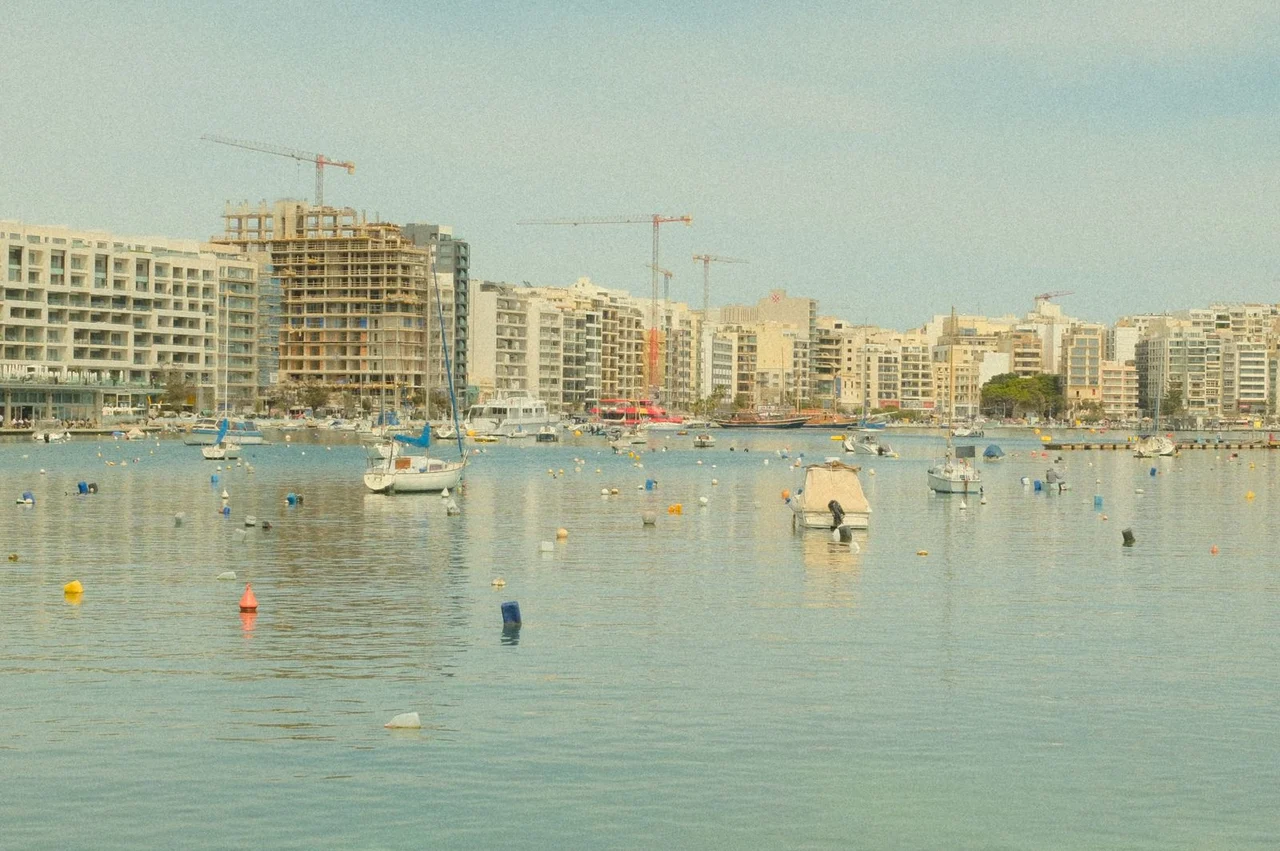
The prestigious coastal areas - Sliema, St. Julian's, Valletta, and Gzira - are the most expensive. This is the center of business and nightlife, with the sea, restaurants, and offices nearby, so demand from expats is high. Quiet and remote locations - the center of the island, towns inside Malta, and especially the island of Gozo - cost noticeably less, sometimes half.
- Sliema / St. Julian's, 1 bedroom:roughly 1,100-1,600 € a month.
- Sliema / St. Julian's, 2 bedrooms:roughly about 2,000 € a month.
- Center of the island, quiet towns, 1 bedroom:roughly 700-1,000 € a month.
- Gozo (Victoria and surroundings), 1 bedroom:roughly from 450-700 € a month.
The advice is obvious: if the work is remote and proximity to St. Julian's nightlife bars isn't essential, moving a couple of kilometers inland or to Gozo saves hundreds of euros monthly. More on buying and renting housing - in our breakdownreal estate in Malta.
Utilities, water, and electricity
A single state company is responsible for electricity and water in Malta - there's no choice of supplier, and bills come once every two months. The rates are progressive: the more you consume, the more expensive each next kilowatt-hour. This is designed to encourage saving.
On average utilities (electricity, water) run roughly to 70-120 € a month for a one-bedroom apartment. But there's an important nuance - air conditioning. Maltese summer is hot and humid, and almost no one manages without AC. Summer electricity bills can rise several times over compared to winter ones, especially if split units run constantly in the apartment.
- Electricity and water, 1-bedroom, off-season:roughly 70-120 € a month.
- Electricity and water, summer with AC:noticeably higher, sometimes 1.5-2 times.
- Home internet (fiber):roughly 25-40 € a month.
- Mobile plan:roughly from 10-20 € a month.
The resident rate is lower than the tourist one, so it's important to correctly set up the utility contract after relocating - this lowers the bills.
Groceries and shopping: why it's pricier than expected
Groceries are exactly the item where island logistics are felt most acutely. A lot is imported into Malta, and imports get built into the price. Local seasonal vegetables, fish, bread, and wine are reasonably priced, but familiar European brands, good-quality meat, and anything «not Mediterranean» cost more than on the continent.
Groceries for one person who cooks at home run roughly to 280-400 € a month. A family of four spends substantially more - roughly 700-1,000 € a month, depending on habits and the share of imported goods in the basket.
- One person, cooks at home:roughly 280-400 € a month.
- Family of 3-4:roughly 700-1,000 € a month.
Local markets, seasonal produce, and large supermarkets outside tourist zones help save money. But in stores by the sea in Sliema and St. Julian's the same goods are usually pricier - a markup for location.
Transport: free buses and paid cars
Here Malta pleasantly surprises. Since October 2022, public transport for island residents has been free - you just need to get a named Tallinja card. All regular daytime and nighttime bus routes around the island are free. Only certain services remain paid - the airport express and on-demand transport.
So for a resident who uses the buses, transport expenses approach zero - a serious plus for the family budget. The card is issued online with a passport and residence permit, and takes about two weeks to produce.
- Buses with a Tallinja card (residents):free.
- A single trip without a card:roughly 2-2.5 €.
- Own car:fuel, insurance, parking - roughly from 150-250 € a month.
The downside of buses is the schedule and rush-hour traffic jams on narrow roads. Many expats eventually buy a car or scooter, but then fuel, insurance, and the eternal parking quest in dense areas get added.
Cafes and restaurants: eating out
Malta is a Mediterranean country with a culture of unhurried dinners, and many here eat out more often than they're used to. Prices are moderate by European standards, but in tourist zones by the sea they're noticeably higher than in ordinary towns.
Coffee with a croissant at a cafe will run roughly 4-6 €. A business lunch or simple lunch - around 12-18 € per person. Dinner at a mid-range restaurant - roughly 20-35 € per person without wine. On Gozo and in quiet towns the same dishes are usually cheaper than in St. Julian's.
- Coffee and pastry:roughly 4-6 €.
- Lunch / business lunch:roughly 12-18 € per person.
- Dinner at a mid-range restaurant:roughly 20-35 € per person.
- Pizza or pasta:roughly 8-16 €.
For the budget this means a simple fork: a couple of dinners out a week easily add a few hundred euros a month. Those who cook at home save noticeably.
Healthcare: the public system and private clinics
Healthcare in Malta operates on two levels. The state system is free at the point of care for citizens and residents who pay social contributions (usually a part of the salary). The level of state healthcare on the island is considered decent, but state hospitals do have queues for scheduled appointments.
So many expats additionally take out private medical insurance - for quick access to specialists and comfort. For a number of residence permits, private insurance is even mandatory as a condition.
- Private insurance, one person:roughly from 25-85 € a month depending on coverage and age.
- Family policy:roughly 140-280 € a month.
- A private specialist visit:roughly 50-120 €.
The exact insurance cost is best calculated individually - it depends on age, health, and the set of services in the policy.
Summary table: monthly budget in Malta
Let's bring all the items together. The table shows approximate monthly expense ranges for two typical scenarios: one person in an average area and a family of 3-4. The figures are deliberately given as ranges - a real budget in Malta depends on the area, habits, and the share of imported goods in your basket.
| Expense item | One person | Family of 3-4 |
|---|---|---|
| Housing rent | 900-1500 € | 1500-2500 € |
| Utilities + internet | 120-180 € | 180-300 € |
| Groceries | 280-400 € | 700-1000 € |
| Transport (buses are free) | 0-150 € | 0-300 € |
| Cafes and restaurants | 150-350 € | 300-600 € |
| Medical insurance | 25-85 € | 140-280 € |
| Other (communication, leisure, daily life) | 150-250 € | 300-500 € |
| Roughly, total | 1800-2800 € | 3500-4500 €+ |
These are working benchmarks, not dogma. A frugal single person on Gozo can manage on less, while a family with two dinners out a week in St. Julian's and seaside rent will easily exceed the upper bound.
“When a client asks «how much does it cost to live in Malta», I always ask them to specify - where exactly and at what pace. The figure «1,800 euros» and «4,500 euros» are the same country, just different areas and habits. The most common mistake is counting only rent and groceries, forgetting about summer electricity bills and medical insurance, which is mandatory for many residence permits. I advise budgeting at the upper end of the range in the first year: while you're getting used to the island, unexpected expenses are always more frequent. And the main thing - the cost of living can't be separated from status and taxes. A properly chosen residency regime sometimes saves more than the entire rent difference between Sliema and Gozo. So it makes sense to calculate the move all at once, together: expenses, residence permit, and a tax structure for your specific income.”
Budget for one person: where to save
For one person the key lever for savings is housing. The difference between a one-bedroom apartment in Sliema and a similar one in the center of the island or on Gozo can be several hundred euros a month. The second lever is food: someone who cooks at home and uses local markets spends noticeably less on food than a daily-cafe enthusiast.
Transport costs a resident almost nothing thanks to free buses, which removes an entire expense item common in other countries. In total, a modest but comfortable month for a single resident fits roughly into 1,800-2,200 € with rent in a quiet area, and closer to 2,500-2,800 € with seaside living and regular restaurant outings.
For context: the average salary in Malta is roughly around 2,000-2,100 € a month, with median income lower. So one can live on a single local salary, but without extras - and this is where it becomes clear why many come to the island with remote income or their own business.
Family budget: children, school, larger rent
A family budget in Malta grows primarily due to housing and groceries. A two- or three-bedroom apartment in a decent area already starts from 1,500 € and up, and in prestigious locations - noticeably more. The grocery basket for a family of four easily reaches 700-1,000 € a month.
A separate item is children. State schools are free, teaching is largely in English, which eases adaptation. But many expats choose private or international schools, and then a significant tuition fee gets added, which needs to be budgeted separately.
- Family housing rent:roughly from 1,500-2,500 € a month.
- Groceries for a family:roughly 700-1,000 € a month.
- A private or international school:is calculated separately and can be significant.
In the end, a comfortable life for a family of 3-4 starts at roughly 3,500-4,500 € a month, and with a private school and seaside rent the budget goes higher. More on lifestyle and adaptation - in our article onlife in Malta.
Gozo and the center of the island: where it's cheaper
If the goal is to lower the cost of living in Malta without losing quality, it's worth considering Gozo and the quiet towns in the center of the main island. Rent there is roughly 20-50% lower than in coastal Sliema and St. Julian's, and the atmosphere is quieter and greener.
At the same time, utility rates are the same across the whole country - electricity, water, and internet on Gozo cost the same as on the main island. But eating out is usually cheaper, and life itself is calmer. The downside of Gozo is transport connectivity: getting to the main island requires a ferry, which is inconvenient for those who need to be at an office in the capital agglomeration daily.
- Rent on Gozo:roughly 20-50% cheaper than in Sliema.
- Utilities:the same, rates are nationwide.
- Restaurants:noticeably cheaper than coastal tourist zones.
For remote workers and those who value a measured pace, Gozo is one of the best ways to live on an EU island for reasonable money.
The English language and easy adaptation
A separate, non-monetary but very important factor is language. English in Malta is official alongside Maltese, and almost the entire population speaks it fluently. Documents, banks, healthcare, shops, government services - everything works in English.
For a relocating family this is a huge advantage over many other EU countries: no need to spend years learning the local language to book a doctor's appointment for a child or figure out a utility bill. Children quickly integrate into an English-speaking school environment, and adults with working English feel comfortable from day one.
This indirectly affects the budget too: fewer expenses on translators, language courses, and legal help due to language barriers. Adaptation is cheaper and faster - one of the reasons the island steadily attracts Russian-speaking residents.
: Malta isn't the cheapest in the EU
It's important not to build illusions. Malta isn't a cheap country. Yes, it's more affordable than Scandinavia, Switzerland, or major Western European capitals, but it won't be cheaper than many Eastern and Southern European countries. Island logistics, expensive imports, and high rental demand from expats keep prices at a noticeable level.
The main «budget eaters» are rent in prestigious areas and summer electricity bills due to AC. If these two items are kept under control (a quiet area plus reasonable energy use), the cost of living in Malta becomes quite predictable.
A realistic view: the island is worth its money thanks to the climate, safety, the English language, EU and Schengen membership, and convenient tax regimes for those who structure their income properly. But coming here «because it's cheap» is a mistake. People come for quality of life and EU resident status.
From expenses to status: permanent residency and taxes
Once the budget is calculated, the next question arises - on what basis to live on the island long-term and legally. And here the cost of living joins with the topic of status. The main long-term tool is the Maltese permanent residency programme (MPRP): a permanent residence permit (not citizenship) that gives the right to live on the island and move freely within Schengen. In parallel, the island is known for its tax regimes - for those whose income comes from abroad.
It's exactly the combination of «real expenses plus a properly built status and tax structure» that determines whether living in Malta will be worthwhile for you personally. This needs to be calculated individually - for your income source, family composition, and plans. Our guide onthe MPRP programme, and on tax questions - our article onMalta tax residency. Official information about the country can be checked on the government portalgov.mt.
Frequently asked
Questions people ask before deciding
01How much does it cost for one person to live in Malta per month?
Roughly from 1,800 to 2,800 € a month. The lower bound is rent in a quiet area or on Gozo, cooking at home, and free public transport. The upper bound is seaside life in Sliema or St. Julian's with regular restaurant dinners. The exact amount depends above all on the area of residence.
02What budget does a family need in Malta?
A comfortable life for a family of 3-4 starts at roughly 3,500-4,500 € a month. The main items are two- or three-bedroom rent and groceries. If children attend a private or international school, tuition needs to be added separately to this amount, and it can be significant.
03How much does housing rent cost in Malta?
A one-bedroom apartment in prestigious coastal areas (Sliema, St. Julian's) costs roughly 1,100-1,600 € a month. In the center of the island - around 700-1,000 €. On Gozo rent is noticeably lower, roughly from 450-700 € for a one-bedroom. Long-term contracts are more favorable than monthly ones.
04Is it true that transport in Malta is free?
Yes, for island residents. Since October 2022, all regular daytime and nighttime bus routes have been free with a named Tallinja card. Only certain services remain paid - for example, the airport express. The card is issued online with a passport and residence permit.
05Why are groceries expensive in Malta?
Malta is an island, and a significant share of goods is brought in by sea. Imports get built into the price, so familiar European brands and quality meat cost more than on the continent. At the same time, local seasonal vegetables, fish, bread, and wine are reasonably priced - and it's worth relying on them to save.
06How much do utilities cost in Malta?
Electricity and water cost roughly 70-120 € a month for a one-bedroom apartment, plus internet at 25-40 €. Rates are progressive. The main seasonal spike is in summer due to air conditioning: electricity bills can rise 1.5-2 times. The resident rate is lower than the tourist one.
07Is healthcare expensive in Malta?
State healthcare is free at the point of care for residents who pay social contributions, and is considered decent. Many additionally take out private insurance for quick access to specialists: roughly from 25-85 € a month per person and 140-280 € for a family. For a number of residence permits, insurance is mandatory.
08Where is it cheaper to live in Malta?
It's cheapest on the island of Gozo and in the quiet towns in the center of the main island. Rent there is roughly 20-50% lower than in coastal Sliema. Utility rates are the same nationwide, but restaurants and the overall atmosphere on Gozo are cheaper and calmer. The downside - a ferry is needed to reach the main island.
09Do you need to know Maltese to live on the island?
No. English in Malta is an official language alongside Maltese, and almost the entire population speaks it fluently. Banks, healthcare, government services, and shops work in English. This greatly eases adaptation for Russian-speaking residents and reduces hidden costs on translators and legal help.
10Is Malta a cheap country to live in?
- no. Malta is more affordable than Scandinavia, Switzerland, and major Western European capitals, but more expensive than many Eastern and Southern European countries. Island logistics and high rental demand keep prices at a noticeable level. People come to the island for quality of life and EU resident status, not for cheapness.
11What is the average salary in Malta?
The average salary is roughly around 2,000-2,100 € a month, with median income lower. One can live on a single local salary, but without extras. This is exactly why many relocate to the island with remote income, their own business, or passive income, rather than counting on local employment.
12How does the cost of living connect to resident status?
To live in Malta long-term and legally you need a status - most often this is permanent residency under the MPRP programme (permanent residency, not citizenship). In parallel, the island is known for its tax regimes for foreign income. It's worth calculating the move together: expenses, residence permit, and a tax structure for your income.
Transparency
How this material was prepared
- Author
- Igor Venc, real Estate Managing Director, BRIDGES
- Terms and costs last verified
- June 2026
- Sources
- official government authorities of the relevant country and state publications
- Methodology
- government minimum requirements are stated separately from due diligence charges, state fees, legal and banking costs
Sources and methodology
Figures, terms and timelines are checked against official sources as of June 2026. Link availability verified in August 2026. Third-party blogs and agent websites are not used as a source of programme terms.
- [1]Identità MaltaResidence, citizenship and documentsidentita.gov.mt
Methodology: tables and charts state government minimum investment requirements; due diligence charges, state fees, legal, banking and other costs are calculated separately and are not included in the minimum thresholds.
About the author
Related materials
What to read next
 ArticleMaltese citizenship by descent: through parents, grandparents and roots
 ComparisonCitizenship of Cyprus or Malta in 2026: comparison of paths to an EU passport
 AnalysisWhat is due diligence and why the Caribbean is rejecting applications
Personal programme selection is conducted by Anna Kovalevskaya, Head of Legal, BRIDGES.
Buying property in Malta: what to check
Title, encumbrances, outstanding debts and what to look for in the contract.