Residency · Egypt
Real Estate in Egypt for Russians 2026: How to Buy, Payment and Risks

Updated: June 2026·Expert reviewed
Terms and costs verified: June 2026
Contents
Sea all year round, transparent prices and a familiarity with Russian-speaking buyers have made Egypt one of the most popular destinations for Russians who want their own home by the sea. For thousands of families from Russia and the CIS, Hurghada and Sharm El Sheikh have long served as a “second home.” Yet behind this apparent simplicity lie real legal nuances: foreigners may buy subject to restrictions, ownership must be properly registered, and in 2026 paying from Russia calls for careful work with banks and verification of the source of funds. Let us walk step by step through how a Russian citizen can buy real estate in Egypt, how much it costs, how to move the money legally and which risks are worth avoiding in advance.
Why Russians buy real estate in Egypt
Egypt is a country at the crossroads of Africa and the Middle East, with its capital in Cairo, Arabic as its official language (English and Russian are widely used in tourism and business) and its own currency, the Egyptian pound (EGP). Its population is around 110 million. For a Russian buyer, it means above all a warm sea all year round, convenient flights and infrastructure geared to Russian-speaking guests.
Real estate in Egypt appeals to Russians for three reasons. First, the entry price: a studio by the sea in Hurghada can be found from $25,000, and a full one- or two-bedroom apartment in the $35,000-120,000 range. That is several times cheaper than comparable housing in the UAE or Turkey. Second, an openness to foreigners: in the resort areas Russian is heard alongside English and German, and many developers and agencies work in Russian. Third, the range of uses: you can keep the apartment for yourself, rent it out to tourists, or treat it as a first step toward a residence permit and even a passport.
That said, it is important to understand that being welcoming to buyers does not override the law. Purchases by foreigners are governed by separate rules, and you cannot close a deal “the way locals do” - there are limits, approvals and mandatory registration of title. More on this below.
Can a Russian citizen buy real estate in Egypt?
Yes, a Russian citizen can legally buy real estate in Egypt, but subject to restrictions that apply equally to all foreigners - there are no separate “sanctions” bans on Russian citizens buying property in Egypt. The basic rules are set by the law on foreign ownership of real estate (Law 230/1996) and its implementing acts.
Key restrictions in force in 2026:
- Number of properties. A foreigner may own no more than two properties for personal residence.
- Area. Each property must not exceed 4,000 sq m. For an apartment that is ample; the limit is more relevant to villas and land plots.
- Intended use. The property is bought for personal use.
- Location. Purchases on the Sinai Peninsula and in border zones are prohibited - a special regime applies there for foreigners (often only long-term leasehold).
- Resale. The property cannot be sold within the first five years without separate permission.
A separate nuance is the form of tenure by region. Hurghada and the Red Sea coast offer full freehold ownership, whereas Sharm El Sheikh and South Sinai are, as a rule, long-term leasehold rather than a purchase of freehold title. This point is critical to clarify before paying any money.
Where to buy: Hurghada, Sharm El Sheikh and other cities
Russians have developed a clear map of preferences, and each city has its own character.
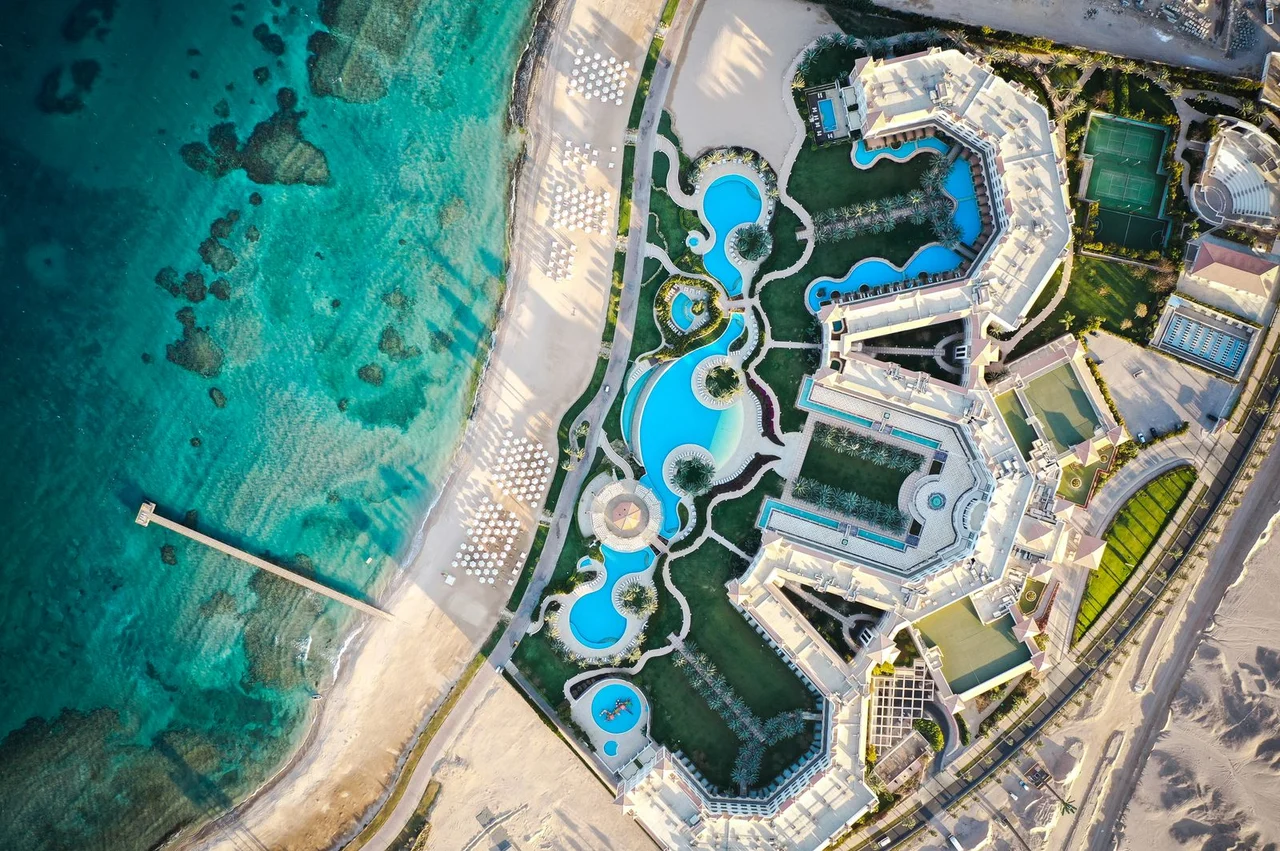
Hurghada is the most common choice. Here a foreigner can obtain full freehold ownership, there is a well-developed Russian-speaking environment, a wide range from budget studios to beachfront villas and an active tourist rental market. It is real estate in Hurghada that has effectively become the Russian standard for a “home by the sea.”
Sharm El Sheikh is more beautiful in terms of nature and diving, but legally more complex: a significant share of deals here are structured as long-term leasehold rather than a purchase of freehold, because the region belongs to Sinai. This does not make a purchase impossible, but it changes its legal nature - you need to read the contract carefully.
Cairo and New Cairo is the choice for those who come for business, study or year-round life in the capital rather than for the sea.
El Gouna, Soma Bay, El Alamein, Alexandria are premium and niche destinations for those who value the gated infrastructure of a resort town.
The advice is simple: if your goal is trouble-free ownership and clear freehold title, the safest place to start is Hurghada and the Red Sea coast.
How much an apartment in Egypt costs: budget and additional expenses
Egypt’s main advantage is the low entry threshold. Indicative Hurghada prices for 2026 look like this (they depend on proximity to the sea, the quality of the complex and the view):
- a studio - from $25,000-45,000;
- a one-bedroom apartment - roughly $35,000-80,000;
- a two-bedroom apartment - around $55,000-120,000;
- beachfront homes with a view and villas - from $150,000 and up.
Many developers offer 0% installment plans over 2-5 years, with a small down payment and no mortgage. For a buyer from Russia this is often more convenient than transferring a large sum at once, because the payments are broken up.
On top of the property price, budget for additional costs: lawyer and notary fees, registration charges and duties (which depend on the value and the city), utility connection fees in a new build, and annual service charges for the maintenance of the complex. It is sensible to keep a reserve of 5-10% above the unit price for paperwork and related payments - that way the deal will not turn into an unexpected overrun.
How a Russian citizen can buy an apartment in Egypt: step by step
A clear sequence of steps removes most of the anxiety. Here is how a Russian citizen can buy an apartment in Egypt by doing everything by the book.
- Determine your budget and region. Decide whether you need full freehold (then Hurghada and the Red Sea) or are prepared for leasehold in Sinai.
- Check the developer and the property. Study the developer’s reputation, the status of permits, the building’s completion stage and whether the property has a clean legal status.
- Reserve the unit. Pay a deposit and lock in the price by signing a preliminary agreement.
- Sign the purchase agreement. The document is certified by a notary; for a foreigner it is mandatory to confirm that the money came from abroad in foreign currency.
- Obtain government approval. A foreigner’s transaction goes through an approval process (Council of Ministers / security clearance), which usually takes about two months.
- Register the title (green contract). The final and most important step - entering the property into the state land registry.
Do not sign anything or pay any large sums without independent legal review. The contract text is most often in Arabic and English - you need a specialist who reads it in your interests, not the seller’s.
Processing and registration: the green contract and Tabu
The most common mistake Russians make is to stop at the purchase agreement and fail to carry the deal through to registration of title. A receipt or a notarized contract does not, in itself, make you a full owner in the eyes of the state. Full title is confirmed only by registration in the unified state land registry.
In Egypt this registration is called the “green contract” - historically the document was printed on green paper. It is the highest and most reliable form of title: it proves that the property is officially registered in your name. The act of registering in the land registry itself (colloquially known as “Tabu”) is a mandatory step.
What to watch out for:
- after notarization, the contract must be registered in the local land registry within a set short time frame;
- the green contract is specifically the registration of title, not merely a contract with the developer, so insist that the deal be carried through to this stage;
- for a foreigner, a package of documents and confirmation of the foreign-currency origin of the money are required;
- in a new build, registration is possible only after the building is handed over - factor this into your timeline.
If you are offered to “skip registration for now and sort it out later,” that is a classic risk. Without a green contract, what you own is not a right but a promise.
Paying for real estate in Egypt: sanctions and transfers from Russia
Here honesty matters more than nice-sounding promises. Egypt itself has not imposed any restrictions on Russians buying property. The difficulty lies elsewhere: in 2026, bank transfers from Russia are complicated by sanctions and heightened compliance on the part of correspondent banks. The disconnection of a number of Russian banks from SWIFT and the expansion of restrictions make a direct transfer of a large sum from Russia unpredictable - the payment may be delayed or returned.
An additional factor is Egypt’s own requirement. For a foreign buyer, the authorities require confirmation that the money came from abroad in foreign currency through a bank. In other words, the payment must be transparent and documented, not “cash out of a suitcase.”
What this means in practice: you need to prepare for the deal in advance, gather documents on the origin of the funds (source of income, statements, contracts) and choose a legal, traceable payment channel. The bank - both in Egypt and in any intermediary country - will check the source of funds and the purpose of the payment.
As a matter of principle, we neither describe nor use sanctions-circumvention schemes - they are illegal and dangerous for the buyer (frozen money, a failed transaction, problems on any future sale). What follows is about legal options.
How to make the payment legally: lawful channels
The logic of a lawful payment rests on a single principle: the money must have a clear origin and reach the seller by a traceable route. Workable, lawful options in 2026:
- Installment plan from the developer. The most convenient route for new builds: payments are spread over 2-5 years, often at 0%. This reduces the one-off transfer burden and simplifies compliance.
- Transfer through a non-sanctioned bank. If you have a foreign-currency account with a bank not subject to restrictions, an international transfer is possible - with full verification of the source of funds.
- An account in a third country. Many use an account in Kazakhstan, Georgia, Turkey or the UAE as an intermediary: funds are moved there legally, converted into currency and transferred to the seller. It is important that every link in the chain is documented.
In any scenario, prepare a “paper trail”: the purchase agreement, invoices from the developer, statements and proof of source of income. It is precisely this package that lets banks clear the payment and lets you register title with peace of mind and, if needed, apply for a residence permit. Specialists can help you choose a correct and lawful payment structure for your situation BRIDGES GLOBAL - without risky workaround schemes.
“The main mistake buyers from Russia make is to treat an Egyptian deal as a purchase ‘on a handshake by the sea.’ People hand over the money, get the keys and consider the matter closed. Then it turns out the title was never registered: no green contract means that in the eyes of the state you own not a right but an intention. I always insist on carrying the deal through to entry in the state registry, even if the developer assures you it will ‘be sorted out later.’ The second painful point is payment. In 2026 a direct transfer from Russia is complicated by sanctions and compliance, while Egypt itself requires confirmation that the money came from abroad in foreign currency. This is solved lawfully: a developer installment plan, a transfer through a non-sanctioned bank, an account in a third country - but always with a transparent source of funds and documents. I never propose sanctions-circumvention schemes: the cost of a mistake is frozen money and a collapsed deal. And third, the region: in Sinai a ‘purchase’ often turns out to be a long-term lease, whereas in Hurghada and on the Red Sea full freehold ownership is available. When these three points are under control, Egypt becomes one of the most comfortable entry points into overseas real estate for a family from Russia.”
An Egyptian residence permit when buying property
Buying property can give you not only square meters but also a legal residence status. Egypt has a mechanism for obtaining a residence permit for investment in real estate, with three thresholds (indicative, based on current rules):
- from $50,000 - a 1-year residence permit with the right to renew;
- from $100,000 - a 3-year residence permit with renewal;
- from $200,000 - a 5-year residence permit with renewal.
The status is renewed for as long as you retain ownership of the property. The residence permit usually extends to immediate family - a spouse and minor children - for the same period.
It is important to understand that a residence permit is not granted automatically by virtue of owning an apartment. It is a separate procedure within Egypt’s Ministry of Interior - you must prove ownership (the green contract), that the amount meets the threshold, and a transparent payment trail. That is why correct structuring of the deal and lawful payment directly affect whether you will be granted residency. For more on the status, see our article on an Egyptian residence permit.
From real estate to Egyptian citizenship
For those looking beyond a residence permit, real estate can become part of the path to a passport. Egypt has a separate citizenship-by-investment program (a 2019/2020 law), and one of its routes is the purchase of real estate from roughly $300,000, holding the property for about five years.
Here it is important not to confuse two different levels. Buying an apartment for $40,000-60,000 in Hurghada gives you a home and, if the threshold is met, a residence permit - but not a passport. Citizenship is a separate, more expensive program with its own set of conditions, source-of-funds checks (due diligence), fees and a processing time of about six months or more.
To be about what an Egyptian passport offers: it is an affordable second passport of a non-EU country, without direct visa-free entry to the Schengen area or the United States. But Egypt is a party to the E-2 treaty with the US, which opens access to the American E-2 investor visa (a visa, not a green card). Egypt allows dual citizenship, and Russia merely requires that you notify the Ministry of Interior of a second passport.
If this particular scenario is of interest, see our detailed guides: Egyptian citizenship for Russians and Egyptian citizenship by investment, as well as the page on the Egyptian citizenship-by-investment program.
Taxes and the cost of maintaining property in Egypt
The tax burden in Egypt is moderate, but it is best to know about it in advance. Income tax is progressive, and value-added tax (VAT) is around 14%. When buying and owning property you will encounter registration charges and duties, as well as annual payments.
What to budget for as an owner:
- registration charges and duties on completion (depending on the value and the city);
- an annual property tax - for most budget apartments it is small, and inexpensive properties often fall under the tax-free threshold;
- service charges for the complex (grounds maintenance, pool, security);
- utility bills and management costs if you rent the property out.
Let us stress a point of principle separately: citizenship or a residence permit is not the same as tax residency. Obtaining status in Egypt does not, in itself, automatically make you a tax resident of the country, nor does it release you from obligations in Russia. Tax residency is determined by rules (above all by time spent in the country) and should be planned separately, if necessary with a tax adviser.
Table: the stages of the deal and what to watch for
To keep the whole logic of the purchase in view, we have gathered the key stages and checkpoints into a single table.
| Stage | What to watch for |
|---|---|
| Choice of region | Hurghada and the Red Sea - full freehold; Sharm/Sinai - more often leasehold rather than a purchase |
| Developer check | Reputation, permits, building completion, a clean legal status for the property |
| Limits for foreigners | No more than 2 properties, up to 4,000 sq m, Sinai and border zones prohibited |
| Contract | Notarization; independent legal review of the text before signing |
| Payment | A lawful channel, a transparent source of funds, confirmation of a foreign-currency transfer from abroad |
| Government approval | Approval of a foreigner’s transaction (approximately ~2 months) |
| Registration of title | The green contract - entry into the state land registry (mandatory) |
| Status and taxes | Meeting the residence-permit threshold; accounting for fees, maintenance and tax residency |
If at each stage you have a clear answer to the “what to watch for” column, the deal will almost certainly go smoothly.
Risks and how to avoid them
Most problems for buyers from Russia stem not from anything exotic but from typical mistakes that are easy to avoid with preparation.
- Unfinished construction and a problem developer. The risk of buying an apartment in a building that is never completed or handed over with a long delay. The solution is to check the developer’s reputation, its track record of completed projects and its permit documentation; for new builds, an installment plan with payments tied to construction milestones.
- Failure to register title. A deal “on a contract without a green contract” leaves you exposed. The solution is to carry the purchase through to registration in the state registry.
- Confusion between ownership and lease. In Sinai a “purchase” often turns out to be a long-term lease. The solution is to clarify the legal form in advance for the specific region and property.
- Payment problems. A transfer may be blocked because of sanctions and compliance. The solution is a lawful channel, documents on the source of funds gathered in advance, an installment plan or an account in a third country.
- A contract that is not in your favor. A text in Arabic/English drafted in the seller’s interest. The solution is an independent lawyer who reads the contract on your behalf.
The general principle: not a single large payment without checking the property, the seller and the legal structure.
How we vet the deal and support the buyer
Buying property in a foreign country is not just choosing an apartment but also dealing with the law, banks and timelines. Here it helps to rely on people who have walked this path dozens of times and know where buyers from Russia usually stumble.
Our task is to ensure that you receive genuine title, carried through to registration, rather than a “promise of an apartment,” and that the money reaches the seller by a lawful and transparent route. We vet the developer and the property, read the contract in your interests, help build a correct payment structure without risky schemes, carry the deal through to the green contract and, if needed, prepare residence-permit documents or point out the path to citizenship.
If you are considering real estate in Egypt - for life by the sea, as an investment or as a step toward residency - discuss your situation with BRIDGES GLOBAL. We will go over the budget, the region, a lawful payment method and the right status. Our overview article on real estate in Egypt.
Frequently asked
Questions people ask before deciding
01Can a Russian citizen buy real estate in Egypt in 2026?
Yes. Russian citizens buy real estate in Egypt on the same terms as all foreigners - there are no separate sanctions bans on the purchase itself. Restrictions apply: no more than 2 properties for personal use, up to 4,000 sq m each, and a prohibition on Sinai and border zones. The deal must be carried through to registration of title (the green contract).
02How much does an apartment in Hurghada cost?
Indicatively for 2026, studios cost from $25,000-45,000, one-bedroom apartments $35,000-80,000, and two-bedroom ones $55,000-120,000. Beachfront homes with a view and villas start from $150,000. The price depends on proximity to the sea, the quality of the complex and the view.
03How does real estate in Hurghada differ from Sharm El Sheikh for a buyer?
In Hurghada and along the Red Sea coast a foreigner can obtain full freehold ownership. In Sharm El Sheikh and South Sinai deals are more often structured as long-term leasehold rather than a purchase of freehold, because the region belongs to Sinai. The legal form must be clarified before payment.
04What is a green contract and why is it needed?
The green contract is the registration of ownership in Egypt’s unified state land registry, the highest and most reliable form of title. It proves that the property is officially and indisputably registered in your name. Without it, what you effectively own is a promise rather than a right.
05How can you legally pay for real estate in Egypt from Russia under sanctions?
Legal options: a developer installment plan (often 0% over 2-5 years), a transfer through a non-sanctioned bank, or an account in a third country (Kazakhstan, Georgia, Turkey, the UAE) as an intermediary step. In any case, a transparent source of funds and documents are required. Sanctions-circumvention schemes are illegal and dangerous - they must not be used.
06Why does Egypt require that the money come from abroad in foreign currency?
For a foreign buyer, the authorities require confirmation that the funds arrived from abroad in foreign currency through a bank. This is part of the oversight and protection of the deal. The payment must therefore be transparent and documented, whereas cash settlements “on the side” create a risk of refusal to register title.
07Does buying property grant an Egyptian residence permit?
It can. The thresholds are indicatively: from $50,000 - a 1-year residence permit, from $100,000 - 3 years, from $200,000 - 5 years, with renewal as long as ownership is retained. The permit usually covers a spouse and minor children. It is a separate Ministry of Interior procedure: you must prove title, the amount and the payment trail.
08Can real estate lead to Egyptian citizenship?
Yes, through a separate citizenship-by-investment program: one route is the purchase of real estate from roughly $300,000, held for about 5 years. This is more expensive than an ordinary apartment purchase and comes with source-of-funds checks, fees and a processing time of about six months.
09How many properties can a foreigner buy and is there an area limit?
A foreigner may own no more than two properties for personal residence, each with an area of up to 4,000 sq m. For an apartment this area limit is more than generous; it matters more for villas and land plots. Purchases in Sinai and in border zones are restricted for foreigners.
10What taxes and costs does a property owner in Egypt face?
Besides the price - registration charges and duties on completion, an annual property tax (usually small for budget apartments, often with a tax-free threshold), service charges for the complex and utility bills. VAT in the country is around 14%. It is sensible to keep a reserve of 5-10% above the price for paperwork.
11Does obtaining a residence permit or citizenship make me a tax resident of Egypt?
No. Citizenship and a residence permit are not the same as tax residency. Status alone does not automatically make you a tax resident of Egypt, nor does it cancel your obligations in Russia. Residency is determined by rules, above all by time spent in the country, and is planned separately, if necessary with an adviser.
12What are the main risks in a purchase and how do you avoid them?
The main risks: unfinished construction and an unscrupulous developer, failure to register title, confusion between ownership and lease in Sinai, a blocked payment because of sanctions, and a contract that is not in your favor. The solutions: vetting the developer and the property, a mandatory green contract, clarifying the legal form, a lawful payment channel and an independent lawyer who reads the contract on your behalf.
Transparency
How this material was prepared
- Author
- Igor Venc, real Estate Managing Director, BRIDGES
- Terms and costs last verified
- June 2026
- Sources
- official government authorities of the relevant country and state publications
- Methodology
- government minimum requirements are stated separately from due diligence charges, state fees, legal and banking costs
Sources and methodology
Figures, terms and timelines are checked against official sources as of June 2026. Link availability verified in August 2026. Third-party blogs and agent websites are not used as a source of programme terms.
- [1]General Authority for Investment and Free Zones (GAFI)Investment grounds and procedurewww.gafi.gov.eg/English/Pages/default.aspx
Methodology: tables and charts state government minimum investment requirements; due diligence charges, state fees, legal, banking and other costs are calculated separately and are not included in the minimum thresholds.
About the author
Related materials
What to read next
 ArticleEgyptian Citizenship through Investment in 2026: 4 Paths, Amounts, Timelines
 ComparisonAntigua and Barbuda or Grenada: Family Passport for Large Families in 2026
 AnalysisWhat is due diligence and why the Caribbean is rejecting applications
Personal programme selection is conducted by Anna Kovalevskaya, Head of Legal, BRIDGES.
Buying property in Egypt: what to check
Title, encumbrances, outstanding debts and what to look for in the contract.