Residency · Cyprus
Education and schools in Cyprus in 2026: international, private, public, universities
Updated: June 2026·12 min read·Expert reviewed
Terms and costs verified: June 2026
Contents
When a family moves to Cyprus, the issue of school for the child is often more important than the issue of real estate or status. There are three parallel tracks on the island: free public schools in Greek, private and international schools with the English program GCSE, A-Level and IB, as well as schools with the Russian program. Plus a developed system of universities with instruction in English and diplomas recognized in the EU. Let’s break it down piece by piece: where is which language, how much does tuition cost per year, in which cities are international schools concentrated, and how all this relates to resident status.
Three tracks of education in Cyprus: what to choose for a family
The first thing a parent who is just looking at the island should understand is that there is no single “school for foreigners” in Cyprus. There are three independent educational tracks, and the choice between them is determined by the budget, the language, and the environment in which the child will grow up.
- Public schools - free, training in Greek according to a unified national program. Suitable for families who are moving for a long time and want the child to fully integrate into the local environment.
- Private and international schools - paid, most often with an English program (GCSE, A-Level, IGCSE, IB). The choice of most expats planning to enroll in universities in the UK, EU or US.
- Schools with Russian curriculum - separate private schools where education follows the Russian curriculum with access to international exams in high school.
Below we analyze each track in detail - with language, cost and nuances. We have collected the general logic of moving with children on the page about Cyprus for families with children.
Public schools: free, but in Greek
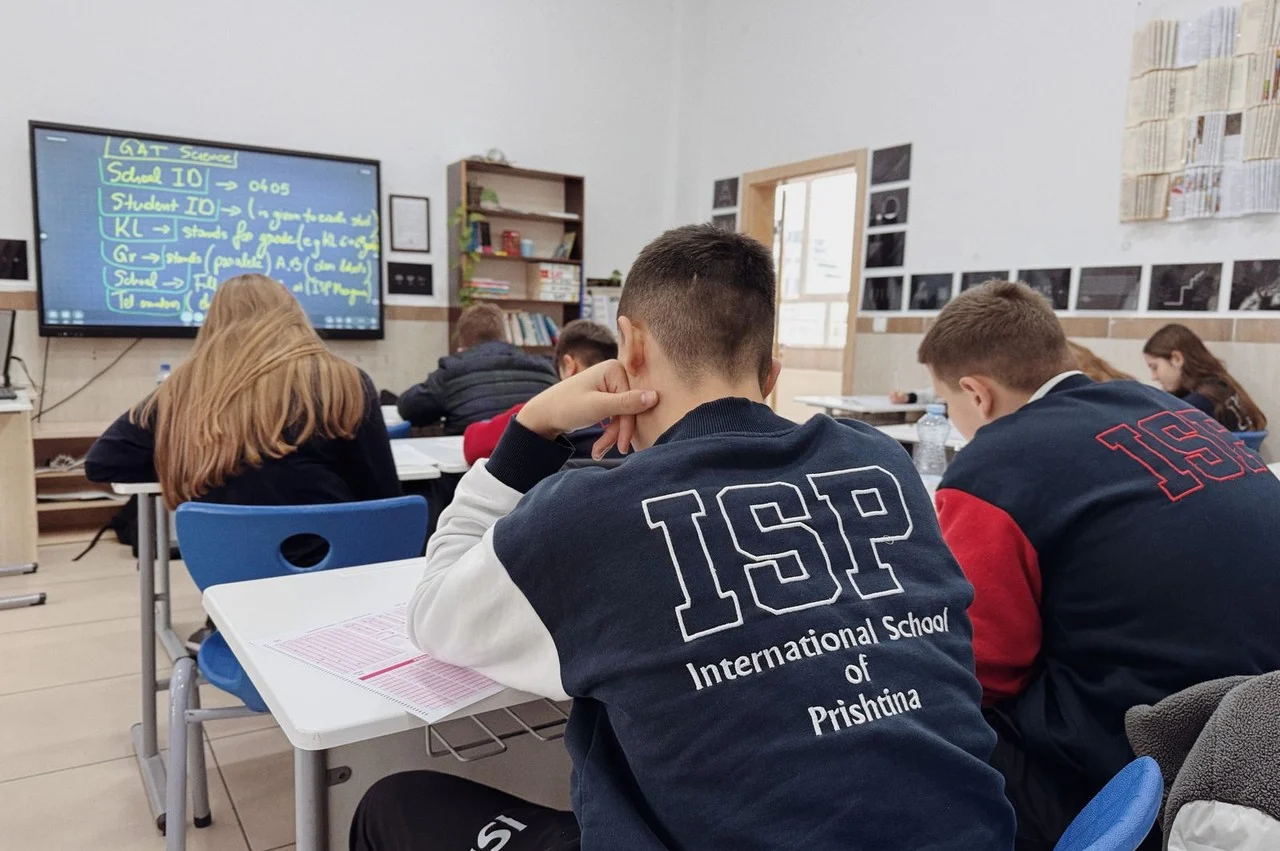
Public school in Cyprus is a free education according to a unified national program, available not only to citizens, but also to children of foreign residents. It sounds attractive, but there is a fundamental point: all training is conducted in Greek. For a child who does not know Greek, the first year becomes a serious challenge.
What is important to know about this track:
- Completely free. In primary school, the state provides students with basic educational materials - notebooks, atlases, and office supplies.
- Language adaptation. Many schools have adaptation programs for foreign children: additional Greek lessons, integration support. But background work - tutors, homework - the family usually has to organize itself.
- Total immersion. After a year or two, the child, as a rule, speaks Greek fluently, and this is a huge plus for those who connect the future with the island.
A public school is a choice for a family who is moving to Cyprus seriously and for a long time. But if the child is over ten or twelve years old, it can be difficult to adapt to a foreign language, and then it is more logical to look at the English program.
Private and international schools: English program
This is the most popular trek among families who move to the island for investment or work reasons. Private international schools in Cyprus operate on the British model: primary school, secondary school, then IGCSE and A-Level, or the International Baccalaureate (IB) program. Education is in English, and it is much easier for a child from any country to enter such an environment than a Greek state school.
Key Features:
- Programs. Most often these are Cambridge and Pearson Edexcel (IGCSE, AS, A-Level), some schools have the IB program. Many schools also issue the local Apolitirion certificate in parallel with British certificates.
- Language. The main language is English, Greek is taught as a subject. This removes the language barrier at the start.
- Admission to universities. A-Level and IB are internationally recognized certificates with which graduates enter universities in the UK, continental Europe and the USA.
The level in strong schools is high and corresponds to the European standard. At the same time, you should keep in mind: getting a place in a sought-after school is not always easy - more on this below.
Geography: where are international schools concentrated?
International schools are unevenly distributed across the island, and this is something to consider first when choosing a city to move to. Concentration directly follows where large expat communities live.
- Limassol - the main hub of international education. It has the largest expat community, the island's business center, and the largest selection of private and international schools with an English curriculum.
- Pathos - the second most saturated zone. Large English- and Russian-speaking community, several well-known international schools, including schools with training according to the British curriculum.
- Nicosia - the capital, where both strong private schools and the country's largest universities operate.
- Larnaca - the choice is more modest, but there are also international and private schools, and the proximity to the airport is convenient for families who fly frequently.
If a school is critical for a family, it is wise to first choose it, and only then select housing within walking or short driving distance. Read more about life in the main expat city in the article about life in Limassol.
Schools with Russian curriculum
For Russian-speaking families in Cyprus there is a separate track - schools operating according to the Russian educational program. There are especially many of them in Limassol, where a large Russian-speaking community has historically developed.
What is important to know:
- Russian program and certificate. Training is carried out according to Russian state curricula, graduates receive a Russian certificate, which is convenient for families who do not exclude returning or enrolling in universities in the Russian Federation.
- Exit to international exams. In high school, many schools provide preparation for IGCSE, A-Level and IELTS - that is, the child is not “locked” into one system.
- Linguistic and cultural environment. Russian-speaking teachers, preservation of traditions and holidays, small classes. For a child who is having a hard time moving, this is a gentle adaptation option.
- Preschool level. A number of schools operate Russian-language kindergartens and centers, so you can build a continuous trajectory from an early age.
The Russian school is a compromise between preserving the native program and gradually achieving international certificates. Suitable for those who have not yet decided on the final country for university.
How much does tuition cost: type of school, language and price
Budget is one of the deciding factors when choosing a track. Let's collect the guidelines in a table. Let's make a reservation right away: the exact cost depends on the specific school, city and class (in high school and Sixth Form it is more expensive than in primary school), and the IB program in top schools often adds a separate fee. The figures below are indicative annual ranges for 2026.
| School type | Language of instruction | Approximate cost per year |
|---|---|---|
| Public school | Greek | Free for residents |
| Private/international (beginner) | English | approximately from 6,000 € |
| Private/international (secondary, A-Level) | English | approximately 8,000-15,000 € |
| IB program (supplement) | English | can add several thousand € per year |
| School with Russian program | Russian (+ English) | depends on the school, to be determined individually |
One-time fees are almost always added to the tuition fee: registration fee, entrance fee, uniform, textbooks, meals, transportation. Therefore, the first year's budget is usually higher than subsequent years. These expenses should be included along with the general expenses of the family - a detailed analysis is in the material about cost of living in Cyprus.
Education and resident status: who can teach children and how
Children's access to schools and universities in Cyprus is directly related to family status. Here it is important to break down how this works in practice, because it is at the intersection of education and migration that parents most often have questions.
- Resident children study on the island. Dependent children of residence permit and permanent residence permit holders have the right to attend Cypriot schools - both public and private.
- Permanent residence according to Regulation 6.2. This lifetime EU resident status covers dependent children up to 25 years of age, which is convenient for families with schoolchildren and students. Status details are in the guide about Cyprus permanent residence.
- Public school - free for residents. Having legal status gives you the right to free public education.
- Private schools require almost no status. Enrolling in a private school is a matter of a contract with the school and payment, but for the residence itself the family still needs a legal basis.
That is, it is logical to build a move “from the family”: first the status that covers children of the required age, then the choice of school. How it works in complex - in the material about relocation to Cyprus.
Higher education: public and private universities
Cyprus is not only schools, but also a developed system of higher education, largely focused on foreign students. Universities are divided into public and private.
- State. University of Cyprus (UCY) is a flagship with an emphasis on research and scientific recognition in the European space. Cyprus University of Technology (CUT) is a technical university in Limassol.
- Private. University of Nicosia (UNIC) - the largest private university in the country, European University Cyprus, Frederick University, as well as UCLan Cyprus - the Cyprus campus of the British University of Central Lancashire.
Strengths of Cypriot higher education:
- English language. Studying in English is very common, especially in private universities and international programs.
- Recognition in the EU. Cyprus is in the Bologna system, diplomas are accompanied by a European Diploma Supplement and are recognized in the European Union.
- Popular directions. IT, business and management, law, medicine, engineering, tourism.
For a family with a teenager, this means that it is possible to build a continuous “school-university” trajectory without leaving the island.
Cost and admission to universities
The cost of higher education in Cyprus greatly depends on the university and program, so specific figures should always be checked with the current tariffs of the chosen university. General guidelines for 2026 look like this:
- Private universities. Annual undergraduate fees vary widely depending on the program; Some expensive specialties (for example, medicine) cost several times higher than the humanities.
- Scholarships. Large private universities offer merit scholarships that partially cover fees for strong applicants - this significantly changes the final budget.
- Admission. English-language programs usually require proof of English level (for example, IELTS) and a certificate - British A-Level, IB or equivalent.
A separate point is for students from countries outside the EU: they have their own procedure for obtaining a student residence permit with confirmation of financial solvency. For children of residents who already live on the island with their status, this issue is usually removed. Expenses for student life should be included in the general family budget - see. cost of living in Cyprus.
Language question: how to choose a track for a child
The main practical question that torments parents is what language to teach their child. There is no universal answer, but there is a logic by which to make a decision.
- Child's age. Until the age of 8-9, children master a new language almost without loss, so for younger ones, a Greek state school is a real option with complete immersion. The older the child, the higher the cost of switching to an unfamiliar language in the midst of school.
- Horizon of plans. If a family is moving permanently and sees a child's future on the island, Greek and local integration are a strong investment. If your horizon is a university in the UK or EU, an English program with A-Level or IB is more logical.
- Emotional adaptation. For a child who is having a hard time moving, a Russian school or an English international school, where language stress is lower, can be a soft transition.
Often a combined strategy turns out to be reasonable: the child goes to an English or Russian school, but at the same time learns Greek - both for everyday life and for the future. This takes the stress out of the start and keeps the doors open.
Registration for school: why places need to be booked in advance
Honesty is important here, which parents do not always hear from realtors: places in popular international schools are limited. Strong schools in Limassol and Paphos enroll classes in advance, and coming in August with the expectation of “we will identify a child by September” is a risky strategy.
What does this mean in practice:
- It is worth submitting documents much in advance. Preferably six months to a year before the start of the school year, especially when it comes to popular classes and programs.
- Waiting lists are possible. In popular schools there are waiting lists, and a place may not become available immediately.
- Entry requirements. Some schools conduct interviews or tests, look at previous performance and level of English.
At the same time, the general level of education on the island is high and corresponds to the European standard - the problem is not in quality, but in the number of places in specific popular schools. Therefore, when planning to move with children, the school issue should be resolved simultaneously with status and housing, and not left for later.
Expert's opinion: how not to make a mistake with your choice
Over the years of working with moving families, a set of typical mistakes has developed that are costly - not in money, but in time lost for the child. Let's list them so you can get around them.
- Putting off school until the last minute. By the time housing is found, there may no longer be places in a good school. The school should be included in the plan at the same time as the status.
- Underestimate the language barrier in public schools. Free does not mean easy: for a teenager without Greek, the first year is difficult, and you cannot do without a tutor.
- Only consider tuition fees. Registration fees, uniforms, meals, transportation - the first year’s budget is noticeably higher than the “price on the website.”
- Ignore link with status. The child’s age must fit within the parent’s status, otherwise, after reaching adulthood, questions will arise regarding the basis for residence.
Our recommendation is to look at education, status and real estate as a single construct. Then the move takes place without any rush, and the child begins the school year calmly.
Not sure which country and status to choose?
We will compare suitable residency programs on budget, timelines and stay requirements - with a full cost calculation for your family.
Free of charge, we reply right away, no obligation.
Bottom line: which track is right for your family?
Cyprus gives a family a rare luxury - a real choice of educational path, and not just one uncontested path. Public schools are free and provide full immersion in the language and environment, but require the child to adapt to Greek. Private and international schools remove the language barrier and lead to internationally recognized A-Level and IB - for a fee of approximately six to fifteen thousand euros per year. Schools with a Russian program remain a soft bridge for Russian-speaking families. And a developed system of universities with instruction in English and EU-level diplomas allows you to bring your child to a diploma without leaving the island.
The optimal strategy for most families is to first determine the status that covers children of the required age, then choose a school and a district and housing for it. To see the whole picture of moving, start with materials about Cyprus for familiesandrelocation to Cyprus. You should always check the latest information on the educational system on the official portal Government of Cyprus (gov.cy).
- Cypriot permanent residence vs Cypriot citizenship: what to choose
- Cyprus Permanent Residency Law: Regulation 6(2)
- Northern Cyprus Citizenship (TRNC): what yes
- How much does Cyprus citizenship cost
- Cyprus permanent residence or Turkish residence permit: what to choose
- Investing in Cyprus real estate: guide
Frequently asked
Questions people ask before deciding
01What language is taught in public schools in Cyprus?
In public schools, education is conducted in Greek according to a unified national curriculum. For a foreign child, this means the need for language adaptation. Many schools have support programs and additional Greek lessons, but families usually have to arrange tutors themselves. But in a year or two, children master the language fluently.
02How much does it cost to study at a private international school in Cyprus in 2026?
The cost approximately starts from about 6,000 € per year in primary school and goes up to 8,000-15,000 € in middle and high school, depending on the school, city and class. The IB program at top schools can add several thousand euros per year. One-time fees are almost always added to the fee: registration, uniforms, textbooks, meals, transportation.
03Are public schools free for children of foreign residents?
Yes. Public schooling in Cyprus is free not only for citizens, but also for children of resident foreigners with legal status. In primary school, the state additionally provides students with basic educational materials. The main condition is a legal basis for the family to live on the island.
04Which cities in Cyprus have the most international schools?
Limassol has the most international schools and is the main hub for the expat community and business. The second most populous zone is Paphos with large English-speaking and Russian-speaking communities. Nicosia has strong private schools and the largest universities; in Larnaca the choice is more modest, but there are also schools.
05What programs do private schools in Cyprus offer?
Most often this is the British model: IGCSE, AS and A-Level using the Cambridge and Pearson Edexcel systems, and some schools have the International Baccalaureate (IB) program. Many schools simultaneously issue the local “Apolitirion” certificate. Training is in English, Greek is taught as a subject.
06Are there schools with a Russian curriculum in Cyprus?
Yes, especially in Limassol, where there is a large Russian-speaking community. These schools provide training according to the Russian curriculum, graduates receive a Russian certificate, and in high school there is preparation for international exams - IGCSE, A-Level, IELTS. A number of schools also operate Russian-language kindergartens.
07Are diplomas from Cypriot universities recognized in the European Union?
Yes. Cyprus is part of the Bologna system, diplomas are accompanied by a European Diploma Supplement and are recognized in the EU. This applies to both public universities (University of Cyprus, Cyprus University of Technology) and private ones (University of Nicosia, European University Cyprus, Frederick, UCLan Cyprus).
08Is it possible to study at universities in Cyprus in English?
Yes, studying in English is very common, especially in private universities and international programs. This is convenient for international students. Admission to English-language programs usually requires proof of English proficiency, such as IELTS, and an A-Level, IB or equivalent.
09Until what age can a child live and study in Cyprus based on the status of the parents?
Cyprus permanent residence under Regulation 6.2 - lifelong EU resident status - covers dependent children up to 25 years of age. This is convenient for families with schoolchildren and students: the child studies at school and then at a university on the island, remaining within the framework of family status. After this age, the foundation for residence must be built separately.
10Which education track to choose if the child is a teenager?
The older the child, the harder it is for him to switch to unfamiliar Greek in the midst of his studies. For teenagers, as a rule, it is more logical to go to an English international school with A-Level or IB or a school with a Russian program - language stress is lower there. A Greek public school with full immersion is more comfortable for younger children.
11Do I need to reserve a place at the school in advance?
Yes, and this is important. Places in popular international schools in Limassol and Paphos are limited, classes are filled in advance. Documents should be submitted six months to a year before the start of the school year; waiting lists are possible. Some schools conduct interviews or testing. It is better to solve the school issue simultaneously with status and housing.
12What is the connection between choosing a school and moving to Cyprus?
Directly. Children's access to schools depends on the family's status: dependent children of residents study on the island, and permanent residence under Regulation 6.2 covers them until they are 25 years old. A reasonable sequence is first a status that covers children of the required age, then the choice of a school, and then the area and housing for it. This way the move takes place without any downtime in your studies.
Transparency
How this material was prepared
- Author
- Viktoria Lebedeva, managing Director, Private Clients, BRIDGES
- Terms and costs last verified
- June 2026
- Sources
- official government authorities of the relevant country and state publications
- Methodology
- government minimum requirements are stated separately from due diligence charges, state fees, legal and banking costs
Sources and methodology
Figures, terms and timelines are checked against official sources as of June 2026. Link availability verified in August 2026. Third-party blogs and agent websites are not used as a source of programme terms.
- [1]Ministry of Interior of the Republic of CyprusResidence conditions and statuses for foreign nationalswww.moi.gov.cy/moi/moi.nsf/index_en/index_en
- [2]Cyprus Tax DepartmentTax residency and rateswww.mof.gov.cy/mof/tax/taxdep.nsf/index_en/index_en
Methodology: tables and charts state government minimum investment requirements; due diligence charges, state fees, legal, banking and other costs are calculated separately and are not included in the minimum thresholds.
About the author
Related materials
What to read next
 ArticleCyprus citizenship by descent: right of blood in 2026
 ComparisonNorthern and Southern Cyprus: Key Differences and Where to Buy Real Estate in 2026
 AnalysisWhat is due diligence and why the Caribbean is rejecting applications
Personal programme selection is conducted by Anna Kovalevskaya, Head of Legal, BRIDGES.
Residency in Cyprus: timelines and requirements
Grounds, document list, presence requirements and what is needed for renewal.