Residency · Cyprus
Safety in Cyprus in 2026: crime rates and life with family

Updated: June 2026·12 min read·Expert reviewed
Terms and costs verified: June 2026
Contents
When a family chooses a country to move to, safety tops the list above climate and taxes. For years, Cyprus has been one of the most peaceful places in Europe: violent crime is rare here, you can walk peacefully in the evening, and children are allowed into the yard without worry. But a conversation is not a postcard. There are seasonal pickpockets in tourist areas, aggressive driving, and a separate, purely financial risk for real estate buyers. We'll take a look at what's really safe on the island, where you should keep your eyes peeled, and how to protect your family and capital.
The big picture: why Cyprus is considered a calm island
If you remove the marketing slogans and look at everyday reality, Cyprus leaves the feeling of one of the calmest countries in Europe. Serious, violent crime here is a rare phenomenon, which is written about as an event, and not as a background to life. Street crime is low, city centers are lively and illuminated in the evening, and Cypriots themselves are friendly and non-aggressive towards foreigners.
This atmosphere consists of several things at once. The island is small, the communities are close, people know each other - the anonymity in which street crime flourishes in large cities is simply less here. Cyprus is part of the European Union, and the police and emergency services operate according to European standards. The economy is based on tourism, finance and IT; there are no depressed industrial outskirts with high crime.
It is important to understand the other side of calm: relaxation does not mean that you can completely forget about basic caution. Minor everyday risks do not disappear anywhere - we will talk about them below. But the background feeling for a family used to a large city, whether London, Moscow or Almaty, is usually the same: in Cyprus one can breathe more calmly. A detailed analysis of everyday life is in the material about moving and living in Cyprus.
Crime rate: what the numbers show and what's behind them
Dry data confirms everyday sensations. The murder rate in Cyprus is one of the lowest in Europe, measured as a fraction of a case per hundred thousand population. Violent attacks, violent robberies, and armed robberies are all unusual and rare on the island. In terms of overall personal safety indicators, Cyprus is confidently ahead of many large European countries.
To make the picture fair, it is important not to reduce security to one number from an aggregator. Behind the low numbers is a specific crime structure:
- Violent crimes - are rare, and in the overwhelming majority these are domestic conflicts within a familiar circle, and not attacks on random passers-by.
- Property crimes - the bulk of what is registered: petty thefts, occasional burglaries, infrequent thefts.
- Crime against tourists and visitors - mainly pickpocketing and theft of things left unattended.
In other words, the risk that a family in Cyprus could realistically face is a stolen bag on the beach rather than a threat to life and limb. This is a fundamentally different class of risks, and you need to treat it accordingly: reasonable everyday care, and not constant anxiety.
By region: where is it quieter for a family to live?
The level of security in Cyprus is high everywhere, but everyday comfort and atmosphere differ in different parts of the island. This is more important than the difference in crime, which is practically non-existent between decent areas.
- Limassol - business and cosmopolitan center, large Russian-speaking and international community, developed infrastructure. A busy city, which in itself contributes to safety; It is logical to choose nightlife areas a little away from family housing.
- Pathos - calm, green, with a leisurely pace, popular with families and retirees. One of the most peaceful options for living.
- Larnaca - a compact seaside town with an airport, convenient and calm, good balance of price and quality of life.
- Nicosia - capital, business center without a seaside resort component; life is more urban, but by the standards of capitals it is very calm.
The general rule for choosing an area for a family is simple: focus on residential areas with infrastructure - schools, parks, shops - and stay a little away from concentrated tourist areas for nightlife. Where exactly to settle depends largely on your budget: price guidelines are collected in the review cost of living in Cyprus.
Safety for the elderly and pensioners
Cyprus has long been one of the favorite destinations for a quiet retirement life, and safety here is not the last reason. For older people, it is not abstract ratings that are important, but the daily feeling of security and predictability of the environment.
What makes the island comfortable for older people:
- Low street crime. Older people are less likely to be attacked; a quiet evening walk is the norm, not a risk.
- Friendly environment. Respectful attitude towards elders, leisurely pace of life, warm climate, absence of aggressive urban crowds.
- Medicine and services. Accessible medical care and a working 112 number give you the feeling that help is nearby if you have a problem.
The areas of attention for pensioners are the same as for everyone: road traffic and telephone or online fraud, to which the older generation reacts more vulnerable - this is where vigilance is really needed, and not fear of street crime. A detailed analysis specifically for this audience is available in guide to moving to Cyprus for retirees.
Cyprus is in the EU, but still outside Schengen: what does this mean?
a disclaimer is important here, which does not directly relate to street safety, but does affect life and travel planning. Cyprus is a full member of the European Union, but is not yet part of the Schengen zone. These are two different concepts that are easy to confuse.
What follows from this in practice:
- EU institutional stability - legal protection, safety standards, single number 112, protection of property rights - fully applies to Cyprus.
- The mere fact of being in Cyprus does not provide free movement within Schengen. Trips to Schengen countries are planned according to general rules, and this must be taken into account when choosing airports and routes.
- For the safety of everyday life status outside Schengen does not matter - it does not affect the peace on the streets and the quality of services.
We deliberately say this directly, without embellishment: EU membership gives Cyprus institutional security, but Schengen is a different story. For a family that evaluates the safety of living, this is a neutral factor; it is more important for travel logistics.
An expert's view: how to soberly assess safety before moving
When clients ask about the security of Cyprus, we advise looking not at one rating, but at the risk structure and checking it to suit their situation.
- Separate types of risks. The safety of life on the street and the financial security of a transaction are two different things. The former is high in Cyprus, the latter depends on the quality of legal due diligence.
- Choose an area for family, not for vacation. Residential areas with schools and parks are quieter than the epicenter of resort nightlife.
- Don't skimp on a lawyer when purchasing. Verification of title and encumbrances in the cadastre is the main protection of capital, and it is cheaper than any subsequent disputes.
- Be aware of the real risks. For a family, these are roads, water and sun, not street crime; build everyday habits around it.
The sober view goes like this: Cyprus is truly one of the most peaceful places in Europe to live with children and elderly parents, and this is not marketing. But security is not only crime statistics, but also a correctly executed status and transaction. Then the move protects both family and capital.
Bottom line: how safe is it to live in Cyprus with your family?
When you put it all together, the picture is compelling and yet . Cyprus consistently ranks among the safest countries in Europe: violent crime is rare, evening walks are calm, children grow up in an environment with low crime risk, and family friendliness is felt at every turn. For many people moving from large cities, this becomes a daily relief that is difficult to overestimate.
At the same time, we do not picture paradise without reservations. The real areas of attention on the island are seasonal petty thefts in tourist areas, aggressive driving and, separately, financial risks when purchasing real estate, which are removed by competent legal checks. All this is managed with reasonable care and proper design.
The conclusion for the family is simple: in terms of personal safety, Cyprus is one of the calmest options in Europe, and this is one of the main arguments in its favor. To make the move safe not only on the street, but also legally, it makes sense to check the property in advance and correctly register the status. Up-to-date official information about government services can always be checked on the portal Government of Cyprus (gov.cy).
Not sure which country and status to choose?
We will compare suitable residency programs on budget, timelines and stay requirements - with a full cost calculation for your family.
Free of charge, we reply right away, no obligation.
- Cypriot permanent residence vs Cypriot citizenship: what to choose
- Cyprus Permanent Residency Law: Regulation 6(2)
- Northern Cyprus Citizenship (TRNC): what yes
- How much does Cyprus citizenship cost
- Cyprus permanent residence or Turkish residence permit: what to choose
- Investing in Cyprus real estate: guide
Night safety: is it possible to walk safely in the evening?
One of the main questions that families ask is whether it is possible to go for a walk in the evening, let the teenager go to friends, or walk back from the restaurant. In Cyprus, the answer is in most cases a calm yes.
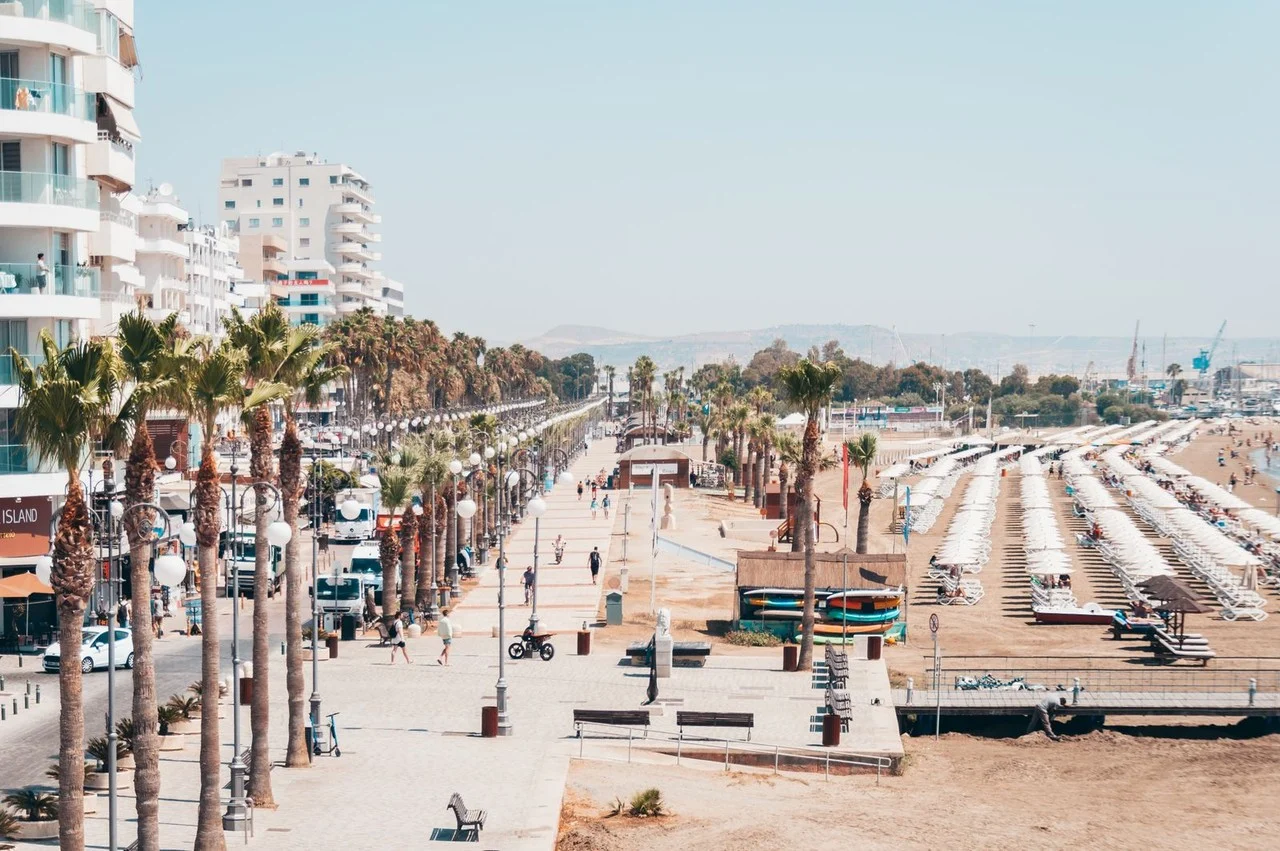
Coastal cities - Limassol, Paphos, Larnaca - live life to the fullest in the evening: embankments, cafes, families with strollers, elderly couples on the promenade. The lighting in residential and tourist areas is good, there are people on the streets until late, and this in itself acts as a natural defense. Women report that they feel comfortable returning home in the dark - for many moving, this is a stark contrast to their previous lives.
At the same time, common sense has not been canceled, and universal rules apply:
- Do not take shortcuts through dark wastelands, construction sites and poorly lit industrial areas.
- At the height of the season, be more careful in noisy night recreation areas where drunken youth gather - there is a higher risk of drunken quarrels and petty thefts.
- Do not leave valuables in plain sight in a parked car.
These measures are not specific to Cyprus, but basic safety hygiene for any location. But precisely because the background danger here is low, it is easy to comply with them and without compromising comfort.
Is it safe for children and family
For families with children, safety is the number one argument, and here Cyprus plays one of its strongest cards. Low crime rates mean that parents are less likely to live in a state of constant supervision. It is a common practice on the island for children to play in the yard and walk around the area on their own, including in the evening, and this is not perceived as a risk.
This comes down to several factors:
- Calm criminal environment. The risk that a child will encounter violence on the street is extremely low.
- Family culture. Cyprus is a country with an emphatically warm attitude towards children; They are welcome to see in restaurants, at holidays, in public places.
- Infrastructure. Parks, playgrounds and sports grounds, safe beaches with a gentle entrance, a developed network of schools, including international ones.
This does not mean that vigilance can be turned off completely: open water, sun and heat in summer, road traffic - these are the real areas of attention for parents in Cyprus, and they are much more pressing than crime. Family life, schools and children's infrastructure are discussed in detail in the guide about life in Cyprus with family and children.
Petty thefts and burglaries: where caution is really needed
Now let’s be about what does happen on the island. The main real risk for visitors is not violence, but property trifles. At the height of the tourist season, from June to August, pickpockets become more active in crowded places.
Typical scenarios to be aware of:
- Pickpocketing and bag snatching - in tourist centers, markets, crowded embankments and beaches.
- Beach thefts - a phone, wallet or bag left unattended while the whole group is swimming.
- Theft from rental cars - broken glass because of a bag or equipment left on the seat.
- Burglary - uncommon, but possible, especially in houses that are empty out of season.
Protection against all this is simple and inexpensive. Do not leave valuables unattended on the beach or in the car, use a safe in your home; for long absences, an alarm system and good locks make sense. This is everyday neatness at the level of any European resort, and not a specific Cypriot problem. It is important to maintain proportion: these risks concern things, not the safety of life and health of the family.
Road safety: a major underestimated risk
If we talk about what can really pose a danger to a family in Cyprus, it is not crime, but the roads. Let's be : driving on the island can be aggressive and nervous. Speeding, risky overtaking, and inattentive driving are much more common than we would like, and accident statistics traditionally remain a sore point.
What is important to consider for those moving:
- Left-hand traffic. Heritage from the British period: drive on the right, drive on the left. For drivers from countries that drive on the right, this requires adjustment and extra caution in the first weeks.
- Pedestrian crossings. You shouldn’t always expect that people will stop in front of you unconditionally - cross carefully, especially with children.
- Child seats and belts. Follow the rules for transporting children strictly; this really reduces the main risk.
The paradox of Cyprus is that a country with very low street crime has a very noticeable traffic risk. For a family, this means a simple thing: you shouldn’t be afraid of an evening walk, but you really need to be careful when driving and crossing the road.
Financial risks in the real estate market are not street crime
Separately, it is worth distinguishing between two different concepts that are often confused. Safety of life and health on the street is one thing, and here Cyprus is calm. Another thing is the financial risks when buying real estate, and they are real, although they have nothing to do with street crime.
The main pitfalls of a buyer in Cyprus:
- Title Deeds. For some properties, especially old resale properties, a separate title may not be issued for years, which prevents a clean re-registration to the buyer.
- Hidden mortgage of the developer. The land under the building can be mortgaged to the bank; even after full payment for the apartment, the bank is able to block the issuance of the title until the developer’s debt is paid off.
- Unfinished construction and unscrupulous intermediaries. Unfinished projects, fake or unlicensed agents, fake powers of attorney.
The protection here is legal, not everyday: an independent lawyer before signing any papers and checking the property in the Land Registry (Department of Lands and Surveys) for encumbrances and mortgages. A competent check at the start is always cheaper than proceedings after payment of money. A separate analysis is devoted to this - legal due diligence of real estate in Cyprus.
Police, emergency services and EU standards
Behind the calm atmosphere is a functioning security infrastructure. Cyprus is a member of the European Union and its emergency services are integrated into the European system.
What is useful to know in practice:
- Single number 112. As throughout the EU, Cyprus has a pan-European emergency number 112 - police, ambulance, fire. The call is free, including from a mobile phone without balance.
- Police. The Cypriot police operate according to EU standards, and tourist destinations often have English-speaking officers, which removes the language barrier for visitors.
- Medicine. Developed network of public and private clinics; Emergency care is available and many doctors speak English.
For the family, this means predictability: if something happens, there is a clear reaction mechanism, and not a legal vacuum. Membership in the EU also adds general institutional stability - a stable legal system, protection of property rights, transparent procedures. This is the background that is often more important for long-term living with a family than the absolute numbers of crime statistics.
“When people ask me whether Cyprus is safe, I always answer with a counter-clarification: safe for what? For family life on the street - yes, this is one of the most tranquil places in Europe, I myself can go for a walk in the evening without worry. Violent crime is rare here, and the fear common in big cities abates on the island. But security is not only about crime. The worst losses I've seen from people moving were not from burglars, but from rushed purchases of properties without title checks and hidden mortgages from the developer. Therefore, I separate two conversations: personal security in Cyprus is high almost by default, but the financial security of the transaction must be built manually - an independent lawyer, checking encumbrances in the cadastre, choosing an area for the family. Do this - and the island will truly protect both your loved ones and your capital.”
Summary table of risks: type - level - what to do
To put everything together, let’s summarize the main categories of risks into one practical table. It helps to see the main thing: what is usually feared (violence, attacks) is unlikely in Cyprus, and real attention should be paid to roads, petty thefts during the season and the legal purity of real estate transactions.
| Risk type | Level | What to do |
|---|---|---|
| Violent crime | Very low | Basic caution; there is no real threat to the family |
| Street crime, robberies | Short | Do not carry large sums of money in public, avoid dark vacant lots |
| Petty and pickpocketing | Average per season | Do not leave things unattended on the beach or in the car |
| Burglary | Short | Good locks, safe, alarm system in case of long absence |
| Road safety | Perceptible | Caution, child seats, getting used to driving on the left |
| Real estate market risks | Real (financial) | Lawyer before signing, checking title and encumbrances in the cadastre |
| Safety for children | High | Focus on water, sun and roads, not crime |
The main conclusion of the table: the risks in Cyprus are mainly domestic and financial, and not criminal-violent. This is the configuration in which the family can live in peace if reasonable caution is observed and transactions are properly executed.
Frequently asked
Questions people ask before deciding
01How safe is it to live in Cyprus in 2026?
Cyprus is consistently ranked among the safest countries in Europe. Violent crime is rare, street crime is low, and evening walks in residential areas are calm. The main real risks are everyday ones: petty theft during the tourist season, aggressive driving and financial risks when buying real estate. This is a very calm direction for family life.
02What is the crime rate in Cyprus?
Short. Homicide rates are among the lowest in Europe, and violent attacks and violent robberies are uncommon. Most of the recorded crimes are property crimes: petty and pickpocketing, infrequent burglaries. The risk for a visiting family is a stolen bag rather than a threat to life and limb.
03Is it possible to safely walk around Cyprus in the evening and at night?
In most cases, yes. Coastal towns are lively and well-lit in the evening, with people on the streets until late. Many people, including women, note that they feel comfortable when walking late. Common sense remains: do not take shortcuts through dark wastelands and be more careful in noisy nighttime recreation areas during the season.
04Is it safe for children in Cyprus?
Yes, Cyprus is considered one of the calmest places for children. Low crime allows parents not to live in a regime of constant control; It is a common practice for children to play in the yard on their own. The real focus areas for families are not crime, but open water, summer sun and traffic.
05What is most often stolen from tourists and visitors in Cyprus?
These are mainly minor property thefts during the high season: pickpocketing in crowded places, theft of bags and equipment left unattended on the beach, and theft from rental cars. The protection is simple: don't leave valuables unattended, use the safe in your accommodation and good locks.
06What is the main real security risk in Cyprus?
If we talk about a threat to life and health, then this is not crime, but roads. Driving on the island can be aggressive, and accident rates are a pain point. Adding to the complexity is driving on the left, which is unusual for drivers from countries with right-hand drive. Attention while driving and when crossing the road, and child seats are a real safety measure for the family.
07What are the risks of buying property in Cyprus?
This is a financial risk, not a street risk. The main problems are unissued Title Deeds for part of the old secondary building, a hidden mortgage from the developer on the land under the building, unfinished construction and unscrupulous intermediaries. Protection - an independent lawyer before signing and checking the property in the Land Registry for encumbrances and mortgages.
08What is the emergency number in Cyprus?
As throughout the European Union, in Cyprus there is a single number 112 - police, ambulance and firefighters. The call is free, including from a mobile phone without balance. The Cypriot police operate according to EU standards, and tourist destinations often have English-speaking officers.
09Is Cyprus safe for older people and pensioners?
Yes, Cyprus is one of the popular destinations for a relaxing retirement life. Low street crime, a friendly environment, respect for elders and affordable healthcare create a sense of security. Seniors' primary vigilance is for roads and phone or online scams, not street crime.
10Is Cyprus part of the Schengen area?
No. Cyprus is a full member of the European Union, but is not yet part of the Schengen zone. This does not affect everyday safety - service standards, legal protection and the 112 number are fully operational. But the mere fact of being on the island does not provide free movement within Schengen, and this must be taken into account when planning trips.
11Which city in Cyprus is the safest to live with a family?
The level of security is high everywhere, the difference between decent areas is small. Families often choose calm, green Paphos, compact Larnaca or residential areas of Limassol away from the nightlife of the resort. The main rule is to choose residential areas with schools and parks, and not the epicenter of a tourist nightlife.
12How to make moving to Cyprus safe not only on the street?
Personal security on the island is high almost by default, but financial security needs to be built: check the property through an independent lawyer, make an extract of encumbrances in the cadastre, correctly register resident status and choose an area for family life, and not for vacation. Legal support protects both family and capital.
Transparency
How this material was prepared
- Author
- Anna Kovalevskaya, head of Legal, BRIDGES
- Terms and costs last verified
- June 2026
- Sources
- official government authorities of the relevant country and state publications
- Methodology
- government minimum requirements are stated separately from due diligence charges, state fees, legal and banking costs
Sources and methodology
Figures, terms and timelines are checked against official sources as of June 2026. Link availability verified in August 2026. Third-party blogs and agent websites are not used as a source of programme terms.
- [1]Ministry of Interior of the Republic of CyprusResidence conditions and statuses for foreign nationalswww.moi.gov.cy/moi/moi.nsf/index_en/index_en
- [2]Cyprus Tax DepartmentTax residency and rateswww.mof.gov.cy/mof/tax/taxdep.nsf/index_en/index_en
Methodology: tables and charts state government minimum investment requirements; due diligence charges, state fees, legal, banking and other costs are calculated separately and are not included in the minimum thresholds.
About the author
Related materials
What to read next
 ArticleCyprus citizenship by descent: right of blood in 2026
 ComparisonNorthern and Southern Cyprus: Key Differences and Where to Buy Real Estate in 2026
 AnalysisWhat is due diligence and why the Caribbean is rejecting applications
Residency in Cyprus: timelines and requirements
Grounds, document list, presence requirements and what is needed for renewal.