Living abroad · Hungary
Cost of living in Hungary 2026: full breakdown of prices

Updated: June 2026·10 min read·Expert reviewed
Terms and costs verified: June 2026
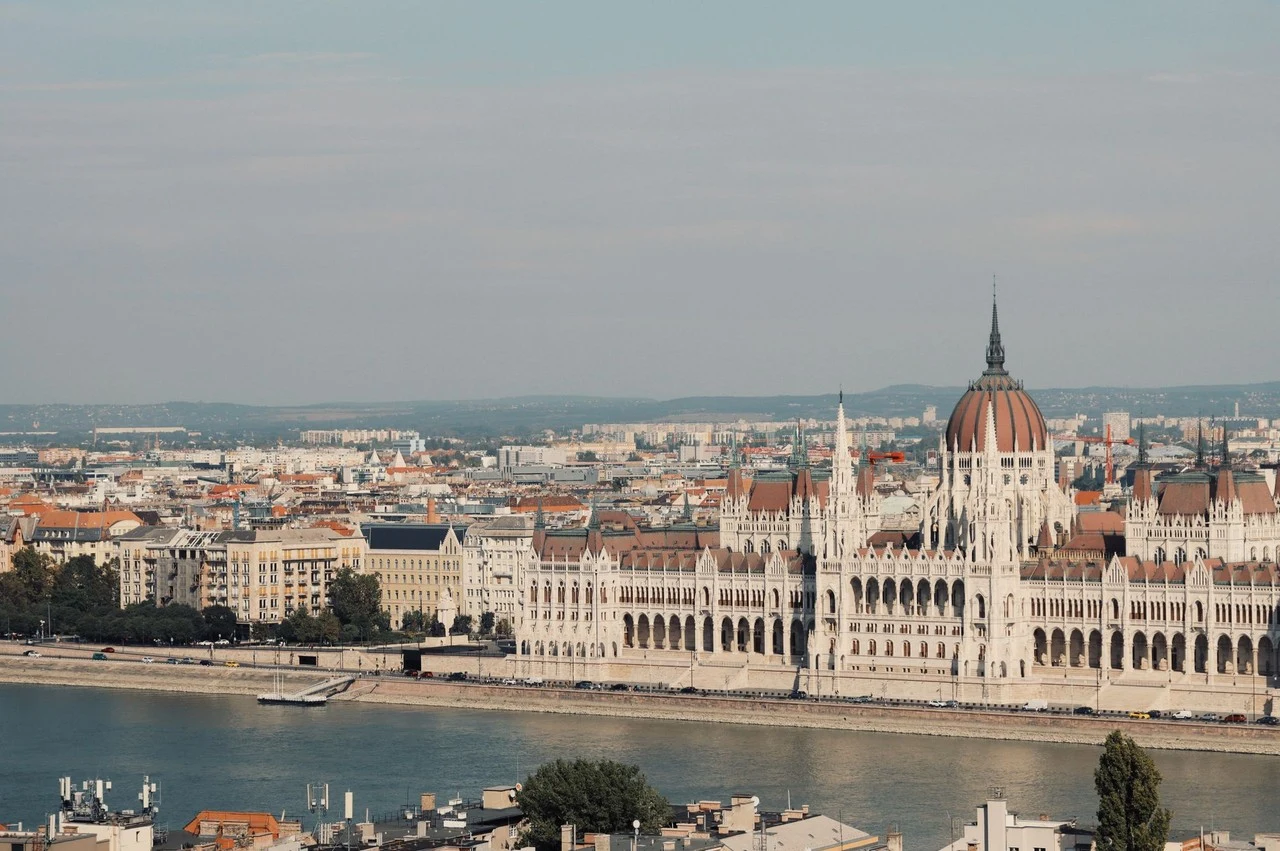
Hungary remains one of the most affordable EU countries to live in: cheaper than Austria and Germany, but noticeably more comfortable than the Balkans. With thermal baths, a metro and European architecture, Budapest is a viable alternative to expensive Western capitals. But exactly how much does it cost to live in Hungary in 2026? Let's look at each item: rent, food, transport, medicine, education - specific numbers without embellishment.
Hungary 2026: why prices are lower than Western Europe
Hungary has been a member of the European Union since 2004, but maintains its own currency, the forint (HUF). This is a key fact: prices in the country are lower than in the eurozone. Inflation in 2022–2024 hit the forint hard (the peak rate in 2022 was 430 HUF per euro), but by 2026 the situation had stabilized at ~395 HUF/€.
According to the Numbeo cost of living index, Budapest is 1.7 times cheaper than Vienna, Berlin - 1.5 times. At the same time, infrastructure, medicine and education are of the European level, albeit not without criticism. For those who moved from Russia, Kazakhstan and Ukraine, Budapest often turns out to be more expensive than their hometowns in their usual currency, but it opens up European mobility.
Below is a complete breakdown of expenses by category.
Housing: rent and purchase in Budapest and the regions
Housing is the main expense item. Budapest is divided into districts: the most expensive and popular among foreigners are V, VI and VII (Pest, center). Buda districts (II, XII) are quieter, greener and 20–30% cheaper than the center.
| Housing type | Budapest (center) | Budapest (dormitory areas) | Regions (Debrecen, Miskolc) |
|---|---|---|---|
| Rent 1BR | €700–900/month | €500–700/month | €350–500/month |
| Rent 2BR | €1,000–1,400/month | €750–1,000/month | €500–750/month |
| Rent 3BR | €1,400–2,000/month | €1,000–1,400/month | €700–1,000/month |
| Purchase 1BR (price/sq.m.) | €3 500–5 500 | €2 500–3 500 | €1 200–2 200 |
Housing and communal services (apartment 70 sq.m.): €100–180/month in Budapest, €80–140/month in the regions. Includes heating, water, garbage removal. Internet 100 Mbit/s - €12–18/month.
Buying real estate. EU citizens buy housing on a par with Hungarians. Non-EU citizens (including from Russia and Kazakhstan) need permission from local authorities (kormanyhivatal) - a fee of about 50,000 HUF (~€130). Agricultural and forest lands cannot be purchased by foreigners. Property transfer tax - 4% of the transaction price.
Are you planning to move to Hungary? We will analyze your case for free.
Get a free consultationFood: prices in stores and restaurants
Products in Hungary are 30–50% cheaper than Western European countries. The main chains are Aldi, Lidl, Spar, Tesco, Penny Market. Markets and farmers' fairs are 15-25% cheaper than supermarkets.
| Product | Price |
|---|---|
| Milk, 1 l | €0,90–1,20 |
| Bread, 0.5 kg | €0,80–1,20 |
| Chicken fillet, 1 kg | €3,50–5,00 |
| Beef, 1 kg | €7–11 |
| Eggs, 10 pcs. | €1,80–2,50 |
| Potatoes, 1 kg | €0,60–1,00 |
| Tomatoes, 1 kg | €1,20–2,00 |
| Local wine, 0.75 l | €3–8 |
Restaurants and cafes: lunch in a cafe for one - €8–14 in Budapest, €5–10 in the provinces. Dinner in a restaurant for two with wine - €30–55 in the capital, €20–35 in the regions. Coffee in a cafe - €1.50–2.50. Takeaway pizza - €7–12.
Total for groceries: €250–350/month per person in Budapest, €200–280 in the regions. A family of three spends €650–950/month on food in the capital.
Transport: public, private and air
Budapest is one of the best cities in Europe for public transport. Metro (3 lines), trams, buses and trolleybuses operate from 4:30 to 23:00. Night buses replace the metro.
| Service | Price |
|---|---|
| Single ticket (bus/metro) | €0,85 |
| Monthly Pass (Budapest) | €22 |
| Annual subscription | €220 |
| Taxi (city trip) | €5–15 |
| Car rental (economy class, day) | €30–50 |
| Gasoline, 1 l | €1,55–1,70 |
| Car insurance (CASCO/year) | €600–1 200 |
A personal car in Budapest is not mandatory. Parking in the center is paid (€1–3/hour), but there are traffic jams. Outside the capital you need a car.
International flights: Liszt Ferenc Airport (BUD) - Wizz Air hub. Direct flights to dozens of European cities. Low-cost flights to London, Berlin or Rome - €30–80 round trip if purchased in advance.
“Hungary often surprises people who compare it to Western Europe. Yes, it is cheaper than Vienna or Berlin - one and a half times. But this does not mean that it is “cheap” here. Budapest is a true European capital with prices that are rising. The biggest expense that clients underestimate is healthcare. The state system is overloaded, and life is uncomfortable without private insurance. Budget €100–150 per month for your family - this is not a luxury, but a reality. In terms of housing: the central districts of Budapest are already comparable to Warsaw or Bratislava. If savings are important, see Buda or residential areas. There are the same metro and trams, but rent is a third lower. And one more thing that everyone asks: is €2,000 a month enough? For one person in Budapest - yes, it’s quite comfortable. For a family with a child - no, you need €3,000–3,500 if you want a private school and normal medicine.”
Medicine: public and private
State healthcare is financed through social contributions. A legal resident with official contributions is entitled to public health care. The problem is queues and outdated equipment in public hospitals.
Private clinics operate at a good European level. Medicover, Duna Medical Center, IDS Clinics are popular choices among expats.
| Service | State | Private |
|---|---|---|
| Visit to a therapist | free (according to policy) | €25–50 |
| Visit to a specialist | free (according to policy), queue | €50–100 |
| Blood tests | free (by referral) | €30–80 |
| MRI | free (queue 2–6 months) | €180–350 |
| Dentistry (filling) | €20–40 | €50–120 |
Health insurance (private, basic): €50–120/month. Recommended for everyone who does not want to wait in queues of the state system.
Dentistry - a separate story. Hungary is among the top 5 European countries in terms of quality and price in dentistry. People from Austria and Germany come specifically to Budapest for dental treatment: prices are 40–60% lower, and the qualifications are high.
Education: kindergartens, schools, universities
Public education in Hungary is free for children of legal residents. Education is in Hungarian, which creates difficulties for foreign children.
Kindergartens (óvoda): public are free for residents, private €200–500/month.
| Educational institution | Cost/year |
|---|---|
| Public school | for free |
| Budapest British International School | €12 000–18 000 |
| American International School of Budapest | €15 000–20 000 |
| Britannica International School | €10 000–15 000 |
| State University (programs in Hungarian) | €1 500–3 000 |
| University (programs in English) | €4 000–12 000 |
Leading universities: Budapest University of Technology (BME), Semmelweis University (medicine), Budapest University of Economics. There are programs in English. The Stipendium Hungaricum scholarship program allows international students to study for free through a competitive process.
Consolidated budget: how much is needed to live in Hungary
Below are realistic budgets for different categories: single, couple, family with a child.
| Article | Single (Budapest) | Family 3 people (Budapest) | Family 3 people (regions) |
|---|---|---|---|
| Rent 1BR/2BR | €700–900 | €1 000–1 400 | €500–750 |
| Products | €280–350 | €650–950 | €450–650 |
| Transport | €22–60 | €60–150 | €50–100 |
| Housing and communal services | €80–120 | €130–180 | €80–140 |
| Medicine/insurance | €60–120 | €150–300 | €100–200 |
| Leisure and restaurants | €150–300 | €300–500 | €150–300 |
| Other | €100–200 | €200–350 | €150–250 |
| Total | €1 400–2 050 | €2 490–3 830 | €1 480–2 390 |
Conclusion: Hungary is more accessible than Germany, Austria, the Czech Republic and France. In terms of cost of living, it is comparable to Poland and Romania, but beats them in terms of the level of urban infrastructure in Budapest.
To obtain an investor residence permit in Hungary (Guest Investor) and legal residence, read the program page Residence permit for an investor in Hungary. If you have Hungarian roots, we will separately analyze the option of EU citizenship by origin.
Are you preparing to move to Hungary? We will analyze your budget and residence permit option for free.
Get a free consultationFrequently asked
Questions people ask before deciding
01How much does it cost to live in Budapest per month in 2026?
A single person spends €1,400–2,050/month with rent. Family of three - €2,500–3,800/month. Without rent, costs are 35–40% lower.
02Renting an apartment in Budapest: how much does it cost?
1BR in the center of Budapest - €700–900/month, 2BR - €1,000–1,400/month, 3BR - €1,400–2,000/month. In residential areas - 20–30% cheaper.
03Is Hungary more expensive or cheaper than Russia in terms of living standards?
The level of service and infrastructure is European level. At nominal prices in euros, it is more expensive than most Russian cities. Rent and products are comparable to Moscow when converted to euros in 2026, but transport is more expensive, private medicine is more expensive.
04Is it possible to live in Budapest on €1,500 per month?
It’s possible for a single person if you rent a house in a residential area (€500–600) and don’t spend money on restaurants. For a family of two people, €1,500 without rent is very modest.
05How much does a travel pass cost in Budapest?
A monthly single pass for all public transport in Budapest is €22 (~8,700 HUF). By European standards it is very affordable.
06Is medicine expensive for foreigners in Hungary?
State medicine is available if you have a residence permit and pay fees, but the queues are long. Private clinics: visit to a specialist €50–100. Private insurance recommended €50–120/month.
07How much do groceries cost in Hungary?
Supermarkets (Aldi, Lidl, Spar): milk 1 liter - €0.90–1.20, bread - €0.80–1.20, chicken fillet 1 kg - €3.50–5, eggs 10 pcs. - €1.80–2.50. Per person per month - €250–350 in Budapest.
08What tax does an individual pay in Hungary?
Flat income tax - 15%, one of the lowest in the EU. VAT - 27% (the highest in the EU, affects prices). Tax residency arises when residing for more than 183 days per year.
09Is it worth moving to Hungary from Russia or Kazakhstan?
Depends on the goal. If you need an affordable start in the EU with good urban infrastructure, Budapest is a logical choice. If a warm climate is important, look at Greece, Spain, Portugal. If you need an EU passport quickly, Hungary is interested in the repatriation program through Hungarian roots.
10How to obtain a residence permit in Hungary for long-term residence?
Main options: Guest Investor Visa (€250,000 for a real estate fund, 10 years residence permit), worker residence permit (subject to an employment contract), student residence permit, citizenship based on Hungarian roots. BRIDGES GLOBAL helps you choose the right option.
About the author
Related materials
What to read next
 ArticleHungarian Citizenship 2026: All Ways to Obtain an EU Passport
 ComparisonCitizenship of Bulgaria or Hungary: EU passport by roots
 AnalysisWhat is due diligence and why the Caribbean is rejecting applications
Personal programme selection is conducted by Anna Kovalevskaya, Head of Legal, BRIDGES.
Moving to Hungary: what to settle first
Housing, schooling, healthcare, accounts and taxes - the order and what takes longest.