Living abroad · Cyprus
Transport in Cyprus: buses, cars, taxis - complete guide

Updated: June 2026·8 min read·Expert reviewed
Terms and costs verified: June 2026
Contents
Cyprus is an island without metro or railways. This is the first thing you need to understand before moving. The entire transport system here is built on two things: personal cars and city buses. For a tourist for a week this is not a problem. For a person who lives here permanently, this is an important question from the very first day. This guide contains everything you need to know about getting around Cyprus. How much does a bus cost from Limassol to Nicosia. How to change Russian license to Cypriot one. Why Bolt doesn't work here. And how much does it actually cost to maintain a car on the island? The figures are current for 2026.
Why transport in Cyprus is a separate issue
Most European countries have a developed railway network. In Cyprus there is none at all. The last railway closed in 1951 and was never rebuilt.
There is no metro either. There are no trams. All public transport infrastructure is buses. Urban routes in large cities and intercity lines between them.
To understand: Cyprus is a small island with an area of about 9250 square meters. km. The distance from Limassol to Nicosia is approximately 80 km. From Larnaca to Paphos - about 140 km. By car it takes 1-2 hours. By bus it takes longer.
Most residents of Cyprus use a personal car as their main transport. For those who have moved, this means one thing: a car is not a luxury here, but a necessity.
City buses: how the system works
Every major city in Cyprus has its own bus company. Nicosia - OSEL, Limassol - EMEL, Larnaca - OSEA, Paphos - OSYPA. They are not united into one network - each has its own routes and tariffs.
A single ticket on a city bus costs €1.50. Day pass - €5. Monthly subscription - €40. There are discounts for students and pensioners.
Buses run from 6am to around 11pm on weekdays. On weekends the schedule is reduced. On Sundays, some routes do not operate at all.
An important point: the movement intervals are large. In central areas - 20-30 minutes. On the periphery - 40-60 minutes. You won’t be able to plan a “get out and get on” trip here.
Payment - in cash to the driver or by contactless card on some routes. There is an application for tracking buses in real time, but it does not work reliably everywhere.
Intercity buses: routes and prices
Buses from Intercity Buses operate between cities. This is the main way to get around the island without a car.
Routes and prices one way:
| Route | Price | Travel time | Frequency |
|---|---|---|---|
| Nicosia - Limassol | €5 | ~1.5 hours | Every 30-60 min |
| Nicosia - Larnaca | €4 | ~45 minutes | Every 30-60 min |
| Nicosia - Paphos | €9 | ~2.5 hours | Several times a day |
| Limassol - Larnaca | €5 | ~1 hour | Every 60 min |
| Limassol - Paphos | €6 | ~1.5 hours | Several times a day |
| Larnaca - Paphos | €9 | ~2 hours | Several times a day |
Buses depart from central bus stations. In Nicosia - at the Solomou bus station. In Limassol - at the new bus station on Enaerios. Tickets are available on site or online at intercity-buses.com.
There are no night flights. The last buses between cities leave at 19-20 hours. This is important to consider when planning.
Taxi in Cyprus: prices and features
Taxis in Cyprus are expensive by European standards. This is not an opinion, but a fact that all those who have moved face.
The minimum boarding fee in the city is €3.50. Next is the counter. A trip through the whole of Limassol will cost €10-15. From Larnaca airport to Larnaca center - €20-25. To Nicosia - €50-60.
Transfer from Paphos airport to Paphos center - €15-20. To Limassol from Paphos - €80-100.
At night (from 20:30 to 06:00) and on holidays there is an increased rate. It is about 20% higher than the daily one.
Bolt and Uber do not operate in Cyprus - their activities are prohibited by law. Local taxi aggregator - Cyprus Taxi app or just call a local company. There are taxi numbers in every city.
For regular trips, a taxi is not an option. A month of such trips will cost more than maintaining a car.
Cyprus Airports: Larnaca and Paphos
Cyprus has two international airports. Both are operated by Hermes Airports.
Larnaca Airport (LCA) is the main one. About 70% of all flights pass through it. Located 5 km from the center of Larnaca and 70 km from Nicosia. There are flights to most European capitals, as well as to Dubai, Tel Aviv, and Istanbul.
Paphos Airport (PFO) is the second largest. It receives mainly charter flights from the UK, Germany, and Scandinavian countries. Used by residents of Paphos and the western part of the island.
Getting to airports: the most convenient way to get from the city center to Larnaca airport is by taxi (€10-15) or by bus No. 424 (€1.50, travels through the whole city). From Limassol to Larnaca - intercity bus with a transfer or taxi for €60-70.
From Paphos airport to Paphos center - bus number 612 for €1.50 or taxi for €15-20.
A car in Cyprus: is it necessary?
Short answer: yes, we do. Especially if you do not live in the center of Nicosia or Limassol.
Buses are not everywhere. They rarely come in the evening. On Sunday they hardly go. If you have children, work in the suburbs, or simply have an active lifestyle, it will be difficult without a car.
Important feature: in Cyprus, driving is on the left. This is a British heritage - the country was a British colony until 1960. The steering wheel is on the right. For those who have never driven on the left side, the first few days will require some adaptation.
The roads in Cyprus are good. Motorways connect all four main cities. The speed limit on the highway is 100 km/h, in the city - 50 km/h. The road markings are clear, the signs are in Greek and English.
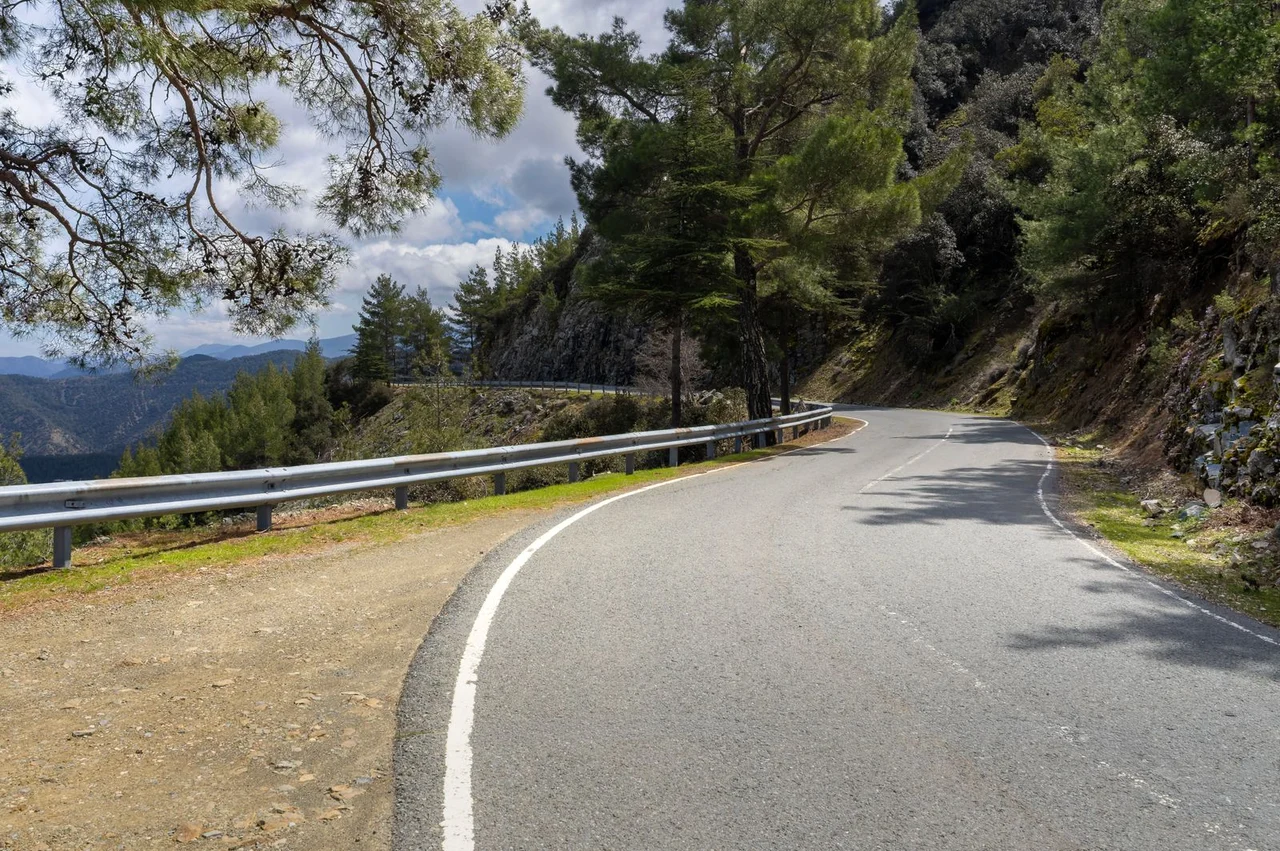
The Troodos mountainous region and some villages require careful driving: serpentines, narrow roads. In winter there is snow in the mountains.
Replacement of driver's license: how and when
Upon receipt of a residence permit (residence permit) in Cyprus, foreign rights can be exchanged for Cypriot ones. It is important to do this during the first year of residence.
Russian licenses are changed to Cypriot ones without retaking the exam - on the basis of a bilateral agreement. Procedure: submit an application to the Traffic Department, provide documents and pay a fee of about €30-50.
For citizens of countries not included in the agreement with Cyprus, passing a theoretical and practical exam will be required. The cost of the courses is €300-500 at a driving school.
Before obtaining a Cypriot license, you can drive on a foreign license - but only for a limited period from the moment of obtaining a residence permit. Please check with the Traffic Department for the specific deadline, as the rules change periodically.
Ukrainian and Belarusian rights also change in a general manner. The conditions are the same: availability of a residence permit and original rights.
Read more about obtaining a residence permit in Cyprus - at Cyprus residence permit program page.
Cost of transport in Cyprus: full table
We collected all transportation costs in one table. Prices are valid for 2026.
| Expense item | Price | Note |
|---|---|---|
| City bus, single ticket | €1.50 | All major cities |
| City bus, day pass | €5 | Unlimited trips per day |
| City bus, monthly pass | €40 | One city |
| Intercity Nicosia - Limassol | €5 | About 1.5 hours |
| Intercity Nicosia - Paphos | €9 | About 2.5 hours |
| Taxi minimum landing | €3.50 | Daily rate |
| Taxi from Larnaca airport to the center | €20-25 | About 5 km |
| Taxi from Paphos airport to the center | €15-20 | About 7 km |
| Car insurance (basic, MTPL) | from €400/year | Depends on the car and the age of the driver |
| Car insurance (casco) | €600-1200/year | Depends on the cost of the car |
| Car rental (budget class) | €25-35/day | Cheaper when renting for 7 days or more |
| Car rental (middle class) | €40-55/day | Includes basic insurance |
| Gasoline (95) | €1.75-1.95/l | Depends on the gas station and city |
| Replacement of license (fee) | €30-50 | For countries with agreement |
| Driving school (for retake) | €300-500 | Full course |
Average monthly transport budget for a family with one car: €150-250. This includes gas, insurance (per month) and the occasional taxi ride.
Do you want to move to Cyprus? We will analyze your case for free.
Get a free consultationBuying a car in Cyprus
You can buy a car in Cyprus from an official dealer or on the secondary market. The used car market is strong, with plenty of offers from British expats and locals.
Prices on the secondary market: small hatchback 5-7 years - €8000-14000. Middle class sedan - €12,000-20,000. SUV - from €18,000.
New cars at dealers are more expensive than in continental Europe due to transport costs. Toyota Corolla new - from €22,000. VW Golf - from €25,000.
Vehicle registration: the fee depends on the engine size and year of manufacture. Approximately €200-500 for a car up to 1600 cc. cm.
An annual technical inspection (MOT) costs around €25-40. Road tax - €35-100 per year depending on the engine.
Important: in Cyprus they sell right-hand drive cars with left-hand drive (for local left-hand traffic). Right-hand drive cars are not used here.
The reality of transport infrastructure: a assessment
Cypriot transport is not the island's strong point. This is recognized by both local residents and long-term foreigners.
What works well: Highways between cities are in excellent condition. The roads are generally smooth. There are no traffic jams like in Moscow or Istanbul. Parking is free or cheap in most places.
What works poorly: City buses rarely run. In the heat (July-August, +40°C in the shade), waiting for a bus for 30 minutes at a bus stop without air conditioning is an ordeal. The schedule is not always followed.
Intercity communication works, but it is inconvenient: if you live in Paphos and work in Nicosia, traveling by bus for 2.5 hours one way is unrealistic. Need a car or remote work.
There are traffic jams in Nicosia during peak hours (8-9 am and 17-18 pm). Limassol is also busy on weekdays. There are few detour routes.
Bicycle infrastructure is poorly developed. Larnaca has a promenade with a bike path. In other cities, riding a bicycle on the road is not safe.
Conclusion: Cyprus is a country for motorists. Plan your budget taking into account the purchase and maintenance of the car.
“Cyprus is one of the few European islands where the transport issue is solved in a fundamentally simple way: you need a car. This is not a flaw, but a feature. Driving on the left initially causes stress for everyone used to driving on the right, especially at the first U-turns and roundabouts. But after 1-2 weeks you get used to it. Another thing is more important: when choosing housing, always take into account the distance to the main points of the route - work, school, supermarket. It is quite possible to travel on business trips by bus between cities once a week. But living without a car if you have a family and children is extremely inconvenient. Especially in Paphos and the suburbs of Limassol. But the roads themselves are good, there are almost no traffic jams, and parking is free almost everywhere. According to these parameters, Cyprus outperforms most European capitals.”
Comparison of transport in Cyprus cities
The city you choose affects how much you need a car.
| City | Public transport | Do you need a car? | Traffic jams |
|---|---|---|---|
| Nicosia | Best on the island | Desirable | Available during peak hours |
| Limassol | Good in the center | Needed in the suburbs | Moderate |
| Larnaca | Average | Need | Weak |
| Pathos | Weak | Required | Almost none |
| Limassol (suburbs) | Very weak | Mandatory | No |
Nicosia and the center of Limassol are the only places where you can more or less get by without a car. In all other cases, a car is required.
Conditions for those moving: what to consider
If you are moving to Cyprus for permanent residence, here are some practical tips on transport.
First: immediately plan to buy or long-term rent a car. Rent from €500-700 per month (30+ days) is cheaper than daily rent. Buying a used car for €10,000-15,000 pays off in 1-2 years.
Second: apply for a residence permit and change your rights within the first year. This will save you from unnecessary questions on the roads and from insurance companies.
Third: Download a local taxi app. In emergency cases, it is more convenient than looking for a phone number.
Fourth: when choosing a housing area, look at the proximity to a bus stop - even if you have a car. In case of a breakdown or a situation where you can’t drive, this is important.
Fifth: in the first weeks, get used to driving on the left. Especially at intersections - intuition often suggests the “wrong” side.
More information about residence permit in Cyprus: Cyprus investment residence permit program.
Do you want to move to Cyprus? We will analyze your case for free.
Get a free consultationCar rental: for tourists and beginners
If you just arrived and haven’t bought a car yet, rent. All major companies operate in Cyprus: Hertz, Avis, Budget, Europcar. Plus local ones are usually cheaper.
Prices for online booking in advance:
| Car class | Price/day | Price/week |
|---|---|---|
| Economy (Fiat 500, VW Up) | €25-35 | €130-180 |
| Compact (VW Polo, Ford Focus) | €35-45 | €180-250 |
| Middle class (VW Passat, Skoda Octavia) | €45-60 | €250-350 |
| SUV (RAV4, Tiguan) | €60-90 | €350-550 |
The price usually includes basic insurance (MTPL). Casco - additional payment €5-15/day. Without comprehensive insurance, in case of an accident you will have to pay out of pocket up to €1000-2000 (deductible).
Important: some companies will not give you a car without a credit card. Not everyone accepts a debit card.
When renting for a month or more, the price drops to €500-700 per month for a compact car.
Taxes and fees: transport costs officially
In addition to insurance and gasoline, the owner of a car in Cyprus pays several mandatory fees.
Road tax: depends on engine size. Up to 1450 cc cm - €35/year. 1451-1800 cc cm - €55/year. 1801-2000 cc cm - €75/year. Over 3000 cu.m. cm - €520/year.
Technical inspection (MOT): every 2 years for new cars, annually for cars over 4 years old. Cost €25-40.
Registration tax upon first registration: calculated from the cost of the car. For a car worth €10,000 - about €1000-1500.
VAT when purchasing a new car is 19%. This is the standard Cyprus VAT rate.
Parking: Free in most cities. In the center of Nicosia and near shopping centers there are paid parking lots €0.50-1.50/hour.
Fines for traffic violations: speeding from €85, talking on the phone - €85, not wearing a seat belt - €85. Fines are sent to the vehicle's registration address.
Practical advice for living in Cyprus
A few details that will help in the first months.
Gasoline: filling a full tank is more profitable than filling it a little at a time - prices fluctuate a little. There are gas stations everywhere, except in very small villages. On the highway there are gas stations every 20-30 km.
Navigator: Google Maps works well. Waze is also popular among locals. Addresses in villages are sometimes written only in Greek - you need to be prepared for this.
Troodos Mountains: if you are traveling in winter, check the weather forecast. The passes are closed during snowfall. Wheel chains are sold in car dealerships.
Accident insurance: if you have an accident, take photos of everything, call the police (112) and notify the insurance company within 24 hours. The European protocol (without police) works for minor accidents.
Tow truck: insurance companies have the numbers of on-duty tow trucks. The average cost of a call is €50-80 within the city.
Find out more about life in Cyprus and get advice on moving: contact the BRIDGES GLOBAL team. Also read on Numbeo - current cost of living in Cyprus.
- Cypriot permanent residence vs Cypriot citizenship: what to choose
- Cyprus Permanent Residency Law: Regulation 6(2)
- Northern Cyprus Citizenship (TRNC): what yes
- How much does Cyprus citizenship cost
- Cyprus permanent residence or Turkish residence permit: what to choose
- Investing in Cyprus real estate: guide
Frequently asked
Questions people ask before deciding
01Is there a metro or railway in Cyprus?
No. There are no metro or railways in Cyprus. The last railway was closed in 1951. The main types of transport are buses and personal cars.
02How much does a city bus cost in Cyprus?
A single ticket on a city bus costs €1.50. Day pass - €5. Monthly subscription - €40. There are routes in Nicosia, Limassol, Larnaca and Paphos.
03Does Bolt or Uber work in Cyprus?
No. Bolt and Uber are prohibited by law in Cyprus. You can only use official local taxis. Call - through the Cyprus Taxi app or by phone.
04How much does a taxi cost from Larnaca airport?
A taxi from Larnaca airport to Larnaca center costs €20-25. To Nicosia - €50-60. To Limassol - €60-70. At night the tariff is approximately 20% higher.
05Do you need a car in Cyprus?
For most places, yes. Buses run rarely, especially in the evenings and on Sundays. It is comfortable to live without a car only in the center of Nicosia or Limassol. In Paphos and its suburbs a car is required.
06Is traffic on the right or on the left in Cyprus?
Left-handed. This is a British heritage - Cyprus was a British colony until 1960. The steering wheel is on the right. Those used to driving on the right need a few days to get used to it.
07Is it possible to drive with a Russian license in Cyprus?
Temporarily - yes. Upon receipt of a residence permit, Russian rights are changed to Cypriot ones without retaking the exam, by bilateral agreement. The fee is about €30-50. This must be done within the first year of residence.
08How much does car insurance cost in Cyprus?
Basic insurance (MTPL) - from €400 per year. Full comprehensive insurance - €600-1200 per year, depending on the cost and age of the car. The price also depends on the driver’s age and experience.
09How much does it cost to rent a car in Cyprus?
Budget class - €25-35 per day. Middle class - €40-55 per day. For long-term rentals (30+ days) the price drops to €500-700 per month. Casco - additional payment €5-15 per day.
10How long is the bus ride from Limassol to Nicosia?
About 1.5 hours. Price: €5 one way. Buses run every 30-60 minutes on weekdays. Schedule and tickets - on the website intercity-buses.com.
11What airports are there in Cyprus?
Two international airports: Larnaca (LCA) - the main one, receives most flights, and Paphos (PFO) - the second one, mainly charter flights. Both are operated by Hermes Airports.
12What is the road tax in Cyprus?
Depends on engine size. Up to 1450 cc cm - €35 per year. 1451-1800 cc cm - €55/year. 1801-2000 cc cm - €75/year. Over 3000 cu.m. cm - €520/year. Plus a technical inspection every 1-2 years - €25-40.
About the author
Related materials
What to read next
 ArticleCyprus citizenship by descent: right of blood in 2026
 ComparisonNorthern and Southern Cyprus: Key Differences and Where to Buy Real Estate in 2026
 AnalysisWhat is due diligence and why the Caribbean is rejecting applications
Moving to Cyprus: what to settle first
Housing, schooling, healthcare, accounts and taxes - the order and what takes longest.