BRIDGES Insights
Where people leave Russia from: statistics and real stories of those who relocated
Updated: June 2026·9 min read·Expert reviewed
Terms and costs verified: June 2026
Contents
Since February 2022, I have been observing this process not only in the news—every week people come to me who have left, returned, or are only thinking about departing. The numbers are impressive: by various estimates, between 800,000 and one million people left Russia in just the first year alone. But behind the statistics lie very different fates. Georgia accepted more than 500,000, Kazakhstan approximately 300,000, Armenia over 100,000. Turkey, Israel, Dubai. The Baltics and Poland for those with EU roots. Then a reverse wave began: many returned—from Tbilisi, from Yerevan, from Almaty. Those who remained were generally those who managed to establish themselves legally: obtained a residence permit, opened a business, found work with a proper contract. This article is neither advocacy nor condemnation. I will simply explain what is actually happening: where people go, how many stay, why they return, and what distinguishes those who settled seriously and for the long term.
The 2022 wave: panic, speed, first countries
In late February–March 2022, people left quickly. Without a plan, without a residence permit, sometimes with only one suitcase. The main criterion for choosing a country was an open border and visa-free entry for Russians.
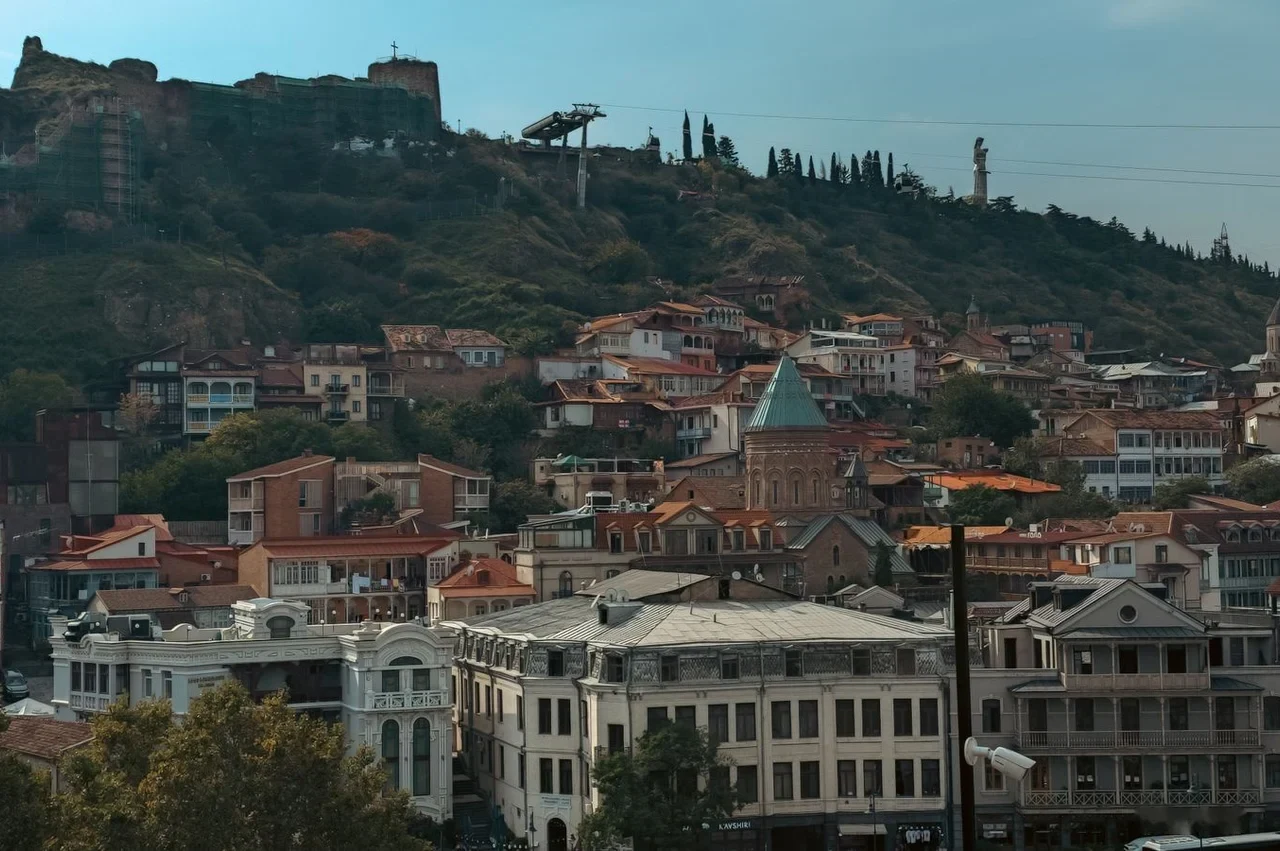
Georgia became the primary destination. Visa-free entry, Russian spoken on Tbilisi streets, cheap rent in the first months. Then prices rose 1.5 to 2 times, locals began openly expressing discontent, yet the flow did not cease. By the end of 2022, Georgia hosted, by estimates, more than 500,000 Russian citizens—a figure comparable to Tbilisi's population.
Armenia—the second most popular hub. Visa-free entry, Russian-speaking environment, relatively straightforward banking system. More than 100,000 people entered in 2022. The IT sector rated Yerevan highly: dozens of Russian technology companies opened offices there.
Kazakhstan accepted approximately 300,000 people. However, the specifics differ: many used Almaty as a transit point to relocate further—to the UAE, Europe, Asia. Plus, a significant portion were shift workers and people with families on both sides of the border.
Turkey: real estate, business, and residence permit through investment
Turkey attracted a different audience—more affluent. Approximately 100,000 Russians entered in 2022–2023. Istanbul and Antalya became true magnets.
The key instrument is real estate purchase. My clients during this period actively considered the Turkish market: the threshold for a residence permit through real estate—from $200,000 according to SPK assessment, term—2 years with renewal option. This provided legal status and the ability to work and live peacefully.
Istanbul—a special case. A whole Russian-speaking business community formed here: coworking spaces, networking events, legal and accounting offices catering to emigrants. Some people fully relocated their businesses—registered Turkish legal entities, opened local accounts.
Important clarification: Turkey is not the EU or Schengen. For those needing European mobility, a Turkish residence permit did not solve the issue. Therefore, many looked further in parallel.
Dubai: where the affluent moved
The UAE—a separate story. By various estimates, 30 to 50 thousand Russians with real capital settled in Dubai in 2022–2024. These are not tourists or IT workers with a laptop—these are entrepreneurs, business owners, people with assets.
Dubai offered three things simultaneously: tax neutrality (no personal income tax, no profit tax for individuals), political neutrality of the Emirates, and the ability to open an account where Russian banks no longer operated.
A popular instrument is the Golden Visa for 10 years through real estate purchase from 2 million dirhams (approximately $550,000). This is not just a residence permit—it is a real attachment to the country with the ability to sponsor family and staff.
To be : among my clients who moved to Dubai, the percentage who "settled" is the highest. Business environment, infrastructure, healthcare, world-class schools. Those who arrived with money and a goal stayed.
Israel: aliyah as a separate path
Israel stands apart. Aliyah—repatriation through Jewish heritage—existed long before 2022. But specifically after February, the flow surged sharply: according to the Jewish Agency, in 2022 more than 50,000 people repatriated from Russia—a record in decades.
Israel grants citizenship—not a residence permit, not a permanent residency, but a full passport—almost immediately upon arrival, if Jewish descent is confirmed. This is a powerful instrument for those who have grounds.
I have seen different stories. Some left consciously, with documents of grandparents, understanding they were leaving for good. Others—in panic, counting on an Israeli passport as a "backup exit" to Europe. The second scenario works, but not as quickly: an Israeli passport provides visa-free access to the EU, however Europe is a separate relocation.
Israel's specificity—the language and cultural barrier is more serious than in Georgia or Armenia. Ulpan (Hebrew course) is mandatory, adaptation is longer. But those who completed it usually stay.
EU through the Baltics and Poland: the heritage path
The European Union—a dream for many. But simply arriving and staying won't work: you need grounds. The main one is heritage.
Lithuania, Latvia, Estonia, Poland—countries where heritage-based repatriation programs have worked for a long time and actually function. By various estimates, more than 50,000 Russian citizens with documentarily confirmed heritage entered the EU through these channels.
The Baltics: if you have a Lithuanian, Latvian, or Estonian ancestor—this is a path to EU citizenship. The procedure takes from several months to a couple of years depending on document completeness. Poland—similarly: Pole's Card or repatriation through Polish heritage.
In my practice, requests for EU heritage roots increased dramatically precisely in 2022–2023. People began retrieving archival documents, searching for great-grandparents' records, restoring lost entries. This is a real path—if documents exist or can be recovered.
Bulgaria—a separate case in the EU. The heritage-based citizenship program as of 2026 simplified: now it suffices to contact the Ministry of Justice directly, without intermediate authorities. A Bulgarian passport is a full EU passport.
The reverse wave: why they returned
This is an important part of history that is often overlooked. Of those who left in 2022, only 30–40% actually remained abroad. The rest returned—some after half a year, others after a year.
Why? I heard different explanations from the people I worked with.
The first reason is financial. People left without a plan, and their money ran out quickly. The cost of living in Georgia and Armenia rose for Russian-speaking emigrants in 2022: rent increased by 1.5–2 times, service prices went up accordingly. Finding work without knowledge of the local language and without local residence permit turned out to be harder than expected.
The second reason is business and assets in Russia. Many could not or did not want to sell real estate or close their companies. Managing a Russian LLC remotely from Tbilisi is possible, but it is a workaround. At some point, people chose personal control over their business.
The third reason is family. Parents remained, children were studying, a partner did not want to leave. This works both ways: sometimes family kept the person who left there; sometimes it pulled them back.
The fourth reason is disappointment with the place. Tbilisi stopped seeming like a temporary paradise after the first year. Yerevan did too. The local population's attitude toward the wave was ambiguous.
Who stayed: three profiles
Looking at those who left and actually established themselves—I see several clear profiles.
IT specialist with a remote contract. Works for a Western or international company, receives salary in currency. Does not need the local labor market. Georgia, Armenia, Serbia, Montenegro—any country with acceptable climate and internet. Stays where they obtained normal residence permit and comfortable living conditions.
Entrepreneur with capital. Relocated the business—or opened a new one. Dubai, Turkey, Cyprus. Obtained residence permit through investment, opened accounts, established logistics. For this person, departure is not flight but business relocation with legal support. Does not plan to return.
A person with roots and a passport. Obtained Israeli citizenship, Bulgarian or Polish passport, Baltic citizenship—through repatriation. Now a citizen of another country. Can live anywhere within passport regime. Russia is one option, but not the only one.
What do all three have in common? A legal anchor. Residence permit, permanent residence, or citizenship. Without it—temporary status, constant uncertainty, and sooner or later, return.
Conditions to stay: what is needed legally
Here is what I tell clients who ask "how to stay."
Tourist entry is not a solution. In most countries, Georgia/Armenia/Kazakhstan allow stay for a year without a visa, but this is not a residence permit. Working officially, opening an account as a resident, using social infrastructure—none of this is possible.
Residence permit through investment is the most manageable path for those with capital. Turkey (from $200k in real estate), UAE (from 2M AED), Greece (from €400k), Cyprus (from €300k)—different thresholds, different conditions, different passport mobility.
Residence permit through employment works if the employer is willing to apply for permission. More difficult, depends on the employer, less predictable.
Citizenship by descent—for those with roots. Bulgaria, Lithuania, Latvia, Poland, Israel. The strongest result—a passport with citizen rights, not guest rights.
Citizenship through investment—Caribbean (Grenada, Saint Kitts, Antigua), Vanuatu, Jordan. A second passport that provides mobility where the Russian passport closes doors.
Questions? We will analyze your case for free.
Get a free consultation"You know what struck me most in 2022–2023? Not the scale of the flow—I understood the scale from the numbers. What struck me was how differently people approached the same decision. Some came to me back in March 2022—calm, with a folder of documents, with specific questions: 'Anna, my grandfather is from Bulgaria, here is my birth certificate from 1938, what do we need next?' These people typically left once and did not return. Because they were preparing—not for departure, but for life in another place. Others came later—sometimes already from Tbilisi or Almaty—with a completely different question: 'I am already here, my money runs out in four months, what do I do?' That is harder. From that position, it is difficult to make good decisions—time pressure, anxiety weighs on you. I will not say whether leaving is right or wrong. It is a personal decision, and I do not judge it. But I will say what distinguishes those who established themselves from those who returned: having a legal anchor. Residence permit, permanent residence, second passport—regardless of what it is called. What matters is that you have a document that gives you the right to be in the country legally, open an account, get health insurance, enroll your child in school. Without it—you are a guest. Sometimes welcome, sometimes not. And at some point, hospitality ends—either your money runs out, or the patience of local authorities, or simply fatigue from uncertainty. If you are thinking about relocating—start not with the question 'where?' but with the question 'on what basis?' The answer to it will determine everything else: the country, budget, timeline, and your life three years from now.'"
Cost of relocation and legalization: real numbers
Let us talk about money—, without "from" and "it depends."
Turkey, residence permit through real estate: Real estate from $200,000 (according to SPK valuation), residence permit registration—approximately $1,500–2,000 including fees and lawyer, annual renewal—$300–500.
UAE, Golden Visa for 10 years: Real estate from 2,000,000 AED (~$545,000), government fees and registration—4% of property value + approximately $3,000–5,000 administrative expenses.
Cyprus, permanent residence: Real estate from €300,000 + VAT (new construction), confirmation of income outside Cyprus from €50,000 per year, government fee ~€500, legal support ~€3,000–5,000.
Greece, Golden Visa: Real estate from €400,000 (in Athens, on islands, in Thessaloniki) or from €250,000 with conversion/restoration, fee €2,000, lawyer €3,000–6,000.
Bulgarian citizenship by descent: Archival search and apostille of documents €1,500–4,000 (depends on complexity of the chain), legal support €2,000–4,000, fees ~€200–400.
Caribbean citizenship (Grenada, Saint Kitts): Contribution to National Fund from $200,000 (family of 4) + due diligence $10,000–15,000, passport $300, fees ~$500–1,000. Total: from $215,000 all-inclusive.
Where is actually better: my rating
People often ask me: "Anna, where would you yourself go?" I will answer as a lawyer who has seen many stories with different outcomes.
For business and taxes—UAE. Zero personal income tax, zero corporate tax for most structures, international banking system, modern infrastructure. If you have capital and a business—Dubai solves the problem quickly and reliably.
For a family with children—Cyprus or Greece. EU, European schools, healthcare, relatively warm climate, Russian-speaking community. Cyprus is simpler in terms of permanent residence, Greece is more geographically diverse.
For a second passport quickly—the Caribbean. 3–6 months, remote, no residency required. Grenada additionally provides access to the US E-2 visa. Saint Kitts—the oldest program, most tested.
For a long-term plan with a European passport—Bulgaria. If you have ancestry roots, this offers the best price-to-result ratio in the EU. A Bulgarian passport is a full-fledged European one.
What I do not recommend as a final destination: tourist status in Georgia or Armenia without a residence permit. This works as a pause, not a solution.
Main mistakes of those who left and returned.
I have seen many return stories. Here is what unites most of them.
They left without a financial plan. They took their savings, rented an apartment in Tbilisi, and waited for things to work themselves out. They did not. Within 6–8 months the money ran out, and the choice was simple: find work (difficult without a residence permit) or return.
They did not obtain a residence permit in time. Tourist status in Georgia—a year without a visa. Many thought: "We'll figure it out later." They did not. A Georgian residence permit for Russian citizens is not automatic; it requires grounds.
They did not transfer their business, only the money. They opened a foreign bank account, withdrew capital—and stopped there. The business continued operating in Russia, requiring presence and decisions. At some point they physically returned "for a week"—and stayed.
They chose a location based on "where it's cheap," not "where I want to live." It turned out that cheap does not mean comfortable. Culture, language, climate, and infrastructure matter more over a period longer than six months.
How to verify if a program suits you: a checklist.
Before making a decision, ask yourself several questions. I use this list in initial consultations.
Purpose of relocation: Tax optimization, security, passport mobility, life change? The answer determines everything—choice of country, program type, timeline.
Capital: What amount are you willing to invest—and what portion are you willing to freeze for several years? Real estate programs require asset retention; fund contributions are either non-refundable or have deferred returns.
Family: Are you moving alone or with family? Children—how old, are there adults? Some programs include children up to age 30, others only up to 18.
Ancestry roots: Do you have ancestors from another country? This is often the cheapest and strongest path to foreign citizenship.
Passport restrictions: Do you need entry to the USA, United Kingdom, Schengen? Not all programs offer equal mobility.
Readiness for residency: Do you want to live in this country—or just obtain a document? Many programs require presence; others do not.
Answering these questions will narrow your list from "anywhere" to 2–3 real options. Next comes detailed analysis and legal support.
Tax considerations: what changes upon relocation.
Every second client asks this—and rightfully so. Tax considerations upon relocation are often more important than country selection.
Russia applies the tax residency principle: if you spend fewer than 183 days per year in Russia, you cease being a tax resident. The personal income tax rate for non-residents increases from 13% to 30% on income from Russian sources. It is important to understand this in advance.
UAE: no personal income tax at all. To become a tax resident, you must spend at least 183 days in the Emirates or have your "center of vital interests" there. With a Golden Visa, this is confirmed automatically upon property ownership.
Cyprus: the 60-day rule—you can become a tax resident by spending only 60 days per year if you have no tax residency in another country and have spent more than 1 day in Cyprus. Tax on foreign dividends and income for non-doms is 0%.
Greece: the non-dom program—a fixed tax of €100,000 per year on any foreign income, regardless of amount. For high-net-worth individuals—advantageous.
I will be : tax planning upon relocation is not "leave and pay nothing." It is structuring that must be done before relocation, with a lawyer and tax consultant.
Any questions? We will analyze your case for free.
Get a free consultation.Trends 2024–2025: where the flow is moving.
The 2022 wave has subsided, but the process has not stopped. It has simply become more deliberate.
In 2023–2024, I see a different type of client. Not a person in panic with a suitcase. A person who thoughtfully structures their future: a second passport, tax optimization, asset diversification. Relocation as strategy, not escape.
Dubai's popularity is growing—and I believe it will continue to grow. The Emirates skillfully combine political neutrality, zero taxes, and a high standard of living. For wealthy Russians, it remains the first choice.
Caribbean citizenship programs are experiencing a boom. Grenada, Saint Kitts, Antigua, Saint Lucia—all are operational, all accept applications from Russian citizens. A second passport as a mobility tool has become the norm for the business audience.
Europe through ancestry—a stable trend. Bulgaria, Lithuania, Poland, Latvia. People have begun systematically working with archives, recovering documents of generations. It takes time, but the result is a European passport.
I believe that 2025–2026 will consolidate this trend: not mass flight, but individual structuring. And in this—there is more sense.
Frequently asked
Questions people ask before deciding
01Where Did Most Russians Go in 2022?
The largest destinations were Georgia (500,000+), Kazakhstan (~300,000), and Armenia (100,000+). Among the affluent—UAE (30–50 thousand) and Turkey (~100,000). More than 50,000 people with confirmed roots relocated to the EU via the Baltics and Poland.
02How Many of Those Who Left Actually Remained Abroad?
By various estimates, only 30–40% of those who left actually settled abroad. The rest returned—typically within 6–18 months. The main reasons for returning: lack of funds, absence of residence permits, and business obligations in Russia.
03Do I Need a Visa to Move to Georgia or Armenia?
No. Russian citizens enter Georgia and Armenia without a visa and can stay for up to 365 and 180 days respectively. However, this is not a residence permit: you cannot work officially, open accounts as a resident, or use social benefits without a status.
04How to Obtain a Residence Permit in Turkey for Russians?
Main routes: purchasing real estate at SPK valuation from $200,000 (provides 2-year ikamet residence permit), starting a business, or signing an employment contract with a local employer. Note: certain districts are closed for initial foreign registration (more than 25% foreign population). We will help you select a property in an open district.
05What is a Golden Visa in the UAE and How Much Does It Cost?
Golden Visa is a 10-year residence permit in the UAE. For real estate investors, the threshold is 2,000,000 AED (~$545,000). The visa allows you to sponsor family and staff, with no restrictions on absence duration. Administrative costs are approximately $3,000–5,000 in addition to the property cost.
06Can I Obtain EU Citizenship Through Ancestry from Russia?
Yes, if you have ancestors from Bulgaria, Lithuania, Latvia, Estonia, or Poland. Bulgaria has simplified the procedure as of 2026: documents are submitted directly to the Ministry of Justice. Processing time is approximately 9 months with all documents. We help restore archived birth certificates for lost documents.
07How Does Aliyah—Repatriation to Israel—Work?
Aliyah is the right to repatriation for Jews and their descendants (up to third generation inclusive). Citizenship is issued essentially upon arrival. You will need to confirm Jewish heritage through the Jewish Agency. In 2022, more than 50,000 people repatriated from Russia.
08What is Citizenship Through Investment and Which Countries are Available to Russians?
These are programs where a second passport is issued for investments without residency requirements. Available to Russians: Grenada (contribution from $235,000), St. Kitts and Nevis (from $250,000), Antigua and Barbuda (from $230,000), St. Lucia (from $240,000), Dominica (from $200,000). Timeline: 3–6 months.
09Do I need to pay taxes in Russia after relocating?
If you spent fewer than 183 days in Russia during the year, you cease to be a tax resident. Income from Russian sources for non-residents is taxed at 30% instead of 13%. Russia does not tax income from foreign sources. Tax planning is recommended before changing tax residency status.
10How quickly can I obtain a second passport through investment?
Caribbean programs are the fastest: 3 to 6 months with a complete document package. Vanuatu: from 2 months. European citizenship by descent takes 9 months to 2–3 years depending on the country and document completeness. Residence permits in the UAE or Cyprus are processed in 1–3 months.
11Can I relocate with my family—spouse and children?
Most programs include a spouse and children up to 18 years old. Caribbean programs extend eligibility to children up to 25–30 years old, parents, and siblings. Each family member undergoes a separate due diligence check. The cost depends on family composition: we clarify this during consultation.
12Where should I start if I want to relocate and obtain a residence permit?
With a answer to four questions: relocation purpose, available budget, family composition, and whether you have roots in another country. This narrows the list from "programs worldwide" to 2–3 realistic options. The next step is a consultation with a lawyer who will analyze your specific situation and propose a plan with realistic timelines and costs.
About the author
Related materials
What to read next
 ComparisonAntigua and Barbuda or Grenada: Family Passport for Large Families in 2026
 AnalysisWhat is due diligence and why the Caribbean is rejecting applications
 AnalysisHow to Choose a Program: Citizenship, Residence Permit or Permanent Residency through Investment
Personal programme selection is conducted by Anna Kovalevskaya, Head of Legal, BRIDGES.
How a programme is chosen: goals breakdown
Budget, family, timelines and relocation plans - which answers lead to which programme.