BRIDGES Insights
Where to move from Russia cheaply: real permanent residence options in 2026
Updated: June 2026·9 min read·Expert reviewed
Terms and costs verified: June 2026
Contents
When clients come to me with the question "I want to leave, but I don't have much money" - I don't discourage them. On the contrary, such requests are exactly what interest me. Because the emigration market has changed significantly in recent years: destinations have emerged where you can live well on $700–900 per month and obtain legal status without investments of hundreds of thousands of euros. Yes, it's not Monaco. But if Tbilisi, Yerevan, Plovdiv or Montenegro suit you - you'll be surprised how affordable emigration really is. I've seen people who relocated with a budget of $600 for the first month and within a year were living quite comfortably. In this article, I'll analyze specific countries: what rent, food, healthcare, and transport actually cost. And most importantly - which residence permit programs are available without major investments. No fantasies - only what I see in real client cases right now.
How much money do you need to move "cheaply"
I'll start with a conversation about figures. "Cheaply" is a relative concept. In my practice, I divide low-budget emigration into three levels.
Up to $1000/month - this is Georgia, Armenia, certain regions of Montenegro and Serbia. Realistic if you rent an apartment outside the center, cook at home and don't spend on restaurants every day.
$1000–1800/month - Turkey (Antalya), Bulgaria (Plovdiv, Varna), Cyprus outside Nicosia and Limassol. Already more comfortable, more choice of housing and infrastructure.
$1800–2500/month - Portugal, Cyprus in the capital. This is no longer "cheap" by Russian standards, but still cheaper than Moscow or St. Petersburg.
Important point: relocation cost is not just monthly expenses. Plus housing deposit (1–2 months), consular fees, moving belongings, health insurance. Budget at least 3 months of expenses as a cushion for the start.
Georgia: the most obvious option and why it's not for everyone
Tbilisi is the first thing that comes to mind. And for good reason: Russian is understood there, people are friendly, food is delicious, climate is tolerable. One-bedroom apartment rental in a non-central Tbilisi area - $400–600, in the center $700–900. Groceries are one and a half times cheaper than Moscow prices.
Total family budget for two people: $900–1200 per month with rent. One person - realistically fits into $500–700.
Now about the pitfalls. From a status perspective: Russian citizens can stay in Georgia for up to one year without a visa. But this is not a residence permit. For a residence permit, you need to either open a private enterprise/LLC, purchase property, or work under an employment contract with a Georgian employer. Simply renting an apartment and "living" - you won't get status that way.
To be : Georgia works great as a temporary base for 6–12 months while you figure out longer-term options. As a permanent place of residence with registered status - it's more complicated.
Armenia: a quiet alternative to Georgia
Yerevan is slightly cheaper than Tbilisi and significantly calmer in pace. One-bedroom apartment rental - $350–550, food and transport are cheaper. Budget for one person - $500–700/month.
Armenia allows Russian citizens to stay without a visa for 180 days. For a residence permit, the paths are similar: employment, business, property, or family reunification. There is a separate option - repatriate status for ethnic Armenians.
What I like about Yerevan: there is a strong IT cluster, many remote workers, good infrastructure for online work. If you're a freelancer or work for a foreign company - Armenia as a base is quite convenient.
Drawback: unstable geopolitical situation in the region. This must be considered in long-term planning.
Serbia: Europe at non-European prices
Belgrade is getting more expensive, but still at reasonable cost. Novi Sad, Niš, Subotica - even cheaper. One-bedroom apartment rental in a non-capital city $400–600, in Belgrade $600–900.
Russians can stay in Serbia for 30 days without a visa. But there is a working scheme: enter, exit for one day to a neighboring country (Montenegro, North Macedonia), return - and another 30 days. Local police treat this calmly, but this is not a legal long-term status.
For a residence permit in Serbia, the most accessible path is private enterprise registration. The procedure is not complicated, taxation is favorable. I've seen clients who arranged a Serbian private enterprise in 2–3 weeks.
Serbia is not in the EU - and this is both a plus and a minus at the same time. Plus: less bureaucracy, cheaper. Minus: a Serbian passport offers limited opportunities for further mobility.
Montenegro: sea, mountains and reasonable prices
Montenegro is small but diverse. Podgorica and Bar are cheaper ($600–800/month for one person). Budva and Kotor are more expensive, especially in summer. If you want affordability, choose non-resort locations.
Russian citizens can stay 30 days visa-free, with the possibility of extending to 90 days. Residence permit is available through property purchase (from €50,000), employment, or business ownership.
Montenegro has officially submitted an EU membership application and is moving toward accession—this affects the attractiveness of local status in the long term. For now, it remains one of the few options where you can live by the sea relatively cheaply with a realistic prospect of obtaining a residence permit.
Bulgaria: the most affordable entry point to the EU.
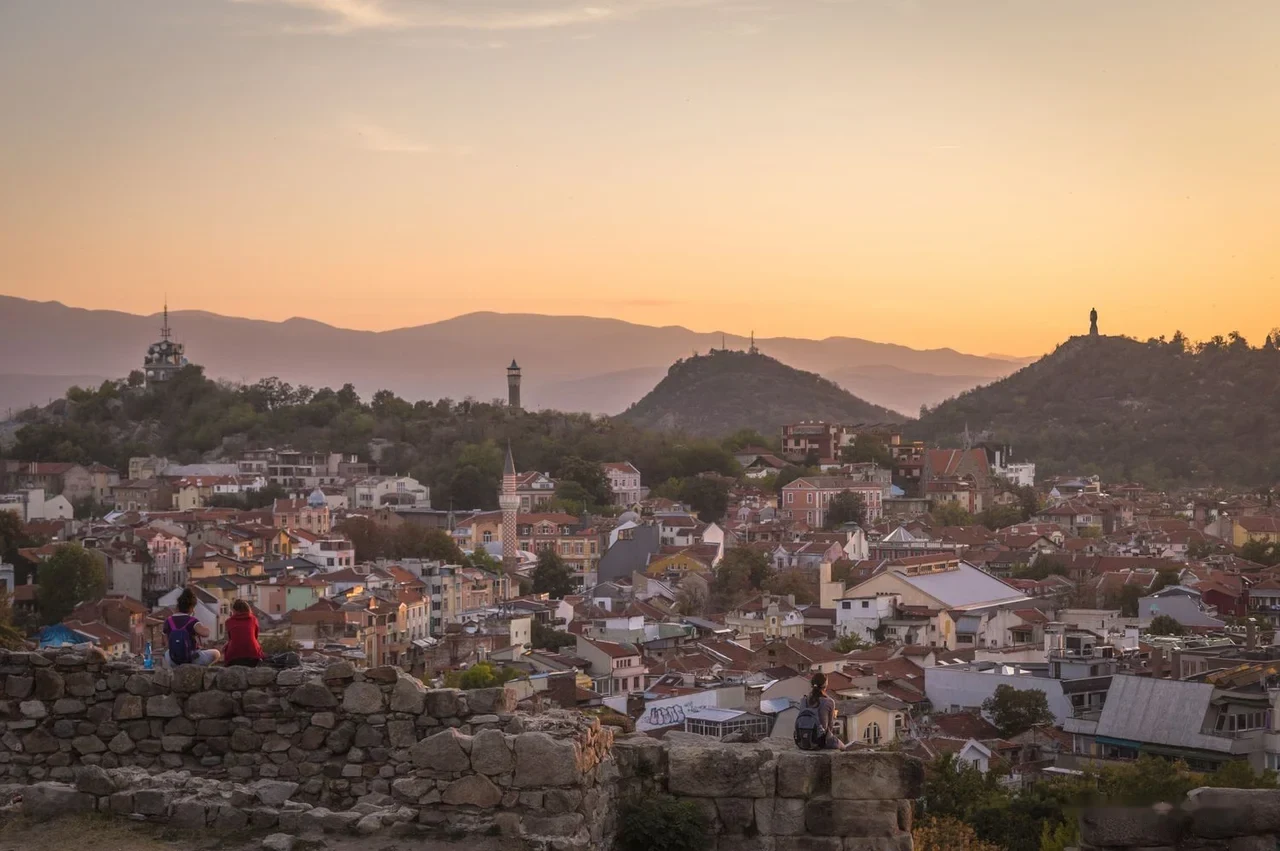
Bulgaria is my top recommendation for those with some savings who want a European status. Plovdiv, Varna, Burgas—cost of living $700–900/month, one-bedroom apartment rent $400–600.
Main scheme: property purchase from €25,000 grants residence permit eligibility. This is one of the cheapest EU entry points through real estate. An apartment in Plovdiv or regional areas for €25–40 thousand is realistic.
After 5 years of residence permit—eligibility for permanent residence. After 5 years of permanent residence—citizenship. Lengthy, yes. But a clear pathway with specific numbers.
Additional advantage for those with Bulgarian ancestry: Bulgaria recognizes citizenship by descent through Bulgarian ancestors. From 2026, the procedure is simplified; documents are submitted directly to the Ministry of Justice. If you have even one Bulgarian ancestor—that changes the conversation entirely, without investment.
Turkey Antalya: affordable but with caveats.
Antalya is perhaps the most popular option among Russians who relocated in recent years. One-bedroom apartment rent $500–900, living expenses can fit within $1200–1800/month if desired.
Residence permit through apartment rental is a workable scheme, processed through iGöç (Turkish immigration service). Processing time—1–2 years, renewable.
I'll be about the risks. Turkey has tightened conditions for foreigners in recent years: it periodically closes districts to new residence permits (too high concentration of foreigners), housing costs have risen, the lira is unstable. I've seen people denied residence permit renewal without clear explanation. Turkey is a workable option, but with less predictability than desired.
Bali: beautiful, but not permanent residence.
I mention Bali separately because I'm constantly asked "what about Bali?" You can live there for $700–1000/month, nature is beautiful, internet is good, many Russian speakers.
Here's what's important to understand: Indonesia does not grant permanent residence to most foreigners. Bali schemes involve tourist visas (60 days), re-entry visas, social visas through a sponsor. These are legal schemes, but they're not permanent residence. You always remain "temporary."
For full-fledged emigration with long-term status prospects, Bali doesn't work. As a base for 1–2 years while you decide where to move next—why not.
Residence permit conditions: what's realistically accessible without significant funds.
Let's break down specific programs that work for people with limited budgets.
Bulgaria—residence permit through property: From €25,000 in any region. The apartment remains yours. Residence permit is issued for one year, renewable. After 5 years—permanent residence.
Portugal D7—passive income: You must confirm income of €820/month for the first applicant. Eligible sources include: pension (including Russian pension if documents exist), rental income from Russian property, dividends, freelance contracts. Portugal in the EU—that's a different status level.
Serbia—through sole proprietorship: Registration takes 2–3 weeks, minimal cost. Residence permit issued for one year, renewable.
Georgia and Armenia—through business or employment: Straightforward if you work online and are prepared to register a local sole proprietorship.
Key point: don't confuse "right to stay visa-free" with residence permit. These are different statuses with different rights and different protections.
"I'm often asked: 'Anna, would you yourself move to Georgia or Bulgaria?' I answer —it depends on your goals. If you need a European passport within 10 years—Bulgaria is absolutely viable, and €25,000 for EU entry is very reasonable by market standards. If you just want to breathe and live peacefully—Tbilisi or Yerevan provide this without extra formalities. But here's what I know for certain from my practice: people who come with a request to 'do it cheap' often underestimate one important factor—the cost of a mistake. Moved to a country without understanding tax consequences—lost more than you saved on rent. Lived a year on a tourist visa, then found out you won't get a residence permit retroactively—lost time. That's why my recommendation is always the same: before calculating rent, understand your legal status. How many days can you stay visa-free. What's needed for a residence permit. What tax obligations arise. This takes one proper consultation call—but saves months of stress later. Budget emigration works. I've seen people who relocated with $800 and after a year felt better than in Moscow on a salary three times higher. It's not about money; it's about choosing the right country for your specific situation."
Cost of living: country comparison table.
Here are real figures I see in client accounts—not tourism blogs.
- Tbilisi: Rent $400–600, food $200–300, transport $50–70, total from $650–970.
- Yerevan: Rent $350–550, food $180–280, transport $40–60, total from $570–890.
- Belgrade (non-capital cities): Rent $400–600, food $250–350, transport $50, total $700–1000.
- Montenegro (Podgorica/Bar): Rent $450–700, food $250–350, transport $60, total $760–1110.
- Bulgaria (Plovdiv): Rent $400–600, food $280–380, transport $50, total $730–1030.
- Antalya: Rent $500–900, food $300–450, transport $60–80, total $860–1430.
- Bali: Rent $400–700, food $250–400, transport $80–120, total $730–1220.
- Limassol (Cyprus): Rent $800–1200, food $400–550, transport $80, total $1280–1830
- Porto (Portugal): Rent $900–1400, food $450–600, transport $80, total $1430–2080
These are baseline figures excluding entertainment, healthcare, and unforeseen expenses. Add 20–30% for real-life costs.
Have questions? We'll analyze your case for free.
Get a free consultationTaxes: what people forget when relocating
Many skip this section - and regret it. Tax issues must be resolved before relocation, not after.
Russia considers you a tax resident if you spend more than 183 days per year in the country. Once you relocate permanently, you cease to be an RF tax resident. The personal income tax (PIT) rate for non-residents increases from 13% to 30% on income from Russian sources. This matters if you own Russian real estate that you rent out or have Russian accounts earning interest.
In your new country: most countries listed above will tax your worldwide income if you spend more than 183 days there and obtain tax residency status. Rates: Bulgaria 10% - one of the lowest in the EU. Portugal - more complex, but favorable regimes exist. Georgia and Armenia are relatively favorable to remote workers.
I always tell clients: sort out your taxes on paper first, then buy your tickets.
How to test a country before relocating
I have a simple rule: before applying for a residence permit, spend at least 30–60 days in the country living as if you actually live there, not on vacation.
What to check: rent an apartment in a regular neighborhood (not a tourist area), visit an ordinary supermarket, figure out public transportation, visit a local bank (whether you can open an account as a foreigner - this is critical), find a Russian-speaking doctor or at least confirm that healthcare is accessible.
One more thing I recommend checking personally: attitudes toward Russians. In most countries listed above, attitudes are neutral or warm. However, there can be nuances depending on the specific city and current political situation.
And finally: check whether you can open a bank account there. Without an account, you won't be able to pay rent normally, receive transfers, or obtain a residence permit. In Georgia and Armenia this is easier. In the EU - more difficult, especially for RF citizens.
How to choose a country for yourself: my algorithm
Every time someone comes to me with the request "where should I move cheaply," I ask three questions.
First: do you have savings? If you have €25–40 thousand - we look at Bulgaria. If only monthly income - we look at Portugal's D7 or Serbia through a sole proprietorship.
Second: is European status important to you? If yes - Bulgaria or Portugal; there are virtually no other cheap EU entry points. If you just want comfortable living without visa problems - Georgia, Armenia, Serbia.
Third: what's your language situation? Zero English and no desire to learn - choose countries with Russian-speaking communities (Georgia, Armenia, Montenegro, Bulgaria). Basic English - Portugal, Cyprus, Turkey open up.
After these three questions, usually 1–2 real options remain. We concentrate on those.
Common mistakes in budget emigration
In 12 years of practice, I've seen the same mistakes repeated over and over.
Mistake 1: confusing tourism blogs with reality. "I live in Tbilisi on $400" - this is one person's story who rents a room, eats at home, and doesn't get sick. This is not your budget.
Mistake 2: not accounting for relocation costs. Moving belongings, deposits, first months without or with delayed income - allocate 3–6 months of expenses as startup capital.
Mistake 3: ignoring healthcare. One hospital visit - and all your rent savings evaporate. Always purchase health insurance. Clarify in advance whether it covers chronic conditions.
Mistake 4: not thinking about banking. Living without a local account is extremely inconvenient. This must be resolved in the first weeks while you're still technically a "tourist."
Mistake 5: postponing status formalization. "I'll live on a tourist visa for now, then figure it out" - a standard story that ends either in deportation or airport panic.
Summary: which countries I recommend
If you want cheap and quick solutions - Georgia or Armenia as a starting point. No unnecessary formalities, Russian is understood, life is inexpensive. But this is a temporary base, not a final destination.
If you want European status with reasonable investments - Bulgaria. €25,000 in real estate, residence permit, path to permanent residency and EU citizenship. This is the best price-to-result ratio of everything I know.
If you have income from €820/month and are prepared for European bureaucracy - Portugal D7. Not the fastest procedure, but one of the best passports in the world in the end.
And remember: cheap emigration doesn't mean poor quality. It means well-planned.
Frequently asked
Questions people ask before deciding
01Which country is easiest to move to from Russia without significant funds?
The most accessible options without visa requirements and major investments are Georgia and Armenia. Russian citizens can stay there for extended periods without a visa, and the cost of living starts from $500–700/month for one person. To obtain a residence permit, you will need a business or employment.
02Is it possible to move to the EU with a minimal budget?
Yes. Bulgaria is the most affordable entry: real estate purchase from €25,000 grants the right to a residence permit. Portugal D7 is accessible with confirmed income from €820/month—pension, freelance, rental income. Cost of living in Plovdiv or Porto starts from $800–1,500/month.
03What is the D7 visa in Portugal and who is it suitable for?
D7 is a visa for people with passive or remote income. You need to confirm income from €820/month for the main applicant. Suitable options include: pension, freelance contract, rental income, dividends. This is a path to a residence permit, and then to citizenship of one of the best EU countries.
04What is the actual cost of living in Tbilisi in 2026?
One person in Tbilisi costs $650–900/month including rent. One-bedroom apartment rent in a non-central district is $400–600, food is $200–300, transport is $50–70. The city center is more expensive. Prices are slightly higher in summer due to tourists.
05Is it possible to live in Montenegro on $800 per month?
In resort towns like Budva—it is difficult, as rent skyrockets in summer. In Podgorica or Bar—it is realistic. Rent is $450–650, food is $250–350, transport is $60. For sea and mountains on a reasonable budget, choose non-tourist cities.
06How to obtain a residence permit in Bulgaria through real estate?
You need to purchase property for a minimum of €25,000. After this, you have the right to apply for a residence permit. The status is issued for one year and renewed annually. After 5 years of residence permit—right to permanent residency, after 5 years of permanent residency—to EU citizenship. The property remains in your ownership.
07Do you need to pay taxes in Russia after moving?
If you spend less than 183 days per year in Russia, you lose your Russian tax resident status. The personal income tax rate on income from Russian sources for non-residents is 30%. At the same time, tax obligations arise in your new country of residence. It is better to consult before moving.
08Is Bali permanent residency or a temporary arrangement?
Temporary. Indonesia does not issue permanent residency visas to most foreigners. Schemes on Bali include tourist visas, social visas through a sponsor, multiple-entry visas. This is legal, but you always remain a temporary resident without long-term status.
09Is it possible to open a bank account for a Russian citizen abroad?
It depends on the country. Georgia and Armenia are the easiest—accounts are opened in 1–2 visits. Turkey—possible, but some banks refuse. EU—more difficult, some banks refuse Russian citizens. This issue should be resolved in the first weeks of your stay in the country.
10Which country is best for a freelancer with remote income?
Georgia and Armenia are the simplest options: low tax rates, easy business registration, Russian-speaking environment. Bulgaria is attractive with a 10% tax rate and EU status. Portugal D7 allows legalization based on income without opening a local business.
11What should be verified before final relocation?
Spend 30–60 days in the country as a regular resident, not a tourist. Verify: opening a bank account, rental accommodation in non-tourist areas, healthcare accessibility, attitude towards Russians, actual cost of living without tourist markups.
12Are there countries where you can obtain residence permit without purchasing property and without an employer?
Yes. Portugal D7 - through income verification. Serbia - through business registration (affordable and fast). Georgia and Armenia - through opening a small local business for freelancers. Bulgaria - only through property purchase or employment.
About the author
Related materials
What to read next
 ComparisonAntigua and Barbuda or Grenada: Family Passport for Large Families in 2026
 AnalysisWhat is due diligence and why the Caribbean is rejecting applications
 AnalysisHow to Choose a Program: Citizenship, Residence Permit or Permanent Residency through Investment
Personal programme selection is conducted by Anna Kovalevskaya, Head of Legal, BRIDGES.
How a programme is chosen: goals breakdown
Budget, family, timelines and relocation plans - which answers lead to which programme.