BRIDGES Insights
Where should a Russian businessman move: countries with tax benefits 2026
Updated: June 2026·9 min read·Expert reviewed
Terms and costs verified: June 2026
Contents
Over the past three years, hundreds of entrepreneurs from Russia have approached me. Each has their own trigger: some are tired of growing tax burden, some lost access to international payment systems, some simply want to build business in a predictable environment. The question "where to move" sounds different, but the essence is the same: where can you work peacefully, pay reasonable taxes, and not fear that rules will change tomorrow? I have seen the most diverse stories. An IT entrepreneur who moved to Dubai and realized after six months that he overlooked Freezone nuances. A business owner who chose Bulgaria for 10% corporate tax and remained satisfied. A consultant who went to Georgia "for a couple of months" and has been living there for two years already. In this article, I will analyze six countries most often considered by Russian entrepreneurs. Not a promotional brochure - a breakdown: what actually works, where the pitfalls are, and what to look at first.
How to choose a country: three questions that decide everything
Before looking at tax rates, answer three questions yourself. First: where are your clients and partners? If business is tied to Europe - one set of options, to the Middle East or Asia - another. Second: are you willing to actually relocate or do you need a holding structure without moving? Third: is it important for you to obtain residence permit or citizenship? Everything depends on the answers. I have seen people choose a country only by tax rate - and then spend a year figuring out bank account, visa regime, and physical presence requirements. Let us analyze each country .
UAE: zero tax and Golden Visa
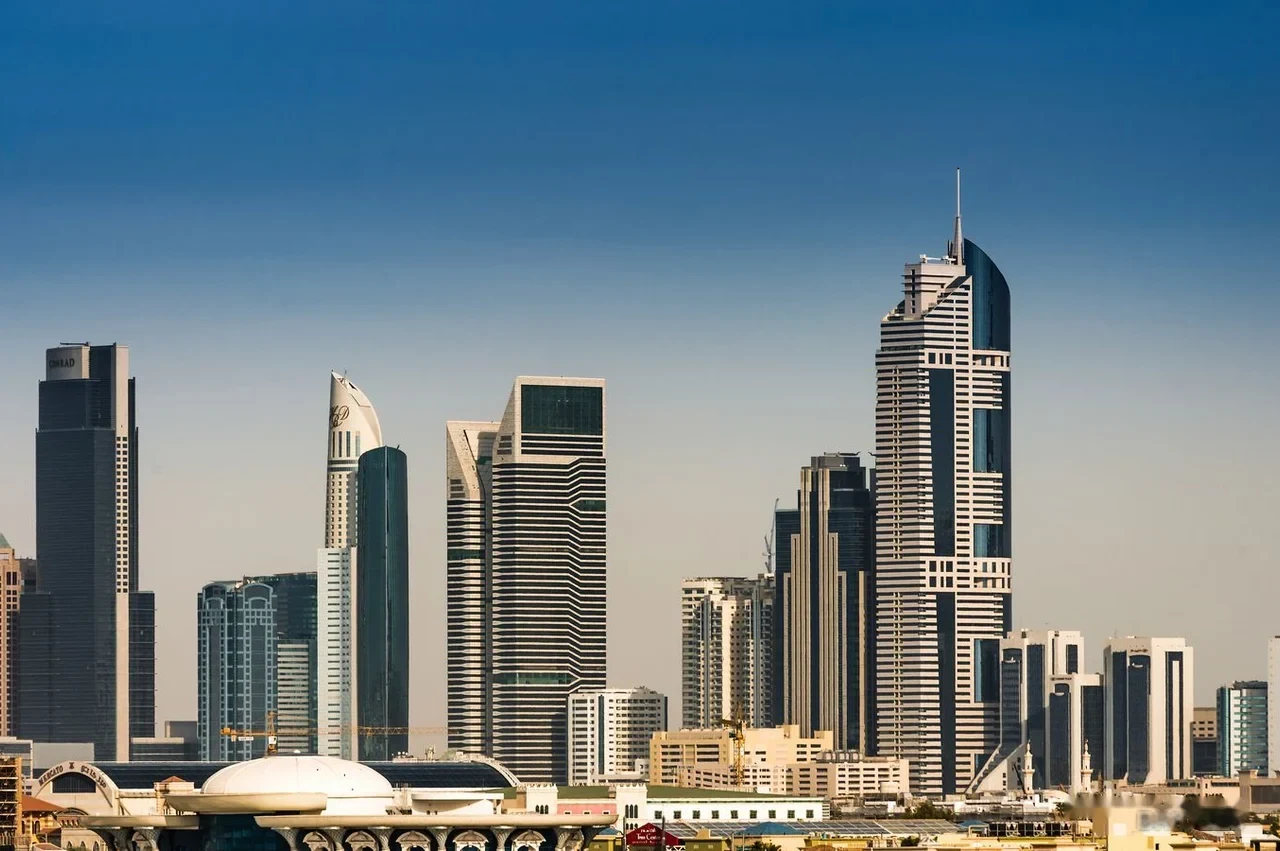
UAE is the most popular choice among my clients for the past three years. The logic is simple: 0% tax on profits in free zones (Freezone), no personal income tax, Golden Visa for 10 years.
But there are details worth understanding. Since 2023, UAE has a 9% corporate tax. However, for companies in Freezone it remains 0% - provided business is conducted within the zone or abroad. If you work with mainland UAE clients through a Freezone company - you need a mainland legal entity license or special permits. This is not critical, but adds expenses and complexity.
Small business with profit up to $100k per year pays 0% regardless of company type. This is a threshold for startups and consultants.
What attracts me about UAE: predictability. Rules have changed, but overall the country consistently builds its reputation as a business hub. Golden Visa through real estate investment from 2 million AED (~$545k) provides real stability - you do not need to renew visa every 2 years.
To be about downsides: cost of living is high, banking for Russians became complicated after 2022. Some banks work fine (Wio, Emirates NBD for business), but opening an account requires time and document preparation. Prepare for this in advance.
Cyprus: holding structures and IP-box
Cyprus is my personal favorite for structuring international business. 12.5% corporate tax - one of the lowest in the EU. But the main value is not in this.
IP-box regime: if your business involves intellectual property - software, patents, trademarks - effective tax rate reduces to 2.5%. This is a serious tool for IT companies and those monetizing licenses.
Holding structures: dividends from subsidiary companies in most cases are not taxed in Cyprus. No withholding tax on outgoing dividends (subject to conditions). Developed network of tax agreements - over 60 countries.
To obtain residence permit through real estate investment from €300k - this is Regulation 6(2), permanent status without requirement of constant residence. I guide clients along this path - the scheme works.
What to consider: Cyprus is in the EU, meaning CRS (automatic exchange of tax information) works in full force. Tax transparency here is real. For those wanting "gray" schemes - not your country. For business - an excellent option.
Portugal: NHR and life in Europe
Portugal attracts those wanting to live in Europe with reasonable taxes. NHR (Non-Habitual Resident) regime operated since 2009 and provided fixed 20% PIT for 10 years. Since 2024 it was reformed - now it is IFICI (Incentivo Fiscal à Captação de Investimento), aimed at specific professions and investors.
For businessmen: if you relocate to Portugal and become tax resident, foreign income with proper structure can be taxed at preferential rate. Corporate tax IRC is 21%, but there are benefits for small business and startups.
Golden visa in Portugal changed: real estate purchase in Lisbon and Porto no longer grants residence permit. Investments must go to funds, business restructuring, or specific regions. Threshold - from €500k.
Portugal is lifestyle plus European passport in 5 years. For families with children, for those thinking long-term - a good choice.
Georgia: territorial tax for IT and beyond
Georgia is perhaps the most underestimated option. Territorial taxation principle means: if your income comes from abroad, it is not taxed in Georgia. This is not a scheme, this is legislative norm.
Virtual Zone for IT companies: 0% corporate tax on income from IT services export. No complex conditions - register a company with Virtual Zone status and work with foreign clients. I know several IT teams that moved development there.
Georgia is not in EU, which for some is a minus (no European passport), for others a plus (less regulatory pressure, easier banking). Opening an account in a Georgian bank for a Russian today is incomparably easier than in a European one.
Low cost of living, Tbilisi is developing as an IT hub, infrastructure is improving. For entrepreneurs working remotely and valuing simplicity - a very worthy option. However, without prospects for European citizenship.
Bulgaria: 10% - the minimum in the EU.
10% corporate tax is the real minimum among EU countries. 5% dividend tax. Personal income tax is also 10% - flat scale. Everything is simple and predictable.
Bulgaria is in the EU, in the Schengen zone (joined in 2024), living costs and real estate prices are significantly lower than Western Europe. Sofia is actively developing as a business destination.
For Russians with Bulgarian ancestry, Bulgaria offers another option - citizenship by descent. Since 2026, the procedure has been simplified: documents are submitted directly to the Ministry of Justice, a certificate from DABCH is no longer required. I am currently handling several cases through this route - results are positive.
Banking services for Russian clients are more complicated than in Georgia or the UAE - European banks are cautious with compliance. However, this is manageable with proper document preparation.
Serbia: 15% and visa-free for Russians.
Serbia is an option for those who want to be in Europe but not in the EU. 15% corporate tax, tax incentives for IT and R&D companies (research expenses reduce the tax base by double).
Key advantage: visa-free entry for Russian citizens, opportunity to obtain residence permit through business establishment. Belgrade has attracted a large community of IT specialists from Russia and Ukraine - there is an ecosystem, mentors, and partners.
Serbia is not in the EU and not in Schengen. There is a path to membership, but it is uncertain. A Serbian passport provides visa-free entry to a number of countries, but not the USA and not most developed markets. If mobility is important for you - keep this in mind.
For IT entrepreneurs who need a European location, simple administration, and low expenses - Serbia works. For those thinking about long-term EU citizenship - no.
Comparison by key parameters.
a comparison of six countries by parameters important to entrepreneurs:
| Country | Corporate tax | Personal income tax | EU | Banking |
|---|---|---|---|---|
| UAE | 0% (Freezone) / 9% | 0% | None | Average |
| Cyprus | 12,5% | 0–35% | Yes | Complex |
| Portugal | 21% | 20% (NHR/IFICI) | Yes | Average |
| Georgia | 0% (Virtual Zone) | 20% (local) | No | Simple |
| Bulgaria | 10% | 10% | Yes | Average |
| Serbia | 15% | 10–15% | No | Average |
Real relocation costs and structure.
Tax rate is only part of the equation. Here are the real costs you should factor in:
UAE (Freezone): Company registration - $3,000–6,000/year depending on the zone. Resident visa - $1,500–2,000. Office rental (flexi-desk) - from $1,500/year. Total entry: from $6,000.
Cyprus: Company registration - €1,500–2,500. Annual maintenance (audit is mandatory) - from €2,000. If residence permit through real estate - from €300k + VAT ~€54k. Total entry threshold is high, but the toolkit is serious.
Bulgaria: OOD registration (LLC equivalent) - €500–800. Annual accounting services - €1,200–2,000. Minimum charter capital - €1 (yes, one euro). The most affordable entry into the EU.
Georgia: Individual entrepreneur or LLC registration - $100–300. Accounting - $200–500/year. Entry threshold is minimal among all options.
Important: I always recommend budgeting separately for legal support in the first year - $2,000–5,000 depending on structure complexity. Money saved on consultations often costs more later.
Tax residency: how not to pay twice.
The most common mistake I see: an entrepreneur opens a company in the UAE or Georgia but continues to live in Russia for more than 183 days per year. Tax residency remains Russian - and the Russian tax service is entitled to reassess taxes.
To become a non-resident of Russia for tax purposes, you must spend more than 183 days per year abroad. It sounds simple, but in practice requires documentary proof: foreign passport with entry/exit stamps, rental agreements, utility bills, bank statements.
CFC (Controlled Foreign Company rules): if you own more than 25% of a foreign company and remain a tax resident of Russia, the profit of that company may be subject to personal income tax in Russia. The profit threshold for mandatory reporting is 10 million rubles per year.
Double taxation avoidance agreements: Russia has effective DTAAs with many countries, including Cyprus (revised in 2023), Serbia, and Bulgaria. DTAAs also exist with the UAE and Georgia. These agreements allow foreign taxes paid to be credited against Russian tax liability.
My advice: do not plan your structure independently. There are too many nuances that depend on your specific situation.
"I remember a client—let's call him Artyom—an IT entrepreneur with a product for the European market and a remote team. He came with a clear request: 'I want to move to the UAE, I've heard about zero tax.' We started investigating. It turned out that 80% of his clients were in Germany and the Netherlands, he planned to split his time between Moscow and Dubai, and his school-aged children's education was important. A Dubai Freezone company was a good idea, but not the complete picture. Ultimately, we built the following structure: an operating company in Cyprus (12.5% corporate tax, IP-box for licenses—effectively 2.5%), a holding company in the UAE for accumulation and dividend distribution (0% tax at source), and personal tax residency in Cyprus through permanent residence. The family settled in Limassol, with excellent schools and a European environment. Artyom spends 183+ days per year in Cyprus—this is genuine presence. What strikes me about this case: if he had simply 'opened a company in Dubai' without thorough analysis, he would have paid twice as much and faced risks with the Russian Federal Tax Service. The correct structure saved him hundreds of thousands of dollars in the first three years. I often tell clients: tax planning is not about hiding money. It's about structuring your business so it operates efficiently, transparently, and sustainably. A good structure does not fear audits—it welcomes them, because everything is justified and documented. If you are considering relocation, do not postpone the question 'until later.' Tax legislation changes, windows of opportunity close. NHR in Portugal has already been reformed. The Cypriot regime is under constant pressure from the EU. Georgia is still open, but no one knows for how long. It is better to act now while the rules are clear."
Banking question: where you can realistically open an account
Since 2022, opening a bank account has become a separate challenge for Russians. To be : opening an account with European banks is difficult—compliance is strict, questions are numerous, and processing can take months.
Where accounts are currently available:
UAE: Wio Bank—a digital bank, favorable to Russians, online account opening in 1–2 weeks. Emirates NBD for business—requires an in-person visit. Mashreq—an option for Freezone companies.
Georgia: TBC Bank and Bank of Georgia—open accounts for Russians with a residence permit or company registration documents. One of the simplest options.
Bulgaria: DSK Bank, Fibank—operational, but compliance has tightened. Documents on the source of funds are required.
Cyprus: Bank of Cyprus, Hellenic Bank—difficult, require extensive documentation, lengthy processing. Possible, but requires preparation.
Alternative: EMIs (electronic payment systems)—Wise Business, Revolut Business. Not a full bank replacement, but often sufficient for operational activities.
What to consider when choosing: checklist
When a client comes to me with the question 'where should I relocate,' I always go through this checklist:
- Income type: Active (services, trade) or passive (royalties, dividends, rent)? Different regimes work differently.
- Client geography: Where are your customers located? This affects taxation at source.
- Willingness to relocate physically: For most preferential regimes, genuine presence is required. Fictitious residency is a risk.
- Family: Do you have school-age children? Educational quality varies significantly across countries.
- Planning horizon: 2–3 years or permanently? This determines whether it's worth investing in real estate for permanent residence.
- Compatibility with Russian tax legislation: Do you remain a Russian resident, are there CFC risks?
There is no universal answer. There is the correct answer for your situation.
Have questions? We'll analyze your case for free.
Get a free consultationCommon mistakes when choosing a jurisdiction
Over the years of practice, I have compiled a list of mistakes that are repeated again and again. I'm sharing them so you don't make the same ones.
Mistake 1: Choosing based on tax rate while ignoring substance. Tax authorities (both Russian and foreign) verify the reality of presence. No office, employees, or on-site director—the structure may be reclassified.
Mistake 2: Failing to resolve Russian residency status. Opening a company in the UAE while continuing to pay taxes in Russia is not optimization—it's double burden.
Mistake 3: Overlooking the bank account. The company exists, but there is no business account—operations cease. Resolve the banking question in parallel with registration.
Mistake 4: Cutting corners on legal support. A hastily constructed structure often requires costly restructuring. I have repeatedly seen people overpay three times more correcting what was not done properly from the start.
Mistake 5: Not thinking about the exit. What will happen to your assets and structure in 5 years? The ability to liquidate, sell the business, or provide for inheritance must be built into the structure from the beginning.
My advice: where to start
If you have read this far, the question is serious. Good. That means you will approach it thoughtfully.
My practical advice: start with a tax analysis of your current situation. Understanding what risks you face now and what effect relocation will have is the first step. Without this, any discussion about "best jurisdictions" remains abstract.
Next, select 2–3 countries that fit your criteria and obtain specific consultations for each. Don't just read articles online—legislation changes rapidly, and current details matter.
At BRIDGES GLOBAL, we work with entrepreneurs exactly this way: first we analyze your structure and goals, then we propose options. No template solutions—only what works in your specific case.
Frequently asked
Questions people ask before deciding
01Can I open a company in the UAE without relocating?
Technically, yes. A freezone company can be registered without mandatory residence in the UAE. However, if you remain a tax resident of Russia, Russian legislation on CFC (controlled foreign companies) may require you to declare this company's profit. Real tax benefits arise only when you change your tax residency.
02What is territorial tax in Georgia and how does it work?
Georgia taxes only income derived within Georgian territory. If your clients are overseas and funds come from foreign sources, this income is not taxed in Georgia. For IT companies with Virtual Zone status, there is 0% corporate tax on export services. Personal income tax on Georgian employee salaries is 20%.
03Bulgaria is in the EU—does that mean it's easier to get permanent residency as a European?
Not quite. Permanent residency in Bulgaria grants the right to live and work in Bulgaria, but not automatically throughout the EU. For free movement across the EU, you need Bulgarian citizenship. It can be obtained after 5 years of lawful residence. Or—if you have Bulgarian ancestry—through citizenship by descent, which is considerably faster.
04Which country is best suited for IT business?
Georgia (Virtual Zone, 0% on export), Cyprus (IP-box 2.5% on software income), UAE (Freezone, 0%). The choice depends on where you're prepared to be physically present, where your clients are, and how important European business registration is to you.
05Do I need to obtain permission from the Russian Federal Tax Service to open a foreign account?
Since 2022, the notification procedure has changed. Russian citizens are required to notify the Federal Tax Service (FTS) of opening a bank account abroad within 30 days. Additionally, an annual report on account transactions must be submitted. Exception: if you spent more than 183 days outside Russia in a year and are not a Russian tax resident.
06What is the IP-box in Cyprus and who is it suitable for?
IP-box is a preferential tax regime for income from intellectual property. If your company receives income from software licensing, patents, trademarks - 80% of this income is tax-exempt. Effective tax rate: 2.5% instead of 12.5%. Suitable for IT companies, software developers, and patent holders.
07Is it possible to transfer a Russian business to a foreign jurisdiction?
Yes, but it is a complex process. Options: redomiciliation (relocation of a legal entity - available in the UAE and certain other jurisdictions), reorganization (establishment of a new foreign structure with asset transfer), parallel operation (the Russian legal entity remains, a foreign entity is created for new operations). Each option has tax consequences - individual analysis is required.
08How long does it take to obtain tax residency in the UAE?
Tax residency in the UAE is obtained through a residence visa. With a Freezone company in place, the visa is issued within 2–4 weeks. Subsequently, you must obtain an Emirates ID and, if necessary, a Tax Residency Certificate from the UAE Ministry of Finance. The complete process takes 1–2 months if all documents are in order.
09Is Serbia a real business alternative or only for living?
A real business alternative, especially for IT. 15% corporate tax, R&D incentives, and the ability to work with European clients. Belgrade actively attracts technology companies. Drawback: Serbia is not in the EU or Schengen, which limits mobility and may complicate relations with some European partners.
10What is NHR in Portugal and how do you obtain it?
NHR (Non-Habitual Resident) is a special tax regime for new Portugal residents. It provided a fixed 20% personal income tax for 10 years. As of 2024, it has been replaced by the IFICI regime, targeted at specific professions and investors. To obtain it, you must become a tax resident of Portugal (spend 183+ days or own a property) and submit an application to the Portuguese tax authority.
11Does the UAE have a double taxation avoidance agreement with Russia?
Yes, the DTA between Russia and the UAE is in effect. This means that taxes paid in the UAE may be credited against Russian tax obligations. However, upon changing tax residency and complying with the rules, this agreement is generally not required - Russian taxes simply cease to be assessed on foreign-source income.
12What documents are required for relocation and company registration?
Basic package in most jurisdictions: foreign passport, proof of address (utility bills, bank statement), proof of source of funds (tax returns, contracts, statements), sometimes - police clearance certificate. Bank account requirements are stricter: business plan, transaction history, beneficial ownership documentation. The specific list depends on the country and bank - verify in advance.
Transparency
How this material was prepared
- Author
- Sergey Evdokimov, managing Partner, BRIDGES
- Terms and costs last verified
- June 2026
- Sources
- official government authorities of the relevant country and state publications
- Methodology
- government minimum requirements are stated separately from due diligence charges, state fees, legal and banking costs
Sources and methodology
Figures, terms and timelines are checked against official sources as of June 2026. Link availability verified in August 2026. Third-party blogs and agent websites are not used as a source of programme terms.
- [1]EUR-LexOfficial texts of European Union legislationeur-lex.europa.eu/homepage.html
- [2]European Commission - Migration and Home AffairsEntry and residence rules in the EUhome-affairs.ec.europa.eu/index_en
Methodology: tables and charts state government minimum investment requirements; due diligence charges, state fees, legal, banking and other costs are calculated separately and are not included in the minimum thresholds.
About the author
Related materials
What to read next
 ComparisonAntigua and Barbuda or Grenada: Family Passport for Large Families in 2026
 AnalysisWhat is due diligence and why the Caribbean is rejecting applications
 AnalysisHow to Choose a Program: Citizenship, Residence Permit or Permanent Residency through Investment
Personal programme selection is conducted by Anna Kovalevskaya, Head of Legal, BRIDGES.
Tax residency explained
When tax residency arises, how double taxation is avoided and what the tax authority checks.