Comparisons · Greece
Montenegro or Greece: Residence Permit by the Sea - Balkans or EU in 2026

Updated: June 2026·14 min read·Expert reviewed
Terms and costs verified: June 2026
Contents
The Adriatic and Aegean seas are almost neighbors, and both countries beckon with olive groves and sea views from the window. But behind a similar picture lie two fundamentally different solutions. Montenegro offers an affordable entry point and temporary residence permit as a EU candidate country, not yet in the Schengen zone. Greece sells the golden visa at a higher price, but with immediate Schengen access and a real pathway to an EU passport. We break down the numbers to show which option is better for whom in 2026.
Summary: Which to Choose
If your goal is to quickly and affordably obtain a European residence permit by the sea, betting on a country about to join the EU, choose Montenegro: entry from €150,000 and euros in your wallet today. If Schengen freedom of movement and a real path to an EU passport matter more, choose the Greek Golden Visa - higher entry cost, but stronger status.
- Budget and Seaside Location, Betting on Future EU Membership - Montenegro
- Schengen Access Immediately and EU Passport Prospect - Greece
- Minimal Presence Required and Rental Income Generation - Both suitable, but Greece does not require residence in the country to maintain the visa
Below is a detailed comparison by entry threshold, costs, timelines, taxes, and path to citizenship. If you want to discuss your budget and goals right away, book a free BRIDGES consultation.
Comparison Table: Montenegro vs. Greece
| Parameter | Montenegro (Residence Permit) | Greece (Golden Visa) |
|---|---|---|
| Real Estate Threshold | from €150,000 | €250,000 / €400,000 / €800,000 by zones |
| Status Type | Temporary Residence Permit | Long-term Investor Residence Permit |
| Status Duration | 12 months, annual renewal | 5 years, renewal every 5 years |
| Residence Requirement | Physical presence required for renewal | Not required to maintain visa |
| Schengen | No (country outside Schengen) | Yes, free travel within the zone |
| Currency | Euro | Euro |
| Permanent Residence | After 5 years | After 7 years (same as citizenship) |
| Citizenship | Naturalization ~10 years | From age 7, EU passport |
| Family | Spouse, children; parents - separately | Spouse, children under 21, parents of both spouses |
| Personal income tax | 9-15 % | Progressive scale + special regimes |
Detailed analysis of each program - in materials on Montenegro residence permit and Greece's golden visa.
Montenegro: affordable entry and focus on the EU
Montenegro is a candidate for EU membership that has advanced further than all other applicants and officially aims for membership by 2028. The country already uses the euro, although it is not formally part of the EU, eurozone, or Schengen. For an investor, this means a European pace of life and stable currency at an entry price unavailable within the EU itself.
From January 2026, a minimum property value threshold of €150,000 applies for residence permits through real estate. Previously, any price purchase was formally acceptable; now the threshold is fixed in the new version of the Foreigners Act. Permits issued based on real estate before January 17, 2026 can be renewed without confirming the property value.
- Grounds for residence permit: property ownership, employment, business establishment, family reunification.
- Duration: temporary residence permit is issued for 12 months and renewed annually.
- Speed: police review applications within an average of 30 days from submission.
- Permanent residence: the right to apply appears after 5 years of continuous legal residence (conditions - on Montenegro's government portal). gov.me).
Important nuance - this is a temporary status tied to actual presence in the country. Montenegro's residence permit is closer to classical immigration than passive golden visa: you must actually live here to renew your permit and move toward permanent residence.
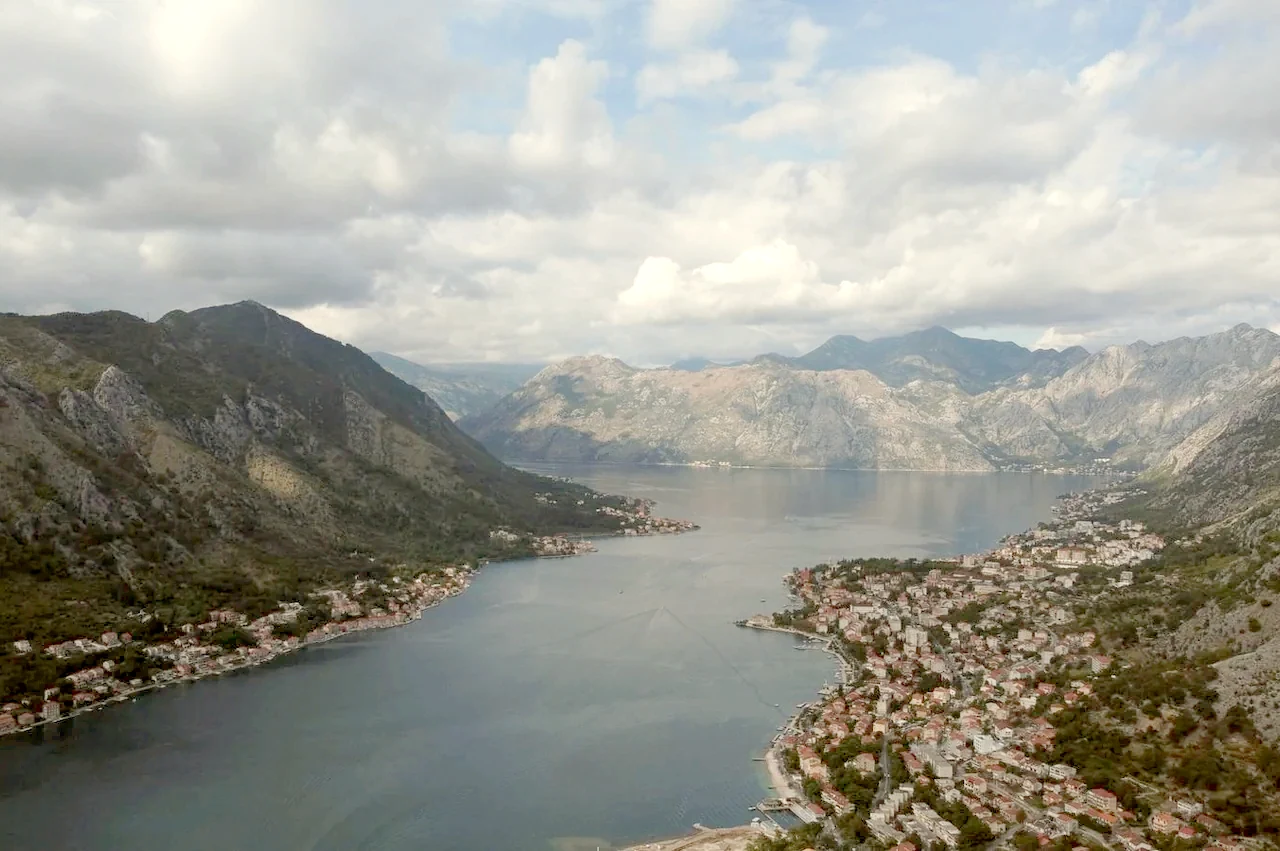
Montenegro's real estate market is noticeably cheaper than Greece's. On the coast - in Budva, Tivat, Kotor, and Herceg Novi - for a budget of €150,000-200,000 you can realistically buy a liquid apartment with Adriatic views, whereas in Athens or popular islands this same amount barely reaches the entry threshold for a golden visa. Tivat's port with yacht marinas has turned the country's north into a premium destination, and rental demand here is high during the resort season. For an investor, this means not just status but a working rental asset.
Infrastructure-wise, Montenegro lags Greece in scale: fewer international flights, more modest healthcare and education systems, less developed road network. However, the country is compact, speaks a closely related Slavic language, and maintains an informal, human atmosphere that no longer exists in well-marketed Mediterranean resorts. Many choose it precisely for this - and for the belief that after EU accession, prices on everything, including real estate, will rise noticeably.
Greece: Schengen and the road to an EU passport
Greece is a full member of the European Union and Schengen Area. Its golden visa grants a long-term investor residence permit that does not require permanent residence in the country but opens free travel across the entire Schengen zone and over time - a path to a Greek, or European, passport.
In 2026, property thresholds are divided by geographic zones:
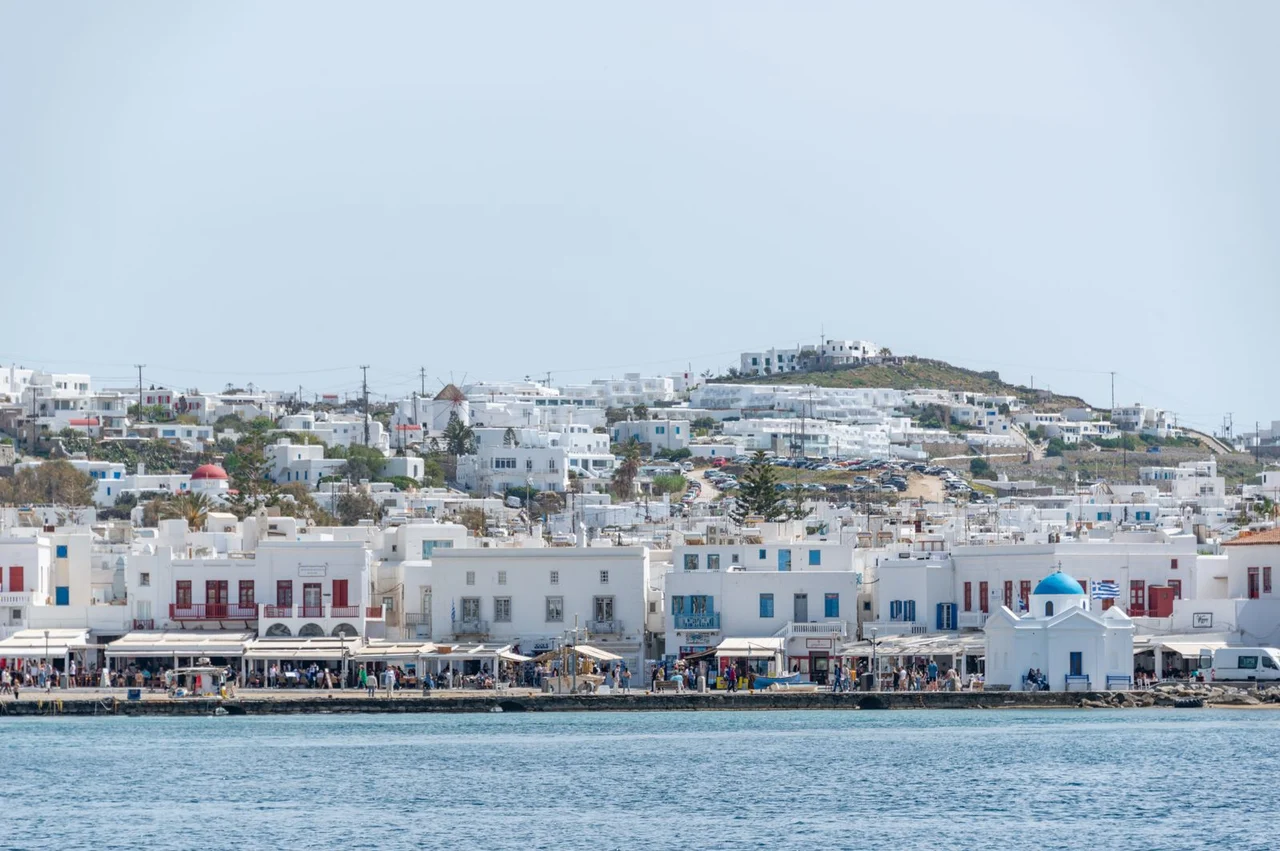
- 800 000 € - Attica (including Athens and Athens Riviera), Greater Thessaloniki, Mykonos, Santorini, and islands with a population exceeding 3,100 people.
- 400 000 € - all other Greek territory. For zones of €400,000 and €800,000, the property must be residential with a minimum area of 120 sq. m.
- 250 000 € - conversion of commercial premises to residential (conversion completed before application) or restoration of cultural heritage sites throughout the country.
Residence permit is issued for 5 years and renewed every 5 years as long as the investment is maintained. Living in Greece is not required to maintain the visa - property ownership is sufficient. If you want an EU passport, you must meet naturalization requirements: actual residence of approximately 183 days per year over 7 years.
Greece fits into the general picture of European investment residence permits - program comparison is available in the review of European golden visas in 2026.
Greece's real estate market has become two-speed after the threshold reform. In premium zones for €800,000, investors target Athens Riviera, central Athens, Thessaloniki, and star islands, where rental is stable and resale is liquid. In regions for €400,000, the selection is wider and cost per square meter lower - mainland Greece, Peloponnese, less popular islands. The €250,000 scenario through commercial-to-residential conversion or heritage monument restoration requires more careful work and a good lawyer, but provides access to historic properties in city centers.
Greece offers what Montenegro does not yet have: EU and Schengen membership with all accompanying infrastructure - international airports with direct flights worldwide, European healthcare and universities, EU-recognized diplomas. For a family with children considering studies in Europe, this is a compelling argument. The price is a higher entry threshold and stricter banking compliance during the transaction.
Total cost: entry, fees, family
Comparing only the property threshold is a mistake. Real expenses comprise the investment, government fees, legal support, appraisal, purchase taxes, and payments for each family member.
- Montenegro. Property from €150,000 plus real estate purchase tax, notarial and legal expenses, government fees for residence permit registration and annual renewal. Entry budget is significantly lower than Greece's, making the country a convenient starting point for a family with limited capital.
- Greece. Minimum €250,000 in a niche conversion scenario, often €400,000 or €800,000 depending on location. Plus transfer tax, attorney fees, application fees, and payments for each included relative.
Money in both programs is returnable in the sense that it is invested in a real asset: upon property sale, you recover capital (accounting for market dynamics). However, in Greece, selling the property usually means losing status, so the ownership horizon must be planned in advance. To match the full cost estimate for your situation, discuss figures at a consultation with BRIDGES.
Let's examine the difference with a practical example. A family with a budget of up to €200,000 in Montenegro covers both the entry threshold and associated expenses, with room to spare for renovation and furnishing. The same family in Greece cannot fit this budget even under the most favorable scenario: a minimum of €250,000 goes to the property alone in the rare conversion scheme, while a standard purchase starts at €400,000. A half-million euro gap is not a nuance but a change of league.
On the other hand, Greek capital works toward stronger status: you pay more but gain Schengen and an EU passport option not included in Montenegro's package. Therefore, it is more accurate to compare not absolute amounts but cost per unit of result: how much Schengen is worth to you personally, exactly how much a European passport, exactly how much broad family coverage. For one investor this premium is justified; for another it is excessive.
Timeline and process step by step
Procedures are similar in structure, but speed and logic differ.
- Montenegro: Property selection and purchase (from €150,000) - registration of ownership - police notification - decision within approximately 30 days - issuance of residence permit card for 12 months - annual renewal - application for permanent residence after 5 years.
- Greece: Property selection in the required zone - transaction and payment - obtaining tax identification number and opening bank account - document submission through attorney - issuance of residence permit for 5 years - renewal every 5 years - application for citizenship after 7 years upon meeting residency requirements.
The Montenegrin path is faster at the start but requires annual renewals and physical presence in the country. The Greek route is slower initially due to bureaucracy, but then the status requires minimal maintenance - renewal once every five years and preservation of the investment.
In practice, timeline is affected not by regulatory deadlines but by document preparation. In Montenegro, delays typically occur during property registration and confirmation of legal residency; in Greece - during account opening and bank compliance procedures before the transaction. Therefore, the actual project schedule almost always depends on the quality of the dossier rather than government agency performance. The cleaner and more complete the initial package, the closer actual timelines will be to regulatory ones.
Time must also be allocated for property selection and verification. In Greece, it is important to confirm that the property meets zoning and size requirements (minimum 120 sq. m for €400,000 and €800,000 categories), otherwise the investment will not be counted. In Montenegro - that the property meets the new threshold of €150,000 and is legally clear. BRIDGES handles this verification before you transfer funds.
What the status provides: Schengen, access, residence
The main difference between the countries is the strength and scope of the status.
- Greek residence permit Opens free travel throughout the Schengen zone without visas, right to live and conduct business in Greece, access to European healthcare and education, and through naturalization - an EU passport with all rights of a Union citizen.
- Montenegrin residence permit Provides legal residence in the country, euro as currency, and resident status of a state that may become an EU member in the foreseeable future. However, it is not yet Schengen: for travel within the zone, you still need separate visas or visa-free status of your passport.
Betting on Montenegro is largely betting on the future: if the country joins the EU around 2028, residents will be within the European perimeter. Greece offers this perimeter today, without waiting.
Family inclusion
Both programs allow status to be granted to family members, but conditions differ in details.
- Montenegro. Residence permit extends to spouse and minor children through family reunification. Parents and adult children are usually registered on separate grounds, not automatically.
- Greece. One investment covers the main applicant, spouse, children (typically up to age 21) and parents of both spouses. This is one of the broadest family coverage options among European golden visas.
If the goal is to secure the broadest circle of relatives under one capital, the Greek program is noticeably more generous. If the family is compact, the difference in coverage ceases to be decisive, and entry price becomes the primary consideration.
Taxes and capital source verification
Obtaining a residence permit does not automatically make you a tax resident - status depends on where you actually spend time and where your center of interests is located.
- Montenegro. Personal income tax on a progressive scale of 9-15%: salary up to €700 is not taxed, €700 to €1,000 - 9%, above €1,000 - 15%. Corporate tax is also 9-15% depending on profit. Low rates are one of the significant arguments in favor of the country.
- Greece. Progressive income tax scale is higher than Montenegro's, but special regimes exist for new residents and pensioners that can substantially reduce the burden with proper planning.
Under both programs, the investor undergoes source of funds verification. BRIDGES pre-audits your document package - capital sources, banking history, cleanliness of the real estate transaction - so the application does not receive a rejection due to formalities. This is particularly important in Greece, where real estate transactions and bank compliance are stricter.
It is important to understand the difference between residence permit and tax residency. The residence permit itself in either country does not obligate you to pay taxes there on all worldwide income - this occurs only if you become a tax resident, typically by spending over 183 days in the country per year or transferring your center of life interests there. An investor with a Greek golden visa who does not live in Greece typically does not become a tax resident. However, one who actually relocates to Montenegro to advance toward permanent residence will very likely fall under local taxation - and here the low rates of 9-15% come in handy.
Greek preferential regimes deserve separate attention. For high-net-worth individuals transferring tax residency, there is a regime with fixed annual payment on foreign income; for pensioners - reduced rate on foreign pension; for specialists and repatriates - partial exemption of labor income. With proper planning, this can make the Greek burden competitive with Montenegro's, despite a higher base scale.
"I often see clients comparing these two countries only by entry price - and that is the most expensive mistake. Montenegro and Greece solve different tasks. If a person needs Schengen and an EU passport, no savings at the start in Podgorica will replace that: you will eventually have to go to the full European Union anyway. And if budget is limited and the goal is to establish yourself by the sea and wait for the country's EU accession, there is no point in overpaying for Greece's €400,000. I always start not with the amount but with the question: where do you want to travel, where do you want to live, and do you ultimately need a European passport. The answer almost always selects the country itself."
Common mistakes when choosing
The most expensive mistakes - choosing a country based on appearance rather than objectives.
- Confusing euro with Schengen. Montenegro uses the euro, but this does not provide free entry to the Schengen zone. If you need unrestricted travel throughout Europe, the euro in Podgorica does not solve that problem.
- Counting only the entry threshold. Taxes, fees, and support services are always added to the minimum amount. The actual budget exceeds the stated figure.
- Expecting the residence permit to become a passport by itself. The Greek golden visa does not require living in the country, but without meeting the 183-day residency requirement for seven years, EU citizenship cannot be obtained.
- Ignoring status maintenance. In Greece, selling the property typically results in loss of the visa; in Montenegro - you must renew the residence permit annually and actually be present in the country.
- Underestimating EU timelines. Montenegro's accession around 2028 is a goal, not a guarantee: 17 of 33 negotiation chapters as of mid-2026 remain unclosed.
Which program suits whom
Let us break this down by scenarios.
- Limited budget, sea nearby. Montenegro: entry from €150,000, euro in your wallet, soft start to European life.
- Freedom of movement throughout Europe. Greece: Schengen opens immediately upon obtaining a residence permit.
- EU passport in the future. Greece: path to EU citizenship from 7 years with residency requirements met.
- Extended family under one capital investment. Greece: spouse, children and parents of both spouses in one application.
- Low taxes and simplified regime. Montenegro: tax rates 9-15% and fast processing.
- Betting on a new EU market. Montenegro: entry before the country's possible accession to the Union around 2028.
- Minimal presence required. Greece: visa can be held without permanent residence in the country.
Final verdict.
This comparison is not about which country is better overall, but about what matters most to you. Montenegro is a smart affordable entry into the European lifestyle with the euro and a bet on rapid EU membership, but without Schengen and tied to residency requirements. Greece is more expensive, slower at the start and more demanding regarding citizenship requirements for a passport, but offers Schengen immediately and a real path to EU citizenship without the obligation to live in the country to maintain the visa.
For a budget investor with a future EU horizon. Montenegrin residence permit is closer.For those who need Schengen and an EU passport. Greek golden visa.To choose based on your capital, family composition and tax situation, book a. free BRIDGES consultation. We will select a scenario and conduct the transaction turnkey.
- Montenegro residence permit: property, business, work
- Cyprus permanent residence or Turkish residence permit: what to choose
- Top 10 Golden Visas in Europe for Investors
- Vanuatu or Antigua: citizenship - comparison
- 7 reasons to choose Portugal: residence permit vs Spain
- Northern and Southern Cyprus: differences and where to live
Frequently asked
Questions people ask before deciding
01Which is cheaper to enter - Montenegro or Greece?
Montenegro: minimum real estate threshold from 150,000 euros versus 250,000-800,000 euros in Greece depending on the zone. For budget entry, Montenegro is significantly more advantageous.
02Does Montenegro residence permit provide access to Schengen?
No. Montenegro uses the euro but is neither an EU member nor part of the Schengen zone. For travel within Schengen, you need a separate visa or visa-free status from your passport.
03Do you need to live in Greece to maintain a golden visa?
No, permanent residence is not required to maintain the golden visa itself. However, for subsequent citizenship, you must meet a requirement of approximately 183 days per year over 7 years.
04When will Montenegro join the EU?
The country is targeting membership by 2028 and has advanced further than other candidates, but this is a goal, not a guarantee: part of the negotiating chapters remain unclosed as of mid-2026.
05What is the golden visa threshold in Greece in 2026?
800,000 euros in premium zones (Attica, Thessaloniki, Mykonos, Santorini, major islands), 400,000 euros in the rest of Greece, and 250,000 euros for conversion of commercial space to residential or restoration of monuments.
06In how many years can you obtain a passport?
In Greece - EU citizenship from 7 years with residency requirements met. In Montenegro, naturalization takes approximately 10 years of continuous residence.
07What about taxes in both countries?
In Montenegro, income tax is 9-15%, corporate tax is also 9-15%. In Greece, the scale is higher, but preferential regimes apply for new residents and pensioners.
08Can parents be included in the application?
In Greece, one investment covers the spouse, children, and parents of both spouses. In Montenegro, the spouse and minor children are processed through family reunification, while parents typically require separate grounds.
09How long until permanent residence appears?
In Montenegro, the right to apply for permanent residence arises after 5 years of continuous residence. In Greece, permanent status and citizenship are available after 7 years.
10Are invested funds returned?
Capital is invested in real estate and returned upon sale based on market conditions. However, in Greece, selling the property typically means losing status, so the holding period is planned in advance.
11How quickly is the status processed?
In Montenegro, police review the application on average within 30 days. In Greece, the process is longer due to bureaucracy and banking compliance, but renewal is then required only once every five years.
12What to choose for a family with a limited budget?
If priority is affordable entry and seaside living, Montenegro residence permit is suitable. If Schengen and an EU passport are more important, the Greek golden visa should be considered despite higher costs.
Transparency
How this material was prepared
- Author
- Anna Kovalevskaya, head of Legal, BRIDGES
- Terms and costs last verified
- June 2026
- Sources
- official government authorities of the relevant country and state publications
- Methodology
- government minimum requirements are stated separately from due diligence charges, state fees, legal and banking costs
Sources and methodology
Figures, terms and timelines are checked against official sources as of June 2026. Link availability verified in August 2026. Third-party blogs and agent websites are not used as a source of programme terms.
- [1]Ministry of Migration and Asylum of GreeceResidence permits, including the investor permitmigration.gov.gr/en
- [2]Enterprise GreeceConditions of the investor programmewww.enterprisegreece.gov.gr/en
Methodology: tables and charts state government minimum investment requirements; due diligence charges, state fees, legal, banking and other costs are calculated separately and are not included in the minimum thresholds.
About the author
Related materials
What to read next
 ArticleGreek citizenship by descent in 2026: by roots, parents, grandparents
 ComparisonGolden Visa of Greece or Caribbean citizenship 2026: EU residence permit versus second passport
 AnalysisWhat is due diligence and why the Caribbean is rejecting applications
How a programme is chosen: goals breakdown
Budget, family, timelines and relocation plans - which answers lead to which programme.
