Citizenship · Saint Kitts and Nevis
6 things St. Kitts checks most strictly
Updated: June 2026·9 min read·Expert reviewed
Terms and costs verified: June 2026

Contents
Saint Kitts and Nevis is the oldest citizenship by investment program in the world. She has been working since 1984. During this time, the country has developed a reputation as the most picky regulator in the Caribbean. Four independent agencies screen each applicant. The biography is studied over 10 years. Financial documents are verified through third sources. It's not scary - it's predictable. If you know what exactly they are looking at, you can prepare and pass the first time.
Why St. Kitts checks the toughest
The Saint Kitts and Nevis citizenship program is the oldest in the world. For 40 years, the country has issued thousands of passports. And over the years, it has built a due diligence system that has no analogues in the region.
Four independent agencies work in parallel. They do not know each other's results until the final mix. This eliminates collusion and human error.
A St. Kitts passport gives visa-free entry into the Schengen area and the UK. That is why the requirements are so high - the country protects its visa reputation. If one passport holder loses it, thousands will suffer. Learn more about the St. Kitts program.
In this article, we look at six points where the majority of unprepared applicants are eliminated.
Item 1. Previous refusals of visas and citizenship
This is the first and most common stumbling block. St. Kitts requires declaration of every visa or citizenship denial - in any country in the world, in your entire life.
Not only American visa refusals. Not only refusals in Schengen. Any refusal - Canadian visa, Australian permanent residence, Dominica citizenship in 2015.
Many applicants think: “A small refusal is not a big deal, no one will check.” This is a mistake. The agencies check immigration databases for dozens of jurisdictions. The fact of refusal is discovered regardless of the applicant.
If a refusal is declared, this is not an automatic closure. CIU (Citizenship by Investment Unit) is studying the circumstances. If the refusal was for a formal reason (there was not enough document, the form was filled out incorrectly) - this is explained and accepted.
Practical advice. Compile a complete list of all visa and citizenship applications filed over a 10-year period. Include even those where you have not received a formal response. It is better to declare what is unnecessary than to hide what is necessary.
Thing 2. Relations with sanctioned persons - up to 4 levels
St. Kitts checks not only the applicant himself. His business partners, shareholders of joint companies, close relatives and their business connections are checked.
The depth of verification is up to four levels. This means: your partner's partner, who works with a person on the sanctions list, may become a reason for refusal.
Three main lists are checked: US OFAC (American sanctions), UN lists and European Union sanctions. If a person from any of these lists is found in your network, the CIU will request a detailed explanation.
This does not automatically mean refusal. The nature of the connection is important. A casual business contact 7 years ago and an active joint venture are different situations. But you will have to explain.
Practical advice. Before submitting an application, check key business partners through open sanctions databases - OpenSanctions, OFAC SDN List. If there are connections, prepare documentation in advance. Read the detailed program guide.
Item 3. Russian and Belarusian applicants - the program is suspended
In March 2023, Saint Kitts and Nevis issued SRO 27/2023, an order suspending the acceptance of applications from Russian and Belarusian citizens.
This is not a temporary measure with an end date. This is the current limitation. The program is closed to citizens of these countries.
An important nuance: the restriction applies to citizenship, and not to nationality or place of residence. If you have a second citizenship - for example, Kazakh or Ukrainian - the situation requires separate analysis and consultation.
There are alternative programs in the Caribbean region for citizens of Russia and Belarus. Dominica, Grenada, Saint Lucia, Antigua and Barbuda each have their own requirements and have not introduced similar restrictions on citizenship. Vanuatu also remains an open option.
Practical advice. If you have a Russian or Belarusian passport, do not waste time applying to St. Kitts now. Switch to an alternative with a comparable passport. Saint Lucia and Grenada provide a similar Schengen visa-free regime.
Item 4. Politically exposed persons and former government officials
PEP - Politically Exposed Person. This is a term for people who have held or are holding significant government positions. Deputies, ministers, governors, judges, high-ranking military officers, heads of state corporations.
If you are a PEP or have been one in the past - St. Kitts uses the Enhanced Protocol. The standard four agencies are working in enhanced mode. Additionally, an interview with the applicant is requested.
An interview is not an interrogation. This is a structured conversation during which the CIU wants to understand the source of the wealth and ensure that there are no stories of corruption. If the biography is clean, the interview goes without problems.
PEP family members are also screened using the enhanced protocol. Spouse, children, parents - everything.
PEP status does not mean denial. There are many former government officials among St. Kitts passport holders. But preparing documents for them takes 30-40% more time.
Practical advice. If you or your spouse have PEP status, allow 6-8 months for the process instead of the standard 3-4. Prepare extensive documentation on the source of funds.
Thing 5. Medical history - what they really check
A medical check is part of the standard package of documents for St. Kitts. The applicant undergoes a medical examination by an accredited doctor.
Two conditions create real challenges when filing.
The first is HIV-positive status. St. Kitts is one of the jurisdictions where this fact influences the decision on the application. This requirement is officially stated in the program’s regulatory documents.
The second is active tuberculosis. Active disease at the time of submission is a limitation. History of cured tuberculosis - no.
Chronic diseases that are not on this list usually do not affect the decision. Diabetes, hypertension, oncology in remission are not grounds for refusal.
It is important to understand: the medical criterion applies to everyone included in the application, including children.
Practical advice. If in doubt, consult before submitting, not after. A citizenship agent can assess the situation in advance and suggest an alternative program if St. Kitts is not medically suitable.
Thing 6. Social networks and public media presence
This is the youngest element of due diligence - and the most underestimated. Agencies review publicly available content about the applicant.
What they watch: profiles on LinkedIn, Facebook, Instagram, Twitter/X, YouTube. Public interviews, articles, mentions in the media. Comments on forums, if they are linked to a real name.
What they are looking for: contradictions with the declared biography, connections with undesirable persons or structures, public statements that can create a reputational risk for the country.
Particular attention is paid to business profiles. If LinkedIn says you worked for a company that you didn't list on your application, that's a mismatch. Even if the company is absolutely clean.
Deleting accounts before submitting does not help - agencies work with archived versions of pages. It's better to bring your public profile in line with reality.
Practical advice. Do your own Google research on your name before applying. See what other people see. Make sure your public biography matches what you put on your paperwork.
How the check works: 4 agencies and 10 years of biography
St. Kitts' due diligence system operates through four independent agencies. These are not four departments of one company - these are four different organizations that do not coordinate with each other during the verification process.
Each agency receives the same package of documents and works independently. The results are compiled only at the final stage in CIU. This structure eliminates the influence of one opinion on another.
The biography is studied over 10 years. This means: place of residence, places of work, business partners, legal history, tax obligations for the last decade. For young applicants (20-25 years old), the period is shortened to adulthood.
Financial documents are verified through third sources. It's not just checking bank statements. Agencies request confirmation through tax authorities, corporate registers, and auditor data. If the source of funds is the sale of a business, the business itself and the transaction are checked.
The verification period is 45-60 working days under a standard scenario. Extended due diligence for PEP and complex cases takes 90-120 business days.
Detailed cost breakdown of the program.
“St. Kitts is a program where the rigor of due diligence is a competitive advantage, not a barrier. When a passport passes four independent checks, it is appreciated by those who receive it. That is why he maintains visa-free travel to countries that have long closed their doors to easier programs. In practice, most refusals occur not to people with real problems in their biography, but to those who were not prepared. Inconsistency between the declaration and public data, a forgotten visa refusal 8 years ago, a business partner on the sanctions list that the applicant did not know about. All this can be solved with proper preparation. The job of a professional agent is to conduct this audit before filing, not to explain the situation after a refusal.”
Program cost: full breakdown down to the cent
St. Kitts offers two main options: contributing to the Island Sustainable Development Fund (SISC) and purchasing real estate.
Along the SISC route, the minimum amount for one applicant is $250,000. For a family of four (2 adults + 2 children under 18 years of age) - $300,000.
| Expense item | Sum | Repayment |
|---|---|---|
| SISC fee (1 applicant) | $250 000 | Non-refundable |
| SISC fee (family 4) | $300 000 | Non-refundable |
| Due diligence, adult | $10,000/person | Non-refundable |
| Due diligence, child | $7,500/person | Non-refundable |
| State duty | $1 000 | Non-refundable |
| Passport fee | $300-500/person | Non-refundable |
| Notary and apostille | $500-1 500 | Non-refundable |
| Translations of documents | $300-800 | Non-refundable |
| Bank transfer fee | 0.1-0.3% | Non-refundable |
| Agent services | $15 000-25 000 | Non-refundable |
Total for 1 applicant: from $278,000-280,000.
Total for family 4 (2+2): from $340,000-360,000.
Along the real estate route, the entry threshold is $325,000 for tourist properties (7 year hold) or $600,000 for private residences. DD and passport fees are similar.
Want to check the odds before you submit?
Free consultationAlternatives to St. Kitts: when the program is not suitable
St. Kitts is not the only Caribbean program with a strong passport. If according to one of the six criteria the passage is in question, there are working alternatives.
Antigua and Barbuda provides similar Schengen and UK visa-free travel. The DD requirements are a little more relaxed. The minimum contribution through NDF is $230,000 for a family of four. The program is open to citizens of all countries.
Grenada is the only Caribbean program with an E-2 treaty with the United States. This opens the way to an American work visa. Contribution from $235,000, DD is strict, but without St. Kitts specific restrictions.
Saint Lucia offers several routes, including government bonds. Schengen gives you a passport. Contribution through NEF from $240,000.
Dominica is the most affordable option with Caribbean visa-free travel and the possibility of visa-free entry into China. NEF from $200,000.
For applicants with Russian citizenship, all four listed programs operate as normal. Comparison of passports for visa-free travel.
How to prepare documents to pass the first time
The main reason for refusals is not a “bad biography”, but inconsistencies between documents. One document says one thing, another says another. The CIU records this and asks for an explanation. If the explanation does not come on time - refusal.
Start with a personal background audit. Go through all jobs, companies, partnerships for 10 years. Make sure this is documented and matches what can be found publicly.
Check business partners through open sanctions databases. It takes 2-3 hours, but saves months.
Collect documents regarding the source of funds in advance. If the source is the sale of a business, you need a purchase and sale agreement, confirmation of registration of the transaction, and a banking history of receipt of funds. If the source is savings from salary, you need a history of bank accounts for 3-5 years.
A professional citizenship agent will do a preliminary check before filing. This costs money, but reduces the risk of losing $10,000 in DD fees if you fail.
Three mistakes that most often cost $10,000
DD fee is non-refundable. If the application is rejected after the verification has begun, the money will not be returned. That's why it's important to avoid making three common mistakes.
Mistake 1. Keep silent about the visa refusal. This is especially common among those who were denied a US visa during their student years. It seems like it was a long time ago, it doesn’t matter. But agencies find it. Everything needs to be declared.
Mistake 2. Not checking business partners. The applicant is confident in his cleanliness. But the business partner ends up on the sanctions list. This comes as a surprise at the verification stage. Surprises should be avoided.
Mistake 3. Submit with active PEP status without an extended package. Some applicants think that the status of an official is a thing of the past and can be applied in a standard way. No. If you have had PEP status in the last 5 years, you need an extended package. Without it, the application will be returned with a request, and time is lost.
Fast track: is it available in St. Kitts?
Officially, the program provides for one period - 45-60 working days. There is no fast track.
Some other Caribbean programs offer expedited processing for an additional fee. There is no such option in St. Kitts.
However, in practice, the deadline greatly depends on the completeness of the package upon initial submission. If all documents are collected correctly, there are no requests for additional information - the application goes faster. The opposite situation: one request can add 3-4 weeks.
The best way to "speed up" is to serve a complete, flawless package the first time. This is possible with proper preparation.
Bottom line: St. Kitts is about quality, not speed
St. Kitts is not the fastest or cheapest Caribbean program. But it is the most secure passport in the region in terms of reputation.
The country deliberately maintains high requirements to ensure that the passport remains desirable in Schengen and the UK. This is beneficial to all holders.
The six points in this article are not a list of obstacles. This is a list of things to check and prepare in advance. Clean background + correctly collected documents = standard process without surprises.
If you have questions about one of the points, consult before submitting, not after. Preparation time is worth less than a lost DD fee and a closed application.
Saint Kitts and Nevis Citizenship Program - full information on the BRIDGES GLOBAL website.
Frequently asked
Questions people ask before deciding
01Is it possible to apply to St. Kitts if you were previously denied an American visa?
Yes, you can. But the refusal must be declared in the application form. The CIU will look into the circumstances. Refusal for formal reasons - there was not enough document, the wrong form - is explained and accepted. Hiding a refusal is an automatic and final refusal of an application.
02Is the St. Kitts program now closed to Russian citizens?
Yes. Since March 2023, SRO 27/2023 has been in force, which suspends the acceptance of applications from citizens of Russia and Belarus. The restriction applies until further notice of cancellation. Alternatives - Dominica, Grenada, Saint Lucia, Antigua.
03How much does due diligence cost in St. Kitts?
$10,000 per adult applicant and $7,500 per child. This fee is non-refundable and does not depend on the outcome of the inspection. This is why it is important to assess the odds before submitting.
04If I am a former civil servant, will they automatically refuse?
No. PEP status does not mean refusal. But for former government employees, an expanded protocol is used: additional agencies, an interview with the applicant, a more detailed verification of the source of funds. The process takes longer.
05Does St. Kitts check connections with sanctioned persons?
Yes, and this is one of the most serious points of verification. Agencies examine business and personal connections up to four levels. If connections are found, explanations are requested. A direct business partnership with an OFAC or UN-listed person will likely close the application.
06What does it mean to check social networks when applying?
Agencies study publicly available content about the applicant: LinkedIn, Facebook, Instagram profiles, media publications. They look for contradictions with the declared biography and unwanted connections. Deleting accounts does not help - archived versions are used.
07How long does it take to process an application?
The standard period is 45-60 working days from the date of submission of the complete package. For applicants with PEP status or complex cases - 90-120 working days. Requests for additional documents stop the countdown.
08Is it possible to expedite the processing of an application in St. Kitts?
There is no official fast track. The best way to reduce the deadline is to submit a complete and flawless package the first time, without errors or missing documents. Then there will be no requests and the application proceeds at a normal pace.
09Does HIV status affect the application?
Yes. St. Kitts is among the programs where HIV-positive status influences the application decision. It is better to discuss this issue with a consultant before applying - he will help assess the situation and, if necessary, offer an alternative program.
10Do I need to travel to St. Kitts in person to apply?
No. The standard process takes place remotely through a licensed agent. A personal visit is not required either to apply for or to receive a passport. Documents are transmitted through an agent.
11What is SISC and how is it different from buying real estate?
SISC - Sustainable Island State Contribution, contribution to the state fund. Minimum $250,000 per applicant, non-refundable. Real estate - purchase in an accredited project from $325,000 with a retention period of 7 years. SISC is simpler and faster, real estate gives an asset.
12How can I make sure that my business partners are not on sanctions lists?
Check through open databases: OFAC SDN List (sanctions.ofac.treas.gov), UN Consolidated List, EU Sanctions Map. The search for key partners will take several hours. If there are connections, it is better to know before submitting, rather than receiving a request from the CIU during the verification process.
Transparency
How this material was prepared
- Author
- Andres Ferreira, head of Investment Advisory, BRIDGES
- Terms and costs last verified
- June 2026
- Sources
- official government authorities of the relevant country and state publications
- Methodology
- government minimum requirements are stated separately from due diligence charges, state fees, legal and banking costs
Sources and methodology
Figures, terms and timelines are checked against official sources as of June 2026. Link availability verified in August 2026. Third-party blogs and agent websites are not used as a source of programme terms.
- [1]St Kitts and Nevis Citizenship by Investment UnitOfficial conditions of the programmeciu.gov.kn
Methodology: tables and charts state government minimum investment requirements; due diligence charges, state fees, legal, banking and other costs are calculated separately and are not included in the minimum thresholds.
About the author
Related materials
What to read next
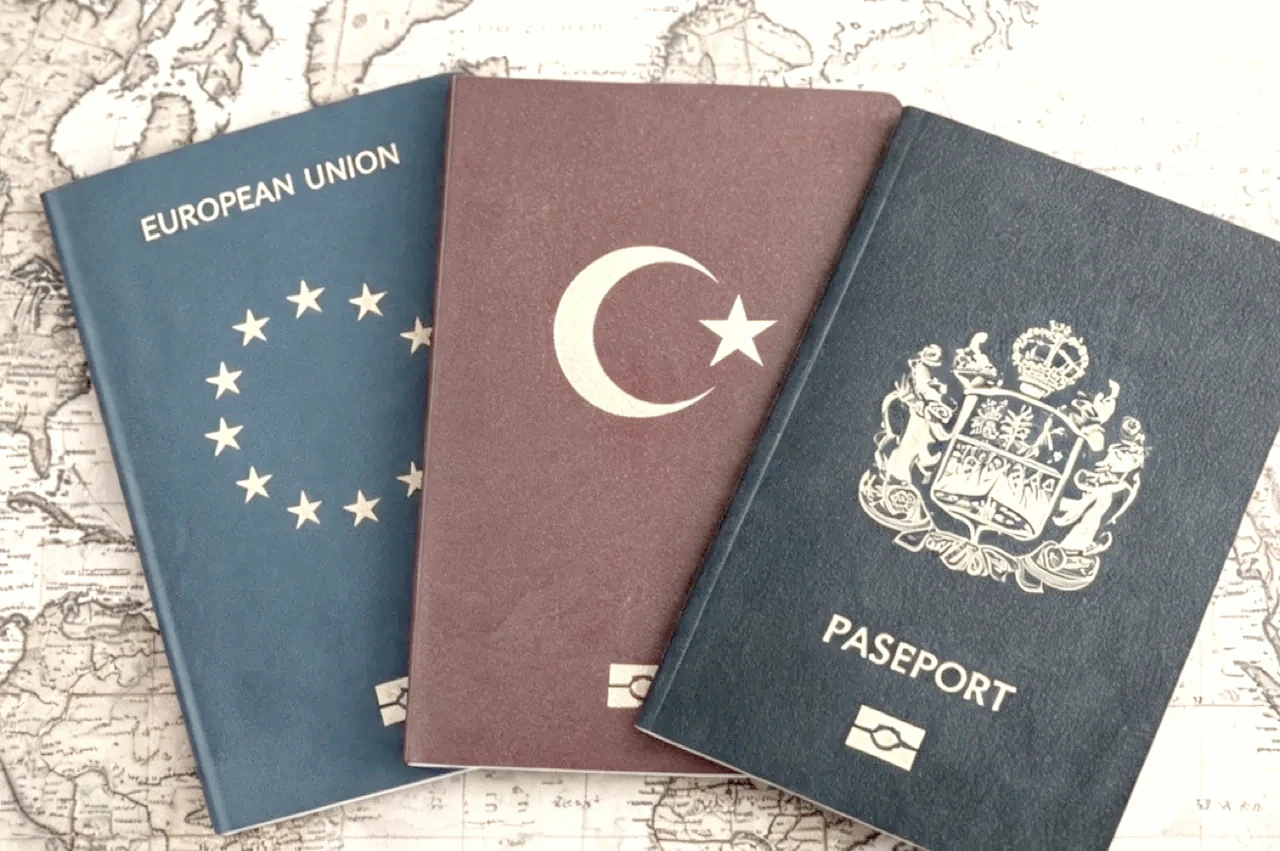 ComparisonMalta, Türkiye or St. Kitts: which passport gives more visa-free travel in 2026
 AnalysisWhat is due diligence and why the Caribbean is rejecting applications
 ArticlePros of St. Kitts citizenship in 2026: how a passport is useful
Personal programme selection is conducted by Anna Kovalevskaya, Head of Legal, BRIDGES.
Comparison of five Caribbean programmes
Amounts, timelines, family composition and requirements in one table.