Citizenship · Sao Tome and Principe
Sao Tome and Principe: what kind of country is it, where is it located and how does it live?
Updated: June 2026·9 min read·Expert reviewed
Terms and costs verified: June 2026
Contents
Sao Tome and Principe is a small island state in the Gulf of Guinea, near the equator, away from the usual tourist routes. Many people hear this name for the first time when choosing a second passport: the country recently launched a citizenship by investment program, and interest in it has skyrocketed. But before looking at the passport, it is logical to understand what kind of country it is, where it is located, what language they speak there and how people live. This review contains a calm portrait of Sao Tome and Principe without embellishment: geography, history, economy, currency, and at the end - a analysis of what local citizenship provides and who it is suitable for.
Sao Tome and Principe - where is it
In short: Sao Tome and Principe is somewhere off the western coast of Africa, right on the equator, in the Gulf of Guinea of the Atlantic Ocean. The country consists of two main islands - Sao Tome (larger, where most of the population lives) and Principe (smaller, further north), plus several small islands around.
The islands lie approximately 250-300 kilometers from mainland Africa. The closest major neighbor on the continent is Gabon, a little further - Equatorial Guinea and Cameroon. The equator literally passes through the southern part of the island of Sao Tome, so the climate here is hot and humid all year round, with tropical rainfall and lush greenery.
In terms of area, it is one of the smallest countries in Africa - about a thousand square kilometers. To put it into perspective, this is comparable to a small European city and surrounding area. Despite its modest size, the nature here is vibrant: volcanic mountains, rain forests, cocoa plantations and dark sand beaches.
Sao Tome and Principe - what kind of country is it?
The full name is the Democratic Republic of Sao Tome and Principe. It is a unitary state with a presidential-parliamentary form of government. The head of state is the president, who is elected in general elections; The executive branch is headed by the Prime Minister, and laws are passed by a unicameral parliament - the National Assembly.
After gaining independence, the country lived for several years as a one-party socialist republic. But already in the early 1990s, reforms took place here: a multi-party system, free elections and a new constitution appeared. Sao Tome and Principe became one of the first African countries to peacefully transition to democracy.
Today it is a calm state without armed conflicts and loud political upheavals. Power passed peacefully from one party to another several times following the election results - for the region this is a good indicator of stability. The island of Principe has autonomous status with its own local government.
A little history: from the Portuguese colony to independence
Before the arrival of Europeans, the islands were uninhabited. Portuguese sailors discovered them in the 1470s, and colonization began in 1486. Sao Tome quickly became an important transit point: first, sugar cane plantations were developed here, and later coffee and cocoa. Plantation labor relied on imported slaves, a difficult but integral part of the islands' history.
For several centuries, Sao Tome and Principe remained an overseas possession of Portugal. Change came in 1974, when the Carnation Revolution took place in Portugal itself, ending the dictatorship and launching the process of decolonization. Already on July 12, 1975, Sao Tome and Principe gained independence.
The first president was the leader of the local liberation movement. Since then, the country has moved from a socialist experiment to a market economy and democracy. The Portuguese heritage has not gone away - it is still felt in the language, architecture, cuisine and the names of the residents.
Language, culture and daily life
The official language of the country is Portuguese. It is used for office work, teaching in schools and communication with government agencies. In addition to literary Portuguese, local creole languages based on Portuguese are common in everyday life - Forro, Angollar and others. Not everyone here speaks English, so for business matters, Portuguese is often needed.
Culturally, the country is closely linked to the Portuguese-speaking world. The cuisine combines African and Portuguese traditions: a lot of fish and seafood, tropical fruits, cocoa and banana dishes. Local cocoa, by the way, is valued by chocolatiers for its quality.
Life on the islands is measured and unhurried. Most of the population is concentrated in the capital and along the coast. Income levels are low by global standards and the infrastructure is modest, but the environment is calm and safe for the region. For those obtaining citizenship, it is important to understand: no one requires you to relocate and live here - the program is remote.
Capital and major settlements
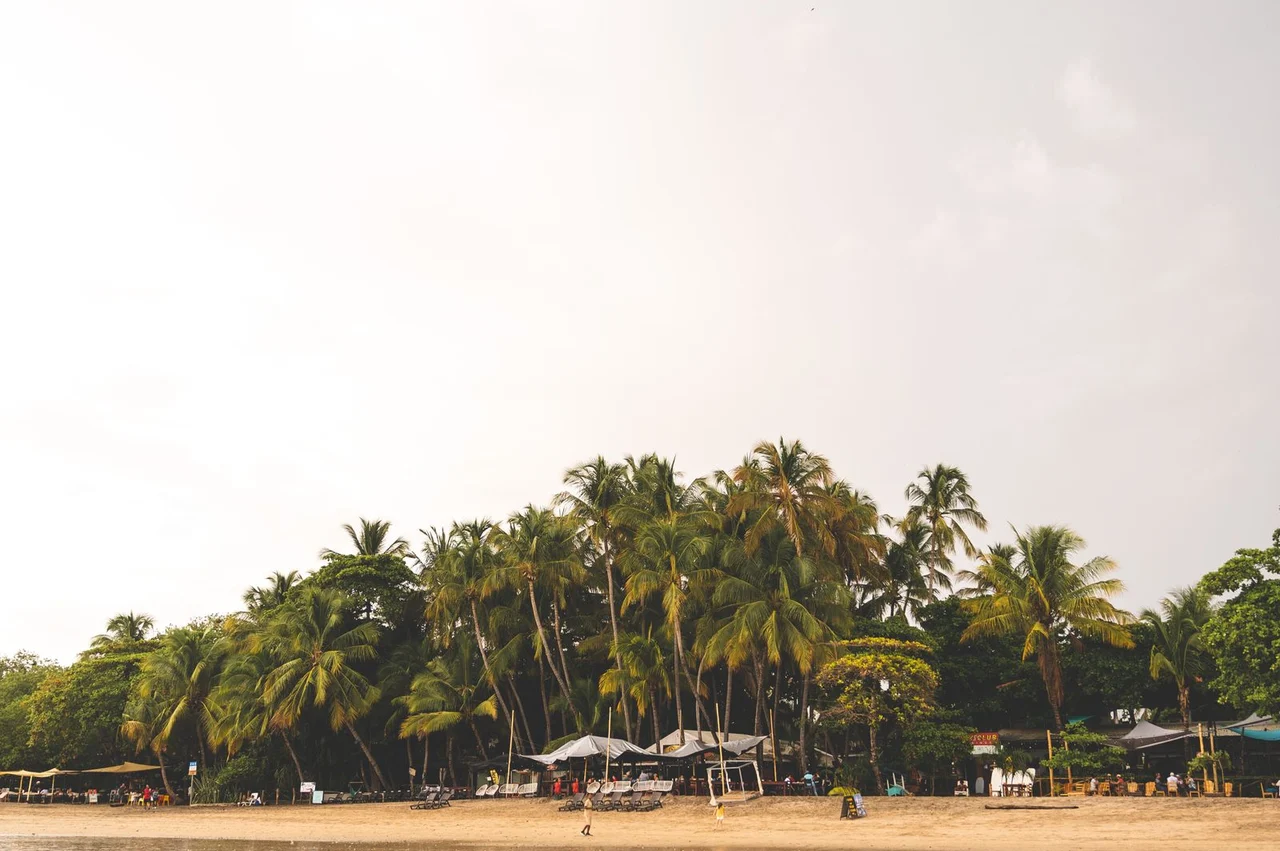
The capital of the country bears the same name as the main island - the city of Sao Tome. It is the administrative, economic and cultural center of the state, where the authorities, the main port and the international airport are concentrated. By the standards of capitals, the city is small - a significant part of the entire population of the country lives in it and its suburbs.
Sao Tome has retained its colonial appearance: low buildings in the Portuguese style, an old fortress, a promenade, central squares and markets. This is not a metropolis with glass skyscrapers, but a cozy tropical city where life moves slowly.
On the island of Principe, the main settlement is the town of Santo Antonio, the center of the autonomous region. The remaining villages are scattered along the coast and around cocoa plantations. We tell you more about the capital in separate material about the city of Sao Tome, and about the location of the country on the map - in a review about map and geography.
How the country lives: economy and currency
The economy of Sao Tome and Principe is small and relies on several pillars. The historical basis is agriculture, primarily the export of cocoa and coffee. Cocoa still remains the country's calling card, although the volumes are no longer the same as in colonial times. Fishing and fish processing play a significant role.
The second pillar is tourism. Unspoiled nature, diving, bird and turtle watching, and ecological routes are gradually attracting travelers who are looking for something out of the ordinary. The tourist flow is still small, but this destination has potential.
A separate topic is oil and gas prospects: there are hydrocarbon reserves in the waters of the Gulf of Guinea, and the country is counting on income from their development in the future. For now, these are more expectations than a real source of budget.
The national currency is dobra (international code STN). It is pegged to the euro, which adds exchange rate stability. GDP per capita is approximately 4-5 thousand dollars - this is the level of a small developing economy.
Sao Tome and Principe: key parameters
To bring the main things into one place, we have collected basic facts about the country in a table. Population and economic figures are approximate - they change from year to year.
| Parameter | Meaning |
|---|---|
| Full name | Democratic Republic of Sao Tome and Principe |
| Region | Gulf of Guinea, West Africa, near the equator |
| Main Islands | Sao Tome and Principe |
| Capital | city of Sao Tome |
| Square | about 1,000 sq. km |
| Population | approximately ~230-245 thousand people |
| Official language | Portuguese |
| Currency | good (STN), pegged to the euro |
| Independence | 12 July 1975 (from Portugal) |
| Form of government | presidential-parliamentary republic |
These data give a general idea of the country. Next, we’ll look at what many people come here for - the opportunity to obtain citizenship.
Why are investors interested in the country?
For a long time, Sao Tome and Principe remained off the radar of those applying for second citizenship. That all changed in 2025 when the country launched its own citizenship by investment program. Against the backdrop of the usual Caribbean and Pacific options, a new address has emerged with one of the most accessible entry thresholds in the world.
The attractiveness is explained by a combination of factors: low investment amount, remote registration without mandatory residence, relatively quick deadlines and the country’s belonging to the Portuguese-speaking community. The latter opens up a separate perspective, which we will discuss below.
At the same time, it is important to maintain a sober outlook. The program is young, the infrastructure around it is just being formed, and the strength of the passport is average. This is not a universal key for all doors, but a specific tool for specific tasks. That is why it makes sense to first understand the facts and only then make a decision.
“Sao Tome and Principe is an interesting newcomer to the citizenship by investment market and should be approached without euphoria, but also without prejudice. I see the main value of this program not in visa-free travel - it is modest here and does not include either Schengen or the USA. The value lies in flexibility and strategic alignment with the Portuguese-speaking world. An affordable entry threshold, remote registration and quick deadlines make the program a convenient tool for diversification. And the country's membership in the CPLP community is a real, although not instantaneous, path to residence and, over time, citizenship of Portugal. For those who think with a horizon of several years, such a first step can be very reasonable. At the same time, I always warn about two things: the program is young, so amounts and procedures need to be verified before the start, and checking the source of funds is not a formality - you should prepare for it seriously.”
Citizenship of Sao Tome and Principe by investment
The regulatory framework of the program is Decree 07/2025, and the acceptance of applications itself started in the second half of 2025. The main route is a non-refundable contribution (donation) to the national development fund (NTF, National Transformation Fund), the funds of which are allocated to the country's priority projects: energy, housing, education and infrastructure.
The entry threshold starts from approximately 90,000 USD per applicant; for a family the amount is higher and depends on the number of people. State fees and costs for processing documents, passports and citizenship certificates are added to the fee. Current figures for 2026 need to be checked before starting - they may be adjusted.
Registration takes place remotely, without the requirement to physically live on the islands. The estimated time frame is about two to three months. A mandatory stage is due diligence: the applicant confirms the legality of the origin of the funds and undergoes compliance. The country allows dual citizenship. A detailed analysis is in our materials about citizenship of Sao Tomeandcitizenship by investment.
What does a passport give: visa-free travel and mobility
Let's be : the Sao Tome and Principe passport is average in strength. It opens visa-free or simplified (visa on arrival, e-visa) entry into approximately several dozen countries and territories - various sources give figures of about 60-90 destinations, and the exact number should be checked for 2026.
It is important to understand the limitations: this list does NOT include Schengen countries and does NOT include the United States. That is, to position this passport as a way to freely travel around Europe or America without a visa would be untrue. Available destinations include a number of countries in Asia, Africa, the Caribbean and South America.
Therefore, the value of citizenship in Sao Tome and Principe rarely comes down to visa-free travel. More often it is interesting as a second document for diversification, as a backup plan or - most importantly - as an entry point into the Portuguese-speaking world. More on this later.
Connecting with Portugal through the CPLP community
The main non-obvious value of citizenship in Sao Tome and Principe is the country's membership in the Community of Portuguese Language Countries (CPLP). This community includes Portugal, Brazil, Angola, Mozambique and other states united by a common language.
For citizens of CPLP countries, simplified conditions for residence and naturalization apply in Portugal. But here we need to be completely : this does NOT mean that the Sao Tome passport automatically turns into an EU passport. The path to Portuguese citizenship still requires legal residence in Portugal, knowledge of the language (at least basic level A2) and several years of residence under the reduced qualification for CPLP citizens.
That is, it is a long and gradual road, and not an instant result. But it is real and understandable: citizenship of Sao Tome and Principe can be the first step in a strategy that ultimately leads to a residence permit and, over time, to Portuguese citizenship. For those who think long-term, this is a serious argument.
Taxes, flag and other practical nuances
Sao Tome and Principe does not tax global income of individuals in the usual sense - the country does not seek to reach the foreign income of its citizens. But here it is important not to confuse the concepts: citizenship does not equal tax residency. Tax status is determined by where a person actually lives and where his center of interests is, and not by the color of his passport. Therefore, tax planning requires separate study with a specialized consultant.
Another feature of the country is the STPIR ship register, under whose flag yachts and ships can sail. This is a niche topic, but it can be relevant for fleet owners.
For citizens of Russia and the CIS countries, general rules apply: work strictly within the law, without circumventing sanctions, with enhanced compliance and verification of the source of funds. It is also important for Russians to remember the obligation to notify the authorized bodies of the Russian Federation about the presence of a second citizenship - this is a formal but mandatory requirement.
Who is eligible for citizenship of Sao Tome and Principe?
This program is not for everyone, and there is nothing wrong with that. It fits well with specific scenarios, but other countries are better suited for other tasks. A sober assessment at the start saves time and money.
Citizenship of Sao Tome and Principe is worth considering if you value an affordable entry price, remote registration without moving, and fast turnaround times. It is a smart choice as a second diversification document, an alternate airfield in uncertain times, or the first step in a long strategy to reach Portugal via the CPLP line.
But if your main goal is visa-free Europe or the USA right now, or you need a top-level passport for mobility, then it is more realistic to look towards other programs. We always say this directly: the right solution is more important than a beautiful cover. Our specialists will help you choose an option for your situation.
How to take the next step
If, after this review, Sao Tome and Principe seems like a good option for you - or you want to compare it with other programs - it makes sense not to guess on your own, but to get an analysis for your specific situation. The timing, current amounts for 2026, family composition, sources of funds and long-term strategy with access to Portugal - it is better to calculate all this in advance.
We have described in detail the conditions, cost and registration procedure for Sao Tome and Principe citizenship program page. There you can also see how the program looks against the background of alternatives and what steps need to be taken.
Are you ready to discuss your task in detail? Leave a request - and we will analyze your case, tell you about the possibilities and limitations, and help you build a route. Contact us for consultation.
Expert's view
Sao Tome and Principe is an interesting newcomer to the citizenship by investment market and should be approached without euphoria, but also without prejudice. I see the main value of this program not in visa-free travel - it is modest here and does not include either Schengen or the USA. The value lies in flexibility and strategic alignment with the Portuguese-speaking world.
An affordable entry threshold, remote processing and quick deadlines make this program a convenient tool for diversification and for those who are building a long-term migration strategy. The CPLP line is a real, although not immediate, route to residence and eventually citizenship of Portugal. For those who think with a multi-year horizon, this can be a very smart first step.
But I always warn clients about two things. First: the program is young, so current thresholds and procedures need to be checked before each start. Second: the due diligence check here is not a formality - the source of funds will have to be seriously confirmed, especially for applicants from Russia and the CIS. With proper preparation, this is a working and instrument.
Frequently asked
Questions people ask before deciding
01Where is Sao Tome and Principe?
It is an island state in the Gulf of Guinea of the Atlantic Ocean, off the west coast of Africa, right on the equator. It consists of two main islands - Sao Tome and Principe - and several small ones. The closest mainland neighbor is Gabon.
02Sao Tome and Principe - what kind of country is it based on the form of government?
It is a democratic presidential-parliamentary republic. The full name is the Democratic Republic of Sao Tome and Principe. Since the early 1990s, the country has had a multi-party system and free elections, the situation is calm and safe for the region.
03What language is spoken in Sao Tome and Principe?
The official language is Portuguese, it is used in schools, office work and government agencies. Local Portuguese-based creole languages are also common in everyday life. Not everyone knows English.
04What is the currency in Sao Tome and Principe?
The national currency is dobra (international code STN). It is pegged to the euro, which provides a certain exchange rate stability.
05How many people live in Sao Tome and Principe?
The population is approximately 230-245 thousand people. This is one of the smallest states in Africa in terms of population and area. Most residents are concentrated on the main island and the capital.
06When did Sao Tome and Principe become an independent country?
The islands gained independence from Portugal on July 12, 1975, following the Carnation Revolution in Portugal itself. Before that, they were a Portuguese colony with a plantation economy for several centuries.
07How does the country's economy live?
The basis of the economy is agriculture (primarily the export of cocoa and coffee), fishing and gradually developing ecotourism. There are oil and gas prospects in the waters of the gulf, but these are still more expectations than real budget income.
08Is it possible to obtain citizenship of Sao Tome and Principe by investment?
Yes. The country launched a citizenship by investment program based on Decree 07/2025. The main route is a non-refundable contribution to the national development fund of approximately USD 90,000 per applicant. Current amounts for 2026 need to be verified.
09Do I need to live on the islands to obtain citizenship?
No. The program is distance learning: residence on the islands is not required. Registration takes place remotely, the estimated time frame is about two to three months, subject to passing a due diligence check and confirming the source of funds.
10Which countries can you travel to with a Sao Tome and Principe passport?
The passport is average in strength: visa-free or simplified entry into approximately several dozen countries and territories. Important: Schengen and the USA are not included in this list. The exact number of destinations should be checked for 2026.
11Is it true that São Tomé citizenship gives you a fast track EU passport?
No, this is a common misconception. The country is part of the CPLP community, which provides a simplified path to residence and naturalization in Portugal. But this is a long process: you need legal residence, knowledge of the language and several years of residence. This does not give you an instant EU passport.
12Is the program suitable for citizens of Russia and the CIS?
Yes, strictly within the law and without circumventing sanctions. For applicants from Russia and the CIS, enhanced compliance and mandatory verification of the source of funds apply. Russians also need to notify the authorized bodies of the Russian Federation about the presence of a second citizenship.
Transparency
How this material was prepared
- Author
- Andres Ferreira, head of Investment Advisory, BRIDGES
- Terms and costs last verified
- June 2026
- Sources
- official government authorities of the relevant country and state publications
- Methodology
- government minimum requirements are stated separately from due diligence charges, state fees, legal and banking costs
Sources and methodology
Figures, terms and timelines are checked against official sources as of June 2026. Link availability verified in August 2026. Third-party blogs and agent websites are not used as a source of programme terms.
- [1]EUR-LexOfficial texts of European Union legislationeur-lex.europa.eu/homepage.html
- [2]European Commission - Migration and Home AffairsEntry and residence rules in the EUhome-affairs.ec.europa.eu/index_en
Methodology: tables and charts state government minimum investment requirements; due diligence charges, state fees, legal, banking and other costs are calculated separately and are not included in the minimum thresholds.
About the author
Related materials
What to read next
 ComparisonAntigua and Barbuda or Grenada: Family Passport for Large Families in 2026
 AnalysisWhat is due diligence and why the Caribbean is rejecting applications
 ArticleThe capital of Sao Tome and Principe: the city of Sao Tome - what to see
Personal programme selection is conducted by Anna Kovalevskaya, Head of Legal, BRIDGES.
Citizenship of Sao Tome and Principe: preparation checklist
Documents prepared in advance, source of funds checks and where applications usually fail.