Residency · Greece
Greece Golden Visa Zones 2026: Where the Threshold Is 400,000 and Where 800,000 Euros

Updated: June 2026·12 min read·Expert reviewed
Terms and costs verified: June 2026
Contents
After the reform, Greece's golden visa is no longer a single price: the entry sum now depends on exactly where you buy your property. In the premium zones - all of Attica including Athens, the Municipality of Thessaloniki, Mykonos, Santorini and large islands with a population above 3,100 - the threshold has been raised to 800,000 euros. In the rest of Greece - the mainland periphery, small islands, emerging markets - 400,000 euros is enough. And there is a separate route at 250,000 euros for conversion and restoration. We break it all down: which region falls into which zone, where the 400k/800k boundary runs, and how to choose a location to fit your budget.
The essentials on Greece Golden Visa zones in 2026
Greece's golden visa used to be simple: a single investment threshold for the entire country, whether you were buying an apartment in central Athens or a house in the Peloponnese countryside. The reform broke that logic. Greece saw investors snapping up property in the hottest spots - Athens, Santorini, Mykonos - driving up prices and pushing locals out of the rental market. To cool these overheated locations while redirecting capital into undervalued regions, the state introduced zoning.
The investment sum now depends directly on geography. There are three main tiers:
- 800,000 euros - premium zones: all of Attica (Athens and Piraeus in full), the Municipality of Thessaloniki, Mykonos, Santorini and all Greek islands with a population above 3,100.
- 400,000 euros - standard zone: all the rest of Greece, i.e. the mainland periphery beyond Attica and Thessaloniki plus sparsely populated islands.
- 250,000 euros - a separate reduced route for converting a commercial property into residential use or restoring a historic building, with no geographic tie.
In other words, choosing a region is choosing your entry budget. The same person can enter the program at either 400 or 800 thousand - the spot on the map decides everything. We keep the basic conditions and step-by-step process in the general guide to the Greek golden visa, while here we break down specifically the geography of the thresholds.
Why the zone division appeared in the first place
To understand the threshold map, it helps to know the logic behind it. Greece is a country that weathered a severe debt crisis, and the golden visa became a powerful pump of foreign capital into real estate. Over several years the program attracted billions of euros, but this had a side effect: in the spots most popular with investors, housing prices soared while affordable rentals for locals became critically scarce.
This was felt most acutely in the premium locations:
- Athens and Attica - the capital region, where the main flow of investors was heading.
- Thessaloniki - the second capital, the northern economic center.
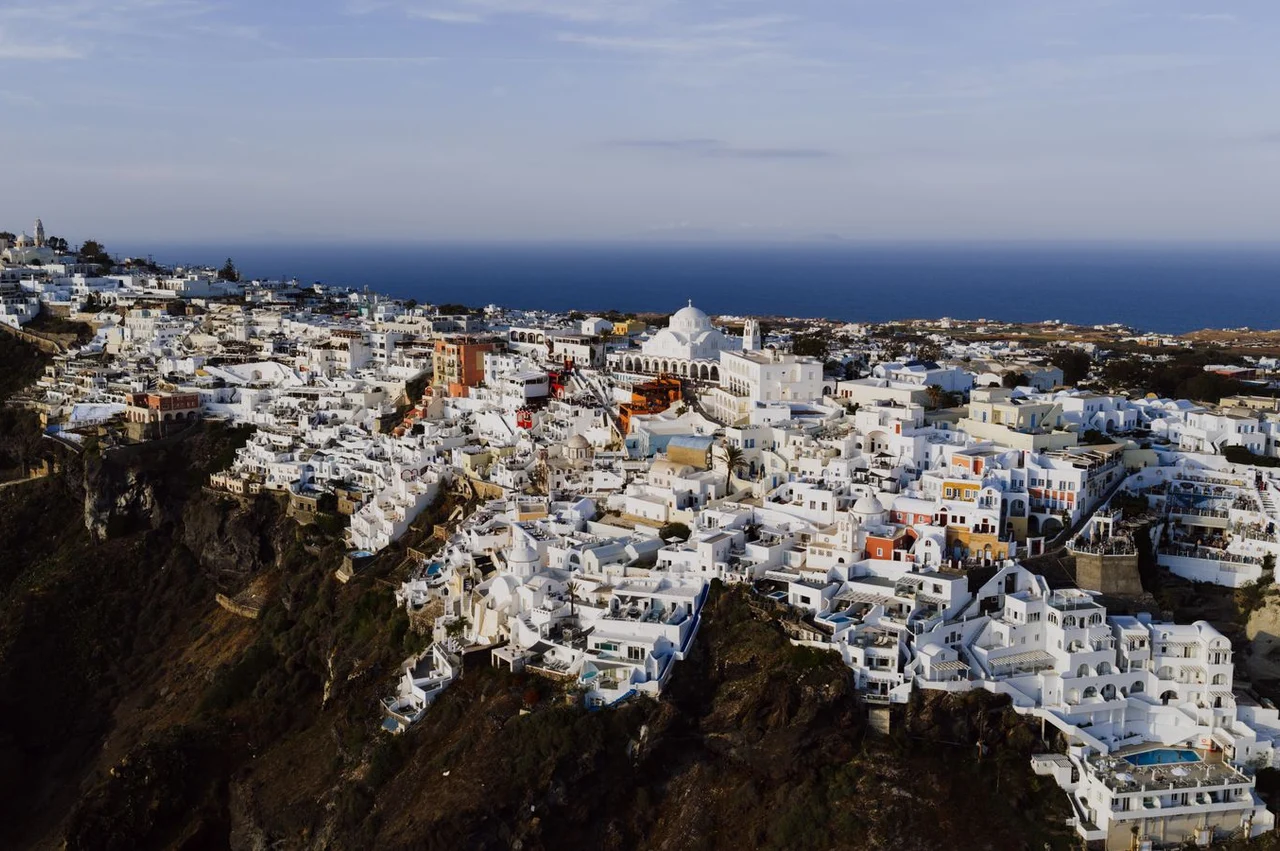
- Mykonos and Santorini - the calling cards of Greek tourism, with astronomical prices per square meter.
The state chose not to kill the program but to recalibrate it. By raising the threshold in overheated zones to 800,000 euros, the authorities cut off part of the demand for expensive housing in hotspots. And by leaving 400,000 euros for the rest of the country, they gently steer capital toward regions that genuinely need investment: the mainland periphery, small islands, and emerging markets. This is not a ban but a redirection of the flow - and for a thoughtful investor, it opens a window of opportunity in undervalued locations.
The 800,000-euro premium zone: exactly where the threshold is highest
Let's start at the top. The 800,000-euro threshold applies not to isolated spots but to entire administrative regions and categories of islands. Let's go through them one by one to avoid confusion.
The premium zone (800k euros) includes:
- All of Attica in full. This covers not just central Athens but the entire metropolitan region - Athens, Piraeus, all the suburbs and the coastal Athens Riviera. If a property lies within the administrative boundaries of Attica, the threshold is automatically 800,000 euros, without exception.
- Municipality of Thessaloniki. The country's second-largest city and its urban core.
- Mykonos and Santorini. The two most expensive and recognizable islands in Greece are singled out separately, regardless of their formal population figures.
- All islands with a population above 3,100. This is the key criterion. It captures virtually all large and medium-sized islands: Crete, Rhodes, Corfu, Kos, Lesbos, Chios, Zakynthos, Kefalonia, Samos, Paros, Naxos and others.
So if you dream of a villa on Crete, an apartment in central Athens or a house on Rhodes - budget from 800,000 euros for a single property of at least 120 square meters. These are the premium zones of the Greek golden visa, and their threshold cannot be circumvented legally. A detailed breakdown of buying specifically in the capital is in the article on real estate in Athens.
The 400,000-euro standard zone: all the rest of Greece
Now the lower, mass-market threshold. The 400,000-euro figure works on the principle of "everything that isn't premium." Formally the law describes the 800k zone, and 400k covers the rest of the country. So it's easier to remember what is NOT part of the expensive zone and understand that everything else falls under 400,000.
The standard zone (400k euros) covers:
- Mainland Greece beyond Attica and the Municipality of Thessaloniki. This means the Peloponnese, Epirus, Thessaly, Central Greece, the northern mainland regions and Halkidiki.
- Small islands with a population below 3,100. A multitude of smaller, less-hyped islands in the Aegean and Ionian Seas.
- Emerging regional markets and secondary cities - the very locations the state wants to redirect investment toward.
For many investors this is the sweet spot. For 400,000 euros you can buy a spacious house on the Peloponnese coast, property in scenic Halkidiki or on a quiet island - and receive exactly the same 5-year residence permit as the owner of an 800-thousand Athens apartment. The status, family rights, and path to permanent residence and citizenship are identical. The only difference is the price and the property's location. For more on how the investment in square meters itself works, see the guide on a Greek golden visa through real estate.
Where the boundary runs: the magic of the number 3,100
The most common question in consultations: "Is my island 400 or 800 thousand?" The answer almost always comes down to a single number - 3,100 registered residents. That is the dividing line between the two thresholds for islands.
The logic is this:
- Island population above 3,100 - an 800,000-euro threshold. This covers all major tourist islands, because they are already overheated by demand.
- Population below 3,100 - a 400,000-euro threshold. These are small, quiet islands where investment is genuinely needed.
On top of this, Mykonos and Santorini are placed in the expensive zone separately, as symbols of premium tourism - regardless of the population arithmetic. And on the mainland the boundary runs along administrative lines: within Attica and the Municipality of Thessaloniki - 800k, beyond them - 400k.
An important practical nuance: population figures are determined by official census data, and it is the census that fixes the status of a given island. So before a transaction you need to check not "by eye" but against the current classification - the boundary can fall in unexpected places, and an error in the zone means either overpaying or a visa refusal due to an insufficient sum. We always verify a property's zone before the client puts down a deposit.
We will find the right basis for residency in Greece
We calculate the budget and timing for your family and list the documents you need.
Zone map: the "region - threshold" table
Let's bring the entire geography of thresholds into one table. It's a working map you can use to quickly estimate the entry budget for a specific location. The figures are the minimum investment in a single piece of real estate of at least 120 m².
| Region / location | Zone | Minimum threshold |
|---|---|---|
| Athens and all of Attica (including Piraeus, the Athens Riviera) | Premium | 800,000 euros |
| Municipality of Thessaloniki | Premium | 800,000 euros |
| Mykonos | Premium | 800,000 euros |
| Santorini | Premium | 800,000 euros |
| Crete, Rhodes, Corfu, Kos (islands above 3,100 residents) | Premium | 800,000 euros |
| The Peloponnese (coast and mainland) | Standard | 400,000 euros |
| Halkidiki | Standard | 400,000 euros |
| Epirus, Thessaly, Central and Northern Greece | Standard | 400,000 euros |
| Small islands up to 3,100 residents | Standard | 400,000 euros |
| Commercial-to-residential conversion / landmark restoration (nationwide) | Reduced route | 250,000 euros |
The table shows the key point: the very same golden visa costs differently depending on the spot on the map. If your budget is capped at 400 thousand, your choice is all of Greece except the premium zones. If you specifically want Athens, Crete or Santorini - be ready for 800 thousand or consider the reduced route at 250k.
"The most common illusion among clients is that Greece's golden visa costs the same everywhere. That hasn't been true for a long time. After the reform, location is the price: for the exact same residence permit you'll pay 800 thousand in Athens and 400 on the Peloponnese coast, with absolutely identical rights for the family. That's why I always start not by searching for a property but with the question of priority: does the minimum budget matter more, or a specific prestigious location. And I give a separate warning about the 3,100-resident boundary on the islands - you can't eyeball it. I've seen deals where an investor was certain his island qualified at 400k, only for the official census to place it in the premium zone. So the first thing we do before any deposit is officially confirm the property's zone. It's five minutes of checking that saves either an extra few hundred thousand euros or a visa that never happens."
The reduced 250,000-euro route: conversion and restoration
A third, cheapest entry point stands apart - 250,000 euros. It survived even after the reform, but works only under strictly defined scenarios and is not tied to zones - it is available across the entire country, including Athens and other premium locations.
The 250,000-euro threshold applies in two cases:
- Converting a commercial property to residential. You buy a non-residential space - for example, a former office, shop or warehouse - and convert it into residential use. The key condition: the conversion must be fully completed BEFORE the golden visa application is submitted.
- Restoring a historic or landmark building. The restoration of a property that holds landmark status or is listed as protected heritage.
This is the most interesting route for those who want to enter central Athens or an expensive island but aren't ready for the 800,000-euro threshold: formally the location is premium, yet the entry sum is just 250 thousand. But the complexity is higher too: you need a project, permits, real construction or restoration, and all of it under the strict requirement to complete the work before applying. This isn't "buy and file" but a full-fledged mini development project. A detailed breakdown of this option is in a separate article on a Greek golden visa for 250,000 euros.
How to choose a zone for your goal
Zoning turns the choice of location into a strategy. The approach depends on what comes first for you - budget, lifestyle or yield. Let's go through the typical scenarios.
- The priority is the minimum budget. Your choice is the standard zone at 400,000 euros: the Peloponnese, Halkidiki, the mainland periphery, small islands. The same status, the same family on the visa, the same path to citizenship - but half the price of the premium zone.
- The priority is a prestigious place to live. If you specifically want central Athens, Crete, Santorini or Mykonos - be ready for 800,000 euros or consider the reduced route at 250k via conversion.
- The priority is investment potential. Here the undervalued regions of the standard zone are more interesting: the state itself channels capital there, and the mainland's emerging markets may grow faster than the overheated premium locations.
- The priority is readiness for the project. If you're not afraid of development, the 250,000-euro conversion route delivers a premium location at the minimum entry price.
There's no universal answer: the optimal zone is the intersection of your budget, your living plans and your view of the market. That's exactly why the choice of location should be discussed before searching for a property, not after.
Taxes and costs on top of the threshold: what to add to the sum
The zone threshold is only the price of the property itself. An investor's real budget is always higher, because taxes and associated costs are added on top of the property price. It's important to factor these in advance so you don't fall short of the funds needed to clear the threshold.
What gets added to the purchase price:
- Property transfer tax - about 3.09% of the property value when buying resale housing.
- Notary and registration fees - executing the transaction and entering it in the registry.
- Legal services - verifying the property's clean title, due diligence.
- Annual ENFIA property tax - paid every year after purchase.
- Government fees for issuing and renewing the residence permit cards themselves.
An important point: the zone threshold (400, 800 or 250 thousand) is the minimum price of the property itself, not the total budget. Taxes and fees come on top. So when planning in a premium zone, the real sum comes out noticeably above 800 thousand, and in the standard zone, above 400. As for tax residency, the golden visa does not by itself make you a tax resident of Greece - that is a separate matter, resolved through physical presence and special regimes. Current requirements and forms should always be verified on the official portal of the Greek Migration Service (migration.gov.gr).
We will calculate the budget for your family
A full estimate: contributions, fees and our work for your family.
Is the Greek golden visa available to Russians and CIS citizens
The short answer: yes, it's available, and zoning has no bearing on this - the 400k and 800k thresholds are the same for investors of any nationality. But there are nuances that citizens of Russia and the CIS should keep in mind.
- The program is open. Greece has not closed its golden visa to Russians. An investor from Russia can buy property in any zone and obtain a residence permit on general terms.
- Enhanced source-of-funds compliance. Since 2022, banks and authorities scrutinize the origin of money more closely. You need to transparently confirm the legality of your capital - sale of assets, business income, savings.
- Strictly no circumvention of sanctions. The transaction is conducted fully within the law. Funds under sanctions restrictions are not brought into the program.
- Schengen visa to enter. You'll need a Schengen visa for the trip to the transaction itself, but Greece is an EU and Schengen member, and the residence permit grants the right to reside freely in the country.
In practice, for a CIS investor the standard zone at 400,000 euros often turns out to be optimal: the threshold is lower and the amount to prove under source of funds is smaller, which makes passing compliance easier. The key is to gather the documents on the origin of your capital in advance, because this is the stage where delays most often arise.
Common mistakes when choosing a zone
Zoning is a young rule, and investors regularly stumble in the same places. Let's go through the typical mistakes so you don't repeat them.
- Judging the zone "by eye." It seems a small island is surely 400k. But the census puts it at 3,200 residents - and the threshold is already 800k. The zone must be checked against the official classification before the deposit.
- Confusing central Athens with a "separate case." All of Attica is a single premium zone, with no division into districts. A cheap Athens neighborhood still requires 800,000 euros.
- Assembling the sum from several properties. The reform prohibits this: you need a single property that reaches the threshold on its own.
- Forgetting the 120 m² of net area. Balconies and parking don't count - a compact apartment may fail on floor area even at the right price.
- Counting only on the property price. Taxes and fees come on top of the threshold, and they're easy to underestimate.
Each of these mistakes costs either money or a visa refusal. That is exactly why checking the zone and the property's parameters is the first step in a deal, not the last.
Expert view: how zoning changes the entry strategy
Zoning isn't just new figures in a table - it's a shift in the very logic of choice. An investor used to search for the best property and pay a fixed sum. Now the zone is chosen first - that is, the budget - and the search happens within it. That's why the first question I ask a client is: what matters more to you - a specific location or the minimum entry sum.
- If the sum matters - we go to the standard zone at 400k, where the same rights cost half the money.
- If a premium-class location matters - either 800k, or a smart workaround via conversion at 250k.
And let me stress separately: the zone cannot be determined by intuition. The 3,100-resident boundary and the administrative lines of Attica and Thessaloniki apply strictly, and a mistake means either needless overpayment or a failed application. So before any deposit we officially confirm the zone of the specific property - it's the first thing we do for a client.
We'll find the region to fit your golden visa budget
Zoning has made choosing a location a strategic decision: your spot on the map determines whether you pay 400 or 800 thousand euros for the very same status. An error in identifying the zone is costly - either an extra few hundred thousand or a refusal due to an insufficient investment sum. We handle Greek residence permits end to end: we verify the specific property's zone before the transaction, select liquid real estate to fit your budget, and manage the investment and document submission.
Discuss your situation with a BRIDGES GLOBAL expert - we'll advise which region will give your budget the best property and guarantee the golden visa threshold you need.
Property conditions: 120 m², one property, one transaction
The zone determines the sum, but there are requirements for the property itself that apply regardless of region - for both 400k and 800k. They're important to know, because they rule out many options that look suitable at first glance.
Key conditions for 2026:
- Minimum area - 120 square meters. And it is specifically the property's living area that counts. Balconies, parking spaces, storage rooms and utility spaces are not included in those 120 m². This immediately rules out compact studio apartments in city centers.
- One property - one transaction. After the reform you cannot "assemble" the sum from several small properties. The investment must go into a single piece of real estate that reaches the zone threshold on its own.
- Full payment. The full sum must be invested, and the residence permit is tied to ownership of that property.
- Ban on short-term rental. A golden visa property cannot be rented out on a nightly basis through Airbnb and similar services - this risks revocation of the residence permit and a fine. Long-term rental is permitted.
Because of the 120 m² and single-property requirement, the premium zones become even more expensive in practice: in Athens or on Santorini, an apartment of 120 "net" meters already means an inherently high budget. But in the standard zone at 400,000 euros, 120 m² is reached easily and with room to spare - another argument in favor of the regions.
We will send a document checklist for your case
Leave your details: we will put together documents and timelines for your family.
Bottom line: which Greece golden visa zone is yours
The reform turned Greece's golden visa into a flexible instrument where the entry price depends on geography. The map is easy to remember:
- 800,000 euros - if you need Athens, all of Attica, Thessaloniki, Mykonos, Santorini or large islands above 3,100 residents.
- 400,000 euros - all the rest of Greece: the Peloponnese, Halkidiki, the mainland periphery, small islands. The same status at half the price.
- 250,000 euros - a reduced route via commercial-to-residential conversion or landmark restoration, available in any zone, including premium.
The main takeaway: the residence permit status, family rights, and path to permanent residence and EU citizenship are the same in all zones - only the entry sum and location differ. So a smart choice of region can save hundreds of thousands of euros without any loss in the quality of the status. You can compare different investment scenarios and dig into the real estate details in our articles on a golden visa through real estate and entry at 250,000 euros. And we keep the full map of the program itself in the guide to the Greek golden visa.
Frequently asked
Questions people ask before deciding
01Where is the 800,000-euro threshold for the Greek golden visa?
In the premium zones: all of Attica including Athens and Piraeus, the Municipality of Thessaloniki, Mykonos, Santorini and every Greek island with a population above 3,100 (Crete, Rhodes, Corfu, Kos and other large islands). In these locations the minimum real estate investment is 800,000 euros in a single property of at least 120 m².
02Where is the 400,000-euro threshold for the Greek golden visa?
In all the rest of Greece beyond the premium zones: the mainland periphery (the Peloponnese, Epirus, Thessaly, Central and Northern Greece, Halkidiki) and small islands with a population below 3,100. This is the standard zone, where 400,000 euros gets you the same residence permit as in the premium zone.
03What's the difference between the 400k and 800k visa, besides price?
Only in the property's location. The residence permit status, the 5-year term, the rights of the whole family, the renewal option, the path to permanent residence and EU citizenship - are absolutely identical in both zones. Only the entry sum and the region where the property sits differ. That's why the standard zone is often the better value with no loss in the quality of the status.
04How do you determine which zone a specific island is in?
The key criterion is the number of registered residents per the official census. Above 3,100 - the threshold is 800,000 euros; below 3,100 - the threshold is 400,000. Plus Mykonos and Santorini are assigned to the premium zone separately. The zone must be checked against the current classification before the transaction, not by eye.
05Why does all of central Athens cost 800,000 euros?
Because all of Attica, as an administrative region, is assigned in full to the premium zone, with no division into districts. Even an inexpensive neighborhood of Athens or Piraeus requires at least 800,000 euros. If your budget is capped at 400k, you'll have to choose a location outside Attica and the Municipality of Thessaloniki.
06Can you get a Greek golden visa for 250,000 euros?
Yes, but only via the reduced route: through converting a commercial property into residential use or restoring a historic building. The conversion must be fully completed before the application is submitted. This route is not tied to zones and is available across the country, including Athens and the premium islands, but it requires a real construction or restoration project.
07What is the minimum property area required for the golden visa?
120 square meters of living space in a single property. Balconies, parking spaces and storage rooms do not count toward this area. The requirement applies in all zones - for both 400k and 800k. Because of it, compact studios in city centers do not qualify for the program.
08Can you make up the required sum from several properties?
No. After the reform the investment must go into a single piece of real estate that reaches the zone threshold on its own and has an area of at least 120 m². Buying several small properties that together add up to the required sum no longer works - you need one transaction for one property.
09Is the Greek golden visa available to Russians in 2026?
Yes, the program is open to citizens of Russia and the CIS, and the 400k and 800k thresholds are the same for them as for everyone. The main condition is enhanced source-of-funds compliance: you must transparently confirm the legal origin of your capital. The transaction is conducted strictly within the law, with no circumvention of sanctions.
10Which zone is better for an investor on a limited budget?
The standard zone at 400,000 euros: the Peloponnese, Halkidiki, the mainland periphery, small islands. You get the same status and rights as in the premium zone, but for half the sum. Plus a smaller amount to prove under source of funds, which makes passing compliance easier.
11Is tax included in the 400k or 800k threshold?
No. The zone threshold is the minimum price of the property itself. Transfer tax (about 3.09%), notary and registration fees, legal services, the annual ENFIA and government fees for the residence permit cards all come on top of this sum. The real budget is always higher than the zone threshold.
12Can a golden visa property be rented out?
Long-term rental of a year or more is allowed. But short-term nightly rental through Airbnb and similar services is prohibited for a golden visa property - this risks revocation of the residence permit and a fine. This rule applies in all zones regardless of the investment sum.
Transparency
How this material was prepared
- Author
- Anna Kovalevskaya, head of Legal, BRIDGES
- Terms and costs last verified
- June 2026
- Sources
- official government authorities of the relevant country and state publications
- Methodology
- government minimum requirements are stated separately from due diligence charges, state fees, legal and banking costs
Sources and methodology
Figures, terms and timelines are checked against official sources as of June 2026. Link availability verified in August 2026. Third-party blogs and agent websites are not used as a source of programme terms.
- [1]Ministry of Migration and Asylum of GreeceResidence permits, including the investor permitmigration.gov.gr/en
- [2]Enterprise GreeceConditions of the investor programmewww.enterprisegreece.gov.gr/en
Methodology: tables and charts state government minimum investment requirements; due diligence charges, state fees, legal, banking and other costs are calculated separately and are not included in the minimum thresholds.
About the author
Related materials
What to read next
 ArticleGreek citizenship by descent in 2026: by roots, parents, grandparents
 ComparisonGolden Visa of Greece or Caribbean citizenship 2026: EU residence permit versus second passport
 AnalysisWhat is due diligence and why the Caribbean is rejecting applications
Residency in Greece: timelines and requirements
Grounds, document list, presence requirements and what is needed for renewal.