Residency · European Union
ETIAS and EES at the Schengen border: what works in 2026 and who is affected

Updated: October 2026·12 min read·Expert reviewed
Terms and costs verified: October 2026
Contents
Picture a traveller with two passports: a Russian one with a Schengen visa and a Caribbean one that allows visa-free travel to Europe. In spring he entered Italy on the Russian passport because the tickets were easier that way, and a month later he flew out of Madrid on the Caribbean one because the queue was shorter. Nobody would have noticed before. Now the EU Entry/Exit System has recorded an entry with no exit, and on his next trip the border officer will see a person who supposedly is still in Schengen. Here is how the two new border systems work, how they differ and what you need to know to avoid stories like this.
In short
- EES, the Entry/Exit System, has been fully operational since 10 April 2026. Passport stamps are gone; every entry and exit is recorded in a database.
- On the first entry a face photo and four fingerprints are taken. Fingerprints are taken from age 12.
- ETIAS, the electronic travel authorisation, is not operating as of 11 October 2026. The EU promises to announce the launch date several months in advance.
- ETIAS will be needed by those travelling to Europe visa-free: on Caribbean, Argentine or UAE passports. Fee €20, valid for 3 years.
- Russian citizens with a visa do not need ETIAS, but EES applies to them in full.
- Holders of Schengen residence permits go through neither EES nor ETIAS.
EES and ETIAS: the difference
The two systems are constantly confused, though they do different jobs. EES is the border's electronic logbook. It replaced the passport stamp: when crossing the Schengen external border, your details, face photo, fingerprints, date and place of entry and exit are recorded. It applies to all third-country nationals coming for a short stay, with or without a visa.
ETIAS is a pre-travel authorisation. Nationals of countries that do not need a Schengen visa will obtain it online before travelling. It is not a visa but a check before boarding: without it the carrier will not let the passenger on the flight. Those who need a visa do not need ETIAS at all.
- 12.10.2025EES starts gradually at external borders
- 10.04.2026EES is fully operational, passport stamps end
- 07.2026The Q4 2026 launch target is removed from the official ETIAS website
- 11.10.2026ETIAS is not operating, no applications accepted
- after launchTransitional and grace periods, then ETIAS becomes mandatory
What this means for you. EES concerns everyone travelling to Schengen for a short stay and is already working. ETIAS concerns only visa-free travellers and has not launched yet.
EES: what happens at the border
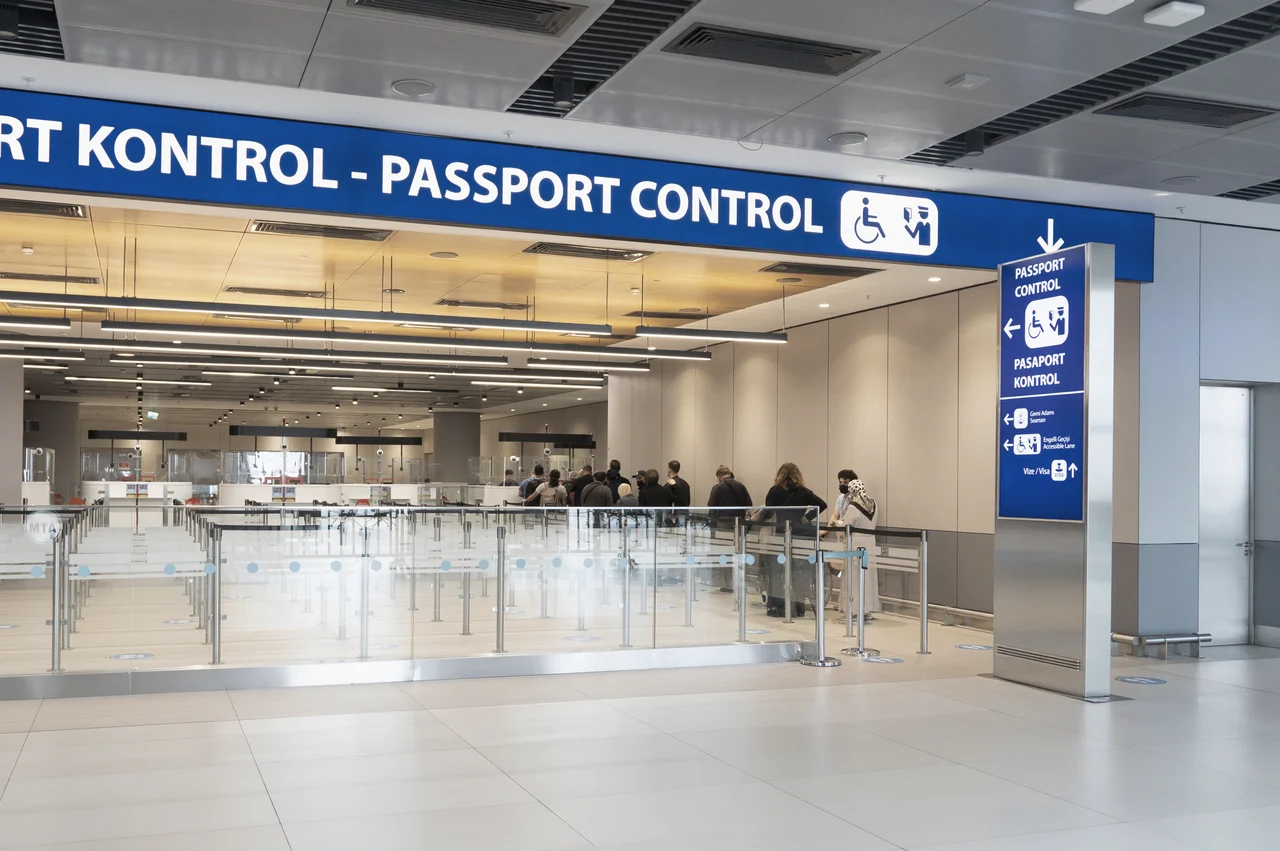
On your first crossing of the external border after launch, a border officer or self-service kiosk registers you in EES: scans the passport, takes a face photo and four fingerprints. Children under 12 do not give fingerprints. The officer may ask about the purpose of the trip, its length, accommodation and funds. Later entries are faster: the system already knows the traveller.
- 1Passportdocument scan
- 2Face photofor all travellers
- 3Fingerprintsfour fingers, from age 12
- 4Questionspurpose, length, lodging, funds
- 5Recorddate and place of entry in the database
Later entries are faster: the system already knows the traveller
EES is applied by 29 Schengen countries: 25 EU states plus Iceland, Liechtenstein, Norway and Switzerland. Cyprus and Ireland are not in Schengen and do not use the system. When travelling from one Schengen country to another there is no registration: the system only works at external borders.
The main change for travellers is automatic counting. Previously an officer counted 90 days in 180 by stamps and could err either way. Now the system counts days precisely and flags an overstay immediately. Records are kept for three years, or five years in case of overstay. Refusals of entry are recorded too. Border officers in every Schengen country can see all of it.
What this means for you. With EES you cannot lose extra days or negotiate them at the border. Every entry and exit is recorded, and the 90 in 180 rule is enforced automatically and strictly.
How to count 90 days in 180 yourself
The rule sounds simple but confuses many. The period is not counted by calendar half-years but as a rolling window: on any day of your stay you look back 180 days, including today, and count how many of them you spent in Schengen. More than 90 is an overstay. The days of entry and exit count as full days.
Example. You spent 60 days in Spain from 1 March to 29 April, then went home. On 15 June you return to Italy. The window on 15 June covers roughly 18 December to 15 June and already contains the 60 days of March and April plus the day of entry. So you have about 29 days before an overstay, not 90. Many believe the counter resets after leaving, and that is exactly where they get caught. A border officer might once have missed it; EES now counts it in a second.
Use the official short-stay calculator on the European Commission website and check it before every trip. If your visa was issued for fewer than 90 days, the visa's term applies.
What this means for you. Days do not reset after you leave. Look at the last 180 days, not just the current trip.
What happens if you overstay
EES itself does not issue fines; it is a database. The consequences are set by the country where the breach is detected: a fine, a removal decision, an entry ban for a period under national law. But the overstay record is kept for five years and is visible in every Schengen country, and consulates take it into account in later visa applications.
If you are delayed through no fault of your own, for example illness or a cancelled flight, contact the migration service of the country you are in before your period expires and keep the documents. An extension for good reason is possible, but it must be arranged, not explained at the exit.
If you have two passports
Back to our traveller. His mistake was not having two passports but crossing the border in and out on different ones. EES links records to the document you present at the check. Entering on one passport and leaving on another creates two open stories in the system: an entry without an exit and an exit without an entry. The first looks like an overstay, and the border officer is obliged to look into it on the next trip.
The rule is simple: enter and leave on the same passport. If you entered on the Caribbean passport, leave on it too. If the visa is in your Russian passport and visa-free access comes with the second one, decide in advance which document the whole trip will be on, and buy tickets in that name and passport. After ETIAS launches, the authorisation will also be tied to a specific passport: if you replace the passport, you will have to apply again.
If the mistake has already happened, do not wait for the next trip. Keep the boarding passes and tickets proving the exit date, and file a request to correct the data. More on that below.
What this means for you. One passport for the whole trip is the main rule for those who have two.
If EES has an error
EES data may be wrong through no fault of your own. For example, an exit was not recorded because of a technical failure at the checkpoint. Every traveller has the right to know what data is held about them and to demand correction. The request goes to the competent authority of any country applying the system, usually the border or migration service.
Practical advice: keep boarding passes and exit tickets at least until your next trip. If the system shows a longer stay than the real one, these documents prove the exit date fastest.
Families with children at the border
Every family member is registered in EES, including infants: children under 12 give only a face photo, older ones fingerprints too. The first registration of a family of four takes noticeably longer than a familiar check, so allow an extra hour at the airport the first time after launch.
If a child travels with one parent or with relatives, carry the other parent's consent with a translation and the birth certificate. EES does not require them, but the border officer may still ask questions, and missing documents for a child are a common cause of delays at the check. And remember the one-passport rule: a child with two citizenships must also enter and leave on the same document.
ETIAS: when and for whom
Update of 14 October 2026. The ETIAS launch has been postponed again. The start date has been removed from official EU websites, the system is not operating and does not accept applications, and it is now planned for no earlier than 2027, once EES has stabilised. The EU promises to announce the date several months before launch. More than 150 websites are already selling a non-existent authorisation: there is nowhere to pay for ETIAS today.
ETIAS will be needed by nationals of about 60 countries who enter 30 European countries visa-free: the Schengen Area and Cyprus. The authorisation is obtained online on the official website or EU app. The fee is €20, free for those under 18 and over 70. It is valid for three years or until the passport expires, if sooner.
The EU has postponed the launch several times. In July 2026 the reference to a launch in the last quarter of 2026 was removed from the official website. It now says the system is not operating and no applications are accepted, and the date will be announced several months ahead. After launch there will be a transitional period, when the authorisation can be obtained but is not yet mandatory, and a grace period for first-time travellers after the transition ends.
Which of our clients this concerns. Holders of passports giving visa-free Schengen access: Caribbean states, Argentina, the UAE, and also UK and US citizens. Russians travelling on a Russian passport do not need ETIAS: they need a visa.
What this means for you. Until ETIAS launches there is nothing to apply for. Any website taking money for an "ETIAS authorisation" today is a scam.
What the ETIAS application will ask
The ETIAS form is short and takes a few minutes online. After launch it will ask for personal and passport details for the passport you will travel on, education and occupation, the first country of entry, and information on serious crimes in recent years, stays in armed conflict zones and previous entry refusals or removal decisions.
Most authorisations are issued automatically within minutes. If there is a database hit, the application is reviewed manually, which can take up to several weeks. So it is better to apply in advance rather than the day before departure. A refusal can be appealed in the country that decided it. If the trip is urgent, there remains a visa with limited territorial validity, issued by consulates in exceptional cases.
Who needs what
A summary of our clients' typical situations. EES applies to all short trips by third-country nationals. ETIAS does not replace a visa.
| Who travels | EES | ETIAS | Visa |
|---|---|---|---|
| Russian citizen with a Schengen visa | yes | no | yes |
| Visa-free passport: Caribbean, Argentina, UAE | yes | yes, after launch | no |
| Holder of a Schengen state residence permit | no | no | no |
| Holder of a Schengen national D visa | no | no | already has one |
| EU citizen | no | no | no |
| Cyprus residence holder without an EU passport | yes, when entering Schengen | depends on passport | depends on passport |
Holders of residence permits and national D visas of Schengen states are not registered in EES and do not apply for ETIAS: their stay is governed by their residence document. That is why a residence permit in a Schengen country remains the most convenient way to travel around Europe without day-counting at the border.
What this means for Russian citizens
For Russians the main change is EES. Every trip on a Schengen visa is now recorded biometrically, and border officers in every country see the full history of entries and exits. Staying a day beyond the visa or breaking the 90 in 180 rule is now much riskier: it is visible immediately and for a long time, and it affects future visa applications.
The second change concerns passports. From 1 October 2026 a number of Schengen countries do not accept Russian five-year passports without biometrics. See our piece on five-year passports, and for the wider context of EU visa policy our article on Schengen visas for Russians in 2027.
For those with a second citizenship giving visa-free Schengen access, ETIAS will add one step after launch: an online authorisation before travel. It is simpler than a visa, but it may be refused: the check matches data against EU databases, and refusal is possible where there are grounds for questions.
A Schengen residence permit instead of counting days
For those who travel to Europe often, both systems argue for a residence permit in a Schengen country. A permit holder is not registered in EES, applies for neither ETIAS nor visas, and travels to other Schengen countries visa-free for up to 90 days in any 180.
The grounds vary: investment, passive income, remote work. The most common among our clients are the Greek golden visa, Hungary's guest investor programme, Spain's non-lucrative residence and Portugal's digital nomad visa. For Russian citizens each programme has its own restrictions, which we check before filing.
What this means for you. If trips to Europe are part of your life rather than an annual holiday, a Schengen residence permit solves visas, EES and ETIAS with one document.
How to avoid scams
There are already many official-looking websites around ETIAS taking money for "processing the authorisation". While the system is not operating, they all collect data and money for nothing. Remember four signs.
The official ETIAS means
- An address on the europa.eu domain or the official EU app
- A €20 fee with no "urgent" or "premium" surcharges
- Applications only after the launch date is officially announced
- No passport copies or card details on third-party websites
Clients often ask whether they should already apply for ETIAS for a spring trip. No: the system is not working, and websites asking for money are a fraud. EES, however, is already changing life at the border. We advise counting your 90 in 180 days yourself and always entering and leaving on the same passport.
Let us check your trips and documents
Visas, a second passport, residence: we will tell you which border rules apply to you.
Summary
EES is already working and has made the Schengen border transparent: every entry and exit is recorded and the 90 in 180 rule is counted automatically. ETIAS has not launched, and nobody should be paid for it now. For Russian citizens with visas, what matters is EES and passport requirements. For holders of visa-free passports, ETIAS will add an online authorisation before travel. And for those living between two countries, the best answer to both systems is a residence permit in a Schengen country.
Let us find a Schengen residence permit for you
Investment, income or remote work: we will match a programme to your family.
How this article was prepared
EES: the EU regulation on the Entry/Exit System and European Commission information on the Entry/Exit System. ETIAS: the EU regulation on ETIAS and the official ETIAS website on the europa.eu domain. Passport requirements: the European Commission list of recognised travel documents. Prepared by Anna Kovalevskaya, Head of Legal at BRIDGES. All facts were checked on 11 October 2026.
Related: Schengen visas for Russians in 2027, five-year passports, Caribbean passports.
Frequently asked
Questions people ask before deciding
01Is ETIAS working in 2026?
No. As of 11 October 2026 the system is not operating and accepts no applications. The EU promises to announce the launch date several months in advance.
02What is EES?
The EU Entry/Exit System. It records crossings of the Schengen external border using biometrics instead of a passport stamp and counts 90 days in 180 itself.
03From what age are fingerprints taken in EES?
From age 12. A face photo is taken of all travellers.
04Do Russian citizens need ETIAS?
No, if entering on a Russian passport with a visa. ETIAS is only for those entering visa-free.
05How much does ETIAS cost?
€20. Free for under-18s and over-70s. Valid for 3 years or until the passport expires.
06Can I enter on one passport and leave on another?
Technically yes, but EES will record an entry without an exit, which looks like an overstay. Enter and leave on the same passport.
07Do residence permit holders need EES and ETIAS?
No. Holders of Schengen residence permits and national D visas are not registered in EES and do not apply for ETIAS.
08Where do I apply for ETIAS?
Only on the official website on the europa.eu domain or in the official EU app, after the launch date is announced.
About the author
Related materials
What to read next
 AnalysisEU golden visas in autumn 2026: Greece gets dearer, Portugal queues, Cyprus grows
 ComparisonAntigua and Barbuda or Grenada: Family Passport for Large Families in 2026
 ArticleLife in Abu Dhabi in 2026: how it differs from Dubai, areas, prices, for families
Let us check documents for your trips
Visas, a second passport, residence and the new border rules.