Residency · Schengen
ETIAS is not running yet: today there is no one to pay for it

Updated: November 2026·12 min read·Expert reviewed
Terms and costs verified: November 2026
Contents
The EU's official website says it plainly: ETIAS is not running, applications are not being collected and nothing is required from travellers. So any page charging for this authorisation on 3 November 2026 is selling something that does not exist. There is one real address, travel-europe.europa.eu, and the EUR 20 fee will appear only after launch. What matters more than the money is your data: the ETIAS form asks for exactly what identity theft needs.
In brief
- The official website is travel-europe.europa.eu/en/etias. The address ends in europa.eu.
- Today no one needs an authorisation and there is nowhere to get one. The EU promises to announce the launch date several months ahead.
- After launch: EUR 20, one person per authorisation, usually an answer within minutes.
- In our assessment the system will not start before the end of 2026: there is no announcement, and the notice period is several months.
- If you have already paid or left your data, act at once: bank, passwords, police report.
There is no system, but the bills are already out
ETIAS is an electronic travel authorisation for nationals of countries who do not need a visa for short trips. It will be required for 30 European countries and allows stays of up to 90 days in any 180-day period. It replaces neither a residence permit nor a visa. See our review of ETIAS and EES at the Schengen border.
The launch was once aimed at the last quarter of 2026, but the official website no longer gives that date. The EU promises to announce it several months before the start, and has not done so. Hence our assessment: the system will not start in the remaining weeks of the year, and you will not need an authorisation for winter trips. A website countdown counts nothing official. As soon as a date appears, we will report it in our news.
Three similar terms cause the confusion. EES already runs at the border and asks for no money, ETIAS is not running, and a visa remains for those outside the visa-free list. Sites that charge often blur these, so keep the difference in front of you.
| EES | ETIAS | Schengen visa | |
|---|---|---|---|
| What it is | recording entry and exit at the border | travel authorisation for the visa-exempt | a visa in the passport for everyone else |
| Running now | yes | no | yes |
| Prior application | not needed | needed after launch | needed |
| Fee | none | EUR 20 after launch | consular fee |
What actually awaits you at the border today
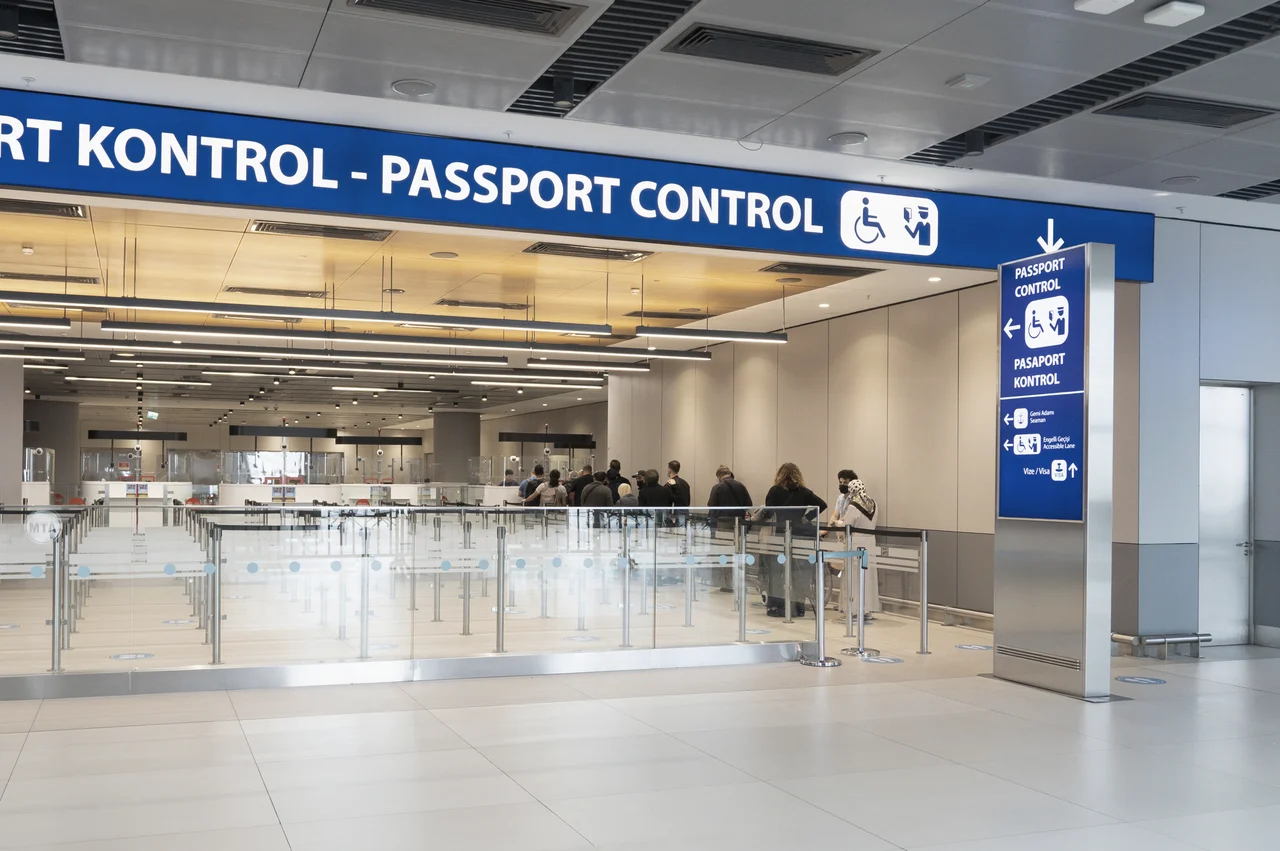
The real novelty is already running, and no one asks for money for it. Since 10 April 2026 the EES has operated at the external borders of 29 Schengen countries and covers everyone arriving from outside the EU for up to 90 days. Border guards record passport data, a facial image, fingerprints, and the dates and place of entry and exit. No prior application is required.
You can save time for free: the European Commission says data can be entered in advance in the Travel to Europe app up to 72 hours before entry. That is one more reason to stick to official addresses, since no one needs to be paid for EES or for such an app.
| Your situation | What a short trip needs today | What changes when ETIAS starts |
|---|---|---|
| Passport of a visa-free country | EES registration at the border | ETIAS is added, EUR 20 |
| Passport of a country that needs a visa | a Schengen visa and EES | nothing, no ETIAS needed |
| Residence permit of a country where ETIAS applies | your permit | nothing, no ETIAS needed |
| Citizenship of a country where ETIAS applies | that passport | nothing, no ETIAS needed |
The table answers the question to ask yourself first: do you need ETIAS at all. For many readers the answer is no, which makes any payment doubly unnecessary. In April 2026 the Commission still pointed to a launch in the last quarter of the year, and the EU has already raised the fee from EUR 7 to EUR 20. Check both figures only on official pages, because old amounts and dates keep circulating online.
The real address takes a minute to check
A design, an EU flag and the word official are easy to copy, but the europa.eu domain is not. So the check starts in the address bar. Read leftwards from the first slash: what matters is what stands directly before it.
- The real one: travel-europe.europa.eu. Before the slash stands europa.eu.
- A fake on the same idea: europa.eu.something-else.com. The owner here is something-else.com, and the words at the start mean nothing.
- A lookalike name: any domain with etias, eu or visa that does not end in europa.eu.
The padlock in your browser means the connection is encrypted and says nothing about the site's status. On a phone the address is often cut off, so tap the bar and read it in full. Top search results can be adverts, so it is safer to bookmark the official address once and open it only from there.
| Sign | Official website | Intermediary or fake |
|---|---|---|
| Address | travel-europe.europa.eu, on the europa.eu domain | any other domain, even with etias in the name |
| Application today | not accepted | offers to file and take payment now |
| Price | EUR 20 after launch | more than EUR 20 or an "express rate" |
| Promises | authorisation does not guarantee entry | guaranteed approval, "fast track" |
Irena SokolovskaHead of European Practice, BRIDGES
Want to travel to Europe without a visa? We will find an option
We will suggest a passport or residence permit that fits your trips and check the entry conditions.
A copied form is dangerous for its questions, not its price
Losing EUR 50 or 100 is annoying. The worse part is that a copy of the ETIAS form extracts details a fraudster would never get otherwise. The left column comes from the official list, and the right is our risk assessment.
| What the application asks for | Why to give it only on the official website |
|---|---|
| Name, date and place of birth, sex, nationalities | the basis for identity theft |
| Home address, email, phone | a channel for the next scam messages |
| Parents' first names | often used as a bank security question |
| Passport details | document number and expiry date |
| Education and occupation | details for targeted fraud |
| Convictions, travel to conflict zones | sensitive information about you |
Today there is nowhere to complete such a form, so any form with these fields is a reason to close the page. A message saying you "urgently need ETIAS" is the same kind of thing: no one can apply yet, so there is nothing to remind you about. Do not follow its link.
Six promises that give a fake away
The real ETIAS rules are already published, so any promise is easy to check. Here is what most often contradicts them.
| What the site promises | What the ETIAS rules say |
|---|---|
| Apply now or you will be refused | the system is not running, nothing is required now |
| Discounted family application | one person per authorisation, no family or group applications |
| Express processing for a fee | usually minutes, 96 hours at most, up to 30 days if documents are requested |
| Guaranteed approval | an authorisation does not even guarantee entry |
| Refund if refused | the official fee is non-refundable |
| Print it and show it at the border | no need to print, the data is in the system |
How applying will work after launch
The form
On the official website or official app, in EU languages. A draft is kept for 48 hours, and you can review and download your application before sending it.
The fee
EUR 20. Under-18s and over-70s do not pay, nor do family members of EU nationals who meet the conditions. There is no refund on refusal.
The answer
Most people within minutes, the rest within 96 hours. If documents or an interview are requested, it can take up to 30 more days.
Travel
Valid for 3 years or until your passport expires. You name a first country on the form but can then go to any of the 30. You request a new one 120 days before expiry.
The EU advises getting the authorisation before buying tickets and booking hotels. There is no need to print it: airlines and border guards see it in the system. It does not guarantee entry, but without it you will be turned back at the border.
An intermediary is legal, but access is your responsibility
After launch a relative, friend or commercial intermediary such as a travel agency may apply for you, and you both sign a declaration of representation. Any other website collects your data and files through the same official website, and everything above EUR 20 goes to it for the service. The EU advises finding out in advance what it costs and how your data is protected. The service itself is legal, but it needs checking.
The key condition is simple: you must have access to the email address on the application. Your application number, the result and the renewal reminder go there, and messages may land in spam. There is no family or group application, so each family member files separately. Children pay no fee, and a child's authorisation stays valid to its end even after they turn 18. Relatives over 70 do not pay at all, so tell them now that any payment on an outside site is unnecessary.
How to choose an intermediary if you really need one
The official page on applying for others gives specific advice, more useful than any general warning. The EU asks you to choose someone you trust, because you hand over very sensitive information, including passport details. The fee should be reasonable.
- The application must use your own email address. Messages from the authorities go there for the whole validity period, and without access you may miss something important.
- Ask for a copy of the draft before it is sent. The intermediary confirms accuracy on your behalf, but you remain personally responsible for the information.
- If you are overcharged or your application is never filed, you can report it anonymously on the official website.
Urgency is no reason to pay an intermediary either. The EU says plainly that most applications are processed within minutes, so a last-minute one will probably be handled in time. Applying early is still wiser, since requests for documents extend the timeline.
Who will not need ETIAS
- Nationals of countries where ETIAS applies and of Ireland. With such a second citizenship, enter on that passport.
- Those with a residence permit or residence card from a country where ETIAS applies, or from Ireland.
- Transit passengers, as long as they stay in the airport's international area.
- Those who need a visa to enter: ETIAS is only for the visa-exempt.
You can be refused if your document is reported lost or invalid, if you are considered a security, illegal immigration or epidemic risk, or if you fail to answer a request or attend an interview. After a refusal you may appeal in the country that refused, and on humanitarian grounds you may request an authorisation with limited validity. We advise against travelling on a passport expiring in under three months: you can apply, but you will be refused at the border without very good reasons.
What to do if you have already paid
Keep the evidence
The website address, emails, payment number and screenshots.
Contact your bank
Report the disputed payment, ask about a chargeback and replace your card if needed.
Assess what you handed over
If a passport scan or card details are on the site, change passwords and watch your accounts. In serious cases, replace the document.
File a police report
This supports your request to the bank.
Messages asking you to "confirm" or "top up" an application are the same trick, so do not pay twice. Such a purchase means nothing for your trip: the system is not collecting applications, and after launch you will have to apply afresh.
Who the launch will really affect
The new requirement will apply to everyone who now travels to Europe visa-free on a non-EU passport. That includes holders of second passports: the Argentine passport and Caribbean passports, for example, give visa-free Schengen access, and ETIAS will be added to them after launch. It hardly affects the programmes themselves: EUR 20 every three years is trivial next to the cost of the document.
Discipline matters more. The authorisation is linked to a passport, so a new document needs a new authorisation. Check your status in advance before your first trip after launch: without a valid authorisation you will be turned back at the border, and the airline will see it in the system at boarding.
What to do on the day the EU announces the date
There will be no need to panic then either. The EU has promised several months' notice, and an answer usually comes within minutes. The steps are short: read the announcement on the official website, check the table above to see whether you need ETIAS, look at your passport dates and apply before buying tickets for your first trip after launch.
Expect a wave of adverts and emails offering to arrange it faster in the first weeks after the announcement. Any new compulsory payment attracts them, and the ETIAS rules describe no official fast track for money. If an offer comes from a travel agency you know, ask what you would ask any intermediary: how much above EUR 20, which email it files with, whether it will show you the draft.
ETIAS will not get in the way of tourist and business trips if you remember that each person needs their own authorisation, a new passport means a new authorisation, and validity does not renew itself. The system warns you by email before expiry, so the address on the application must work for the whole period.
Behind the EUR 20 is a question of status
The fee is a small thing. What matters more is that your access to Europe depends on your document, and the rules at this border are only getting tighter. A holder of European citizenship or a residence permit does not need ETIAS at all, and the risk of refusal disappears. See what your document offers in the BRIDGES Passport Index and our country comparison, and how Schengen works for particular passports in our articles on the Vanuatu passport and the Turkish passport.
If you are thinking of living in Europe, start with our sections on residence permits and citizenship. We prepare paperwork through our document services, and you can go through a plan at an online consultation.
What to do today
- Bookmark travel-europe.europa.eu.
- Warn your parents and frequent travellers.
- Check the validity of your family's passports.
- Pay no one for ETIAS until the EU announces a date.
How this article was prepared
Prepared on 3 November 2026. Sources: the European Union's official ETIAS website, its home page and frequently asked questions: system status, application procedure, fee, intermediaries, refusals and appeals. The site is overseen by the European Commission's Directorate-General for Migration and Home Affairs. The launch estimate and the data risk assessment are the position of BRIDGES.
Share this article
Frequently asked
Questions people ask before deciding
01What is the official ETIAS website?
travel-europe.europa.eu/en/etias, an EU domain. After launch you can apply there or in the official app.
02Do I need to get ETIAS now?
No. The system is not running, applications are not being collected and nothing is required from travellers.
03How much does ETIAS cost?
EUR 20 after launch. Applicants under 18 and over 70 do not pay, nor do family members of EU nationals who meet the conditions.
04Can I apply through an intermediary?
After launch, yes, with a declaration of representation. Anything above EUR 20 goes to the intermediary.
05What if I have already paid on another site?
Save the emails and payment details, contact your bank, assess what data you shared and file a police report.
06How long does an ETIAS application take?
Most get an answer within minutes, and within 96 hours at most. If documents or an interview are requested, it can take up to 30 more days.
07Can one application cover my whole family?
No. An authorisation is issued to one person and linked to their passport. Each family member applies separately.
08How long is an ETIAS authorisation valid?
3 years or until the passport expires, if sooner. You can request a new one 120 days before expiry.
09When will ETIAS launch?
There is no official date. The EU promises to announce it several months ahead. With no announcement as of 3 November 2026, a launch before the end of 2026 is, in our assessment, ruled out.
10How is ETIAS different from EES?
EES records entries and exits at the border and runs now, with no application or fee. ETIAS is a travel authorisation for the visa-exempt and is not yet running.
About the author
Related materials
What to read next
 NewsETIAS is not operational: what changed in EES border checks
 ArticleETIAS and EES at the Schengen border: what works in 2026 and who is affected
 ComparisonAntigua and Barbuda or Grenada: Family Passport for Large Families in 2026
News+1 story on 3 November
Related news
 Schengen · 13 OctLTV visas for Russians: Schengen by territory and why residence beats a visa
 Greece · 3 NovGreece: the 15% home purchase tax will depend on tax residency, not on your passport
 European Union · 1 NovEuropean Union: updated social security rules for living and working in two countries enter into force
Personal programme selection is conducted by Anna Kovalevskaya, Head of Legal, BRIDGES.
Want to live and travel in Europe? We will find a residence permit or passport
We will go through your trips and budget and suggest a suitable option.
