Residency · Cyprus
Climate and weather in Cyprus in 2026: by season, city and sea temperature

Updated: June 2026·12 min read·Expert reviewed
Terms and costs verified: June 2026
Contents
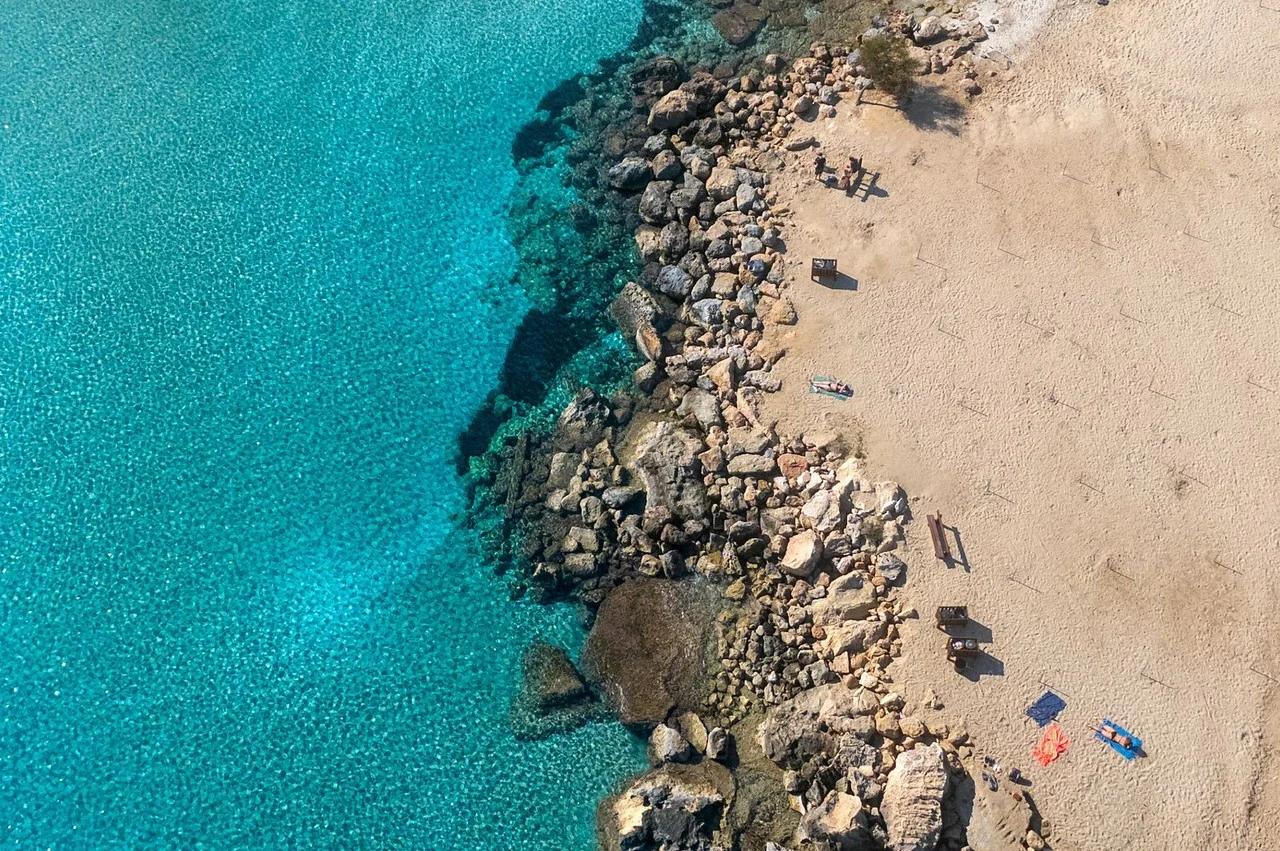
Cyprus is one of the sunniest corners of the Mediterranean: 300-340 clear days a year, hot dry summers and mild rainy winters. The sea warms up to +27...+28 by August, and swimming is comfortable from May to November. In winter, the coast is +15...+18 and green, while there is snow in the Troodos Mountains and a ski slope is open - a rare contrast when you can go skiing in the morning and go down to the sea in the afternoon. We analyze the weather by season and city to understand whether this climate is suitable for you to live and move.
Mediterranean climate of Cyprus: what does it mean in practice
Cyprus lies in the eastern Mediterranean Sea and experiences the classic Mediterranean scenario: long, hot and almost rainless summers from mid-May to mid-October and mild but fairly rainy winters from December to February. There are no sharp frosts here, just as there is no protracted gray autumn in the usual sense for a resident of the middle zone - the weather changes gently and predictably.
The main trump card of the island is the sun. Cyprus has between 300 and 340 clear days a year, one of the highest rates in all of Europe and the Mediterranean. Even in December and January, the island receives an average of about six hours of bright sun per day, and during the six months of the summer season - about 11-12 hours daily. It is the abundance of sun, and not just the warmth, that makes the Cypriot climate so attractive for those who are tired of long, dark winters.
For the person who is considering moving to Cyprus, climate is not an abstract figure in the forecast, but the daily background of life: how many months a year the beach season is open, how difficult the summer heat is and whether a winter wardrobe is needed at all.
Summer in Cyprus: hot, dry and peak beach season
Summer is the most predictable season on the island. From June to September there is a steady heat without rain: you don’t have to wait for clouds for weeks. On the coast, daytime temperatures range from +30...+36, and at the height of the season, in July and August, the temperature often rises higher. The heat is dry, which is easier to bear than the humid tropical heat, but in the midday hours you are still drawn to the shade and under the air conditioning.
An important nuance is humidity. On the south coast, in the Limassol area, in summer it is noticeably more humid than in other coastal cities, and the stuffiness there is felt more strongly. The dry heat of the central plain is tolerated differently than the sticky humidity of the sea, and this is worth considering when choosing a place to live.
But the sea in summer is ideal. By August, the water near the shore warms up to +27...+28, and this is no longer a refreshing swim, but literally fresh milk. The daylight hours are long, the evenings are warm, and all life shifts to the coast and in the evening hours. For those who plan to live by the sea all year round, it is useful to understand in advance best areas to live in Cyprus - the microclimate and level of summer stuffiness in them differ markedly.
Winter in Cyprus: mild, green and sunny
The Cypriot winter bears little resemblance to winter in the usual sense of the word. From December to February on the coast during the day it is +15...+18, the nights are cooler, but there are practically no frosts near the sea. The island turns green during these months: it rains, the vegetation comes to life, and the landscape becomes lush, and not scorched, as in August.
Yes, winter is the rainy season. The bulk of annual precipitation falls from November to March, with the wettest month being December. But even in winter, Cyprus remains sunny: the rains are usually short, with clear skies and mild warmth in between. About six hours of sun per day in January is a figure that northern countries can only dream of in winter.
For many, it is the mild winter that becomes the decisive argument in favor of the island. You don't need a thick down jacket, you don't need to live without the sun for months, and a light jacket and umbrella cover almost all weather scenarios. The topic of winter comfort is especially important for those who plan moving to Cyprus in retirement - We’ll talk about health and climate separately below.
Spring and autumn: the most comfortable seasons
If you ask locals what is the best time of year in Cyprus, many will say not summer, but the off-season. Spring (April-June) and autumn (September-November) are the golden mean: warm, but without sweltering heat, daytime temperatures stay in the pleasant range of +20...+28.
In spring, the island literally blooms: after the winter rains, everything turns green and blooms, the air is warmed up, and the sea is already warmer. By May, the water near the shore reaches +20...+21, and the swimming season opens. This is the ideal time for walks, trips around the island and exploring nature - the heat has not yet driven everyone into the shade.
Autumn is also good in its own way: the summer heat subsides, but the sea remains warm - in September and October the water is +24...+26, and swimming is more comfortable than in spring, because it has warmed up well over the summer. September and October are considered by many to be the best months to relax and explore the island: mild warmth, warm seas and fewer tourists than during peak summer weeks.
Sea temperature by month and swimming season
The sea is a special reason to love Cyprus. The Mediterranean Sea near the island is warm almost all year round, and the swimming season is one of the longest in the region. For seven months, from May to November, the average water temperature exceeds +20, that is, you can swim for almost six months in a row.
Guidelines for water temperature near the coast (Paphos, Larnaca, Ayia Napa are similar in values):
- February - the coldest water, about +16...+17.
- May - +20...+21, start of the swimming season.
- June - +24, the water is already really warm.
- July-August - peak, +26...+28, the sea is steamy.
- September-October - +24...+26, velvet season.
- November - about +22, still comfortable for many.
In winter, from December to April, the water is cool - for the seasoned, but not for relaxed swimming. But from late spring to mid-autumn, the coast works at full capacity: it is the long warm season that makes coastal cities so attractive for permanent living.
We will find the right basis for residency in Cyprus
We calculate the budget and timing for your family and list the documents you need.
Climate by city: coast, Nicosia and mountains
Cyprus is a small island, but the climate within it varies markedly depending on where you are: by the sea, in the center of the island or in the mountains. This difference is important to understand when choosing a place to live.
- Coast (Limassol, Paphos, Larnaca, Ayia Napa, Protaras) - the mildest climate. The sea softens both the summer heat and winter cold: in summer +30...+34, in winter +15...+18. In Limassol in summer the humidity is higher and it is more stuffy.
- Nicosia (Lefkosia) and central plain - the capital lies inland of the island, far from the sea, so the climate here is more continental: in summer it is hotter than on the coast (often above +36), and in winter it is cooler at night.
- Troodos Mountains - a completely separate world. It is cooler here all year round, in summer +24...+26 instead of the sweltering heat of the plain, and in winter it snows.
This difference of several tens of kilometers is a real factor when choosing housing. For those who lean towards the West Coast, a separate analysis is useful life in Paphos with its mild and one of the healthiest microclimates on the island.
Troodos Mountains: snow and ski season in Cyprus
The most unexpected fact about the Cypriot climate: on the island, where the sea is warm half the year, you can ski in winter. The Troodos mountain range in the center of the island rises to almost 2000 meters - the highest point, Mount Olymbos (Chionistra), reaches 1952 meters. The mountains create their own weather, completely different from the coast.
From January to March there is snow on the peaks of Troodos, and around Olymbos the snow cover lasts for three to four months a year. There is a ski slope here: the season usually lasts from January to March-April, and the best conditions for skiing are from mid-January to mid-March, during the peak snow months.
This is where the signature Cypriot contrast is born, which the locals love to brag about: on a fine winter day you can go skiing in the mountains in the morning, and by lunchtime go down to the sea and walk along the embankment in a light jacket. Limassol and Nicosia lie about an hour's drive from the slopes. In the summer, Troodos turns into an escape from the heat: coolness, pine forests and +24...+26 instead of +35 on the plain - it is not surprising that Cypriots themselves flock here during the hottest weeks.
Who suits the Cyprus climate: a assessment by season
Let’s put everything together and see who the Cypriot climate is suitable for, and who needs to weigh the nuances. The main advantages are obvious: a record number of sunny days, mild winters without frost, a long swimming season and dry air. But the summer heat is a real factor that cannot be ignored.
- Whose climate is ideal for: those who do not tolerate long dark winters and dampness, love the sun, sea and outdoor activities most of the year.
- Who should prepare: for those who can hardly tolerate heat above +33. In July-August, it can be really hot on the plain and in Nicosia; air conditioning, early and evening hours, as well as mountains and the coast with a sea breeze save the day.
- For the elderly and health: mild sunny winter is a big plus, especially for joints and breathing. But during the peak of the summer heat, people with cardiovascular problems need caution: shade, water, cool rooms.
If you are weighing not only the weather, but also the everyday aspects of moving, it makes sense to compare climatic comfort with cost of living in Cyprus - for example, the costs of air conditioning in summer and heating in winter are noticeably different from usual.
“Climate is the first thing clients ask about, and I always answer : Cyprus is about the sun for more than three hundred days a year and about the sea in which you swim for six months. Winter here is mild, without frost, and for many this is a decisive argument - especially for those who are moving at an older age or with children. But I never sugarcoat the summer heat: in July and August it gets really hot on the plains and in Nicosia, and people with heart or blood pressure need to be careful during these weeks. Therefore, the choice of location is not a small thing: the coast with the sea breeze, quiet Paphos with its healthy microclimate or the cool mountains of Troodos provide completely different lifestyles. When we select a region for a family, we always look not only at status and budget, but also at how a person tolerates heat and humidity - this determines whether the move will be a joy.”
Rain and precipitation: when and how much it rains in Cyprus
Contrary to the image of an eternally sunny island, there is rain in Cyprus - it’s just compressed during the winter months. The bulk of precipitation, about 80%, falls from November to March, and the wettest month is December. In summer, rain is almost an event: from June to September the sky remains clear for weeks.
The annual precipitation rate on the coast is low - about 300-400 mm, which is noticeably less than in many European countries. At the same time, the distribution is uneven across the island: in the Troodos mountains there is much more rain and snow, and it is noticeably wetter there than on the dry southern coast. Among the coastal cities, the most rainfall occurs in the Paphos area, and the driest is in the east of the island, in the Protaras area.
In practice, this means that even in winter Cyprus does not turn into a country of complete greyness: the rains usually pass quickly, giving way to clear weather. An umbrella is needed in winter, a raincoat is advisable, but you won’t have to sit without the sun for months. For everyday life, this is a comfortable scenario: nature receives moisture, and people receive sun almost all year round.
Humidity, wind and coastal microclimate
Air temperature is not the only thing that shapes the feeling of the weather. Humidity and wind are sometimes more important than the numbers on the thermometer, and in Cyprus their distribution is worth knowing in advance.
Summer humidity is the main nuance. On most of the coast, the air is relatively dry during the day, which makes the heat easier to bear, but the southern coast in the Limassol area is noticeably more humid, and the stuffiness there is felt more strongly. Deeper into the island, in Nicosia, the air is drier, but the heat is also higher. The sea breeze on the coast is a natural air conditioner: even in the heat, you can breathe easier right next to the water than a few kilometers from the shore.
The wind on the island is generally moderate. In winter there are windier days with rain fronts, but there are no prolonged storms like on the ocean coasts. It is the combination of dry air, sea breeze and plenty of sun that creates the very microclimate that doctors often call favorable for the respiratory system and general well-being - one of the non-obvious but powerful arguments in favor of living by the sea.
What to take with you and how to dress for the seasons
A practical question for those who are traveling to Cyprus for the first time or are planning a move: what kind of wardrobe is really needed on the island. The answer is encouraging - almost no heavy winter clothing is required here.
- Summer (June-September): Light, breathable clothing, a hat, sunglasses and high SPF cream are required. In the evening it can be cooler by the sea - a light cape will come in handy.
- Spring and autumn: T-shirts and light clothes during the day, a thin sweater or windbreaker for the evening. The swimsuit is relevant from May to November.
- Winter (December-February): on the coast - jeans, a sweater, a light jacket and an umbrella. There is no need for a down jacket, but waterproof shoes and a windbreaker will help out on rainy days.
- Troodos Mountains in winter: a completely different story - a warm jacket, hat, gloves and winter shoes, especially if you plan to ski.
The main advice is to dress in layers, especially in the off-season and when traveling from the coast to the mountains: a difference of several degrees on a short route is common here. This is perhaps the best illustration of how different climates fit on one small island.
Climate and health: an expert's view of life by the sea
The climate of Cyprus is often called healing, and there is a rational grain in this, but the issue should be approached soberly. A mild, sunny winter without frost or dampness really makes life easier for people with problems with the joints, respiratory and cardiovascular systems - it is no coincidence that the island is popular among those moving to retire.
Dry air and sea breezes are favorable most of the year, and plenty of sun supports vitamin D production and helps those who suffer from the seasonal blues in northern latitudes. But there is also a downside, which we warn you about: the summer heat in July-August is a serious burden on the body, especially on the plain and in Nicosia. During these weeks, it is important for people with cardiovascular diseases to avoid the midday sun, drink enough water and take advantage of cool indoor conditions, and also consider the coast or mountains instead of the hot center of the island. With a balanced approach, the climate of Cyprus becomes one of the healthiest in Europe for year-round living.
We will help you choose a place in Cyprus that suits your climate and lifestyle
Climate is only one of the moving factors, but an important one: it determines whether you live by the sea or in the mountains, in quiet Paphos or business-like Limassol. We solve the issues of obtaining a residence permit and permanent residence in Cyprus on a turnkey basis and help you choose a location so that the weather, infrastructure and resident status will result in a comfortable life, and not a series of compromises.
Discuss moving to Cyprus with a BRIDGES GLOBAL expert - we will tell you which region of the island is suitable for your family and how to obtain legal residence.
We will send a document checklist for your case
Leave your details: we will put together documents and timelines for your family.
Bottom line: Cyprus climate for holidays and permanent living
Cyprus offers one of the most sun-rich climates in Europe: 300-340 clear days, warm seas for almost half the year and winters in which you don't need a down jacket. Summers are hot and dry, the off-season is mild and comfortable, and the unique contrast of the coast and the snow-capped mountains of Troodos makes the island truly diverse - from the beach to the ski slopes within an hour's drive.
For permanent living, this means a simple thing: for most of the year, the weather works for you, not against you. The only nuance is the summer heat, which can be easily mitigated by choosing the right place and daily routine. If sun, sea and mild winters are your priority, the climate of Cyprus is a strong argument in favor of moving. You can always check the latest weather statistics and official data on the portal Cyprus government services (gov.cy), and we will help you solve the issues of legal residence and choice of region on a turnkey basis.
- Cypriot permanent residence vs Cypriot citizenship: what to choose
- Cyprus Permanent Residency Law: Regulation 6(2)
- Northern Cyprus Citizenship (TRNC): what yes
- How much does Cyprus citizenship cost
- Cyprus permanent residence or Turkish residence permit: what to choose
- Investing in Cyprus real estate: guide
Frequently asked
Questions people ask before deciding
01How many sunny days a year are there in Cyprus?
From 300 to 340 clear days a year - this is one of the highest rates in Europe and the Mediterranean. Even in winter, in December and January, the island receives an average of about six hours of bright sun per day, and in summer - about 11-12 hours daily.
02What is the climate in Cyprus?
Mediterranean: long, hot, dry summers from mid-May to mid-October and mild, relatively rainy winters from December to February. There is practically no frost, precipitation is concentrated in the cold months, and the sun shines almost all year round.
03What is the summer temperature in Cyprus?
On the coast during the day in summer it stays at +30...+36, at the height of the season it is higher. Inland, in Nicosia and the central plain, it is hotter - often above +36. It is cooler in the Troodos Mountains, around +24...+26, so in the summer people go there to escape the heat.
04To what temperature does the sea warm up in Cyprus?
By August, the water off the coast warms up to +27...+28. In May it reaches +20...+21, in June +24, and in the velvet season of September-October it is +24...+26. The coldest water in February is about +16...+17.
05When is the swimming season in Cyprus?
It is comfortable to swim from May to November - for seven months in a row the average sea temperature exceeds +20. The peak occurs in July-August, when the water reaches +27...+28, and September and October are considered by many to be the best time: the sea is warm and the heat has already subsided.
06What is winter like in Cyprus?
Soft and sunny. On the coast during the day +15...+18, there are practically no frosts near the sea, the island turns green after the rains. Winter is a rainy season, but the rains are usually short with clear skies in between. You don't need a down jacket, a light jacket and an umbrella are enough.
07Does it snow in Cyprus?
On the coast - no, but in the Troodos mountains there is snow from January to March. Around the highest point, Mount Olymbos (1952 m), snow cover lasts for three to four months. This is the only place on the island where stable snow falls in winter.
08Is it true that you can ski in Cyprus?
Yes. There is a ski slope in the Troodos Mountains, the season usually lasts from January to March-April, the best conditions are from mid-January to mid-March. The signature contrast of the island: in the morning you can go skiing in the mountains, and in the afternoon you can go down to the warm sea on the coast.
09Where in Cyprus is the climate most comfortable for living?
On the coast - in Limassol, Paphos, Larnaca, Ayia Napa - the sea softens both the summer heat and the winter cold. Paphos in the west is famous for its particularly mild and healthy microclimate. Limassol has higher humidity in summer, Nicosia inland is hotter, and the mountains are cooler all year round.
10When is the best time to go to Cyprus?
The most comfortable seasons are spring (April-June) and autumn (September-November): warmth without sweltering heat, +20...+28, warm sea and fewer tourists. Summer is suitable for lovers of heat and the beach, and winter is for those who come for the soft sun and skiing of Troodos.
11Is the heat hard to bear in Cyprus in summer?
In July-August it can be really hot on the plain and in Nicosia, above +33...+36. Air conditioning, early and evening hours, the sea breeze on the coast and the coolness of the Troodos Mountains help. People with cardiovascular problems should take care during the peak of the heat and avoid the midday sun.
12Is the climate of Cyprus suitable for health and elderly people?
A mild, sunny winter without frost or damp makes life easier for people with joint and breathing problems, and the abundance of sun helps with seasonal blues. The main caveat is the summer heat: people with cardiovascular diseases in July-August need caution, shade and cool rooms.
Transparency
How this material was prepared
- Author
- Irena Sokolovska, head of European Practice, BRIDGES
- Terms and costs last verified
- June 2026
- Sources
- official government authorities of the relevant country and state publications
- Methodology
- government minimum requirements are stated separately from due diligence charges, state fees, legal and banking costs
Sources and methodology
Figures, terms and timelines are checked against official sources as of June 2026. Link availability verified in August 2026. Third-party blogs and agent websites are not used as a source of programme terms.
- [1]Ministry of Interior of the Republic of CyprusResidence conditions and statuses for foreign nationalswww.moi.gov.cy/moi/moi.nsf/index_en/index_en
- [2]Cyprus Tax DepartmentTax residency and rateswww.mof.gov.cy/mof/tax/taxdep.nsf/index_en/index_en
Methodology: tables and charts state government minimum investment requirements; due diligence charges, state fees, legal, banking and other costs are calculated separately and are not included in the minimum thresholds.
About the author
Related materials
What to read next
 ArticleCyprus citizenship by descent: right of blood in 2026
 ComparisonNorthern and Southern Cyprus: Key Differences and Where to Buy Real Estate in 2026
 AnalysisWhat is due diligence and why the Caribbean is rejecting applications
Personal programme selection is conducted by Anna Kovalevskaya, Head of Legal, BRIDGES.
Residency in Cyprus: timelines and requirements
Grounds, document list, presence requirements and what is needed for renewal.
