BRIDGES Insights · World
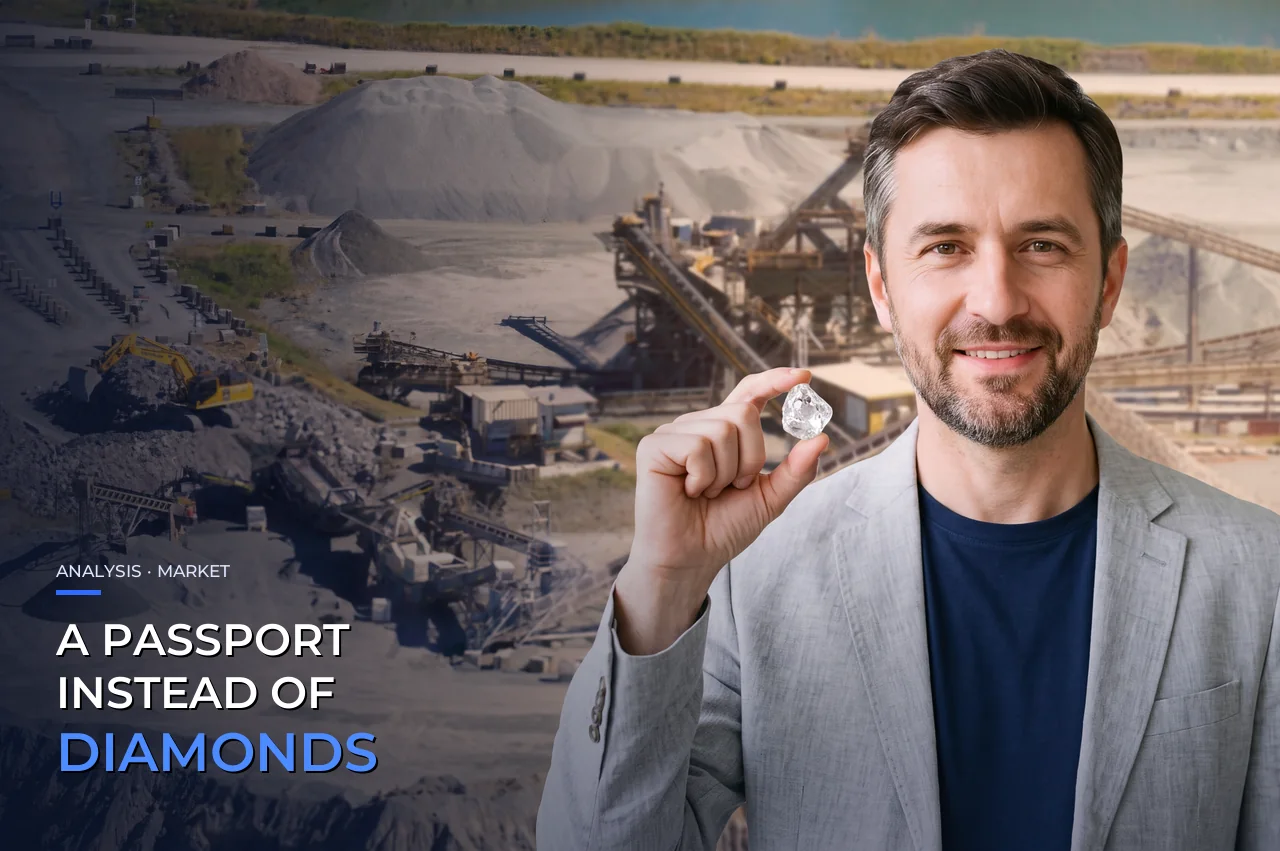
A passport instead of diamonds: why countries sell citizenship and what it means for investors
Updated: October 2026·9 min read·Expert reviewed
Terms and costs verified: October 2026
Contents
On 25 September 2026 Moody's cut Botswana's rating for the second time in less than a year. The reason is one word: diamonds. A country held up to all of Africa as a model for half a century is losing its main source of money, and one of the government's answers is a passport. A contribution of about $75,000; the law has already been passed. The same month Argentina named the price of its passport and Jordan reported a hundred new investor citizens. Three countries are selling the same thing for entirely different reasons. For an investor the reason matters more than the price, and below I explain why.
In short
- Botswana: diamonds provide about a third of budget revenue and three quarters of FX earnings. Exports fell 34.6% in 2024 and the rating was cut to Baa2. The citizenship by investment law was passed in December 2025 but is not in force.
- Argentina: $350,000 as a contribution or $800,000 in bonds. The money goes to the treasury of a country with a difficult debt history. The programme is being challenged in court and in Congress.
- Jordan: 100 investors received citizenship in the first nine months of 2026. The threshold is from JD 1.5m in shares of Jordanian companies, with money locked in for years.
- Countries sell passports for three reasons: a cash gap, investment policy or a permanent budget line. The reason determines how long the programme will live.
- The most stable programmes are those the budget can no longer do without. The riskiest are those opened in a hurry.
Botswana: when the diamonds run out
Botswana long served as a textbook on how to avoid the resource curse. A diamond company half-owned by the state fed the budget, schools, hospitals and central bank reserves. Then the world learned to grow diamonds in laboratories, and China and the US began spending less on jewellery. According to the Bank of Botswana, diamond exports fell 34.6% in 2024, from 61.7 to 40.4 billion pula. The economy contracted.
- Diamonds' share of budget revenueabout 1/3and about 3/4 of FX earnings
- Diamond exports 2023-2024-34.6%from 61.7 to 40.4 bn pula
- Moody's ratingBaa2second cut in under a year, 25.09.2026
- Indicative contribution$75,000-90,000law passed, no regulations
Bank of Botswana, Moody's, Botswana ministry responsible for citizenship
In September 2025 the government announced a citizenship by investment programme. The indicative contribution is $75,000-90,000, with spouse and children for an extra fee. In December 2025 parliament amended the citizenship law: the changes allowed multiple citizenship and created a basis for granting passports to investors. In its first week the registration portal collected 464 expressions of interest from 77 countries.
Then comes what I call the gap between the headline and the law. The law has passed but is not in force: that requires regulations. There are none. No approved contribution amount, no vetting procedure, no authority accepting applications. As of October 2026 the portal still collects only registrations of interest. The promised early-2026 launch has passed.
What this means for you. In Botswana today you cannot apply for citizenship by investment. Registering on the portal is not an application and guarantees nothing.

Argentina: dollars for the treasury
Argentina sells its passport for another reason, but a monetary one too. On 2 October 2026 the government named the terms: $350,000 non-refundable to the National Treasury or $800,000 in special bonds. A family of four with two children under 18 pays $500,000. The government says openly that the money will strengthen the budget.
The passport is strong: visa-free Schengen, the UK and Japan, the right to live in Mercosur countries, a short route to Spanish citizenship. But the programme rests on a presidential decree, not a law. The National Electoral Chamber has already declared the decree null, and the case is before the Supreme Court. On 12 October constitutional lawyers reminded the public that Argentina's Constitution grants naturalisation after two years of residence or for exceptional services to the country, and says nothing about purchase. Ban bills sit in Congress. We covered all the risks in a separate article.
The $800,000 bonds look like a way to get the money back. But remember whose bonds they are. Argentina has a long history of sovereign defaults. An investor choosing the bonds buys not only a passport but country risk too.
What this means for you. In Argentina the buyer pays for a strong passport but takes on political risk: the programme rests on one president and one decree.
Jordan: a passport for jobs
Jordan shows an entirely different model. On 12 October 2026 the interior ministry reported that between 1 January and 1 October, 100 foreign investors had received citizenship. Since the programme began in 2018 there have been 681. For comparison, small island programmes reach such numbers in a month.
The reason is the terms. A Jordanian passport is not sold for a contribution. You must buy new shares in Jordanian companies worth at least JD 1.5 million and hold them for five years, or set up a business with capital from JD 700,000 in Amman and hire 20 Jordanians, or sustain 150 jobs. There is a quota of up to 500 investors a year and security and solvency checks. This is not a cash desk but investment policy: the country needs factories and salaries, not a one-off payment.
What this means for you. A slow and expensive programme is often the most reliable. A state that needs your business rather than your contribution will not close the door a year later.
Three types of passport sellers
Over years of working with programmes I arrived at a simple question I ask before asking about price: why does this country need your money? There are only three answers.
| Seller type | How the programme behaves | What it means for you |
|---|---|---|
| Cash gap | opens fast, low price, rules change on the go | enter when the law works, not when it is announced |
| Investment policy | expensive, slow, many conditions | money is tied up but reliability is high |
| Budget line | programme lives for decades and is defended | the main risk is external: EU, US, banks |
Cash gap. The country opens a programme because it needs money urgently. That is how Botswana and Argentina look now. Such programmes start with a low price and big promises, but the rules are written on the go and the political consensus behind them is weak. A change of government or the end of a crisis, and the programme is closed or rewritten.
Investment policy. The country needs not money but an economy: factories, jobs, exports. Jordan; Turkey with its real estate and deposits. Expensive, slow, money locked in for years. But the programme is built into state strategy and nobody is in a hurry to close it.
Budget line. The programme has run for so long that the budget relies on it. Caribbean states have sold citizenship since 1984, Vanuatu since 2017. For them the programme is as much part of the economy as tourism. It is defended, its vetting is improved, deals are struck with Europe. The main risk here is not internal but external: EU pressure on visa-free access, bank requirements, regulators' lists.
When a client asks which programme is cheapest, I answer with a question: for how many years do you need this passport? A cheap programme opened in a crisis may not exist in five years. A programme the budget depends on will be defended even through a change of government.
What this means for you. A programme's price tells you what you pay today. The reason for selling tells you what will happen to your passport tomorrow.
Five programmes side by side
So the theory does not hang in the air, here are the five programmes discussed this autumn in one table. Figures as of 13 October 2026.
| Country | Why it sells | Entry price | Status on 13.10.2026 | Main risk |
|---|---|---|---|---|
| Botswana | plug the hole left by diamonds | $75,000-90,000 (indicative) | law passed, not in force | no regulations, unknown timing |
| Argentina | dollars for an indebted treasury | $350,000 or $800,000 bonds | announced, applications in Q4 | courts and the 2027 elections |
| Jordan | investment and jobs | from JD 1.5m in shares | running, 100 citizens in 9 months | strict terms, money locked in |
| Sao Tome and Principe | development fund for a small economy | from $90,000 | running since 2025 | young programme, weaker passport |
| Vanuatu | a permanent budget revenue line | from $130,000 | running since 2017 | external pressure on visa-free access |
Note the status column. Of the five programmes, two do not accept applications today. That is no reason to give up on them, but it is a reason not to pay in advance. We have detailed comparisons of Argentina, Sao Tome and Vanuatu; links are below.
When a new programme is not for you
Let me talk you out of one popular mistake. News of a new cheap programme creates an urge to be first. In investment migration being first does not pay.
- You need a passport within months. A programme without regulations will not issue a passport in time. Choose a working one.
- You need banks to accept the passport. Banks are cautious with passports from new programmes until they see how vetting works.
- You are not ready to wait for a court or an election. If a programme rests on a decree or one politician, the decision about it will be made without you.
New programmes do suit some people: those building a second or third passport in the family, who already have a reliable base and are ready to put a modest sum into an option. For such investors Botswana in a year or two may turn out to be a good entry price, if the regulations come out and vetting proves strict.
Where investors go wrong
- Paying for a registration of interest. Registering on the portal is free and gives nothing. If someone asks you for money for a place in the queue of a programme that does not accept applications, stop.
- Comparing only price. $75,000 for a programme without regulations and $130,000 for a programme with a nine-year history are different products.
- Not reading what the programme rests on. A law, a decree, a government regulation: this determines who can cancel it and how fast.
- Not checking what happens to issued passports. A good programme answers directly whether citizenship survives if it closes.
How to check a programme
Five questions before paying
- Why the country needs money: a crisis, investment or permanent budget revenue
- What the programme rests on: an act of parliament or a decree
- Whether it works: are applications accepted, have first passports been issued
- How applicant vetting is organised and who carries it out
- What happens to your citizenship if the programme closes
Let us check the programme you are considering
Botswana, Argentina, Sao Tome or Vanuatu: legal basis, status and risks for your family.
My conclusion
The passport market is growing because states are running out of money. Diamonds get cheaper, debt gets dearer, aid shrinks. In the coming years there will be more new programmes: Kenya, Namibia and Nigeria are considering their own. Each will be sold as the best deal. I suggest looking not at the price but at the seller's motive. A programme the country cannot survive without will outlive both you and me. A programme opened for one budget year may close along with it.
Ask about new programmes
Tell us which passport you are looking for and why. We will reply which programmes can match your horizon.
Sources
Botswana: Bank of Botswana diamond export data, Moody's rating action of 25 September 2026, statements of the ministry responsible for citizenship on the status of the 2025 law, data from the official registration portal. Argentina: government announcement of 2 October 2026, court rulings of 18 and 30 June 2026. Jordan: interior ministry report of 12 October 2026 and programme terms of the investment ministry. Prepared by Andres Ferreira, Head of Investment Advisory at BRIDGES. Facts checked on 13 October 2026.
Related: citizenship market map 2026, Argentine citizenship, Sao Tome citizenship, Vanuatu citizenship.
Frequently asked
Questions people ask before deciding
01Can I get Botswana citizenship by investment now?
No. The law was passed in December 2025 but is not in force: there are no regulations, no contribution amount and no vetting procedure. The portal only accepts registrations of interest.
02How much will a Botswana passport cost?
No amount has been officially approved. The indicative figure named by the authorities and the programme portal is $75,000-90,000 for the main applicant.
03Why did Botswana decide to sell citizenship?
Diamonds provide about a third of budget revenue. Diamond exports fell 34.6% in 2024 and Moody's cut the rating twice. The programme is meant to provide a new source of foreign currency.
04How many people received Jordanian citizenship by investment?
According to the interior ministry, 100 investors between 1 January and 1 October 2026 and 681 since 2018.
05Why is a programme opened in a crisis risky?
Rules are written on the go and political support is thin. After a change of government or the end of the crisis the programme may be closed or rewritten.
06Which programmes are the most stable?
Those long built into the country's budget: Caribbean programmes since 1984, Vanuatu since 2017. They are defended, and their main risk is external.
07Should I register on a new programme's portal?
Registration is free and commits you to nothing. Paying for a place in the queue of a programme that does not accept applications is not worth it.
08What should I check before paying for any programme?
The country's motive, the legal basis (law or decree), whether applications are accepted, how vetting works and what happens to citizenship if the programme closes.
About the author
Related materials
What to read next
 ComparisonAntigua and Barbuda or Grenada: Family Passport for Large Families in 2026
 AnalysisWhat is due diligence and why the Caribbean is rejecting applications
 AnalysisHow to Choose a Program: Citizenship, Residence Permit or Permanent Residency through Investment
Personal programme selection is conducted by Anna Kovalevskaya, Head of Legal, BRIDGES.
Let us check the programme before you pay
Legal basis, status, risks: Botswana, Argentina, Sao Tome, Vanuatu.