Comparisons · Hungary
Life in Hungary and Russia in 2026: prices, salaries and quality of life

Updated: June 2026·12 min read·Expert reviewed
Terms and costs verified: June 2026
Contents
Who this is for. This article is written for citizens of Russia. Visa, banking, sanctions and dual citizenship rules depend on your passport: for other nationalities they may differ.
Hungary is more expensive than Russia in absolute terms, but offers life in the European Union, visa-free travel throughout Europe, and a flat tax rate of 15%. Russia wins on food and rental costs, but loses in purchasing power among the middle class and access to the global market. We break it down point by point—salaries, food, housing, taxes, healthcare, and quality of life in 2026—with figures, not slogans.
In Brief: Where It Is More Financially Advantageous to Live
In summary: in Russia the basic basket is cheaper - groceries, rent, utilities and transport in absolute figures are lower. In Hungary prices are higher, but so is access - to the EU labor market, visa-free Europe, European healthcare and education, and the payroll tax is fixed and low (15% versus Russia's progressive 13-22%). For an individual, Russia is more economical daily. For a family looking at a 5-10 year horizon, an EU passport and stability often outweigh the price difference.
Next - a comparison by expense categories based on open data from June 2026 and the official tax base. We do not idealize Hungary: where it falls short, we state this directly.
Comparison Methodology
For a comparison, we follow three principles.
- Data Sources Prices, rent and salaries - from crowdsourced open data (updated June 2026). Taxes - from official Hungarian regulations and the Russian Tax Code.
- What We Compare Against What We compare capitals and national averages: Budapest versus Moscow, Hungary as a whole versus Russia as a whole. Moscow is more expensive than the rest of Russia, as is Budapest more expensive than Hungary's provinces - we keep this in mind.
- Currency Hungarian prices are given in euros (the forint is pegged to the euro through the EU), Russian prices in rubles. Direct conversion by exchange rate distorts the picture, so we look not only at the figure but also at purchasing power - how much of a basic basket a median salary covers.
Open data itself acknowledges: data is collected by users and reflects order of magnitude, not exact accounting. Therefore we discuss trends, not pennies.
Salaries: What Remains Take-Home
The main question is not what the prices are, but what these prices cover. Based on open data on cost of living for June 2026, the average net salary in Hungary is approximately 990 euros per month, higher in Budapest. In Moscow the average income is around 150,000 rubles (approximately 1,500 dollars), across Russia as a whole - noticeably lower.
| Indicator | Hungary (Budapest) | Russia (Moscow) |
|---|---|---|
| Average Net Salary | ~990 euros (nationwide), higher in the capital | ~150,000 rubles (~1,500 dollars) |
| Payroll Tax | 15% flat | 13-22% progressive |
| Minimum Wage (net, reference) | ~430-470 euros | Regional minimum wage, lower |
| Purchasing Power | Higher among the middle class in EU context | Lower due to imports and inflation |
In ruble terms, Moscow salary is comparable to Budapest salary. But in Hungary this income provides access to goods and services across the entire EU without import markup and logistics costs, whereas in Russia a significant portion of the budget goes to more expensive imports. More on EU benefits - in the article on Hungarian citizenship Hungarian Citizenship.
Prices for Food and Cafes
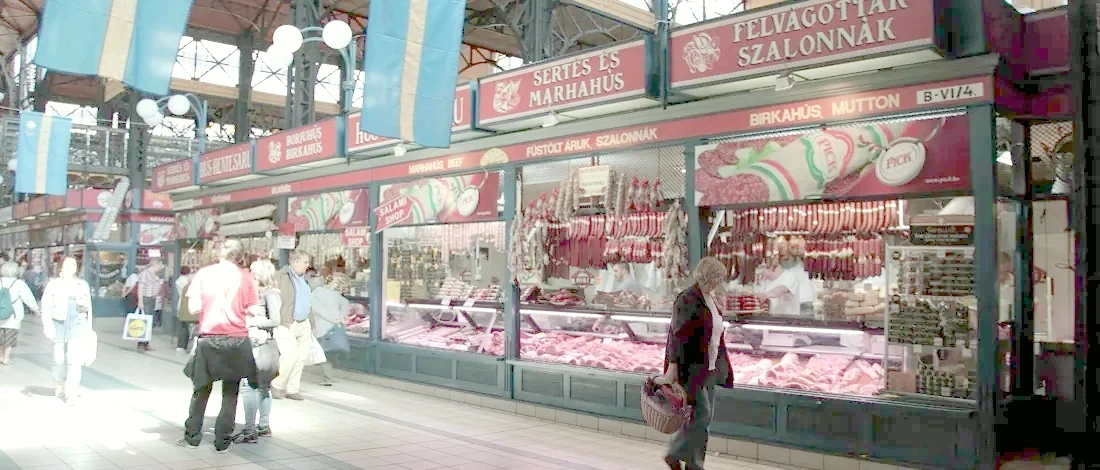
Here Russia typically wins in absolute figures, especially for basic domestically produced goods. In Budapest a liter of milk costs about 1 euro, a loaf of bread approximately 1.3 euros. Lunch at an inexpensive cafe - about 8-10 euros, dinner for two at a mid-range restaurant - around 44 euros.
- Basic Basket Bread, milk, eggs, vegetables are cheaper in Russia, partly due to government support and local production.
- Imports and Brands Coffee, cheeses, out-of-season fruits, electronics - in Hungary often cheaper and wider selection due to the single EU market without sanctions markup.
- Cafes and restaurants. The average bill in Budapest is higher than in Moscow, but the quality and variety of European cuisine is broader.
Summary on food products: on daily grocery shopping, the Russian budget is more economical; on imported goods and dining out, the gap narrows or shifts in Hungary's favor.
Rental accommodation and housing.
Rental accommodation is the largest expense category in both countries. According to open data, a one-bedroom apartment in central Budapest costs approximately 500-810 euros per month; outside the center - 390-615 euros. In Moscow, a comparable apartment in the center costs 70,000-150,000 rubles; on the outskirts - approximately 62,000 rubles.
| Housing. | Budapest. | Moscow. |
|---|---|---|
| 1-bedroom in center. | ~500-810 euros. | 70,000-150,000 rubles. |
| 1-bedroom outside center. | ~390-615 euros. | ~62,000 rubles. |
| 3-bedroom in center. | proportionally more expensive. | ~230,000 rubles. |
When converted at current exchange rates, Moscow rental and Budapest rental are comparable; however, outside the capitals, housing in Hungary is noticeably more affordable relative to wages. Property purchase in Hungary is open to foreigners and is simplified with a temporary residence permit - one pathway to legalization is described in the guide. Hungary temporary residence permit through investment..
We will help you choose the right programme
We compare timelines, amounts and requirements for your family and tell you which option works best.
Utilities and transport.
Utility payments in Hungary are higher than in Russia in absolute terms: an average apartment requires 100-150 euros per month (heating, electricity, water, waste disposal). In Russia, utilities are traditionally lower due to regulated tariffs and inexpensive energy resources.
- Transport. A monthly transit pass in Budapest costs approximately 25 euros. In Moscow, the transit pass is cheaper when converted; meanwhile, the capital's metro system is among the best in the world in terms of quality and coverage.
- Fuel. Petrol in Russia is cheaper than in Hungary, where prices are closer to average European levels.
- Communications and internet. Comparable; mobile communications in Russia are cheaper; high-speed internet is available in both countries.
On utilities and fuel, Russia is more economical. Hungary compensates with urban environment quality, ecology, and EU infrastructure.
Income tax.
This is an area where Hungary looks advantageous for rising incomes. From 2025, Russia abandoned the flat 13% and introduced progression, which continues to apply in 2026.
| Parameter. | Hungary. | Russia 2026. |
|---|---|---|
| Personal income tax (PIT). | 15% flat for all. | 13% up to 2.4 million rubles/year, then brackets up to 22%. |
| Benefits/exemptions. | exemption for youth under 25, mothers with multiple children. | standard and social deductions. |
| Corporate tax. | 9% (minimum in the EU). | rate increases from 2026. |
| VAT. | 27% (one of the highest in the EU). | increases from 2026. |
The logic is straightforward: the higher the salary, the more advantageous Hungary's flat 15% compared to Russian progression, reaching up to 22% in the upper brackets.details on Russian tax changes 2026.Hungary's corporate tax of 9% is the lowest in the European Union, making the country convenient for entrepreneurs and freelancers. The downside is VAT of 27%, which is built into retail prices.
"I am often asked: where is it cheaper to live - in Hungary or Russia? And this is the wrong question. It's cheaper in Russia, there's no argument here: milk, bread, petrol, utilities are lower. But people don't move for cheap milk. They move so their child can study at a European university as a local resident, so their passport opens 180+ countries, so business tax is 9%, not the Russian budget guessing the rate every year. Hungary is more expensive in shops and more profitable in the long run. I always tell clients: don't count the supermarket receipt, count ten years of your life - and then the picture becomes ."

Healthcare
Both countries have state-funded and private healthcare systems. The difference lies in the structure and institutional framework.
- Hungary State healthcare integrated into the EU system, funded through social contributions (TB). Residents with insurance receive basic medical care free of charge. Private clinics are of high quality; Budapest is a medical tourism hub for all of Europe (particularly dentistry).
- Russia Mandatory Health Insurance (OMS) covers basic medical care free of charge; the private sector is well-developed in major cities. Availability of medications and equipment in certain segments has declined due to import restrictions.
Hungary's key advantage is that residents automatically enter the European medical space, and with European health insurance coverage, receive medical services throughout the EU. This is part of the package provided by Hungarian residence permit.
Education
The gap in Hungary's favor widens with each year of study.
- Secondary Education In both countries, state school education is free. Hungary offers international and bilingual schools; children grow up in a European environment and language.
- Higher Education Hungary's main advantage is that diplomas are recognized throughout the EU, and resident students pay EU university tuition at domestic rates rather than international rates. This represents a significant cost difference for higher education in Europe.
- Languages and Mobility Hungarian secondary school graduates freely study and complete internships in other EU member states through EU programs (Erasmus, etc.).
For families with children, EU education is often a decisive factor favoring relocation, outweighing differences in food prices.
Safety and Environment
According to open-source quality of life indices, Hungary consistently ranks higher in aggregate factors—safety, environment, purchasing power, healthcare access. Budapest is considered one of Europe's safest capital cities with low street crime rates.
- Security Hungary is a peaceful EU country without active border conflicts, offering a predictable legal framework.
- Environment Strict EU environmental standards, well-developed waste separation system, access to nature and thermal spa resorts.
- Stability EU and NATO membership, freedom of movement within the Schengen Area, protected property rights.
This comparison factor shifts focus away from absolute price figures—it concerns life predictability for years to come.
Final Balance—What is More Cost-Effective Where
Let us consolidate all factors. No single country wins across all categories—the choice depends on what matters most to you.
| Criterion | More Cost-Effective In |
|---|---|
| Groceries (basic food basket) | Russia |
| Rent (absolute figures) | Russia |
| Utilities and Fuel | Russia |
| Tax on High Income | Hungary (15%) |
| Business Tax | Hungary (9%) |
| Access to Labor Market | Hungary (entire EU) |
| Education in Europe | Hungary (at domestic rates) |
| Healthcare in the EU | Hungary |
| Safety and Stability | Hungary |
| Freedom of Movement | Hungary (Schengen area, visa-free access) |
Russia is more affordable on a daily basis. Hungary is an investment in long-term prospects and access. If your income is high and you value mobility, the balance shifts toward the EU. Hungarian golden visa can be compared with alternatives in the review Hungary, Greece, and Portugal.
What this means for those relocating
Relocation is not just about the difference in milk prices. In practice, at BRIDGES GLOBAL we verify several factors before recommending a scenario
- Income source Remote work, business ownership, or local employment - this determines which tax regime is more advantageous and which residence status to apply for
- Family composition Children significantly change the calculation: EU education and healthcare often outweigh the difference in cost of living
- Time horizon Relocating for 1-2 years for savings purposes is not justified - Hungary's advantage unfolds over time through temporary residence permit, permanent residence, and citizenship
- Legal pathway We select the basis: golden visa, employment, business, or, if you have Hungarian ancestry, simplified naturalization by descent.
Open data provides benchmarks, but the decision is made based on your specific situation, not on averages
We will send a document checklist for your case
Leave your details: we will put together documents and timelines for your family.
Summary
Russia is more affordable for basic expenses - groceries, rent, utilities. Hungary is more expensive in stores but offers low flat-rate taxation, access to EU market and education, European healthcare, safety, and freedom of movement. For a single person on a short-term basis, Russia is more economical. For a family planning for years ahead, Hungary often proves more advantageous overall, not just on individual receipts
If you are considering relocation, start with a legal basis. Study the pathways in materials on Hungarian citizenship and Residence permit through investment - and for a personalized calculation, contact us at BRIDGES GLOBAL
Frequently asked
Questions people ask before deciding
01Where is it cheaper to live - Hungary or Russia?
Based on basic expenses - groceries, rent, utilities - Russia is cheaper. Hungary is more expensive in absolute terms, but provides access to the EU market and services, and offers a low flat tax of 15%.
02What is the average salary in Hungary in 2026?
According to publicly available cost of living data as of June 2026, the average net salary in Hungary is approximately 990 euros per month, with Budapest above the national average.
03What is the average salary in Moscow in 2026?
Average income in Moscow is approximately 150,000 rubles per month (approximately 1,500 USD). The figure is notably lower across Russia as a whole.
04What is the personal income tax rate in Hungary?
Hungary has a flat personal income tax (PIT) of 15% for all income levels. There are exemptions - for example, exemptions for youth under 25 years old and mothers with large families.
05What is the personal income tax rate in Russia in 2026?
As of 2025, Russia has a progressive tax scale: 13% on income up to 2.4 million rubles per year with further brackets up to 22% on high incomes. The progressive system remains in place in 2026.
06What is the cost of apartment rental in Budapest?
A one-bedroom apartment in central Budapest costs approximately 500–810 euros per month; outside the center - 390–615 euros (public data, June 2026).
07What are utility costs in Hungary?
Utilities for an average apartment in Hungary are approximately 100–150 euros per month: heating, electricity, water, waste disposal. This is higher than Russian rates.
08Is healthcare in Hungary better than in Russia?
Hungarian healthcare is integrated into the EU system: a resident with insurance receives medical assistance throughout the Union; private clinics are high-quality. Budapest is a center for medical tourism in Europe. In Russia, basic care is covered by the compulsory health insurance system, but the availability of imported medications and equipment has declined.
09Is education more expensive in Hungary?
School education in both countries is free. However, at Hungarian and European universities, a resident student pays local rates rather than international rates, and the diploma is recognized throughout the EU - this is a key advantage.
10Is Hungary safer than Russia?
According to open-source quality of life indices, Hungary ranks higher on safety, environment, and stability. Budapest is one of the safest capital cities in Europe with low street crime.
11Is it worth relocating to Hungary for cost savings?
For immediate savings - no, Russia is cheaper on basic expenses. Hungary's benefits unfold over time: taxes, EU access, education, healthcare, and freedom of movement. The calculation should be based on a horizon of years, not a store receipt.
12How can one legally relocate to Hungary from Russia?
Main pathways: Residence Permit through investment (golden visa), work or business status, or simplified naturalization by descent if Hungarian roots exist. Selection of the basis depends on income, family composition, and planning horizon - this is what we help calculate at BRIDGES GLOBAL.
Transparency
How this material was prepared
- Author
- Viktoria Lebedeva, managing Director, Private Clients, BRIDGES
- Terms and costs last verified
- June 2026
- Sources
- official government authorities of the relevant country and state publications
- Methodology
- government minimum requirements are stated separately from due diligence charges, state fees, legal and banking costs
Sources and methodology
Figures, terms and timelines are checked against official sources as of June 2026. Link availability verified in August 2026. Third-party blogs and agent websites are not used as a source of programme terms.
- [1]Országos Idegenrendészeti FőigazgatóságResidence permits and how to applyoif.gov.hu
- [2]Nemzeti Adó- és Vámhivatal (NAV)Tax residency and ratesnav.gov.hu/en
Methodology: tables and charts state government minimum investment requirements; due diligence charges, state fees, legal, banking and other costs are calculated separately and are not included in the minimum thresholds.
About the author
Related materials
What to read next
 ArticleHungarian Citizenship 2026: All Ways to Obtain an EU Passport
 ComparisonCitizenship of Bulgaria or Hungary: EU passport by roots
 AnalysisWhat is due diligence and why the Caribbean is rejecting applications
Personal programme selection is conducted by Anna Kovalevskaya, Head of Legal, BRIDGES.
How a programme is chosen: goals breakdown
Budget, family, timelines and relocation plans - which answers lead to which programme.