Citizenship · Vanuatu
Vanuatu citizenship for retirees: proving the source of funds without a salary
Updated: September 2026·14 min read·Expert reviewed
Terms and costs verified: September 2026
Contents
We are not asked about Vanuatu citizenship in retirement often, but the request is always the same: there are savings, work is over, and a second passport is wanted while health still allows travel. The Vanuatu programme suits this situation: there is no upper age limit, no employment contract or language is needed, and it takes 2-3 months without moving to the islands. We explain how a retiree proves the source of funds without a salary, what it costs for two, what the passport gives for travel and heirs, and what we warn older applicants about.
Vanuatu citizenship in retirement: in brief
In brief: the programme does not look at age and does not require work. Two questions decide it: a clean background and a proven source of money for the contribution. The turnkey total is $135,000 for one applicant and $155,000 for a couple under the DSP, with a timeline of 2-3 months.
For our older clients the task is usually not relocation. They need a back-up document, easy trips to children and grandchildren and winters in a warm country without visa hassle. A Vanuatu passport meets that need, while very few agree to live on the islands themselves: healthcare there is limited, as explained in detail below.
In order: what the programme does not ask for, how to prove money without a salary, what it costs for one and for a couple, who else can be included, what the passport gives for travel, how it passes to children, what about healthcare and what we check before filing.
Age and work: what the programme does not ask
In brief: the lower threshold for the main applicant is 18, and there is no upper one. No employment contract, salary certificate or language exam is needed, and moving to the islands is not required either.
Most routes to another country are built around work: a work visa needs an employer, a remote worker visa needs regular income, a student visa does not fit by age. So after 55 the choice narrows quickly. Vanuatu citizenship by investment works differently: it is a status granted for a contribution to the national budget, and the applicant is assessed on background and origin of money, not employment.
| Requirement | Work visa or remote work visa | Vanuatu citizenship |
|---|---|---|
| Upper age | Often an age limit | No limit |
| Employment contract | Mandatory | Not needed |
| Regular income | Proven every month | Not proven; a source of funds for the contribution is needed |
| Language | Often an exam | No exam |
| Living in the country | Mandatory | Not required |
| Timeline | From several months to years | 2-3 months |
There is still one in-person step: since 1 July 2025 biometrics are given in person. For our clients that means Dubai, Hong Kong, Moscow, St Petersburg or Port Vila, a one-day trip to the nearest city. The rest of the process is remote, which is the main argument for an applicant who finds flights hard. A full review of the programme is in Vanuatu citizenship by investment.
How to prove the source of funds without a salary
In brief: savings, the sale of property, a pension, an inheritance, dividends and rent all work. What the checker needs is not a monthly amount but a clear chain: where the money came from and which documents show it.
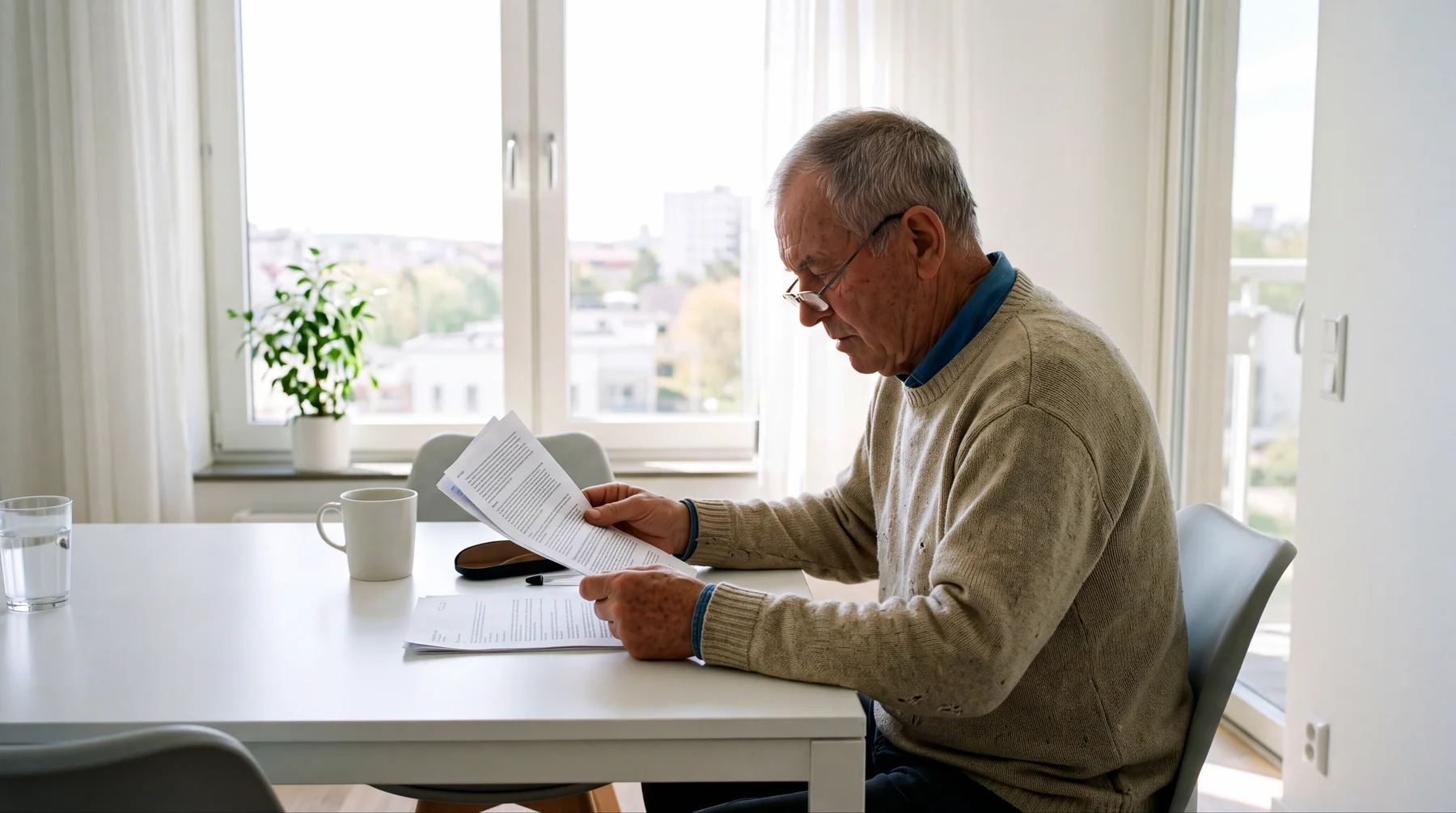
This is the main question for a retired applicant, and it is usually easier to settle than for a younger client: a long life leaves a clear history. We put it together in one set before filing so that the checker has no questions left.
- Savings from years of work. Deposit and account statements showing how the sum built up.
- Sale of property. A contract for the sale of a flat, house, business stake or car and the money arriving in the account.
- Pension. Certificates of payments over several years, state or from a private fund.
- Inheritance. A certificate of inheritance and the movement of funds through the account.
- Dividends and rent. Income from a business you handed over or sold, and from letting property.
What gets in the way most often: a large account balance with no explanation of where it came from, and money held by relatives. If an adult child pays the contribution, they are also checked as the payer, and documents are prepared for them. How the check itself works is covered in due diligence.
Download the document checklist for retirees
Leave your contacts and we will send a checklist: which papers prove savings, sale of property, a pension and an inheritance.
What it costs and how long it takes
In brief: under the DSP the turnkey total is $135,000 for one applicant and $155,000 for a couple; under the CIIP fund $165,000 for a family of up to four, of which $50,000 is returned after 5 years. Beyond the contribution, the only payment to the state is the FIU fee.
A single applicant or a couple does better with the DSP: a contribution of $130,000 for one and $150,000 for a couple, plus a $5,000 FIU fee per application. If adult children or parents are included, the CIIP fund is often better: the sum does not grow with the number of members, and $50,000 is returned after 5 years. A comparison of the two programmes is in choosing between the DSP and the CIIP fund, and all budget items in the turnkey total by family size.
The money is paid after Citizenship Commission approval. Before the decision the applicant pays only the FIU fee and document costs, so a large sum does not have to be tied up for months. From filing to passport takes roughly 2-3 months: the FIU check takes up to 7 working days without requests, the Commission sits twice a month, and the passport is issued 1-3 weeks after approval.
Spouse, children and grandchildren in one application
In brief: the application can include a spouse, children under 25 and parents over 50. A couple obtains two passports in one process, and the second spouse does not need to prove anything separately.
For an older couple this is convenient: documents are collected once, one FIU fee is paid per application, and the decision covers all members at once. Exactly who can be included and which documents each needs is covered in who can be included in the application.
If adult children or grandchildren are not ready yet, they are added later by a separate application. That costs more than including them straight away, so the decision is made before filing. The procedure is described in how to add a child or spouse later.
What the passport gives in retirement
In brief: a back-up document, visa-free travel to 46 countries and another 42 with a visa on arrival, no taxes in the country itself, and citizenship that passes to children. The passport does not open Schengen or the UK.
For our clients the practical value comes down to four things.
- A back-up document. A second passport in case something goes wrong with the main one: it expires, is lost on a trip, or the rules change.
- Travel. Asia, Oceania, the Caribbean and Latin America are open without a visa or with a visa on arrival; lengths of stay are below.
- Taxes. Vanuatu has no personal income tax, capital gains tax or inheritance tax. But taxes are paid where a person lives: the passport does not change tax residence.
- For heirs. Citizenship passes to children; it is a family asset, not a one-off document.
What the passport does not give: visa-free entry to the Schengen area and the UK. To live in Europe, Vanuatu citizens arrange Greek residence, which is a separate step and separate money. The full list of destinations is in where the Vanuatu passport takes you.
Wintering somewhere warm: how long you can stay without a visa
In brief: for wintering, long stays matter. Hong Kong gives 90 days, Fiji 120, Malaysia and Thailand 30 days each, and the Maldives 30 days on a visa on arrival.
In total, a Vanuatu passport opens 46 countries without a visa and another 42 with a visa on arrival.
BRIDGES visa-free destinations database as of September 2026
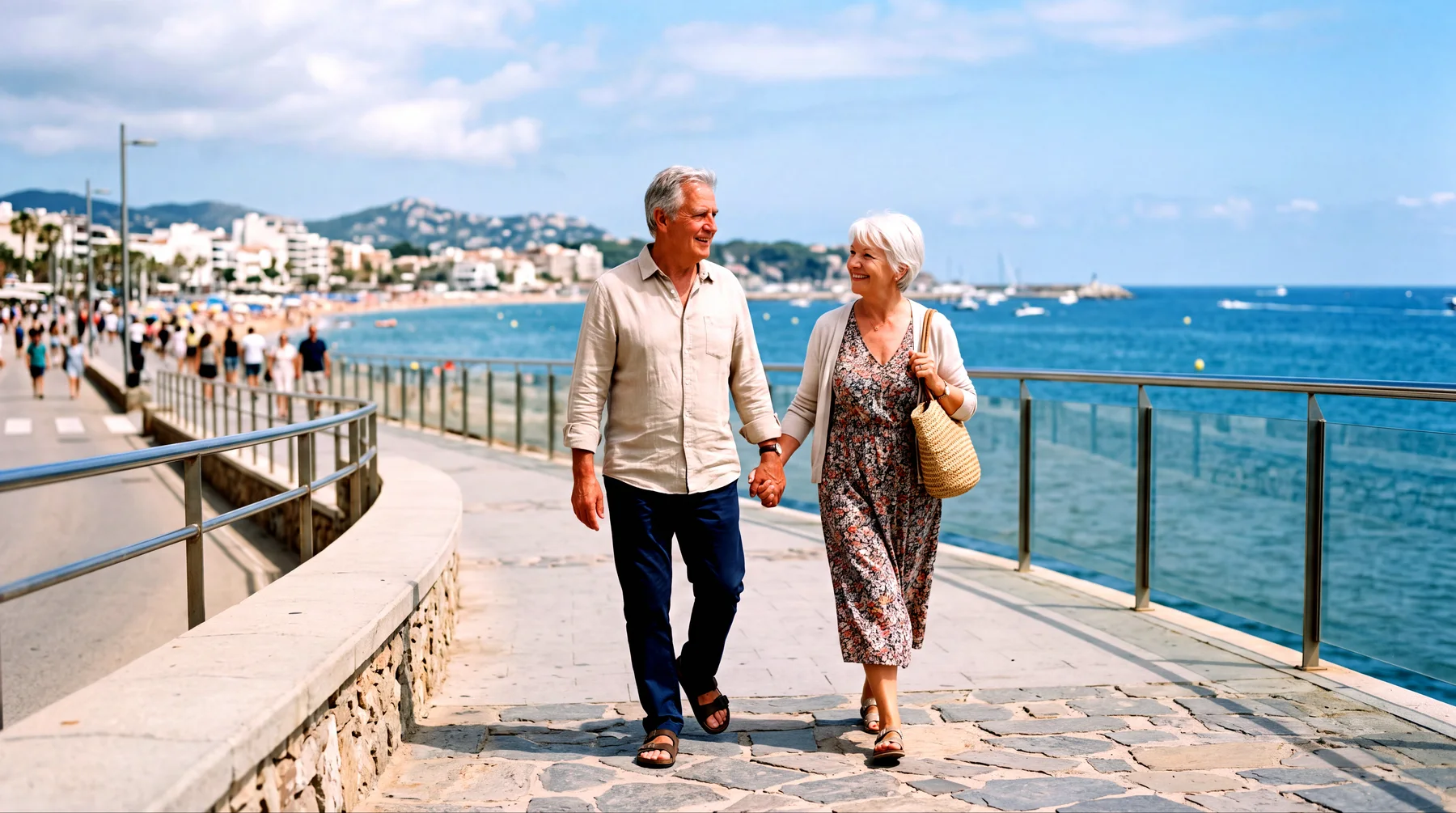
The pattern our retired clients choose: two or three months in a warm country in winter, then back home or on to a neighbouring country. That is exactly how the couple in case: a couple in their 60s wintering in Asia lives. In this pattern the Vanuatu passport saves time on visas and gives some leeway if a trip has to be extended.
Entry conditions are checked before each trip: countries change their rules, and some destinations work through an electronic visa. The check takes a few minutes on the embassy or visa service website.
Inheritance: how citizenship passes to children
In brief: children included in the application receive passports straight away. Children born after citizenship is granted become citizens by descent without a new contribution, and from there the status passes to grandchildren.
For an older applicant this is often the main point: to leave heirs not only money but mobility. How it passes through the generations and the documents needed are covered in citizenship by descent.
Vanuatu citizenship can also be renounced at any time; the procedure is described in how to renounce citizenship. In practice this is rarely used: the status requires nothing of its holder while the passport sits in a drawer.

Healthcare, insurance and life on the islands
In brief: the passport does not replace health insurance and does not give access to other countries’ healthcare. We do not advise living on the islands themselves after 60: serious treatment there requires a flight to Australia or New Zealand.
For travel, we advise older applicants to take insurance with medical evacuation and without strict age limits. Such policies exist, but their terms are checked in advance, especially with chronic conditions.
Age in the policy itself is checked separately: some insurers limit cover after 70 or ask for a medical certificate. This is sorted out in advance, before buying tickets, and costs less than urgent help on the spot.
Moving to the islands comes up rarely and almost always ends with the decision to keep the passport as a tool and live where one is used to. If you are still considering a move, see moving to and living in Vanuatu: it covers climate, prices, rent and healthcare without embellishment.
What we check before filing
In brief: the preliminary check takes 1-2 working days and happens before any payment. We look at the background, source of funds, documents and spelling of names.
- Source of funds. We rebuild the chain: sale of property, contract, receipt; deposit, statement; inheritance, certificate.
- Old documents. Older applicants often have surname changes, old-format documents and old passports. They are collected, translated and certified in advance.
- Police clearance. Needed for every member from 18, no older than 3 months on the filing date. The main applicant goes through the FIU check.
- Name matches on lists. A namesake on sanctions or wanted lists is more common than it seems, and it is cleared with documents before filing.
- Latin spelling of names. The spelling in all documents is checked against the passport, otherwise a discrepancy will surface during the check.
The preliminary check protects your money: the FIU fee is not refunded on refusal. If the check shows the application will not pass, we say so straight away, before the agreement.
How we handle the application
In brief: we collect the documents, prepare the source of funds, file through a designated agent and support you through to the passport, quickly, reliably and lawfully.
Working with a retired applicant is usually calm: we take on collecting certificates, translation and certification, set one day for biometrics in a convenient city and stay in contact with the agent and the Commission. All we need from you are documents and a signature; you will not have to go from office to office.
The amount for you and your spouse is shown by the budget for your family, and how support works is described on Vanuatu citizenship with BRIDGES.
Calculate citizenship for yourself and your spouse
The calculator works out the DSP and the CIIP fund for your family and shows the total including the FIU fee.
Frequently asked
Questions people ask before deciding
01Is there an upper age limit for Vanuatu citizenship?
No. The programme has no upper age limit, and people apply at 60, 70 and 80. There is only a lower threshold: the main applicant must be 18 or over.
02Does a retiree need to prove employment or income?
No. An employment contract, salary certificate and regular income are not needed. What is proven is the origin of the money for the contribution: savings, sale of property, a pension, an inheritance, dividends or rent.
03How is the source of funds proven without a salary?
With a chain of documents: deposit statements, a contract for the sale of a flat or business stake and the money arriving in the account, pension payment certificates, a certificate of inheritance. What matters is not the monthly amount but a clear history of the money.
04How much does Vanuatu citizenship cost for a retiree?
The terms are the same as for everyone: under the DSP the turnkey total is $135,000 for one applicant and $155,000 for a couple; under the CIIP fund $165,000 for a family of up to four, with $50,000 returned after 5 years. Beyond the contribution, the only payment to the state is the FIU fee: $5,000 under the DSP and $8,000 under the fund per application.
05Can a spouse and other relatives be included?
Yes. The application can include a spouse, children under 25 and parents over 50. A couple receives two passports in one process, and the FIU fee is paid once per application.
06Do I need to travel to Vanuatu?
No. The application is filed by a designated agent, and since 1 July 2025 biometrics are given in person in one of these cities: Dubai, Hong Kong, Moscow, St Petersburg or Port Vila. It is a one-day trip to the nearest.
07How long does it take?
Roughly 2-3 months. The FIU check without requests takes up to 7 working days, the Citizenship Commission sits twice a month, and the passport is issued 1-3 weeks after approval.
08When is the contribution paid?
After Commission approval. Before the decision the applicant pays only the FIU fee and document costs, so a large sum is not tied up.
09Where can I travel with a Vanuatu passport?
To 46 countries without a visa and another 42 with a visa on arrival: Hong Kong up to 90 days, Fiji up to 120, Malaysia and Thailand 30 days each, the Maldives 30 days on a visa on arrival. The Schengen area and the UK require a visa.
10Does citizenship pass to children and grandchildren?
Yes. Children in the application receive passports straight away, and children born after citizenship is granted become citizens by descent without a new contribution. From there the status passes to grandchildren.
11Do I need to pay taxes in Vanuatu?
The country itself has no personal income tax, capital gains tax or inheritance tax. But tax residence is set by the country where a person lives most of the year, and the passport does not change it.
12Is Vanuatu suitable for living in retirement?
For travel and as a back-up document yes; for permanent living rarely: healthcare on the islands is limited, and serious cases are evacuated to Australia or New Zealand. So the passport is usually taken as a tool, while people live where they are used to.
13What most often gets in the way of older applicants?
A large account balance with no explanation of its origin, old documents and a surname change without supporting papers, an expired police clearance and different Latin spellings of the name.
14Are the spouse and children checked like the applicant?
The main applicant goes through the FIU check and proves the source of funds. All members from 18 provide a police clearance, and everyone needs a medical certificate.
Transparency
How this material was prepared
- Author
- Sofia Mendes, investment Programs Expert, BRIDGES
- Terms and costs last verified
- September 2026
- Sources
- official government authorities of the relevant country and state publications
- Methodology
- government minimum requirements are stated separately from due diligence charges, state fees, legal and banking costs
Sources and methodology
Figures, terms and timelines are checked against official sources as of September 2026. Link availability verified in August 2026. Third-party blogs and agent websites are not used as a source of programme terms.
- [1]Vanuatu Citizenship OfficeOfficial conditions of the citizenship programmevancitizenship.gov.vu
- [2]Vanuatu Department of ImmigrationEntry, visas and statusesimmigration.gov.vu
Methodology: tables and charts state government minimum investment requirements; due diligence charges, state fees, legal, banking and other costs are calculated separately and are not included in the minimum thresholds.
About the author
Related materials
What to read next
 ComparisonSecond citizenship in 3-6 months: Caribbean, Türkiye or Vanuatu in 2026
 AnalysisWhat is due diligence and why the Caribbean is rejecting applications
 ArticleBanks in Vanuatu and accounts abroad: what a bank checks for a Vanuatu citizen
Personal programme selection is conducted by Anna Kovalevskaya, Head of Legal, BRIDGES.
We can help you obtain Vanuatu citizenship in retirement
We check the background and source of funds before any payment, collect the documents and take the application through to passports for you and your spouse.