Citizenship · Turkey
Real estate in Istanbul for Turkish citizenship in 2026: areas, prices, profitability
Updated: ·14 min read·Expert reviewed
Terms and costs verified: undefined
Contents
Turkish citizenship by investment is subject to one threshold - investing at least $400,000 in real estate and holding it for three years. But this figure hides the main question: what exactly to buy in Istanbul so that the object will give you a passport and not eat the money. We analyze the areas of the European and Asian parts, prices per square meter in 2026, rental yields and the pitfalls of the “citizenship” market.
Why Istanbul and not Antalya or Bodrum
An investor choosing real estate under Turkish citizenship actually has three popular destinations: Istanbul, the Mediterranean coast (Antalya, Alanya, Fethiye) and Aegean resorts (Bodrum, Cesme). Each solves different problems, and confusing them is an expensive mistake.
Resort property is purchased for vacation and seasonal rental: it is rented out for three to four months a year, and then sits empty. Its liquidity depends on the flow of foreign buyers - as long as there is a flow, the property is sold, but as demand sags, leaving the apartment on the shore is more difficult than it seems.
Istanbul is not a resort, but an economy of 16 million people, the financial and logistics center of the country. There is a constant internal demand for rental from local, corporate tenants, students and relocators: the facility is open all year round, and not three summer months. For an investor for whom it is important not just to “get a passport”, but to preserve and increase the $400,000 invested, constant demand is more important than a view terrace.
The second argument is the depth of the market. There are dozens of districts in Istanbul with different prices per square meter, from budget outskirts to the elite Bosphorus. This gives flexibility: the required amount can be collected from one expensive property or from two or three profitable ones. In a small resort there is no such choice. Therefore, for the combination of “investment plus passport plus clear exit in three years,” Istanbul is often more rational than the coast - provided that the area is chosen correctly.
Program conditions: how much to invest and on what rules
Turkish Citizenship by Investment (CBI) is a legal program that is tied to a specific amount and period. For real estate the threshold is US$400,000 according to official estimates. The amount can be collected from several objects - for example, an apartment for 250,000 and a studio for 150,000 are counted together if the total gives a threshold.
- Retention - three years. The property cannot be sold earlier. The restriction is recorded on the Certificate of Title (TAPU) as a mark-sharkh, and the period is counted from the date of purchase, not from receipt of the passport.
- Payment - in full. The amount cannot be extended over years: the full calculation is carried out before filing an application for citizenship.
- SPK rating. The value is confirmed by the report of a licensed appraiser, and not by the price in the contract. If the market valuation is below 400,000, the property does not pass, even if the price according to the securities is higher.
- Family. The application includes the spouse and children under 18 years of age. An adult child registers his own investment or share in a common property.
There are also alternatives to real estate: a deposit, government bonds or investment fund shares worth $500,000, or the creation of 50 jobs. But it is real estate that remains the most clear route: the asset remains with the investor, and after three years it can be sold. We discuss the full mechanics and comparison of options in guide to Turkish citizenship by investment. Official citizenship requirements are published General Directorate of Population and Citizenship (NVI).
European or Asian part: where to look for an object
Istanbul divides the Bosphorus Strait in two - into European and Asian parts. It's not just geography, but two different investment logics: the choice of side affects price, profitability and liquidity.
European part - the historical and business center (Beyoglu, Sisli, Besiktas) plus large residential areas in the west: Beylikduzu, Basaksehir, Esenyurt. Here are offices, tourism, trade, Istanbul airport. The price per square meter varies greatly - from budget western areas to the elite center. This side has the most options for the $400,000 set and the most active rental market.
Asian part - Kadikoy, Üsküdar, Ataşehir, Maltepe - calmer, more “residential” and greener. An educated middle class lives here, the infrastructure is developed, and the demand for high-quality long-term rentals is consistently high. Kadikoy with the areas of Syadie, Erenkoy and Fenerbahce is among the most expensive locations in the city.
- For profitable rentals to local residents and relocants, the Asian side (Kadikoy, Ataşehir) often looks more reliable - less speculative overheating.
- For capitalization and connection with the business center and tourism, they are looking at the European side - but there is a higher risk of overpaying for the “region brand”. Transport connectivity through tunnels and subways under the Bosphorus is constantly improving, so “Asian = far” is an outdated stereotype.
There is no universal answer: the side is chosen according to the task. Those planning to move often like the Asian part; for those who buy an asset with an exit in three years, liquid European areas.
We will map your route to Turkey citizenship
We review your family, source of funds and timing and tell you which route fits.
Specific areas: Basaksehir, Beylikduzu, Kadikoy and center
Let's look at four reference locations that an investor usually chooses between to meet the citizenship threshold.
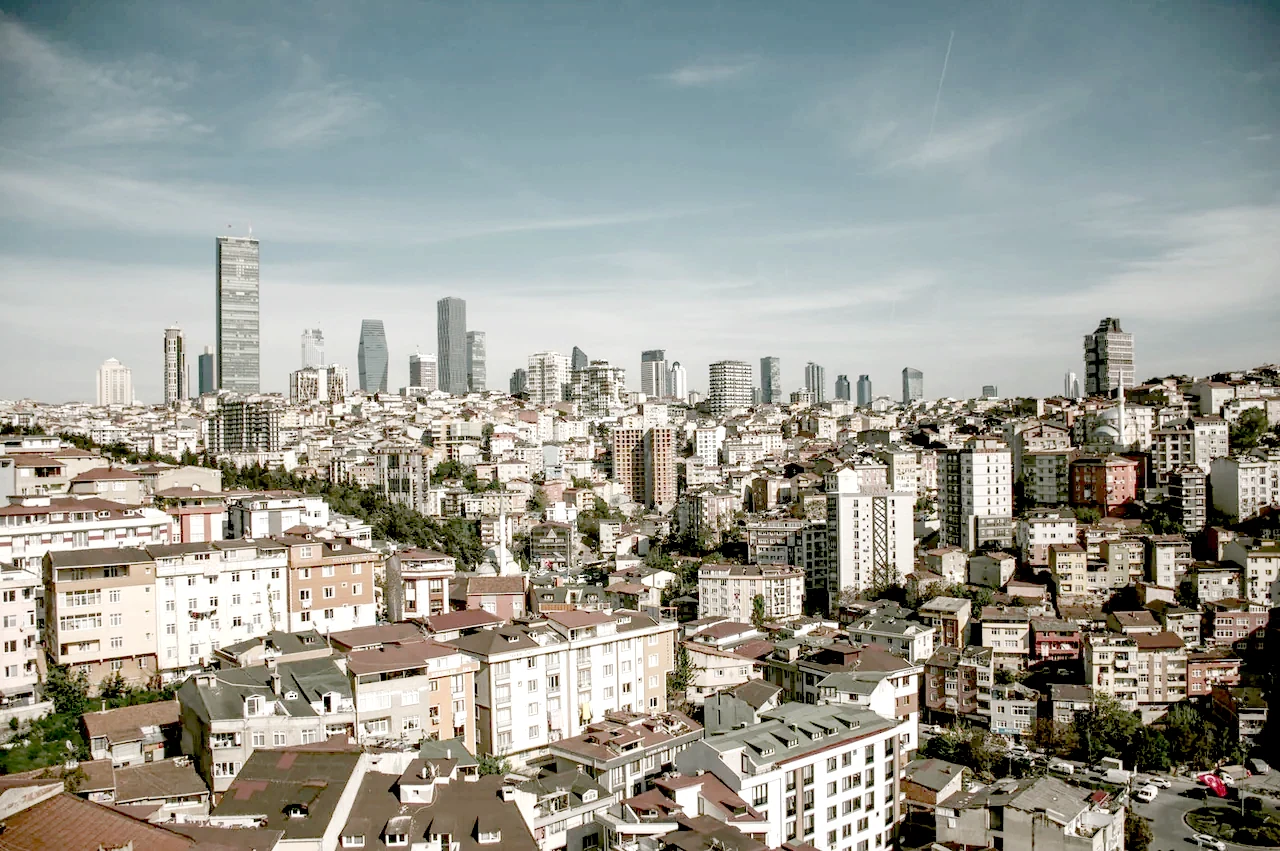
Basaksehir - a modern planned area in the west of the European part, a landmark for investment in new buildings. According to estimates for 2026, it is in the middle segment - about $1,500-3,000 per square. It is Basaksehir and the western regions that analysts call the most promising in terms of price growth over a five-year horizon. The downside is the distance from the historical center and dependence on transport projects.
Beylikdüzü - also the Western European part, the middle segment, approximately 1,500-3,000 dollars per square. The area is popular with families and Russian-speaking buyers, there is a lot of new housing with infrastructure. The entry price is lower than in the center, but there has historically been a lot of speculative demand for citizenship here - more on this risk below.
Kadikoy - premium Asian side. Prices are among the highest in the city, with certain neighborhoods (Syadiye, Fenerbahce) at the top of the market. Rent is stable, liquidity is good, but gross yield is lower due to expensive entry: suitable for those who value the safety of capital above interest.
Center (Besiktas, Sisli, Beyoglu, Fatih) - tourism, business, short-term rental. Here are the highest prices per square meter, the toughest competition and the most restrictions on short-term rentals.
| District | Part | Segment | What to wear |
|---|---|---|---|
| Basaksehir | Europe (west) | Average, ~$1,500-3,000/m2 | Rising prices, new buildings |
| Beylikdüzü | Europe (west) | Average, ~$1,500-3,000/m2 | Family rental, entry price |
| Kadikoy | Asia | Premium | Safety, stable rental |
| Center (Besiktas/Sisli) | Europe | Premium, up to $4,000+/m2 | Tourism, capitalization |
Prices per square meter in 2026: numbers without illusions
Istanbul remains Turkey's most expensive major market. As of early 2026, the average price in the city is around $1,750 per square meter, but the variation between areas is huge.
- Premium (Besiktas, Kadikoy, center): the upper limit reaches 80,000-200,000 Turkish liras per square meter and above, in dollars - noticeably more expensive than average, in expensive neighborhoods up to 4,000 or more per meter.
- Middle segment (Basaksehir, Beylikduzu): approximately 1,500-3,000 dollars per square.
- Accessible/outlying areas: lower, but the demand for rentals there is more “local”.
An important nuance in 2026 is the difference between the price in lira and in dollars. In lira terms, the market continues to grow at double-digit rates, but due to high inflation, real growth (after subtracting inflation) is close to zero or even negative. For a foreign investor, this means a simple thing: the nominal “on paper growth” in lira is not equal to the increase in your dollar capital. You need to calculate the profitability in the currency in which you invest and plan to exit.
A practical guide: to pass the threshold of $400,000 in the middle segment at a price of about 2,500 per square meter, you will need approximately 160 square meters - one large apartment or two smaller ones; in a premium area for the same amount the area will be noticeably smaller. This arithmetic should be done in advance: both the area and the rental potential depend on it. It is useful to check market dynamics before a transaction - prices change throughout the year.
“The most expensive mistake in Istanbul is buying an object “with a passport” and not with money. I constantly see how an investor takes an apartment with a 15-20% markup only because it was beautifully packaged as “suitable for citizenship”, and after three years he sells it at the market price and loses this difference. He, of course, receives a passport - but as an investment, the object worked out in the red. My principle is simple: first we calculate profitability and liquidity in dollars, check the valuation according to SPK and TAPU, look at how many similar apartments will be available for sale in the complex in three years - and only then think about citizenship. If the object is good as an asset, the passport will become a pleasant bonus, and not the only justification for overpaying.”
Rental profitability and liquidity: what does the property really bring?
Citizenship is the goal, but for three years the object will either work for you or just stand there. Therefore, rental yield is not a secondary, but a key parameter of choice.
Based on data from late 2025 to early 2026, typical gross yields for long-term rentals in Istanbul range from around 5% in premium areas near the Bosphorus to around 9.5% in prime suburbs, with a citywide average of around 7.2%. The pattern is simple: the more expensive the square, the lower the percentage, because the price grows faster than the rental rate.
- Long term rental gives about 7% on average and a minimum of hassle: the tenant lives for years, the property does not stand idle. This is a basic, predictable scenario.
- Short-term (tourist) rental in successful areas can bring in gross 10-14%, but requires management, a license and depends on the season and occupancy.
Liquidity is the other half of the equation. In three years, the property will need to be sold, and here the areas with real internal demand benefit: Kadikoy, Ataşehir, the center, and the inhabited parts of Beylikdüzü. The most difficult thing is to exit properties that were bought by a crowd of investors “for citizenship” in one complex: when everyone’s three-year term ends at once, many identical apartments come onto the market, and the price sags. Therefore, liquidity is built into the solution at the entrance.
New building or resale under the citizenship threshold
This is one of the main forks in the selection of an object - each option has its own logic.
New building from the developer. Pros: modern layouts, infrastructure of the complex, often installment plans and neat documents. Many complexes in Basaksehir and the western regions are being built specifically for a foreign investor, with ready support for the transaction for citizenship. Disadvantages - this is where speculative demand “for a passport” is concentrated, the price often includes a markup for the service, and the SPK estimate may be lower than the requested amount.
Secondary housing. Pros - real market price without markup, populated area, clear demand for rentals, often better location. Disadvantages - you need a thorough check of the history of the property, the condition of the house (especially taking into account seismicity), the absence of debts and encumbrances in TAPU.
- For a pure investment with a clear exit in three years, a secondary market in a liquid area is often more profitable: you pay the market price, not the “civil” price.
- For comfort and turnkey package support, a new building is more convenient - but the price and SPK assessment must be checked especially strictly.
- In any case, the assessment by a licensed appraiser according to SPK is not a formality: it is she who decides whether the property passes the 400,000 threshold. The register and status of the property are checked according to data from the Main Directorate of Cadastre (TKGM).
Which objects are, in principle, counted towards citizenship, and which are not - we analyze in detail in the material about real estate suitable for Turkish citizenship.
Risks of the “citizenship” market: where they lose money
The program is legal and works, but there is a layer around it where investors regularly lose some of their capital. Let's list the real risks.
- Extra charge “for passport”. Some properties are sold significantly above the market precisely because they “suit citizenship.” After three years, you sell them at the market price - and the difference goes to the original seller. This is the most common way to lose money at the start.
- Overestimated under the threshold. Sometimes the property is valued at up to 400,000, although the market is lower. You will receive a passport, but when you leave in three years, you will not be able to sell it for the same amount.
- Overstocking of the complex. When dozens of apartments in one project are purchased for citizenship, after three years they simultaneously go on sale, and the price inside the complex falls.
- Currency gap. An object can “grow” in lira and at the same time cost less in dollars due to inflation and the exchange rate.
- Legal defects. Encumbrances, debts, illegal redevelopment, problems with TAPU. All this comes up when selling.
Protection against these risks is a discipline: independent assessment, TAPU verification, analysis of competition within the complex, calculation of profitability in dollars and a sober look at liquidity at exit. An object for citizenship is chosen not by a beautiful presentation, but by numbers.
Residence permit for real estate and citizenship: do not confuse the paths
There are two different statuses swirling around Turkish real estate, and they are regularly confused - which leads to disappointment.
Citizenship by Investment - this is a threshold of 400,000 dollars, a retention period of three years and, as a result, a Turkish passport. That's what this article is all about.
Residence permit for real estate (İkamet) - a separate, much more modest path. The threshold for the value of the object has been raised to $200,000 according to the assessment; the status is usually issued for one to two years with extension and does not automatically lead to citizenship: A passport for naturalization requires a separate long route of residence.
- Residence permits for real estate are not issued in “closed” areas (makhallas), where the share of foreigners exceeds 25% of the registered population. You can buy an apartment there, but not a residence permit at this address.
- Commercial real estate is not suitable for a residence permit for real estate - only residential.
- Valid health insurance is required and ownership is verified through TAPU.
Conclusion for the investor: if the goal is a passport, focus on the threshold of 400,000 and the CBI program, and not on a cheap residence permit. We discuss the details of the resident route in the review. investment in real estate in Turkey. The current residence permit rules are published Turkish Migration Authority.
Türkiye versus other programs: what does a passport give?
Türkiye is not part of the EU or Schengen - this must be understood, and anyone who promises you a “European passport through Istanbul” is misleading. Turkish citizenship gives something else.
The main application advantage is access to a US investor visa E-2: Türkiye is on the list of countries whose citizens can qualify to do business in the United States. This is a rare option that most Caribbean passports do not have. Plus, dual citizenship is allowed, there is no requirement to live in the country permanently, and the process itself is fast by the standards of investment programs.
- If the priority is visa-free Europe, it makes sense to compare with Caribbean and other programs; analysis is in the material Grenada or Türkiye.
- If you are choosing between the Middle East and Turkey for taxes and business - see the comparison UAE vs Turkey, and will compare the review with the Pacific version Vanuatu or Türkiye.
For most investors choosing Istanbul, the logic is this: a real asset in a large economy that works for three years on lease, plus a passport with access to a US business visa. If this coincides with your goals, Türkiye is appropriate; If you need European mobility, you should look at other programs.
We will send a document checklist for your case
Leave your details: we will put together documents and timelines for your family.
How do we check an object before a transaction?
Selecting real estate for citizenship is not a trip to new buildings, but a financial and legal check, on which both the passport and the safety of $400,000 depend. This is what our work procedure looks like in Istanbul.
- Target verification. First, we fix what is more important: profitability, a smooth exit in three years, or a future move. For different purposes - different areas and objects.
- SPK assessment in advance. We check that the independent assessment actually reaches the threshold of 400,000 before you deposit money - so that this does not become clear at the application stage.
- Check TAPU and history. Encumbrances, debts, redevelopment, land status, seismic reliability of the house - all before signing.
- Competition and liquidity analysis. We calculate how many similar apartments in the complex were purchased “for citizenship” and what will be the outcome in three years, and we calculate the profitability in dollars, not in lire.
If you are deciding on an area and budget for the citizenship threshold, it makes sense to start by analyzing your specific situation - leave a request for a consultation, and we will select objects to suit your goal and calculate the output in three years.
Frequently asked
Questions people ask before deciding
01How much do you need to invest in Istanbul real estate for Turkish citizenship in 2026?
The minimum threshold is US$400,000 according to official valuation. The sum can be collected from several objects if together they give a threshold. The valuation is confirmed by a report from a licensed appraiser according to SPK rules, and not by the price in the contract.
02Is it possible to sell an apartment immediately after receiving a passport?
No. The property must be held for at least three years; sale before that is prohibited. The restriction is registered in TAPU as a notation and the three-year period is counted from the date of purchase.
03Which area of Istanbul should you choose for investment?
Depends on the goal. Basaksehir and the western regions are more likely to see rising prices and new buildings; for stable rent and safety of capital - Kadikoy and Ataşehir; for tourist rental - center. Beylikdüzü is popular due to its entry price and family demand.
04What is the real rental yield in Istanbul?
Gross long-term rental yields range from approximately 5% in premium areas near the Bosphorus to approximately 9.5% in the outskirts, with a city average of approximately 7.2%. Short-term tourist rentals can yield 10-14% of gross, but require licensing and management.
05How much does a square meter cost in Istanbul in 2026?
The city average is about $1,750 per square. In the middle segment (Basaksehir, Beylikdüzü) - approximately 1,500-3,000 dollars, in premium areas and the center - up to 4,000 and above. It is worth checking the exact figure before the transaction, the market is moving.
06New building or resale - which is more profitable for citizenship?
For a pure investment with an exit in three years, a secondary market in a liquid area is often more profitable: you pay the market price, not the “civil” price. A new building is more convenient due to its turnkey support, but there is a higher risk of a “passport” markup and overstocking of the complex.
07How long does it take to obtain a Turkish passport through real estate?
Approximately 6 to 12 months from investment to passport. The exact timing depends on the completeness of the documents and the workload of the organs; A specific date cannot be guaranteed.
08What does “closed areas” mean and does this apply to citizenship?
This is a mahalla where the share of registered foreigners exceeds 25%, and residence permits for real estate are not issued there. This does not apply to purchases or the citizenship by investment program, but it is worth asking about the address in advance.
09Does a Turkish passport give visa-free entry into Europe?
No. Türkiye is not a member of the EU or Schengen, so a passport does not provide visa-free Europe. The main application benefit is access to the US E-2 investor business visa, which most Caribbean passports do not have.
10Is it possible to get a residence permit for real estate cheaper than citizenship?
Yes, a residence permit for real estate (İkamet) requires a property valued at $200,000 and is issued for one to two years with an extension. But this is a separate path: it does not automatically lead to citizenship and is not suitable for commercial real estate.
11Is family included in the citizenship application?
Yes. The application includes a spouse and children under 18 years of age per investment. An adult child registers his own investment or share in a common property. Türkiye allows dual citizenship; there is no need to renounce your previous passport.
12How not to overpay for an object “under citizenship”?
Calculate the profitability in dollars, order an independent assessment according to SPK before depositing money, check the TAPU for encumbrances and see how many similar apartments in the complex will go on sale in three years. The object must be good as an asset, and not just as a way to get a passport.
Transparency
How this material was prepared
- Author
- Karim Naser, head of Istanbul Office, BRIDGES
- Terms and costs last verified
- Sources
- official government authorities of the relevant country and state publications
- Methodology
- government minimum requirements are stated separately from due diligence charges, state fees, legal and banking costs
Sources and methodology
Figures, terms and timelines are checked against official sources. Link availability verified in August 2026. Third-party blogs and agent websites are not used as a source of programme terms.
- [1]Presidency of Migration ManagementResidence permits and citizenshipen.goc.gov.tr
- [2]General Directorate of Land Registry and CadastreProperty transactions and valuationwww.tkgm.gov.tr/en
Methodology: tables and charts state government minimum investment requirements; due diligence charges, state fees, legal, banking and other costs are calculated separately and are not included in the minimum thresholds.
About the author
Related materials
What to read next
 ComparisonCaribbean or Turkey: Citizenship for Contribution or Real Estate in 2026
 AnalysisWhat is due diligence and why the Caribbean is rejecting applications
 ArticleTurkish citizenship by investment in 2026: complete guide
Personal programme selection is conducted by Anna Kovalevskaya, Head of Legal, BRIDGES.
Buying property in Turkey: what to check
Title, encumbrances, outstanding debts and what to look for in the contract.