News · Germany
Germany: governing bloc proposes restoring 8 years to citizenship

Updated: November 2026·9 min read·Expert reviewed
Terms and costs verified: November 2026
Contents
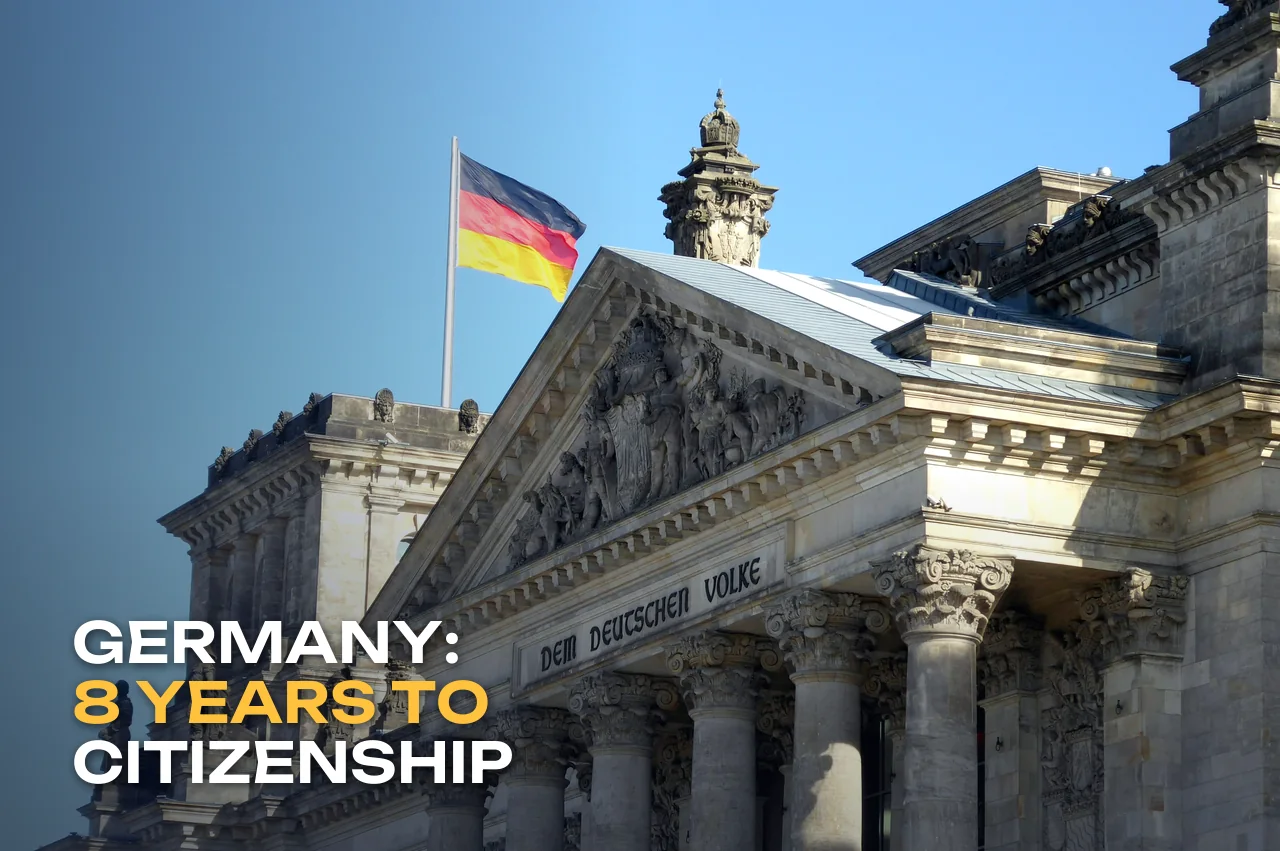
Germany's governing CDU/CSU bloc is once again proposing to tighten access to citizenship. According to Bild on 18 November 2026, the conservatives want to restore an 8-year residence requirement instead of the current 5, raise the German language requirement to B2, allow dual citizenship only in exceptional cases and refuse applicants who receive social assistance. The proposal is part of a migration policy reform package. The coalition partner, the SPD, is reviewing it. For now it is a proposal, not a law. Here is what would change if it were adopted and how to factor it in when choosing a country for residence now.
Key points
- The CDU/CSU proposes restoring 8 years of residence before German citizenship instead of 5.
- Dual citizenship would become the exception: most applicants would have to give up their previous passport.
- The German language requirement would rise from B1 to B2, and receiving social assistance would rule out citizenship.
- The proposal is part of a migration reform package, and the SPD is reviewing it.
- In the 2025 coalition agreement the parties promised to keep 5 years and the dual citizenship rules.
- The current law still applies: 5 years and dual citizenship for everyone.
What the conservatives propose
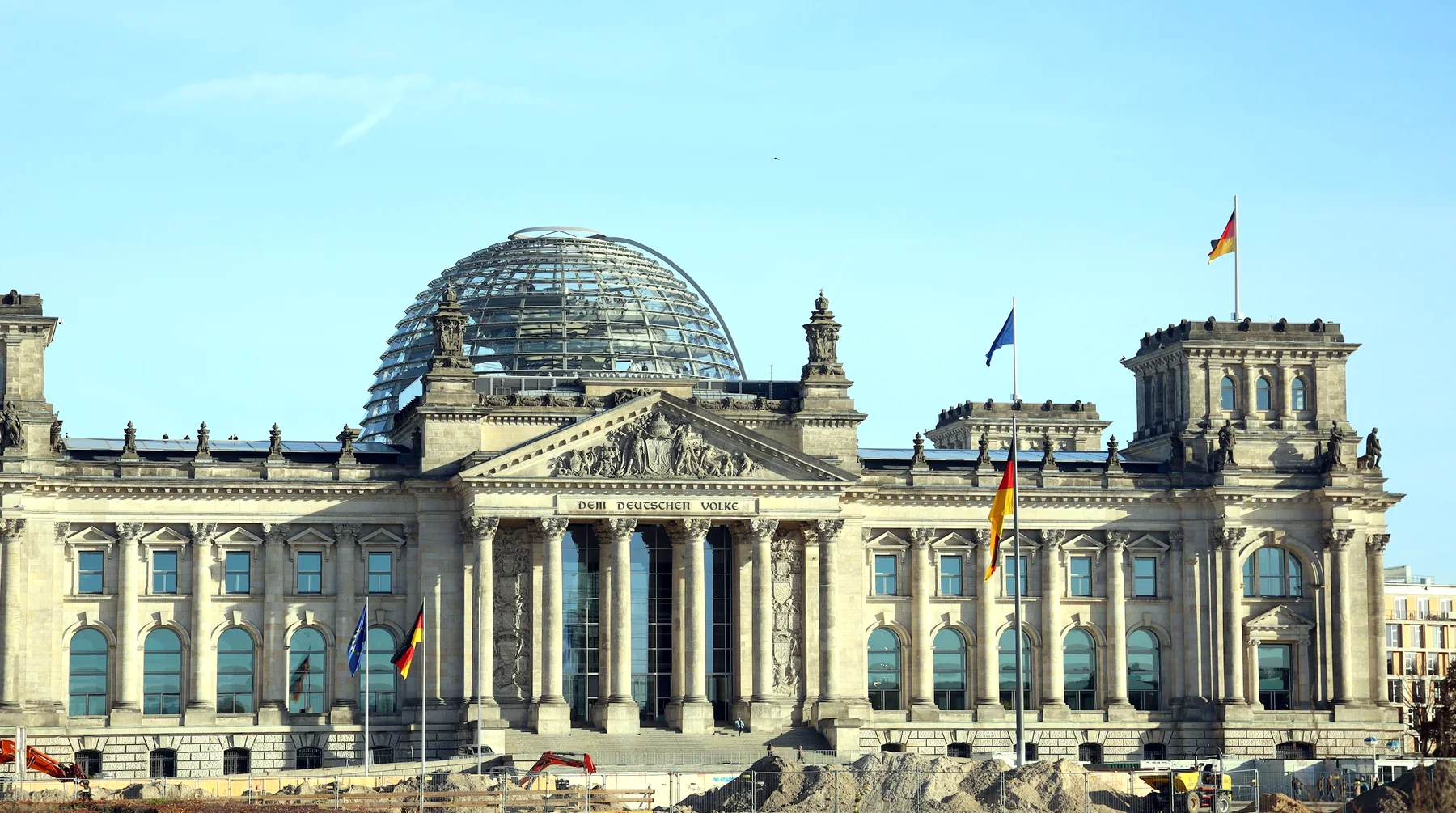
The proposal was prepared by Günter Krings, deputy leader of the CDU/CSU parliamentary group in the Bundestag, and Alexander Throm, the CDU interior policy expert. According to Bild, it contains four changes to the nationality law. All of them restore the rules in force before the 2024 reform or make them stricter.
| Requirement | Now | CDU/CSU proposal |
|---|---|---|
| Residence period | 5 years | 8 years |
| Fast track | abolished in October 2025 | not provided |
| Dual citizenship | allowed for everyone | only in exceptional cases |
| German language level | B1 | B2 |
| Social assistance | assessed with exceptions | receiving assistance rules out citizenship |
| Children born in Germany | citizenship if a parent has lived there 5 years | citizenship if a parent has lived there 8 years |
The most noticeable changes for foreigners are the period and dual citizenship. Eight years instead of five mean that someone who moved to Germany in 2026 could apply for a passport no earlier than 2034. And restricting dual citizenship would bring back a choice that the 2024 reform removed for most people: keep the previous passport or become a German citizen. The new rule on children would affect families with a child born in Germany: for automatic citizenship a parent would need to have lived in the country for eight years rather than five.
Level B2 means fluent command of the language on everyday and professional topics. For many adults who moved to Germany for work, this is noticeably higher than the current B1. The rule on social assistance without exceptions means that even temporary receipt of benefits could become grounds for refusal.
What this means for you. If you already live in Germany and meet the current conditions, it is better to apply without delay. If the law is adopted, it is unclear whether there will be transitional rules for applications already filed.
How the rules have changed
In June 2024 the citizenship modernisation law passed by the previous coalition of the SPD, the Greens and the Free Democrats took effect. It cut the residence period from eight years to five, allowed dual citizenship for all foreigners and introduced a three-year fast track for well-integrated applicants. In October 2025, under the new coalition, the Bundestag abolished the fast track, while the five years and dual citizenship remained.
The conservatives opposed the reform from the start. At the CDU congress in Stuttgart in February 2026, delegates voted to return to eight years. Yet in the 2025 coalition agreement the CDU/CSU and the SPD agreed to keep the five-year period and not change the dual citizenship rules. Now the conservatives propose revisiting that agreement in exchange for other changes to migration policy.
According to Bild and The Local, the issue may be linked to stronger residence rights for foreigners who work or train in Germany. This looks like an attempted trade: the SPD would get a more secure status for workers, and the conservatives a stricter path to citizenship. SPD representatives are already discussing the package with their coalition partners, and a meeting of party leaders may take place in the coming days.
Who would be affected most
If the proposal becomes law, it will hit hardest those already living in Germany who made plans around the five-year period. Here are four groups for whom the difference is especially noticeable.
- Those who moved in 2022-2023. Many of them expected to apply for citizenship in 2027-2028. With an eight-year period the wait would grow by three years unless transitional rules are provided for them.
- Those who want to keep their previous passport. Under the current law you can become a German citizen without giving up your own country's citizenship. If restrictions return, you will have to choose, and for citizens of some countries renouncing citizenship is a lengthy procedure in itself.
- Families with children born in Germany. A child of foreign parents receives citizenship at birth if one parent has lived lawfully in the country for a set period and holds a permanent right of residence. The proposal raises that period from five to eight years.
- Benefit recipients. The current law allows exceptions, for example for those who cannot work through no fault of their own. The proposal removes the exceptions, and even a short period on benefits could become grounds for refusal.
For those only planning to move, the calculation is simple: the path to a German passport is likely to be longer than today's rules promise. Plan for eight years rather than five and allow for the possibility that language and income requirements will rise. Those who already meet the current conditions stand to gain most if they apply before any changes.
What are the chances of the law passing
Changing the law requires a majority in the Bundestag, and the CDU/CSU does not have one without the SPD. The SPD regards the 2024 citizenship reform as one of the main achievements of the previous government and has so far refused to reverse it. Much therefore depends on what the conservatives offer in return and how talks on the migration package as a whole go.
There are procedural limits too. Even if the parties agree, a bill must be drafted, introduced and passed through parliament, and some of the changes are likely to involve the federal states as well. This will take months. Until the law is adopted and takes effect, the current rules apply: five years of residence, B1 language and dual citizenship.
Irena SokolovskaHead of European Practice, BRIDGES
Choosing a country for residence with a passport in view? We will compare timelines and conditions
We will look at your situation, compare EU countries by the time to citizenship and prepare documents for the whole family.
A Europe-wide trend
Germany is not alone. Since 19 May 2026 Portugal has required citizens of most non-EU countries to live there for 10 years instead of five, plus a test on language, culture and history. How this changed the calculations for residence permit holders we analysed in our piece on Portuguese citizenship and in our guide to naturalisation. If Germany returns to eight years, the overall trend will become even clearer: the path to a European passport through residence is getting longer and stricter.
| Country | Residence before citizenship | What matters |
|---|---|---|
| Germany | 5 years, 8 proposed | dual citizenship currently allowed |
| Portugal | 10 years since 19 May 2026 | test on language, culture and history |
| Greece | 7 years | actual residence in the country required |
| Hungary | 8 years | a simplified route by descent exists |
For comparison, naturalisation in Greece requires seven years of actual residence, details in our piece on Greek citizenship. In Hungary the general period is eight years, but there is a simplified route for those with Hungarian roots, which we covered in our piece on Hungarian naturalisation. Timelines and conditions of residence programmes are compared in our review of residence without a stay requirement.
What it means for those choosing a country
For those planning to live and work in Germany, the rules on entry and residence permits are not changing. You can work on an EU Blue Card, through the opportunity card, whose results we covered in a separate news item, or as a freelancer, as explained in our guide to freelancing in Germany. Only the last step may change: the time and conditions for obtaining a passport.
- Count the whole path. If the goal is a European passport, compare countries by the full timeline and conditions, not only by the cost of residence. What a German passport offers is shown in the passport index.
- Factor in dual citizenship. If the restrictions return, you will have to choose between passports. How Russia treats dual citizenship we covered in a separate piece.
- Do not bet everything on one country. Naturalisation rules change faster than the path to a passport takes. A second citizenship through an investment programme delivers results in months, not years. Programmes are listed in our citizenship catalogue.
Those who have already lived in Germany for more than five years and meet the conditions should check their documents and apply now. A language certificate, proof of income, residence records and police clearance are best gathered in advance: queues at citizenship offices in large cities are long as it is. What is happening in the golden visa market overall is summarised in our review of EU golden visas in autumn 2026.
What happens next
The next step is talks within the coalition on the migration package. They will determine whether a bill appears and in what form. We are following the discussion and will update this piece when the parties announce a decision or a bill is introduced in the Bundestag.
Transitional rules will be worth watching separately. Last year's experience is not encouraging: when the Bundestag abolished the three-year fast track to citizenship in October 2025, no grace period was provided for those who had not yet received a decision. There is no guarantee that new rules would spare applications already filed until a bill is published. So we advise those who already meet the current requirements not to wait for the outcome of the talks but to apply with a complete set of documents.
What to do now
Check your period
If you have lived in Germany for five years and meet the conditions, prepare an application under the current rules.
Improve your German
A B1 certificate is needed now, and under the new rules B2 may be required.
Compare countries
Timelines to EU citizenship are growing. Compare Germany, Portugal, Greece and Hungary over the full path.
Consider a second passport
An investment programme does not depend on changes to EU naturalisation rules.
If you want to understand which path to citizenship suits your family, book an online consultation. Residence options are in our residence catalogue.
Share this article
Still have questions? We'll answer for your case
Tell us what you want to solve, and an expert on the topic will contact you.



Frequently asked
Questions people ask before deciding
01Has the time to German citizenship changed?
No. As of 19 November 2026 the existing law applies: 5 years of residence, B1 language, dual citizenship allowed. The CDU/CSU proposes 8 years, but no law has been passed.
02What does the CDU/CSU propose?
Restoring 8 years of residence, raising the language level to B2, allowing dual citizenship only in exceptional cases and refusing applicants who receive social assistance.
03Will the law pass?
It needs the support of the SPD, which agreed in the 2025 coalition agreement to keep 5 years. The SPD is reviewing the proposal and no decision has been taken.
04Should I apply for German citizenship now?
If you have lived there 5 years and meet the conditions, it is better not to wait. It is unclear whether there would be transitional rules for applications already filed if the law changes.
05Where in the EU is the path to citizenship shorter?
Greece requires 7 years, Germany 5 for now, Hungary 8 and Portugal 10 since 19 May 2026. Investment citizenship programmes deliver a passport in months.
About the author
Related materials
What to read next
 AnalysisPortuguese citizenship after the 29 October regulation: who should apply now
 NewsGermany's opportunity card: 7,983 visas in the first half of 2026 and first data on moves into work
 ComparisonAntigua and Barbuda or Grenada: Family Passport for Large Families in 2026
News+2 stories on 21 November
Related news
 Ireland · 18 NovIreland: citizenship applications up 236% ahead of the move to 8 years
 Grenada · 17 NovGrenada to keep its citizenship programme until 2032 despite the EU deadline
Personal programme selection is conducted by Anna Kovalevskaya, Head of Legal, BRIDGES.
Want a European passport? We will find the shortest path for your family
We will compare naturalisation timelines and conditions, residence and investment programmes and prepare the documents.
