News · European Union
Five EU countries agree on a migrant return hub in Rwanda

Updated: November 2026·9 min read·Expert reviewed
Terms and costs verified: November 2026

Contents
On 16 November 2026 in Vienna, Austria, Germany, Greece, Denmark and the Netherlands announced a migration partnership with Rwanda. The five EU countries want to open a return hub in Rwanda for people who are obliged to leave Europe but have not left on their own. The agreement has not been signed yet, and transfers are planned to start in 2027. It is the first attempt by EU countries to use the new Return Regulation, which allows such hubs outside the EU. Here is how it works and who it may affect.
Key points
- Five EU countries and Rwanda announced the partnership in Vienna on 16 November 2026.
- Only people with an enforceable removal decision, such as rejected asylum seekers, are to be transferred to the hub in Rwanda.
- EU countries submit lists, Rwanda vets each person and decides whom to accept.
- The five countries bear the costs. They want to sign the agreement in the coming months and start transfers in 2027.
- The basis is the 2026 EU Return Regulation, which allows return hubs in third countries.
- Nothing changes for those living in the EU on a lawful residence permit or visa.
How the return hub works
A return hub is a place outside the EU to which a country can send a person who is obliged to leave but is not returning home. These are usually people refused asylum or whose lawful status has ended but who cannot be sent home: the country of origin will not take them back, they have no documents, or there are no direct connections. There are many such people in the EU: according to European officials, most rejected applicants remain in the bloc.
| Question | What is known as of 16 November 2026 |
|---|---|
| Participants | Austria, Germany, Greece, Denmark, the Netherlands and Rwanda |
| Who is transferred | only people with an enforceable removal decision, including rejected asylum seekers |
| Who decides | EU countries submit lists, Rwanda vets them and decides whom to accept |
| Who pays | the five countries: accommodation and projects for local residents |
| Timeline | signing in the coming months, transfers from 2027 |
| Scale | a pilot of a few dozen people per country, exact number not announced |
Under the plan, the five countries will draw up lists of people for transfer, and Rwanda will vet each one and reserve the right to refuse. In Rwanda a person will have three options: stay and integrate into local life, return home voluntarily, or move to a third country they can lawfully enter. Rwanda and international organisations will help with this. The five countries cover the direct costs, including temporary accommodation, and fund projects which, they say, will also benefit Rwandans.
The number of people has not been announced. According to diplomatic sources, the pilot covers a few dozen people from each country. The format of the hub is described differently: some reports call it an open reception centre, others a place of detention. There is no definitive answer until the agreement is signed.
What this means for you. If you live in the EU on a residence permit, a visa or as a citizen, the new hub does not concern you. It is meant for those finally refused the right to stay. But it shows how much tougher the EU has become on those who lost their status and did not leave in time.
The legal basis
The basis is the new EU Return Regulation 2026/2280, which we analysed in detail in a separate news item. It entered into force on 16 October 2026 and replaced the 2008 directive. The regulation allows EU countries to set up return hubs in third countries on two conditions: there is a formal agreement with the country, and it respects international human rights standards. The regulation also introduced entry bans of up to 10 years, and in some cases up to 20. In addition, a removal decision taken by one EU country can now be enforced by another, and countries share data on such decisions. So escaping a decision by moving to a neighbouring Schengen country has become much harder.
The five countries stress that their plan differs from the British one. German Interior Minister Alexander Dobrindt called the plans incomparable: the British scheme covered everyone who arrived irregularly, while the European one covers only those refused after a full procedure. Dutch Deputy Prime Minister Bart van den Brink explained the choice of Rwanda by its considerable experience in receiving migrants. Rwanda's Interior Minister Vincent Biruta said the scheme offers people with no right to stay in Europe a second chance.
| UK plan 2022 | Five EU countries plan 2026 | |
|---|---|---|
| Who would be sent | everyone arriving irregularly, before an asylum decision | only those already refused and obliged to leave |
| Legal basis | a bilateral agreement | the 2026 EU Return Regulation and an agreement with Rwanda |
| Outcome | ruled unlawful by the Supreme Court in 2023, scrapped in 2024 | agreement in preparation, not signed |
| Cost and result | about GBP 290 million, four people relocated voluntarily | not yet known |
The British experience explains why everyone is cautious. London's 2022 agreement with Kigali was ruled unlawful by the UK Supreme Court in 2023 because of the risk that people would be sent on to places where they faced danger. In 2024 the new government scrapped it. The UK paid Rwanda about GBP 290 million, and in the end four people relocated, all voluntarily.

Why Rwanda
Rwanda has long hosted refugees, mainly from the DR Congo and Burundi, and has already taken part in several relocation schemes. From 2013 to 2018 it received people removed from Israel. Since 2019 about 3,000 people have been evacuated from Libya to Rwanda through a transit mechanism run with UNHCR and the African Union. Since August 2025 Rwanda has received people removed from the United States. For the five EU countries this experience is the main argument.
Rwanda promises independent monitoring and UNHCR involvement. For the country itself the partnership means money for projects and political weight in relations with Europe. But human rights in Rwanda remain the main point of dispute: four of the five participating countries themselves raised the issue at the UN in January 2026.
Who objects and why
Human rights groups criticise the plan. Human Rights Watch says third-country transfers have already led to arbitrary detention and ill-treatment and that Rwanda does not meet the EU requirement to respect human rights. Amnesty International calls such schemes unlawful, unworkable and expensive. A coalition of 47 organisations warns that people would be cut off from their lives and networks in Europe. UNHCR is advising Rwanda and the five countries on the plan's compliance with international law but has not yet given its assessment.
The criticism matters because any transfer can be challenged in court. The regulation requires the partner country to respect human rights, and courts will check this. So even after the agreement is signed, the first transfers may be delayed by lawsuits. The UK experience shows that a court can halt a scheme entirely, not just individual transfers.
Irena SokolovskaHead of European Practice, BRIDGES
Living in the EU and want a secure status? We will check your residence permit and find the next step
We will review the deadlines, grounds and risks of your status and propose how to strengthen or change it.
Why this is happening now
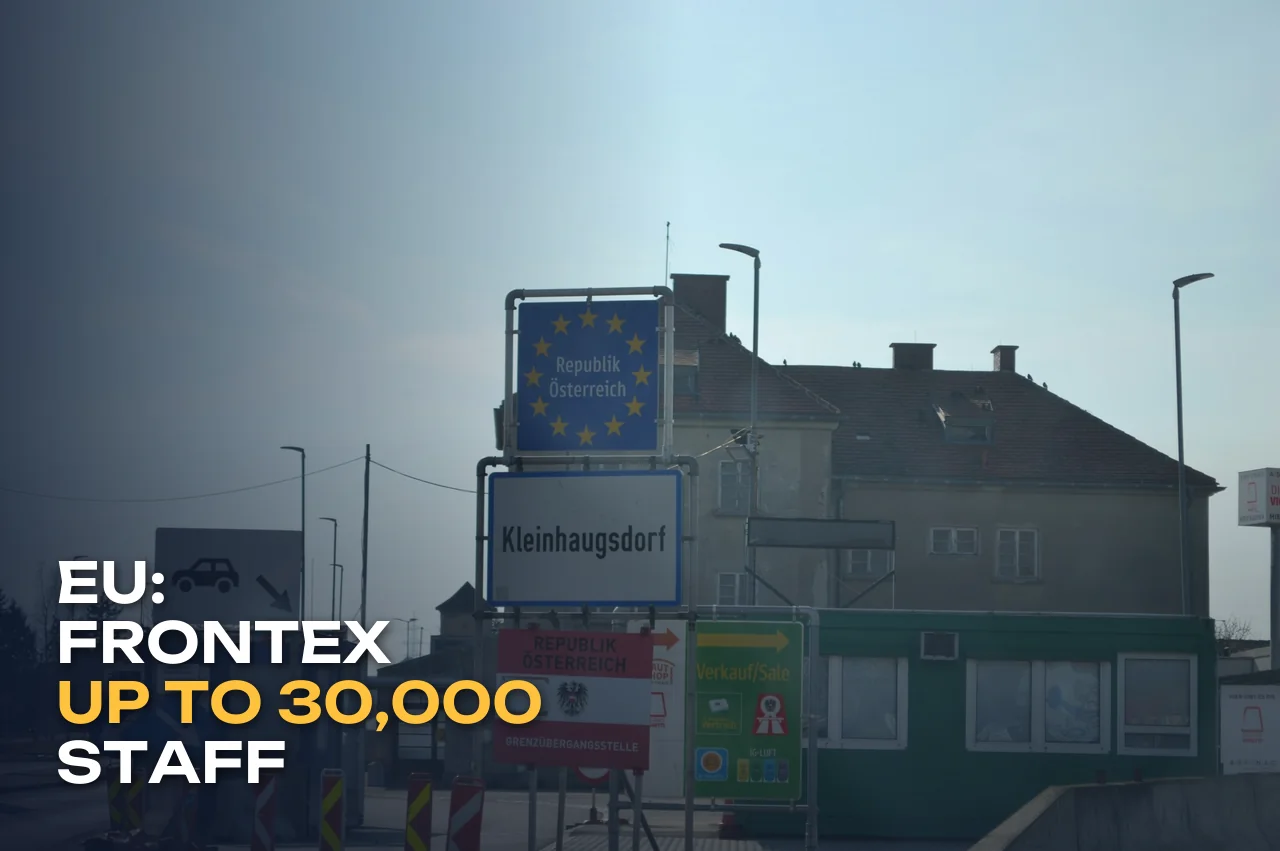
Europe is looking for a way to remove refused applicants faster. According to the European Commission, 669,365 first-time asylum applications were lodged in the EU in 2025, with about 45% approved on average. Most rejected applicants nevertheless stay. Hence the new regulation, the plan to expand Frontex to 30,000 staff, which we covered in our news on Frontex, and the designation of Greece, Spain, Cyprus and Italy as countries under migratory pressure, see our news item.
At the same time Europe is not closing to legal migration. We examined this paradox in our analysis of borders and residence permits: borders are tougher on irregular migration while residence permit grants are rising. The same countries building the return hub keep attracting professionals and investors: Germany runs its Opportunity Card for job seekers, whose results we covered separately, and the Netherlands is changing its tax relief for skilled workers, see our news on the 30% ruling.
Who is affected
- Rejected asylum seekers in the five countries who have an enforceable removal decision. They are the main target of the scheme.
- Those who lost a residence permit and did not leave. If a renewal was refused and the person stayed, they may receive a removal decision and, under the new regulation, an entry ban of several years.
- Visa overstayers. The EES system records entries and exits, making breaches of the 90/180 rule easier to detect. More in our guide to EES and ETIAS.
- Lawful residents, investors and visa holders. Nothing changes for them as long as they meet the conditions of their status.
The practical conclusion for our clients: keep your status in order. Renew a residence permit early, do not exceed the permitted stay, and keep proof of entry and exit. For those with residence through a company, the company itself is also checked, as we explained in our piece on company checks.
Three examples
- A professional in the Netherlands failed to renew a work permit after changing employer, was refused and stayed. A few months later he receives a removal decision. If he does not comply, in theory he could end up on a transfer list and, under the new regulation, also receive an EU entry ban.
- A tourist from a visa-required country stayed in Austria for 120 days instead of 90. EES will record this. A return hub is unlikely for him, but an entry ban and a database record will complicate any future visas.
- An investor with a Greek golden visa renews the residence permit on time and keeps the investment. The scheme changes nothing for him: the status is lawful and the grounds are in place.
The difference between these people comes down to one thing: whether they have a lawful basis to be in the EU. The new rules change almost nothing for those who keep their status in order and sharply raise the consequences for those who lose it.
What to do now
Check your status deadlines
Apply to renew your residence permit early, not in the last days.
Count your Schengen days
If you enter on a visa or visa-free, follow the 90/180 rule and keep your boarding passes.
Do not stay after a refusal
If a renewal is refused, discuss an appeal or a lawful departure with a lawyer rather than waiting for removal.
Think about a secure status
Investment residence or a second citizenship reduce dependence on visas and renewals.
Living conditions in the participating countries are on our pages for Austria and Greece, and a stable route into the EU through investment is on the Greek golden visa page. We wrote about how Austria is changing the rules for Ukrainians in a separate news item. All residence options are in our residence section, and you can have your situation reviewed in an online consultation.
Share this article
Still have questions? We'll answer for your case
Tell us what you want to solve, and an expert on the topic will contact you.



Frequently asked
Questions people ask before deciding
01Which countries reached the deal with Rwanda?
Austria, Germany, Greece, Denmark and the Netherlands. The partnership was announced in Vienna on 16 November 2026.
02Who will be transferred to Rwanda?
Only people with an enforceable removal decision, such as those refused asylum. Rwanda vets each person and decides whom to accept.
03When will transfers start?
They are planned from 2027. The agreement has not been signed yet; the countries want to sign it in the coming months.
04Does this affect residence permit and visa holders?
No, as long as they meet the conditions of their status. The scheme targets those obliged to leave the EU who have not left.
05How does the plan differ from the British one?
The British plan covered everyone arriving irregularly and was ruled unlawful in 2023. The five countries' plan covers only rejected applicants and rests on the 2026 EU regulation.
About the author
Related materials
What to read next
 NewsThe new EU Return Regulation: entry bans up to 10 years, return hubs and what it means for Russians
 NewsEU proposes tripling Frontex to 30,000 staff and making it the lead agency on returns
 AnalysisEurope: tougher at the border, more residence permits inside. What it means for a move in 2027
News+2 stories on 21 November
Related news
 European Union · 9 NovEU names Greece, Spain, Cyprus and Italy as countries under migratory pressure
 European Union · 1 NovEuropean Union: updated social security rules for living and working in two countries enter into force
 European Union · 26 OctEuropean Union: Germany proposes single-country Schengen visas for Russians
Personal programme selection is conducted by Anna Kovalevskaya, Head of Legal, BRIDGES.
Need a secure status in Europe? Write to us and we will find residence or a second passport
We will check your current status, compare countries and prepare documents for the whole family.
