News · Caribbean
Citizenship programme transparency index 2026: 8 of 13 below 30%, Saint Lucia leads
Updated: November 2026·11 min read·Expert reviewed
Terms and costs verified: November 2026
Contents
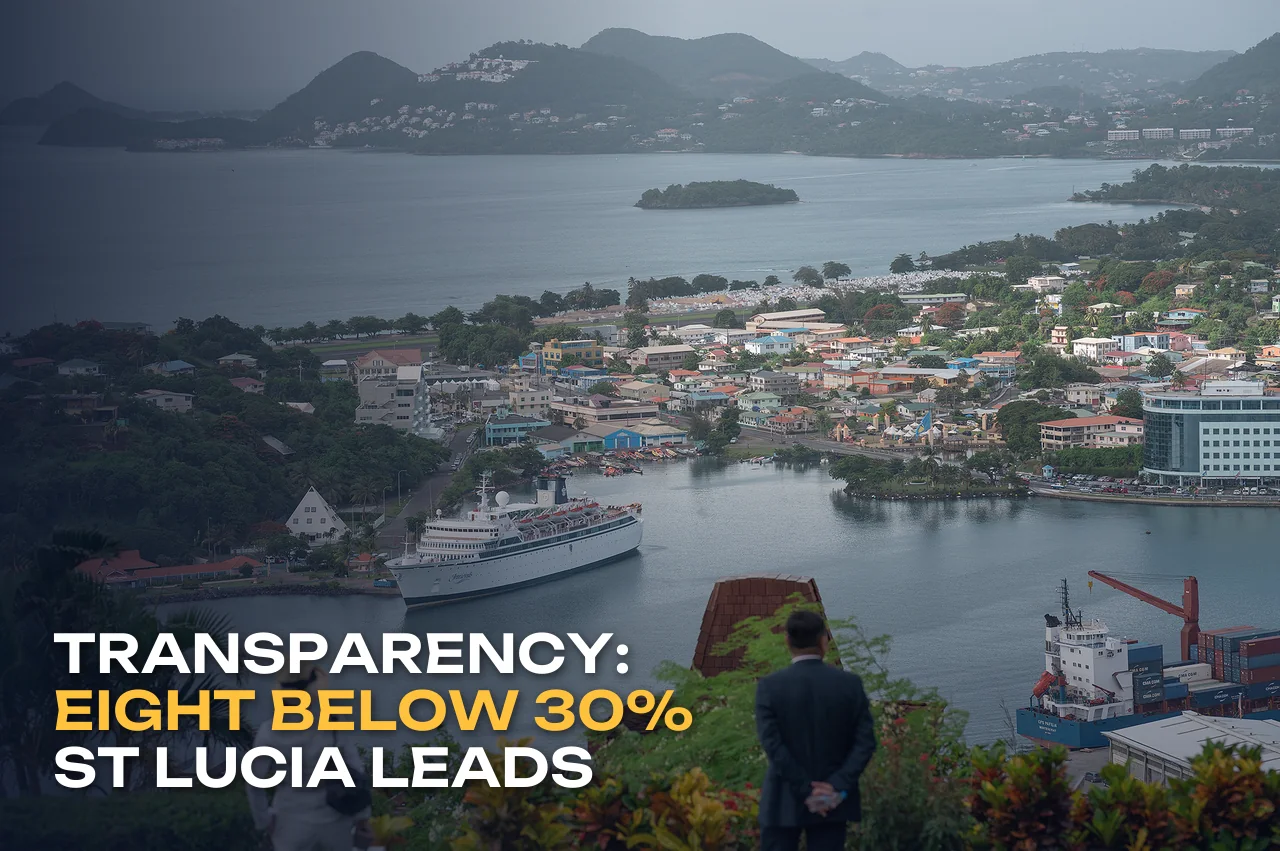
On 23 November 2026 the industry's 2026 transparency index of citizenship by investment programmes was published. It measures how much a programme discloses about itself: reports, application and refusal statistics, financial accounts, agent lists. The result is sobering for the market: 8 of 13 programmes scored below 30%, and the average is 25%. Saint Lucia leads with 60%, Grenada is second with 57% and Antigua and Barbuda third with 43%. Both Grenada and Antigua have slipped since 2024. One caveat matters: this is a ranking by an industry publication, not government data. It was, however, scored only from official government documents, and for an applicant it works as a map of where a programme can be checked first-hand and where you have to take someone's word for it.
Key points
- The 2026 index scored 13 citizenship by investment programmes. Eight of them came in below 30%, and four at 6% or less.
- Saint Lucia holds 60% for the third edition in a row and is the only programme with full marks for integrity of disclosure.
- Grenada fell from 62% to 57%, and Antigua and Barbuda from 47% to 43%. Both are back at their 2022 levels.
- Newcomers: Sao Tome and Principe enters fourth with 40%, Nauru fifth with 30%.
- St Kitts and Nevis (21%), Dominica (19%) and Vanuatu (17%) still do not publish application and approval numbers.
What the index measures
The index does not judge whether a programme is good, fast or strict with applicants. It measures one thing: how fully the government itself reports on the programme. The maximum is 47 points across five dimensions. The first is how regularly reports appear. The second is how detailed the application data is: how many filed, approved and refused, and from which countries. The third is financial disclosure: how much money came in and where it went. The fourth is history, meaning how many years of data exist. The fifth is integrity, and it counts double.
Integrity covers five signs: audited accounts of the fund, a named list of agents, published licence terms, a blacklist of banned intermediaries, and disclosed payments to agents and due diligence firms. Only official government sources count, and every figure was checked against the source document. Scores are shown as a share of the maximum, so Saint Lucia's 60% is not a pass mark: it is 60% of everything the programme could in theory disclose.
The 2022 and 2024 editions used an older method. For comparison they were rescored under the 2026 rules using documents that were public at the time. So the changes in the table below are like for like: a programme moved up or down because it published more or less, not because the ruler changed.
| Programme | 2026 | 2024 | Change |
|---|---|---|---|
| Saint Lucia | 60% | 60% | 0 |
| Grenada | 57% | 62% | -5 |
| Antigua and Barbuda | 43% | 47% | -4 |
| Sao Tome and Principe | 40% | not scored | new |
| Nauru | 30% | not scored | new |
| Jordan | 26% | 6% | +20 |
| St Kitts and Nevis | 21% | 21% | 0 |
| Dominica | 19% | 19% | 0 |
| Vanuatu | 17% | 13% | +4 |
| Turkey | 6% | 6% | 0 |
| Egypt | 0% | 0% | 0 |
| Cambodia | 0% | 0% | 0 |
| Sierra Leone | 0% | not scored | new |
The average across all 13 programmes is 25%. Across the ten programmes scored in both 2024 and 2026, the average rose from 23% to 25%. But Jordan alone accounts for that whole rise: without it the other nine slipped slightly. Programmes do best on history of data and worst on the detail of application statistics.
The leaders: Saint Lucia, Grenada, Antigua
Saint Lucia's programme publishes what almost nobody else does: an annual report of the citizenship unit, audited accounts of the National Economic Fund, itemised fees, and payments to agents and due diligence firms. It names licensed agents and blacklisted intermediaries. In the 2024/25 financial year it received 2,957 applications, approved 2,278 and refused 355. There are gaps too: the report gives no breakdown of applicants by nationality and does not separate main applicants from family members. Its 2021/22 report earns the same 60% under today's method, so Saint Lucia has held the line since records began. How the country is negotiating with the EU over the programme's future is covered in our news on Saint Lucia's letter to the EU.
Grenada lost 5 points, for a specific reason. When the Investment Migration Agency took over the programme, the Ministry of Finance stopped itemising fees and publishing spending reports for the National Transformation Fund. Financial disclosure fell 15 points to 62%, and integrity fell 20 points to 40%. Quarterly statistics arrive late: the first-quarter 2026 report appeared in June, and the second-quarter report was still missing in late November. Grenada names its licensed agents, but not the 16 agents whose licences were withdrawn. Even so, it remains the second most open of the 13. Grenada's plan to keep the programme until at least 2032 is in our news.
Antigua and Barbuda fell from 47% to 43% because of missed deadlines. The law requires a report every six months, yet the latest one posted covers January to June 2024 and went up on 15 October 2024. The 2025 reports were tabled in Parliament but never published. The reports themselves are detailed: 739 applications in the first half of 2024, 5,203 since launch, a breakdown by country of birth, and every payment from the programme account with its payee. What they lack is the number of approvals and refusals. Antigua's proposal to close the programme by 2030 is analysed in our news on the EU deadline.
What this means for you. A high place in the index does not guarantee a passport and does not mean lighter checks. It means the programme can be verified from official documents: how many applications are approved, how many refused, where the money goes. For a family investing 200,000 to 300,000 dollars, that is real support when choosing.
Newcomers: Sao Tome and Nauru
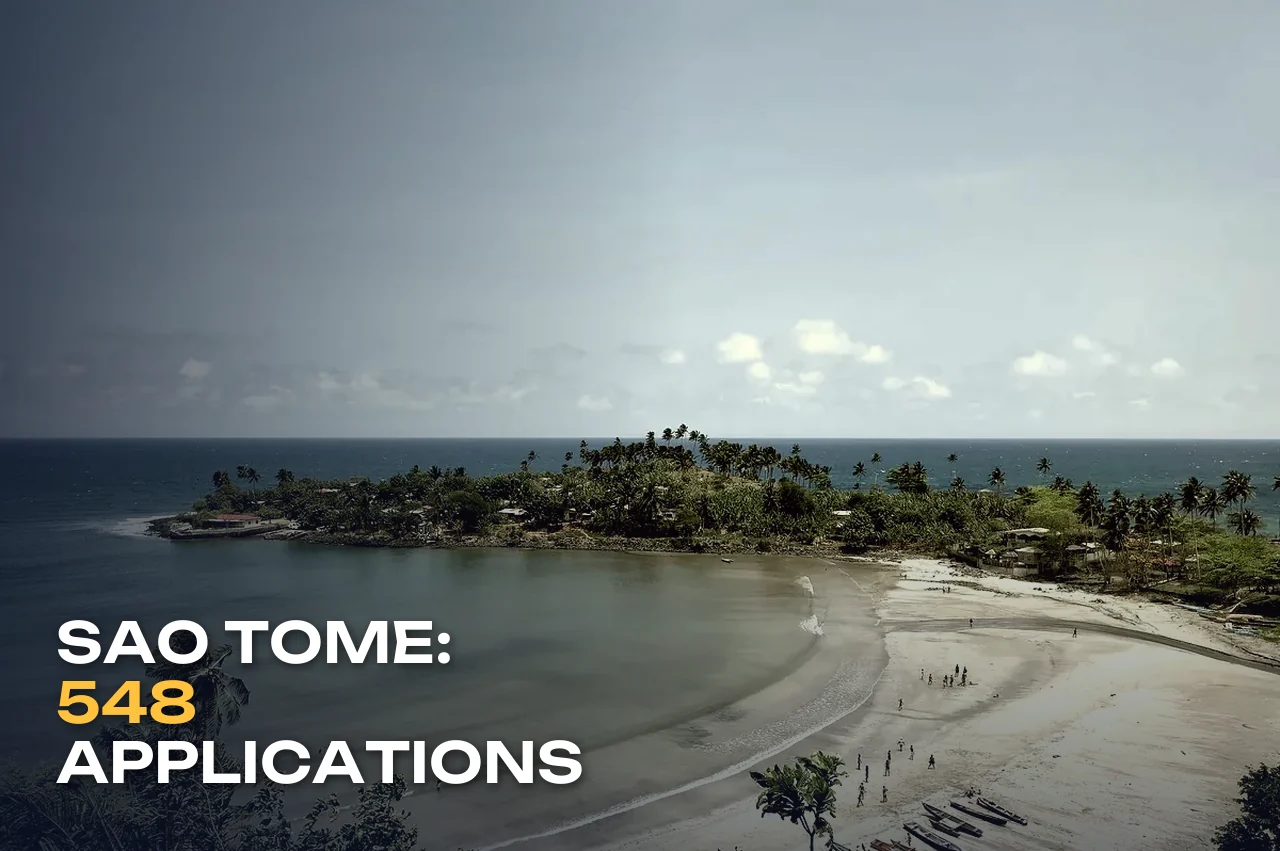
Sao Tome and Principe entered the index for the first time and went straight to fourth place with 40%. The reason is the programme's first annual report of 1 September 2026: 548 applications, 350 approvals, 12 refusals and citizenship granted in 117 cases. It names the five most common nationalities of applicants and the amount raised for the National Transformation Fund, 9.8 million US dollars. What it lacks is the amounts spent on the projects the fund finances. A full review of the report is in our news on the programme's first year.
Nauru scored 30%. Until 19 November 2026 the programme published no statistics at all. Then the government reported that over the first 18 months it had received 205 applications, approved 98 and issued 221 passports. Refusals were given only as a rate, without a number. The list of authorised agents is published, but the page for prohibited agents is empty. What these numbers mean for an applicant is covered in our news on Nauru's 221 passports.
Both newcomers show that a young programme can be open from year one. For the market that is a signal: publishing a report is not a privilege of established programmes, it is a government's choice.
Below 30%: who stays silent
St Kitts and Nevis (21%) and Dominica (19%) are where they were. Neither citizenship unit publishes the number of applications or approvals. Most of their points come from finance ministries, which itemise programme revenue in budget estimates. Both countries name authorised agents. St Kitts once announced a "169% increase in applications" without the underlying numbers. In 2023 Dominica published a blacklist of seven firms; that page is now blank. The debate about the Nevis programme's future is covered in our news on the transition period.
Vanuatu rose from 13% to 17%. Its citizenship office began publishing a list of agents whose authorisation was cancelled, and the programme gained 20 points on integrity, to 40%. There are still no application or approval statistics.
Jordan is the big riser of this edition, from 6% to 26%. The Ministry of Investment publishes a half-year report and the Cabinet releases quarterly figures. In the first half of 2026, 65 investors and 250 family members received citizenship, with approvals broken down by nationality. There are no application or refusal counts and nothing on agents. The programme's pace in 2026 is covered in our news on Jordan. Turkey scored 6%: it has no regular statistics, and its only official figure came in December 2025, when the Interior Minister told Parliament that 46,431 foreigners had gained citizenship through investment between 2018 and 2024. Egypt and Cambodia score 0%: they publish nothing. Sierra Leone's programme status is unclear, and it also scores 0%.
Why Malta dropped out and how we got here
- 2022First edition of the index. Saint Lucia 60%, Grenada 57%, Antigua 43%
- 2024Second edition: Grenada rises to 62%, Antigua to 47%, Malta scores 77%
- 29.04.2025The EU Court of Justice rules that Malta's programme breaches EU law, and Malta leaves the index
- 01.09.2026Sao Tome and Principe publishes the programme's first annual report
- 19.11.2026Nauru discloses statistics for the first time: 205 applications, 98 approvals, 221 passports
- 23.11.2026Index 2026: 8 of 13 programmes below 30%, Saint Lucia leads with 60%
In 2024 the most open programme was Malta with 77%. It is not in the 2026 index: on 29 April 2025 the EU Court of Justice ruled that Malta's citizenship by investment programme breached EU law. What remains of the Maltese route is described in our guide to Maltese citizenship. That leaves Saint Lucia as the market's transparency leader again, even though its score has not changed.
For the Caribbean, transparency is not an academic question right now. The EU wants five Eastern Caribbean countries to wind down their programmes by 1 June 2028, or their citizens risk losing visa-free access to Schengen. Partners also expect the region to screen applicants more strictly, and what that looks like in practice is shown in our article on screening in St Kitts. The less a programme publishes, the harder it is to show partners that passports are not handed out to anyone. A low score is not a verdict, but it is not a detail either.
How transparency affects banks and visa-free travel
A bank opening an account for the holder of a second passport does not read the index. But its compliance team asks the same questions: how was the passport obtained, who screened the applicant, where did the money come from. When a programme publishes reports, audited accounts and agent lists, those questions are easier to answer. The client shows a government document, not an intermediary's brochure. How a bank decides on an account is explained in our article on second passports and banks, and suitable banks are collected in the bank catalogue.
The link to visa-free travel is direct, if not immediate. Visa-free access rests on the trust of partner countries. A programme that does not disclose how many passports it issues and does not publish a blacklist of agents gives partners fewer reasons to trust it. If trust falls, visa-free access is at risk for every citizen of the country, including those who obtained the passport by investment. You can compare where each passport currently travels without a visa in the passport index.
There is a third angle: the applicant's money. Published itemised fees and agent payments protect against extra charges, because you can see what the government takes and what the intermediary takes. A published blacklist helps you avoid an agent who has lost a licence. These are exactly the two signs the index weighs most heavily.
How to choose a programme with transparency in mind
Transparency is one criterion, not the only one. Passport strength, price, timing, screening requirements and political risk matter just as much. The index is most useful when laid over everything else, and then the picture looks like this:
- If banking and a long horizon matter most. High-scoring programmes, Saint Lucia, Grenada and Antigua, let you rely on official documents when you talk to a bank.
- If speed and price matter most. Sao Tome and Nauru are younger but already publish reports. A newcomer needs transparency more than an established programme, and both seem to understand that.
- If you have chosen Dominica, St Kitts or Vanuatu. A low score does not make the programme weak. It means you will have to gather proof yourself: the citizenship decision, the naturalisation certificate, receipts for payments to the government.
- Always. Check that your agent appears on the programme's official list and not on its blacklist.
We compared how strictly programmes screen applicants separately in the 2026 due diligence index, and the overall ranking by price, timing and passport strength is in the 2026 citizenship programme index. All programmes and their terms are in the citizenship catalogue.
Sofia MendesInvestment Programs Expert, BRIDGES
Choosing a citizenship programme? We will compare them on facts, not advertising
We will review your goals, banking and travel, compare programmes on official data and prepare documents for the whole family.
What to do now
Define your goal
Visa-free travel, banking, tax or a family plan B: your goal decides how much a programme's transparency matters.
Check the programme at the source
Find the latest report, the agent list and the blacklist on the government website. If there is nothing, ask questions.
Check your agent
Make sure the agent is on the programme's official register and has not lost its licence.
Keep your proof
Save the citizenship decision, the certificate and receipts for payments to the government: the bank will need them.
BRIDGES supports clients with citizenship by investment programmes in the Caribbean, Oceania, Africa and the Middle East and prepares document packs for banks. You can find the right programme for your case at an online consultation.
Share this article
Still have questions? We'll answer for your case
Tell us what you want to solve, and an expert on the topic will contact you.

Frequently asked
Questions people ask before deciding
01Who compiled the 2026 transparency index?
It is a ranking by an industry publication, not government data. Scores were based only on official government documents, and every figure was checked against the source.
02Which citizenship programme is the most transparent?
Saint Lucia: 60% of the maximum, for the third edition in a row. It publishes an annual report, audited fund accounts, fees, agent payments and a blacklist of intermediaries.
03Why did Grenada and Antigua slip?
Grenada stopped itemising fees and fund spending, and its quarterly statistics are late. Antigua has not published its 2025 reports, although the law requires one every six months.
04Does a low score mean a bad programme?
No. The index measures how much a programme publishes, not the quality of the passport or the checks. With a low score you should gather proof for the bank yourself.
05How does transparency affect banks and visa-free travel?
A bank finds it easier to accept a passport whose origin is backed by official documents. Visa-free access rests on partners' trust, and closed programmes give them fewer reasons to trust.
About the author
Related materials
What to read next
 NewsSão Tomé and Príncipe: 548 applications in the first year, Russia in second place
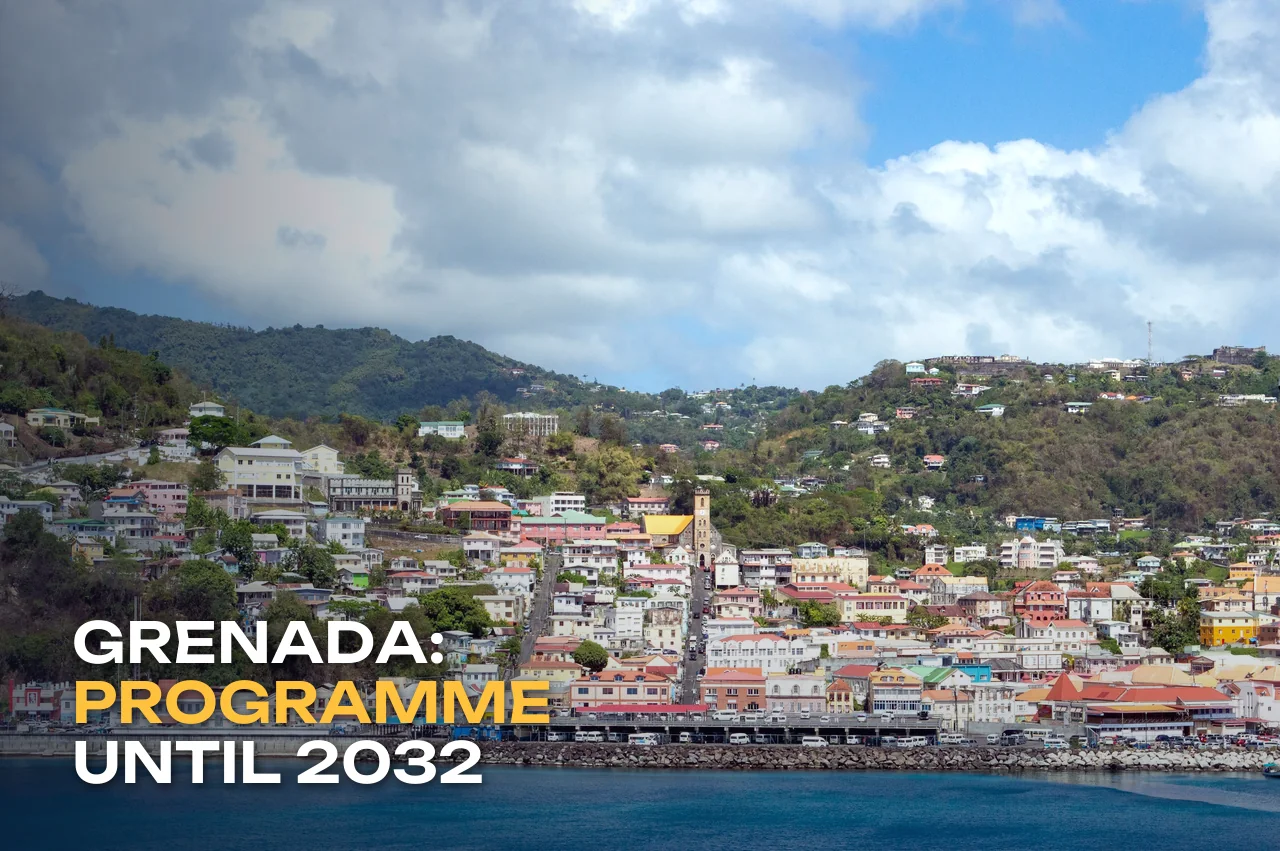 NewsGrenada to keep its citizenship programme until 2032: the EU deadline does not change that
 AnalysisCBI Index 2026: St Kitts first again, Vanuatu rising, but the ranking will not choose a programme for you
News+10 stories on 24 November
Related news
 Caribbean · 9 NovEU’s 12 November Caribbean deadline unconfirmed: Antigua proposes closing its programme by 2030
 Caribbean · 11 OctNo more Caribbean passport without a trip: biometrics and interviews
 Saint Kitts and Nevis · 24 NovNevis Premier asks for five years to close citizenship programmes: a statement, not an EU decision
Personal programme selection is conducted by Anna Kovalevskaya, Head of Legal, BRIDGES.
Not sure which citizenship programme to trust? We will compare them on official data
We will review your goals, banking and travel, find a programme and prepare documents for the whole family.